
OUTLINE Problem statement Solution structure and defining elements
OUTLINE • Problem statement; • Solution structure and defining elements; • Solution properties in a neighborhood of regular point; • Solution properties in a neighborhood of irregular point: • construction of new Lagrange vector; • construction of new structure and defining elements; • Generalizations.

Problem statement Family of parametric optimal control problems: are given functions, is a parameter.
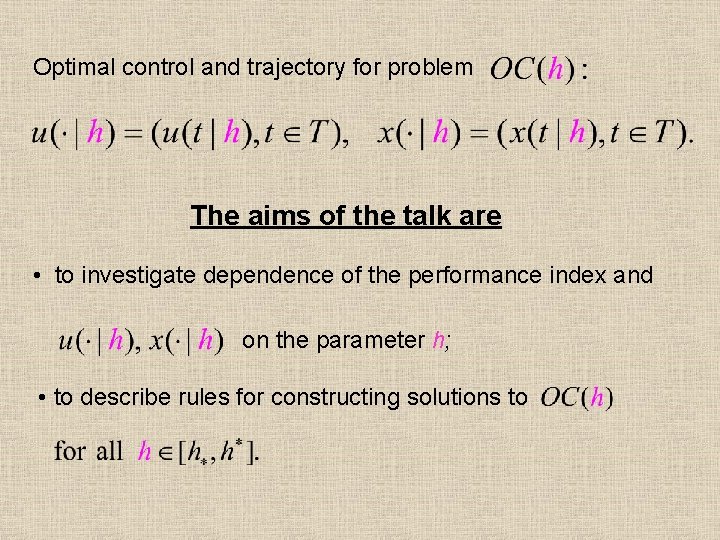
Optimal control and trajectory for problem The aims of the talk are • to investigate dependence of the performance index and on the parameter h; • to describe rules for constructing solutions to
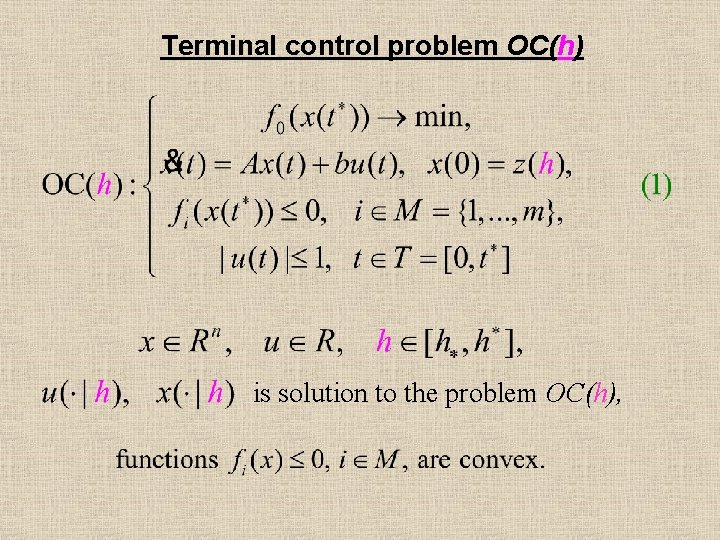
Terminal control problem OC(h) is solution to the problem OC(h),
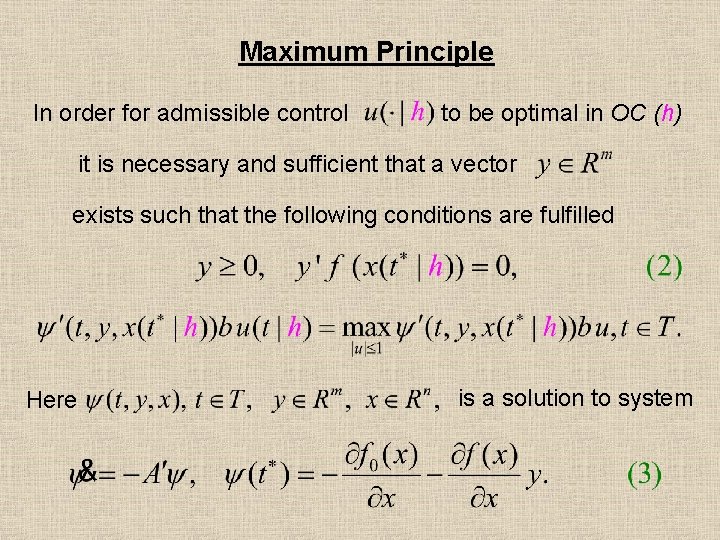
Maximum Principle In order for admissible control to be optimal in ОС (h) it is necessary and sufficient that a vector exists such that the following conditions are fulfilled Here is a solution to system
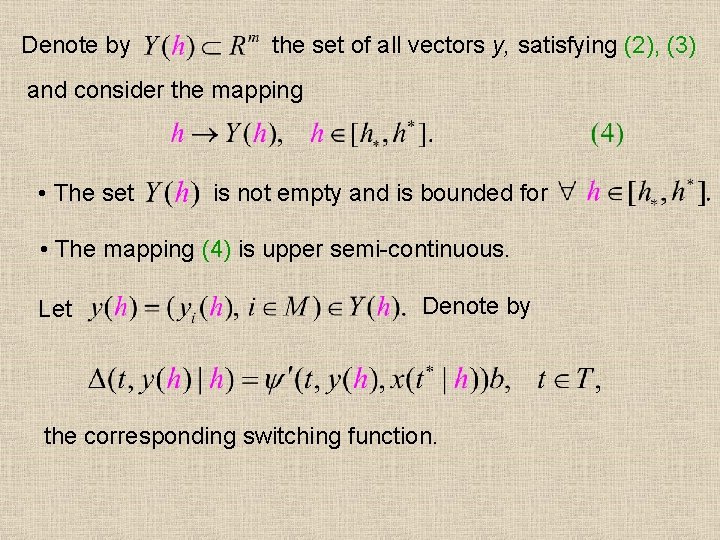
Denote by the set of all vectors y, satisfying (2), (3) and consider the mapping • The set is not empty and is bounded for • The mapping (4) is upper semi-continuous. Let Denote by the corresponding switching function.
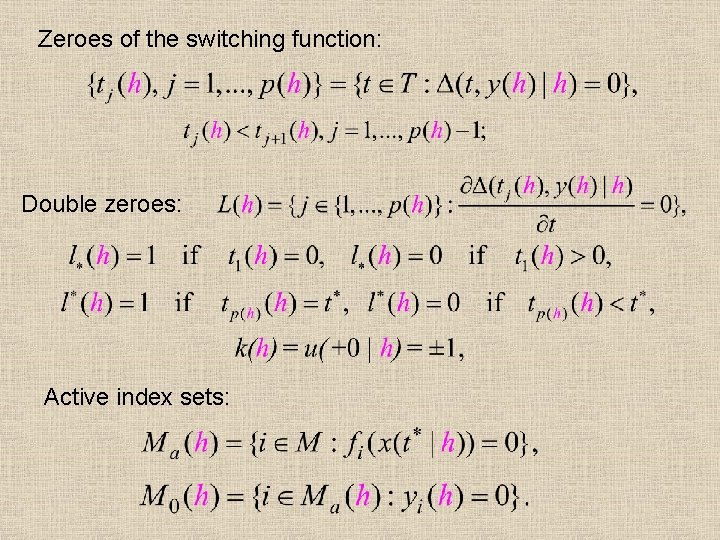
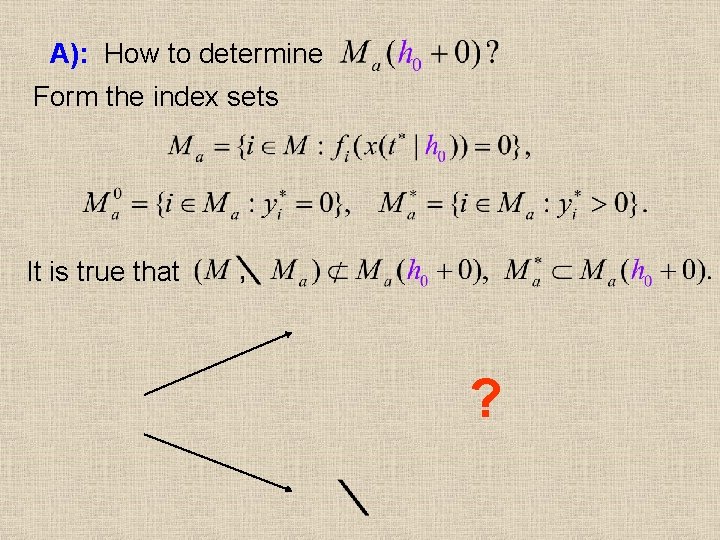
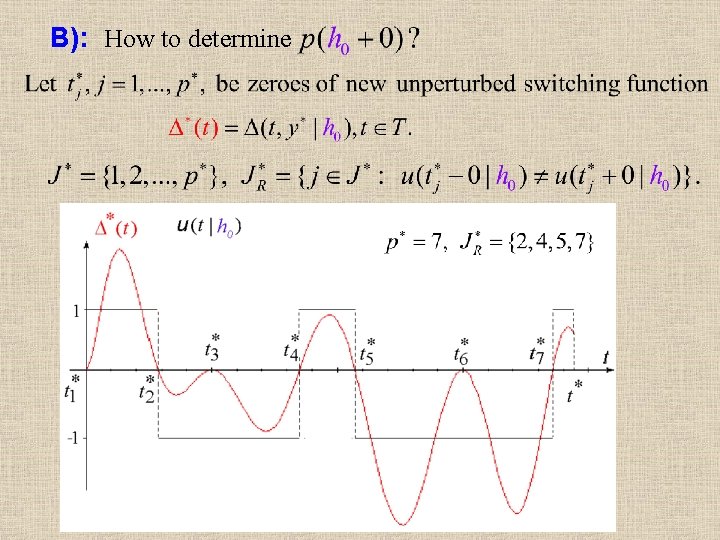
Zeroes of the switching function: Double zeroes: Active index sets:
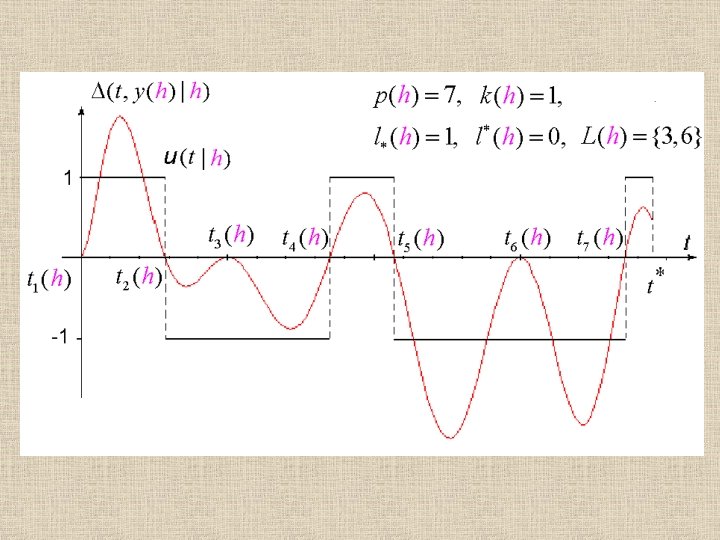
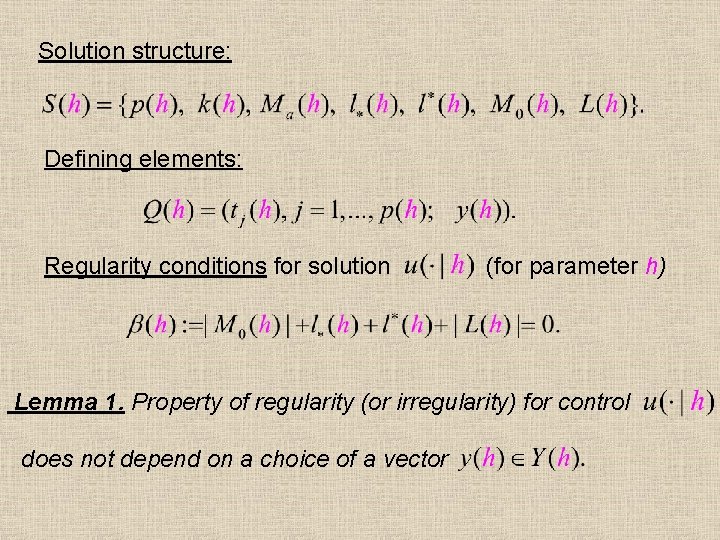
Solution structure: Defining elements: Regularity conditions for solution (for parameter h) Lemma 1. Property of regularity (or irregularity) for control does not depend on a choice of a vector
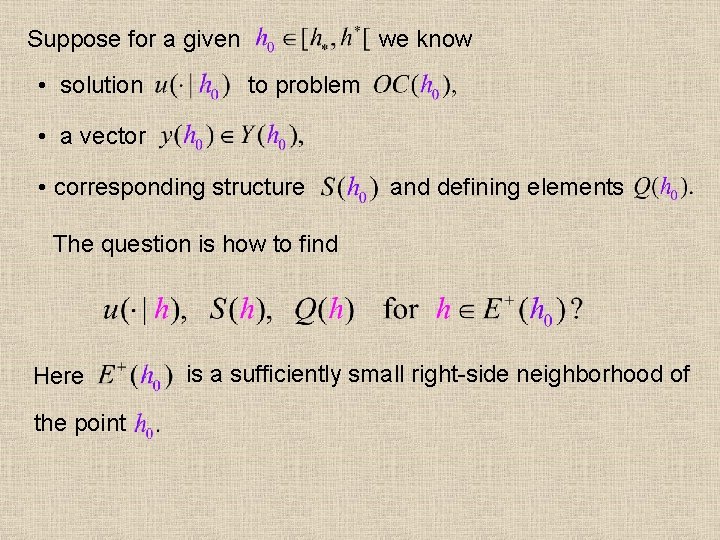
Suppose for a given • solution we know to problem • a vector • corresponding structure and defining elements The question is how to find Here the point is a sufficiently small right-side neighborhood of
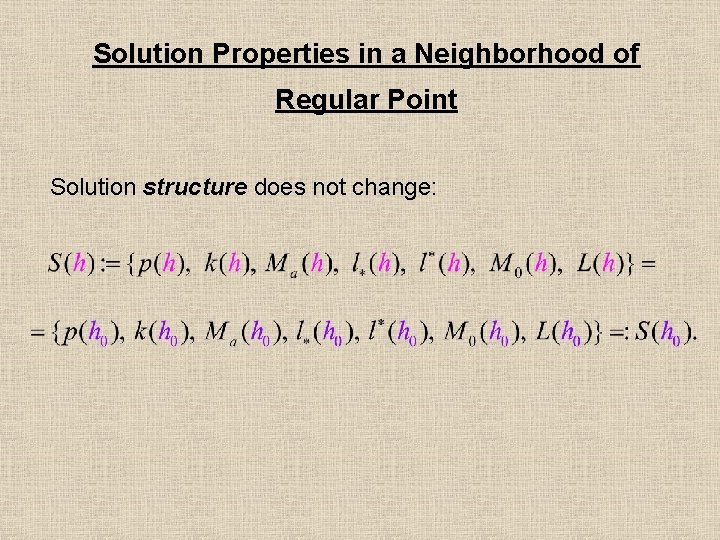
Solution Properties in a Neighborhood of Regular Point Solution structure does not change:
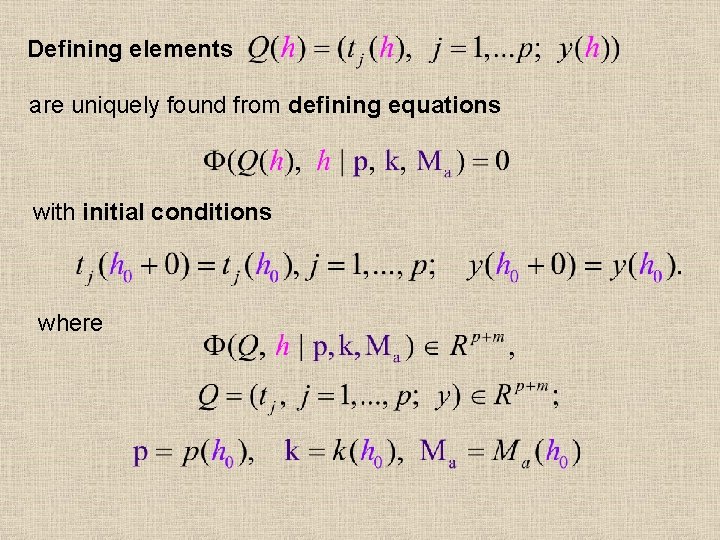
Defining elements are uniquely found from defining equations with initial conditions where
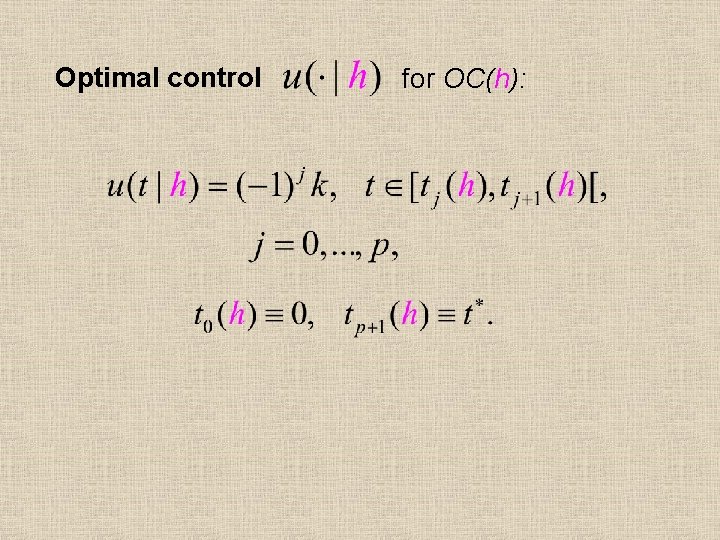
Optimal control for ОС(h):
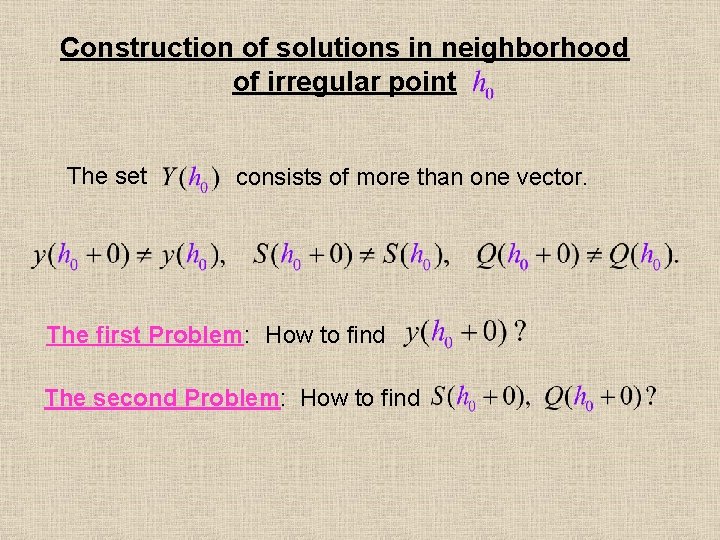
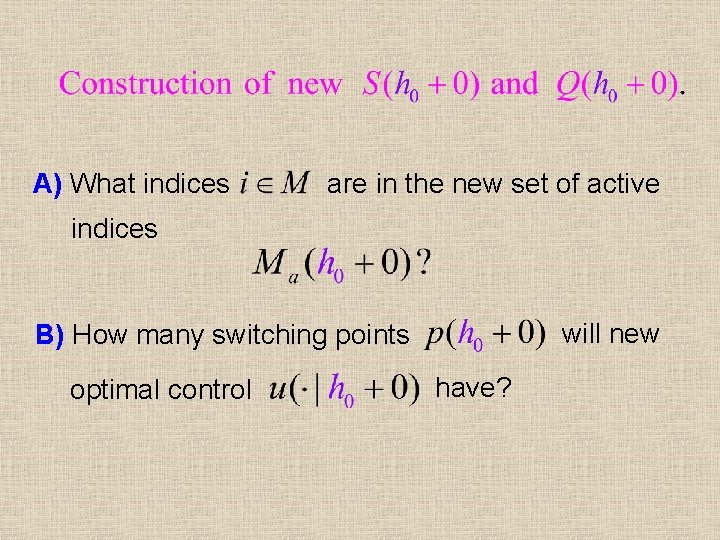
Construction of solutions in neighborhood of irregular point The set consists of more than one vector. The first Problem: How to find The second Problem: How to find
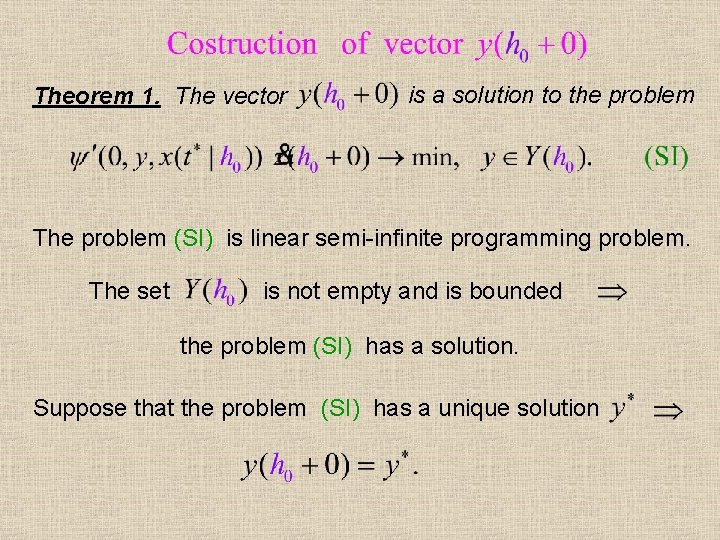
Theorem 1. The vector is a solution to the problem The problem (SI) is linear semi-infinite programming problem. The set is not empty and is bounded the problem (SI) has a solution. Suppose that the problem (SI) has a unique solution
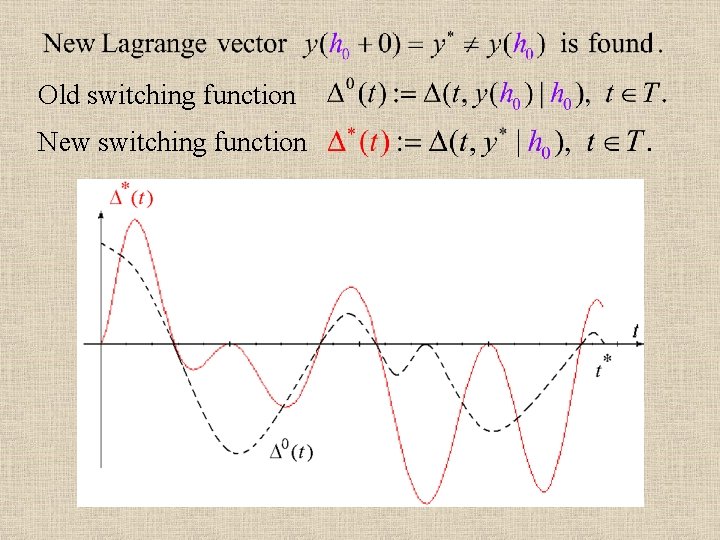
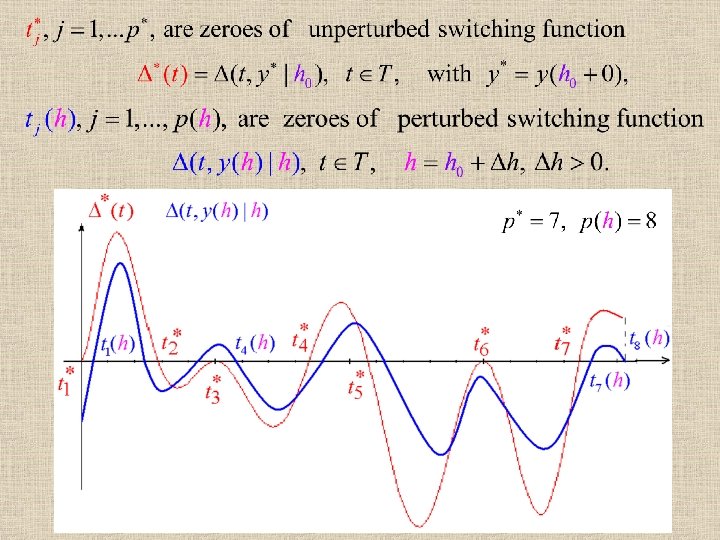
Old switching function New switching function
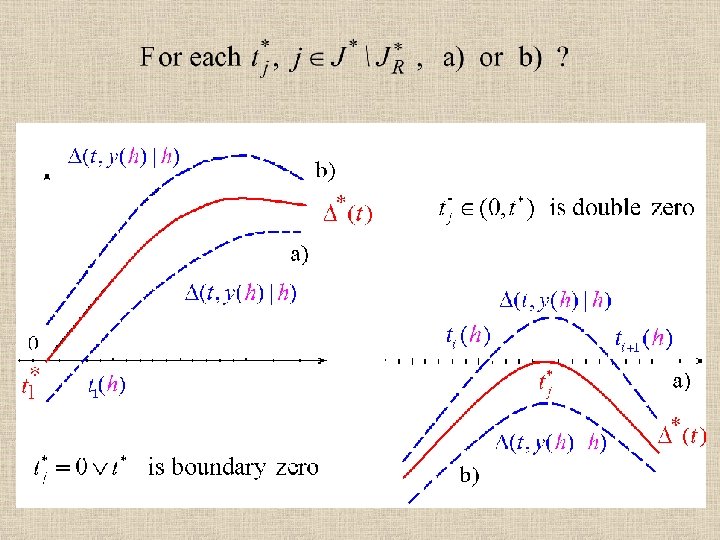
A) What indices are in the new set of active indices will new B) How many switching points optimal control have?
A): How to determine Form the index sets It is true that ?
B): How to determine
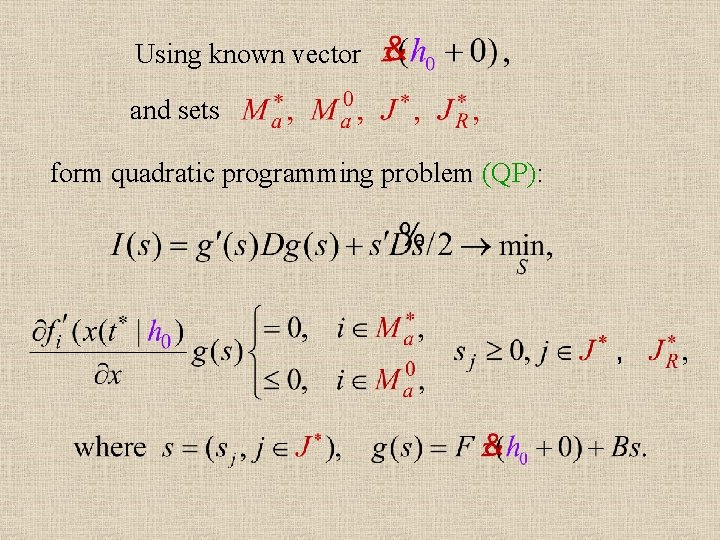
Using known vector and sets form quadratic programming problem (QP):
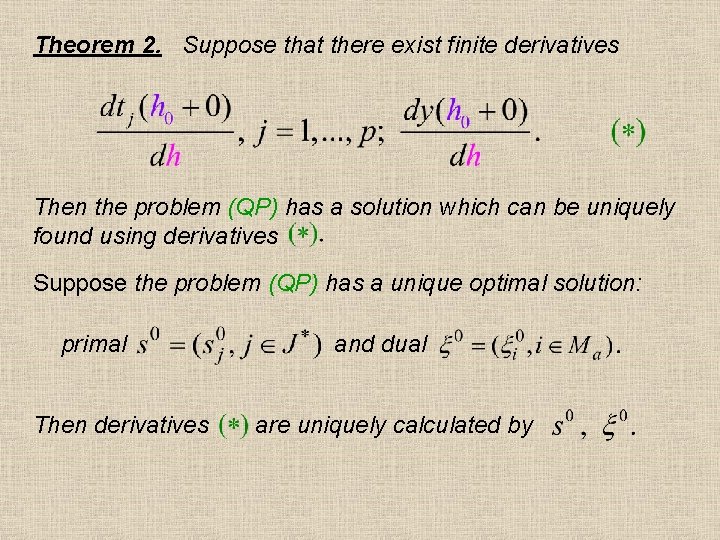
Theorem 2. Suppose that there exist finite derivatives Then the problem (QP) has a solution which can be uniquely found using derivatives Suppose the problem (QP) has a unique optimal solution: primal Then derivatives and dual are uniquely calculated by
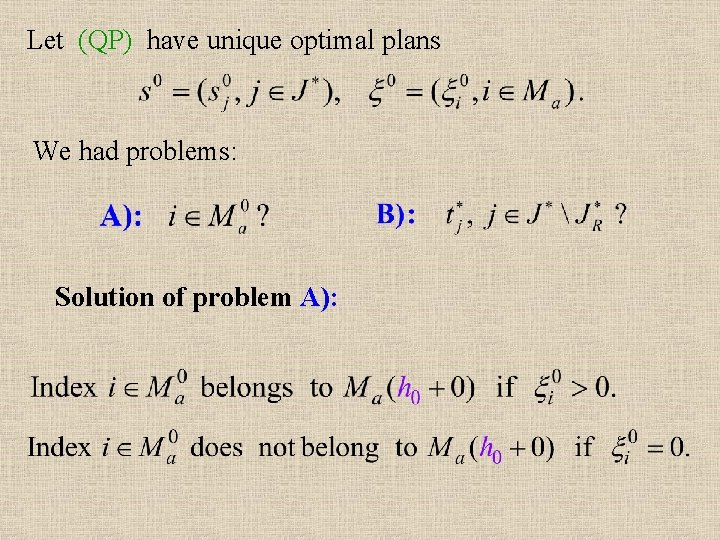
Let (QP) have unique optimal plans We had problems: Solution of problem A):
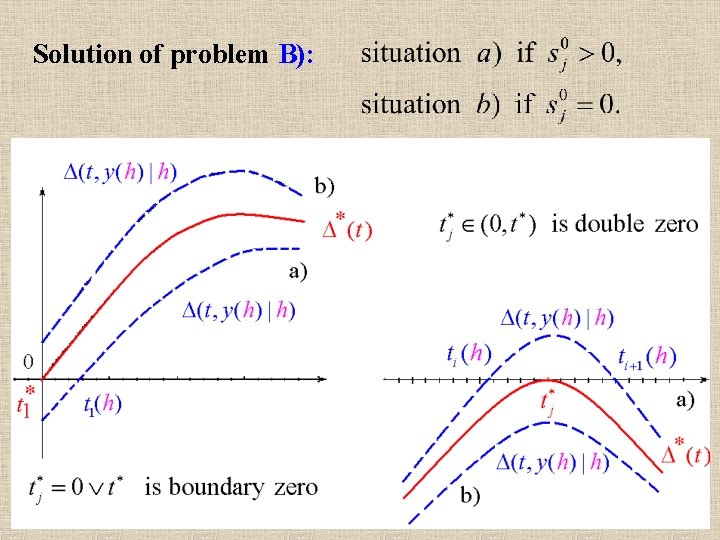
Solution of problem B):
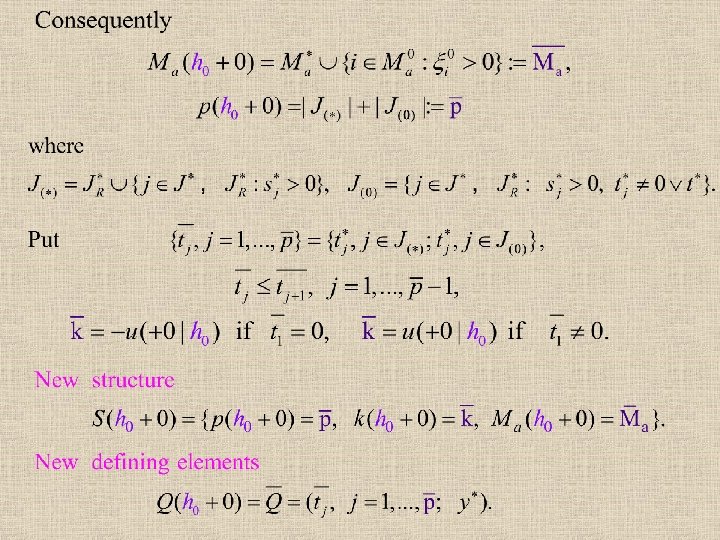
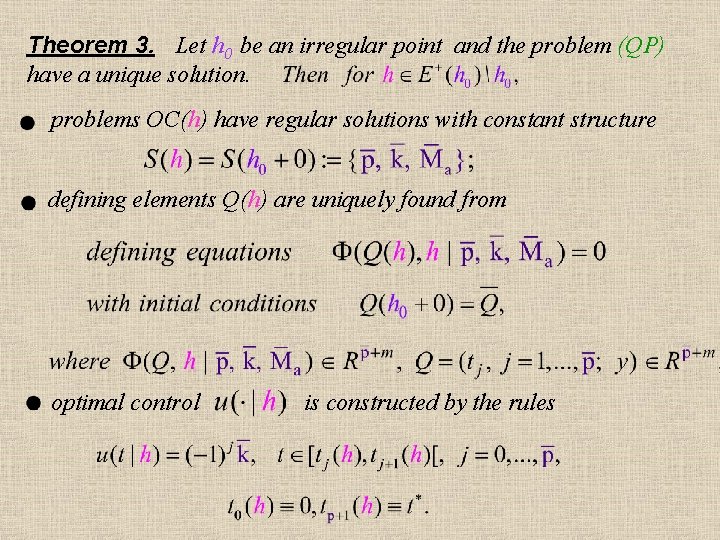
Theorem 3. Let h 0 be an irregular point and the problem (QP) have a unique solution. problems ОС(h) have regular solutions with constant structure defining elements Q(h) are uniquely found from optimal control is constructed by the rules
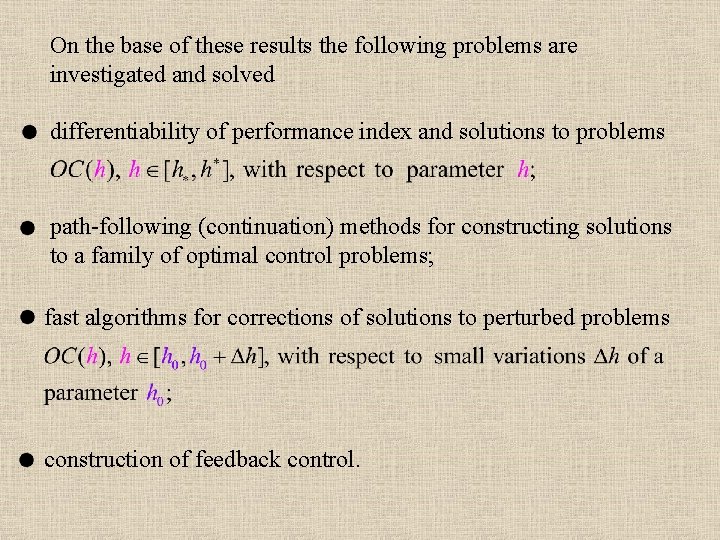
On the base of these results the following problems are investigated and solved differentiability of performance index and solutions to problems path-following (continuation) methods for constructing solutions to a family of optimal control problems; fast algorithms for corrections of solutions to perturbed problems construction of feedback control.
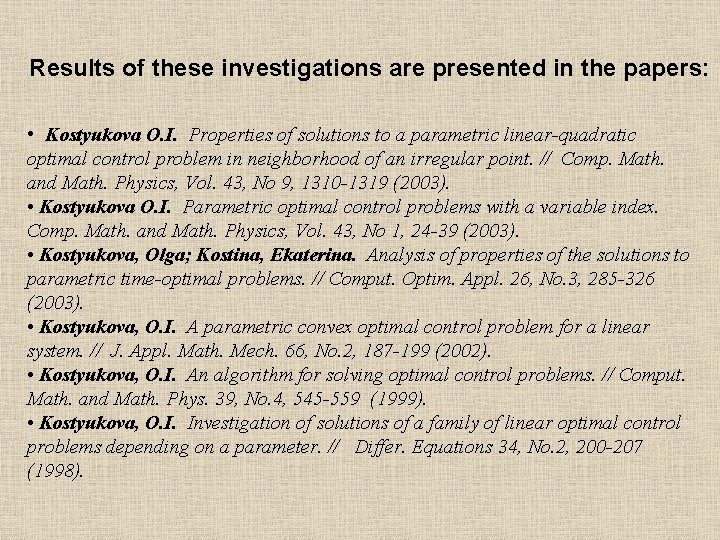
Results of these investigations are presented in the papers: • Kostyukova O. I. Properties of solutions to a parametric linear-quadratic optimal control problem in neighborhood of an irregular point. // Comp. Math. and Math. Physics, Vol. 43, No 9, 1310 -1319 (2003). • Kostyukova O. I. Parametric optimal control problems with a variable index. Comp. Math. and Math. Physics, Vol. 43, No 1, 24 -39 (2003). • Kostyukova, Olga; Kostina, Ekaterina. Analysis of properties of the solutions to parametric time-optimal problems. // Comput. Optim. Appl. 26, No. 3, 285 -326 (2003). • Kostyukova, O. I. A parametric convex optimal control problem for a linear system. // J. Appl. Math. Mech. 66, No. 2, 187 -199 (2002). • Kostyukova, O. I. An algorithm for solving optimal control problems. // Comput. Math. and Math. Phys. 39, No. 4, 545 -559 (1999). • Kostyukova, O. I. Investigation of solutions of a family of linear optimal control problems depending on a parameter. // Differ. Equations 34, No. 2, 200 -207 (1998).
- Slides: 30