
Outline of Presentation Introduction to Analog Interfaces Inc



- Slides: 51
Outline of Presentation • Introduction to Analog Interfaces, Inc. • Introduction to the Indenter Polymer Aging Monitor • Principle of Indenter measurements • How aging correlations are done • Overview of software and test taking • Overview of FAA contract
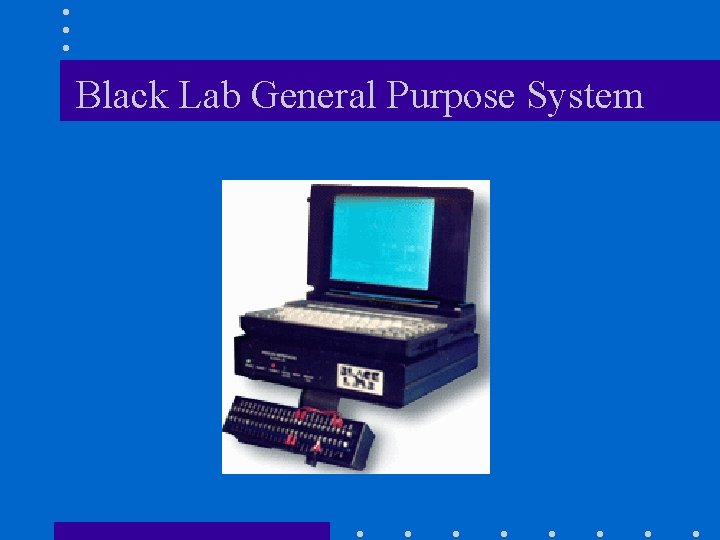
Analog Interfaces, Inc. • • • Data Acquisition products Hardware and software Portability - emphasis RS-232 (serial) front ends Standard 16 channel product “BLACK LAB” • Most of work has been on custom OEM products
Black Lab General Purpose System
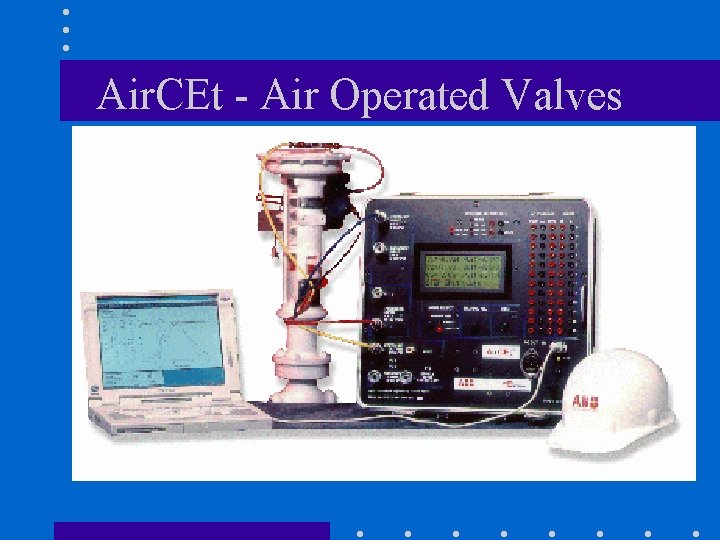
Air. CEt - Air Operated Valves
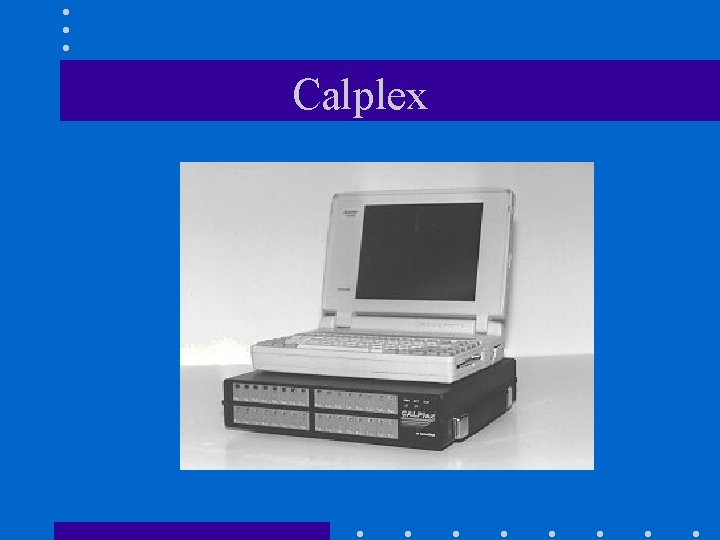
Calplex
Introduction to Indenter
Indenter Polymer Aging Monitor • Provides information on aging of wires • Market at this point primarily nuclear • Systems in use in U. S. ; UK; Sweden; Russia; France; Canada; India • Product in field use for about 10 years • Marketing partner AMEC Earth and Environmental (formerly Ogden) • William M. Denny - materials consultant
Principle of Indenter Measurements
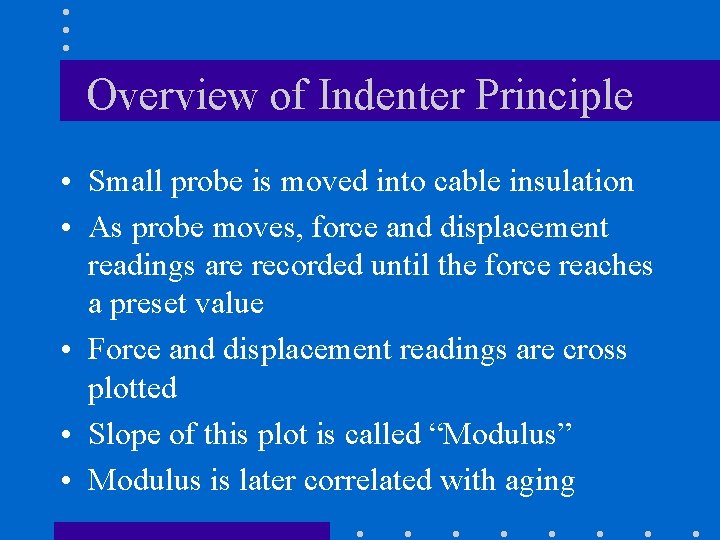
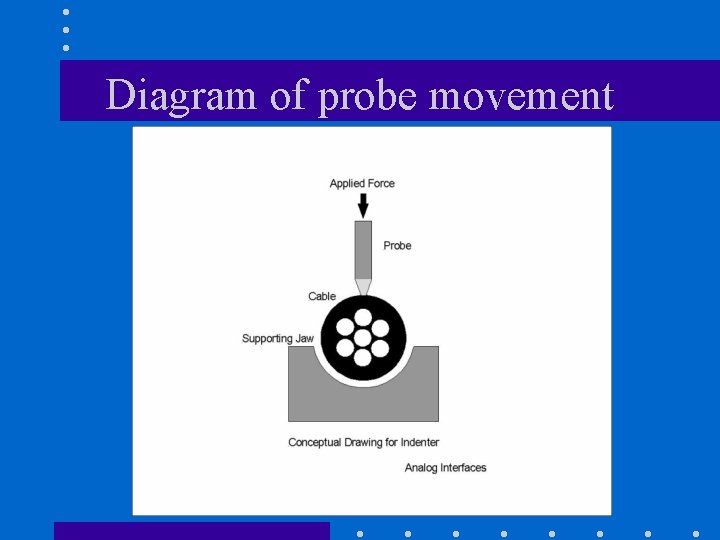
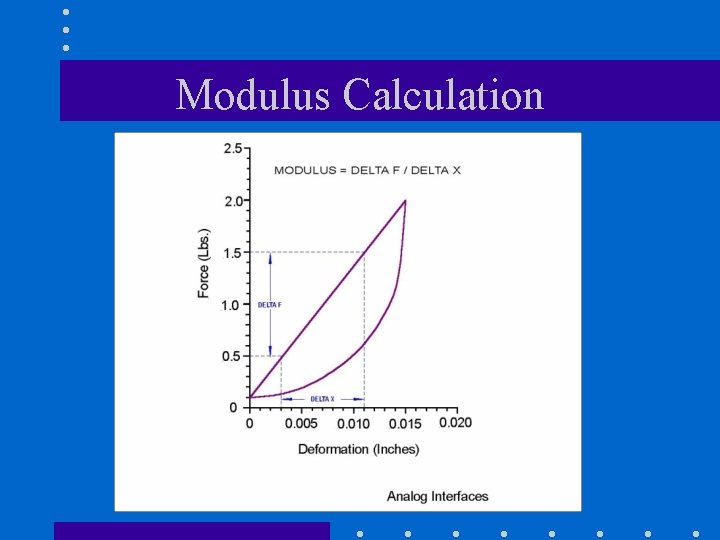
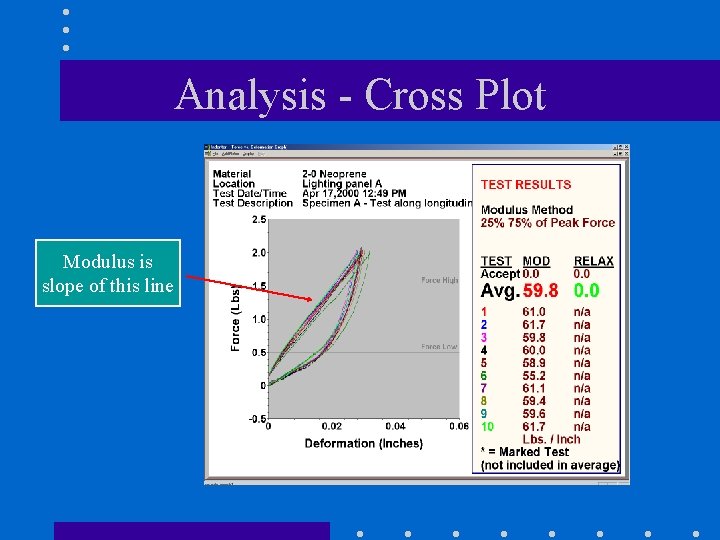
Overview of Indenter Principle • Small probe is moved into cable insulation • As probe moves, force and displacement readings are recorded until the force reaches a preset value • Force and displacement readings are cross plotted • Slope of this plot is called “Modulus” • Modulus is later correlated with aging
Diagram of probe movement
Modulus Calculation
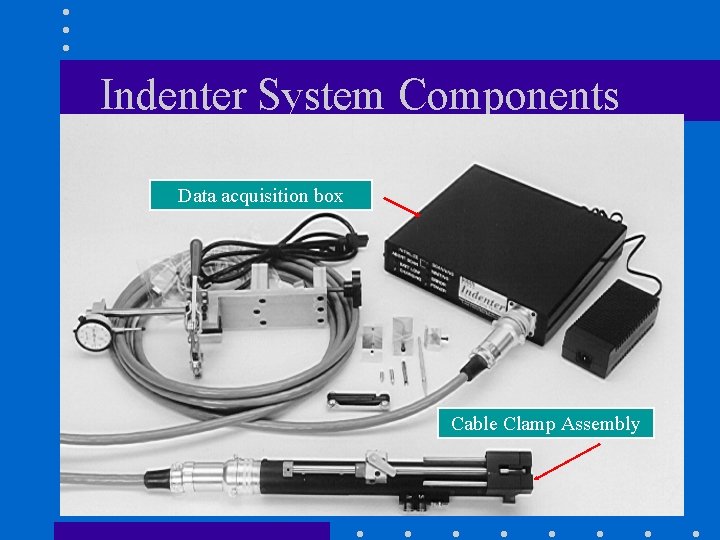
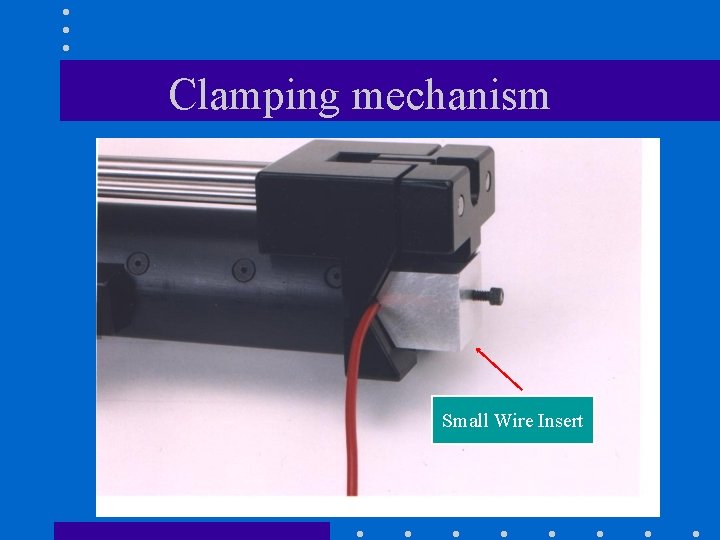
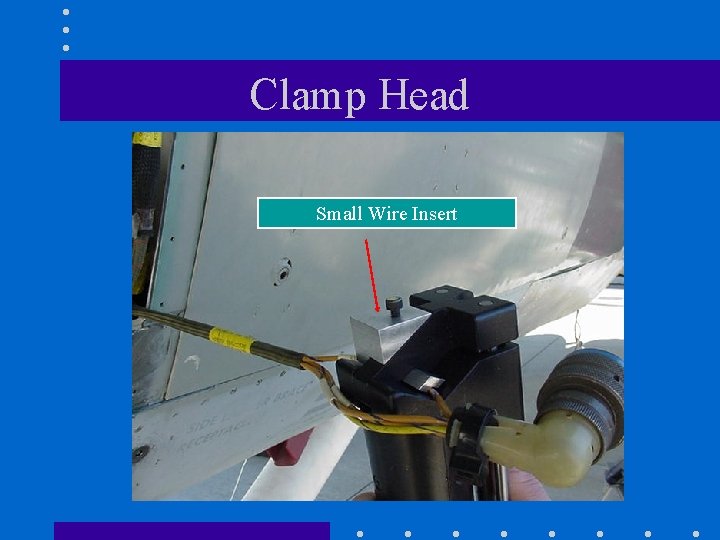
Indenter System Components Data acquisition box Cable Clamp Assembly
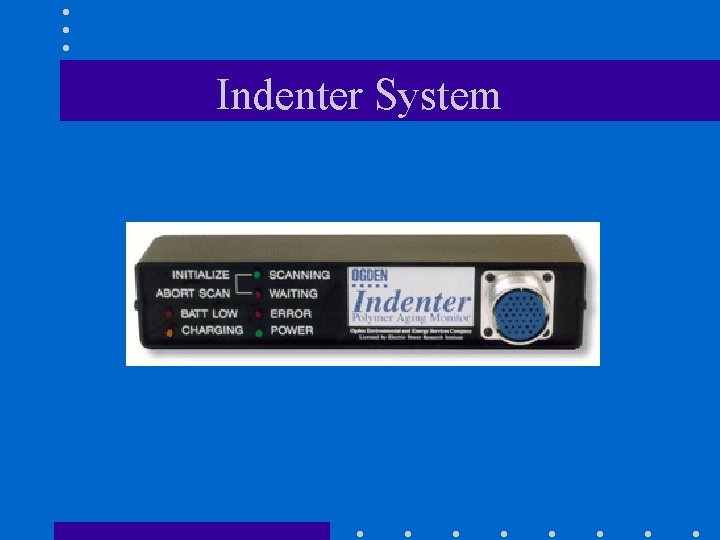
Indenter System
Clamping mechanism Small Wire Insert
Clamp Head Small Wire Insert
Adapt technology to aircraft wires • Natural extension to nuclear area Differences in: • Sizes • Types of material • Accessibility • FAA contract to make this transition
How Aging Correlations are done
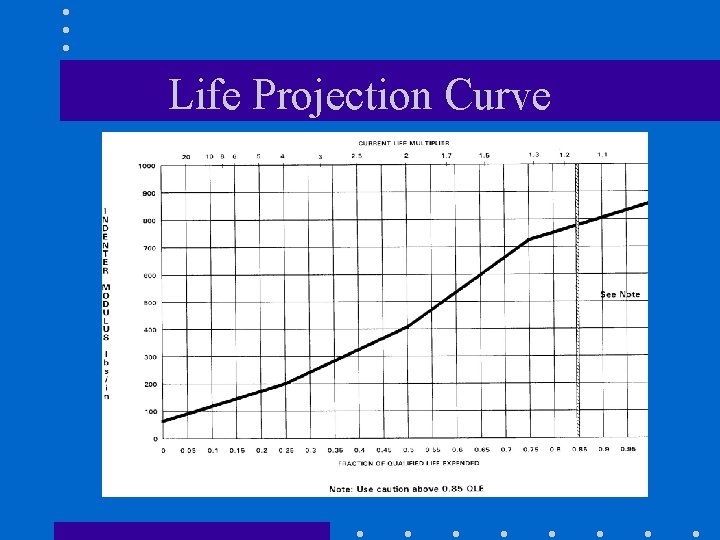
Relationship Modulus to Aging • Objective of taking modulus readings is to provide data on wire condition • This is done by correlating modulus values with data obtained from elongation-at-break (and possibly other) tests • Following discussion shows how this is done - examples from nuclear industry
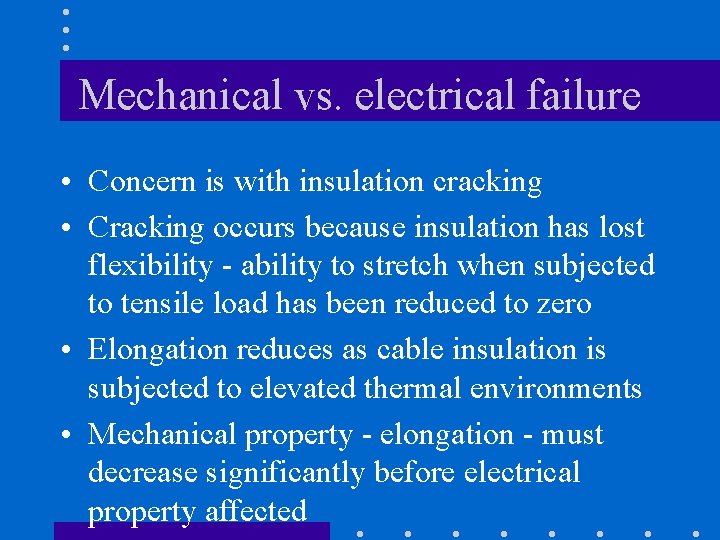
Mechanical vs. electrical failure • Concern is with insulation cracking • Cracking occurs because insulation has lost flexibility - ability to stretch when subjected to tensile load has been reduced to zero • Elongation reduces as cable insulation is subjected to elevated thermal environments • Mechanical property - elongation - must decrease significantly before electrical property affected
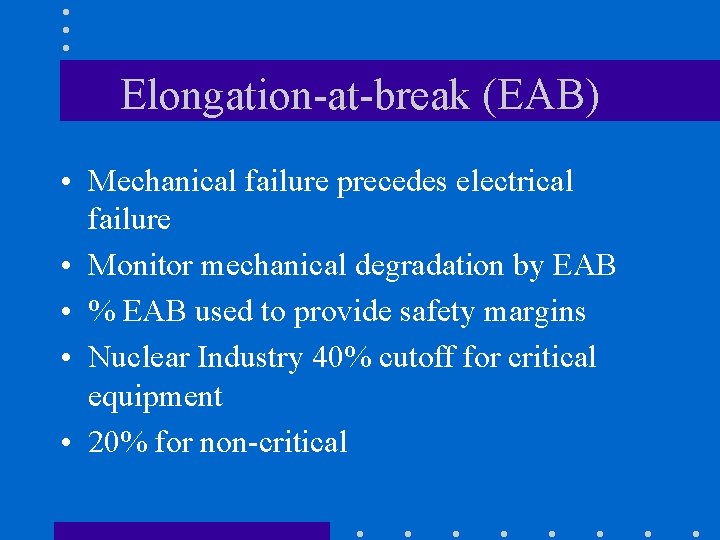
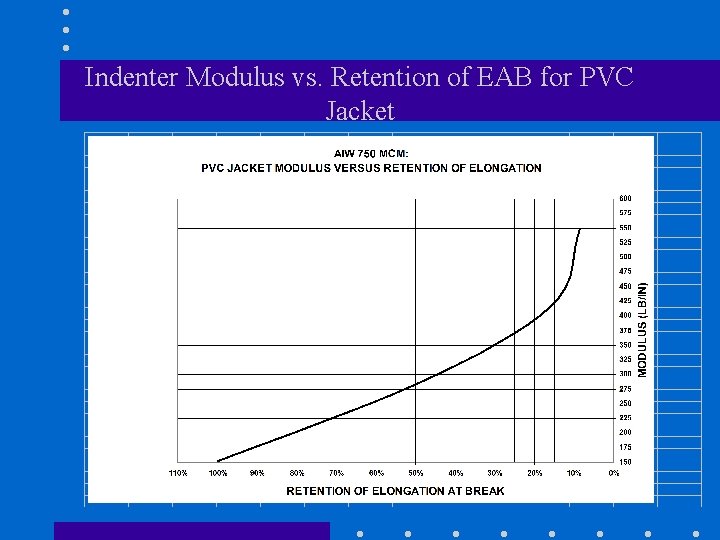
Elongation-at-break (EAB) • Mechanical failure precedes electrical failure • Monitor mechanical degradation by EAB • % EAB used to provide safety margins • Nuclear Industry 40% cutoff for critical equipment • 20% for non-critical
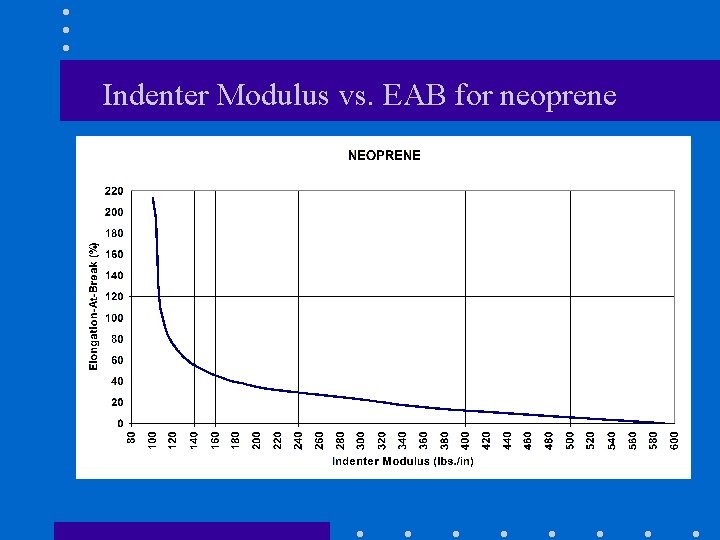
Modulus - EAB Correlation • Cables artificially aged using accelerated thermal aging • At fixed time intervals, samples are removed and tested for EAB and modulus values also taken
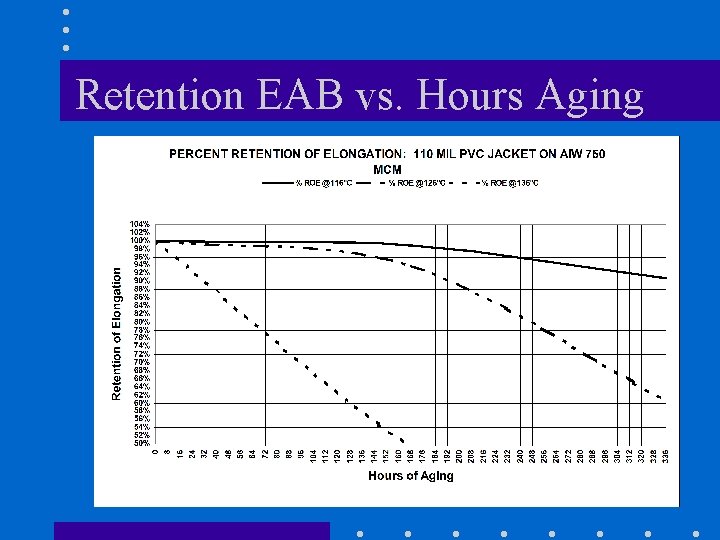
Retention EAB vs. Hours Aging
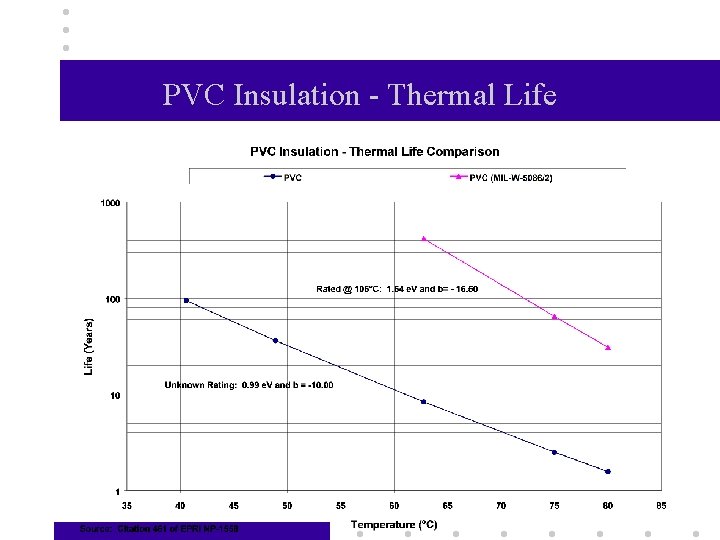
Arrhenius thermal life curve • Using previous graph, pick off values from three curves AT SAME ELONGATION VALUE • These values used in regression analysis to obtain classic “Arrhenius thermal life curve” shown in the next graph.
PVC Insulation - Thermal Life
Indenter Modulus vs. EAB for neoprene
Indenter Modulus vs. Retention of EAB for PVC Jacket
Life Projection Curve
Overview of Software and Testing
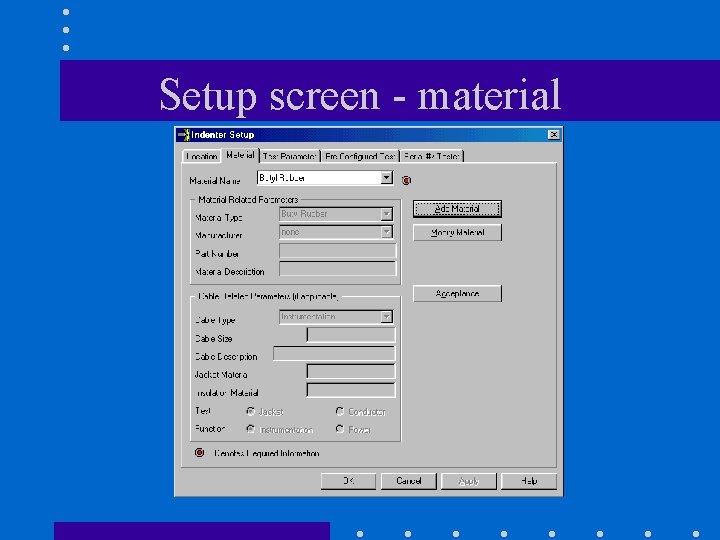
Key software features • • • Required data entry location, material, etc. Multiple opportunities to enter notes Database saves all test setup info, notes, etc. Automatic generation of reports Easy export to spread sheets
Setup screen - material
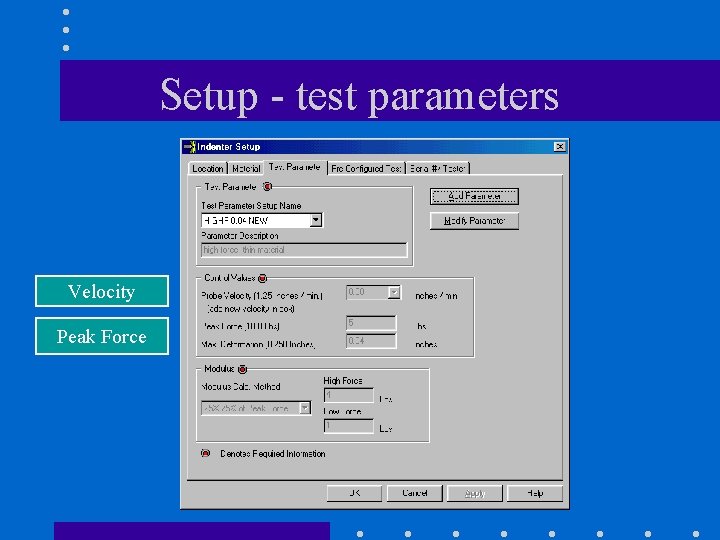
Setup - test parameters Velocity Peak Force
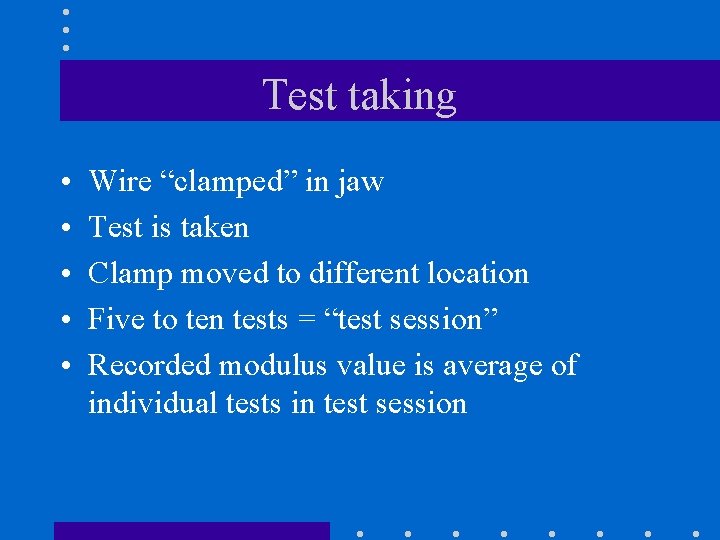
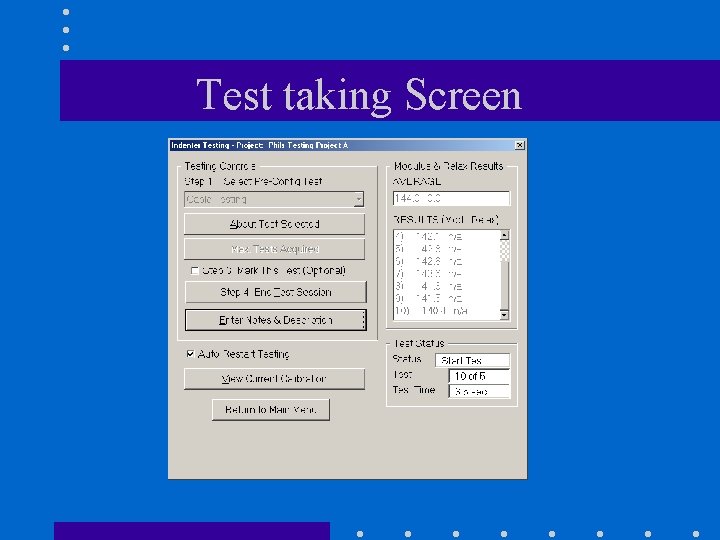
Test taking • • • Wire “clamped” in jaw Test is taken Clamp moved to different location Five to ten tests = “test session” Recorded modulus value is average of individual tests in test session
Test taking Screen
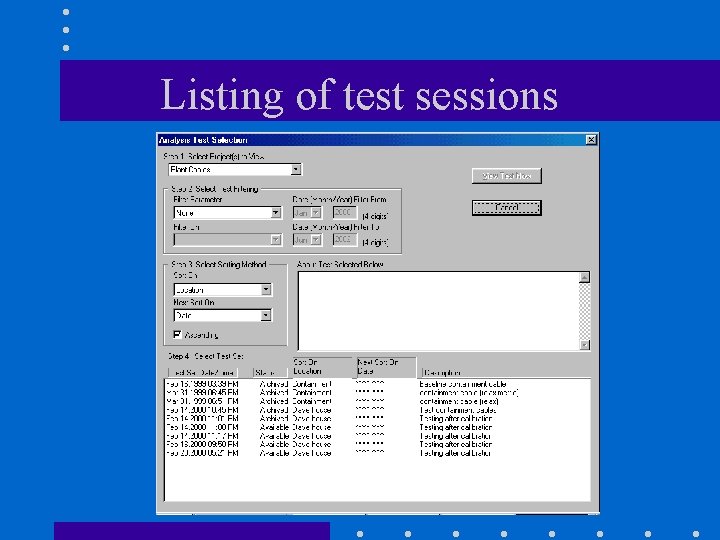
Listing of test sessions
Analysis - Cross Plot Modulus is slope of this line
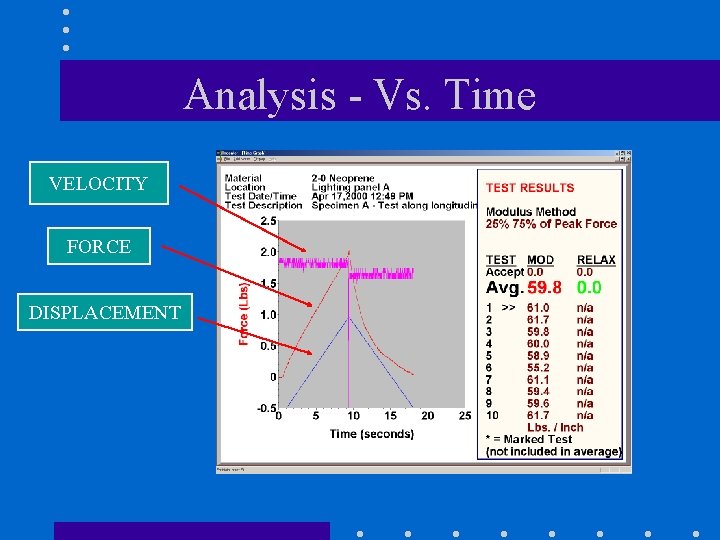
Analysis - Vs. Time VELOCITY FORCE DISPLACEMENT
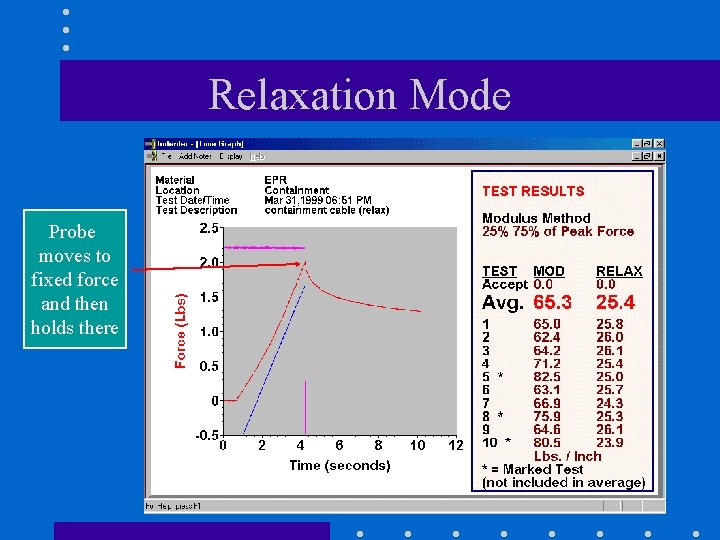
Relaxation Mode Probe moves to fixed force and then holds there
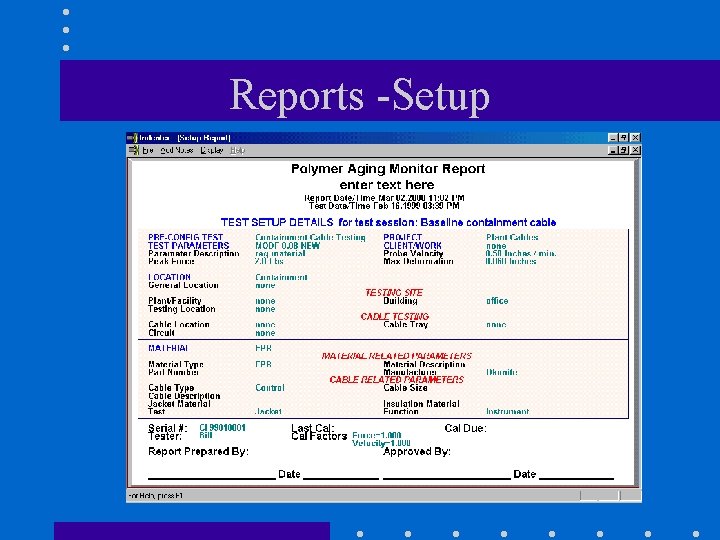
Reports -Setup
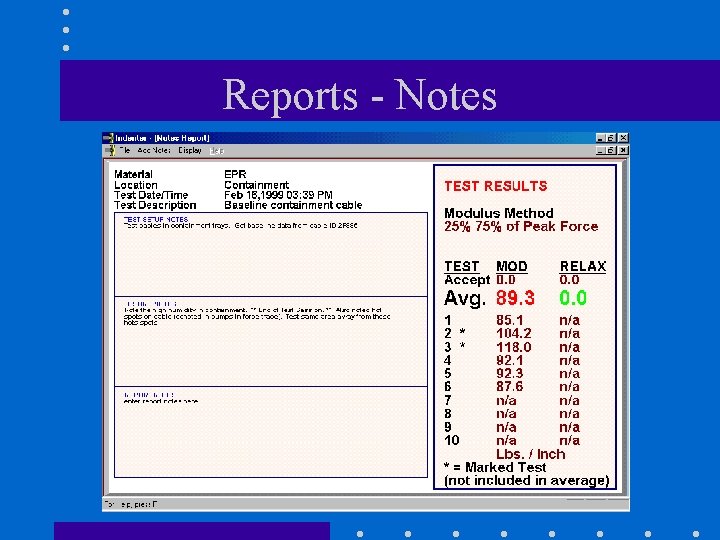
Reports - Notes
FAA Contract Work • Title - Material Testing Research and Indenter Equipment Modifications for Determining Aging of Wires in Aircraft Two Main Areas: • Material related • Redesign of present Indenter hardware/software
Material Testing • • Polyimide (Kapton) Power feeder Cross linked ETFE (Tefzel) TKT (Teflon / Kapton / Teflon)
Reference Wire • Simple wire construction • To be used for comparison with nuclear data to determine or confirm that small diameter wires perform in similar manner • Will use PVC
Validation Plan • Testing to be done by independent group • Samples to be randomly numbered
Industry Database • Test results • Data from other testing (like nuclear) • Material specifications
Cable Clamp Redesign Objectives: • Lightweight • Easy to hold • No greater than 1. 25” in diameter • Can access wires in tight locations • Molded plastic outer construction
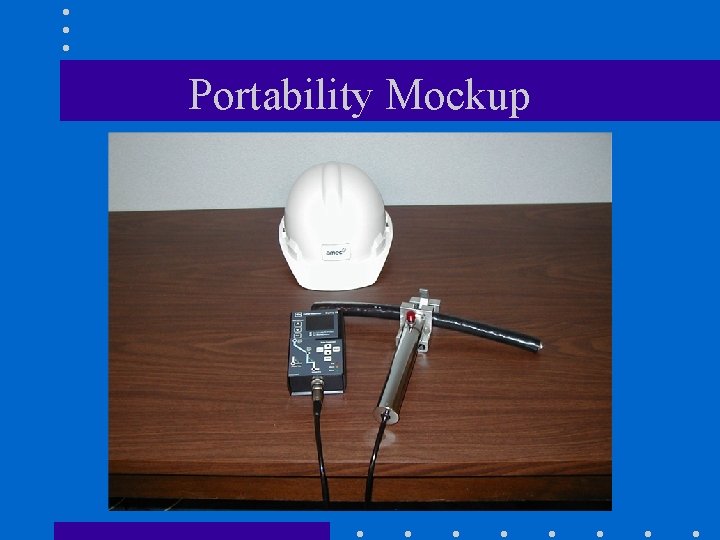
Portability Mockup
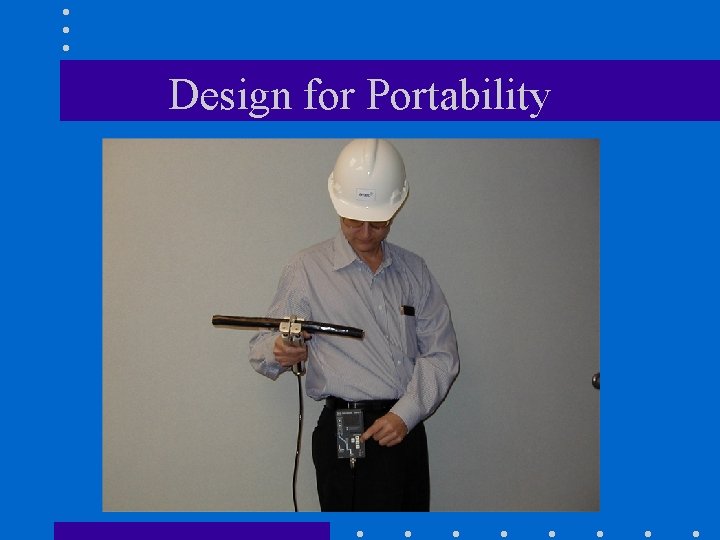
Design for Portability
Hardware Design Objectives • Portable - worn on belt • Light weight • Ease of use by operator
Software Changes • When testing in the field, a notebook PC will not be used • New software will provide for transferring test parameters and data back and forth between a host PC
Summary Advantages of Indenter tests for aging: • Non-destructive • Done in actual locations in aircraft • Easy and fast to acquire test data • Once the relationship between the modulus readings and aging is established for a wire type, determining the wire’s condition is then possible
Other inputs sought • If your organization has data or inputs that would be helpful to this study or you would like to include your data in the database, we’d like to discuss this with you. • THANK YOU for the opportunity to make this presentation