
Outline Introduction LTEU and LAA Regulatory Requirements Spectrum
- Slides: 53
Outline • Introduction • LTE-U and LAA • Regulatory Requirements • Spectrum Considerations • LAA Carrier Aggregation Feasibility Study • Deployment scenarios for LAA • Coexistence • Design targets, functionalities and solutions for LAA 2
Introduction • LTE-U (LTE-Unlicensed), or as it is also known LTELAA (LTE-License Assisted Access) utilizes unlicensed spectrum, typically in the 5 GHz band to provide additional radio spectrum • First introduced in Rel 13 – Built upon carrier aggregation capability of LTE-A – No changes are needed to the core network 3
3 GPP LTE-U and LTE-LAA • To evaluate LTE enhancements for a single global solution framework for licensed-assisted access (LAA) to unlicensed spectrum – Approved at 3 GPP TSG RAN #65 – Complementary access using the unlicensed band would be supported by licensed operation, the quality of which can never be matched by unlicensed operation 4
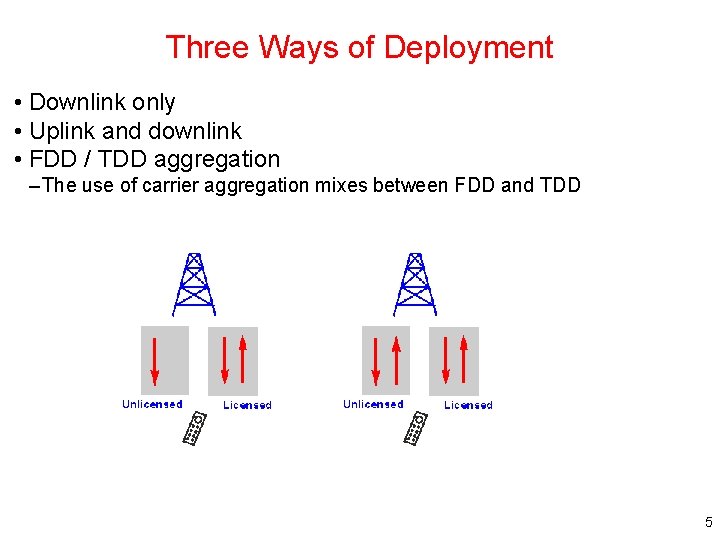
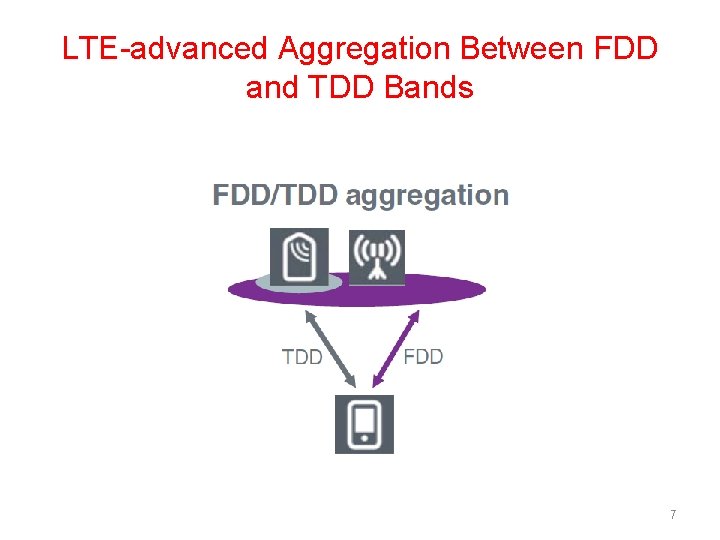
Three Ways of Deployment • Downlink only • Uplink and downlink • FDD / TDD aggregation – The use of carrier aggregation mixes between FDD and TDD 5
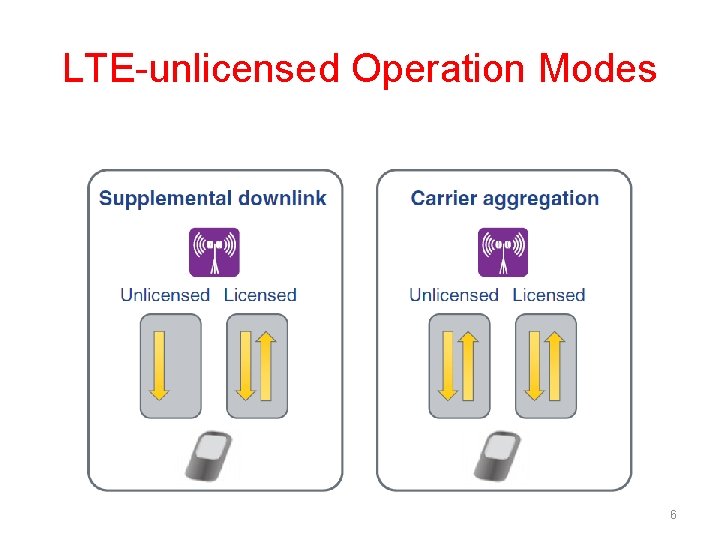
LTE-unlicensed Operation Modes 6
LTE-advanced Aggregation Between FDD and TDD Bands 7
Licensed-Assisted Access (LAA) • LTE in unlicensed spectrum serves as an additional tool to maximize the value for users, while the core of the activity remains anchored to the licensed spectrum – The primary component carrier in licensed spectrum will still be used to carry some (or all) of the control signal (and possibly also data, e. g. retransmissions) of the traffic carried over the carrier in unlicensed spectrum – Unlicensed spectrum is better used as “Licensed-Assisted Access”, considered as a secondary component carrier in a carrier aggregation scenario • The use of unlicensed spectrum also increases the need for more licensed spectrum 8
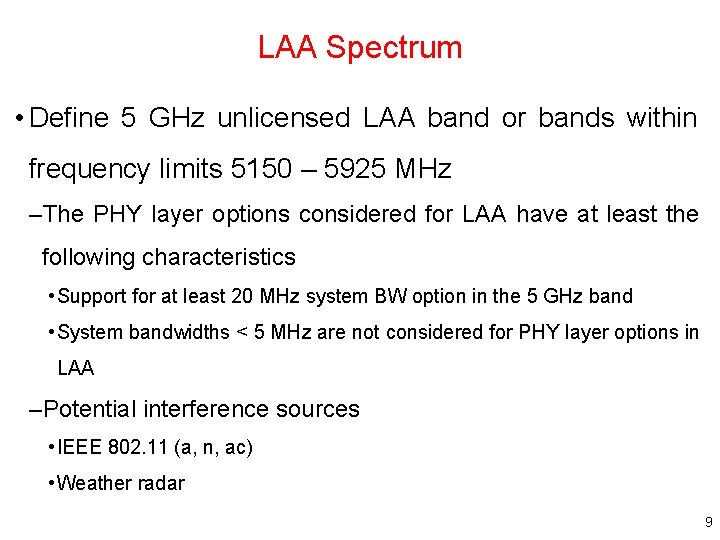
LAA Spectrum • Define 5 GHz unlicensed LAA band or bands within frequency limits 5150 – 5925 MHz –The PHY layer options considered for LAA have at least the following characteristics • Support for at least 20 MHz system BW option in the 5 GHz band • System bandwidths < 5 MHz are not considered for PHY layer options in LAA –Potential interference sources • IEEE 802. 11 (a, n, ac) • Weather radar 9
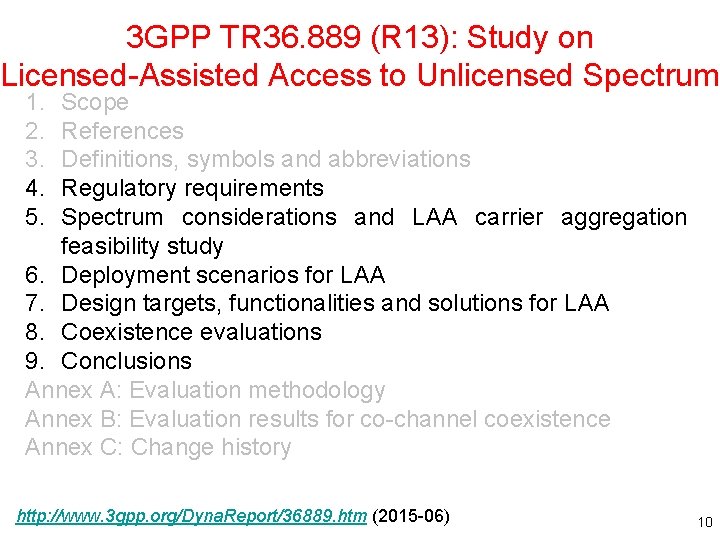
3 GPP TR 36. 889 (R 13): Study on Licensed-Assisted Access to Unlicensed Spectrum 1. 2. 3. 4. 5. Scope References Definitions, symbols and abbreviations Regulatory requirements Spectrum considerations and LAA carrier aggregation feasibility study 6. Deployment scenarios for LAA 7. Design targets, functionalities and solutions for LAA 8. Coexistence evaluations 9. Conclusions Annex A: Evaluation methodology Annex B: Evaluation results for co-channel coexistence Annex C: Change history http: //www. 3 gpp. org/Dyna. Report/36889. htm (2015 -06) 10
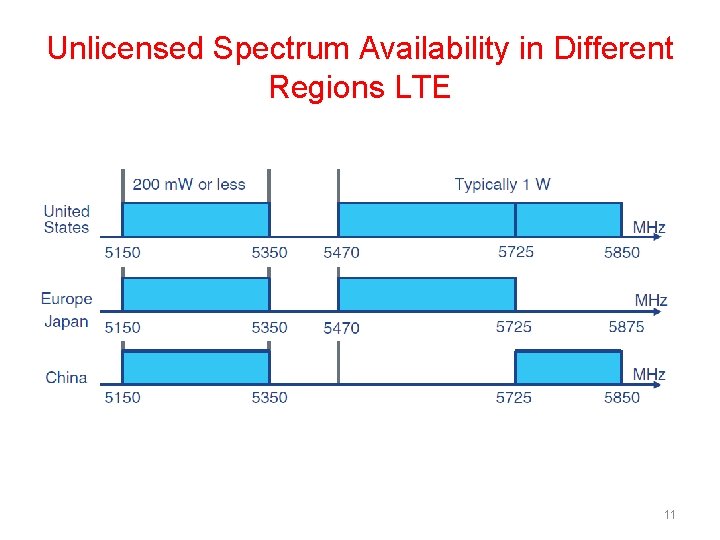
Unlicensed Spectrum Availability in Different Regions LTE 11
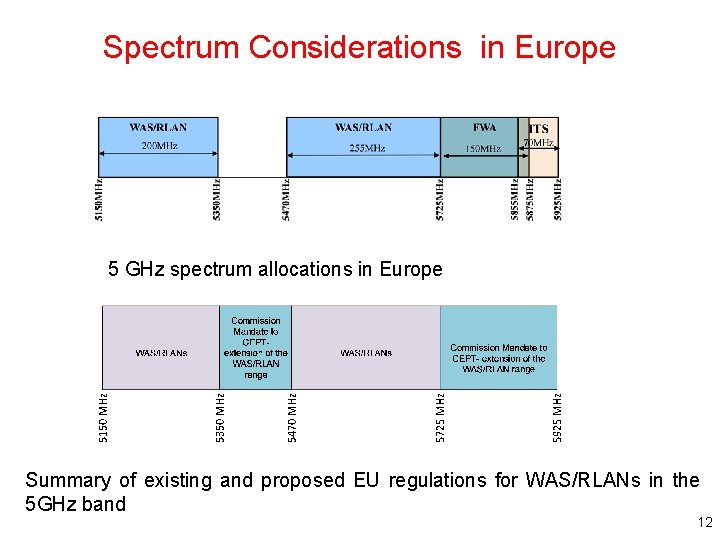
Spectrum Considerations in Europe 5 GHz spectrum allocations in Europe Summary of existing and proposed EU regulations for WAS/RLANs in the 5 GHz band 12
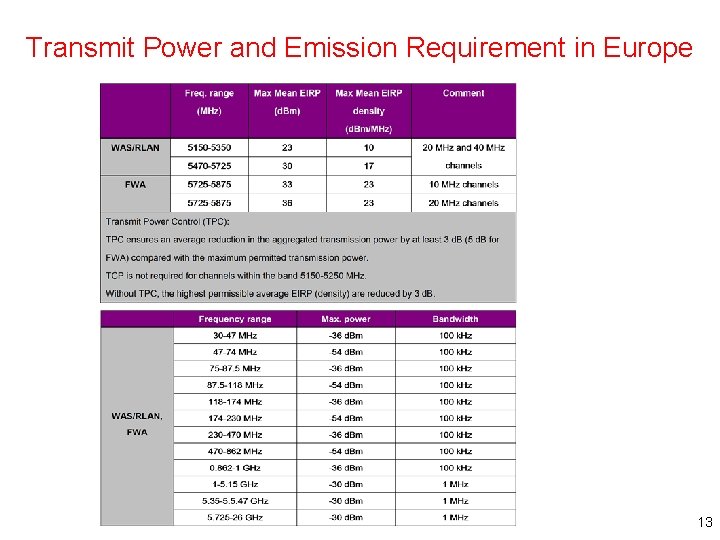
Transmit Power and Emission Requirement in Europe 13
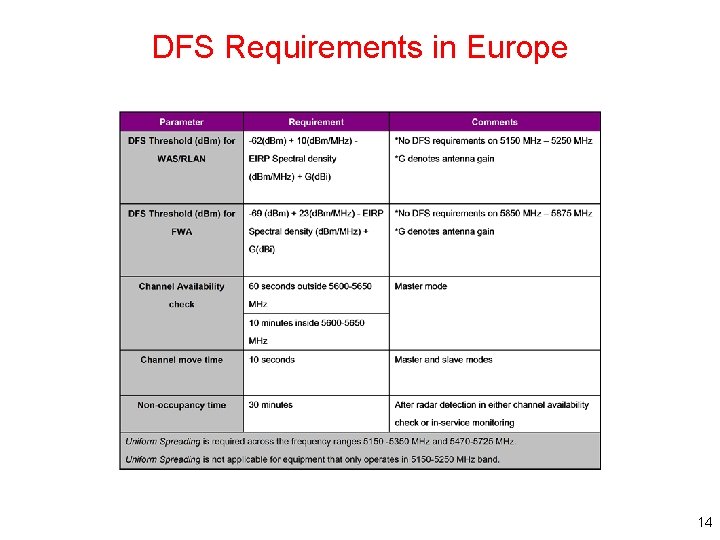
DFS Requirements in Europe 14
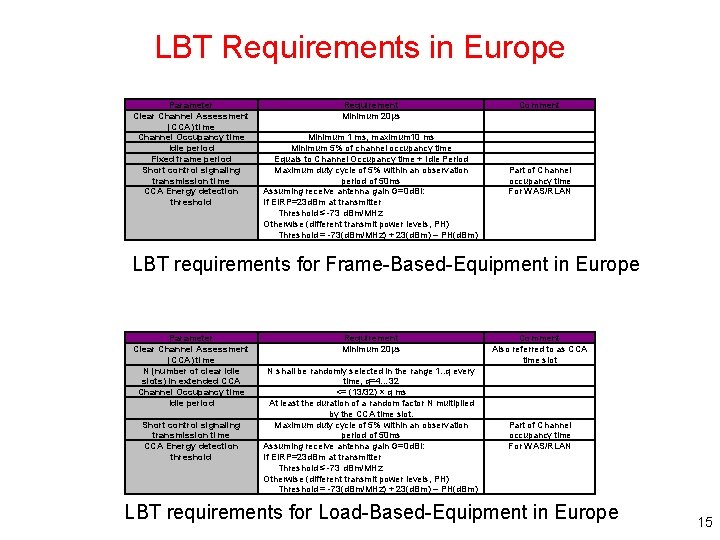
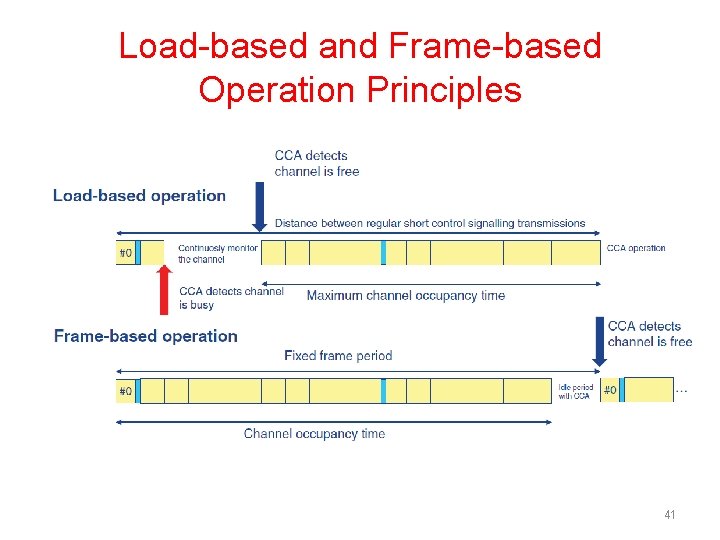
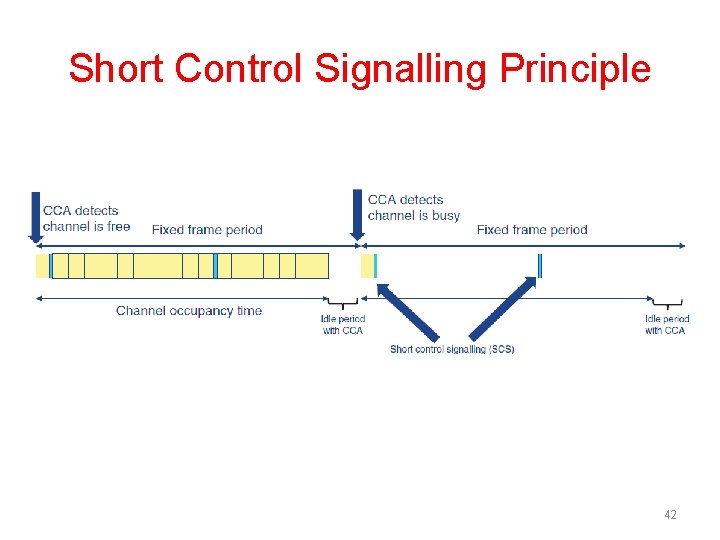
LBT Requirements in Europe Parameter Clear Channel Assessment (CCA) time Channel Occupancy time Idle period Fixed frame period Short control signaling transmission time CCA Energy detection threshold Requirement Minimum 20μs Comment Minimum 1 ms, maximum 10 ms Minimum 5% of channel occupancy time Equals to Channel Occupancy time + Idle Period Maximum duty cycle of 5% within an observation period of 50 ms Assuming receive antenna gain G=0 d. Bi: If EIRP=23 d. Bm at transmitter Threshold ≤ -73 d. Bm/MHz Otherwise (different transmit power levels, PH) Threshold = -73(d. Bm/MHz) + 23(d. Bm) – PH(d. Bm) Part of Channel occupancy time For WAS/RLAN LBT requirements for Frame-Based-Equipment in Europe Parameter Clear Channel Assessment (CCA) time N (number of clear idle slots) in extended CCA Channel Occupancy time Idle period Short control signaling transmission time CCA Energy detection threshold Requirement Minimum 20μs N shall be randomly selected in the range 1. . q every time, q=4… 32 <= (13/32) × q ms At least the duration of a random factor N multiplied by the CCA time slot. Maximum duty cycle of 5% within an observation period of 50 ms Assuming receive antenna gain G=0 d. Bi: If EIRP=23 d. Bm at transmitter Threshold ≤ -73 d. Bm/MHz Otherwise (different transmit power levels, PH) Threshold = -73(d. Bm/MHz) + 23(d. Bm) – PH(d. Bm) Comment Also referred to as CCA time slot Part of Channel occupancy time For WAS/RLAN LBT requirements for Load-Based-Equipment in Europe 15
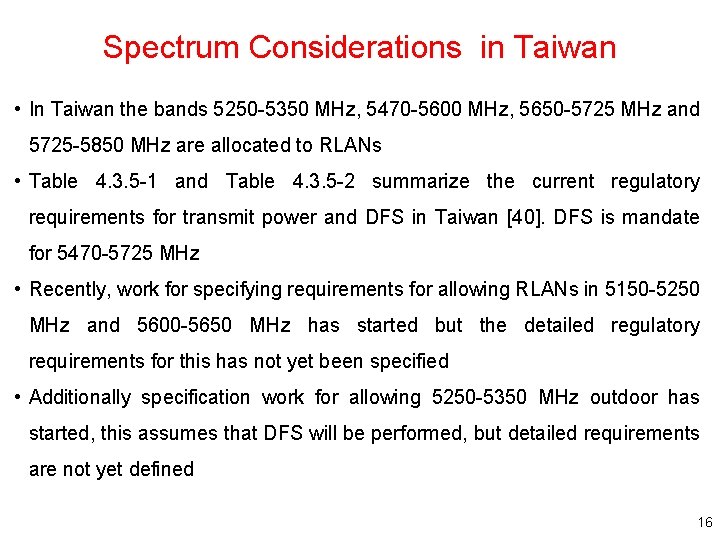
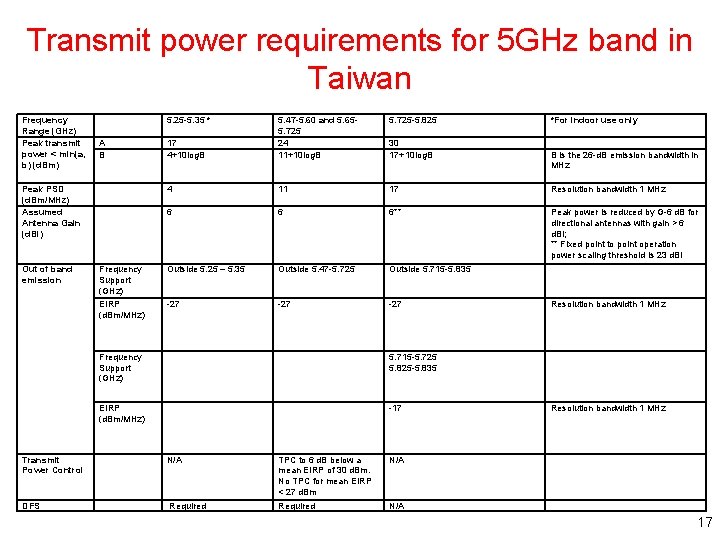
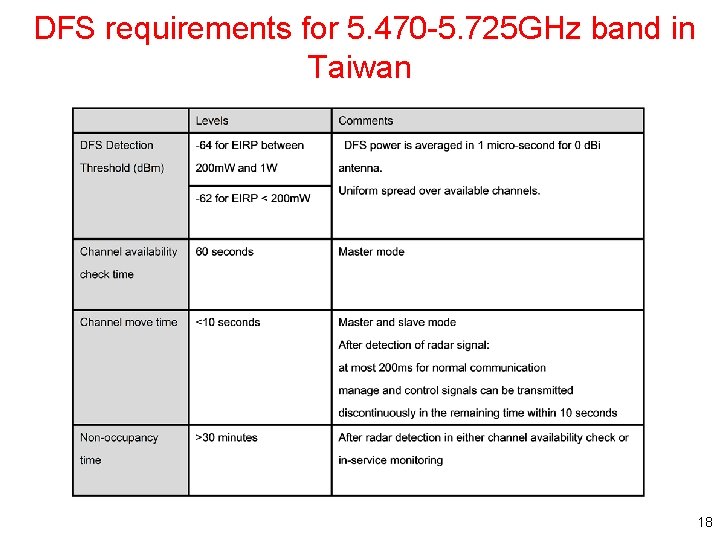
Spectrum Considerations in Taiwan • In Taiwan the bands 5250 -5350 MHz, 5470 -5600 MHz, 5650 -5725 MHz and 5725 -5850 MHz are allocated to RLANs • Table 4. 3. 5 -1 and Table 4. 3. 5 -2 summarize the current regulatory requirements for transmit power and DFS in Taiwan [40]. DFS is mandate for 5470 -5725 MHz • Recently, work for specifying requirements for allowing RLANs in 5150 -5250 MHz and 5600 -5650 MHz has started but the detailed regulatory requirements for this has not yet been specified • Additionally specification work for allowing 5250 -5350 MHz outdoor has started, this assumes that DFS will be performed, but detailed requirements are not yet defined 16
Transmit power requirements for 5 GHz band in Taiwan Frequency Range (GHz) Peak transmit power < min(a, b) (d. Bm) 5. 25 -5. 35 * 5. 725 -5. 825 *For indoor use only 17 4+10 log. B 5. 47 -5. 60 and 5. 655. 725 24 11+10 log. B A B 30 17+10 log. B B is the 26 -d. B emission bandwidth in MHz Peak PSD (d. Bm/MHz) Assumed Antenna Gain (d. Bi) 4 11 17 Resolution bandwidth 1 MHz 6 6 6** Peak power is reduced by G-6 d. B for directional antennas with gain > 6 d. Bi; ** Fixed point to point operation power scaling threshold is 23 d. Bi Out of band emission Frequency Support (GHz) EIRP (d. Bm/MHz) Outside 5. 25 – 5. 35 Outside 5. 47 -5. 725 Outside 5. 715 -5. 835 -27 -27 Resolution bandwidth 1 MHz Frequency Support (GHz) 5. 715 -5. 725 5. 825 -5. 835 EIRP (d. Bm/MHz) -17 Resolution bandwidth 1 MHz Transmit Power Control N/A TPC to 6 d. B below a mean EIRP of 30 d. Bm. No TPC for mean EIRP < 27 d. Bm N/A DFS Required N/A 17
DFS requirements for 5. 470 -5. 725 GHz band in Taiwan 18
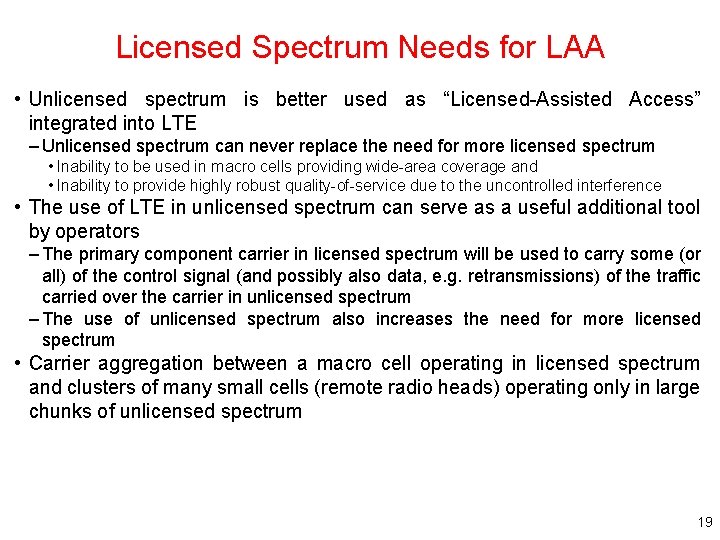
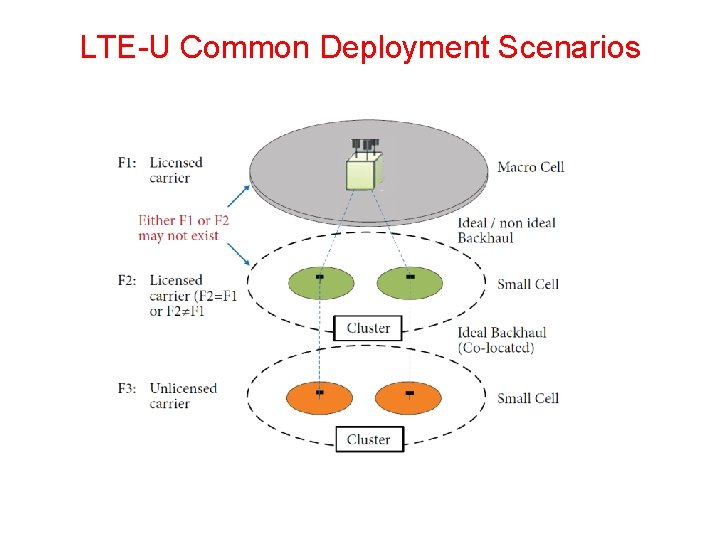
Licensed Spectrum Needs for LAA • Unlicensed spectrum is better used as “Licensed-Assisted Access” integrated into LTE – Unlicensed spectrum can never replace the need for more licensed spectrum • Inability to be used in macro cells providing wide-area coverage and • Inability to provide highly robust quality-of-service due to the uncontrolled interference • The use of LTE in unlicensed spectrum can serve as a useful additional tool by operators – The primary component carrier in licensed spectrum will be used to carry some (or all) of the control signal (and possibly also data, e. g. retransmissions) of the traffic carried over the carrier in unlicensed spectrum – The use of unlicensed spectrum also increases the need for more licensed spectrum • Carrier aggregation between a macro cell operating in licensed spectrum and clusters of many small cells (remote radio heads) operating only in large chunks of unlicensed spectrum 19
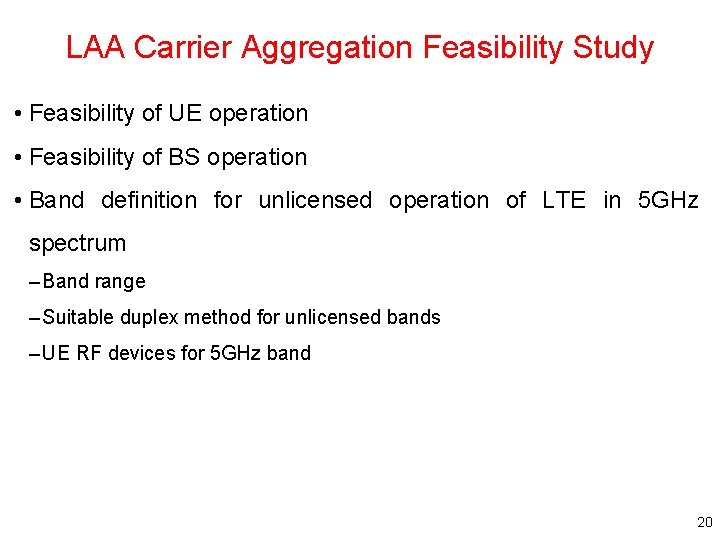
LAA Carrier Aggregation Feasibility Study • Feasibility of UE operation • Feasibility of BS operation • Band definition for unlicensed operation of LTE in 5 GHz spectrum – Band range – Suitable duplex method for unlicensed bands – UE RF devices for 5 GHz band 20
Feasibility of UE Operation • For 5 GHz spectrum available for WAS/RLAN, regulatory requirements such as allowed transmit output power or TPC requirements need to be taken into account • It is reasonable to assume one single front end filter in UE implementation to cover the entire 5 GHz spectrum – This does not preclude consideration of other implementation options in the WI phase – For aggregating carrier in unlicensed 5 GHz band for inter-band CA, there exists some UE RF architecture that could be feasible • It is feasible for UEs to operate in the 5 GHz unlicensed spectrum – RF requirements should be specified taking into account issues including implementation complexity and performance 21
Feasibility of BS Operation • While BS implementation considerations may be different from those of UE in terms of performance, implementation complexity, and fair access to the unlicensed carriers in the presence of Wi. Fi, there are no major issues reported during the study • It is noted that to enable fair access between LAA BS and Wi. Fi AP/STAs, some LAA BS RF requirements may require further study • In summary, it is feasible for BSs to operate in 5 GHz unlicensed spectrum. RF requirements should be specified taking into account issues including implementation complexity and performance 22
Band Definition for Unlicensed Operation of LTE in 5 GHz Spectrum • Band range – Define 5 GHz unlicensed LAA band or bands within frequency limits 5150 – 5925 MHz • Suitable duplex method for unlicensed bands – In case of e. NB operating DL+UL LAA over the same carrier in unlicensed spectrum, the DL transmission burst(s) and UL transmission burst(s) on LAA can be scheduled in a TDM manner while any instant in time can be part of a DL transmission burst or an UL transmission burst, which is different from existing Frame Structure type 2 (FS 2) – Potential duplex methods for LAA operation may consider both DL-only and/or DL+UL transmission – Since the duplex method is tied to frame structure, the duplex method for 5 GHz unlicensed band shall be based on the physical layer design on L 1 enhancements for LAA • UE RF devices for 5 GHz band – It is recommended that radio requirements should be specified such that a single filter implementation for UE across the entire frequency range from 5150 to 5925 MHz is possible 23
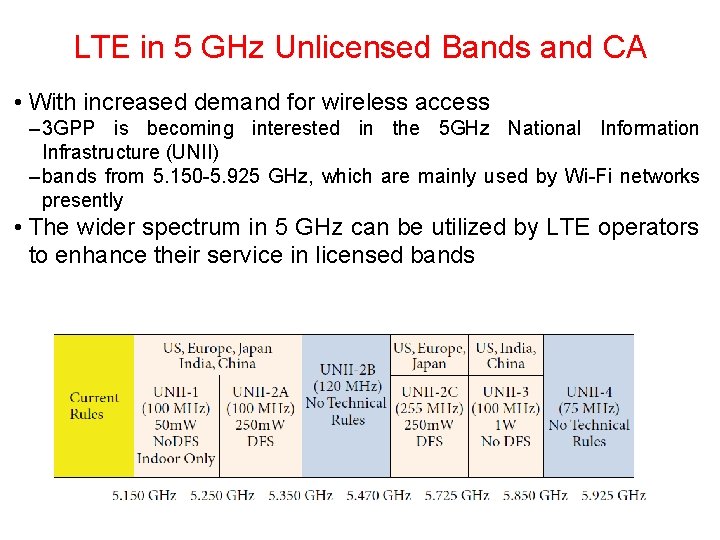
LTE in 5 GHz Unlicensed Bands and CA • With increased demand for wireless access – 3 GPP is becoming interested in the 5 GHz National Information Infrastructure (UNII) – bands from 5. 150 -5. 925 GHz, which are mainly used by Wi-Fi networks presently • The wider spectrum in 5 GHz can be utilized by LTE operators to enhance their service in licensed bands
LTE-U Common Deployment Scenarios
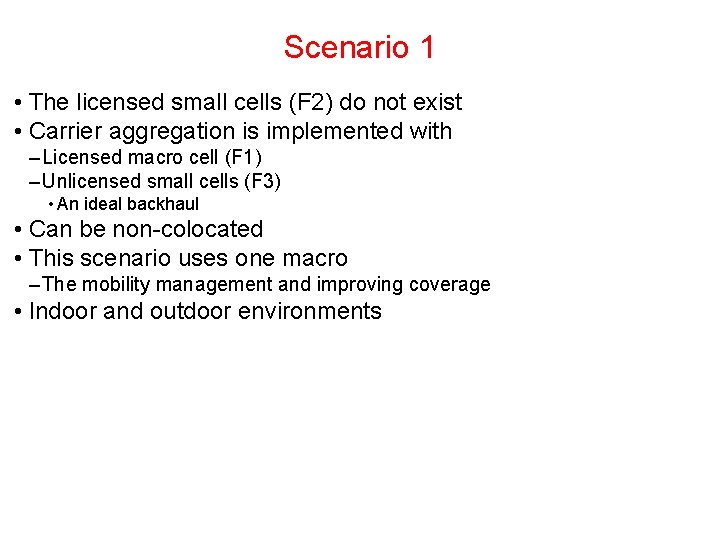
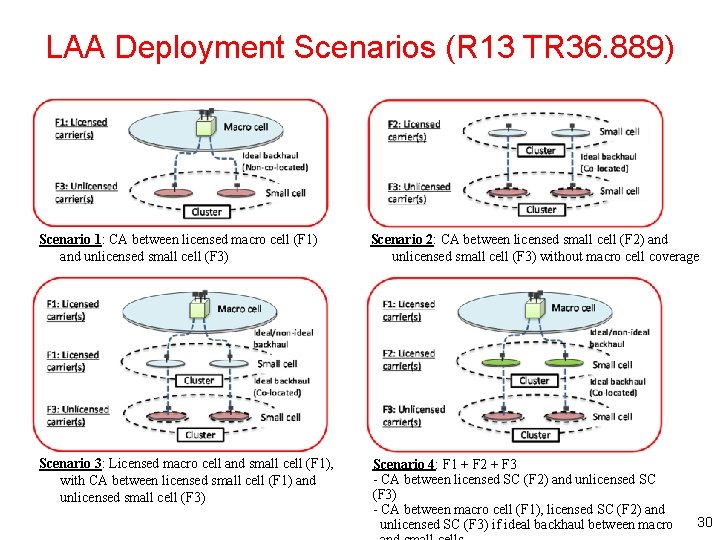
Scenario 1 • The licensed small cells (F 2) do not exist • Carrier aggregation is implemented with – Licensed macro cell (F 1) – Unlicensed small cells (F 3) • An ideal backhaul • Can be non-colocated • This scenario uses one macro – The mobility management and improving coverage • Indoor and outdoor environments
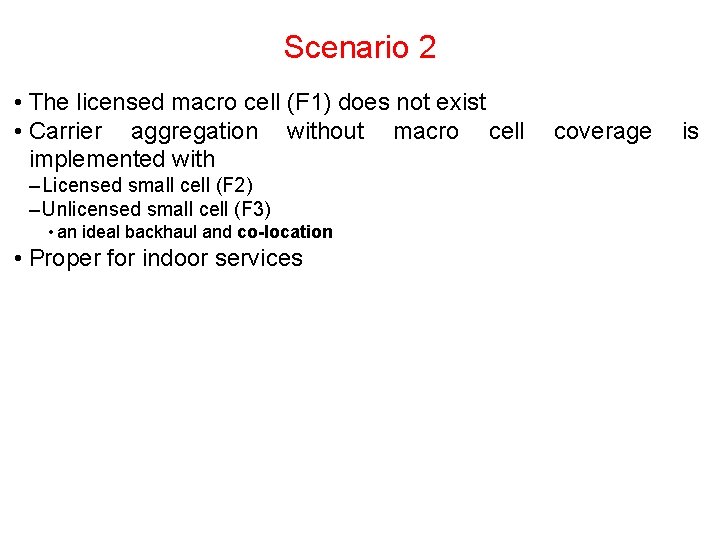
Scenario 2 • The licensed macro cell (F 1) does not exist • Carrier aggregation without macro cell coverage is implemented with – Licensed small cell (F 2) – Unlicensed small cell (F 3) • an ideal backhaul and co-location • Proper for indoor services
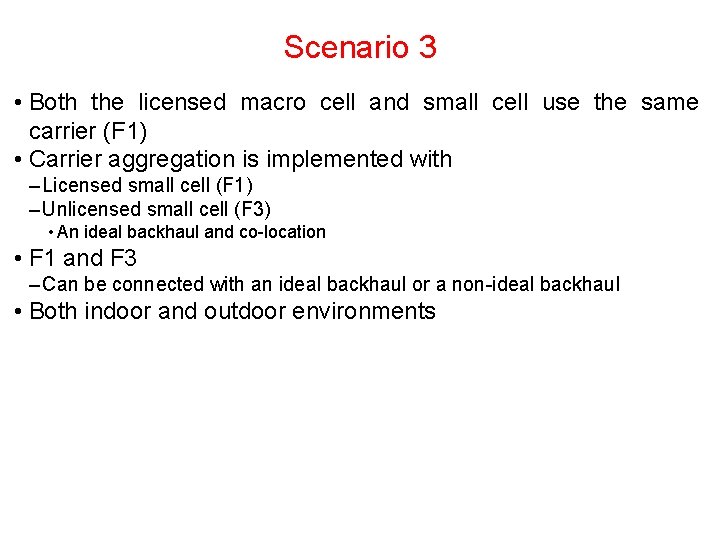
Scenario 3 • Both the licensed macro cell and small cell use the same carrier (F 1) • Carrier aggregation is implemented with – Licensed small cell (F 1) – Unlicensed small cell (F 3) • An ideal backhaul and co-location • F 1 and F 3 – Can be connected with an ideal backhaul or a non-ideal backhaul • Both indoor and outdoor environments
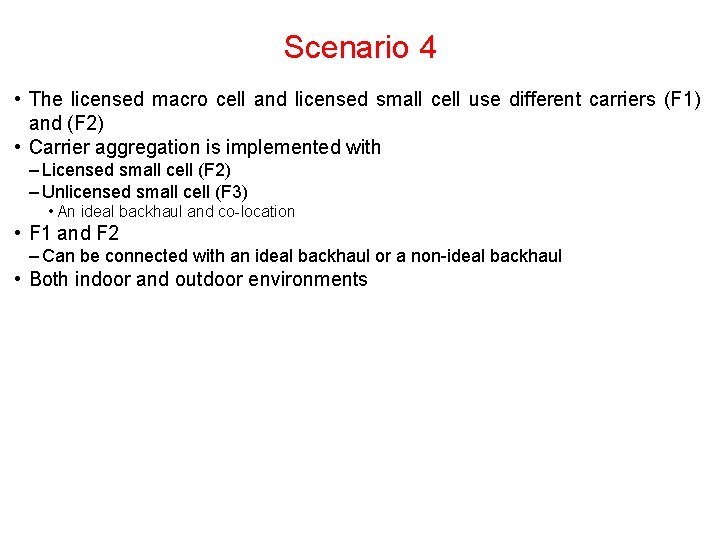
Scenario 4 • The licensed macro cell and licensed small cell use different carriers (F 1) and (F 2) • Carrier aggregation is implemented with – Licensed small cell (F 2) – Unlicensed small cell (F 3) • An ideal backhaul and co-location • F 1 and F 2 – Can be connected with an ideal backhaul or a non-ideal backhaul • Both indoor and outdoor environments
LAA Deployment Scenarios (R 13 TR 36. 889) Scenario 1: CA between licensed macro cell (F 1) and unlicensed small cell (F 3) Scenario 2: CA between licensed small cell (F 2) and unlicensed small cell (F 3) without macro cell coverage Scenario 3: Licensed macro cell and small cell (F 1), with CA between licensed small cell (F 1) and unlicensed small cell (F 3) Scenario 4: F 1 + F 2 + F 3 - CA between licensed SC (F 2) and unlicensed SC (F 3) - CA between macro cell (F 1), licensed SC (F 2) and unlicensed SC (F 3) if ideal backhaul between macro 30
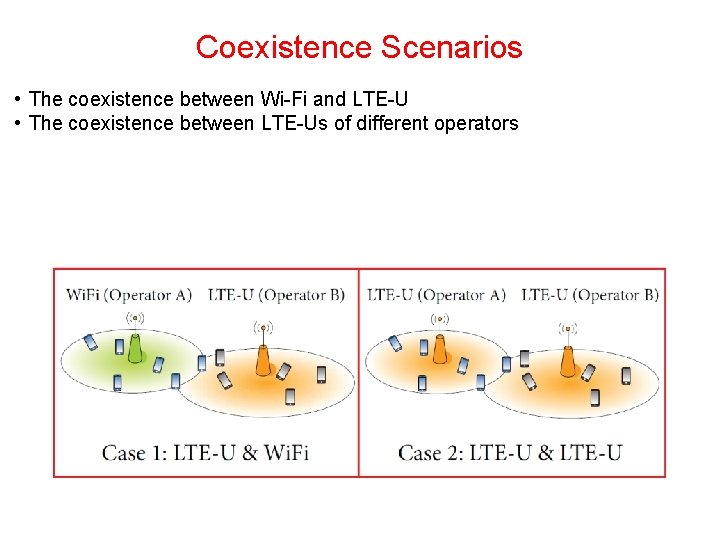
Coexistence Scenarios • The coexistence between Wi-Fi and LTE-U • The coexistence between LTE-Us of different operators
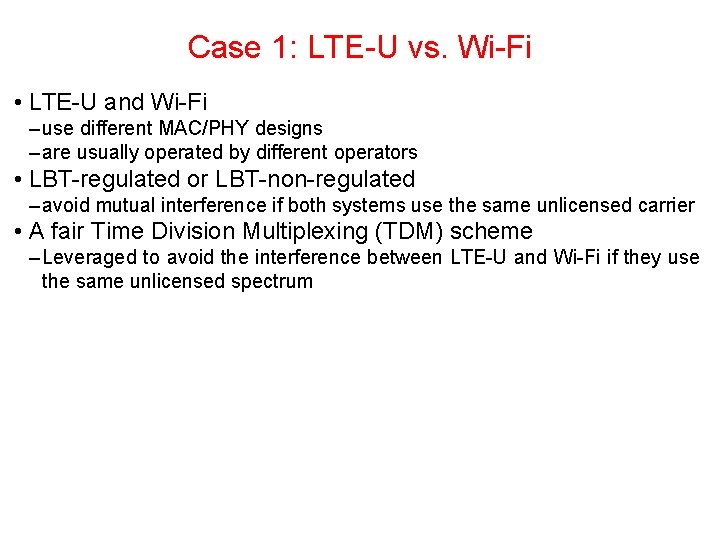
Case 1: LTE-U vs. Wi-Fi • LTE-U and Wi-Fi – use different MAC/PHY designs – are usually operated by different operators • LBT-regulated or LBT-non-regulated – avoid mutual interference if both systems use the same unlicensed carrier • A fair Time Division Multiplexing (TDM) scheme – Leveraged to avoid the interference between LTE-U and Wi-Fi if they use the same unlicensed spectrum
Case 2: LTE-U vs. LTE-U • LTE-Us from different operators coexist in the same 5 GHz unlicensed spectrum • LBT : reduce the interference and improve the spectrum efficiency – multiple LTE-U nodes simultaneously identify a clear unlicensed spectrum • online auction mechanism
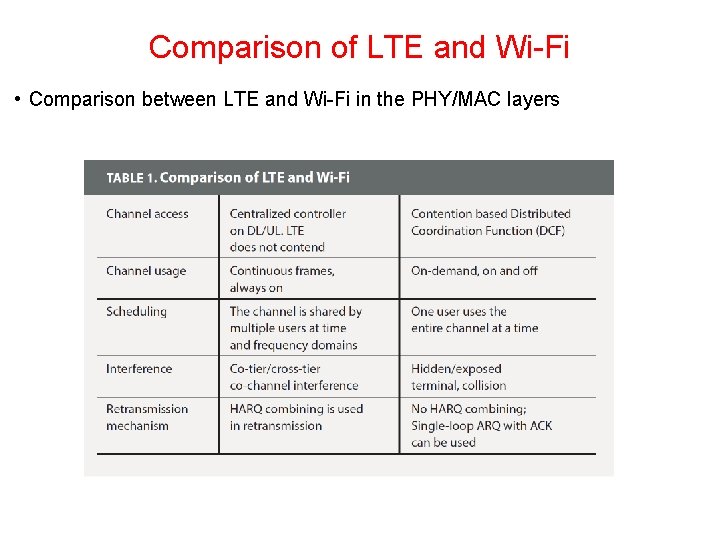
Comparison of LTE and Wi-Fi • Comparison between LTE and Wi-Fi in the PHY/MAC layers
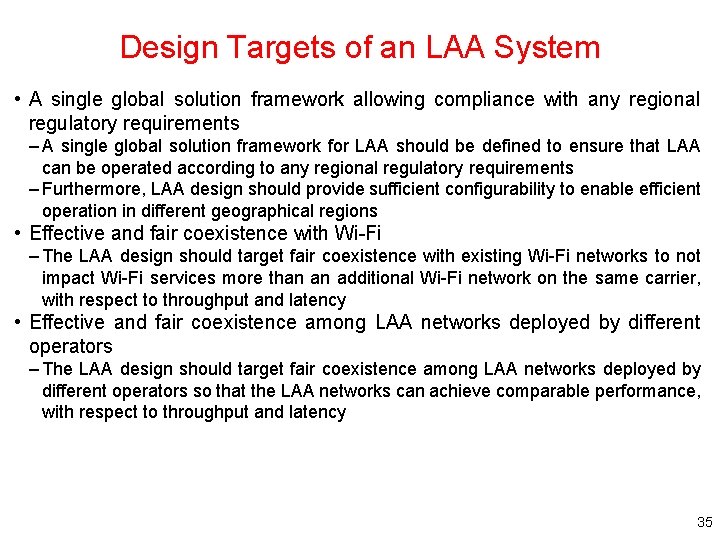
Design Targets of an LAA System • A single global solution framework allowing compliance with any regional regulatory requirements – A single global solution framework for LAA should be defined to ensure that LAA can be operated according to any regional regulatory requirements – Furthermore, LAA design should provide sufficient configurability to enable efficient operation in different geographical regions • Effective and fair coexistence with Wi-Fi – The LAA design should target fair coexistence with existing Wi-Fi networks to not impact Wi-Fi services more than an additional Wi-Fi network on the same carrier, with respect to throughput and latency • Effective and fair coexistence among LAA networks deployed by different operators – The LAA design should target fair coexistence among LAA networks deployed by different operators so that the LAA networks can achieve comparable performance, with respect to throughput and latency 35
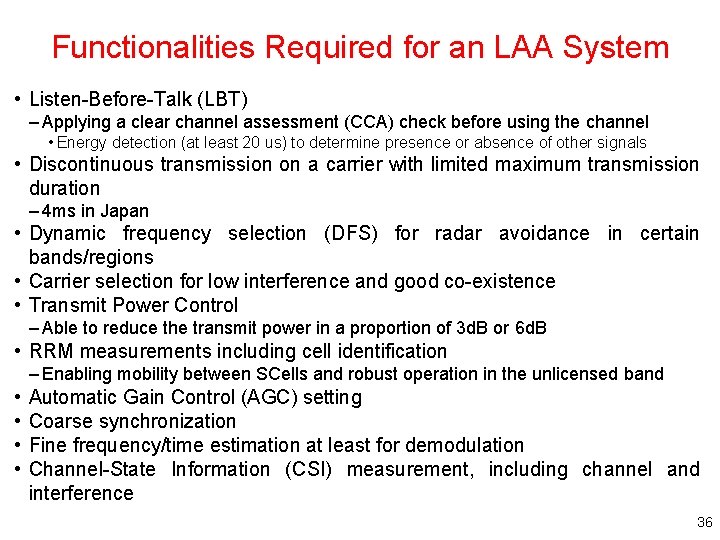
Functionalities Required for an LAA System • Listen-Before-Talk (LBT) – Applying a clear channel assessment (CCA) check before using the channel • Energy detection (at least 20 us) to determine presence or absence of other signals • Discontinuous transmission on a carrier with limited maximum transmission duration – 4 ms in Japan • Dynamic frequency selection (DFS) for radar avoidance in certain bands/regions • Carrier selection for low interference and good co-existence • Transmit Power Control – Able to reduce the transmit power in a proportion of 3 d. B or 6 d. B • RRM measurements including cell identification – Enabling mobility between SCells and robust operation in the unlicensed band • • Automatic Gain Control (AGC) setting Coarse synchronization Fine frequency/time estimation at least for demodulation Channel-State Information (CSI) measurement, including channel and interference 36
Listen-Before-Talk (Clear Channel Assessment) • The listen-before-talk (LBT) procedure is defined as a mechanism by which an equipment applies a clear channel assessment (CCA) check before using the channel • The CCA utilizes at least energy detection to determine the presence or absence of other signals on a channel in order to determine if a channel is occupied or clear, respectively – European and Japanese regulations mandate the usage of LBT in the unlicensed bands • Apart from regulatory requirements, carrier sensing via LBT is one way for fair sharing of the unlicensed spectrum and hence it is considered to be a vital feature for fair and friendly operation in the unlicensed spectrum in a single global solution framework 37
PHY Layer Options for LAA • The PHY layer options considered for LAA have at least the following characteristics –Support for at least 20 MHz system BW option in the 5 GHz band –System bandwidths < 5 MHz are not considered for PHY layer options in LAA 38
Solutions for Operation in Unlicensed Spectrum • Physical layer aspects – Discontinuous transmission on the downlink – RRM measurements and reporting – CSI measurements and reporting – Downlink transmissions – Scheduling and HARQ – Listen-Before-Talk Design – UL transmission – Transmission burst • Higher layer aspects – Random Access (RA) – HARQ operation – DRX – Qo. S control – RRM measurement and reporting – PCI confusion and PCI collision – In-device coexistence (IDC) – Listen-Before-Talk (LBT) 39
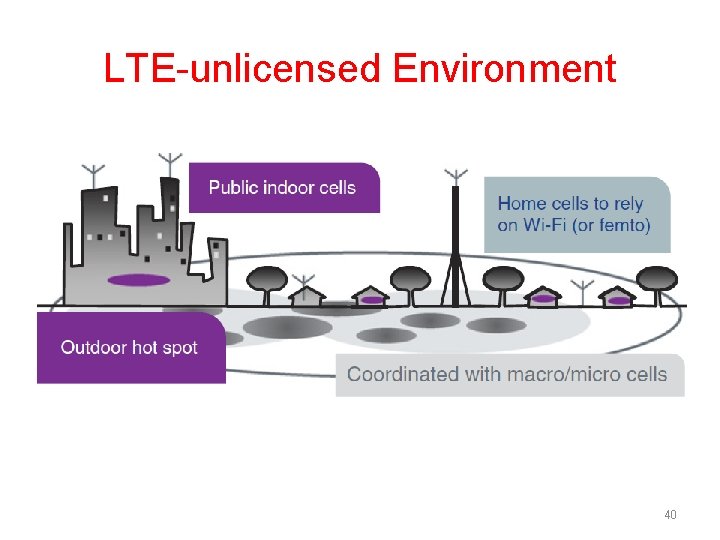
LTE-unlicensed Environment 40
Load-based and Frame-based Operation Principles 41
Short Control Signalling Principle 42
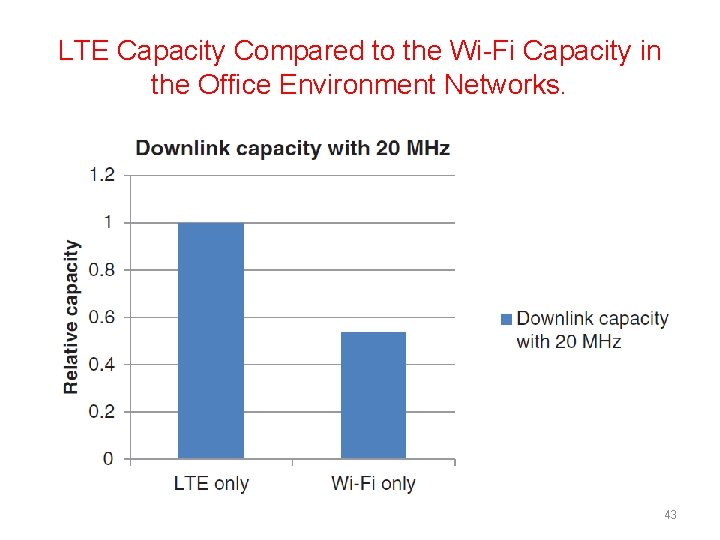
LTE Capacity Compared to the Wi-Fi Capacity in the Office Environment Networks. 43
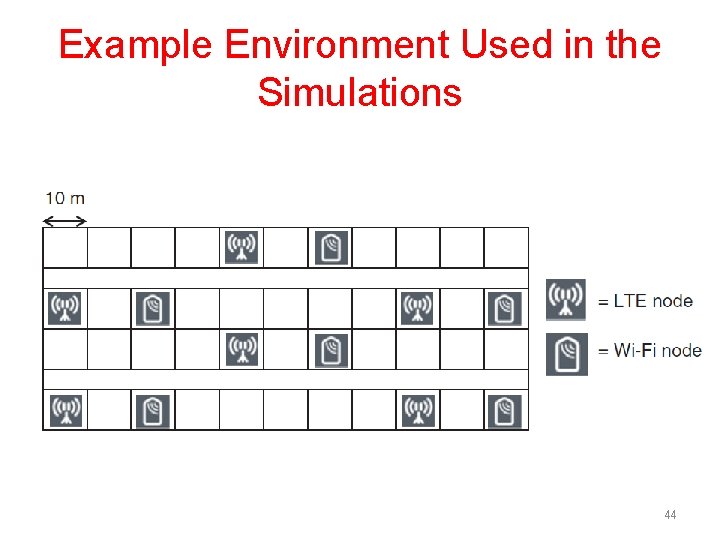
Example Environment Used in the Simulations 44
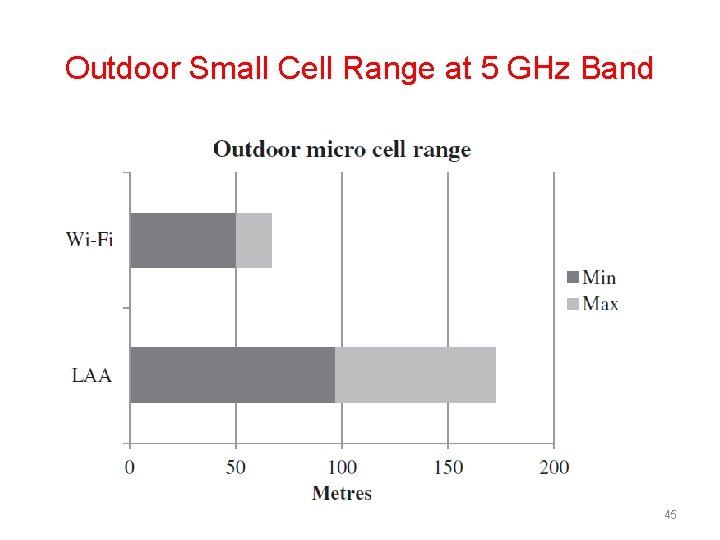
Outdoor Small Cell Range at 5 GHz Band 45
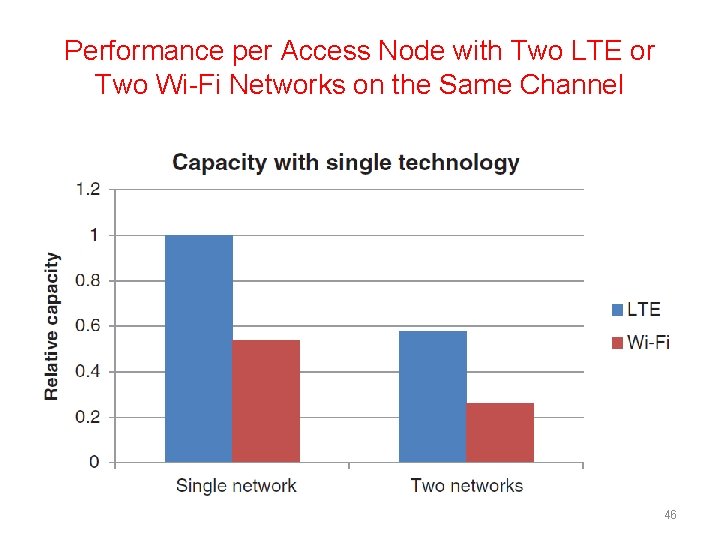
Performance per Access Node with Two LTE or Two Wi-Fi Networks on the Same Channel 46
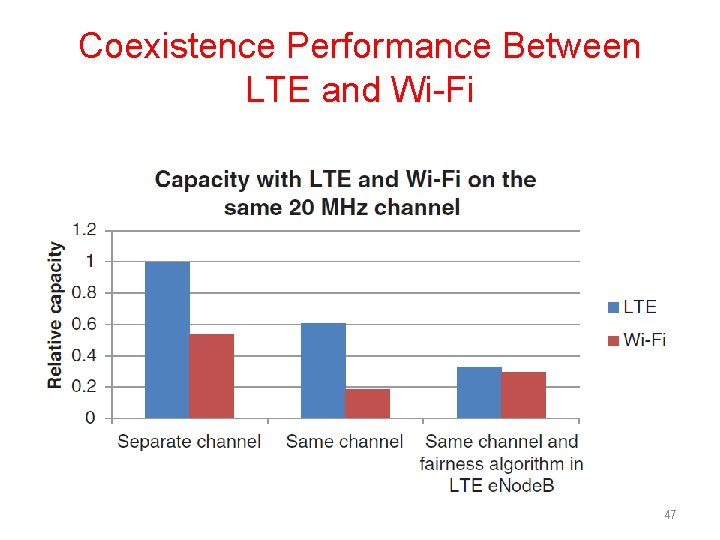
Coexistence Performance Between LTE and Wi-Fi 47
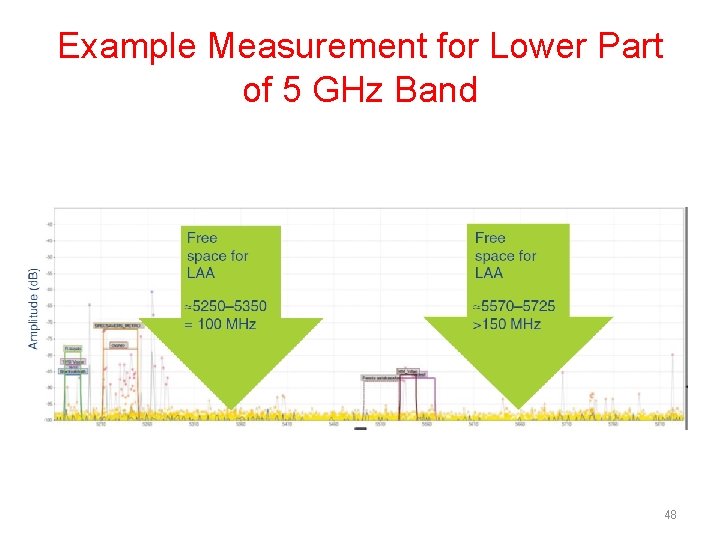
Example Measurement for Lower Part of 5 GHz Band 48
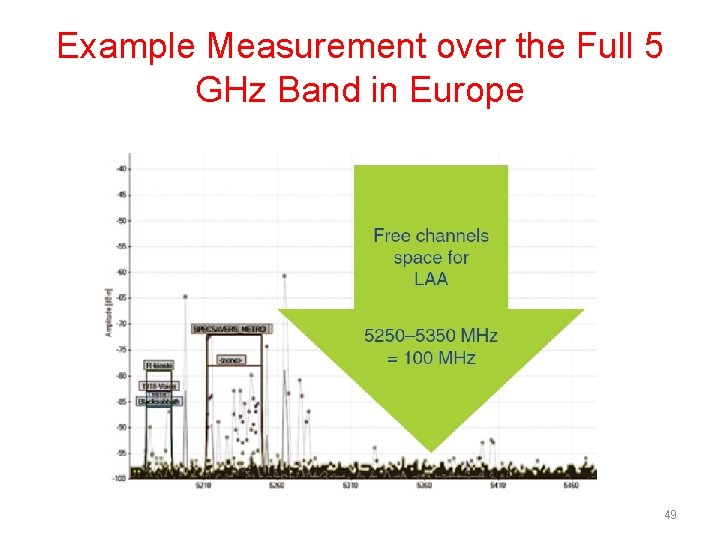
Example Measurement over the Full 5 GHz Band in Europe 49
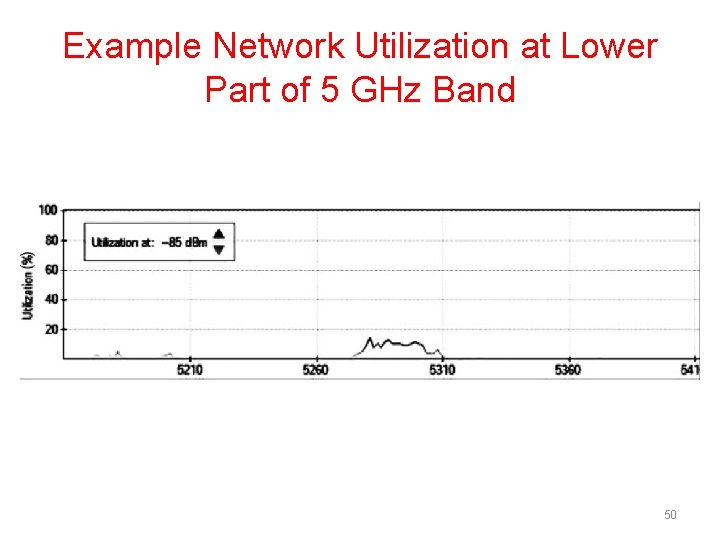
Example Network Utilization at Lower Part of 5 GHz Band 50
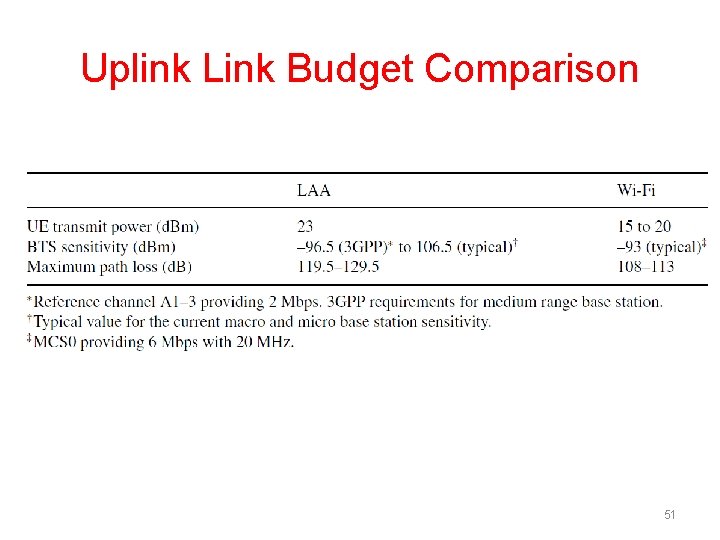
Uplink Link Budget Comparison 51
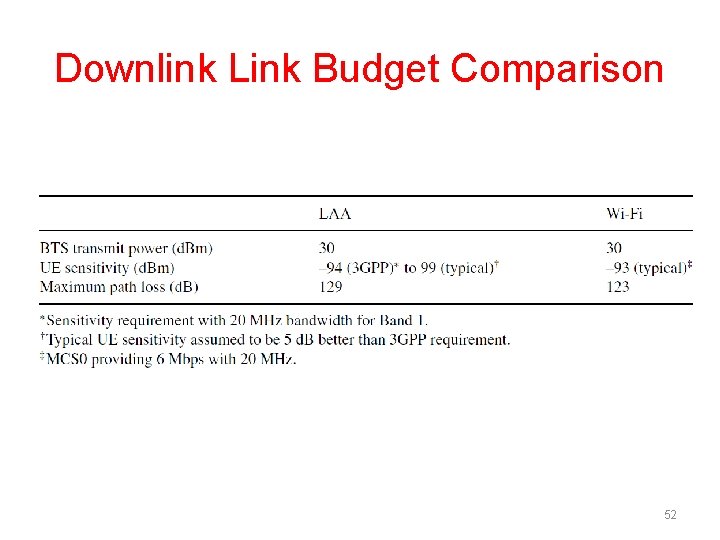
Downlink Link Budget Comparison 52
Summary • LAA: the operation of LTE in unlicensed spectrum as a secondary cell through carrier aggregation • The use of LTE in unlicensed spectrum can serve as a useful additional tool by operators to maximize the value they can provide to users – The core of the activity of the operators remains anchored to the licensed spectrum • A majority of sources providing evaluation results showed – at least one LBT scheme for LAA that does not impact Wi-Fi more than another Wi. Fi network – The LBT scheme and/or parameters shown by different sources to not impact Wi-Fi more than another Wi-Fi network may be different • When an appropriate channel access scheme is used, it is feasible for LAA to achieve fair coexistence with Wi-Fi, and for LAA to coexist with itself based on the evaluated scenarios • The key parameters of the LBT scheme such as contention windows and defer periods should be configurable within limits to enable fair coexistence with other technologies operating in unlicensed spectrum 53