
Outline Introduction Gas phase synthesis methods gas condensation


- Slides: 16
Outline: Introduction Gas phase synthesis methods - gas condensation processing - chemical vapor condensation - expansion cooling Difference in products Advantages
Introduction: Synthesis methods of nanostructure materials is divided into two different groups: - top-down methods - bottom-up methods: gas phase synthesis
Gas phase synthesis methods: Inert gas condensation: - gas condensation processing (GPC) - chemical vapor condensation (CVC) n Expansion cooling n
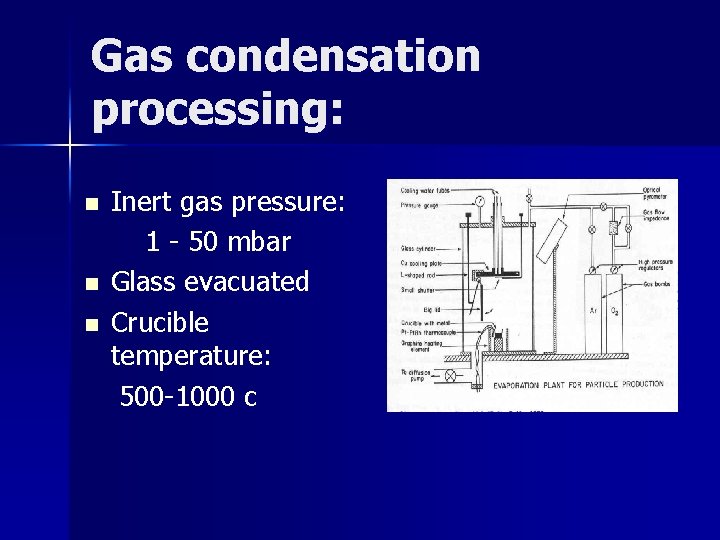
Gas condensation processing: n n n Inert gas pressure: 1 - 50 mbar Glass evacuated Crucible temperature: 500 -1000 c
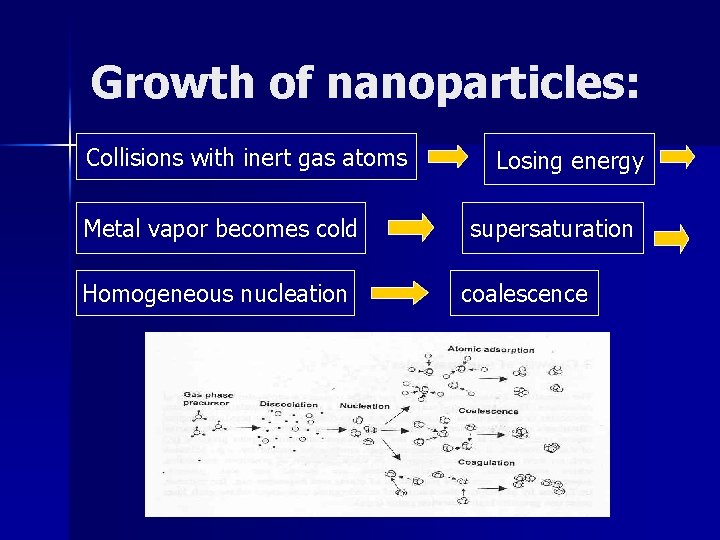
Growth of nanoparticles: Collisions with inert gas atoms Metal vapor becomes cold Homogeneous nucleation Losing energy supersaturation coalescence
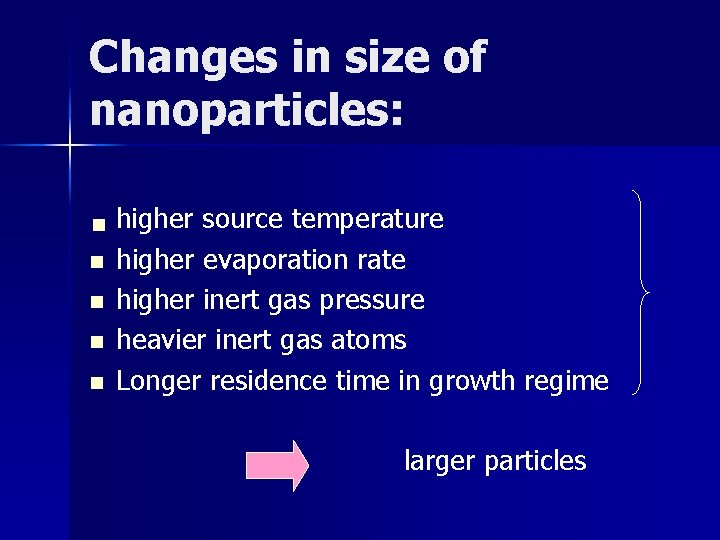
Changes in size of nanoparticles: n n higher source temperature higher evaporation rate higher inert gas pressure heavier inert gas atoms Longer residence time in growth regime larger particles
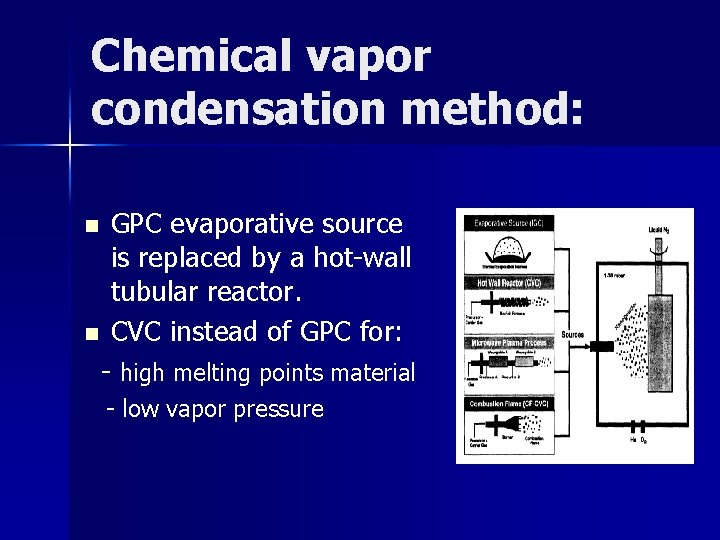
Chemical vapor condensation method: GPC evaporative source is replaced by a hot-wall tubular reactor. n CVC instead of GPC for: - high melting points material n - low vapor pressure
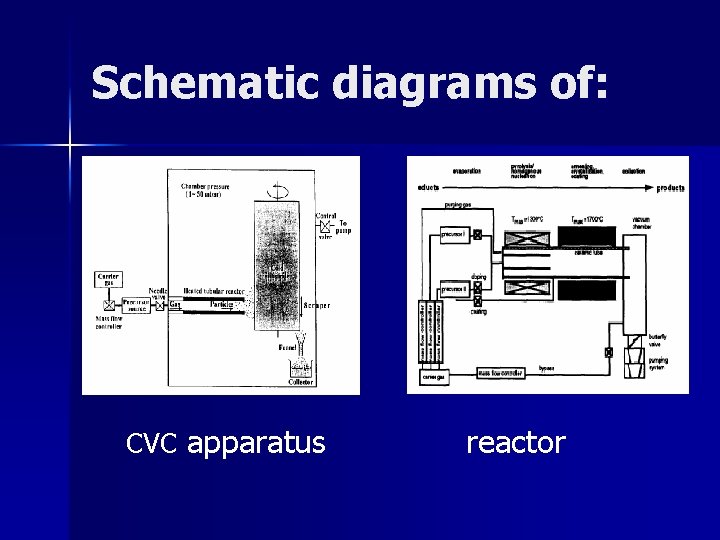
Schematic diagrams of: CVC apparatus reactor
CVC process: A low concentration of precursors in the carrier gas n Rapid expansion of the gas stream through the uniformly heated tubular reactor n Rapid quenching of the gas phase clusters in a low pressure chamber n
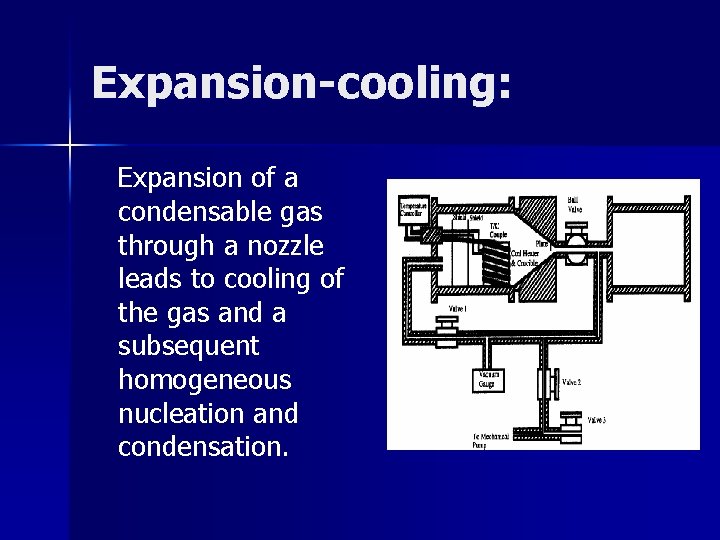
Expansion-cooling: Expansion of a condensable gas through a nozzle leads to cooling of the gas and a subsequent homogeneous nucleation and condensation.
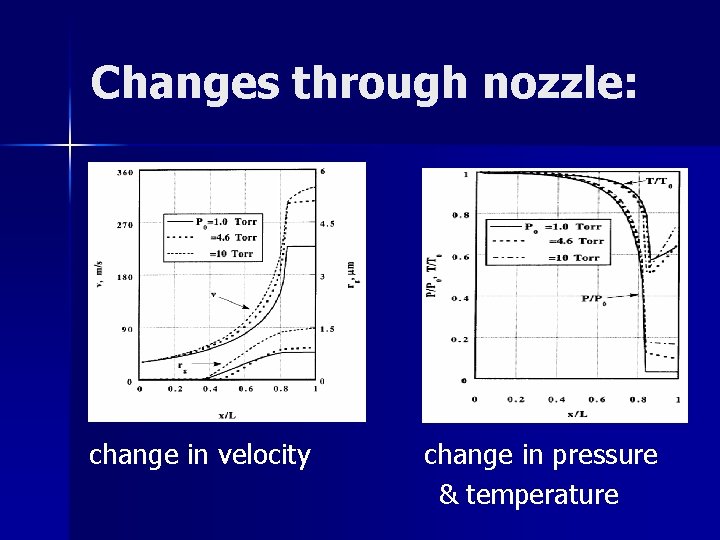
Changes through nozzle: change in velocity change in pressure & temperature
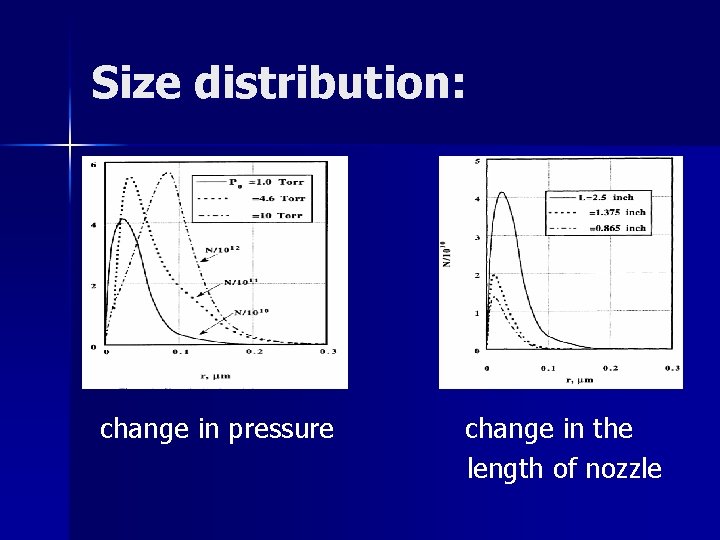
Size distribution: change in pressure change in the length of nozzle
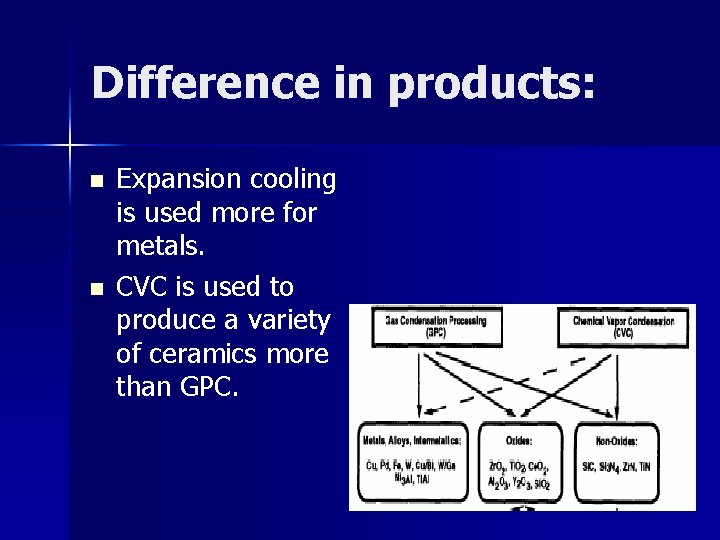
Difference in products: n n Expansion cooling is used more for metals. CVC is used to produce a variety of ceramics more than GPC.
Advantages : n n n high purity ability to create complex chemical structures Products are loosely agglomerated. n n continuous process controllable process and products