
Outline I Exam 1 II First Impressions III
- Slides: 17
Outline I. Exam 1 II. First Impressions III. Attributional process A. Correspondence Bias/FAE B. Attributions for other’s behavior 1. 2 step process of making attributions C. Attributions for own behavior D. Actor-Observer Difference
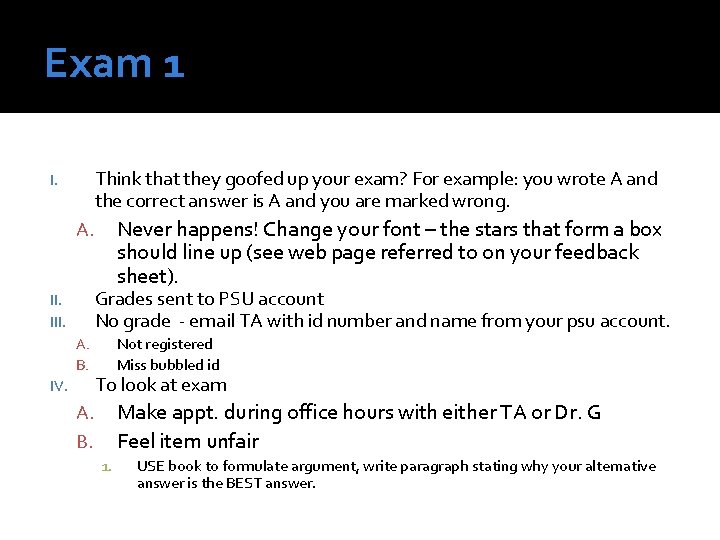
Exam 1 Think that they goofed up your exam? For example: you wrote A and the correct answer is A and you are marked wrong. I. Never happens! Change your font – the stars that form a box should line up (see web page referred to on your feedback sheet). A. Grades sent to PSU account No grade - email TA with id number and name from your psu account. II. III. A. B. IV. Not registered Miss bubbled id To look at exam Make appt. during office hours with either TA or Dr. G Feel item unfair A. B. 1. USE book to formulate argument, write paragraph stating why your alternative answer is the BEST answer.
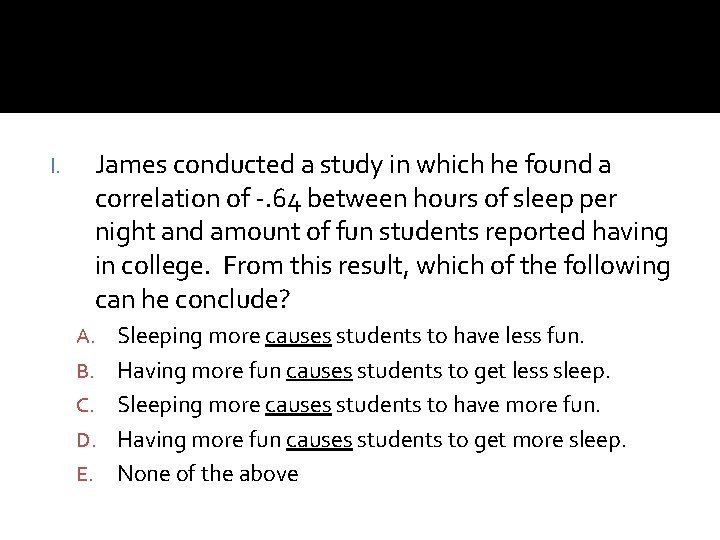
James conducted a study in which he found a correlation of -. 64 between hours of sleep per night and amount of fun students reported having in college. From this result, which of the following can he conclude? I. A. Sleeping more causes students to have less fun. B. Having more fun causes students to get less sleep. C. Sleeping more causes students to have more fun. D. Having more fun causes students to get more sleep. E. None of the above
Impressions Count I. Video was here
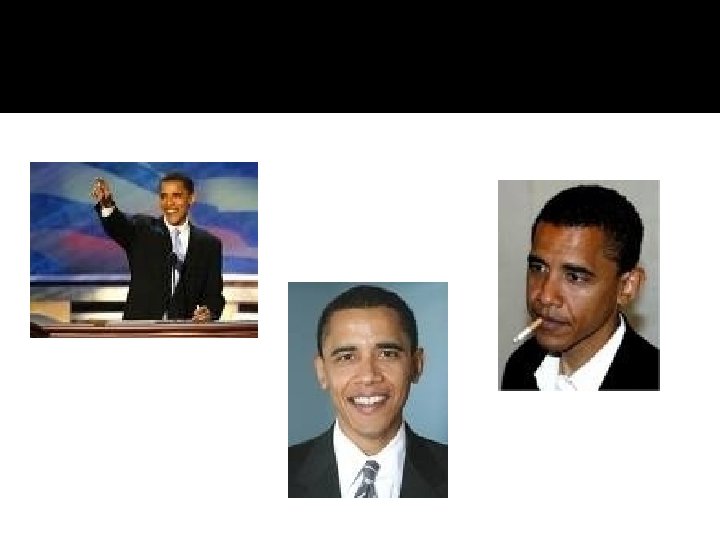
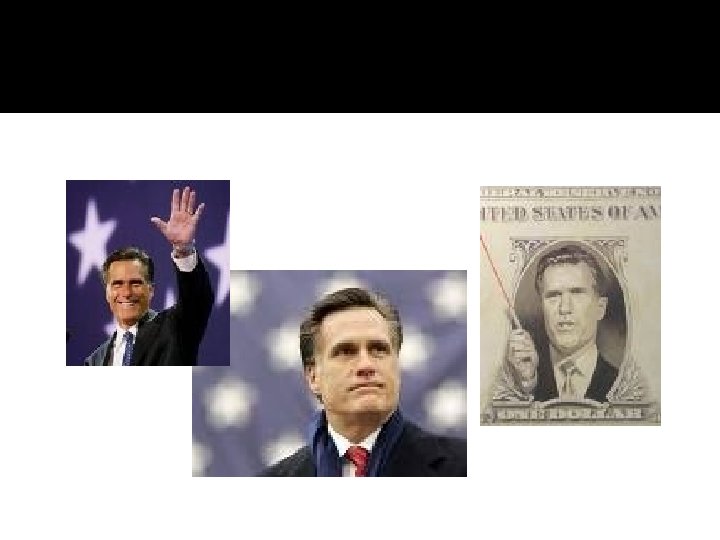
I. Do first impressions really matter in the long run?
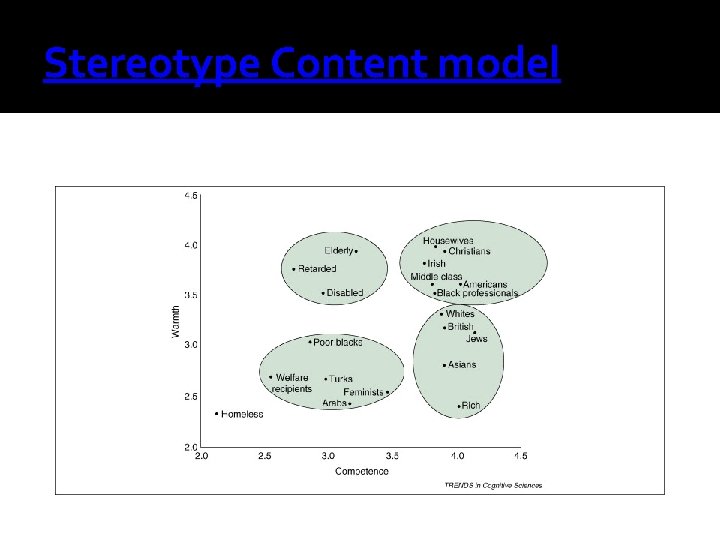
Characteristics that correlated with winning I. Look powerful – winning A. Height predicts most pres. elections II. Look warm – less likely to win Warm and competence key variables in social perception
Stereotype Content model
I. Video was here
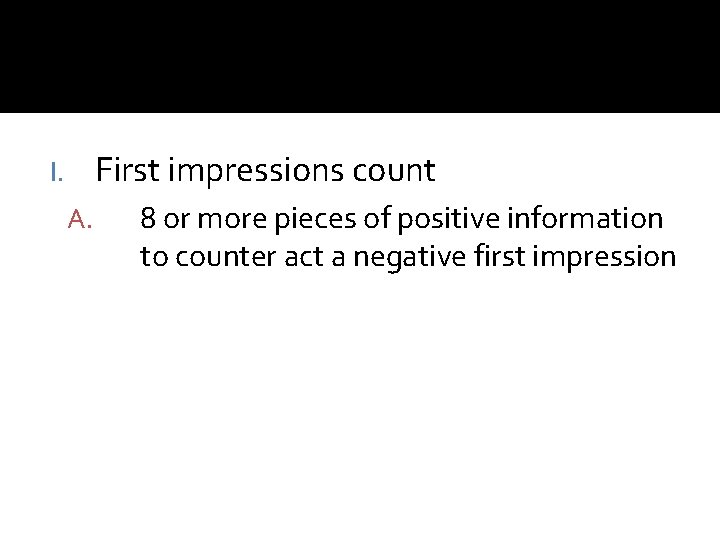
First impressions count I. A. 8 or more pieces of positive information to counter act a negative first impression
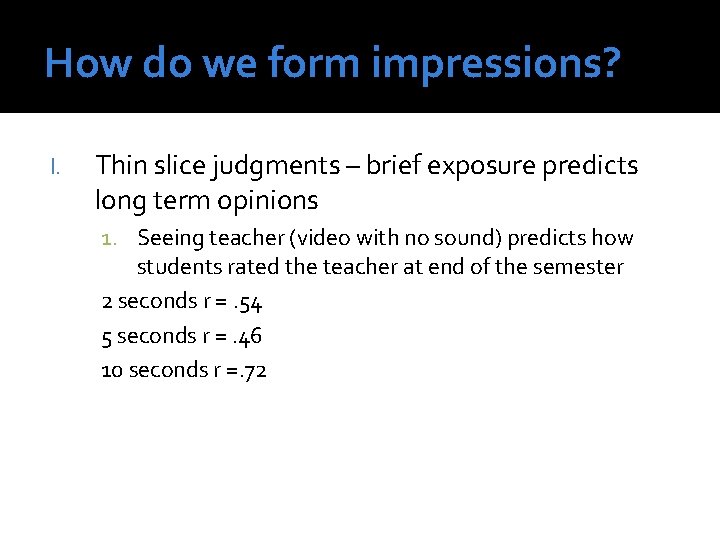
How do we form impressions? I. Thin slice judgments – brief exposure predicts long term opinions 1. Seeing teacher (video with no sound) predicts how students rated the teacher at end of the semester 2 seconds r =. 54 5 seconds r =. 46 10 seconds r =. 72
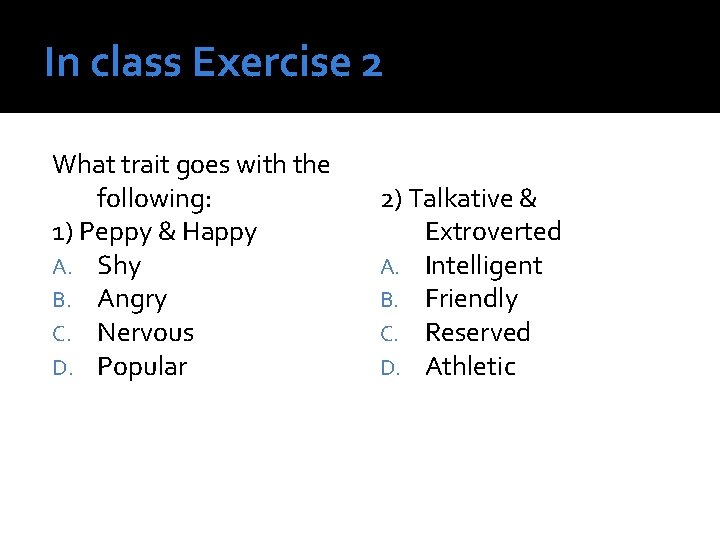
In class Exercise 2 What trait goes with the following: 1) Peppy & Happy A. Shy B. Angry C. Nervous D. Popular 2) Talkative & Extroverted A. Intelligent B. Friendly C. Reserved D. Athletic
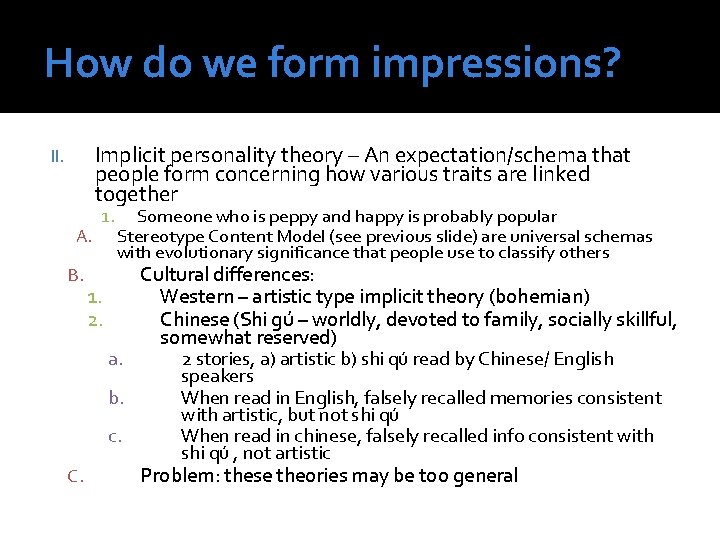
How do we form impressions? Implicit personality theory – An expectation/schema that people form concerning how various traits are linked together II. A. 1. Someone who is peppy and happy is probably popular Stereotype Content Model (see previous slide) are universal schemas with evolutionary significance that people use to classify others Cultural differences: 1. Western – artistic type implicit theory (bohemian) 2. Chinese (Shi gú – worldly, devoted to family, socially skillful, somewhat reserved) a. 2 stories, a) artistic b) shi qú read by Chinese/ English speakers b. When read in English, falsely recalled memories consistent with artistic, but not shi qú c. When read in chinese, falsely recalled info consistent with shi qú , not artistic C. Problem: these theories may be too general B.
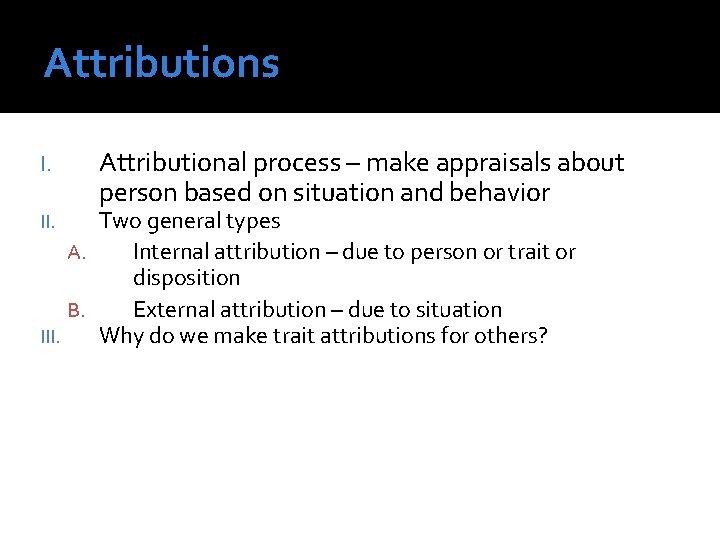
Attributions I. Attributional process – make appraisals about person based on situation and behavior Two general types A. Internal attribution – due to person or trait or disposition B. External attribution – due to situation III. Why do we make trait attributions for others? II.
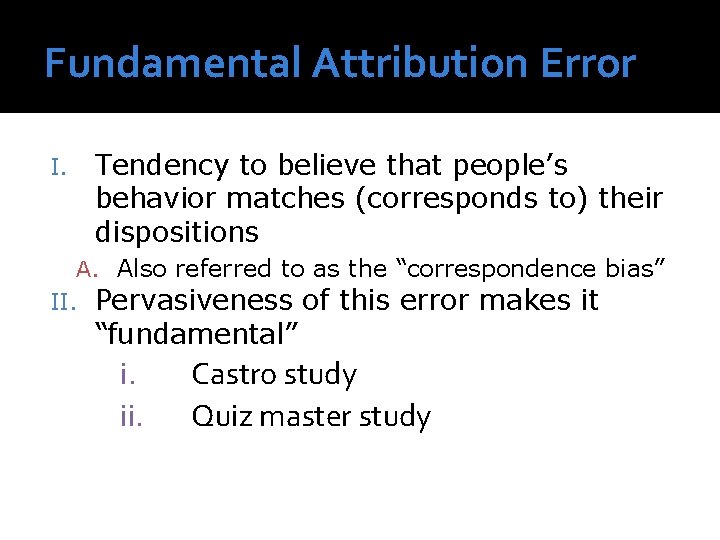
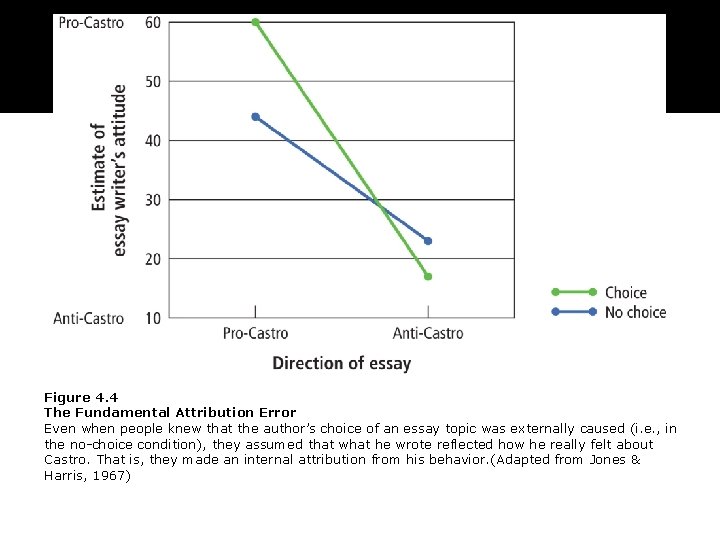
Fundamental Attribution Error I. Tendency to believe that people’s behavior matches (corresponds to) their dispositions A. Also referred to as the “correspondence bias” II. Pervasiveness of this error makes it “fundamental” i. ii. Castro study Quiz master study
Figure 4. 4 The Fundamental Attribution Error Even when people knew that the author’s choice of an essay topic was externally caused (i. e. , in the no-choice condition), they assumed that what he wrote reflected how he really felt about Castro. That is, they made an internal attribution from his behavior. (Adapted from Jones & Harris, 1967)