
Outline for Today Objectives Linux scheduler Lottery scheduling
Outline for Today • Objectives: – Linux scheduler – Lottery scheduling 1
Linux Scheduling Policy • Runnable process with highest priority and timeslice remaining runs (SCHED_OTHER policy) – Dynamically calculated priority • Starts with nice value • Bonus or penalty reflecting whether I/O or compute bound by tracking sleep time vs. runnable time: – sleep_avg – accumulated during sleep up to MAX_SLEEP_AVG (10 ms default) – decremented by timer tick while running 2

Linux Scheduling Policy – Dynamically calculated timeslice • The higher the dynamic priority, the longer the timeslice: High priority more interactive Low priority less interactive 10 ms 150 ms 300 ms – Recalculated every round when “expired” and “active” swap – Exceptions for expired interactive • Go back on active unless there are starving expired tasks 3
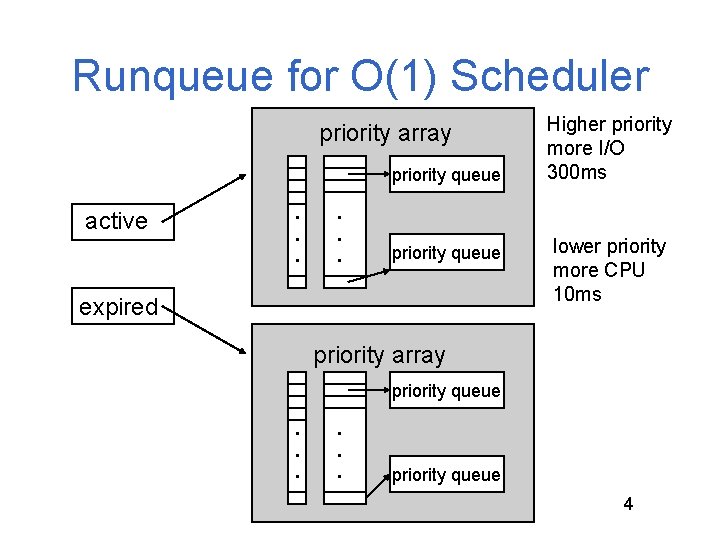
Runqueue for O(1) Scheduler priority array priority queue active . . . priority queue expired Higher priority more I/O 300 ms lower priority more CPU 10 ms priority array priority queue. . . priority queue 4
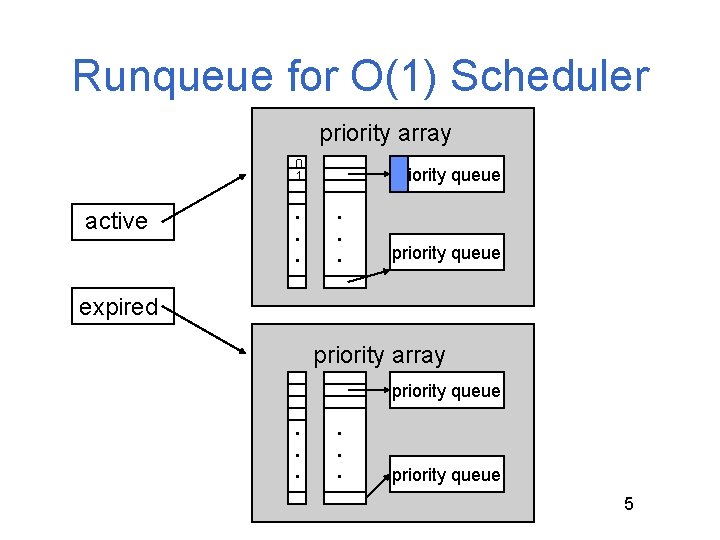
Runqueue for O(1) Scheduler priority array 0 1 active . . . priority queue expired priority array priority queue. . . priority queue 5
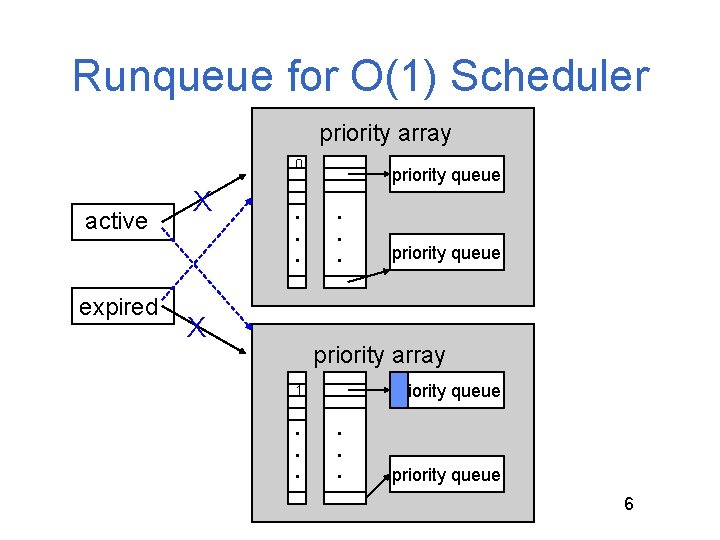
Runqueue for O(1) Scheduler priority array 0 active expired X . . . X priority queue. . . priority queue priority array priority queue 1 . . . priority queue 6
Linux Real-time • No guarantees • SCHED_FIFO – Static priority, effectively higher than SCHED_OTHER processes* – No timeslice – it runs until it blocks or yields voluntarily – RR within same priority level • SCHED_RR – As above but with a timeslice. * Although their priority number ranges overlap 7
Diversion: Synchronization • Disable Interrupts • Busywaiting solutions - spinlocks – execute a tight loop if critical section is busy – benefits from specialized atomic (read-modwrite) instructions • Blocking synchronization – sleep (enqueued on wait queue) while critical section is busy. 8
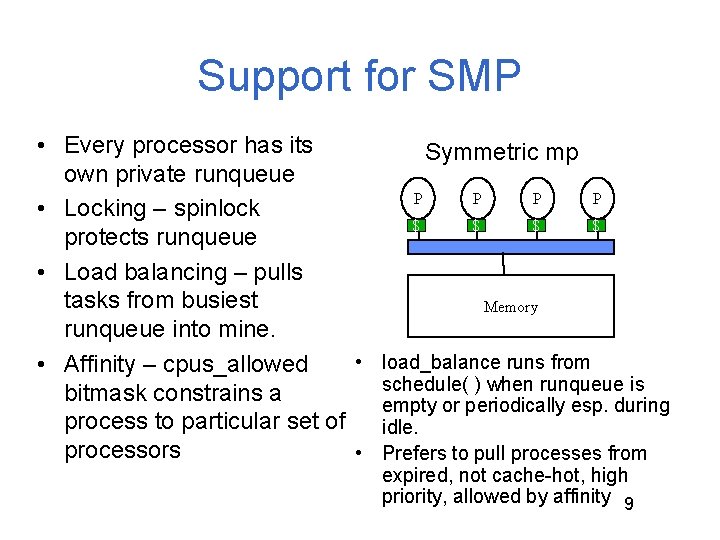
Support for SMP • Every processor has its Symmetric mp own private runqueue P P • Locking – spinlock $ $ protects runqueue • Load balancing – pulls tasks from busiest Memory runqueue into mine. • load_balance runs from • Affinity – cpus_allowed schedule( ) when runqueue is bitmask constrains a empty or periodically esp. during process to particular set of idle. processors • Prefers to pull processes from expired, not cache-hot, high priority, allowed by affinity 9
Lottery Scheduling Waldspurger and Weihl (OSDI 94) 10
Claims • Goal: responsive control over the relative rates of computation • Claims: – Support for modular resource management – Generalizable to diverse resources – Efficient implementation of proportional-share resource management: consumption rates of resources by active computations are proportional to relative shares allocated 11
Basic Idea • Resource rights are represented by lottery tickets – abstract, relative (vary dynamically wrt contention), uniform (handle heterogeneity) – responsiveness: adjusting relative # tickets gets immediately reflected in next lottery • At allocation time: hold a lottery; Resource goes to the computation holding the winning ticket. 12
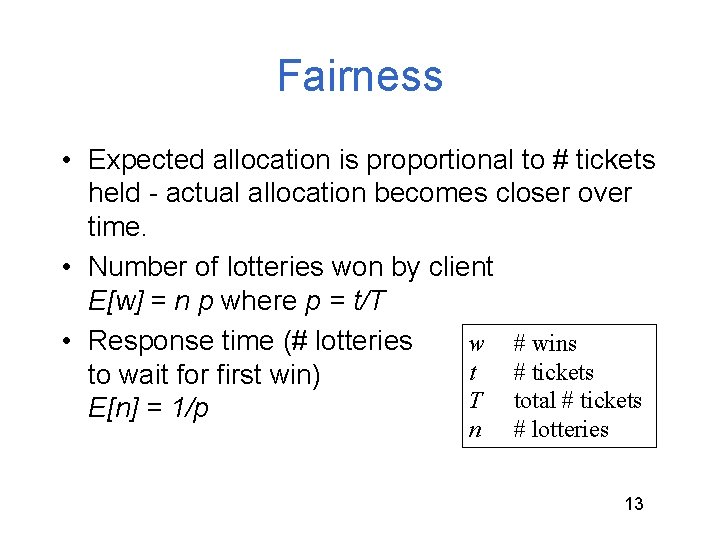
Fairness • Expected allocation is proportional to # tickets held - actual allocation becomes closer over time. • Number of lotteries won by client E[w] = n p where p = t/T • Response time (# lotteries w # wins t # tickets to wait for first win) T total # tickets E[n] = 1/p n # lotteries 13
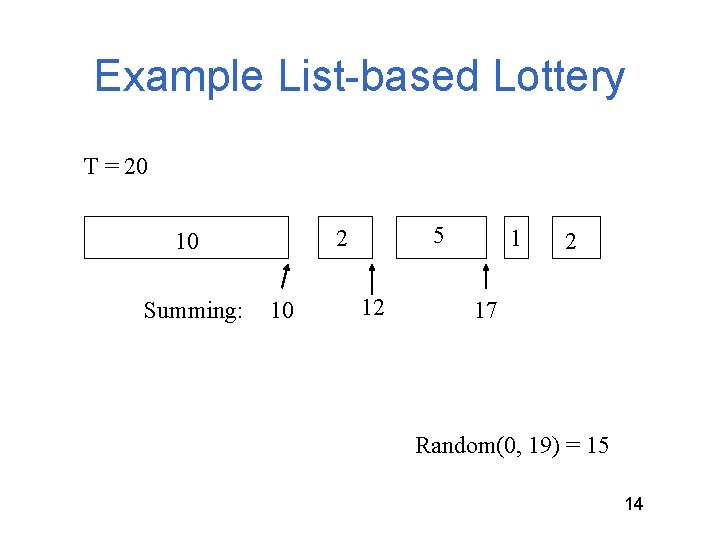
Example List-based Lottery T = 20 Summing: 5 2 10 10 12 1 2 17 Random(0, 19) = 15 14
Bells and Whistles • Ticket transfers - objects that can be explicitly passed in messages – Can be used to solve priority inversions • Ticket inflation – Create more - used among mutually trusting clients to dynamically adjust ticket allocations • Currencies - “local” control, exchange rates • Compensation tickets - to maintain share – use only f of quantum, ticket inflated by 1/f in next 15
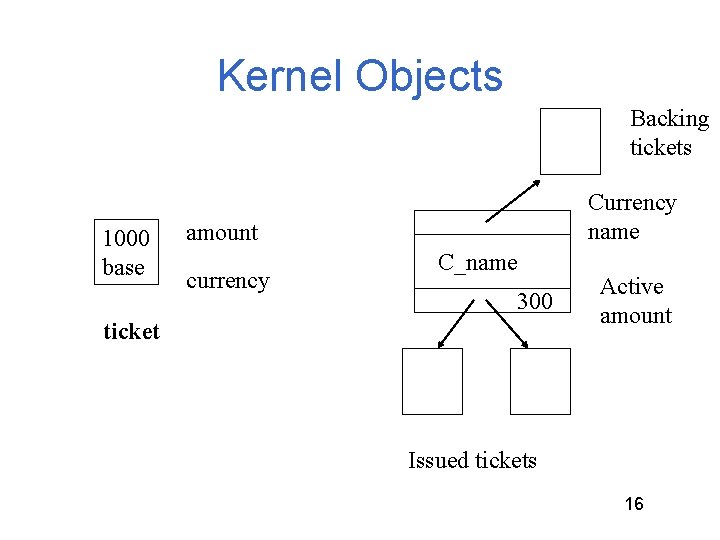
Kernel Objects Backing tickets 1000 base Currency name amount currency C_name 300 ticket Active amount Issued tickets 16
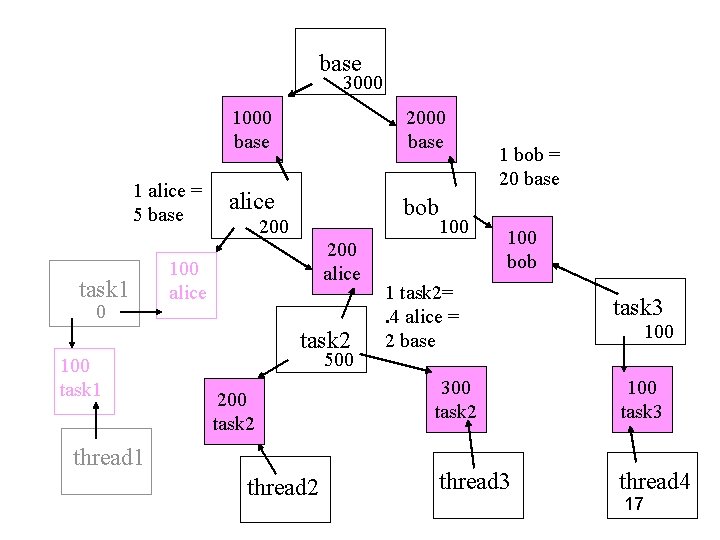
base 3000 1 alice = 5 base task 1 0 1000 base 2000 base alice bob 200 100 200 alice 100 alice task 2 100 task 1 500 200 task 2 thread 1 thread 2 1 bob = 20 base 100 bob 1 task 2=. 4 alice = 2 base task 3 100 300 task 2 100 task 3 thread 4 17
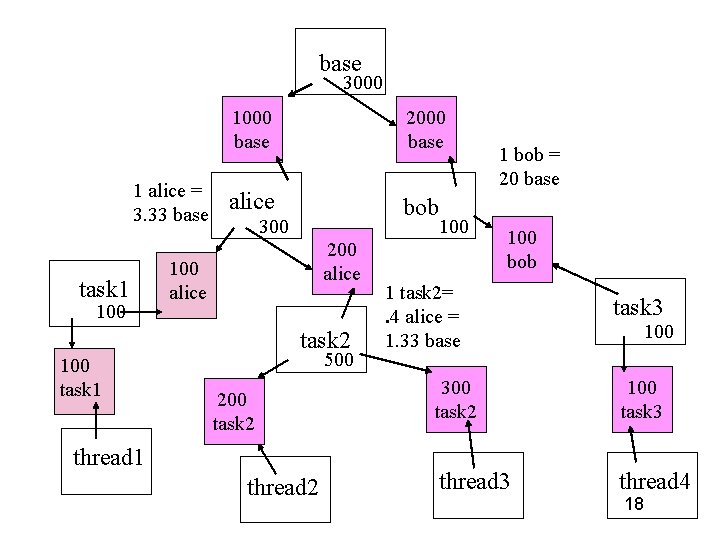
base 3000 1 alice = 3. 33 base task 1 1000 base 2000 base alice bob 300 100 200 alice 100 alice task 2 100 task 1 500 200 task 2 thread 1 thread 2 1 bob = 20 base 100 bob 1 task 2=. 4 alice = 1. 33 base task 3 100 300 task 2 100 task 3 thread 4 18
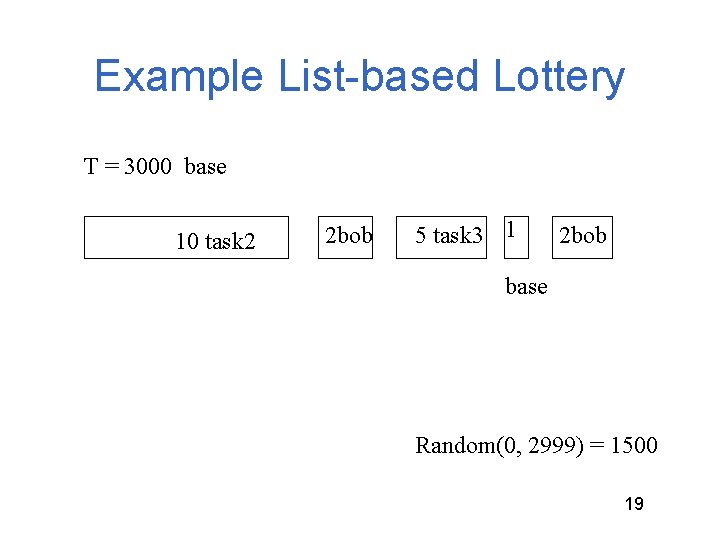
Example List-based Lottery T = 3000 base 10 task 2 2 bob 5 task 3 1 2 bob base Random(0, 2999) = 1500 19
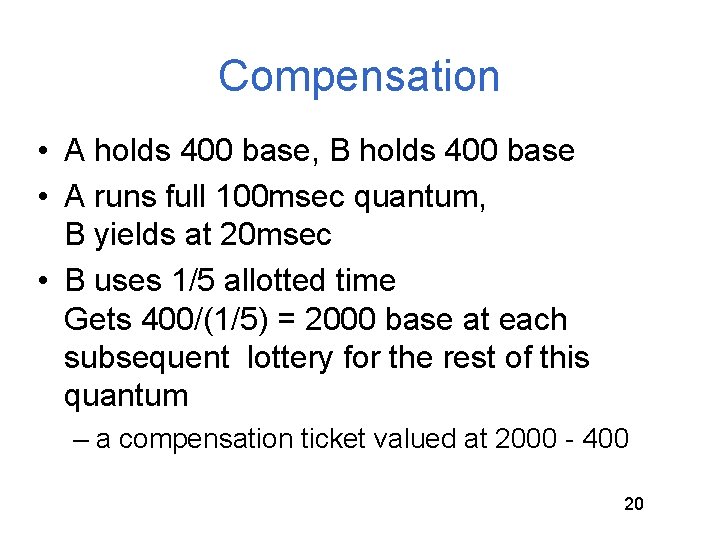
Compensation • A holds 400 base, B holds 400 base • A runs full 100 msec quantum, B yields at 20 msec • B uses 1/5 allotted time Gets 400/(1/5) = 2000 base at each subsequent lottery for the rest of this quantum – a compensation ticket valued at 2000 - 400 20
Ticket Transfer • Synchronous RPC between client and server • create ticket in client’s currency and send to server to fund it’s currency • on reply, the transfer ticket is destroyed 21
Control Scenarios • Dynamic Control Conditionally and dynamically grant tickets Adaptability • Resource abstraction barriers supported by currencies. Insulate tasks. 22
UI • mktkt, rmtkt, mkcur, rmcur • fund, unfund • lstkt, lscur, fundx (shell) 23
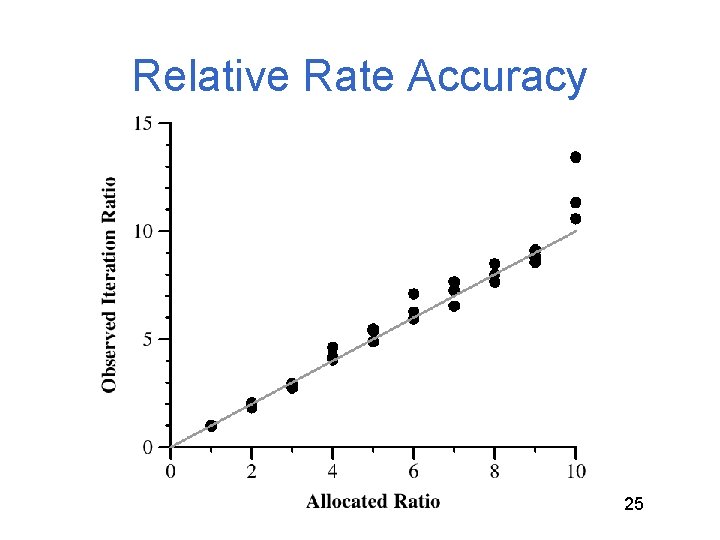
Relative Rate Accuracy 25
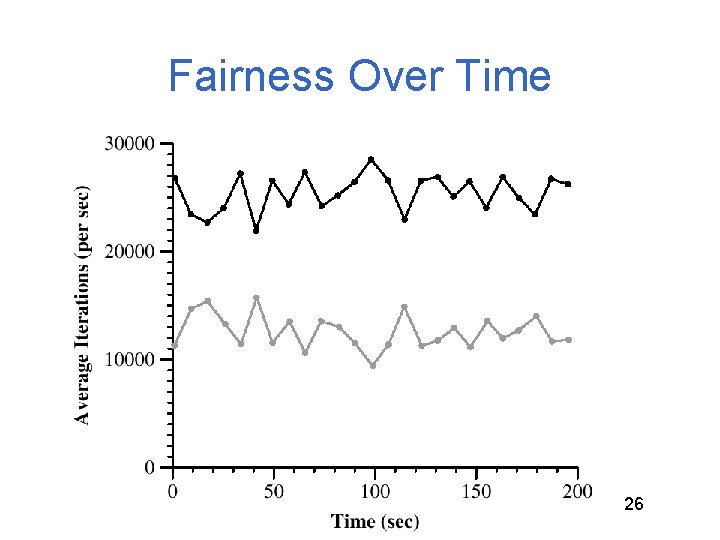
Fairness Over Time 26
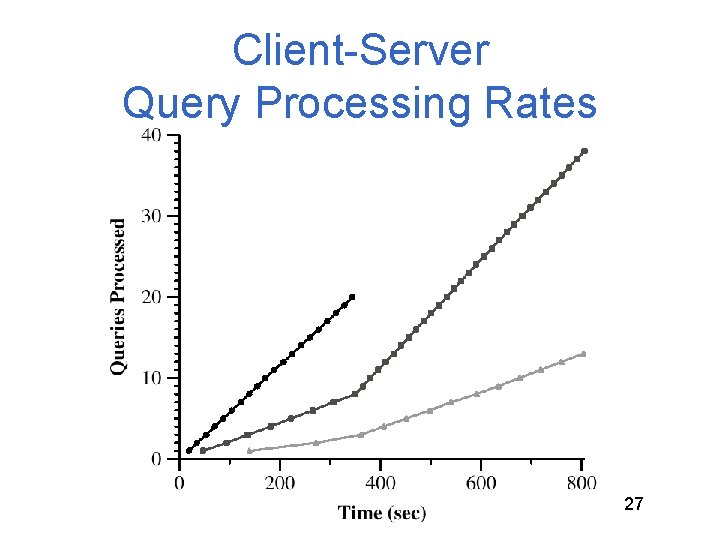
Client-Server Query Processing Rates 27
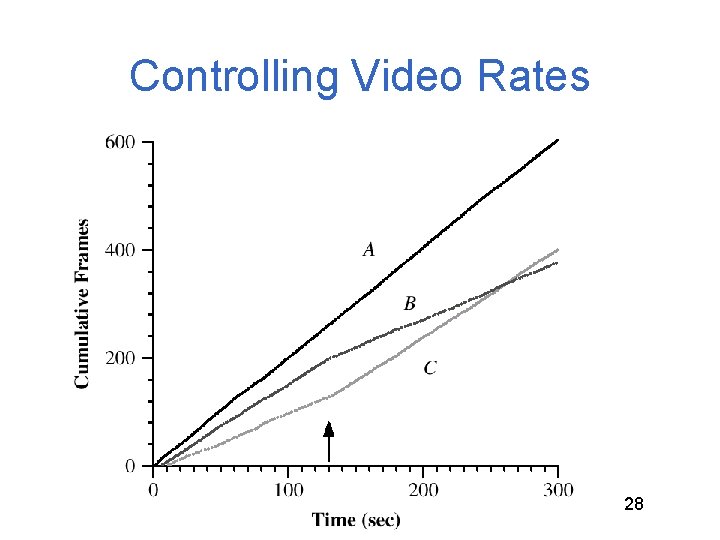
Controlling Video Rates 28
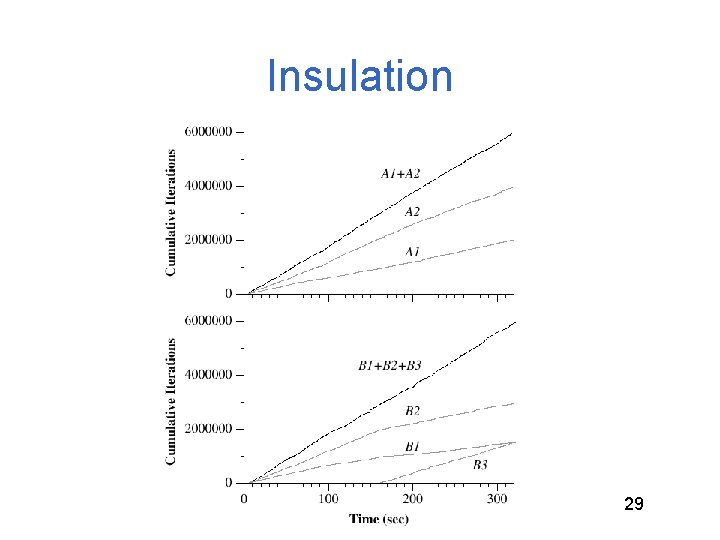
Insulation 29
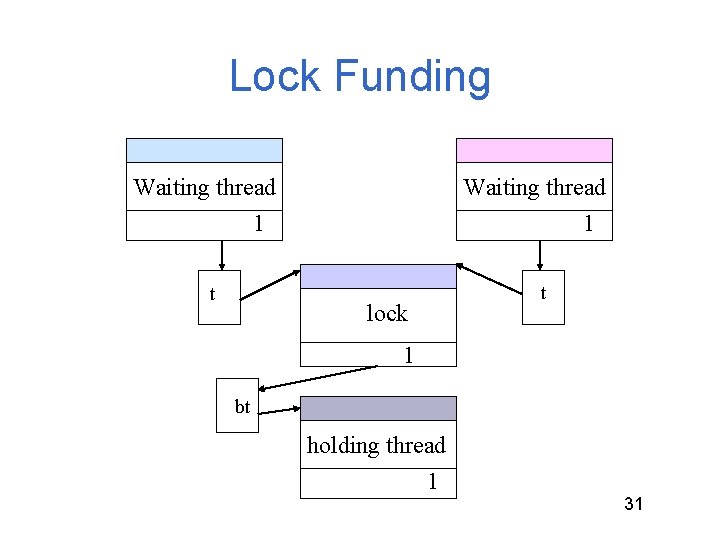
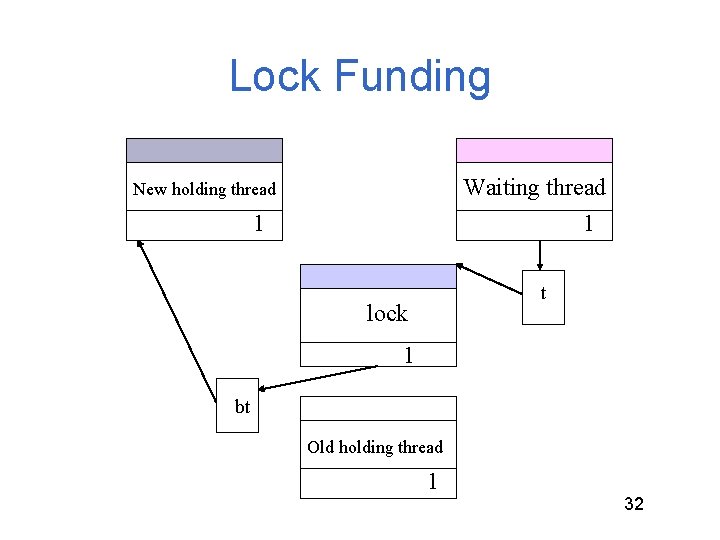
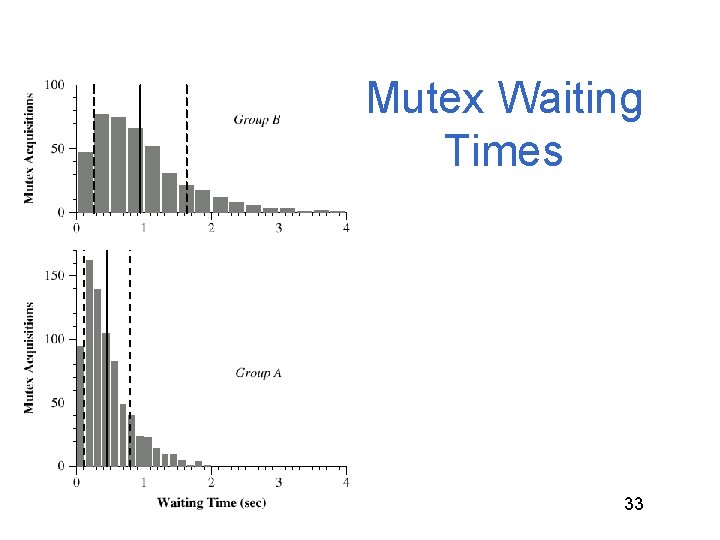
Other Kinds of Resources • Claim: can be used for any resource where queuing is used • Control relative waiting times for mutex locks. – Mutex currency funded out of currencies of waiting threads – Holder gets inheritance ticket in addition to its own funding, passed on to next holder (resulting from lottery) on release. • Space sharing - inverse lottery, loser is victim (e. g. in page replacement decision, processor node preemption in MP partitioning) 30
Lock Funding Waiting thread 1 t Waiting thread 1 lock t 1 bt holding thread 1 31
Lock Funding Waiting thread 1 New holding thread 1 t lock 1 bt Old holding thread 1 32
Mutex Waiting Times 33
- Slides: 32