
Outline Classroom Introduction Terminology Respirator Program Handson Cleaning
- Slides: 39
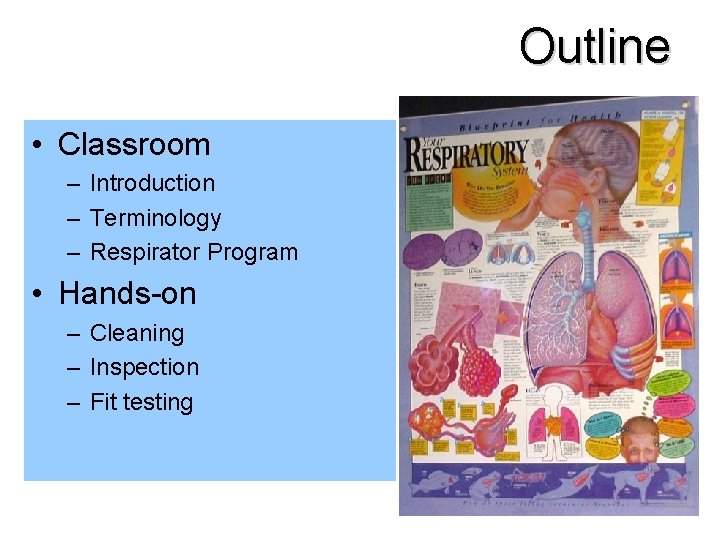
Outline • Classroom – Introduction – Terminology – Respirator Program • Hands-on – Cleaning – Inspection – Fit testing
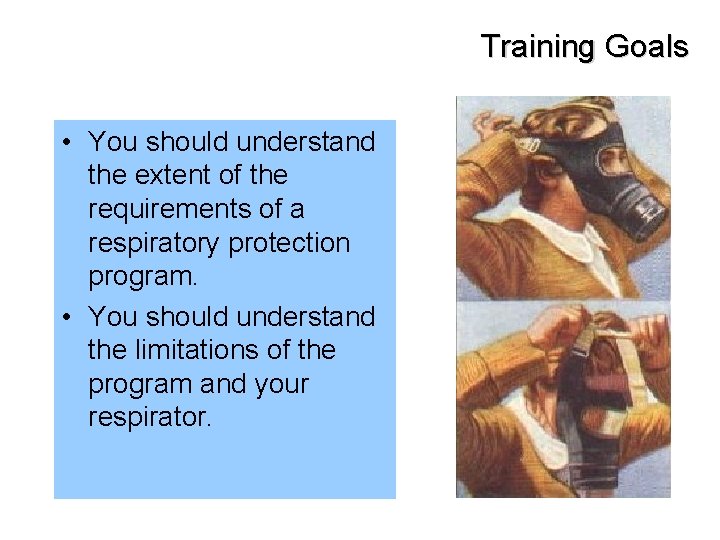
Training Goals • You should understand the extent of the requirements of a respiratory protection program. • You should understand the limitations of the program and your respirator.
Permissible Practices • Engineering and administrative controls before respirators. • Engineering: substitution, minimization, isolation, ventilation controls. • Administrative: scheduling or rotation of work. • Maintenance and Research areas where respirator use is still fairly common.
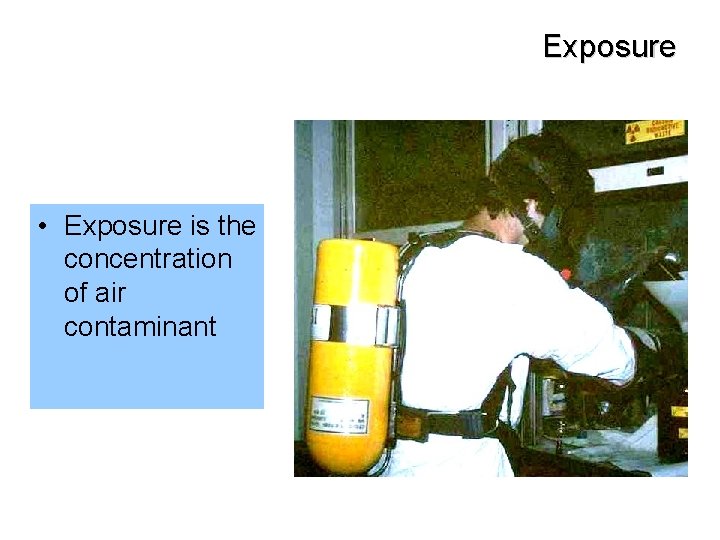
Exposure • Exposure is the concentration of air contaminant
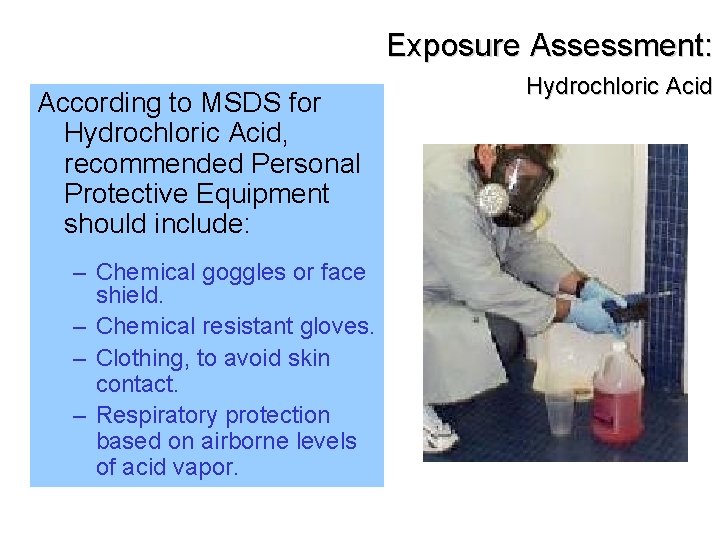
Exposure Assessment: According to MSDS for Hydrochloric Acid, recommended Personal Protective Equipment should include: – Chemical goggles or face shield. – Chemical resistant gloves. – Clothing, to avoid skin contact. – Respiratory protection based on airborne levels of acid vapor. Hydrochloric Acid
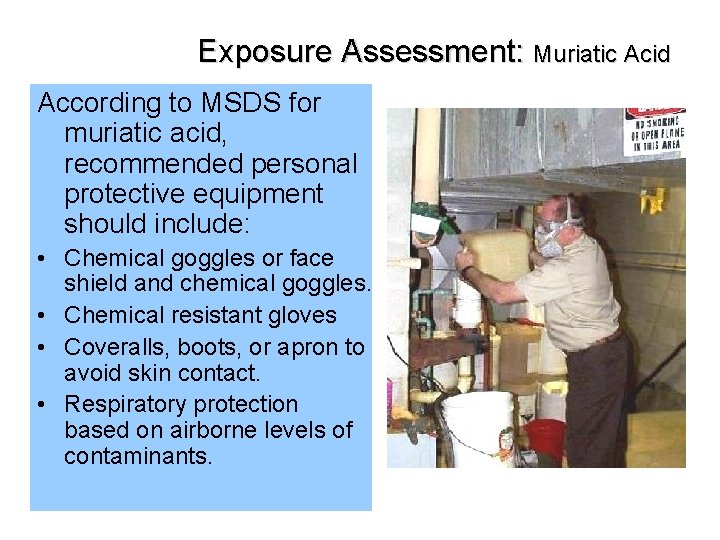
Exposure Assessment: Muriatic Acid According to MSDS for muriatic acid, recommended personal protective equipment should include: • Chemical goggles or face shield and chemical goggles. • Chemical resistant gloves • Coveralls, boots, or apron to avoid skin contact. • Respiratory protection based on airborne levels of contaminants.
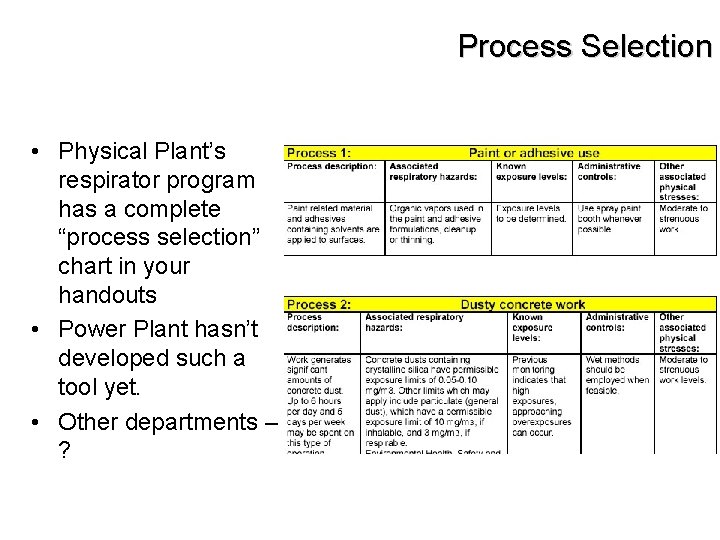
Process Selection • Physical Plant’s respirator program has a complete “process selection” chart in your handouts • Power Plant hasn’t developed such a tool yet. • Other departments – ?
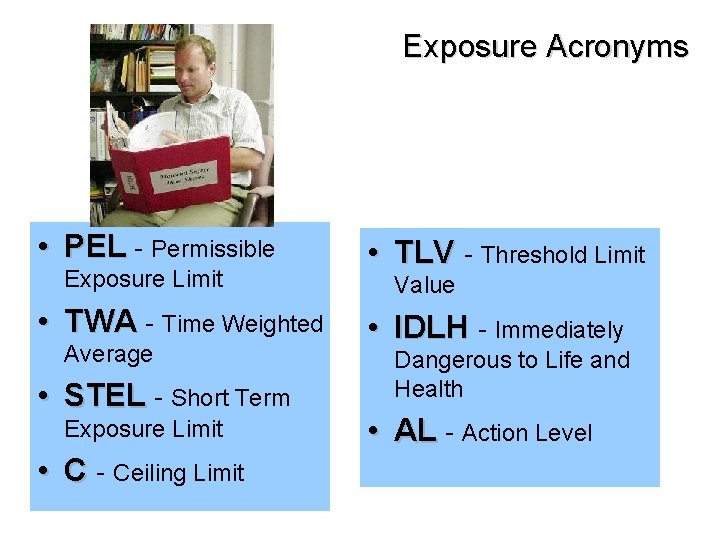
Exposure Acronyms • PEL - Permissible Exposure Limit • TWA - Time Weighted Average • STEL - Short Term Exposure Limit • C - Ceiling Limit • TLV - Threshold Limit Value • IDLH - Immediately Dangerous to Life and Health • AL - Action Level
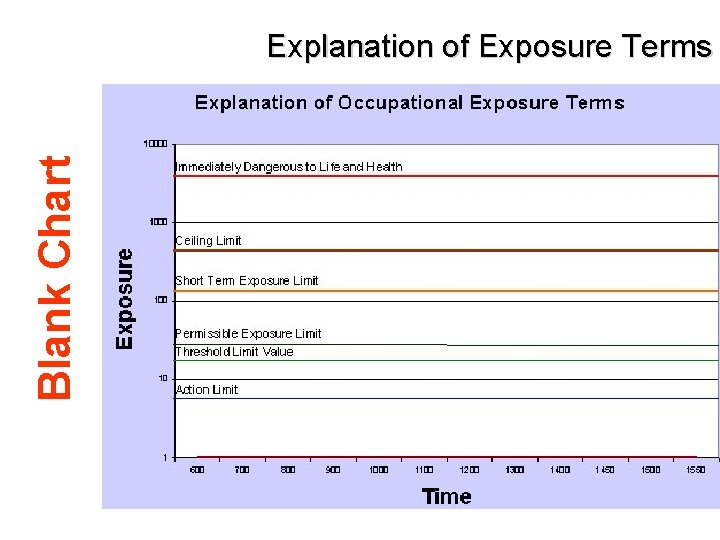
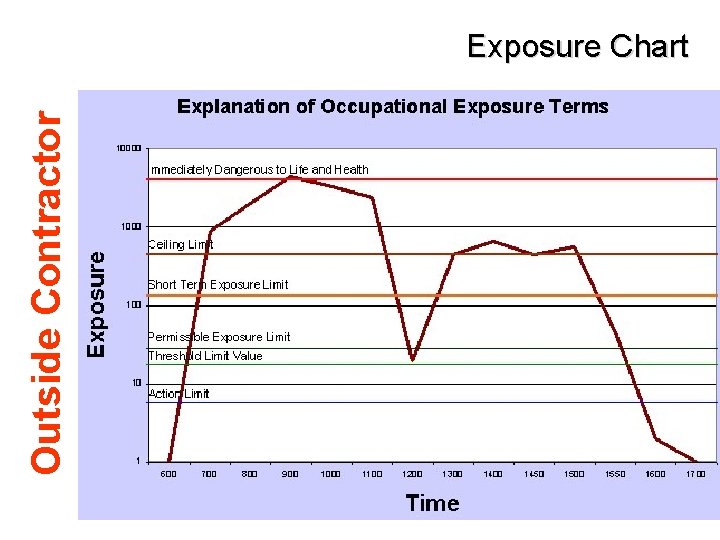
Blank Chart Explanation of Exposure Terms
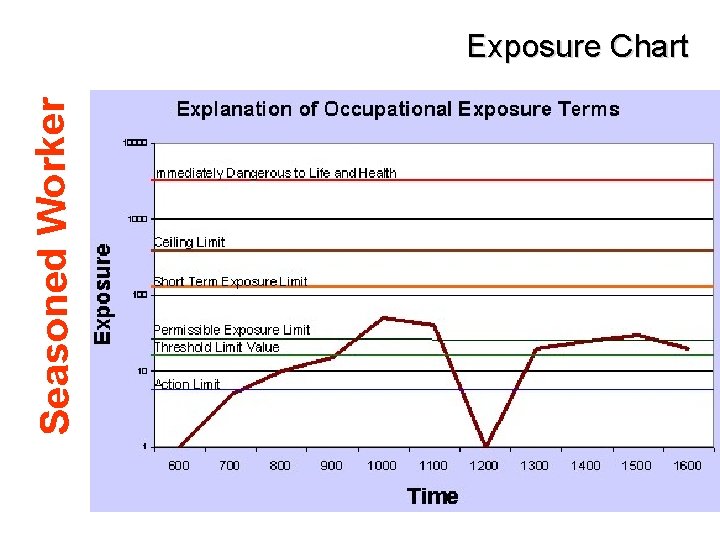
Seasoned Worker Exposure Chart
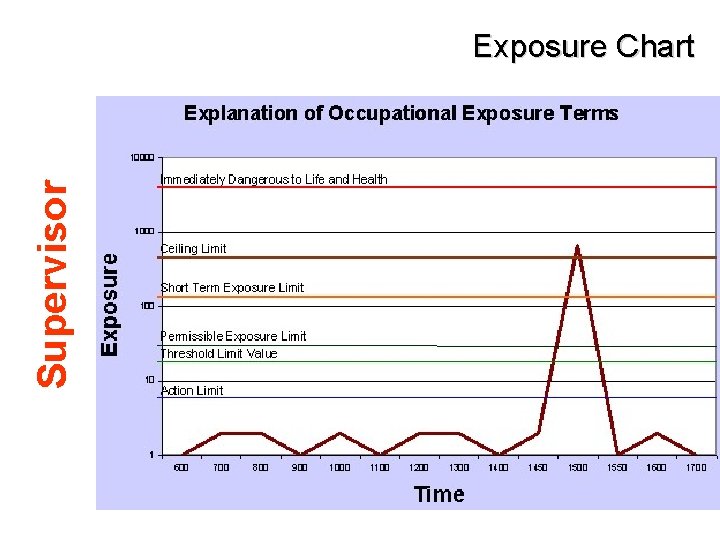
Supervisor Exposure Chart
Outside Contractor Exposure Chart
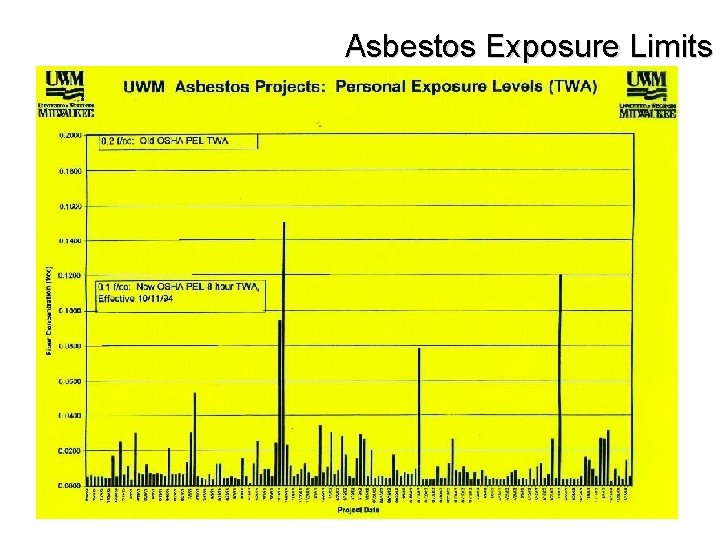
Asbestos Exposure Limits
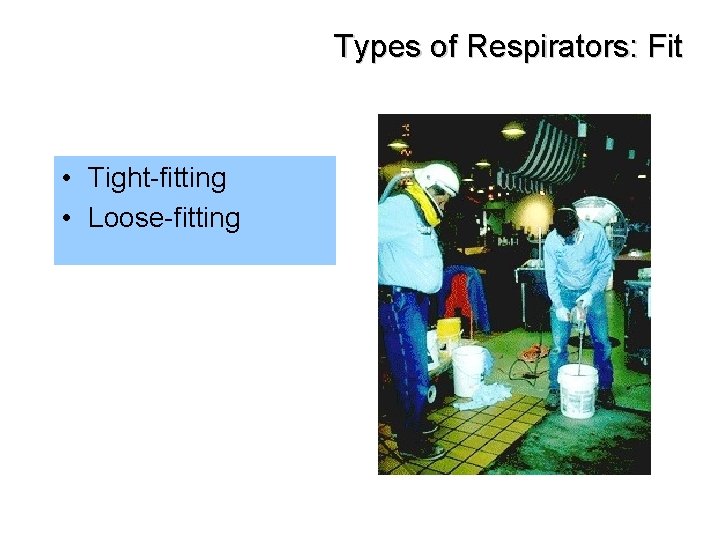
Types of Respirators: Fit • Tight-fitting • Loose-fitting
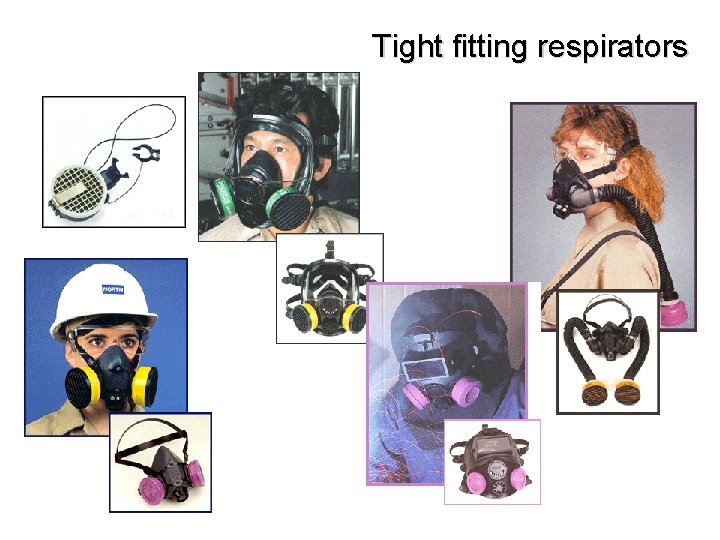
Tight fitting respirators
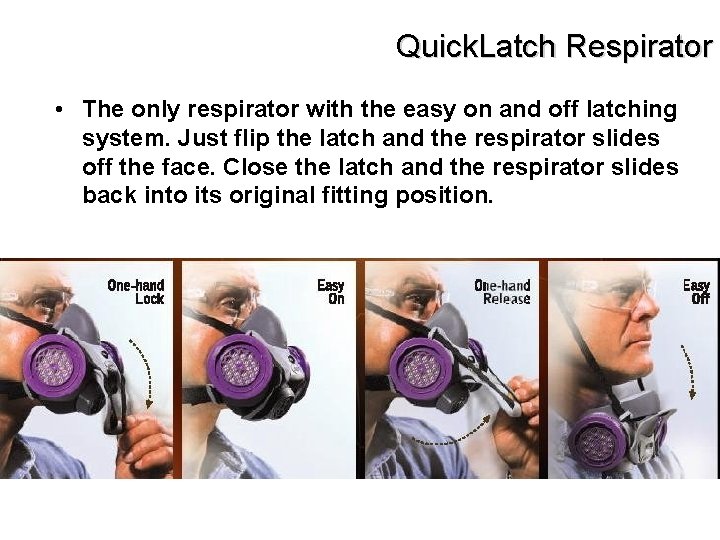
Quick. Latch Respirator • The only respirator with the easy on and off latching system. Just flip the latch and the respirator slides off the face. Close the latch and the respirator slides back into its original fitting position.
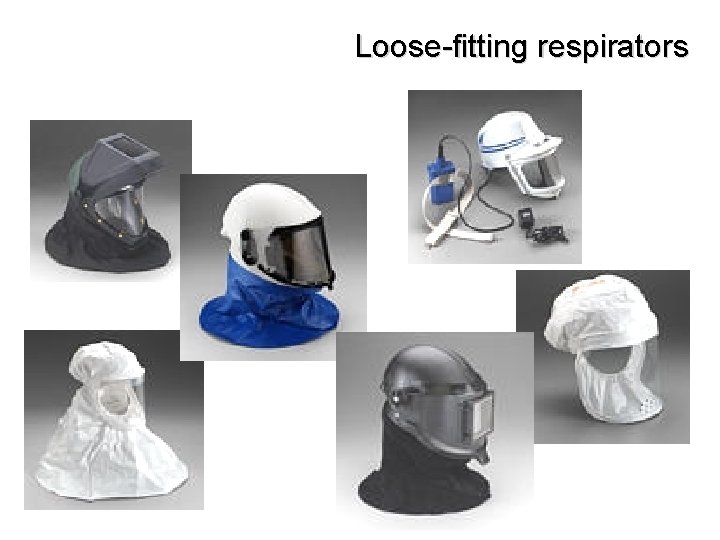
Loose-fitting respirators
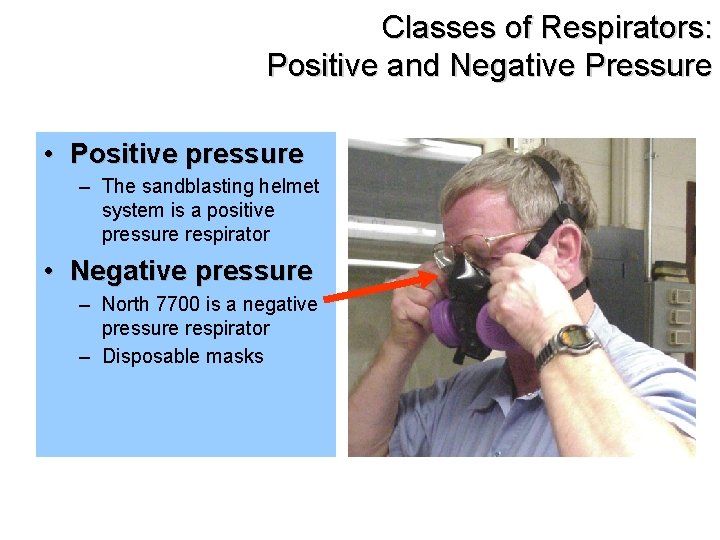
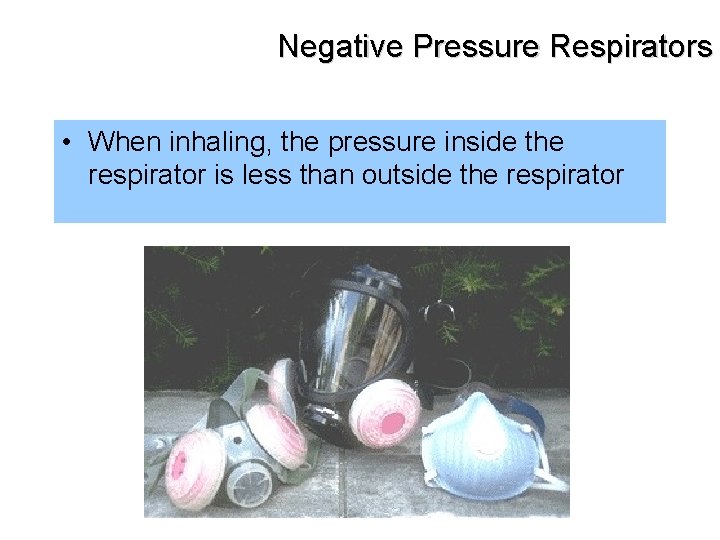
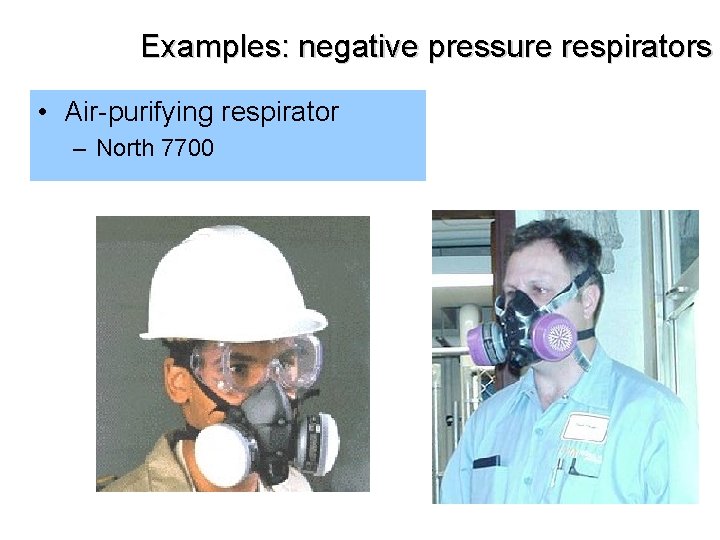
Classes of Respirators: Positive and Negative Pressure • Positive pressure – The sandblasting helmet system is a positive pressure respirator • Negative pressure – North 7700 is a negative pressure respirator – Disposable masks
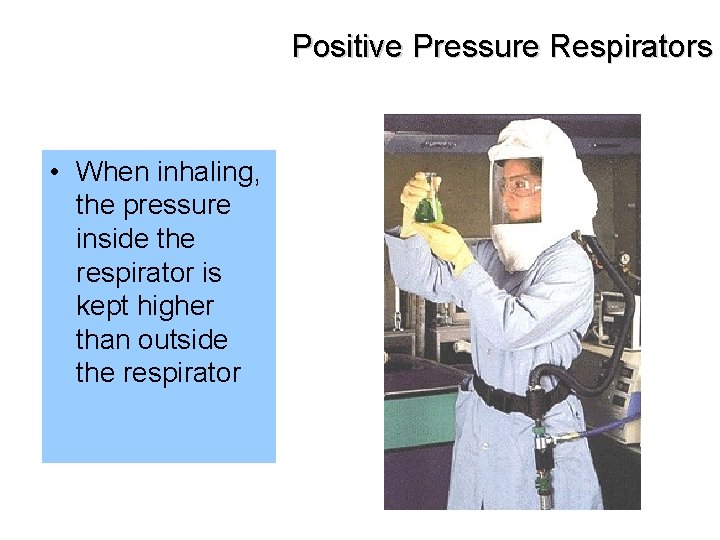
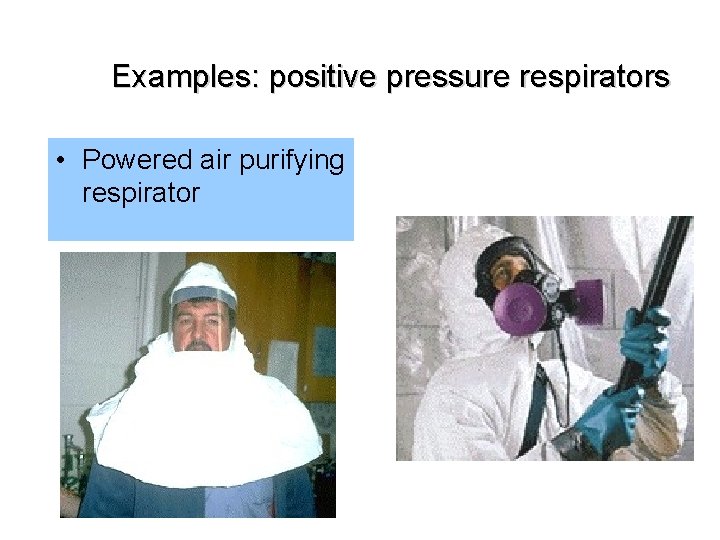
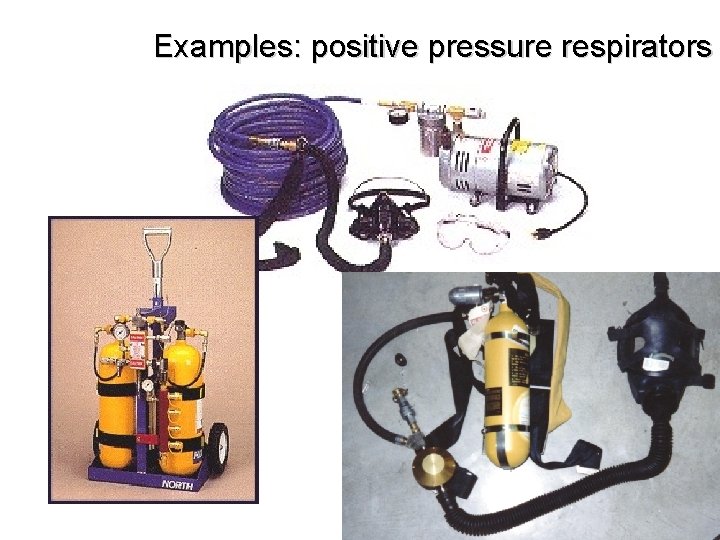
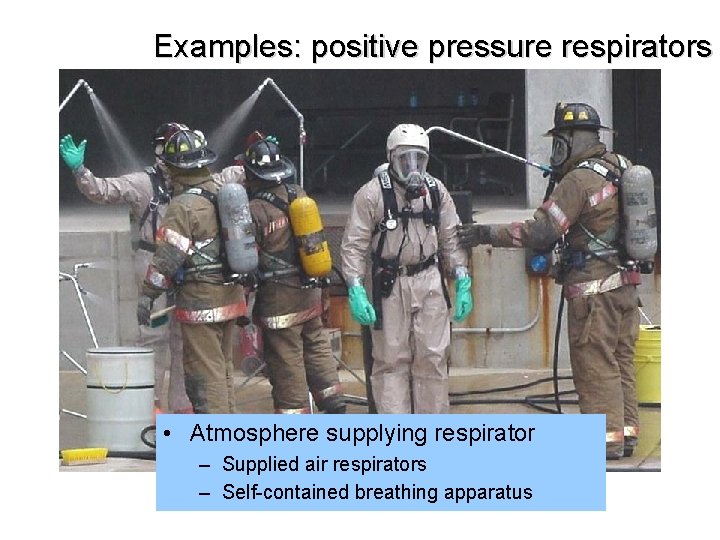
Positive Pressure Respirators • When inhaling, the pressure inside the respirator is kept higher than outside the respirator
Examples: positive pressure respirators • Powered air purifying respirator
Examples: positive pressure respirators
Examples: positive pressure respirators • Atmosphere supplying respirator – Supplied air respirators – Self-contained breathing apparatus
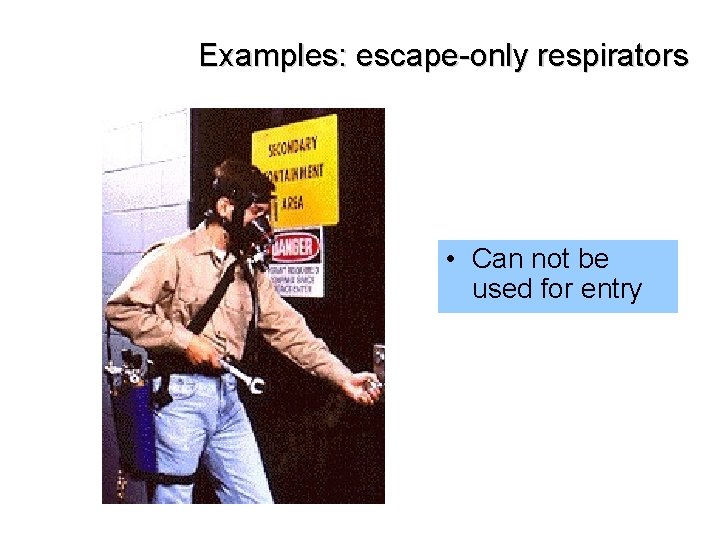
Examples: escape-only respirators • Can not be used for entry
Negative Pressure Respirators • When inhaling, the pressure inside the respirator is less than outside the respirator
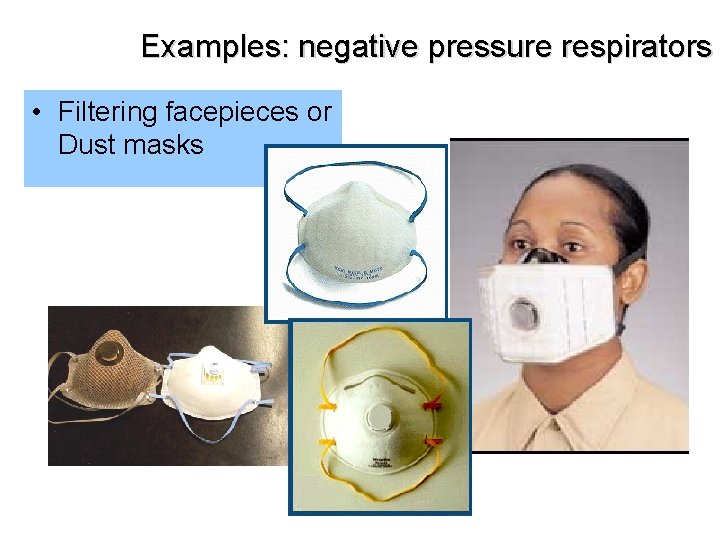
Examples: negative pressure respirators • Filtering facepieces or Dust masks
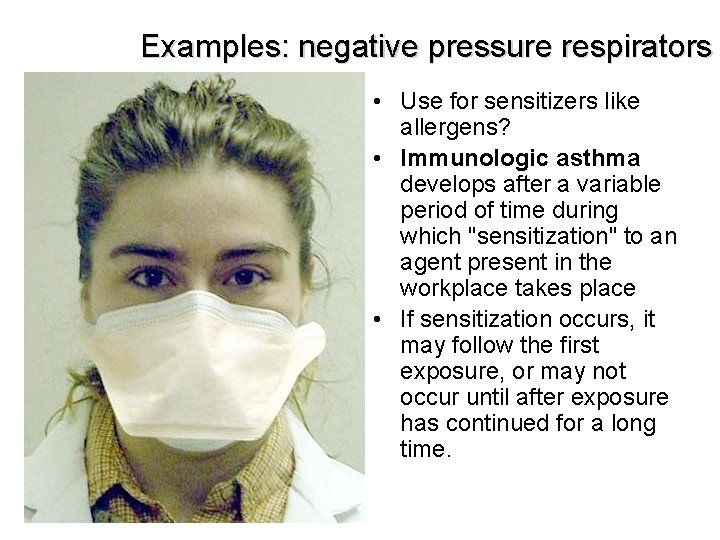
Examples: negative pressure respirators • Use for sensitizers like allergens? • Immunologic asthma develops after a variable period of time during which "sensitization" to an agent present in the workplace takes place • If sensitization occurs, it may follow the first exposure, or may not occur until after exposure has continued for a long time.
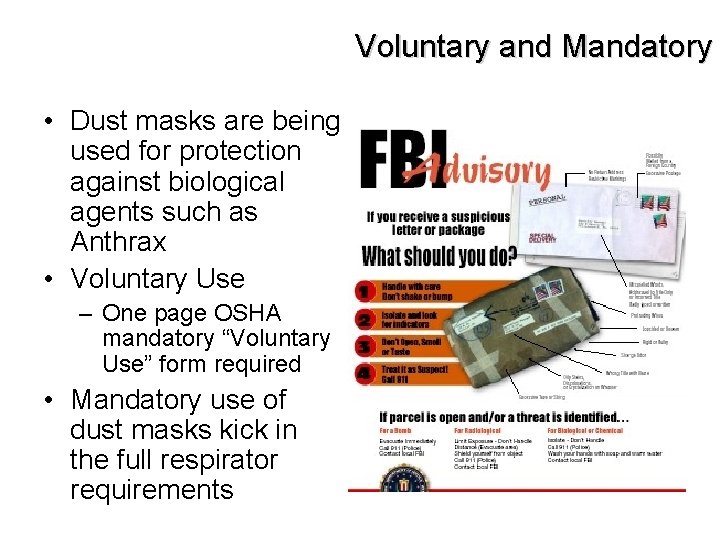
Voluntary and Mandatory • Dust masks are being used for protection against biological agents such as Anthrax • Voluntary Use – One page OSHA mandatory “Voluntary Use” form required • Mandatory use of dust masks kick in the full respirator requirements
Examples: negative pressure respirators • Air-purifying respirator – North 7700
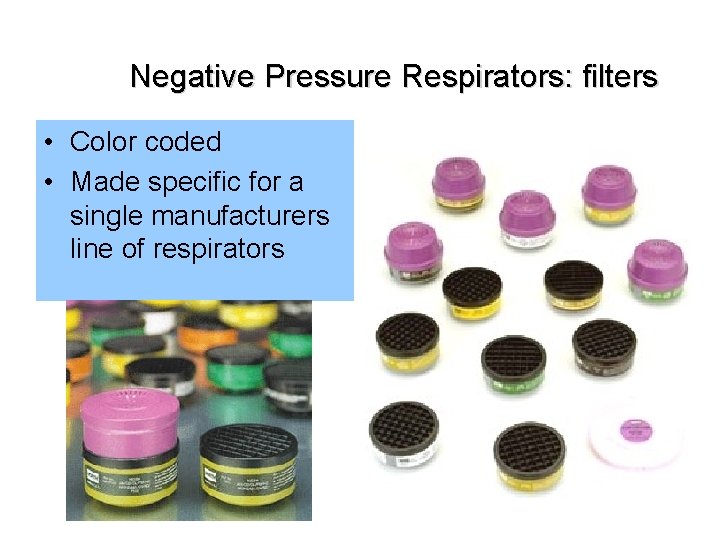
Negative Pressure Respirators: filters • Color coded • Made specific for a single manufacturers line of respirators
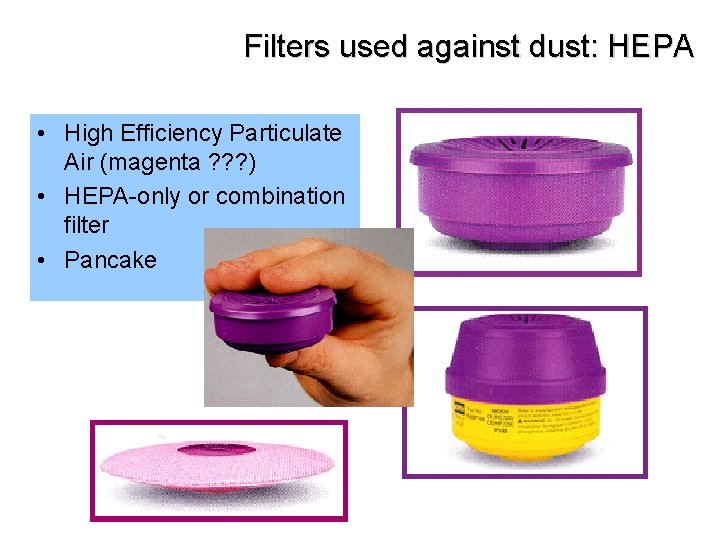
Filters used against dust: HEPA • High Efficiency Particulate Air (magenta ? ? ? ) • HEPA-only or combination filter • Pancake
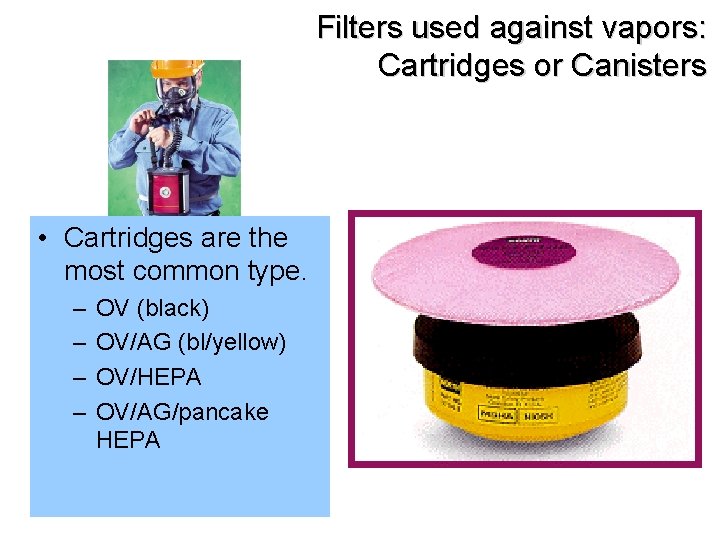
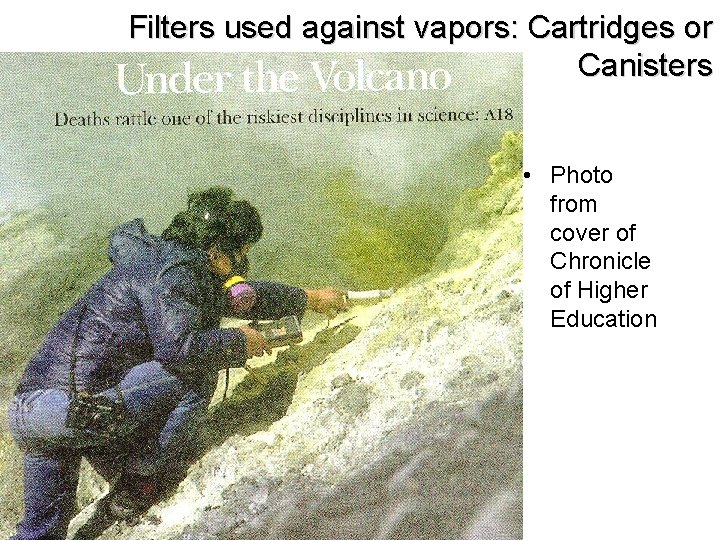
Filters used against vapors: Cartridges or Canisters • Cartridges are the most common type. – – OV (black) OV/AG (bl/yellow) OV/HEPA OV/AG/pancake HEPA
Filters used against vapors: Cartridges or Canisters • Photo from cover of Chronicle of Higher Education
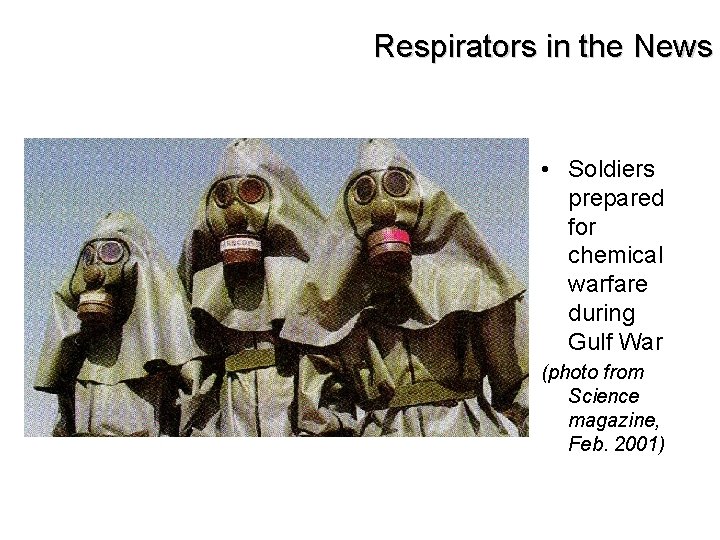
Respirators in the News • Soldiers prepared for chemical warfare during Gulf War (photo from Science magazine, Feb. 2001)
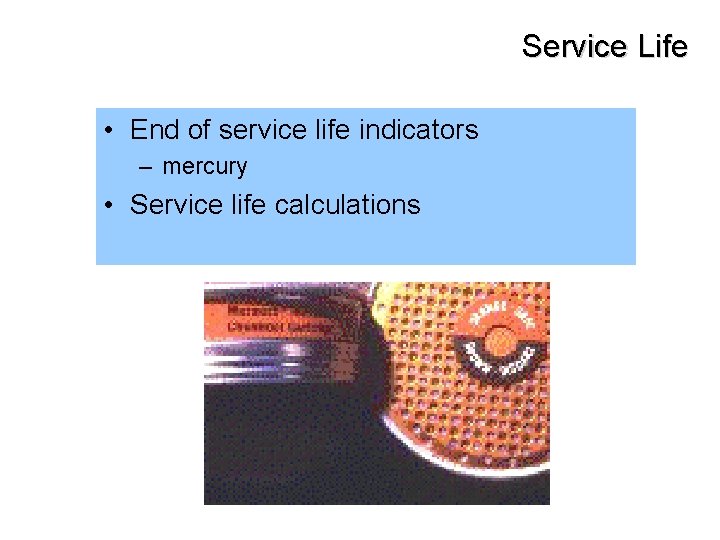
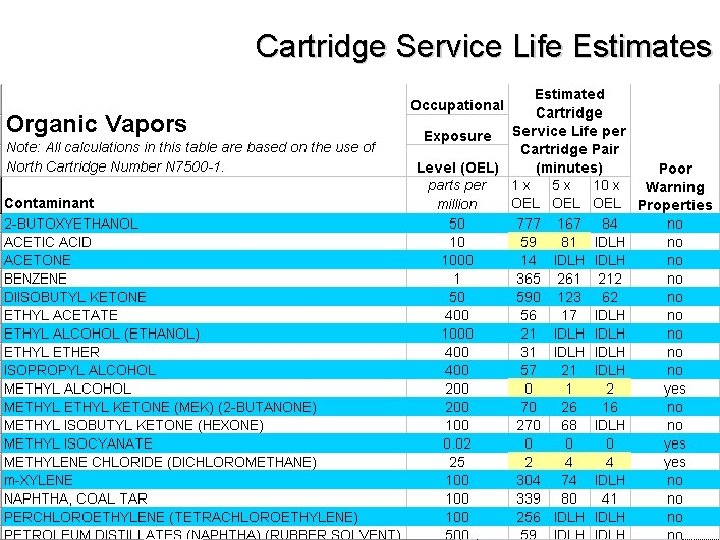
Service Life • End of service life indicators – mercury • Service life calculations
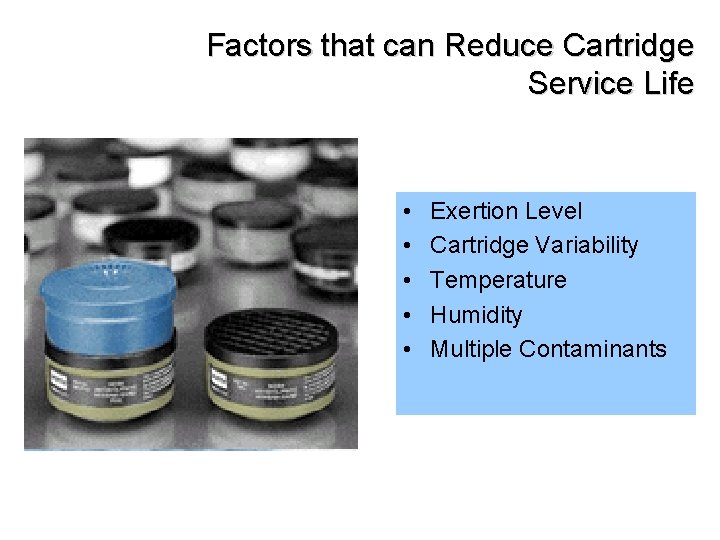
Factors that can Reduce Cartridge Service Life • • • Exertion Level Cartridge Variability Temperature Humidity Multiple Contaminants
Cartridge Service Life Estimates
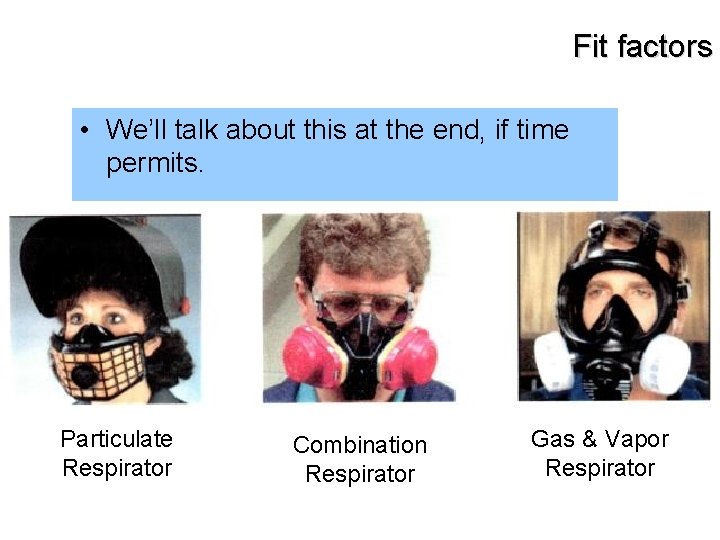
Fit factors • We’ll talk about this at the end, if time permits. Particulate Respirator Combination Respirator Gas & Vapor Respirator
Latex Allergy • Latex allergy can result from repeated exposures to proteins in natural rubber latex. Exposure can be due to skin contact with a latex-containing item or inhalation of the proteins. Reactions can range from skin rash to anaphylaxis and shock. Some items that include latex are gloves, medical supplies, respirators, rubber bands, balloons, and baby bottle nipples. • Respirators are available in rubber and silicone. The silicone masks can be used by those with latex sensitivities