
Outer Layers of the Sun Photosphere Limb darkening
Outer Layers of the Sun • Photosphere – Limb darkening – Sun spots • Chromosphere • Corona • Prominences, flares, coronal mass ejections • Reading 18. 5 -18. 10
The Sun’s Atmosphere • Photosphere - the 5800 K layer we see. • Chromosphere – a thin layer, a few 1000 km thick, at a temperature of about 10, 000 K. Can be seen during solar eclipse. • Corona – Outermost layer, 1, 000 km thick, at a temperature of about 1, 000 K.

Outer layers of sun 1 = photosphere, 2 = chromosphere, 3 = corona Why the outer layers of the Sun’s atmosphere are hotter is a puzzle.

Photosphere
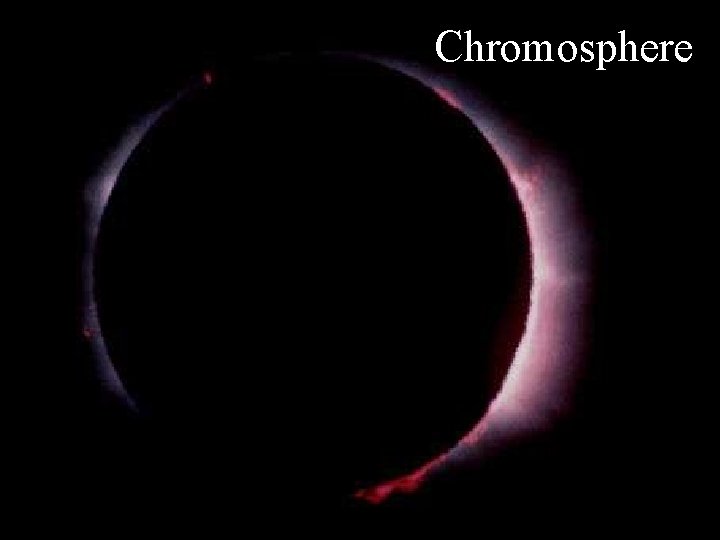
Chromosphere

Corona
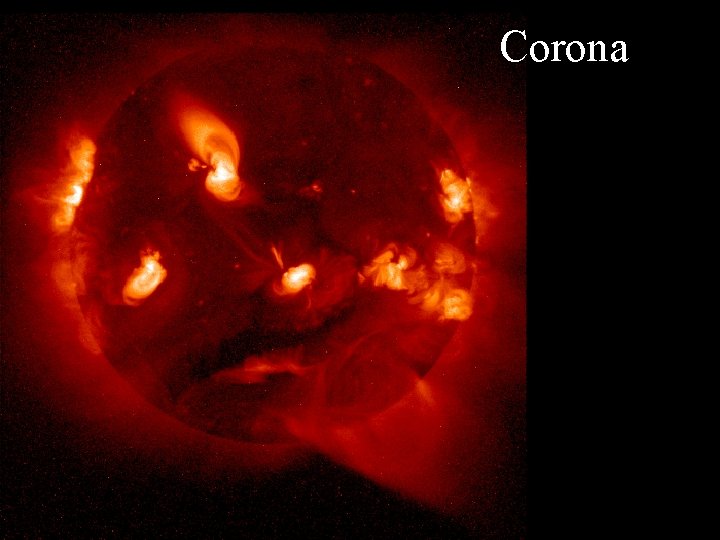
Corona
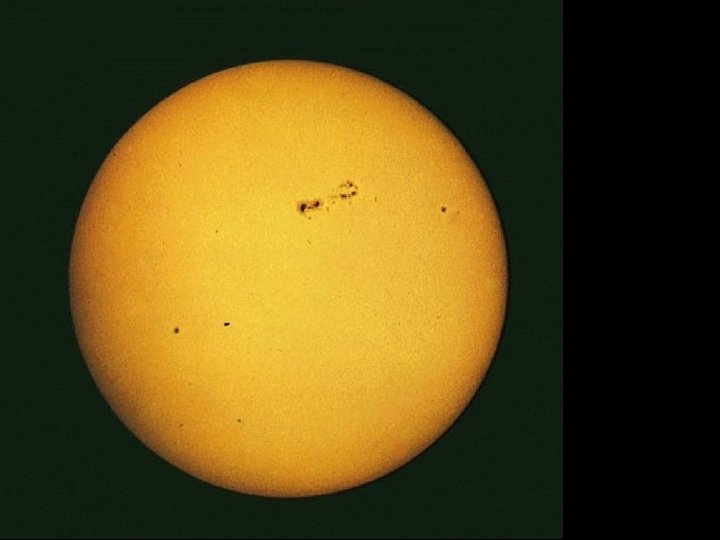
Limb darkening
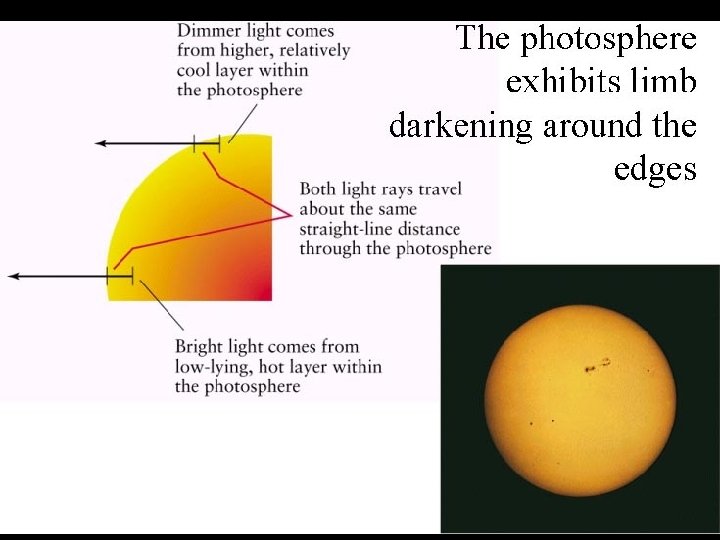
Limb darkening
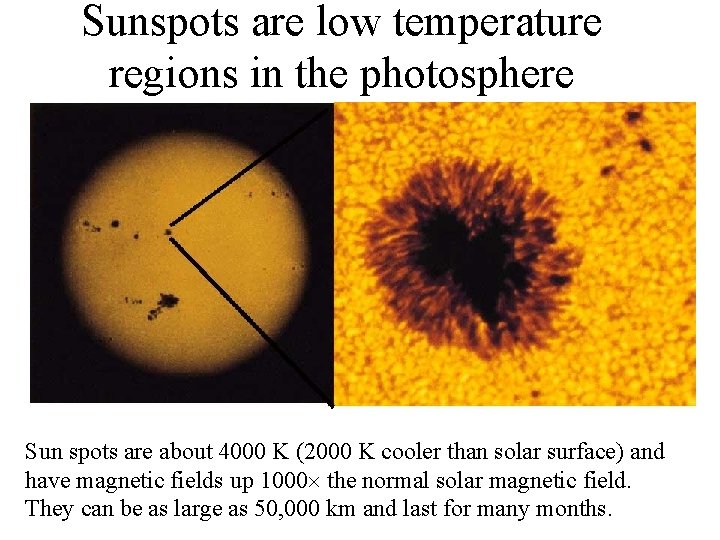
Sunspots are low temperature regions in the photosphere Sun spots are about 4000 K (2000 K cooler than solar surface) and have magnetic fields up 1000 the normal solar magnetic field. They can be as large as 50, 000 km and last for many months.
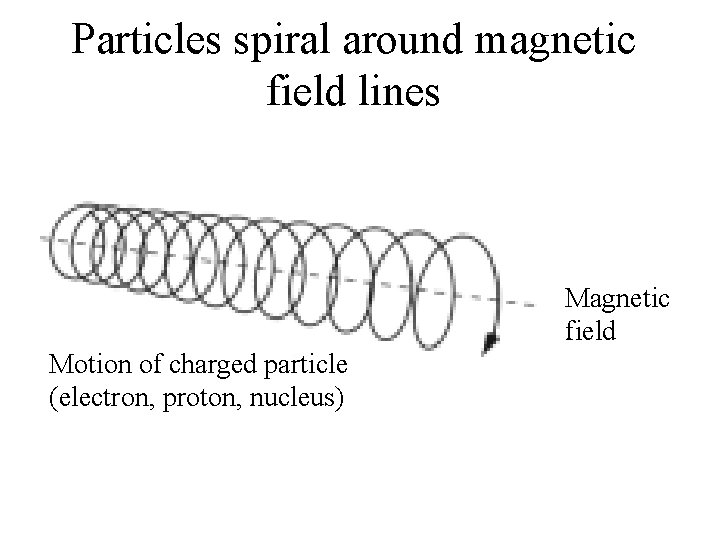
Particles spiral around magnetic field lines Magnetic field Motion of charged particle (electron, proton, nucleus)
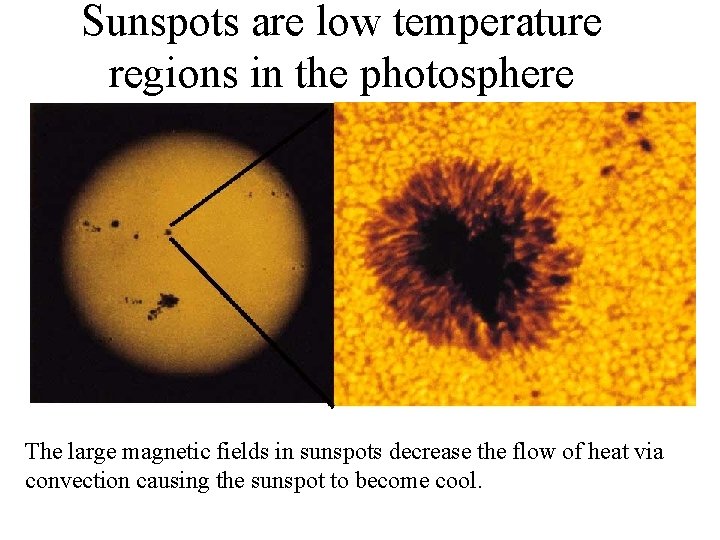
Sunspots are low temperature regions in the photosphere The large magnetic fields in sunspots decrease the flow of heat via convection causing the sunspot to become cool.

Sunspot cycle
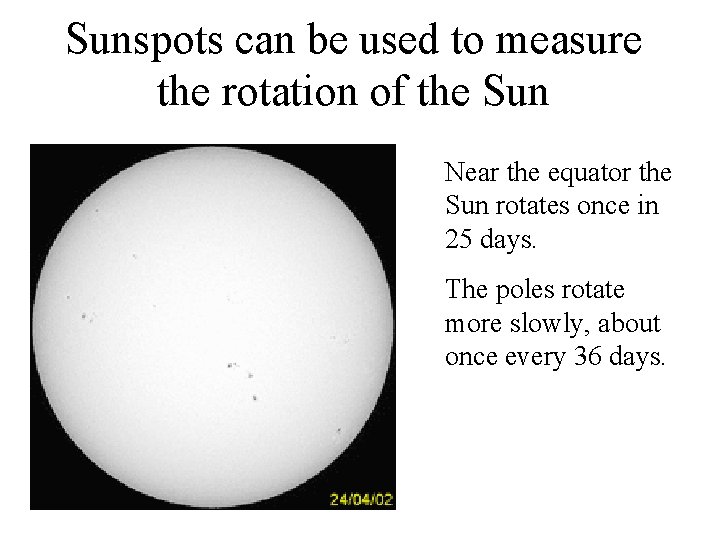
Sunspots can be used to measure the rotation of the Sun Near the equator the Sun rotates once in 25 days. The poles rotate more slowly, about once every 36 days.
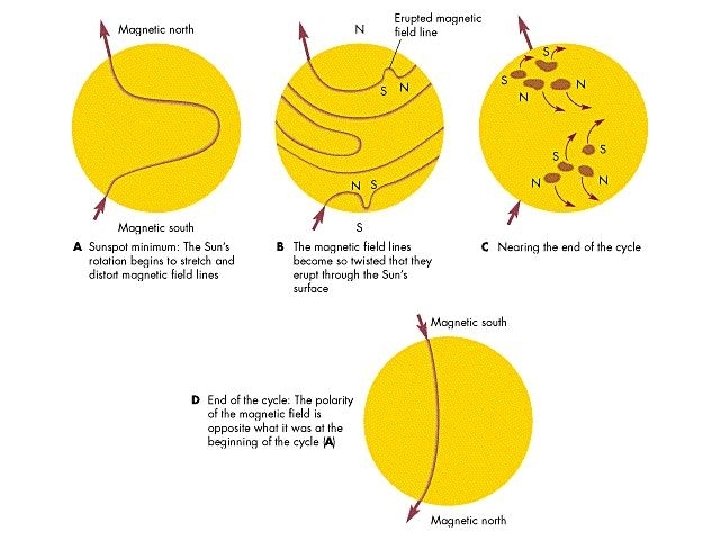
Sunspot cycle Each 11 years, the Sun’s magnetic field changes direction. Overall cycle is 22 years.
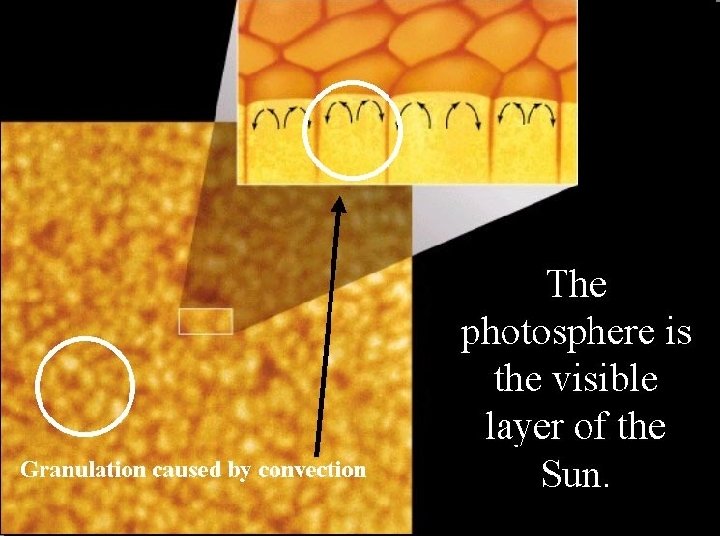
Granulation
What direct observational evidence supports the model of thermonuclear reactions in the Sun’s core? 1. 2. 3. 4. Neutrinos Gamma rays Sun spot counts WMD inspections
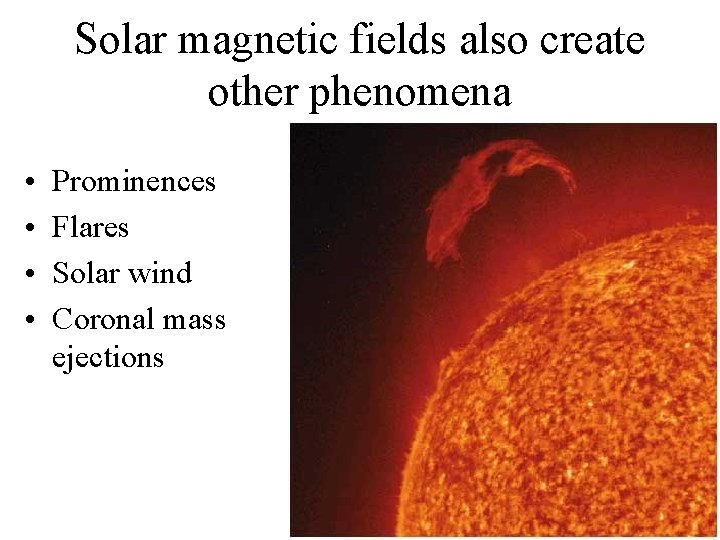
Solar magnetic fields also create other phenomena • • Prominences Flares Solar wind Coronal mass ejections
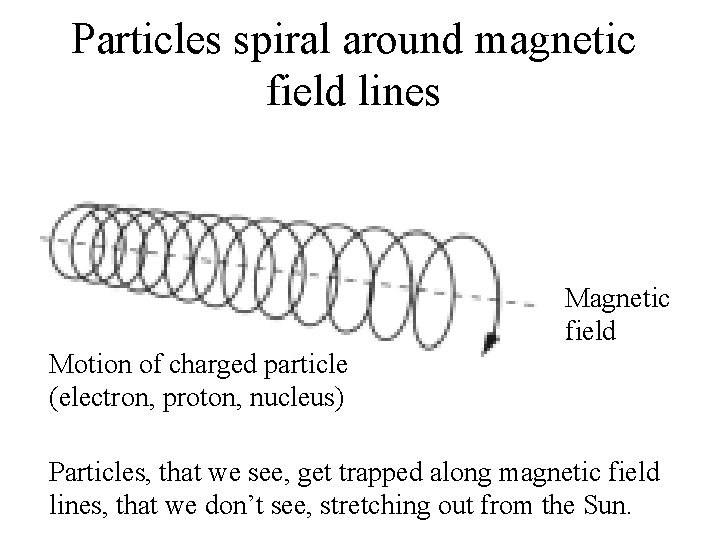
Particles spiral around magnetic field lines Magnetic field Motion of charged particle (electron, proton, nucleus) Particles, that we see, get trapped along magnetic field lines, that we don’t see, stretching out from the Sun.
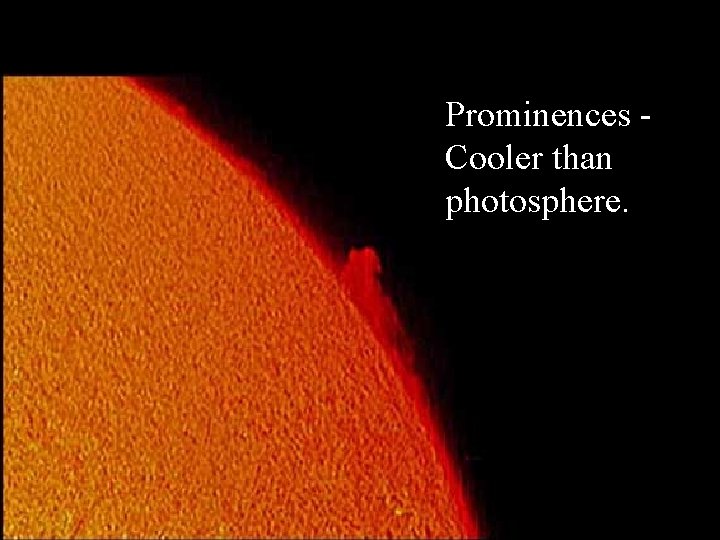
Prominences Cooler than photosphere.
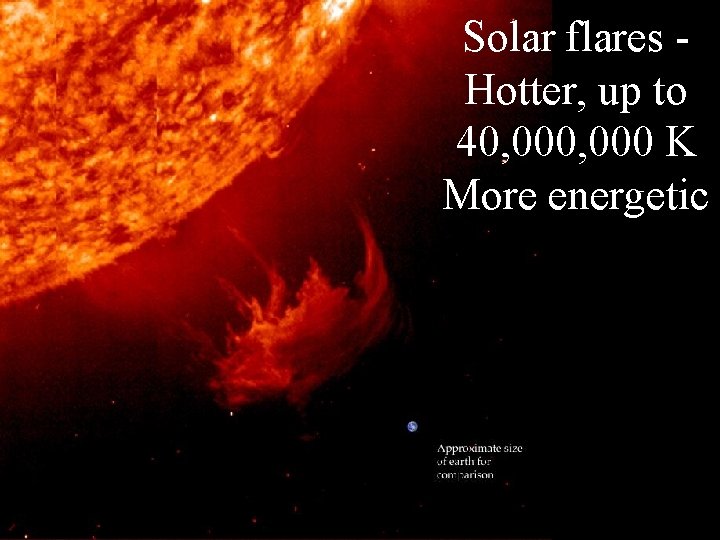
Solar flares Hotter, up to 40, 000 K More energetic
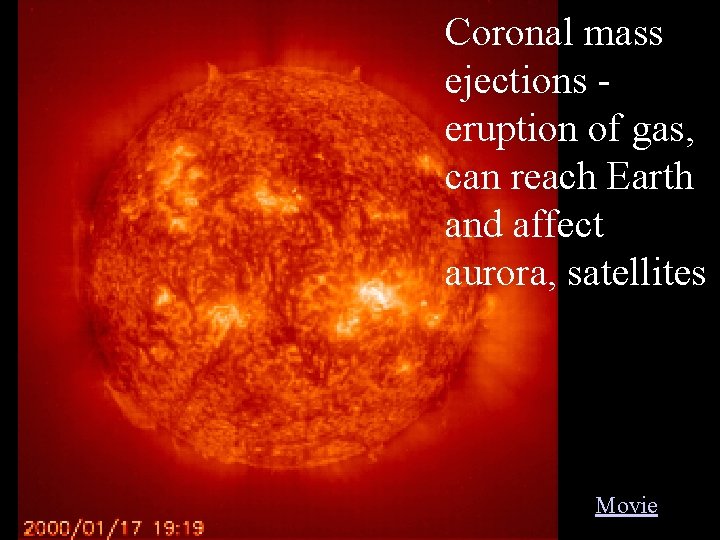
Coronal mass ejections eruption of gas, can reach Earth and affect aurora, satellites Movie
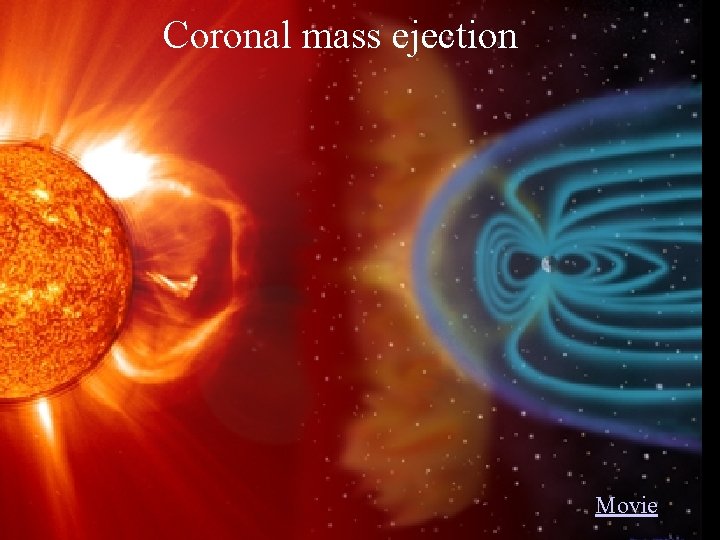
Coronal mass ejection Movie
Which statement is not correct? 1. The solar coronal temperature is about 106 K. 2. Sunspots are very cool and dark, with temperatures of about 300 K. 3. The Sun’s core has a temperature about 107 K. 4. The chromosphere is hotter than the photosphere.
Review Questions 1. Since the Sun is so bright, how is it possible to see its dim outer atmosphere (corona)? 2. Where does the solar wind come from? 3. What are sunspots? Why do they appear dark? 4. What is the connection between sunspots and the Sun’s magnetic field? 5. What is the sunspot cycle?
- Slides: 25