
Outdoor Learning Activities PreK to 5 th Grade






- Slides: 30
Outdoor Learning Activities Pre-K to 5 th. Grade Gables Elementary School, Neptune, NJ
Gables School Outdoor Classroom CURRICULUM AUTHORS: LAUREN MILES, SHEREE TERRELL WALKER, AMBER YI JOE WOERNER (ENVIRONMENTAL SCIENCE TEACHER)
Our Focus This summer… Develop 2 learning activities for Pre-K to 5 th…
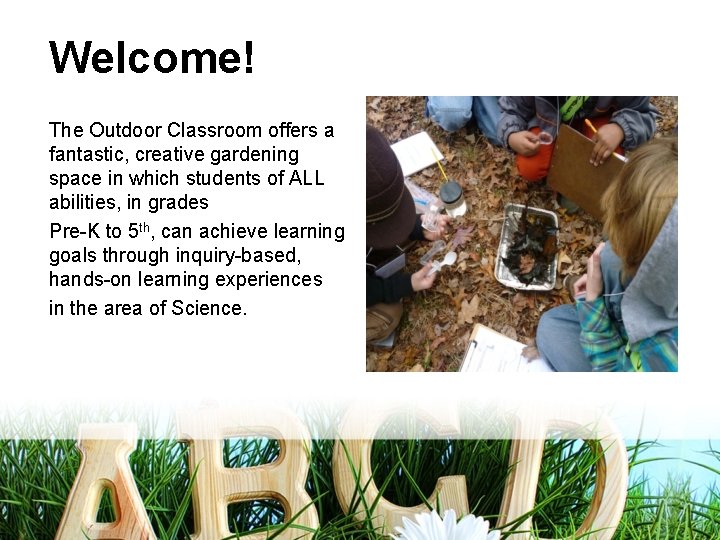
Welcome! The Outdoor Classroom offers a fantastic, creative gardening space in which students of ALL abilities, in grades Pre-K to 5 th, can achieve learning goals through inquiry-based, hands-on learning experiences in the area of Science.
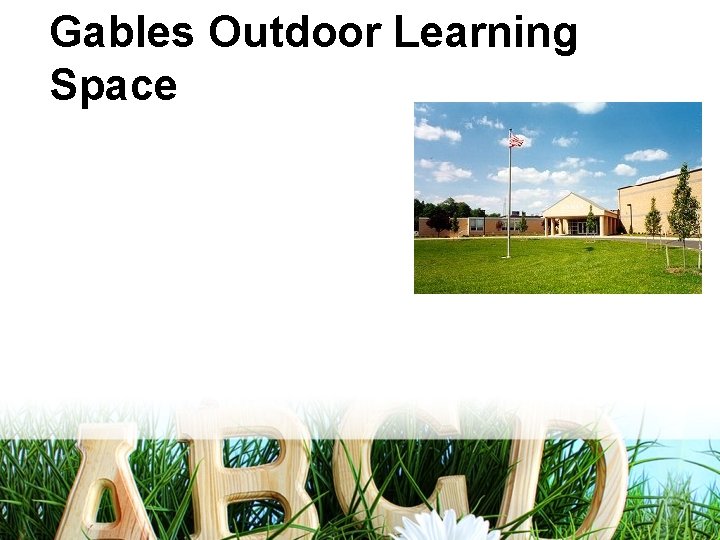
Gables Outdoor Learning Space
Great Staff… Great Students…Great Expectations! Learning Activities for grades Pre-K to 5 th reflect the New Jersey State Science Standards.
Energy Flow Cycling of Materials Interdependence Idea of Change CORE ECOLOGICAL CONCEPTS
The Outdoor Classroom Take a Closer Look…
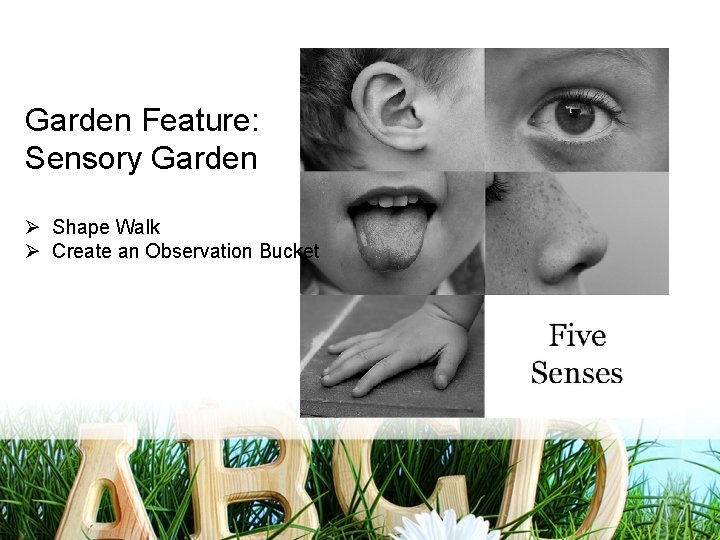
Learning Activities: Pre-K The Five Senses
Garden Feature: Sensory Garden Ø Shape Walk Ø Create an Observation Bucket
Learning Activities: Kindergarten Weather
Garden Feature: Sensory Garden Ø Make a Rain Gauge Ø Make a Sundial
Learning Activities: st 1 Grade Habitats & Organisms
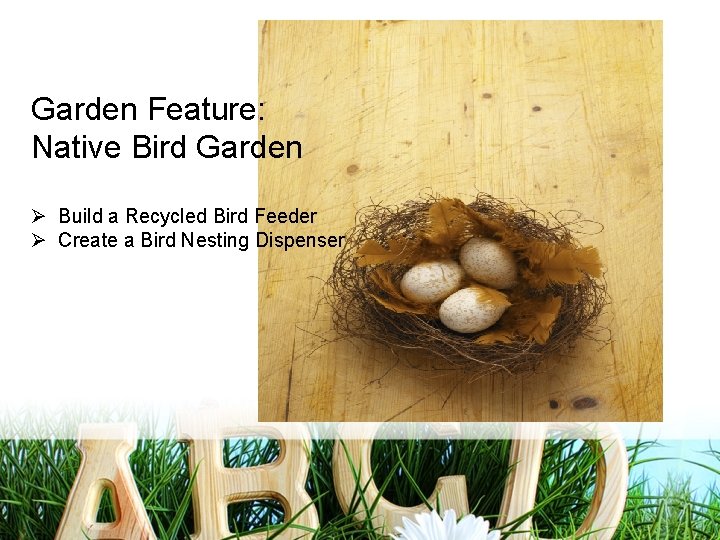
Garden Feature: Native Bird Garden Ø Build a Recycled Bird Feeder Ø Create a Bird Nesting Dispenser
Learning Activities: nd 2 Habitats Grade
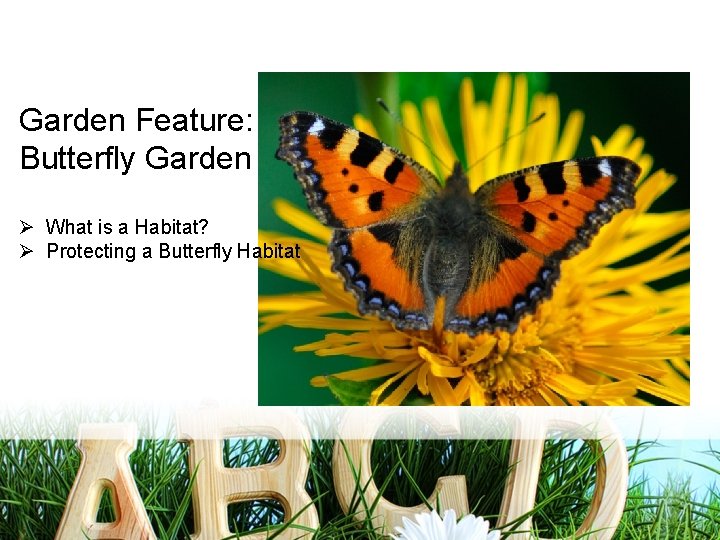
Garden Feature: Butterfly Garden Ø What is a Habitat? Ø Protecting a Butterfly Habitat
Learning Activities: rd 3 Grade Life Cycles & Interdependence
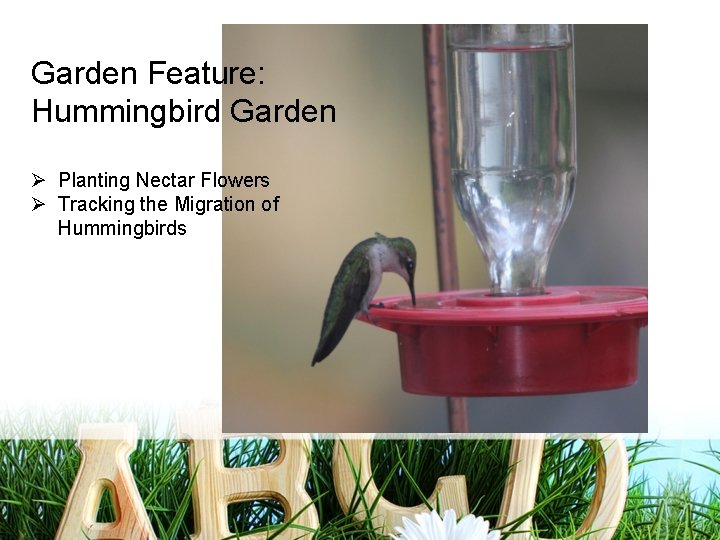
Garden Feature: Hummingbird Garden Ø Planting Nectar Flowers Ø Tracking the Migration of Hummingbirds
Learning Activities: th 4 Grade Ecosystems & Energy
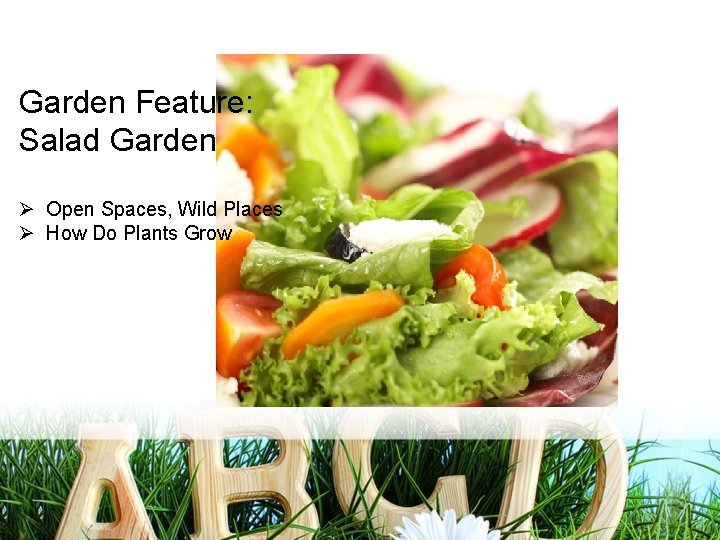
Garden Feature: Salad Garden Ø Open Spaces, Wild Places Ø How Do Plants Grow
Learning Activities: th 5 Grade Energy & Earth’s Properties
Garden Feature: Hydroponics Garden Ø Ø Soil Analysis How Plants Grow Aztec Floating Gardens Great Growing Ground Stuff
Learning Activity Template
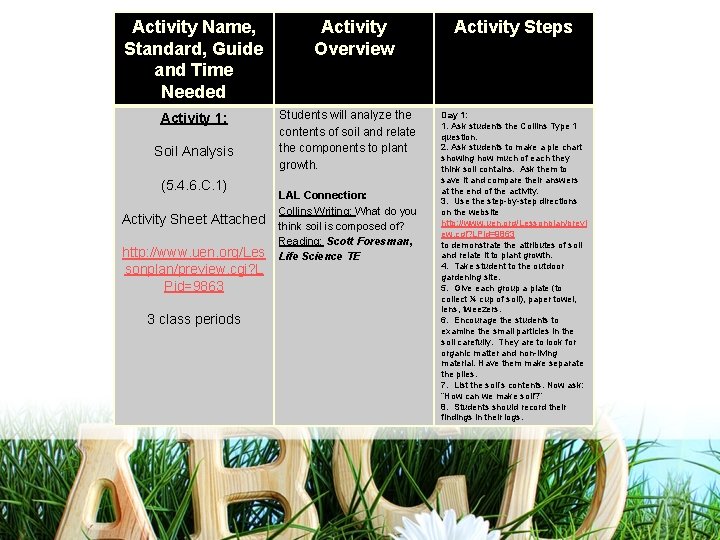
Activity Name, Standard, Guide and Time Needed Activity 1: Soil Analysis (5. 4. 6. C. 1) Activity Sheet Attached http: //www. uen. org/Les sonplan/preview. cgi? L Pid=9863 3 class periods Activity Overview Students will analyze the contents of soil and relate the components to plant growth. LAL Connection: Collins Writing: What do you think soil is composed of? Reading: Scott Foresman, Life Science TE Activity Steps Day 1: 1. Ask students the Collins Type 1 question. 2. Ask students to make a pie chart showing how much of each they think soil contains. Ask them to save it and compare their answers at the end of the activity. 3. Use the step-by-step directions on the website http: //www. uen. org/Lessonplan/previ ew. cgi? LPid=9863 to demonstrate the attributes of soil and relate it to plant growth. 4. Take student to the outdoor gardening site. 5. Give each group a plate (to collect ¼ cup of soil), paper towel, lens, tweezers. 6. Encourage the students to examine the small particles in the soil carefully. They are to look for organic matter and non-living material. Have them make separate the piles. 7. List the soil’s contents. Now ask: “How can we make soil? ” 8. Students should record their findings in their logs.
Questions?
Log-in to access learning plans G-drive on the desktop
Gables School Sees the Light and Goes Green! www. smartexchange. com www. thinkquest. org www. proteacher. com http: //growingblue. com www. epa. gov/kids/club http: //eelink. net http: //www. discoveryeducation. com www. learningscience. org CLASSROOM RESOURCES
Bang, Molly. Common Ground, The Water, Earth, and Air We Share, New York, NY : The Blue Sky Press, c 1997. A book that invites discussion. It helps us all to see our daily actions in a new way – and to understand why we must work together to preserve our common ground. Barraclough, Sue. Making a Difference Recycling Materials, North Mankato, MN : Sea-to-Sea Pub. Co. , c 2008. Encourages children to help recycle, and think carefully about the value of materials and how they can be used again. Bailey, Jacqui. What’s the Point of Being Green? , North Mankato, MN : Two’s Company Pub. Co. , c 2010. Written especially for young adult readers, this heavily illustrated book talks about the threat to our planet’s environment and outlines steps that governments, organizations, and ordinary citizens – including this book’s young readers – can take to help keep the planet green. Berger, Melvin and Gilda. Your Five Senses, New York, NY : Scholastic, c 2003. A color-illustrated overview of the five senses. Boyd, Lizi. Lulu Crow’s Garden, Canada : Pub. Co. , Little, Brown, & Company, c 1998. Rhyming nonsense verses picture Lulu Crow in her garden with all her animal friends. CLASSROOM RESOURCES
Cole, Joanna. The Magic School Bus Gets Planted, New York, NY : Scholastic, c 1997. In a young reader’s introduction to plants and the science behind how they grow, Ms. Fizzle’s class searches for a beanstalk for the class play, and fans are invited to participate with the accompanying seeds, pots, and stickers. Ehlert, Lois. Eating the Alphabet, New York, NJ: Harcourt Brace Pub. Co. , c 1994. While teaching upperand lowercase letters to preschoolers, it introduces fruits and vegetables from around the world. Ehlert, Lois. Growing Vegetable Soup, New York, NJ: Harcourt Brace Pub. Co. , c 1994. A book about the gardening cycle with an easy recipe for vegetable soup. Glaser, Linda. Wonderful Worms, Minneapolis, MN: Millbrook Press Pub. Co. , c 1992. Describes the physical characteristics, behavior, and life cycle of the common earthworm. Henkes, Kevin. My Garden, New York, NY : Harper. Collins Pub. Co. , c 2010. The girl in this book grows chocolate rabbits, tomatoes as big as beach balls, flowers that change color, and seashells in her garden. CLASSROOM RESOURCES
Hines, Grossnickle Anna. Miss Emma’s Wild Garden, New York, NJ : Greenwillow Books Pub. Co. , c 1997. Chloe’s friend, Miss Emma, has a garden that grows any way it wants to. It is full of flowers, and there are wild animals too. There is another wild creature in the garden, whose identity children are invited to guess. Kalman, Bobbie. How a Plant Grows, New York, NJ: Crabtree Pub. Co. , c 1996. . It introduces children to the amazing lives of plants – from their beginnings, through their growth, to reproduction and death. Slade, Suzanne. A Plastic Bottle’s Journey, North Mankato, MN : Picture Window Books, c 2011. Where did that plastic bottle in your hand come from? And where is it going next? A plastic bottle’s journey is filled with bounces, bumps, and blasts. Pack your bags, and get ready to follow it! Stewart, Sarah. The Gardener, New York, NY : Square Fish Pub. Co. , c 2007. The book introduces readers to an engaging and determined young heroine, whose story is told through letters written home. CLASSROOM RESOURCES