
Outcomes review and use of the 7 point

- Slides: 17
Outcomes review and use of the 7 -point scale 1
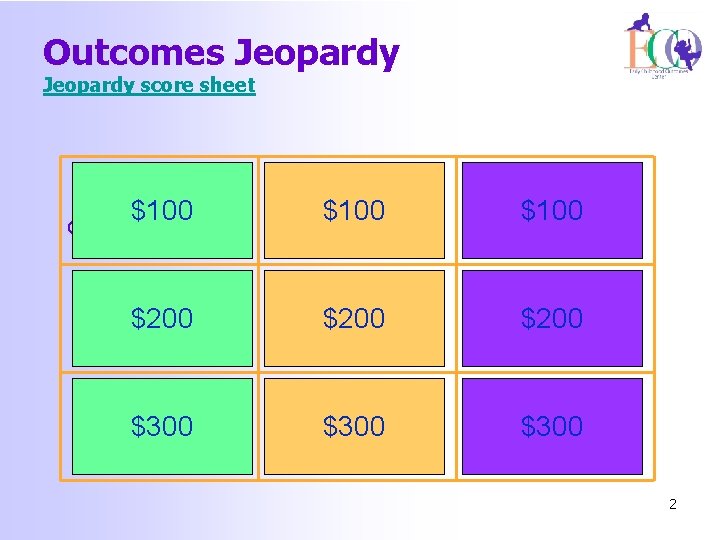
Outcomes Jeopardy score sheet Reading the Pointing to the letter$100 “S” on the $100 cabinet for cereal Stop sign Washes hands $100 before lunch $200 Biting Plays by himself $200 in the classroom Plays with $200 rhyming words Building a castle from blocks $300 with a friend Problems $300 sleeping Sharing a cookie $300 at lunchtime 2
How did you do? ? 3
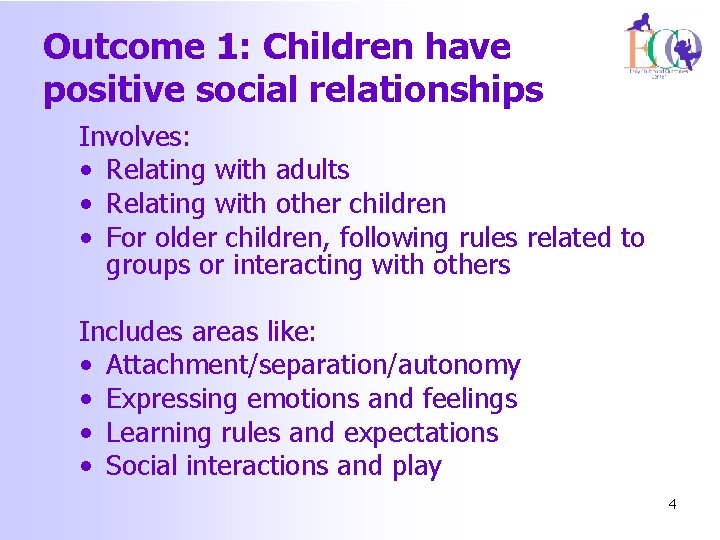
Outcome 1: Children have positive social relationships Involves: • Relating with adults • Relating with other children • For older children, following rules related to groups or interacting with others Includes areas like: • Attachment/separation/autonomy • Expressing emotions and feelings • Learning rules and expectations • Social interactions and play 4
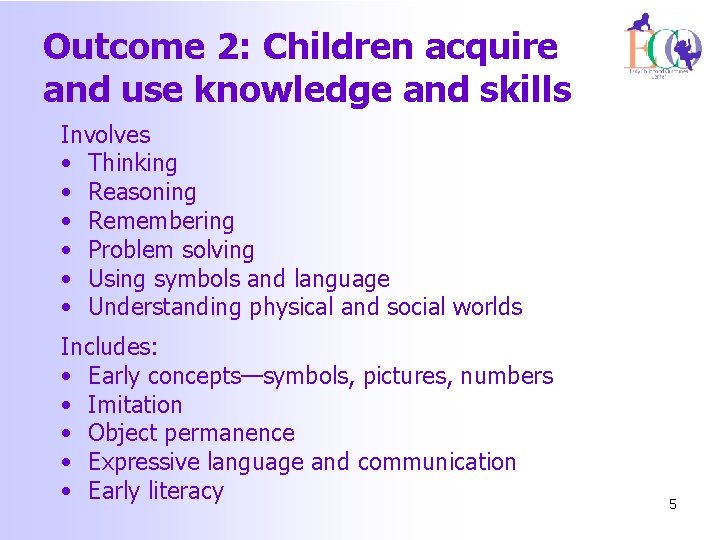
Outcome 2: Children acquire and use knowledge and skills Involves • Thinking • Reasoning • Remembering • Problem solving • Using symbols and language • Understanding physical and social worlds Includes: • Early concepts—symbols, pictures, numbers • Imitation • Object permanence • Expressive language and communication • Early literacy 5
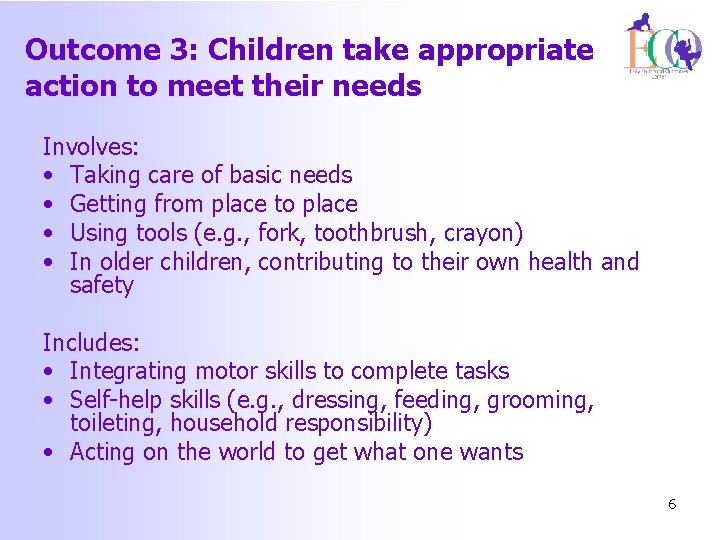
Outcome 3: Children take appropriate action to meet their needs Involves: • Taking care of basic needs • Getting from place to place • Using tools (e. g. , fork, toothbrush, crayon) • In older children, contributing to their own health and safety Includes: • Integrating motor skills to complete tasks • Self-help skills (e. g. , dressing, feeding, grooming, toileting, household responsibility) • Acting on the world to get what one wants 6
Need more information about the three outcomes? ECO Professional Development Resources 7
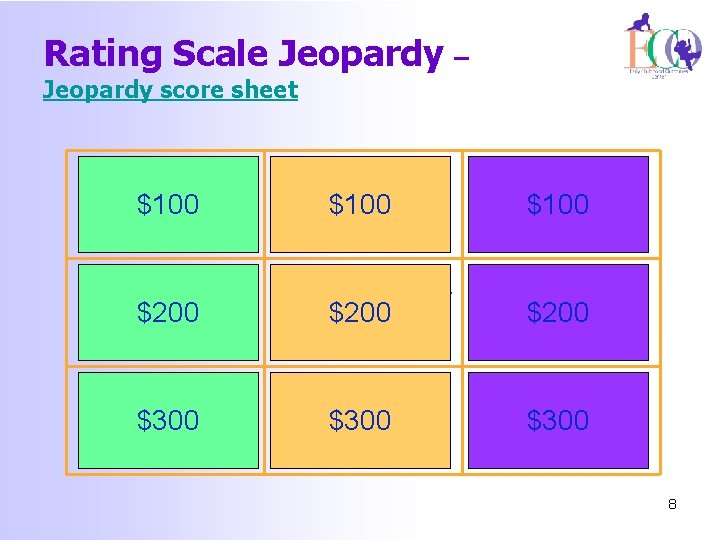
Rating Scale Jeopardy – Jeopardy score sheet Age appropriate functioning $100– no concerns Mix of age appropriate and not age $100 appropriate functioning No age appropriate functioning – not yet $100 showing immediate foundational skills Some age appropriate $200 functioning but very little No age appropriate functioning – lots of $200 immediate foundational skills Age appropriate functioning $200– some concerns Rarely shows age appropriate $300 functioning No age appropriate functioning – some $300 immediate foundational skills Age appropriate $300 functioning 8
How did you do? ? Outcomes and Rating Scale Jeopardy Answer Key 9
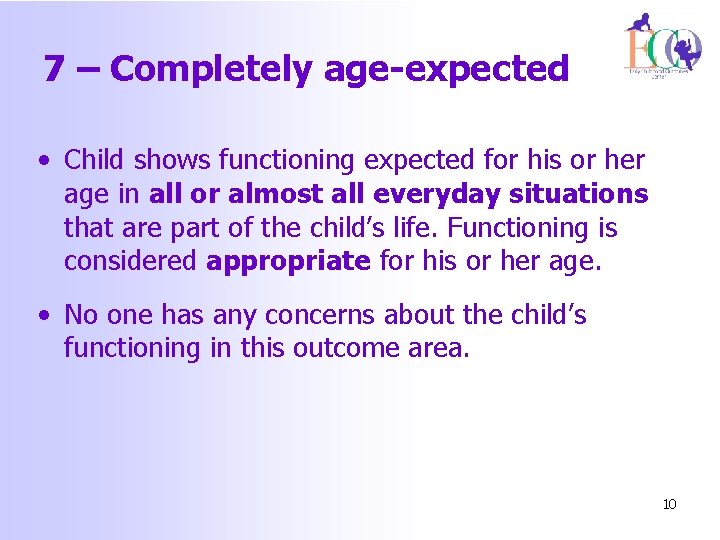
7 – Completely age-expected • Child shows functioning expected for his or her age in all or almost all everyday situations that are part of the child’s life. Functioning is considered appropriate for his or her age. • No one has any concerns about the child’s functioning in this outcome area. 10
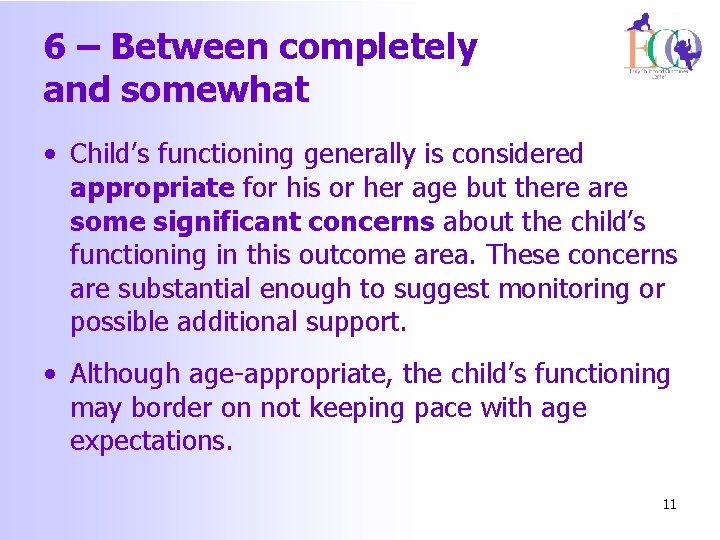
6 – Between completely and somewhat • Child’s functioning generally is considered appropriate for his or her age but there are some significant concerns about the child’s functioning in this outcome area. These concerns are substantial enough to suggest monitoring or possible additional support. • Although age-appropriate, the child’s functioning may border on not keeping pace with age expectations. 11
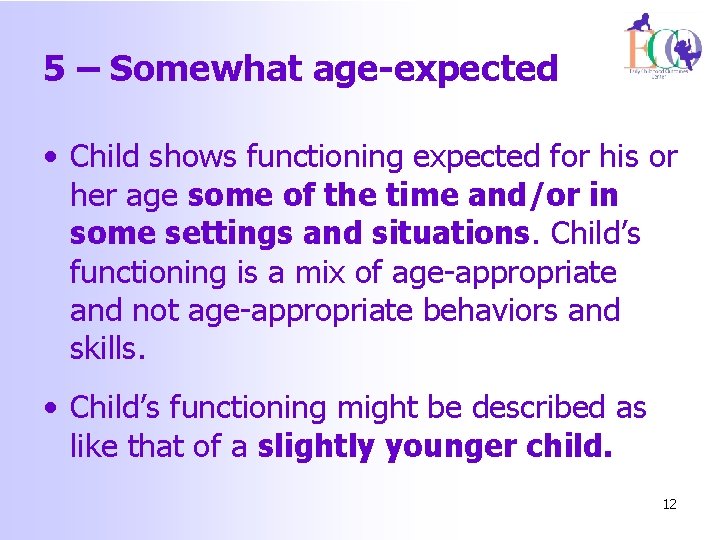
5 – Somewhat age-expected • Child shows functioning expected for his or her age some of the time and/or in some settings and situations. Child’s functioning is a mix of age-appropriate and not age-appropriate behaviors and skills. • Child’s functioning might be described as like that of a slightly younger child. 12
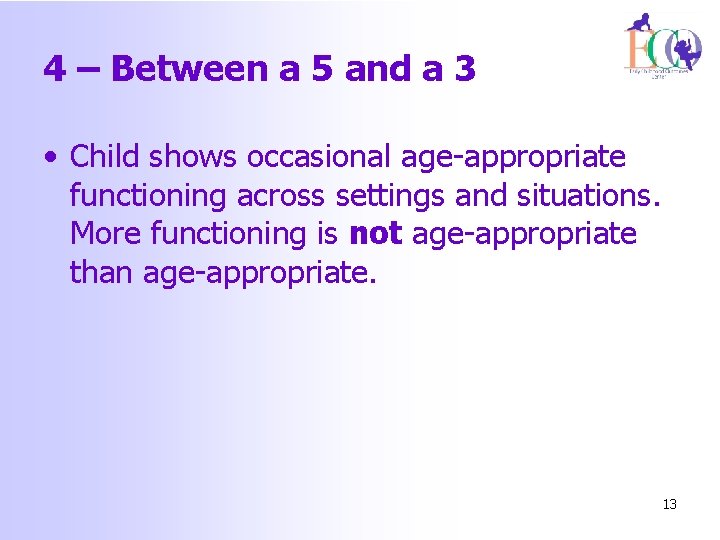
4 – Between a 5 and a 3 • Child shows occasional age-appropriate functioning across settings and situations. More functioning is not age-appropriate than age-appropriate. 13
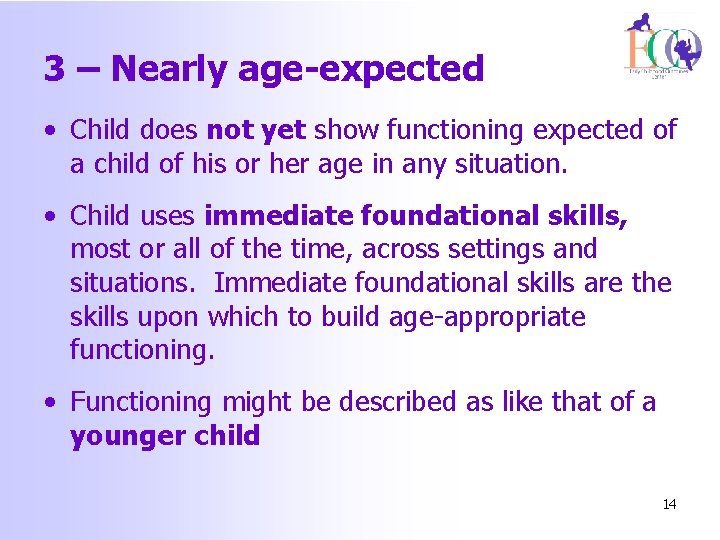
3 – Nearly age-expected • Child does not yet show functioning expected of a child of his or her age in any situation. • Child uses immediate foundational skills, most or all of the time, across settings and situations. Immediate foundational skills are the skills upon which to build age-appropriate functioning. • Functioning might be described as like that of a younger child 14
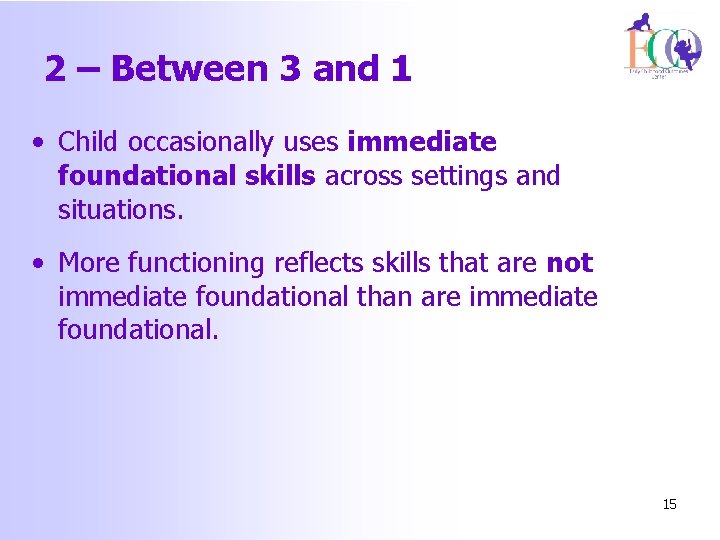
2 – Between 3 and 1 • Child occasionally uses immediate foundational skills across settings and situations. • More functioning reflects skills that are not immediate foundational than are immediate foundational. 15
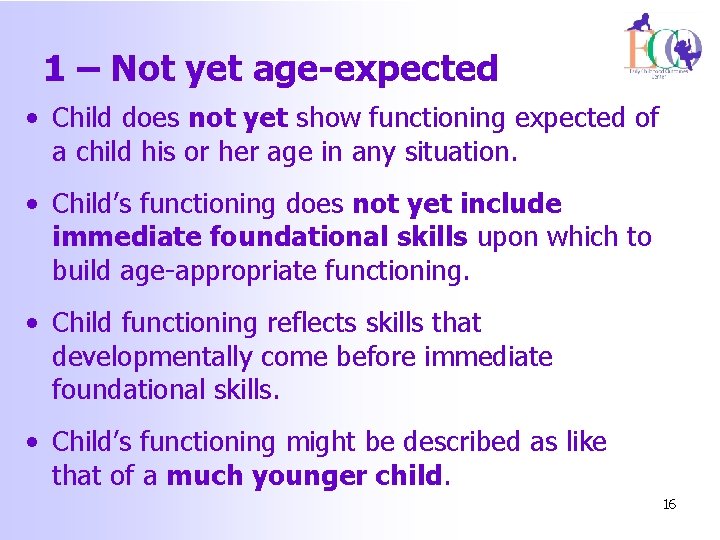
1 – Not yet age-expected • Child does not yet show functioning expected of a child his or her age in any situation. • Child’s functioning does not yet include immediate foundational skills upon which to build age-appropriate functioning. • Child functioning reflects skills that developmentally come before immediate foundational skills. • Child’s functioning might be described as like that of a much younger child. 16
Need more information about the points on the rating scale? Age-expected Child Development Child Outcomes Summary Process 17