
Outcomes of extraarticular intraepiphyseal drilling for OCD lesions
- Slides: 22
Outcomes of extra-articular, intra-epiphyseal drilling for OCD lesions of the knee with intact articular cartilage Eric W Edmonds, MD Jay Albright, MD Scott J Mubarak, MD Tracey Bastrom, MA Henry G Chambers, MD
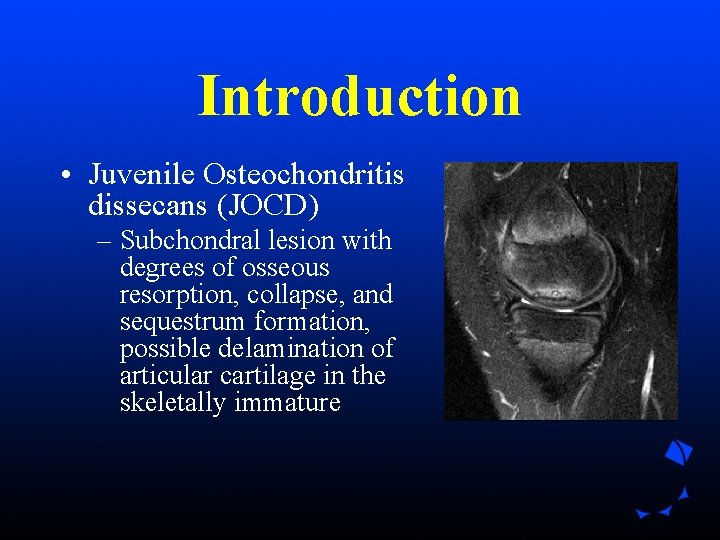
Introduction • Juvenile Osteochondritis dissecans (JOCD) – Subchondral lesion with degrees of osseous resorption, collapse, and sequestrum formation, possible delamination of articular cartilage in the skeletally immature
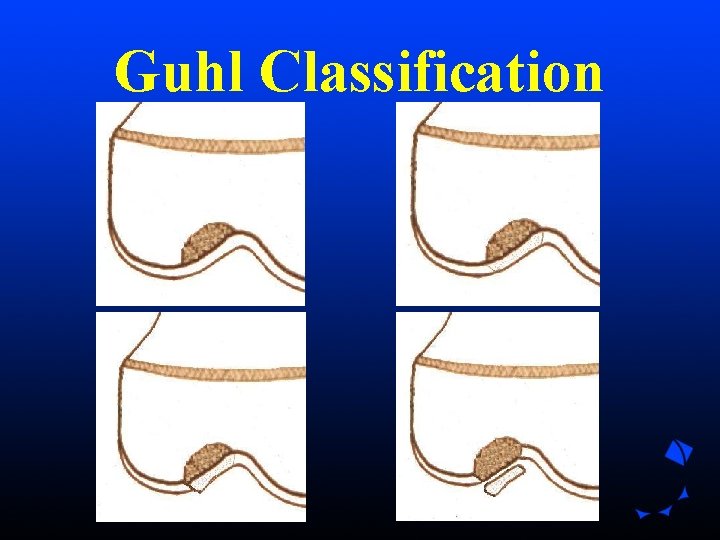
Guhl Classification
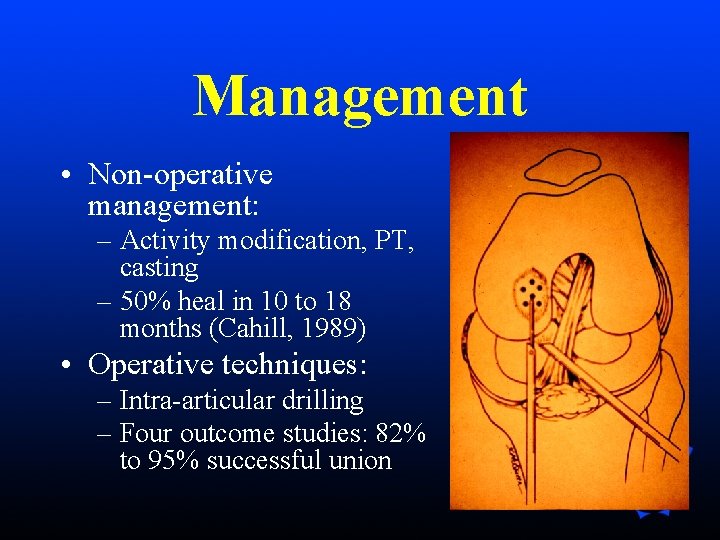
Management • Non-operative management: – Activity modification, PT, casting – 50% heal in 10 to 18 months (Cahill, 1989) • Operative techniques: – Intra-articular drilling – Four outcome studies: 82% to 95% successful union
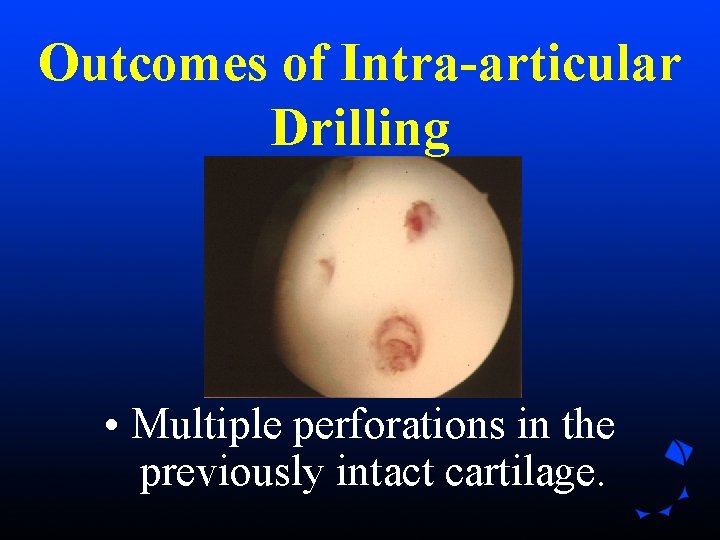
Outcomes of Intra-articular Drilling • Multiple perforations in the previously intact cartilage.
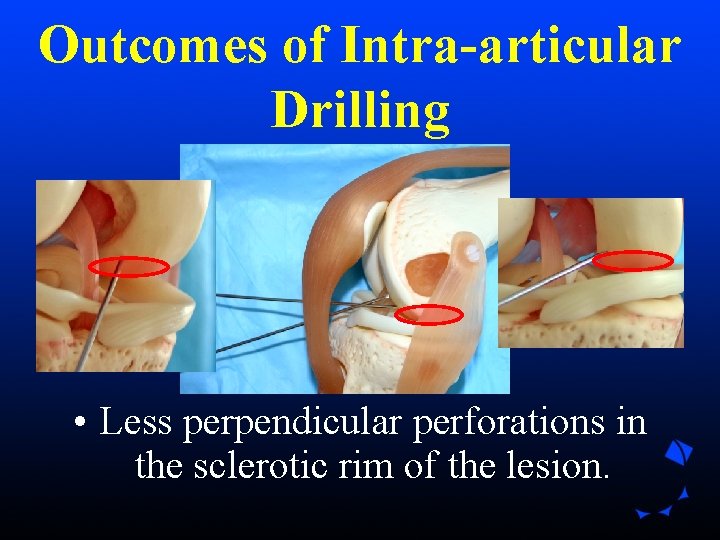
Outcomes of Intra-articular Drilling • Less perpendicular perforations in the sclerotic rim of the lesion.
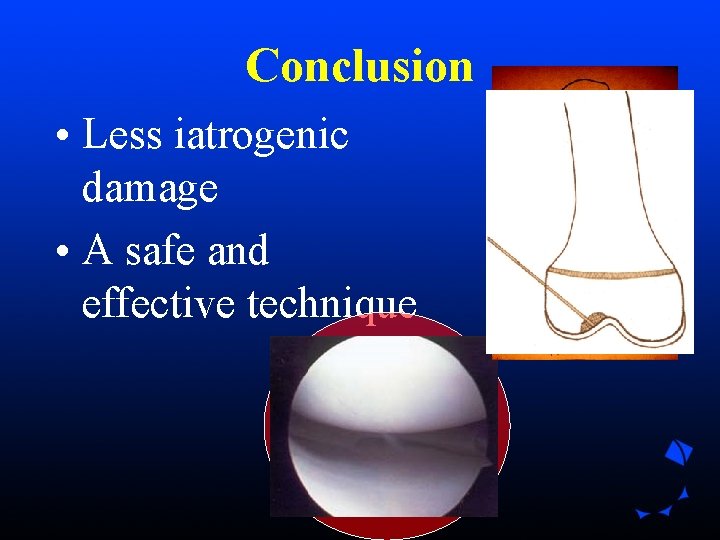
Purpose • Evaluate: – Extra-articular, intra-epiphyseal drilling – Does not damage intact articular cartilage – Increased fenestration of sclerotic rim
Methods • • Retrospective review Years 1997 to 2005 68 children, 75 knees (76 OCD lesions) Inclusion criteria – Open growth plates, failed six months conservative management, arthroscopically confirmed intact articular cartilage • Exclusion criteria – Arthroscopic drilling through cartilage, detached cartilage, or closed growth plates.
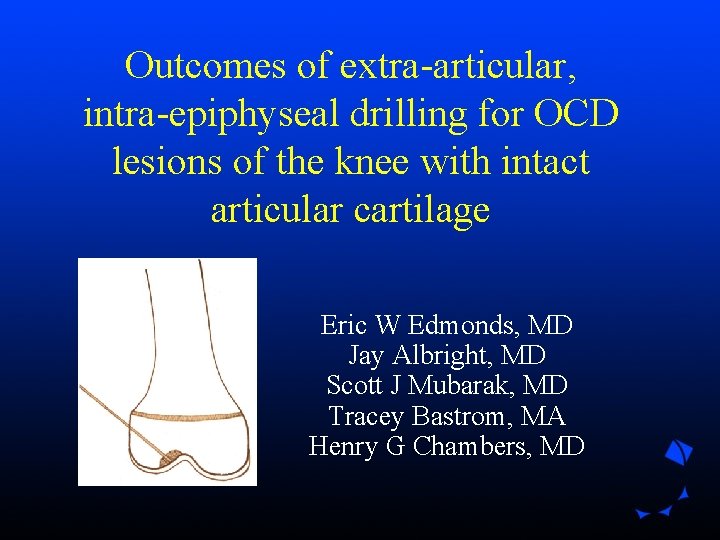
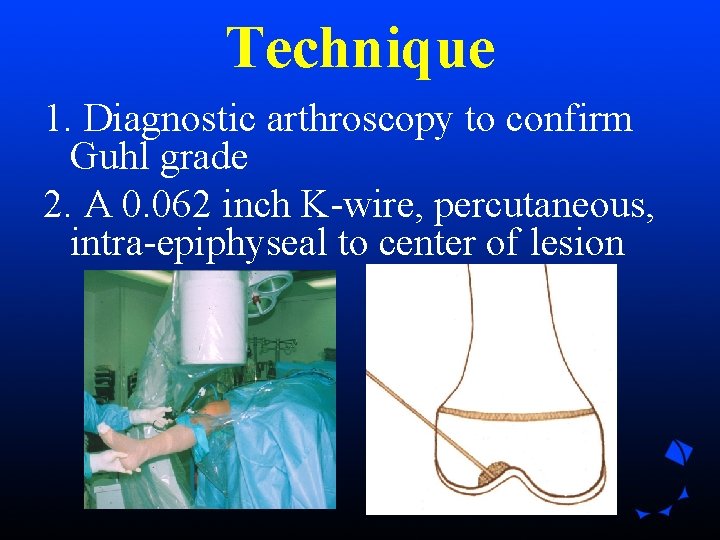
Technique 1. Diagnostic arthroscopy to confirm Guhl grade 2. A 0. 062 inch K-wire, percutaneous, intra-epiphyseal to center of lesion
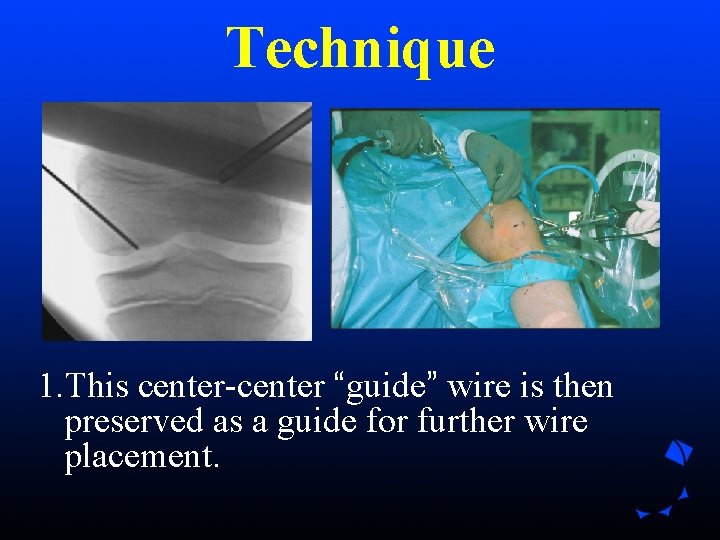
Technique 1. This center-center “guide” wire is then preserved as a guide for further wire placement.
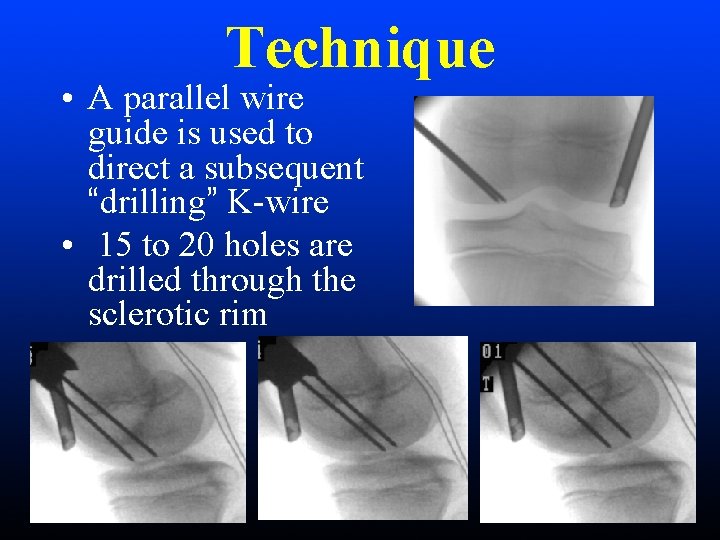
Technique • A parallel wire guide is used to direct a subsequent “drilling” K-wire • 15 to 20 holes are drilled through the sclerotic rim
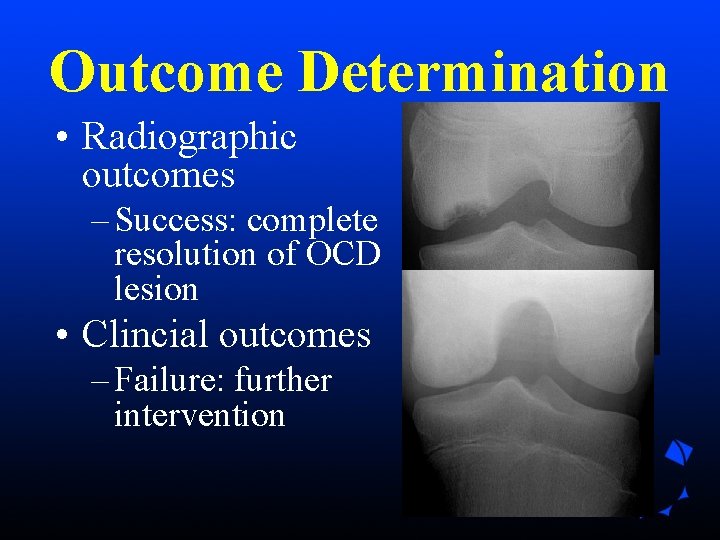
Outcome Determination • Radiographic outcomes – Success: complete resolution of OCD lesion • Clincial outcomes – Failure: further intervention
Results • 59 lesions with complete data – 17 lateral condyles and 42 medial condyles • Mean age 13. 4 years (8 to 18. 6) • 15 girls and 36 boys
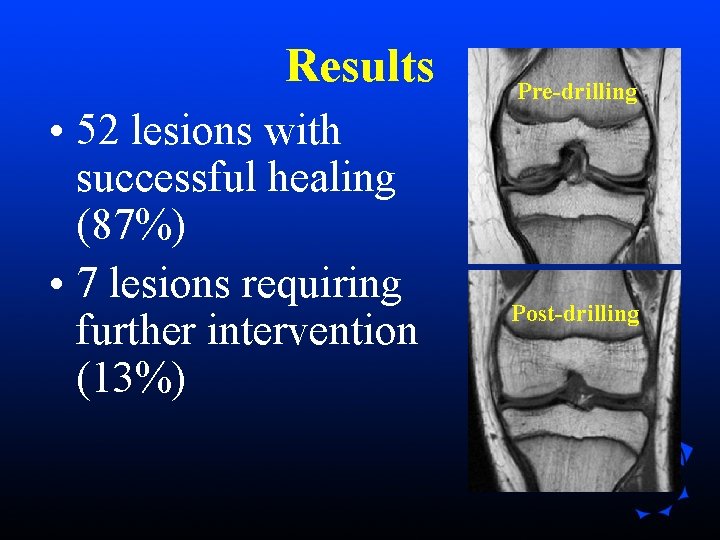
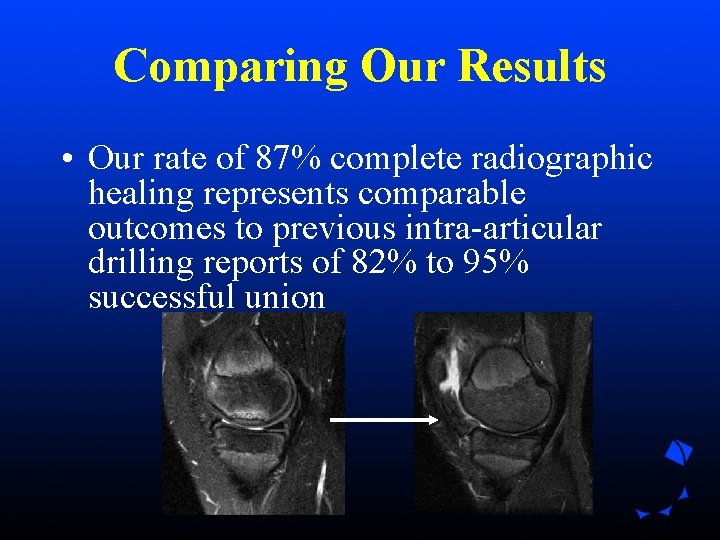
Results • 52 lesions with successful healing (87%) • 7 lesions requiring further intervention (13%) Pre-drilling Post-drilling
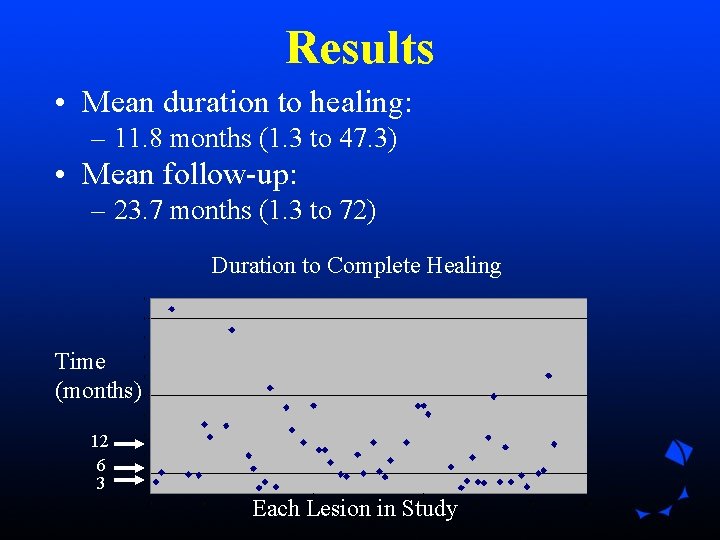
Results • Mean duration to healing: – 11. 8 months (1. 3 to 47. 3) • Mean follow-up: – 23. 7 months (1. 3 to 72) Duration to Complete Healing Time (months) 12 6 3 Each Lesion in Study
Failures • 2 nd operation, mean 18 months after index operation: – 4 required repeat drillings – 2 required repeat drilling with bone graft – 1 required trans-articular drilling with osteochondral tack
Failures • 3 rd operation: requiring matchstick bone graft and chondroplasty – 39 months after the index procedure (15 months after the second procedure of repeat drilling)
Complications • No other complications resulted from this procedure
Comparing Our Results • Our rate of 87% complete radiographic healing represents comparable outcomes to previous intra-articular drilling reports of 82% to 95% successful union
Discussion • Extra-articular, intra-epiphyseal drilling of OCD lesions – Similar rate of healing compared to intraarticular drilling – Improved fenestration of subchondral rim – Nullifies damage to the overlying articular cartilage
Conclusion • Less iatrogenic damage • A safe and effective technique
Thank You