
Outcomes Based Library Planning Part 2 Presented by
Outcomes Based Library Planning – Part 2 Presented by: • Julie Mc. Kenna – Deputy Library Director • Nancy Mac. Kenzie - Community Engagement and Programming 1
Session Outcomes 1. Participants will understand RPL’s outcome based planning journey to date 2. Participants will know why an outcomes based framework is essential for a customer centered culture 3. Participants will learn about the tools we have used 2
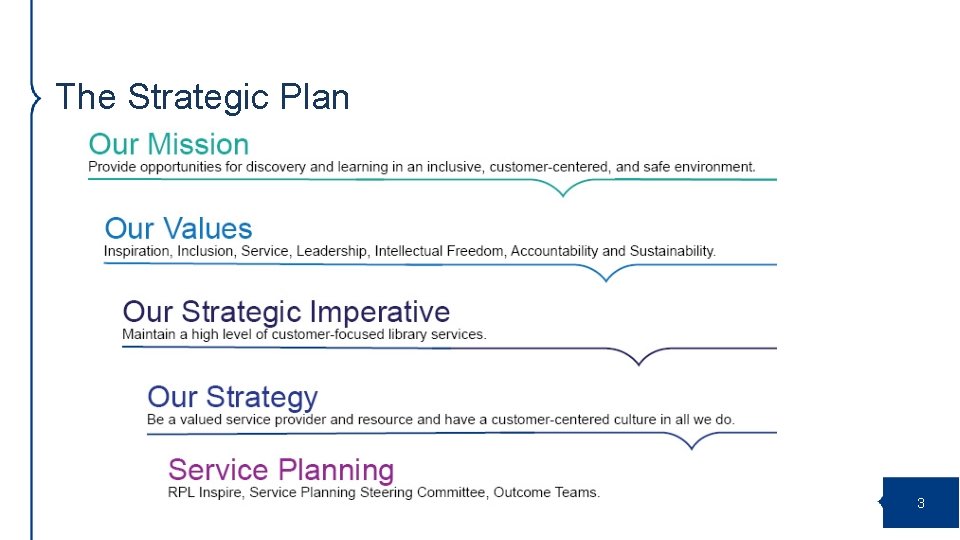
The Strategic Plan 3
Outcomes Framework v What is this? – Human centered understanding of needs and services – Drives planning and measuring service experience v Why did we choose this approach? – Traditional numbers based reporting and decision-making – Help our citizens, customers, staff, and political stakeholders understand the benefits of services and the risk of stopping support or funding v How will we use this? – Our management planning models at RPL already make way for this; we have done some successful work in this area in the past; our staff understand why this is important and timely 4
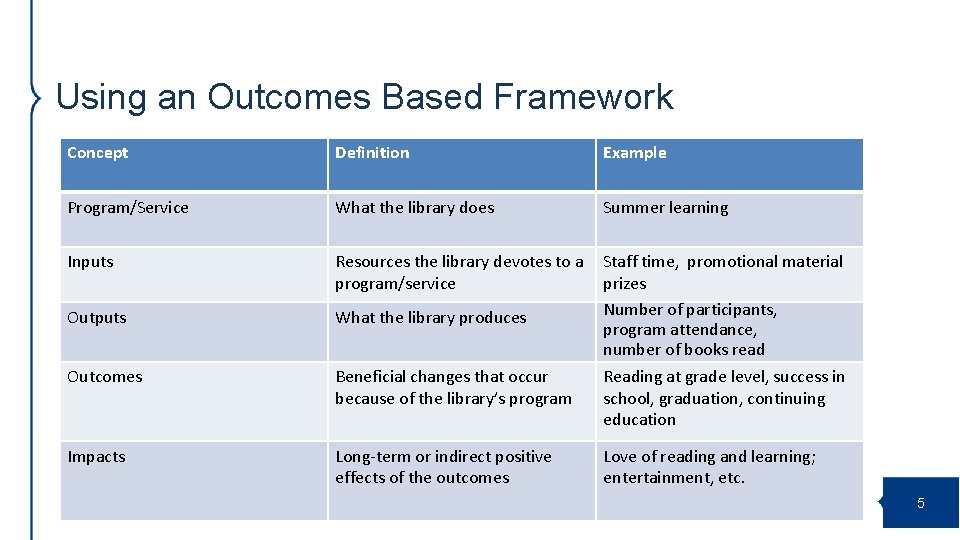
Using an Outcomes Based Framework Concept Definition Example Program/Service What the library does Summer learning Inputs Resources the library devotes to a program/service Outputs What the library produces Outcomes Beneficial changes that occur because of the library’s program Staff time, promotional material prizes Number of participants, program attendance, number of books read Reading at grade level, success in school, graduation, continuing education Impacts Long-term or indirect positive effects of the outcomes Love of reading and learning; entertainment, etc. 5
Outcomes v https: //reginapubliclibrary. sharepoint. com/: v: /s/Marketingand. Com munications/EWHh 51 Fj. JIp. Oi. Ito 8 R 50 dig. Brf. HQO 81 IJh. Q 65 t. Pxd. ZR 1 kg? e=K 4 ZZN 3 6
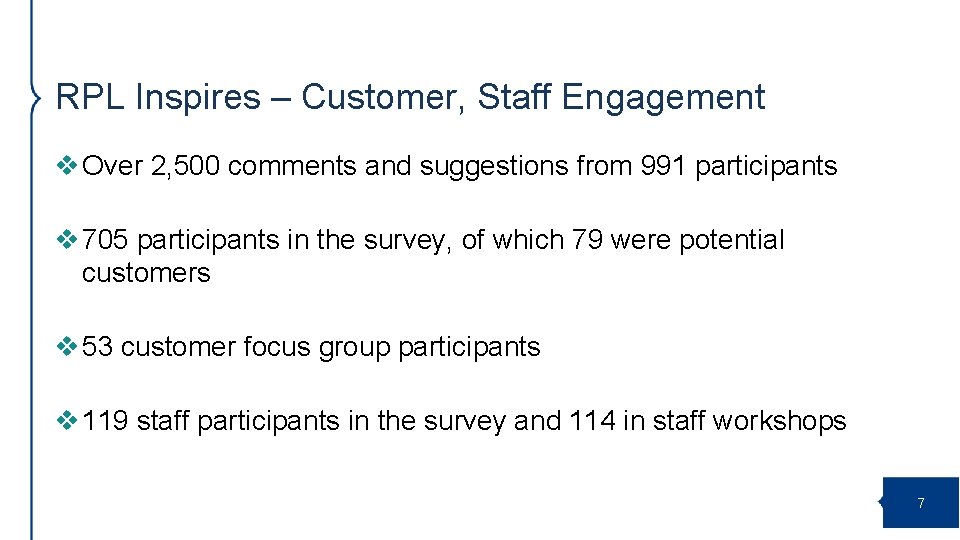
RPL Inspires – Customer, Staff Engagement v Over 2, 500 comments and suggestions from 991 participants v 705 participants in the survey, of which 79 were potential customers v 53 customer focus group participants v 119 staff participants in the survey and 114 in staff workshops 7
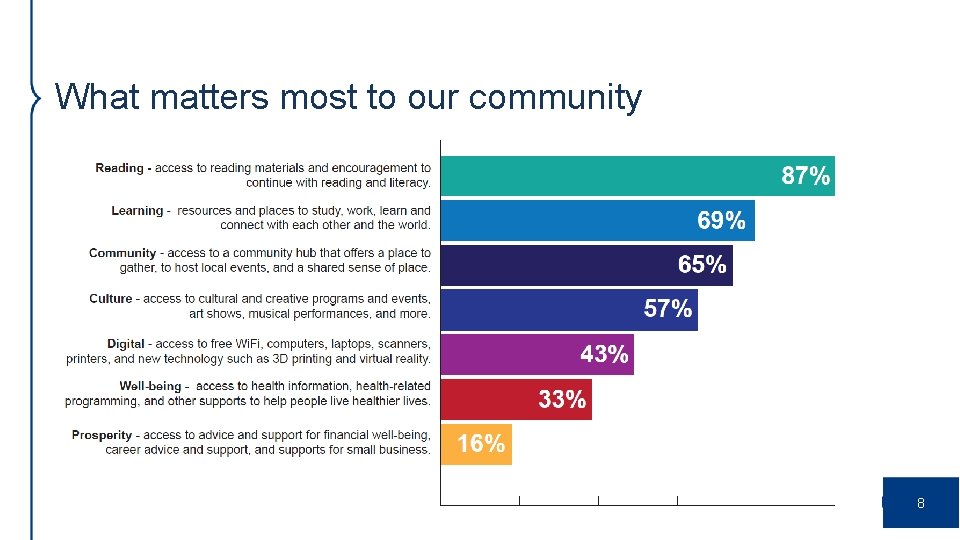
What matters most to our community 8
9
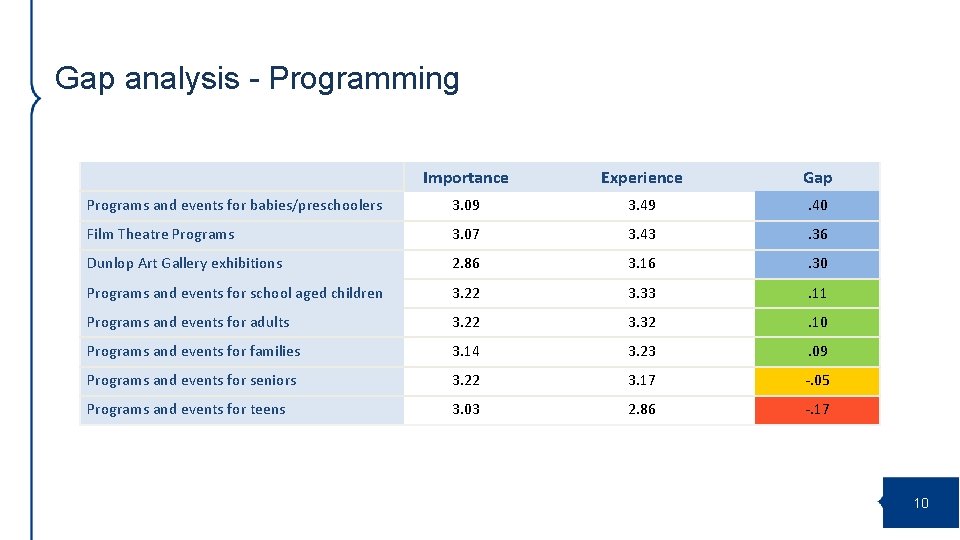
Gap analysis - Programming Importance Experience Gap Programs and events for babies/preschoolers 3. 09 3. 49 . 40 Film Theatre Programs 3. 07 3. 43 . 36 Dunlop Art Gallery exhibitions 2. 86 3. 16 . 30 Programs and events for school aged children 3. 22 3. 33 . 11 Programs and events for adults 3. 22 3. 32 . 10 Programs and events for families 3. 14 3. 23 . 09 Programs and events for seniors 3. 22 3. 17 -. 05 Programs and events for teens 3. 03 2. 86 -. 17 10
Outcome Teams v Terms of Reference v Composition of Teams v The Tools – Service canvas – Program Logic Models 11

Tools – Service Canvas Name of New Collection: Story Bags What is the problem, gap or issue, goal? URL of e. Resource/Database: Describe the service: How does the service benefit our customers? Who are the target group/customers? How is it being addressed today? Would there be duplication? What other products duplicate this service that are not offered by RPL? How will we measure success? Who are our key partners? What are the key channels we could use to market the service? Website tie-in What resources are needed to make this proposed Collection/Service possible? What issues do we need to address (include issues of access in RPL’s inclusive environment? Budget: 12
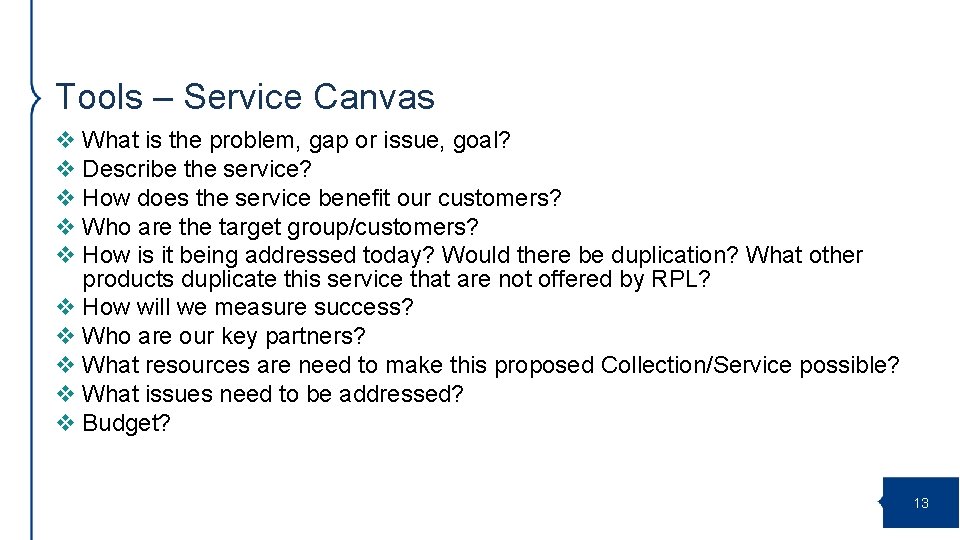
Tools – Service Canvas v What is the problem, gap or issue, goal? v Describe the service? v How does the service benefit our customers? v Who are the target group/customers? v How is it being addressed today? Would there be duplication? What other products duplicate this service that are not offered by RPL? v How will we measure success? v Who are our key partners? v What resources are need to make this proposed Collection/Service possible? v What issues need to be addressed? v Budget? 13
Tools – Program Logic Models v Used for design, planning, communication, evaluation, & learning v Shaping Outcomes: Making a Difference in Libraries and Museums – Outcomes Based Planning and Evaluation (OBPE) Model – http: //www. shapingoutcomes. org/ v Rubin, Rhea Joyce, Demonstrating Results: Using Outcome Measurement in Your Library. Chicago: ALA Editions, 2006 14
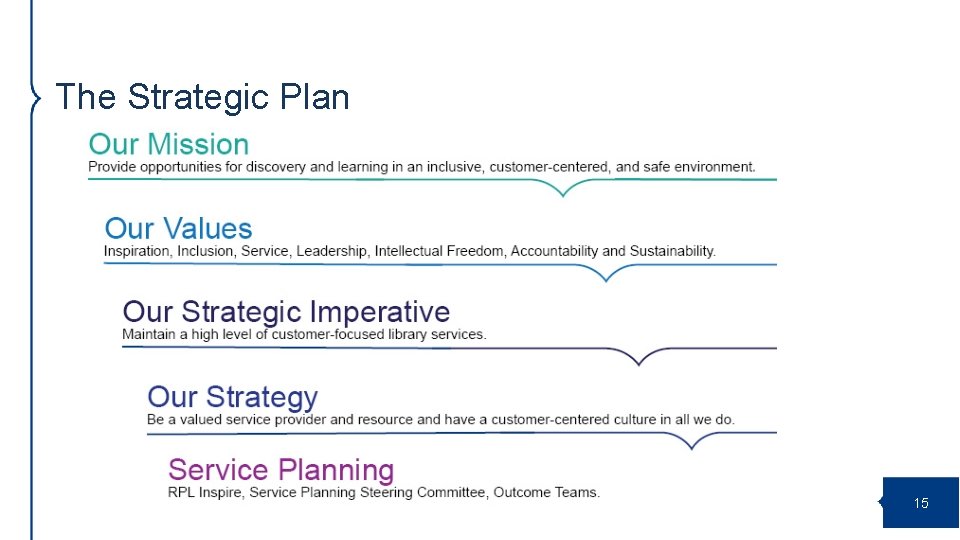
The Strategic Plan 15
Mission Statement – 4 Pillars 1. Free and open access to resources 2. Community space where people and ideas meet 3. Programs and services that support reading, curiosity, and learning 4. Community opportunities that complement and strengthen the public library offering 16
17
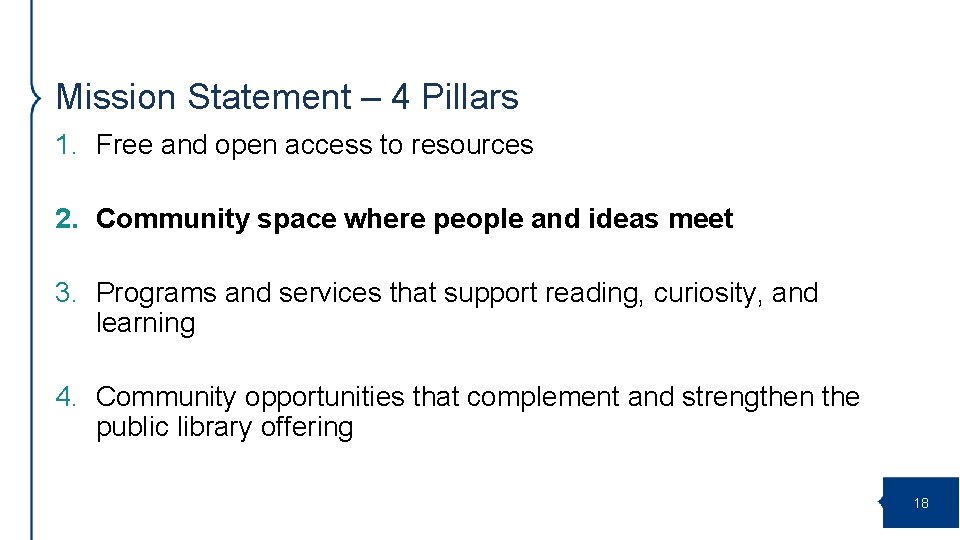
Mission Statement – 4 Pillars 1. Free and open access to resources 2. Community space where people and ideas meet 3. Programs and services that support reading, curiosity, and learning 4. Community opportunities that complement and strengthen the public library offering 18
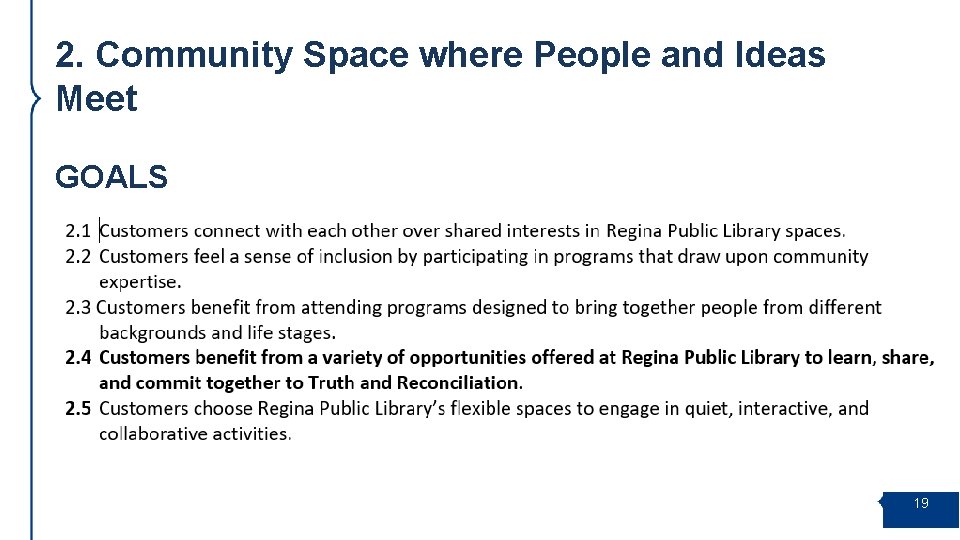
2. Community Space where People and Ideas Meet GOALS 19
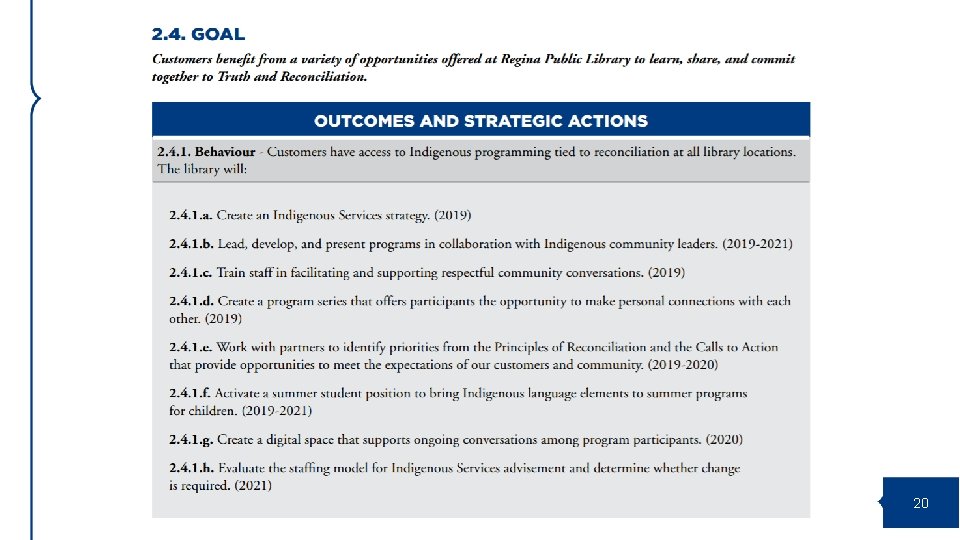
20
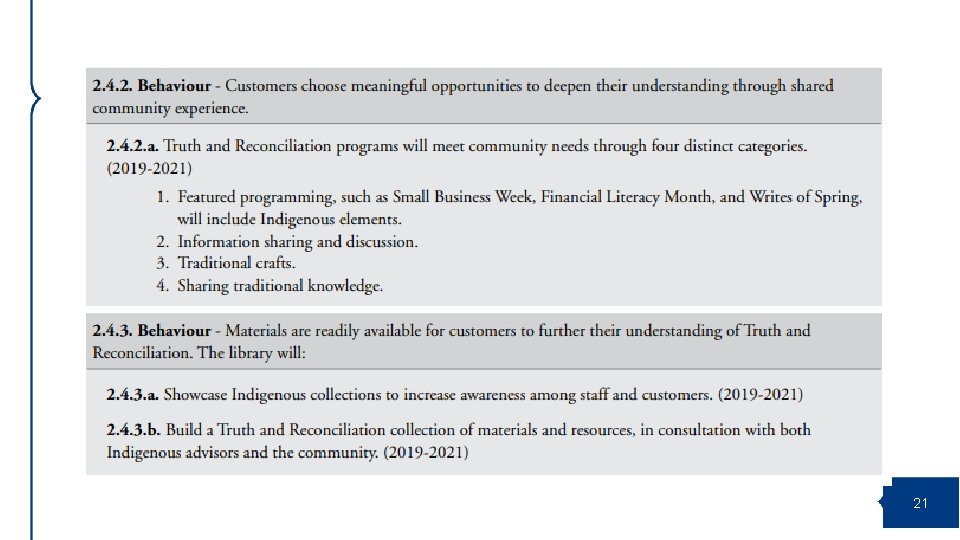
21
Getting the Work Done v Operational Plans v Performance Planning and Review – launched new in 2019 v Internal communication v Board reporting v Community reporting v Team projects – big cross functional changes 22
Teams v Activating Central v Inclusion v Reading v Truth and Reconciliation 23
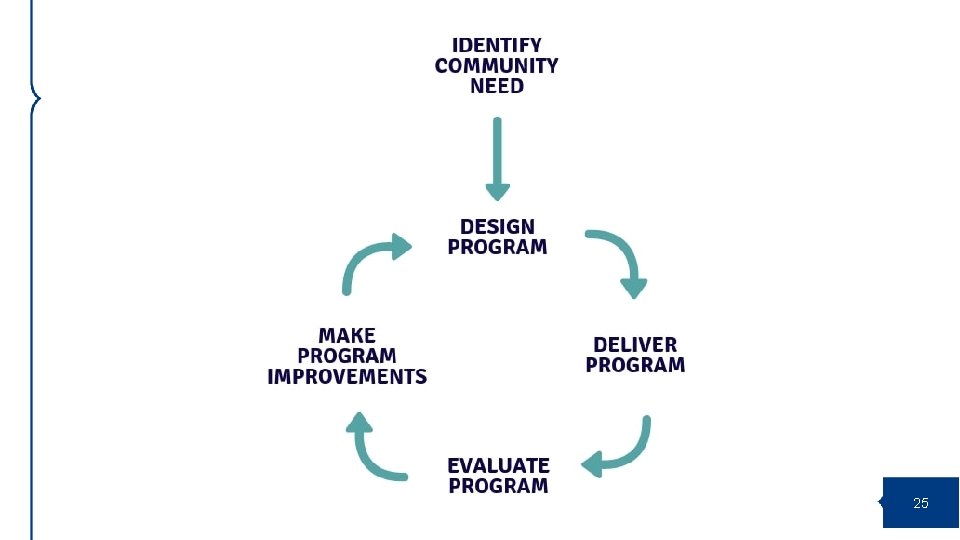
Evaluation v From the customer’s perspective v Continuous iterative loop = Continuous learning & improvement – – Understand needs Design Deliver Evaluate v Quantitative v Qualitative 24
25
Session Outcomes 1. Participants will understand RPL’s outcome based planning journey to date 2. Participants will know why outcomes based framework is essential for a customer centered culture 3. Participants will learn about tools that RPL tools have been beneficial 26
Outcomes Based Library Planning – Part 2 • jmckenna@reginalibrary. ca • nmackenzie@reginalibrary. ca 27
- Slides: 27