
Outage Radioactive Particulate Extraction System 1998 Capstone Design

- Slides: 20
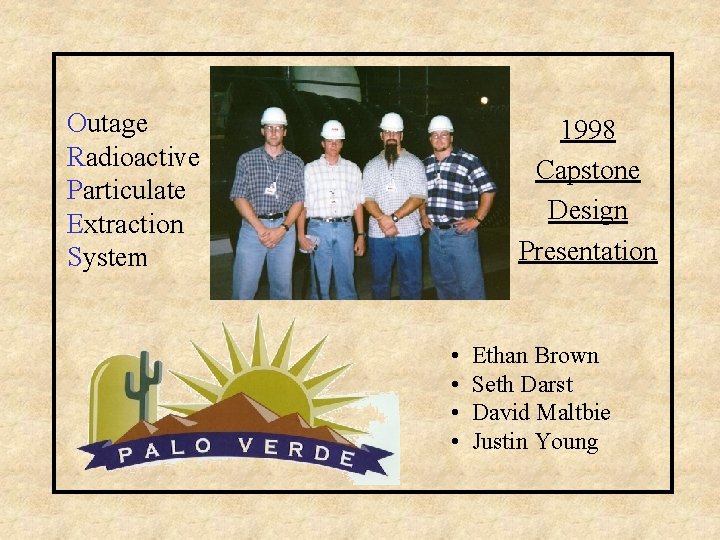
Outage Radioactive Particulate Extraction System 1998 Capstone Design Presentation • • Ethan Brown Seth Darst David Maltbie Justin Young
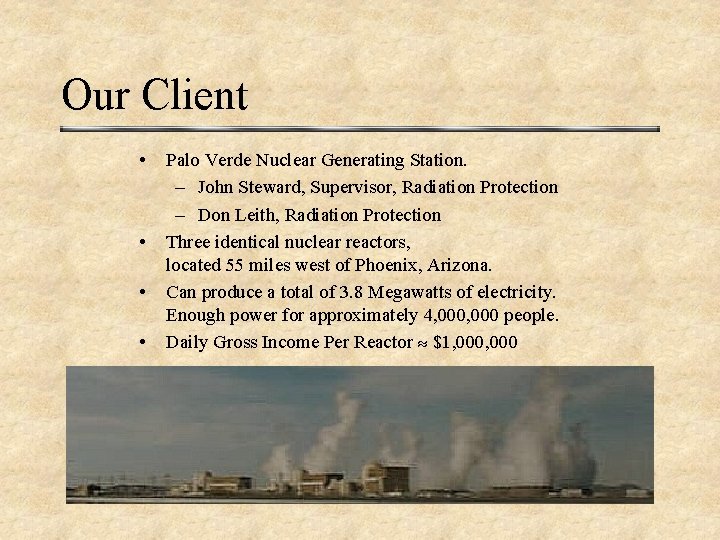
Our Client • • Palo Verde Nuclear Generating Station. – John Steward, Supervisor, Radiation Protection – Don Leith, Radiation Protection Three identical nuclear reactors, located 55 miles west of Phoenix, Arizona. Can produce a total of 3. 8 Megawatts of electricity. Enough power for approximately 4, 000 people. Daily Gross Income Per Reactor » $1, 000
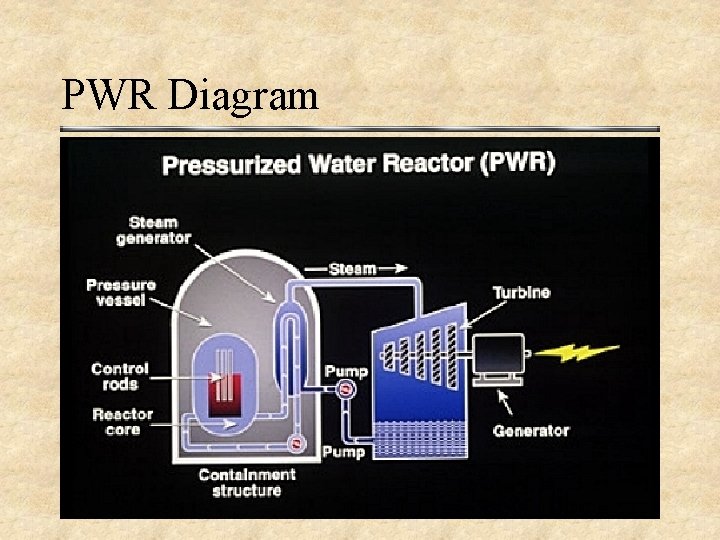
PWR Diagram
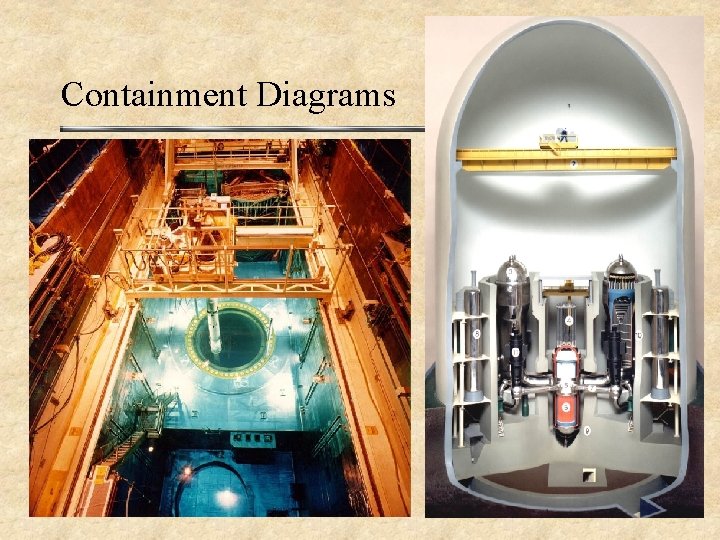
Containment Diagrams
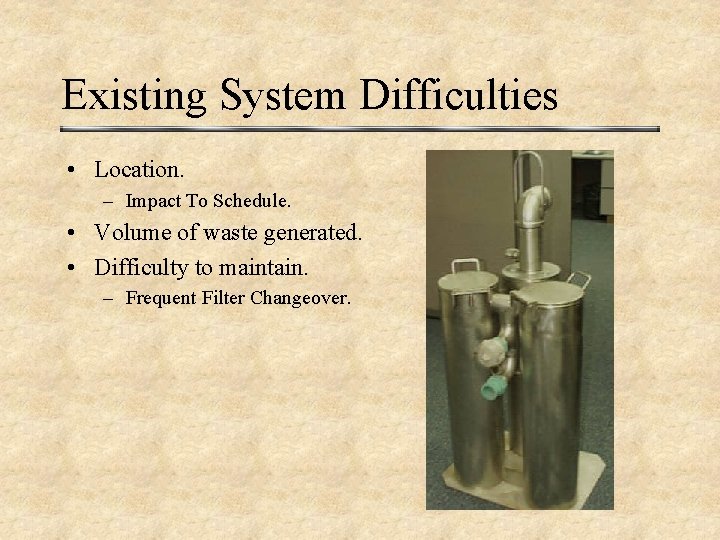
Existing System Difficulties • Location. – Impact To Schedule. • Volume of waste generated. • Difficulty to maintain. – Frequent Filter Changeover.
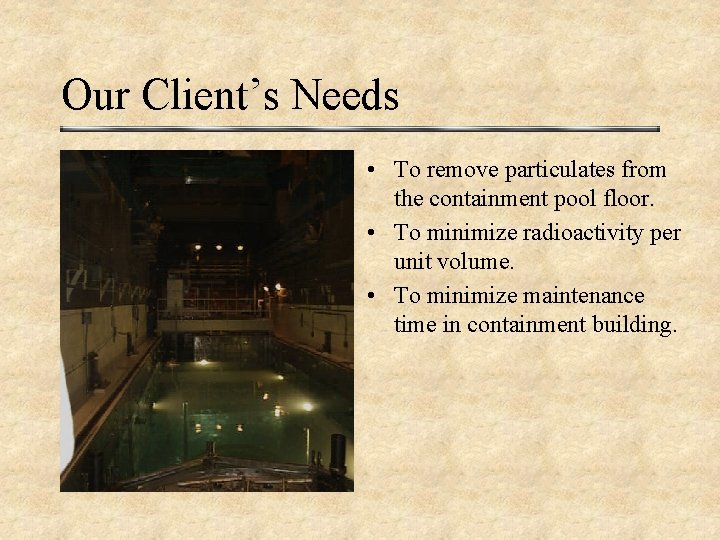
Our Client’s Needs • To remove particulates from the containment pool floor. • To minimize radioactivity per unit volume. • To minimize maintenance time in containment building.
Steps To A Solution 1. Green Hat Brainstorming. 2. Conceptualize Preliminary Design. 3. Modeling. 4. Engineering Calculations. 5. Search For Premanufactured Components. 6. Design Components Not Commercially Available. 7. Generate Engineering Drawings.
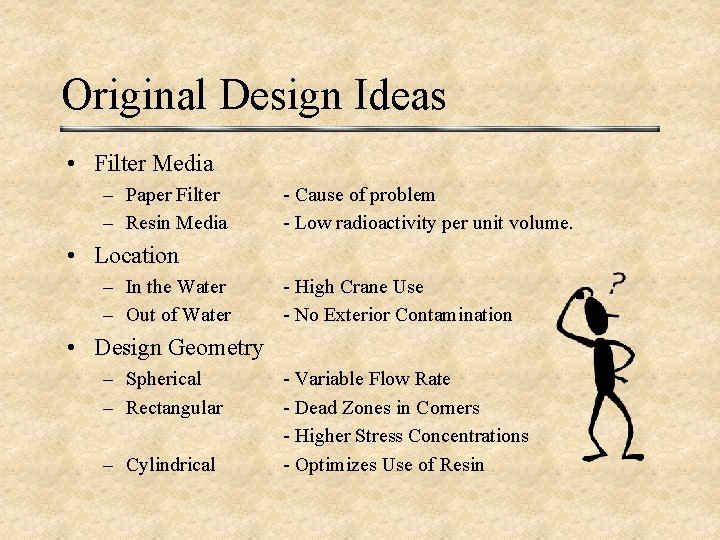
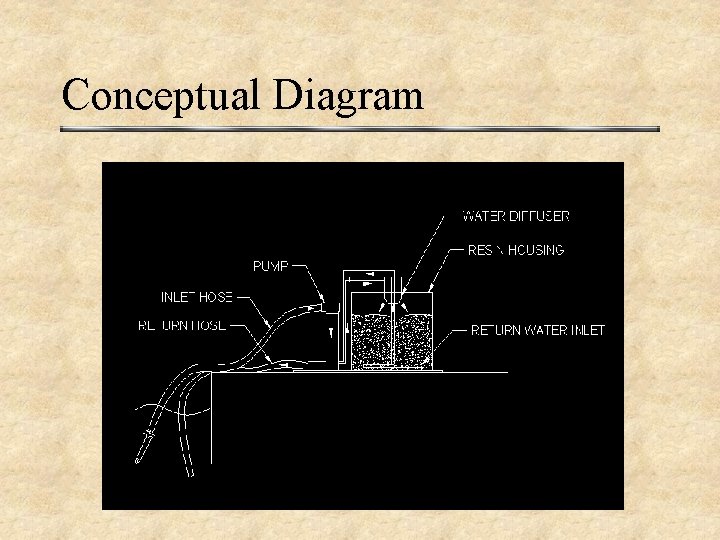
Original Design Ideas • Filter Media – Paper Filter – Resin Media - Cause of problem - Low radioactivity per unit volume. • Location – In the Water – Out of Water - High Crane Use - No Exterior Contamination • Design Geometry – Spherical – Rectangular – Cylindrical - Variable Flow Rate - Dead Zones in Corners - Higher Stress Concentrations - Optimizes Use of Resin
Conceptual Diagram
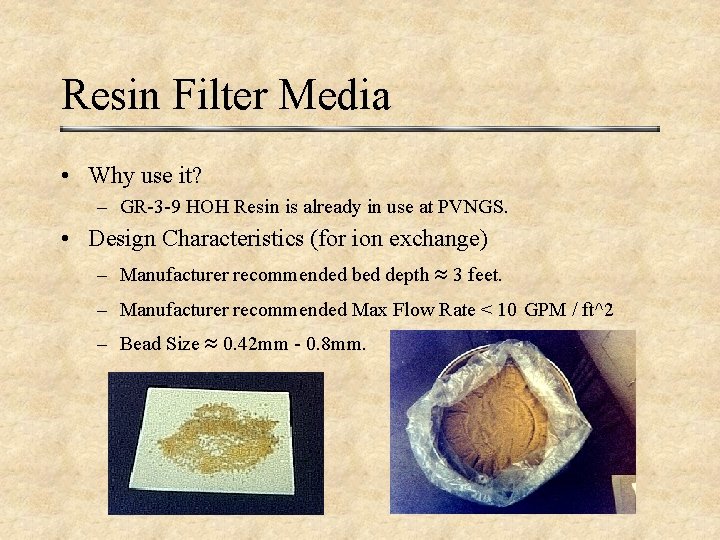
Resin Filter Media • Why use it? – GR-3 -9 HOH Resin is already in use at PVNGS. • Design Characteristics (for ion exchange) – Manufacturer recommended bed depth » 3 feet. – Manufacturer recommended Max Flow Rate < 10 GPM / ft^2 – Bead Size » 0. 42 mm - 0. 8 mm.
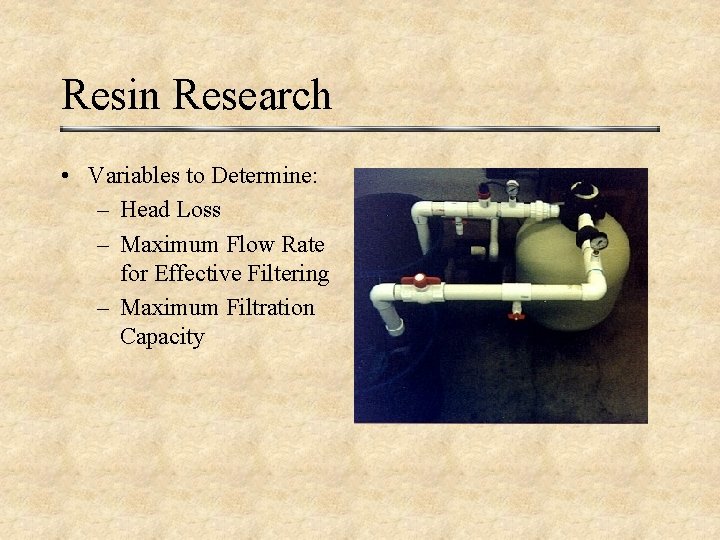
Resin Research • Variables to Determine: – Head Loss – Maximum Flow Rate for Effective Filtering – Maximum Filtration Capacity
Modeling Conclusions • 77 ft of Head Produced Through Vessel at 100 GPM • Max Flow Rate 160 GPM – 99. 5% Effective on particulates as small as 20 microns • Filter Capacity 600 m. L – Mechanical capacity high enough so that radioactivity should determine actual capacity =
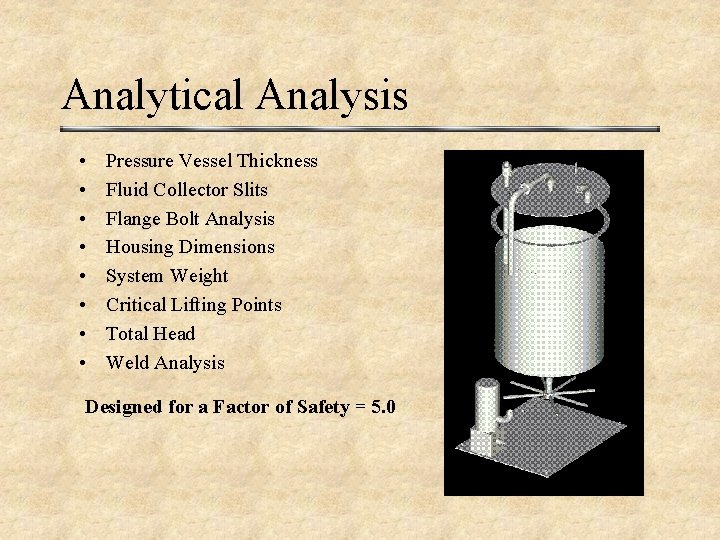
Analytical Analysis • • Pressure Vessel Thickness Fluid Collector Slits Flange Bolt Analysis Housing Dimensions System Weight Critical Lifting Points Total Head Weld Analysis Designed for a Factor of Safety = 5. 0
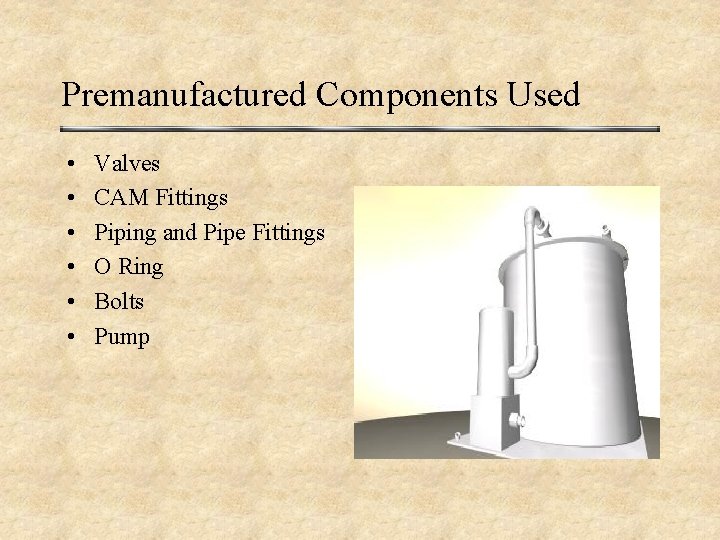
Premanufactured Components Used • • • Valves CAM Fittings Piping and Pipe Fittings O Ring Bolts Pump
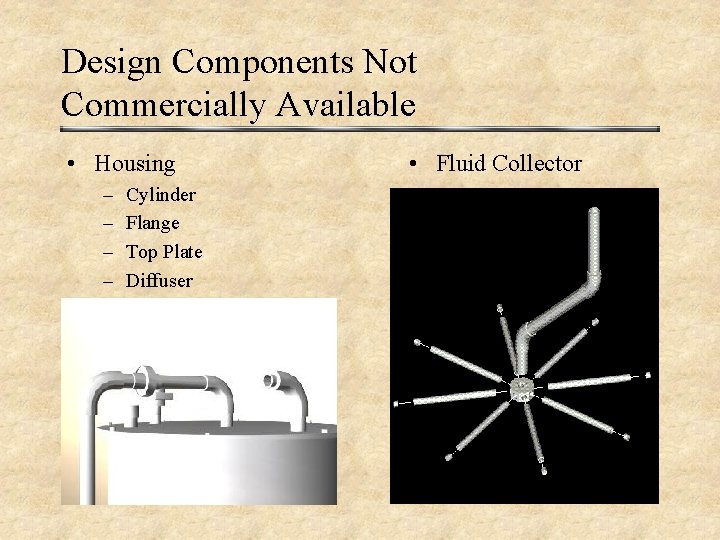
Design Components Not Commercially Available • Housing – – Cylinder Flange Top Plate Diffuser • Fluid Collector
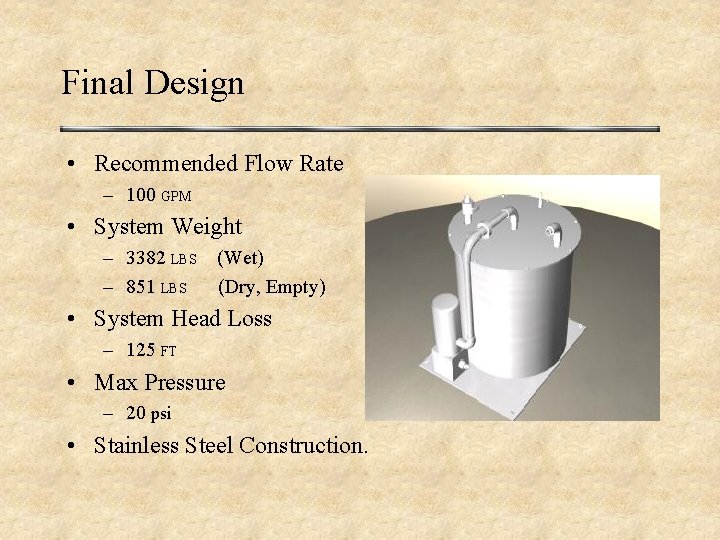
Final Design • Recommended Flow Rate – 100 GPM • System Weight – 3382 LBS – 851 LBS (Wet) (Dry, Empty) • System Head Loss – 125 FT • Max Pressure – 20 psi • Stainless Steel Construction.
Conclusions • All needs were met: – Vacuums particulates from pool floor. – Reduces radioactivity per unit volume. – Minimizes maintenance and crane use.
Additional Design Suggestions • Incorporate a secondary cellulose filter. • Incorporate a startup recirculation connection. • Further testing to find actual max flow rate.
Budget • Max spending limit. – Within Reason! • Project Expenses To Date – Resin Experiment Equipment – Resin (GR-3 -9) – Pool Filter ( 3 FT 3 ) • Prototype Costs – TBD by APS. $400. 00 $800. 00 $300. 00
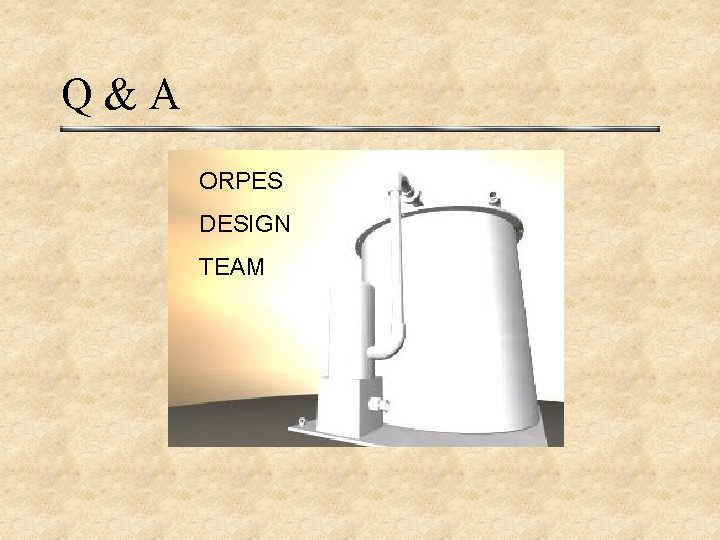
Q&A ORPES DESIGN TEAM