
Our Solar System Stars and Galaxies Galaxy a
- Slides: 17
Our Solar System
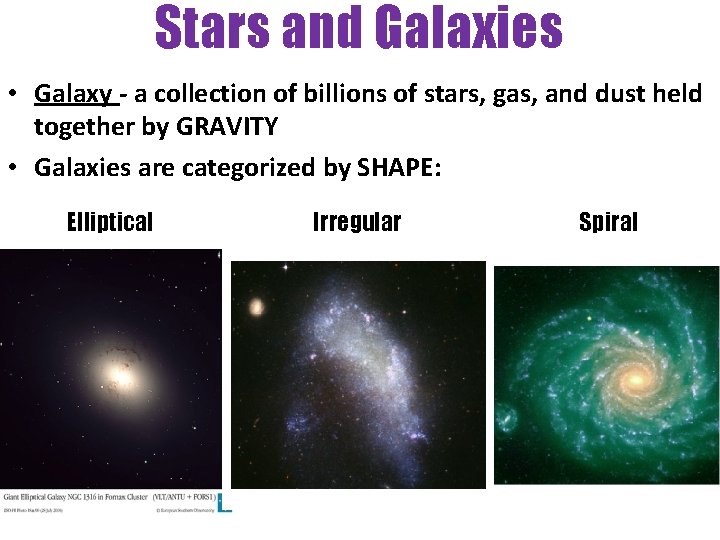
Stars and Galaxies • Galaxy - a collection of billions of stars, gas, and dust held together by GRAVITY • Galaxies are categorized by SHAPE: Elliptical Irregular Spiral
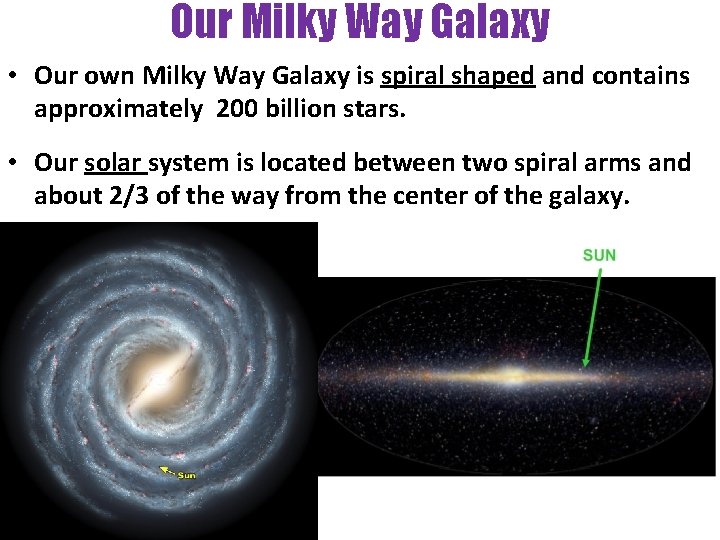
Our Milky Way Galaxy • Our own Milky Way Galaxy is spiral shaped and contains approximately 200 billion stars. • Our solar system is located between two spiral arms and about 2/3 of the way from the center of the galaxy.
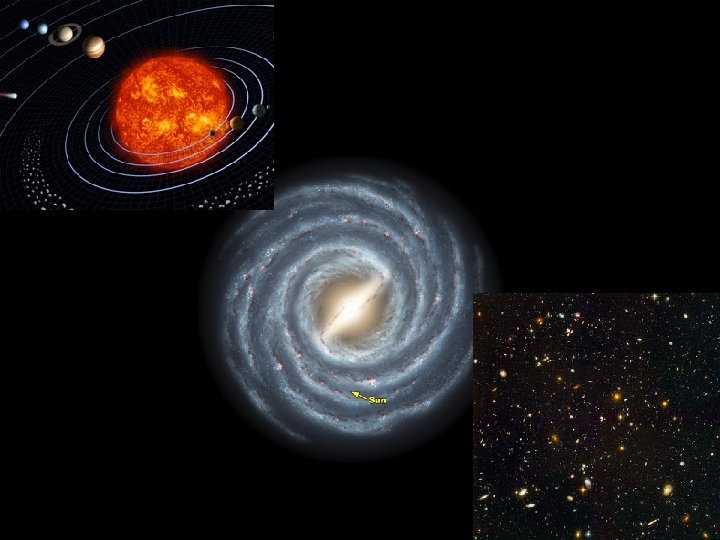
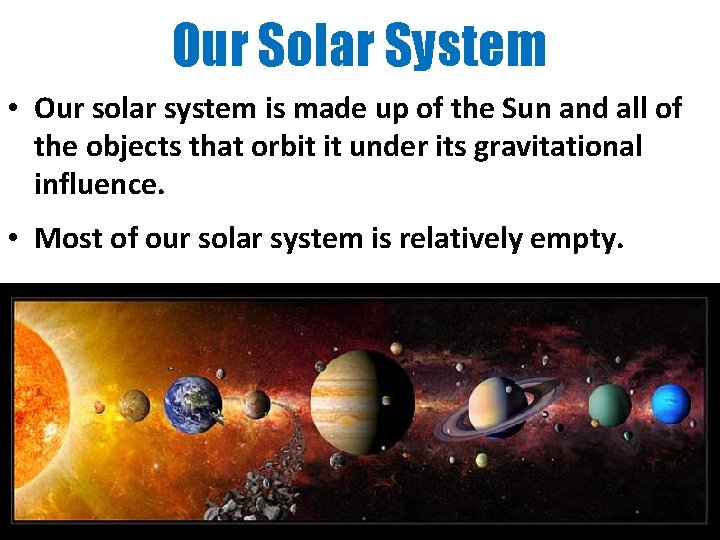
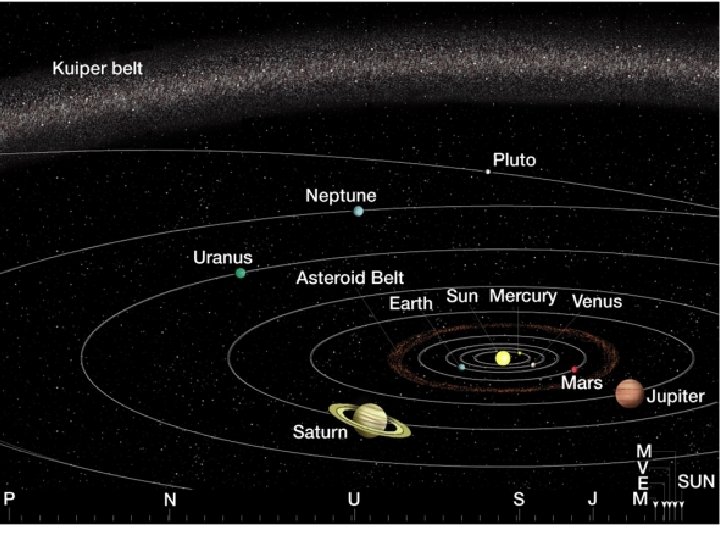
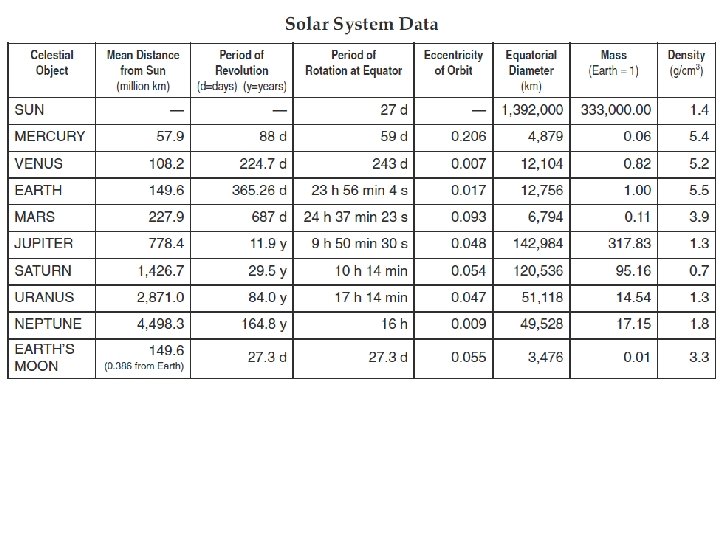
Our Solar System • Our solar system is made up of the Sun and all of the objects that orbit it under its gravitational influence. • Most of our solar system is relatively empty.
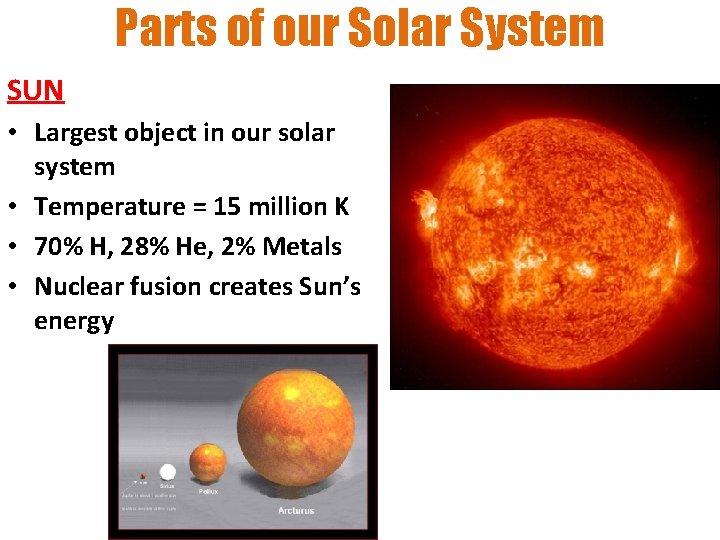
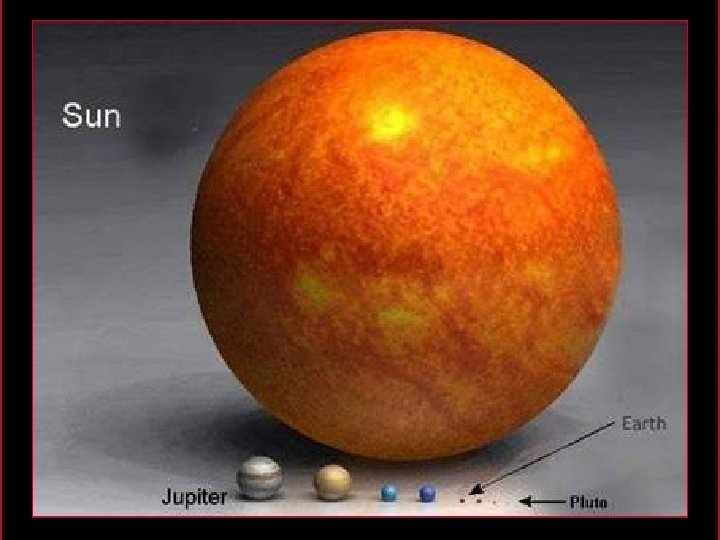
Parts of our Solar System SUN • Largest object in our solar system • Temperature = 15 million K • 70% H, 28% He, 2% Metals • Nuclear fusion creates Sun’s energy
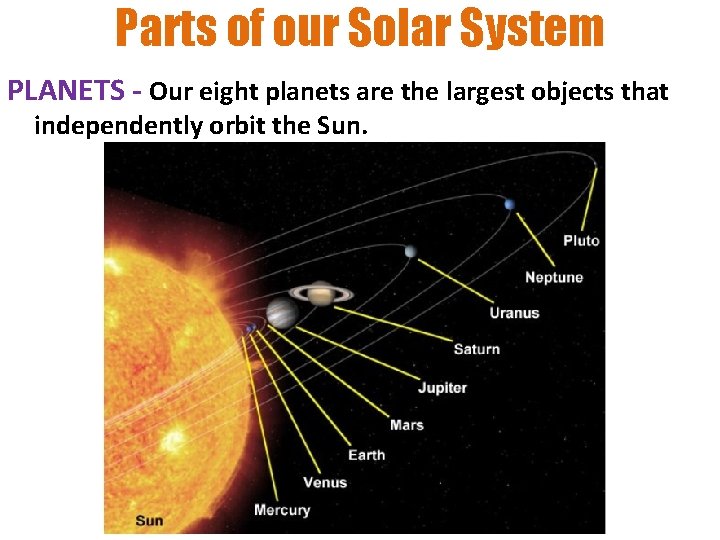
Parts of our Solar System PLANETS - Our eight planets are the largest objects that independently orbit the Sun.
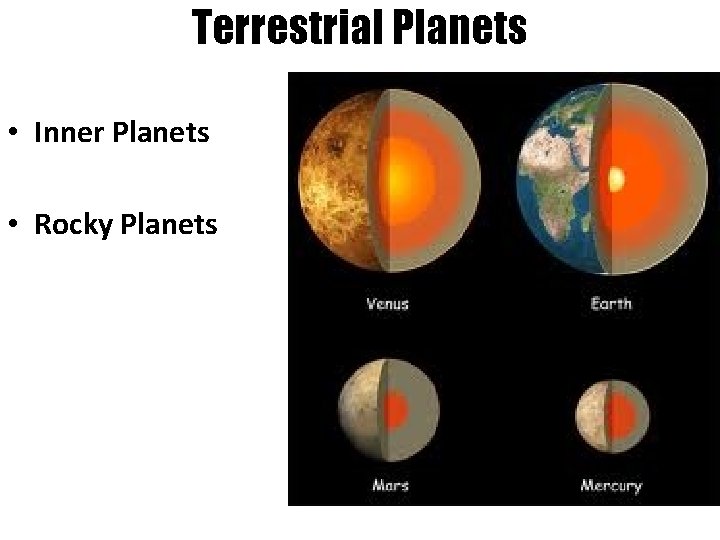
Terrestrial Planets • Inner Planets • Rocky Planets
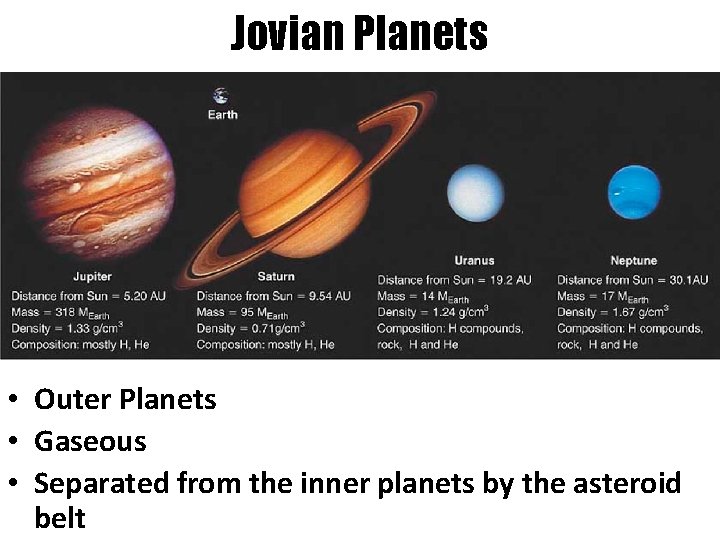
Jovian Planets • Outer Planets • Gaseous • Separated from the inner planets by the asteroid belt
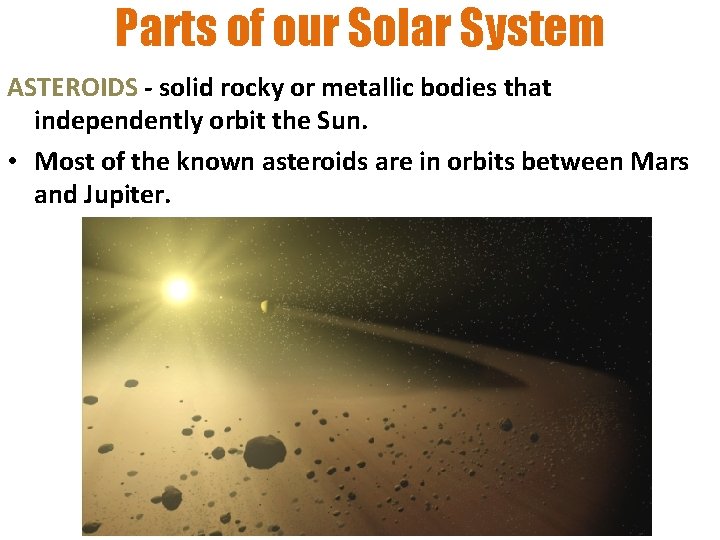
Parts of our Solar System ASTEROIDS - solid rocky or metallic bodies that independently orbit the Sun. • Most of the known asteroids are in orbits between Mars and Jupiter.
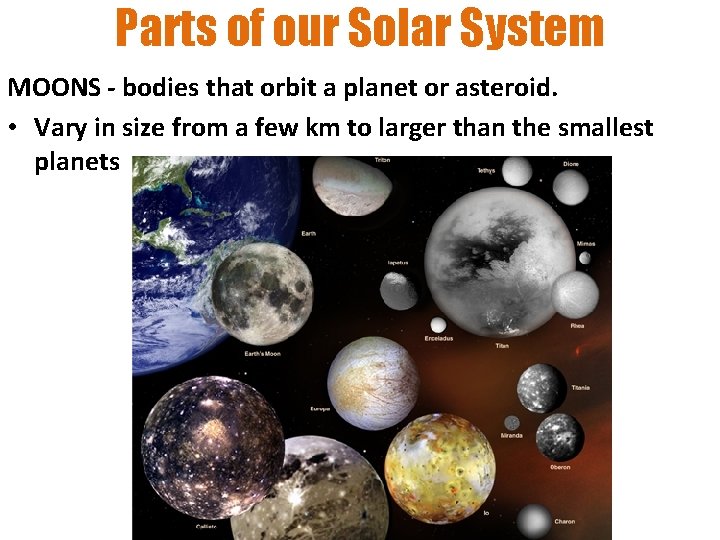
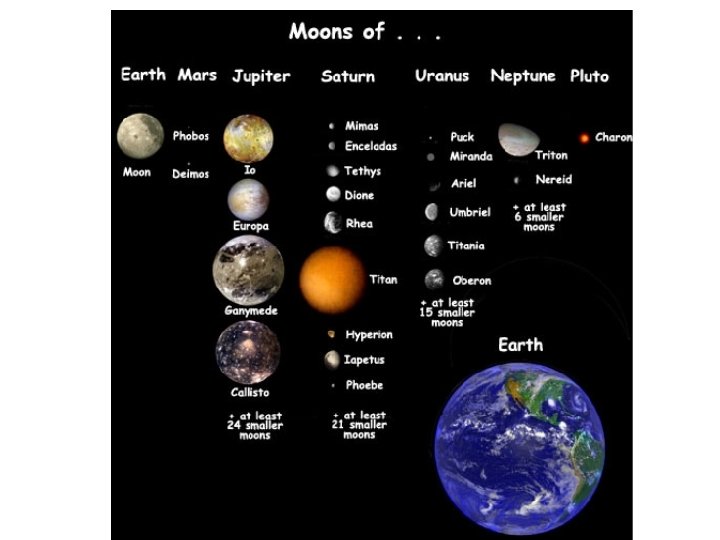
Parts of our Solar System MOONS - bodies that orbit a planet or asteroid. • Vary in size from a few km to larger than the smallest planets
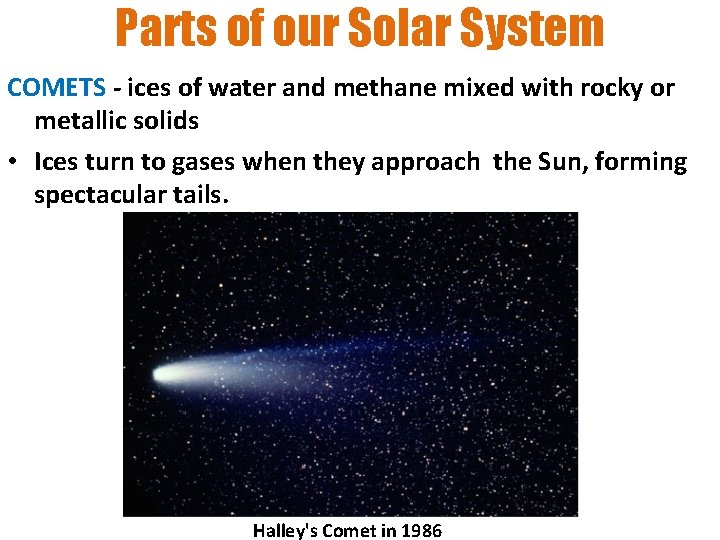
Parts of our Solar System COMETS - ices of water and methane mixed with rocky or metallic solids • Ices turn to gases when they approach the Sun, forming spectacular tails. Halley's Comet in 1986
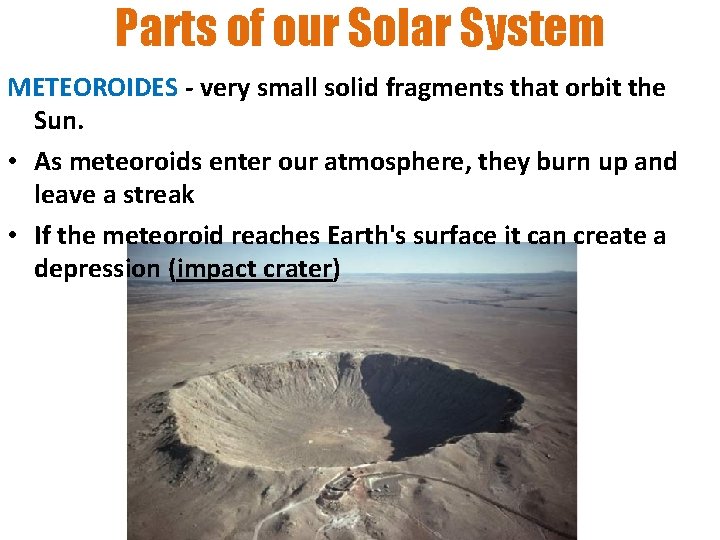
Parts of our Solar System METEOROIDES - very small solid fragments that orbit the Sun. • As meteoroids enter our atmosphere, they burn up and leave a streak • If the meteoroid reaches Earth's surface it can create a depression (impact crater)