
Our Solar System By Mason Rucker Our solar
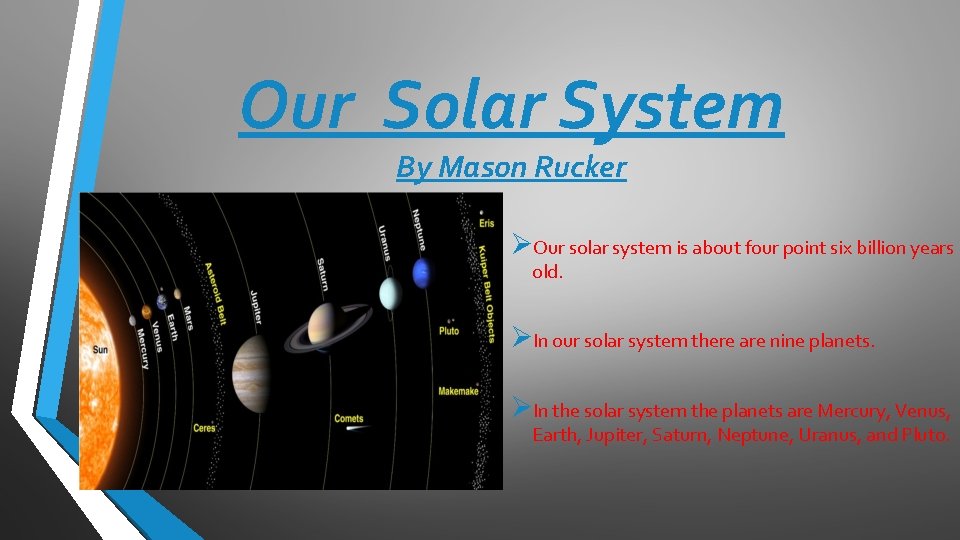
Our Solar System By Mason Rucker ØOur solar system is about four point six billion years old. ØIn our solar system there are nine planets. ØIn the solar system the planets are Mercury, Venus, Earth, Jupiter, Saturn, Neptune, Uranus, and Pluto.
The Sun ØThe Sun is more than three million times bigger than Earth. ØThe Sun is around ninety-nine point eighty eight percent of the solar system’s mass. ØThe Sun’s core is close to thirteen million six hundred thousand degrees Celsius.
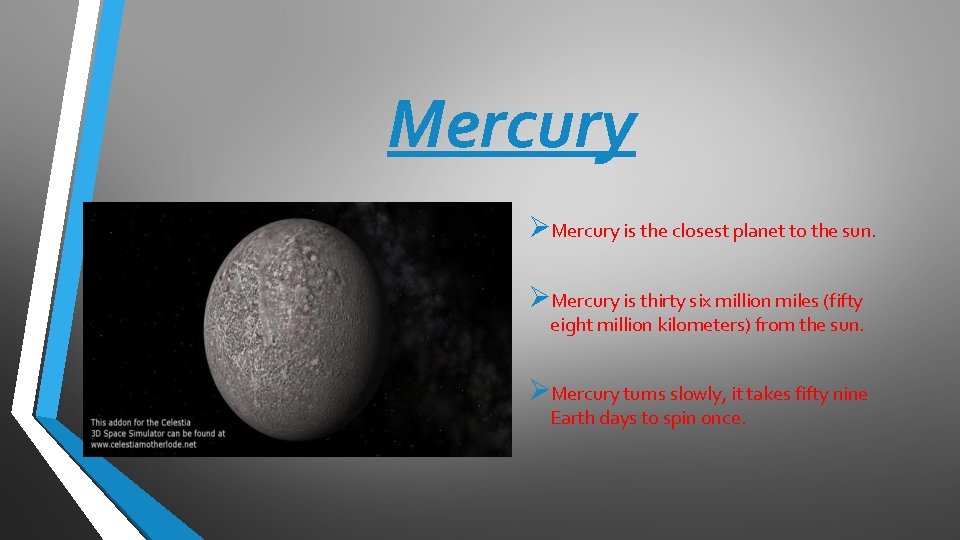
Mercury ØMercury is the closest planet to the sun. ØMercury is thirty six million miles (fifty eight million kilometers) from the sun. ØMercury turns slowly, it takes fifty nine Earth days to spin once.
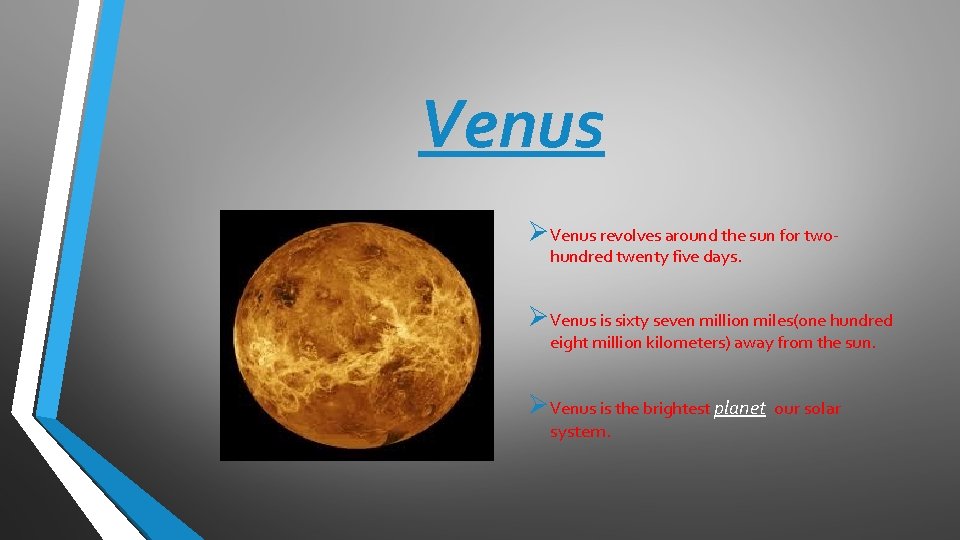
Venus Ø Venus revolves around the sun for twohundred twenty five days. Ø Venus is sixty seven million miles(one hundred eight million kilometers) away from the sun. Ø Venus is the brightest planet system. our solar
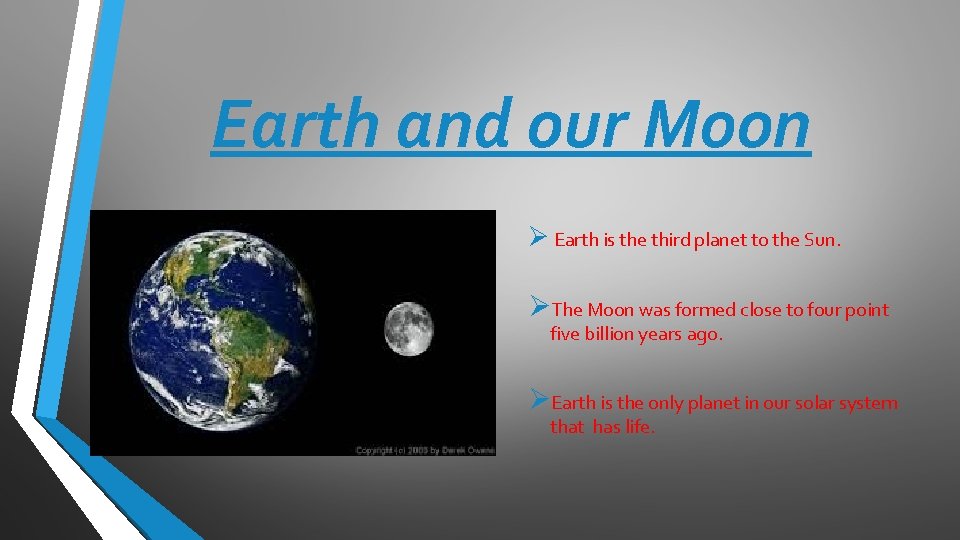
Earth and our Moon Ø Earth is the third planet to the Sun. ØThe Moon was formed close to four point five billion years ago. ØEarth is the only planet in our solar system that has life.

Mars ØIn one year on Mars there is one year and six-hundred eighty-seven days. ØToday forty three thousand craters were found that are only large craters. ØMars is usually called the red planet.
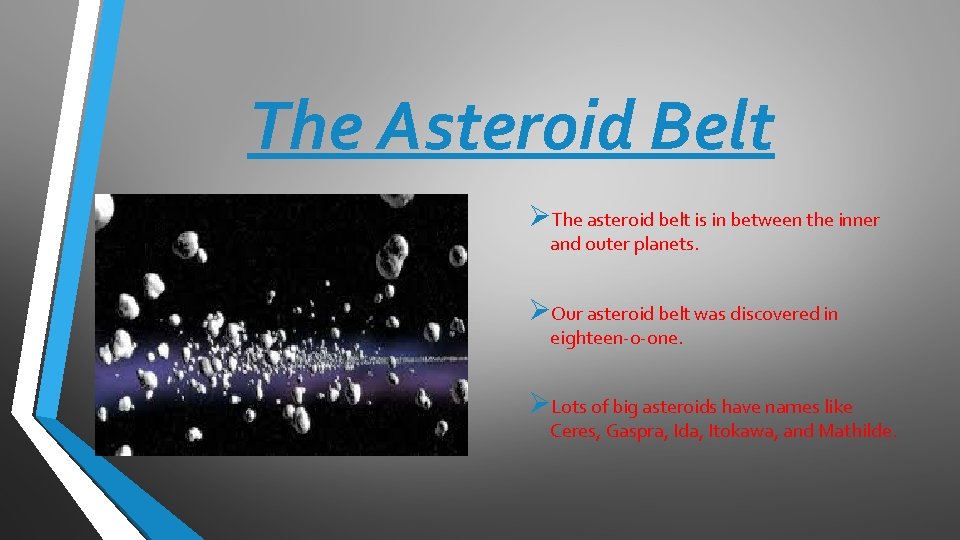
The Asteroid Belt ØThe asteroid belt is in between the inner and outer planets. ØOur asteroid belt was discovered in eighteen-o-one. ØLots of big asteroids have names like Ceres, Gaspra, Ida, Itokawa, and Mathilde.
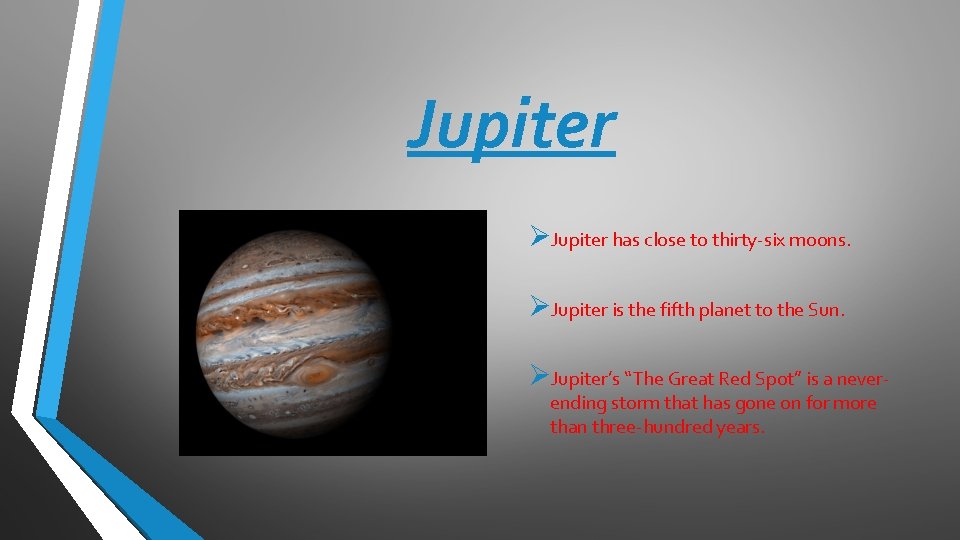
Jupiter ØJupiter has close to thirty-six moons. ØJupiter is the fifth planet to the Sun. ØJupiter’s “The Great Red Spot” is a neverending storm that has gone on for more than three-hundred years.
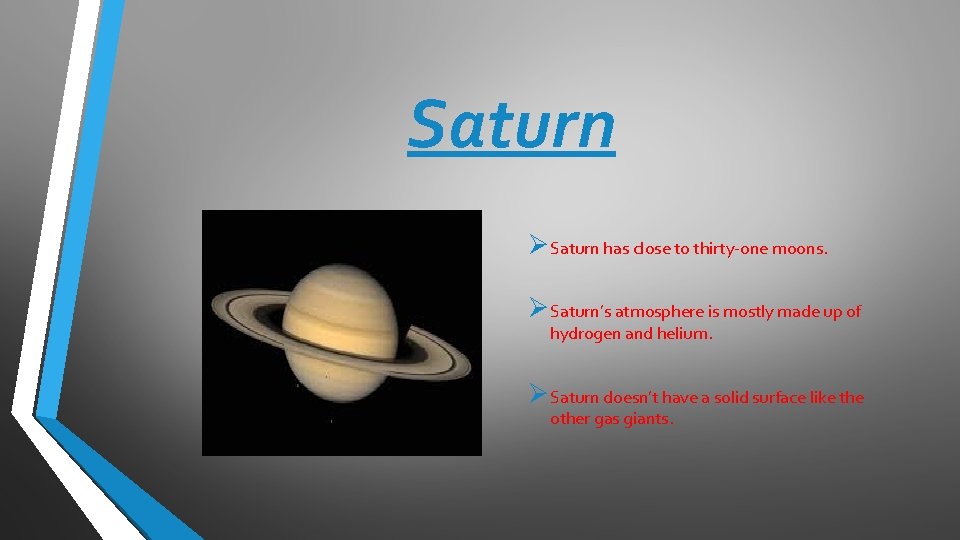
Saturn Ø Saturn has close to thirty-one moons. Ø Saturn’s atmosphere is mostly made up of hydrogen and helium. Ø Saturn doesn’t have a solid surface like the other gas giants.
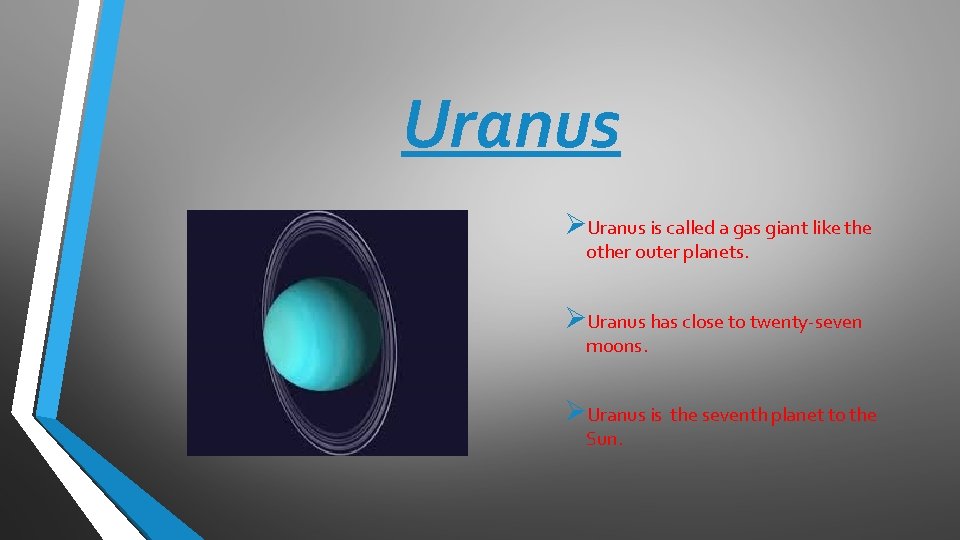
Uranus ØUranus is called a gas giant like the other outer planets. ØUranus has close to twenty-seven moons. ØUranus is the seventh planet to the Sun.
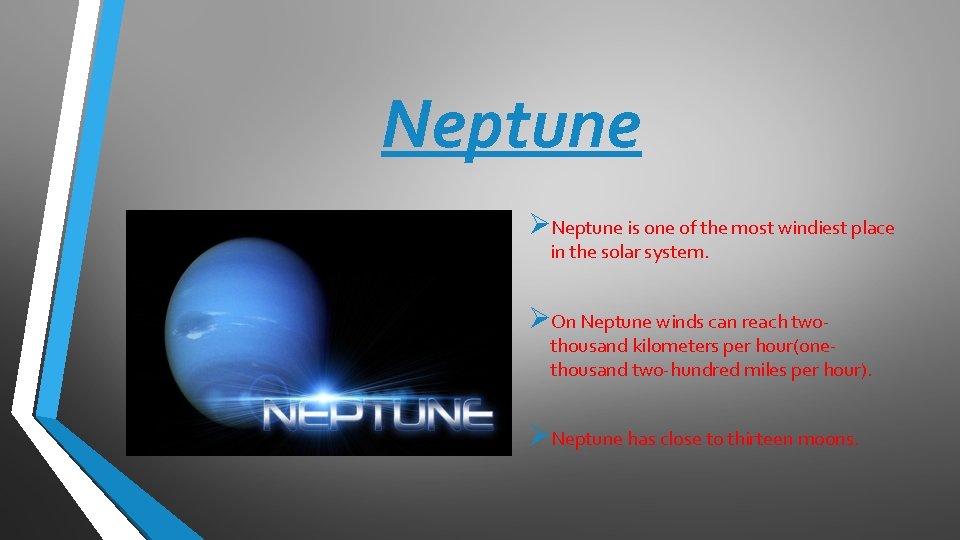
Neptune ØNeptune is one of the most windiest place in the solar system. ØOn Neptune winds can reach two- thousand kilometers per hour(onethousand two-hundred miles per hour). ØNeptune has close to thirteen moons.
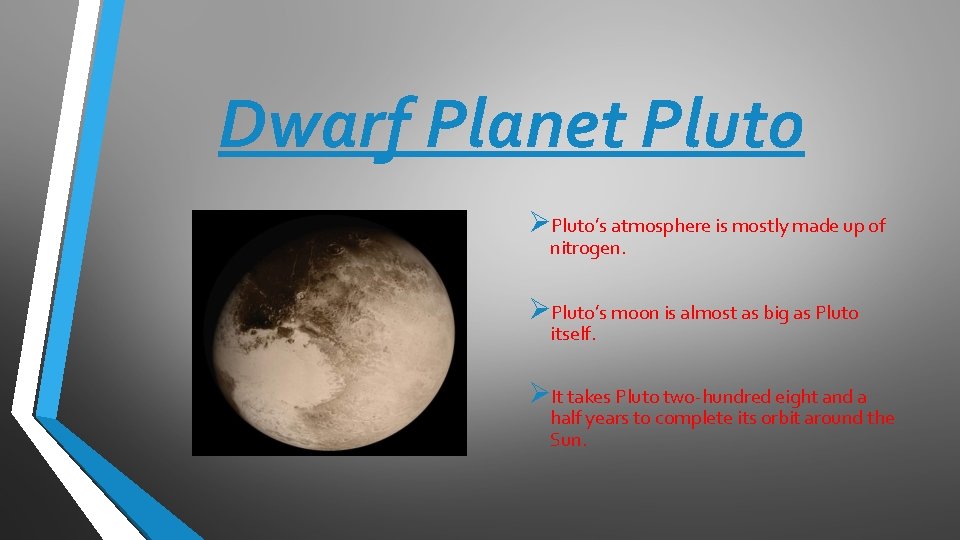
Dwarf Planet Pluto ØPluto’s atmosphere is mostly made up of nitrogen. ØPluto’s moon is almost as big as Pluto itself. ØIt takes Pluto two-hundred eight and a half years to complete its orbit around the Sun.
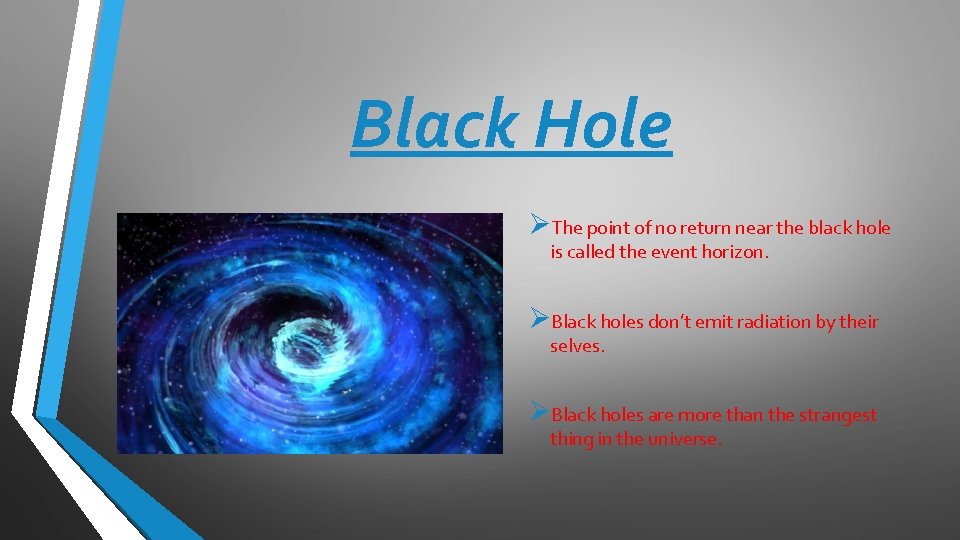
Black Hole ØThe point of no return near the black hole is called the event horizon. ØBlack holes don’t emit radiation by their selves. ØBlack holes are more than the strangest thing in the universe.
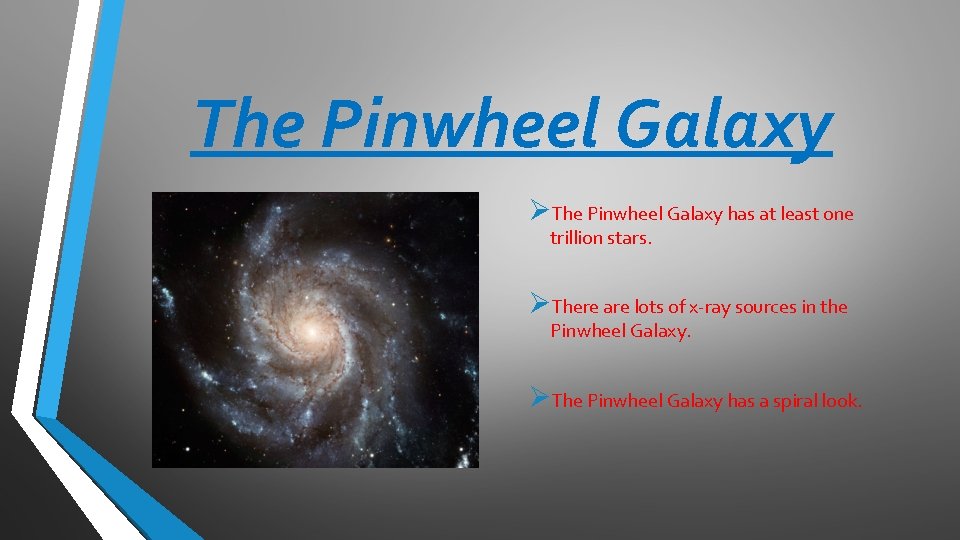
The Pinwheel Galaxy ØThe Pinwheel Galaxy has at least one trillion stars. ØThere are lots of x-ray sources in the Pinwheel Galaxy. ØThe Pinwheel Galaxy has a spiral look.
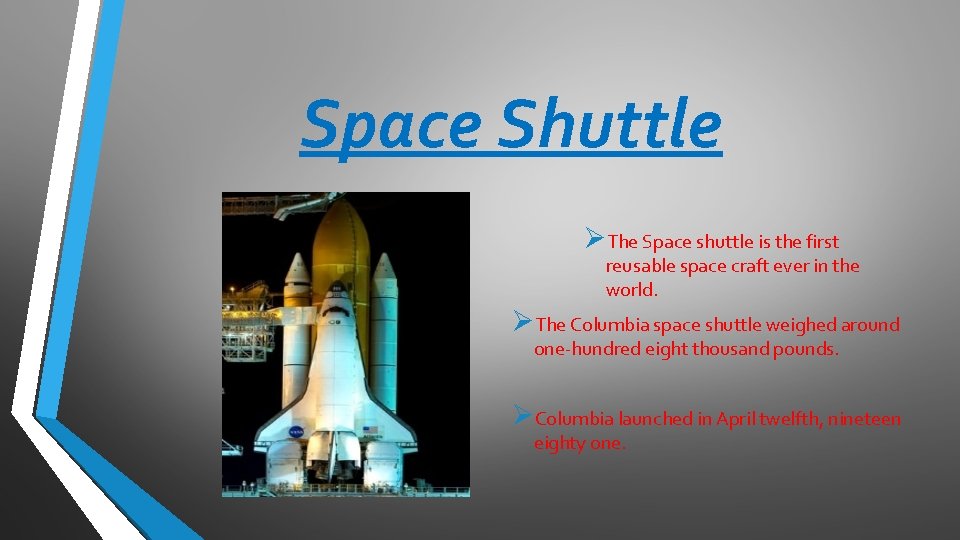
Space Shuttle ØThe Space shuttle is the first reusable space craft ever in the world. ØThe Columbia space shuttle weighed around one-hundred eight thousand pounds. ØColumbia launched in April twelfth, nineteen eighty one.
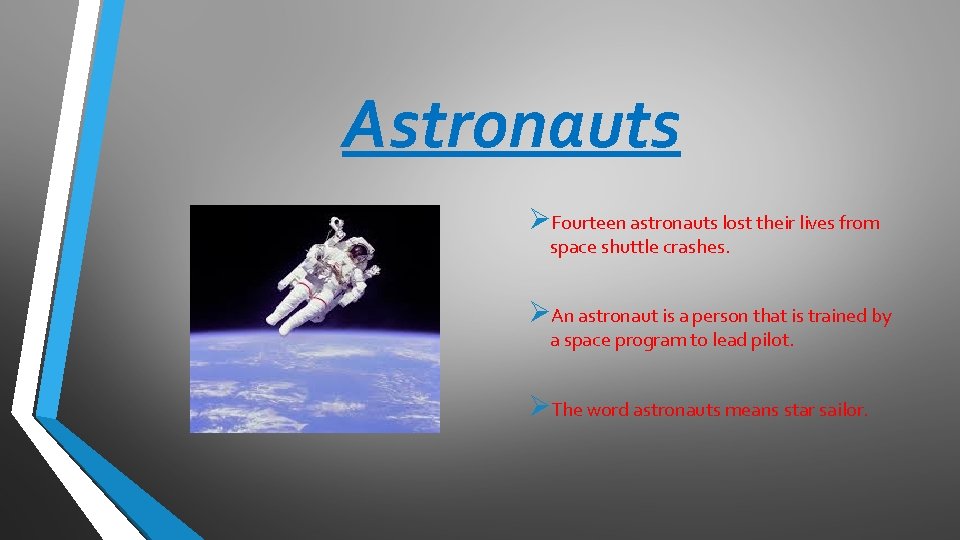
Astronauts ØFourteen astronauts lost their lives from space shuttle crashes. ØAn astronaut is a person that is trained by a space program to lead pilot. ØThe word astronauts means star sailor.
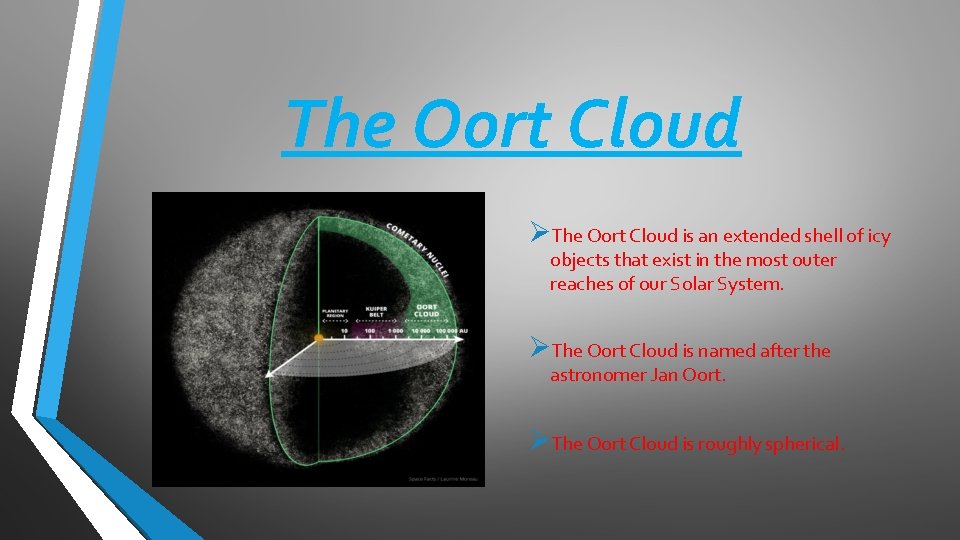
The Oort Cloud ØThe Oort Cloud is an extended shell of icy objects that exist in the most outer reaches of our Solar System. ØThe Oort Cloud is named after the astronomer Jan Oort. ØThe Oort Cloud is roughly spherical.
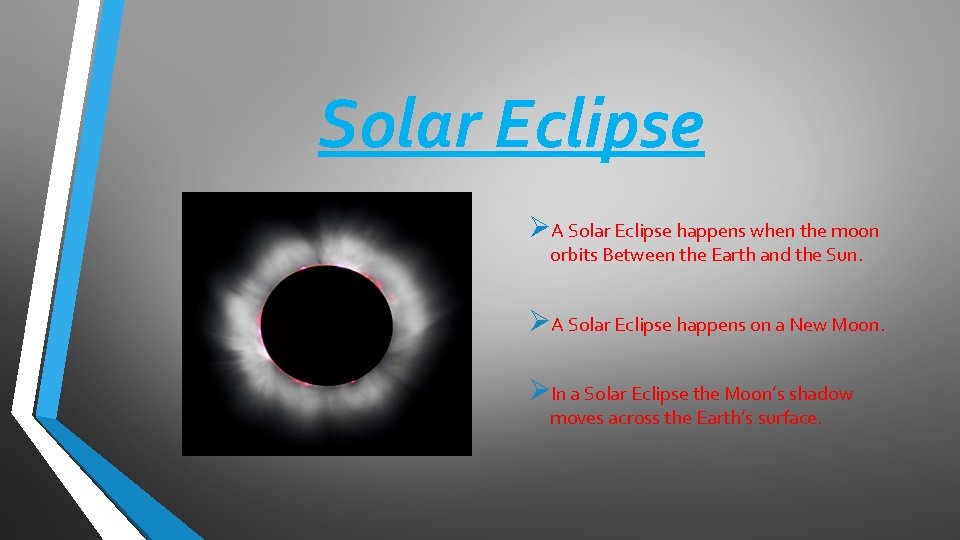
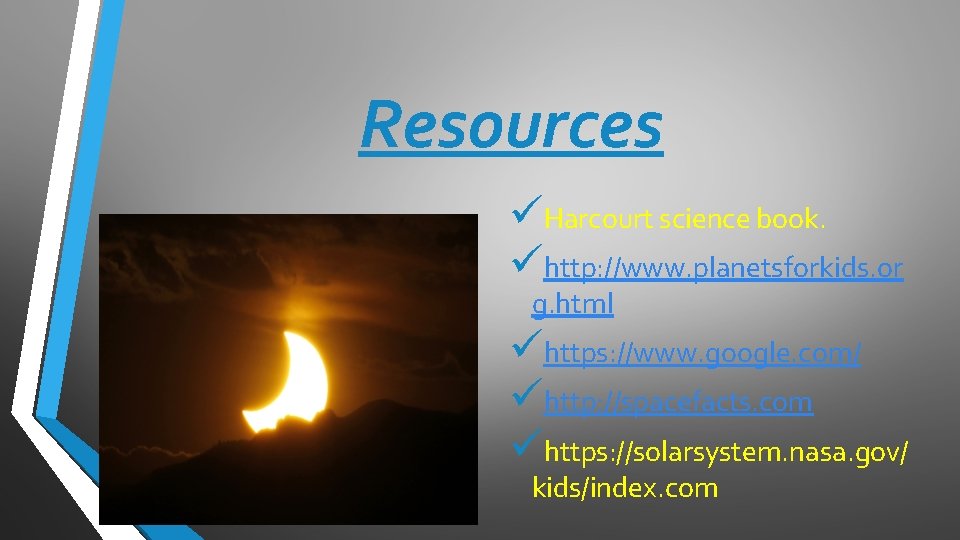
Solar Eclipse ØA Solar Eclipse happens when the moon orbits Between the Earth and the Sun. ØA Solar Eclipse happens on a New Moon. ØIn a Solar Eclipse the Moon’s shadow moves across the Earth’s surface.
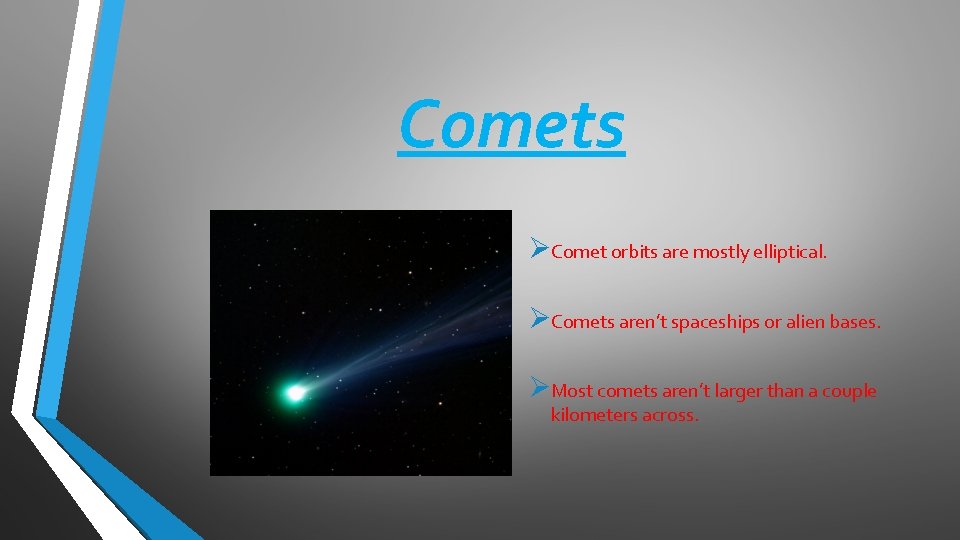
Comets ØComet orbits are mostly elliptical. ØComets aren’t spaceships or alien bases. ØMost comets aren’t larger than a couple kilometers across.
Resources üHarcourt science book. ühttp: //www. planetsforkids. or g. html ühttps: //www. google. com/ ühttp: //spacefacts. com ühttps: //solarsystem. nasa. gov/ kids/index. com

HELP MEH!
- Slides: 21