
Our favorite Solar System A solar system is
- Slides: 27
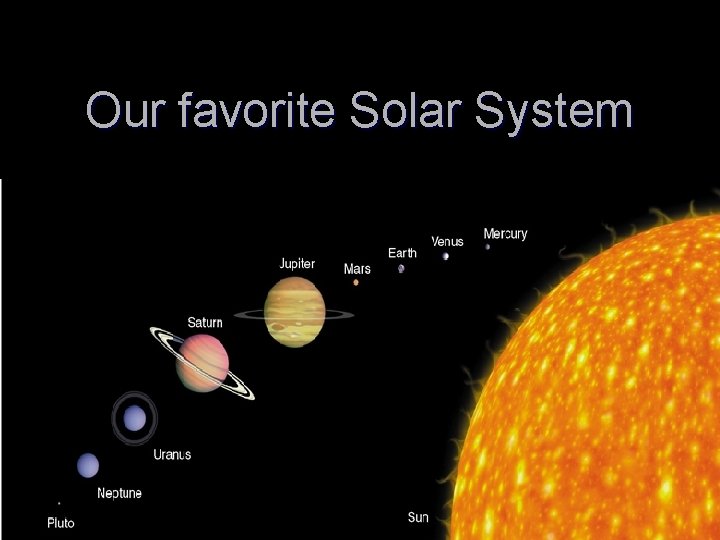
Our favorite Solar System
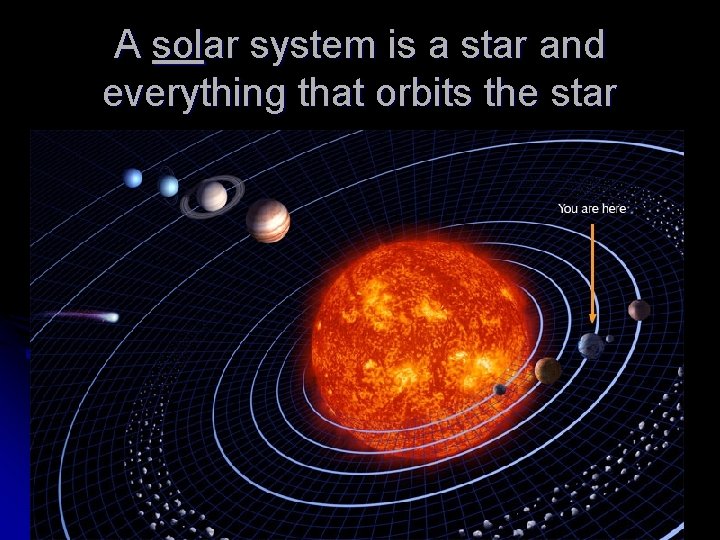
A solar system is a star and everything that orbits the star
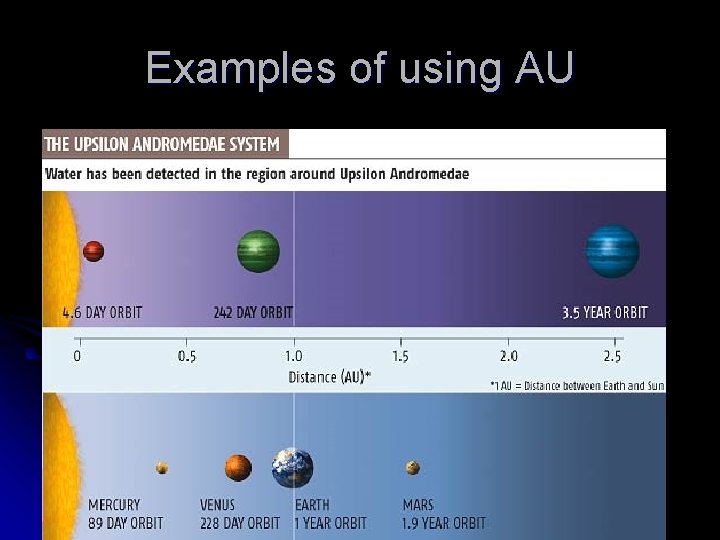
Our sun is not the only star with planets: 150+ planetary systems Two examples: Upsilon Andromeda- very similar to ours 3 planets PSR B 1620 -26 - solar system with two stars 1 planet
systems. are small in space terms so they are measured using astronomical units l Solar l 1 AU = the distance from the Earth to the Sun l 1 AU= 150 million kilometers
Examples of using AU
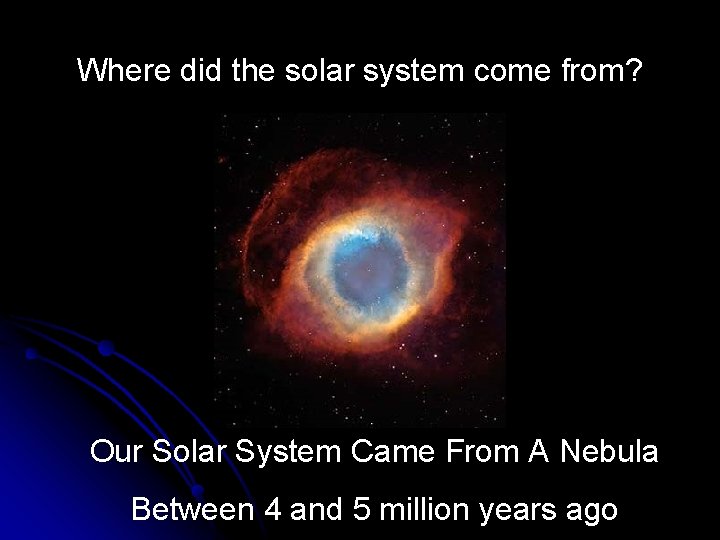
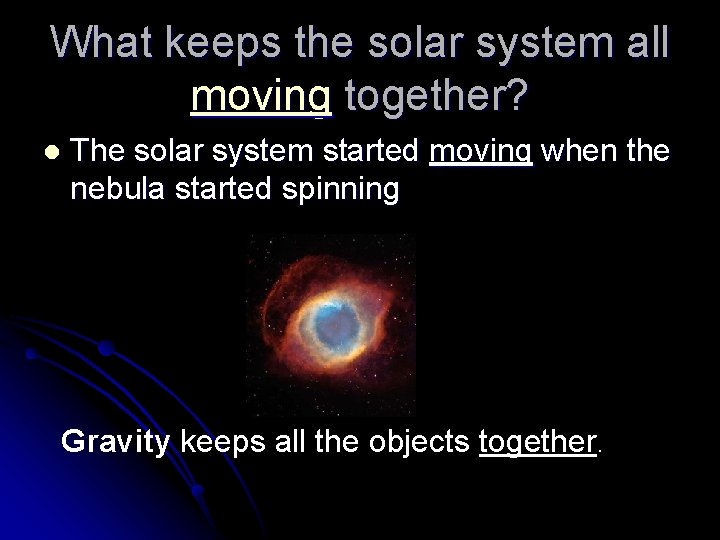
Where did the solar system come from? Our Solar System Came From A Nebula Between 4 and 5 million years ago
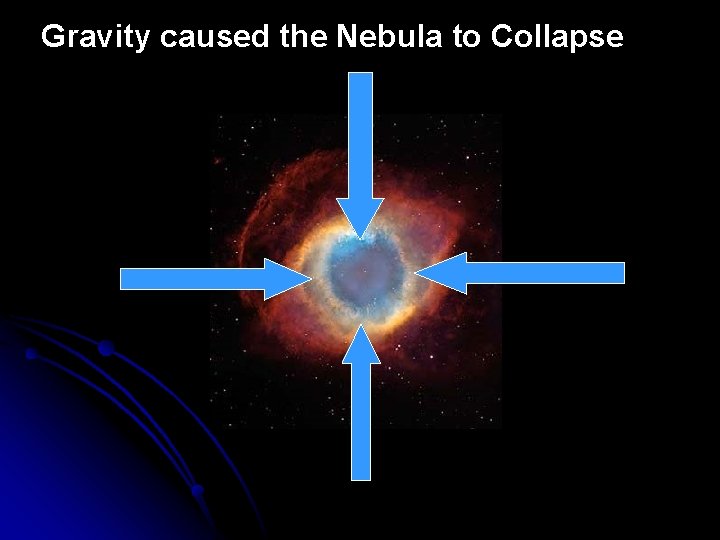
Gravity caused the Nebula to Collapse
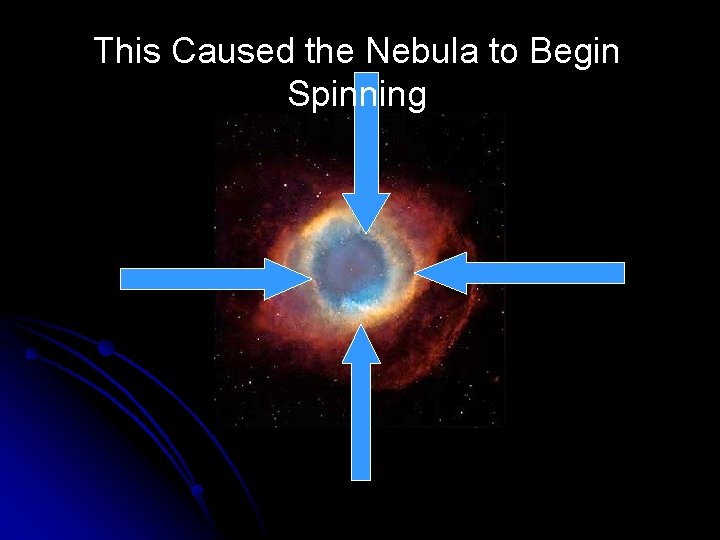
This Caused the Nebula to Begin Spinning
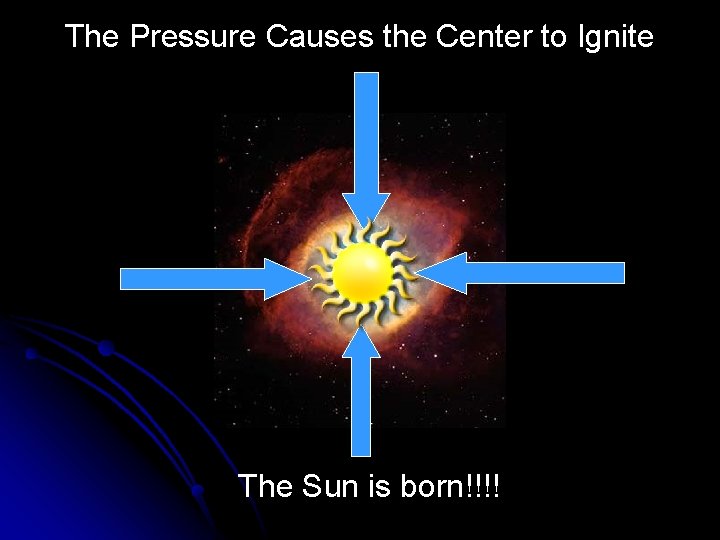
The Pressure Causes the Center to Ignite The Sun is born!!!!
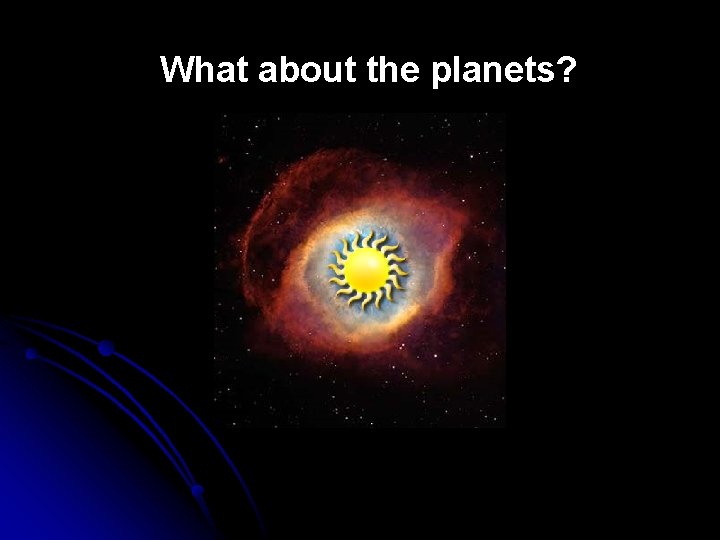
What about the planets?
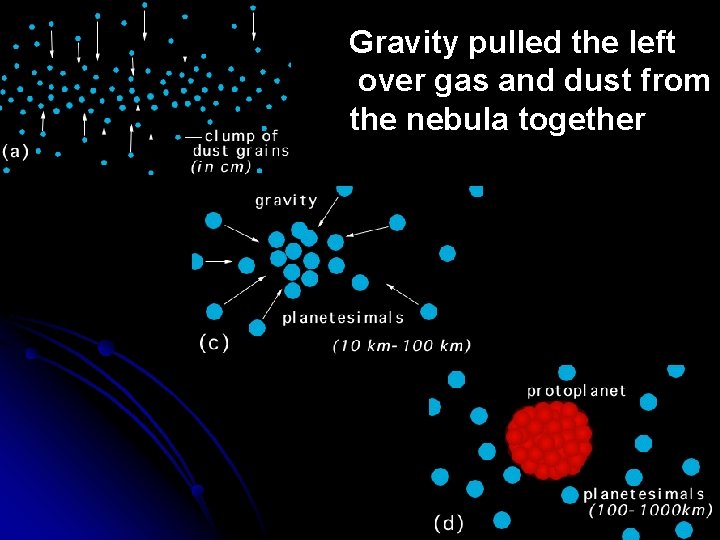
Gravity pulled the left over gas and dust from the nebula together
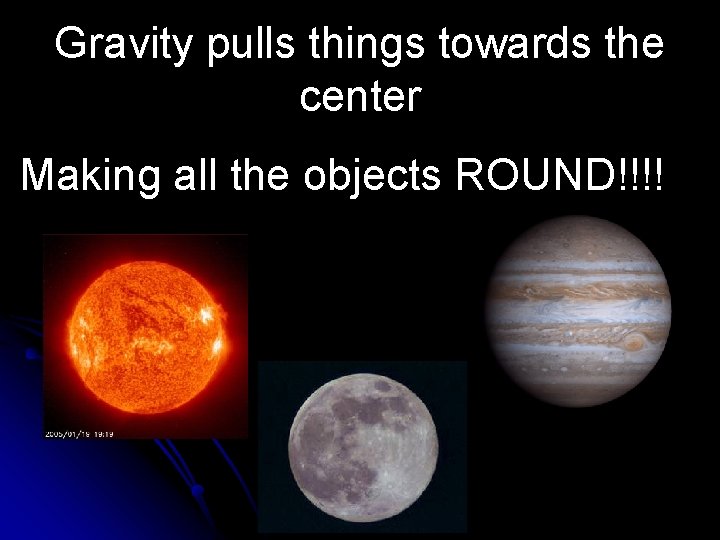
Gravity pulls things towards the center Making all the objects ROUND!!!!
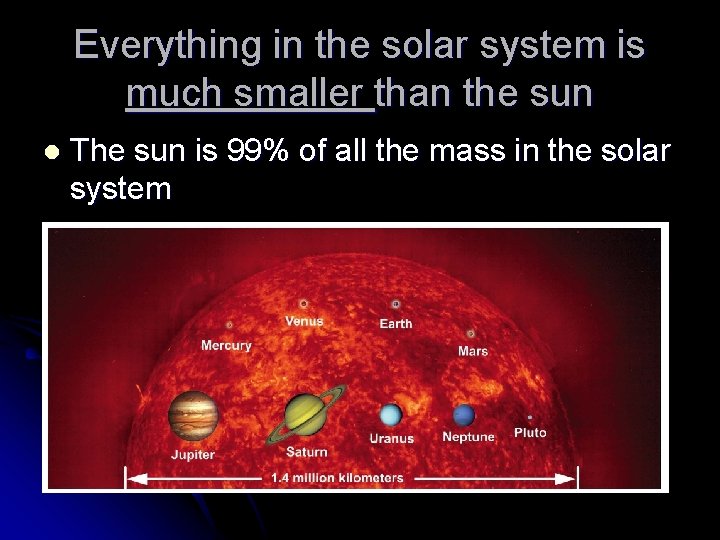
Everything in the solar system is much smaller than the sun l The sun is 99% of all the mass in the solar system
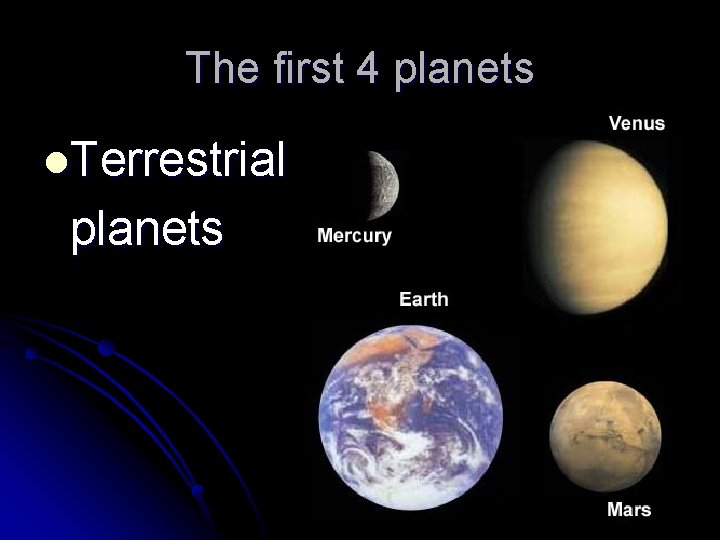
The first 4 planets l. Terrestrial planets
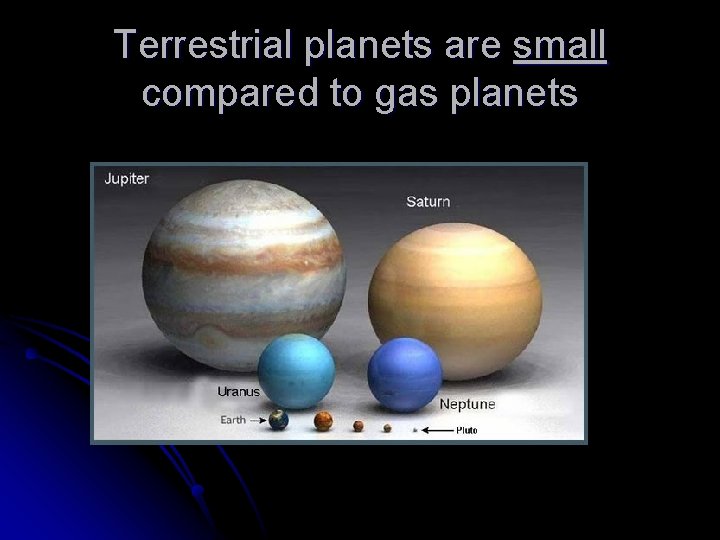
Terrestrial planets are small compared to gas planets
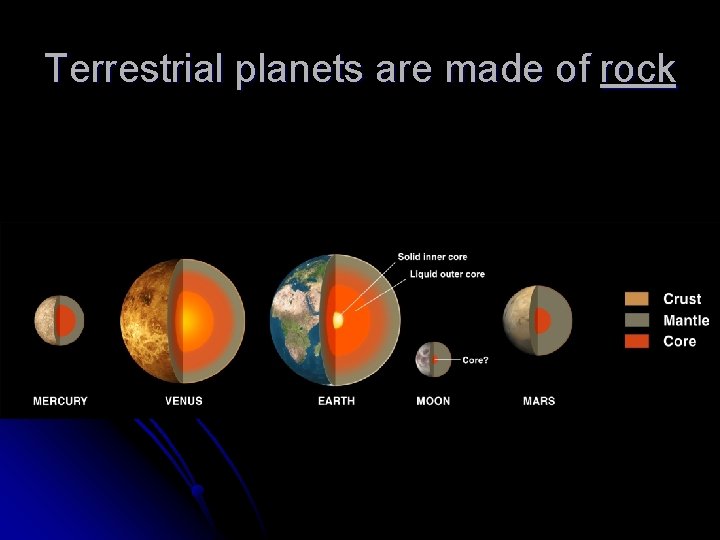
Terrestrial planets are made of rock
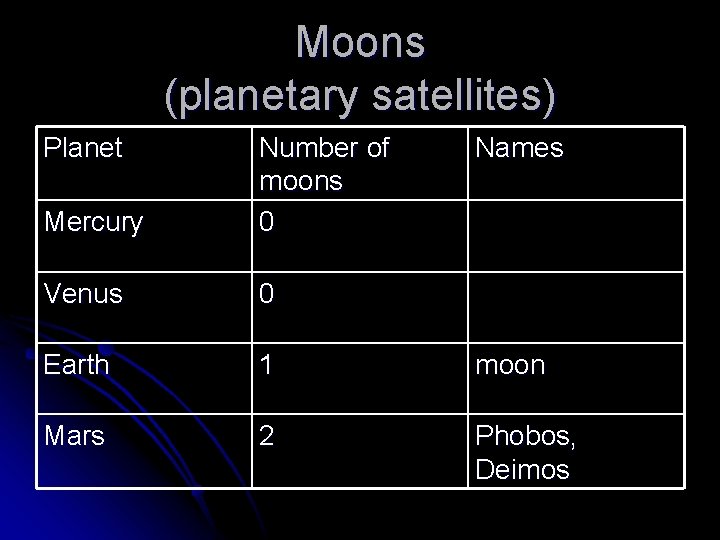
Moons (planetary satellites) Planet Mercury Number of moons 0 Names Venus 0 Earth 1 moon Mars 2 Phobos, Deimos
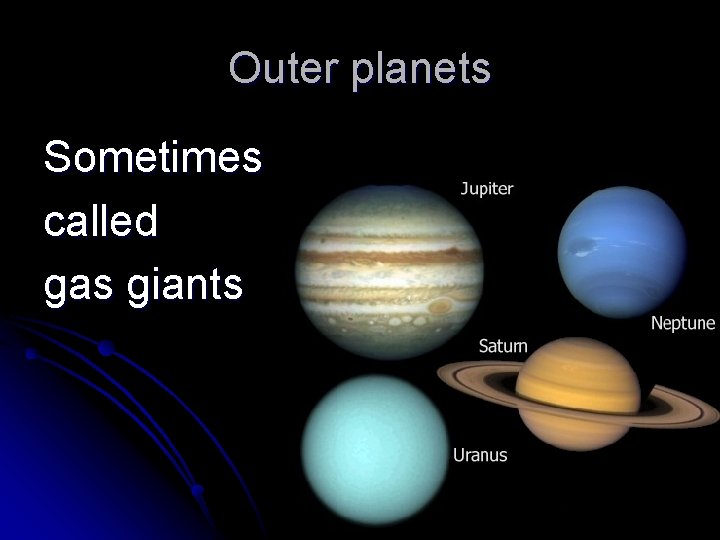
Outer planets Sometimes called gas giants
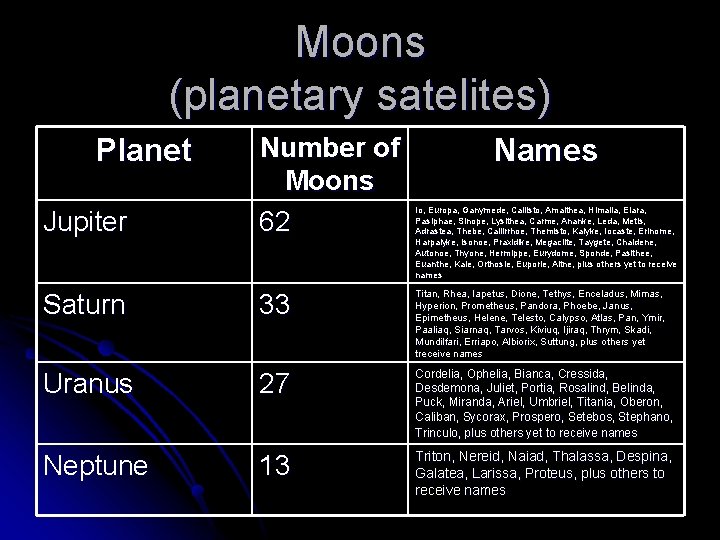
Moons (planetary satelites) Planet Jupiter Number of Moons 62 Names Io, Europa, Ganymede, Callisto, Amalthea, Himalia, Elara, Pasiphae, Sinope, Lysithea, Carme, Ananke, Leda, Metis, Adrastea, Thebe, Callirrhoe, Themisto, Kalyke, Iocaste, Erinome, Harpalyke, Isonoe, Praxidike, Megaclite, Taygete, Chaldene, Autonoe, Thyone, Hermippe, Eurydome, Sponde, Pasithee, Euanthe, Kale, Orthosie, Euporie, Aitne, plus others yet to receive names 33 Titan, Rhea, Iapetus, Dione, Tethys, Enceladus, Mimas, Hyperion, Prometheus, Pandora, Phoebe, Janus, Epimetheus, Helene, Telesto, Calypso, Atlas, Pan, Ymir, Paaliaq, Siarnaq, Tarvos, Kiviuq, Ijiraq, Thrym, Skadi, Mundilfari, Erriapo, Albiorix, Suttung, plus others yet treceive names Uranus 27 Cordelia, Ophelia, Bianca, Cressida, Desdemona, Juliet, Portia, Rosalind, Belinda, Puck, Miranda, Ariel, Umbriel, Titania, Oberon, Caliban, Sycorax, Prospero, Setebos, Stephano, Trinculo, plus others yet to receive names Neptune 13 Triton, Nereid, Naiad, Thalassa, Despina, Galatea, Larissa, Proteus, plus others to receive names Saturn
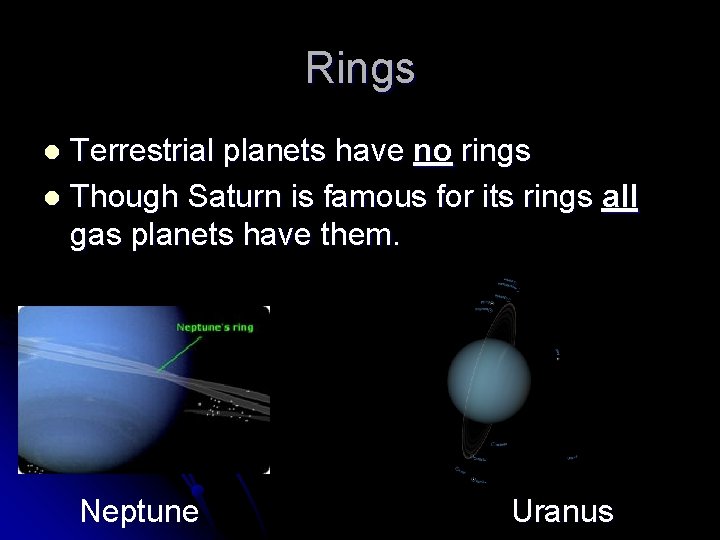
Rings Terrestrial planets have no rings l Though Saturn is famous for its rings all gas planets have them. l Neptune Uranus
Objects besides planets
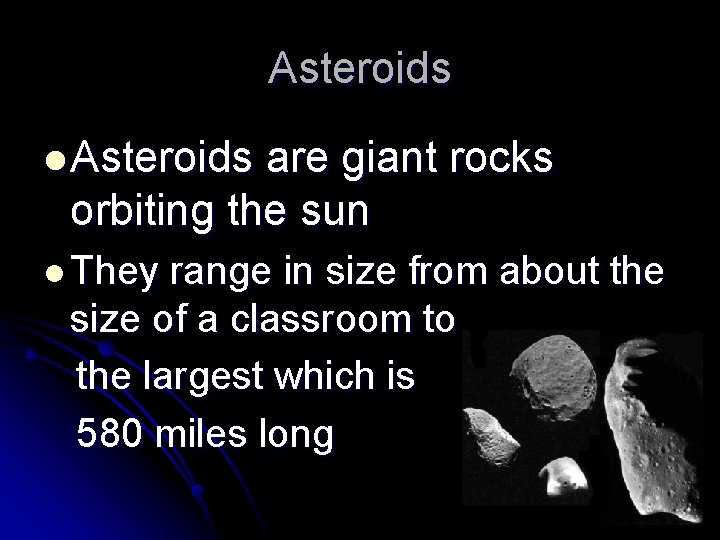
Asteroids l Asteroids are giant rocks orbiting the sun l They range in size from about the size of a classroom to the largest which is 580 miles long
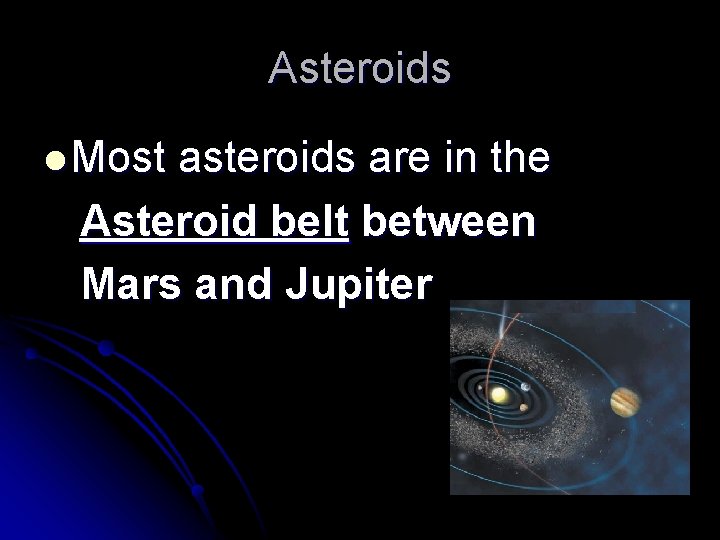
Asteroids l Most asteroids are in the Asteroid belt between Mars and Jupiter
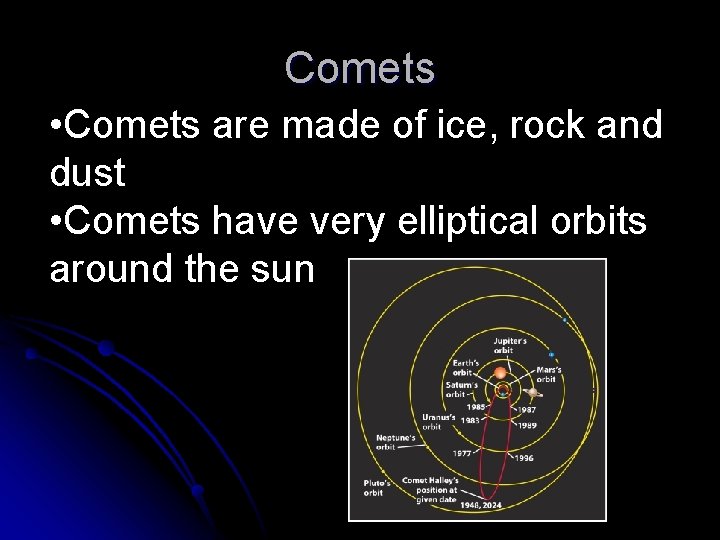
Comets • Comets are made of ice, rock and dust • Comets have very elliptical orbits around the sun
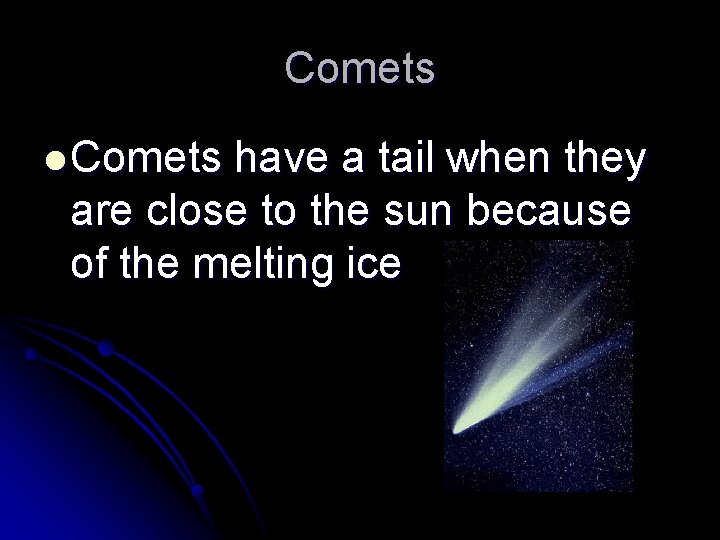
Comets l Comets have a tail when they are close to the sun because of the melting ice
What keeps the solar system all moving together? l The solar system started moving when the nebula started spinning Gravity keeps all the objects together.
Main points Solar systems are a star and what orbits around it l Solar systems are measured using A. U. l In our solar system we have: l the sun gas planets terrestrial planets moons (planetary satellites) asteroids comets