
OUR ENVIRONMENT The Past Present and Future Impacts
- Slides: 12
OUR ENVIRONMENT: The Past, Present, and Future Impacts/ Effects Regarding Exploitation, Conservation, and Preservation Dustin Menhart, United States Army Professor of Military Science William and Mary November 01, 2017
AGENDA Overview of our Environment Local Dynamics of Exploitation Global Issues of Exploitation Local Strategies of Conservation Global Initiatives of Conservation Local Policies of Preservation Global Approaches of Preservation Group Case Studies & Presentations Potential Careers Summary Q&A
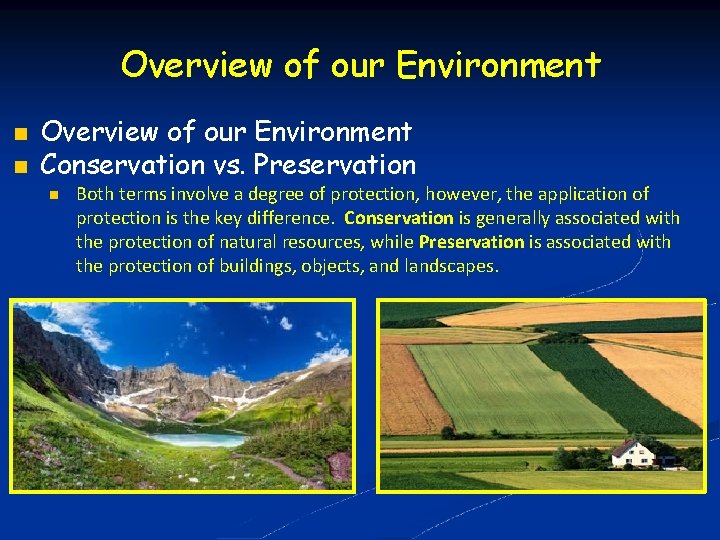
Overview of our Environment Conservation vs. Preservation Both terms involve a degree of protection, however, the application of protection is the key difference. Conservation is generally associated with the protection of natural resources, while Preservation is associated with the protection of buildings, objects, and landscapes.
Local Dynamics of Exploitation FRACKING IN VIRGINIA: Hydraulically fracked wells in Virginia typically require 0300, 000 gallons of water. Increasingly, operators are utilizing nitrogen-based foam to frack wells. By contrast, fracked wells in the Marcellus shale can use 45 million gallons of water. Technique has been utilized in the Commonwealth since the 1960 s. Over 8, 000 wells have been fracked in Southwest Virginia. There have been no documented instances of surface or groundwater degradation from fracking in Virginia.
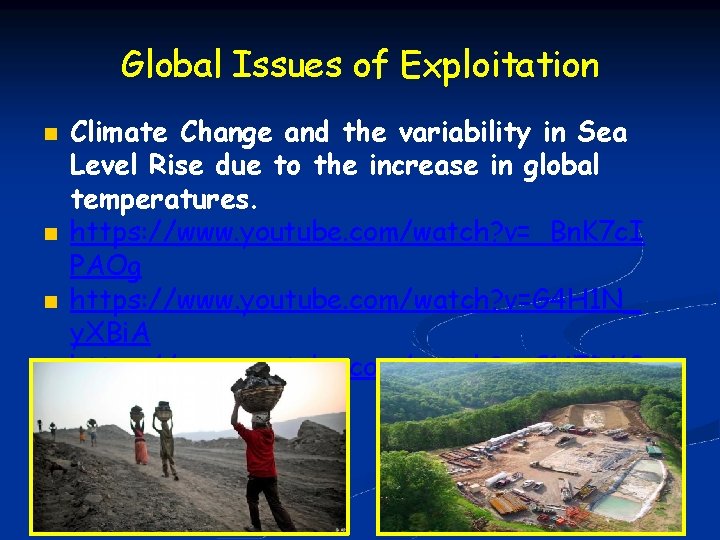
Global Issues of Exploitation Climate Change and the variability in Sea Level Rise due to the increase in global temperatures. https: //www. youtube. com/watch? v=_Bn. K 7 c. I PAOg https: //www. youtube. com/watch? v=G 4 H 1 N_ y. XBi. A https: //www. youtube. com/watch? v=C 1 j. EDKG Do. So
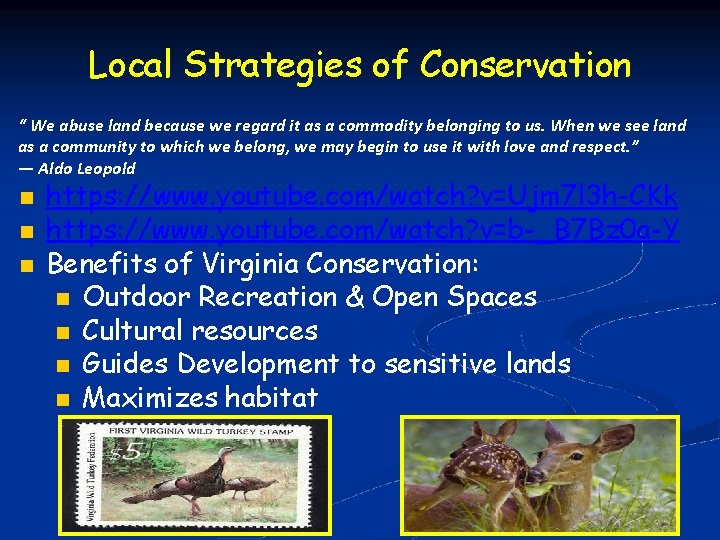
Local Strategies of Conservation “ We abuse land because we regard it as a commodity belonging to us. When we see land as a community to which we belong, we may begin to use it with love and respect. ” — Aldo Leopold https: //www. youtube. com/watch? v=Ujm 7 l 3 h-CKk https: //www. youtube. com/watch? v=b-_B 7 Bz 0 a-Y Benefits of Virginia Conservation: Outdoor Recreation & Open Spaces Cultural resources Guides Development to sensitive lands Maximizes habitat
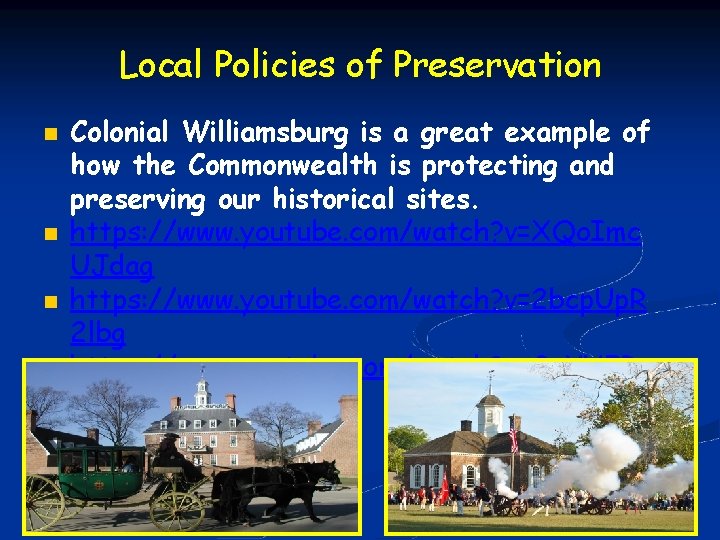
Local Policies of Preservation Colonial Williamsburg is a great example of how the Commonwealth is protecting and preserving our historical sites. https: //www. youtube. com/watch? v=XQo. Imc UJdag https: //www. youtube. com/watch? v=2 bcp. Up. R 2 lbg https: //www. youtube. com/watch? v=Gn. YHFRq 7 -5 s
Global Approaches of Preservation The Global Preservation Project (GPP) is solely dedicated to the preservation of endangered habitat and the life therein. GPP targets the motivations for environmental destruction and finds responsible solutions that benefit society, nature, and economics.
Group Case Studies & Presentations 8 Groups of Five People Each person will take 5 minutes to review the literature Once reviewed, the small group will have a discussion for 15 minutes identifying themes and messages of the review Each Small Group will designate 2 spokespersons to brief the class on their particular readings/findings(5 minute overview)
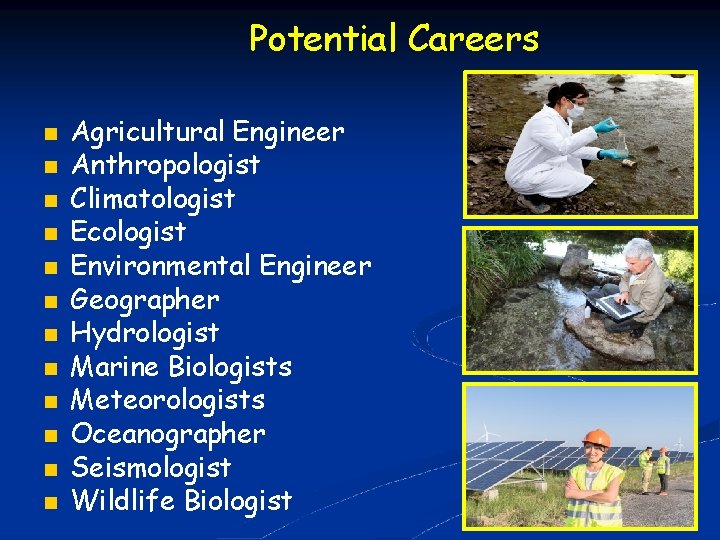
Potential Careers Agricultural Engineer Anthropologist Climatologist Ecologist Environmental Engineer Geographer Hydrologist Marine Biologists Meteorologists Oceanographer Seismologist Wildlife Biologist
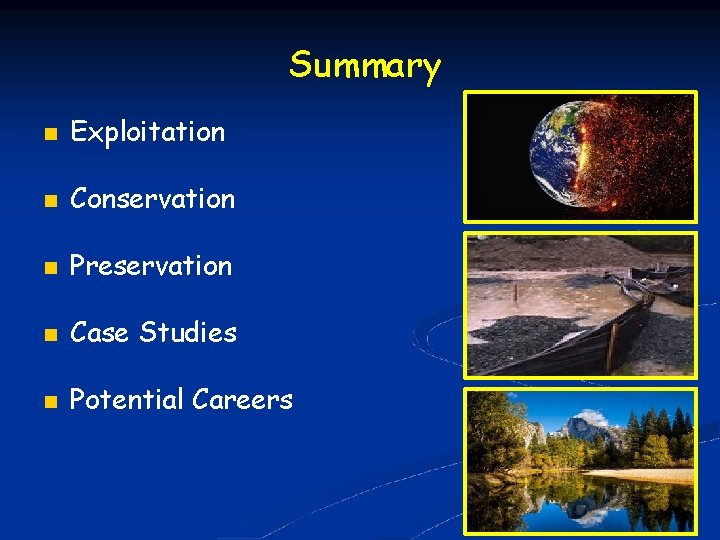
Summary Exploitation Conservation Preservation Case Studies Potential Careers
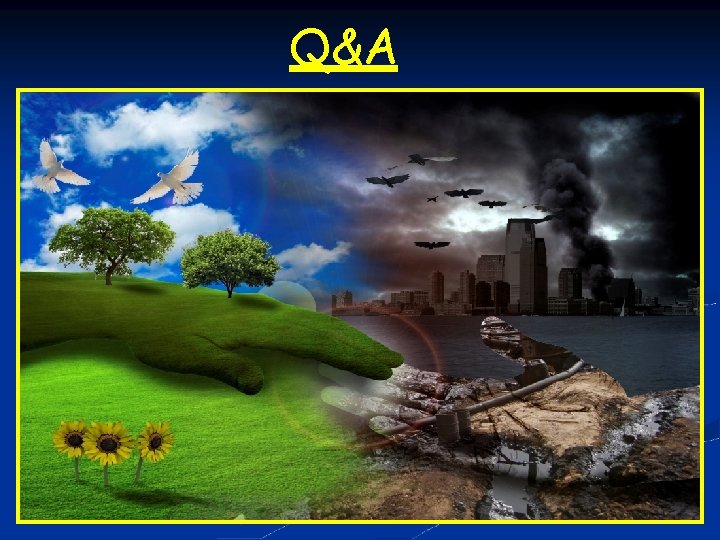
Q&A