
Our current rates of resource consumption and pollution
- Slides: 19
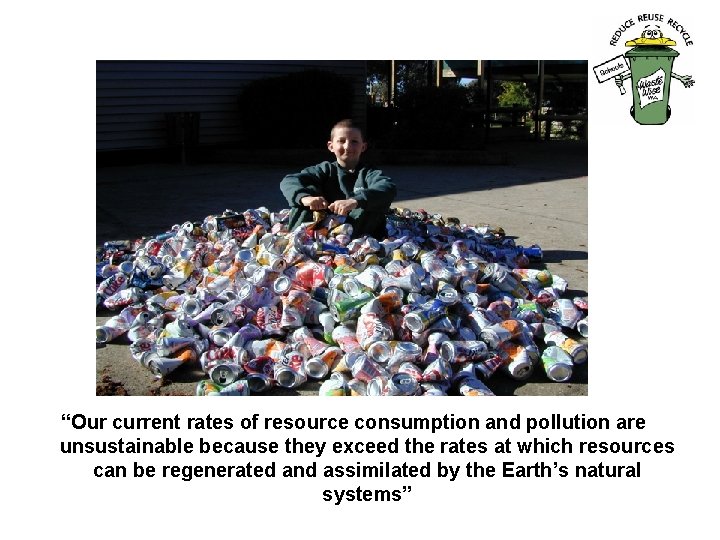
“Our current rates of resource consumption and pollution are unsustainable because they exceed the rates at which resources can be regenerated and assimilated by the Earth’s natural systems”
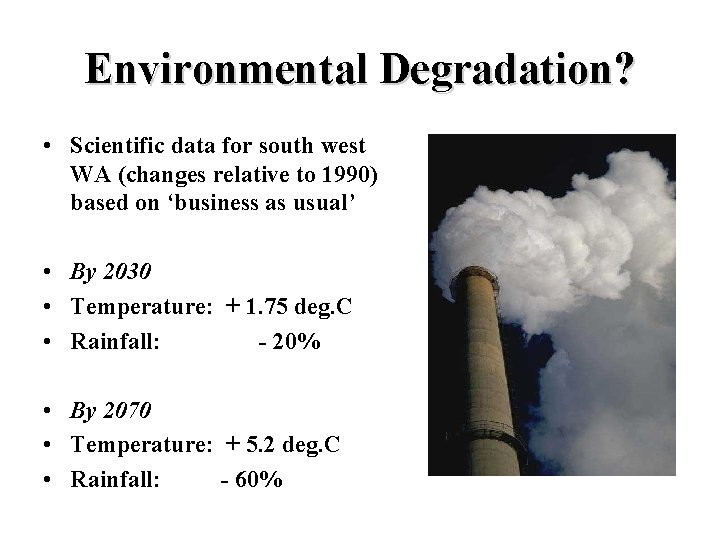
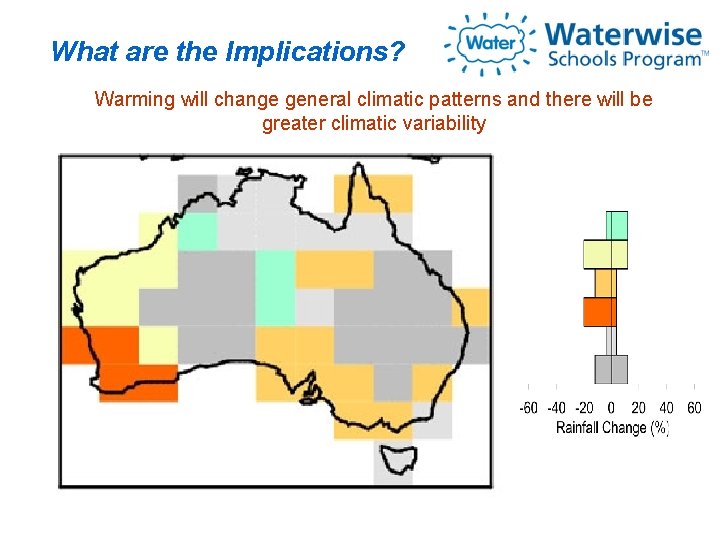
Environmental Degradation? • Scientific data for south west WA (changes relative to 1990) based on ‘business as usual’ • By 2030 • Temperature: + 1. 75 deg. C • Rainfall: - 20% • By 2070 • Temperature: + 5. 2 deg. C • Rainfall: - 60%
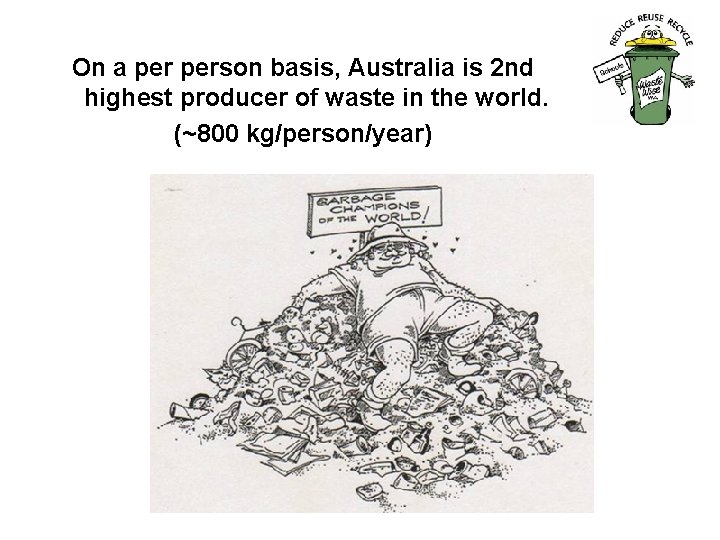
On a person basis, Australia is 2 nd highest producer of waste in the world. (~800 kg/person/year)
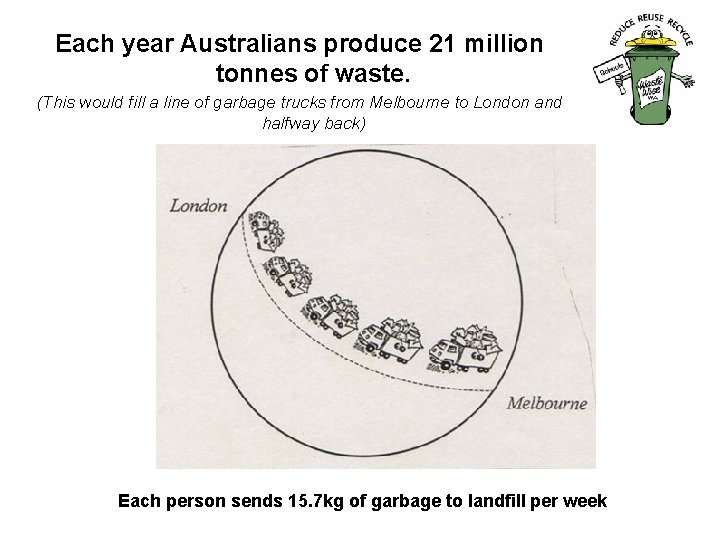
Each year Australians produce 21 million tonnes of waste. (This would fill a line of garbage trucks from Melbourne to London and halfway back) Each person sends 15. 7 kg of garbage to landfill per week
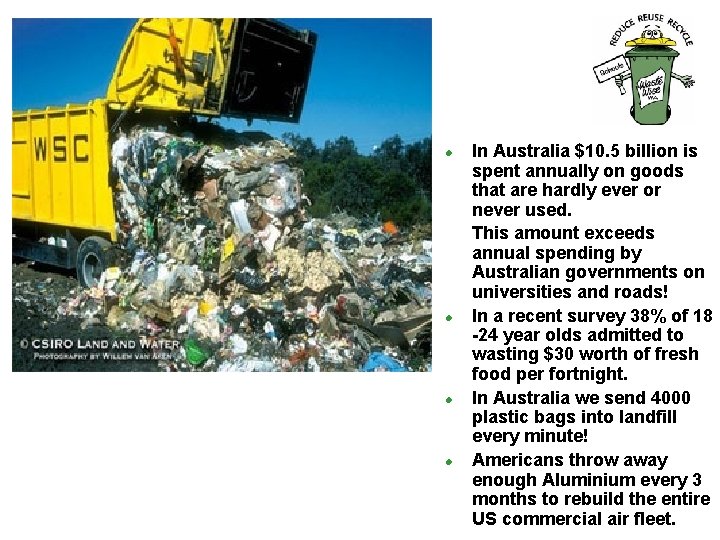
l l In Australia $10. 5 billion is spent annually on goods that are hardly ever or never used. This amount exceeds annual spending by Australian governments on universities and roads! In a recent survey 38% of 18 -24 year olds admitted to wasting $30 worth of fresh food per fortnight. In Australia we send 4000 plastic bags into landfill every minute! Americans throw away enough Aluminium every 3 months to rebuild the entire US commercial air fleet.
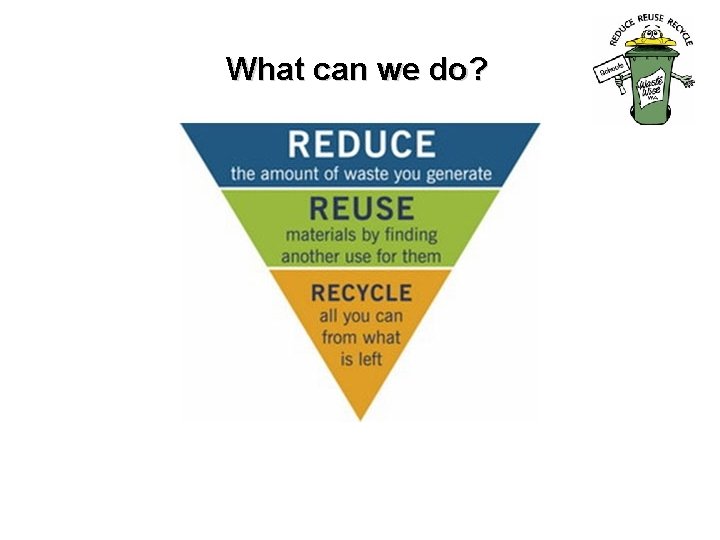
What can we do?
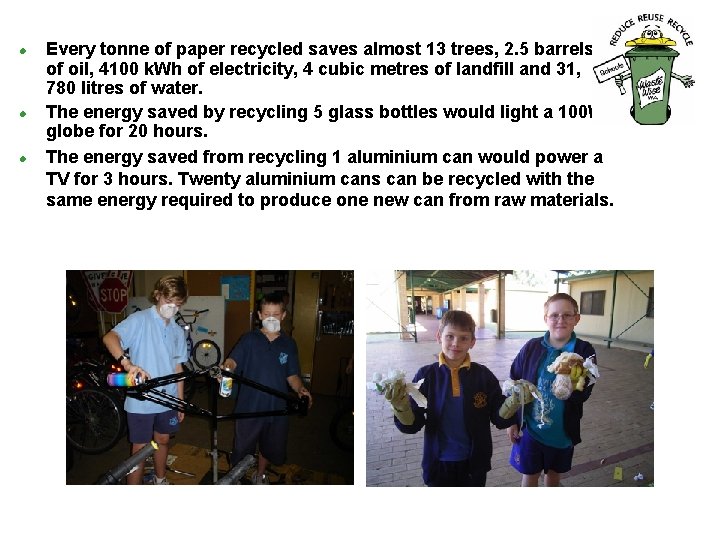
l l l Every tonne of paper recycled saves almost 13 trees, 2. 5 barrels of oil, 4100 k. Wh of electricity, 4 cubic metres of landfill and 31, 780 litres of water. The energy saved by recycling 5 glass bottles would light a 100 W globe for 20 hours. The energy saved from recycling 1 aluminium can would power a TV for 3 hours. Twenty aluminium cans can be recycled with the same energy required to produce one new can from raw materials.
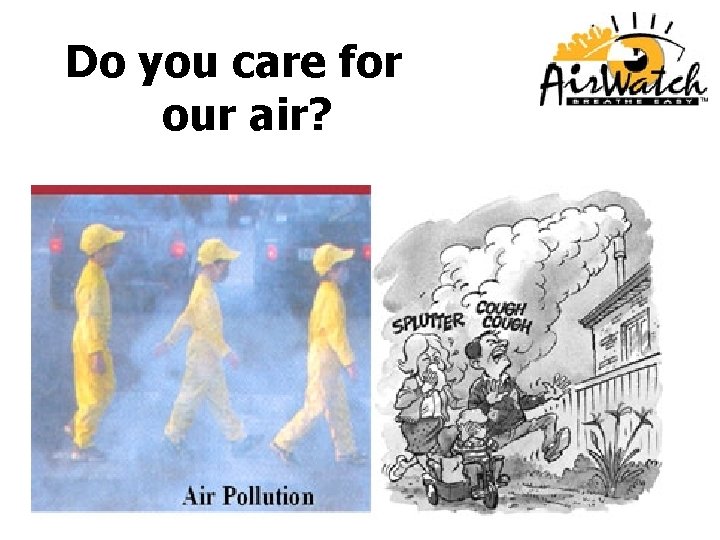
Do you care for our air?
• The car is the technology which involves the biggest number of employees, the highest advertising budget, the largest accidental death rate and the biggest contribution to global warming. • Every day Perth drivers travel the equivalent of 500 times around the world in their cars!
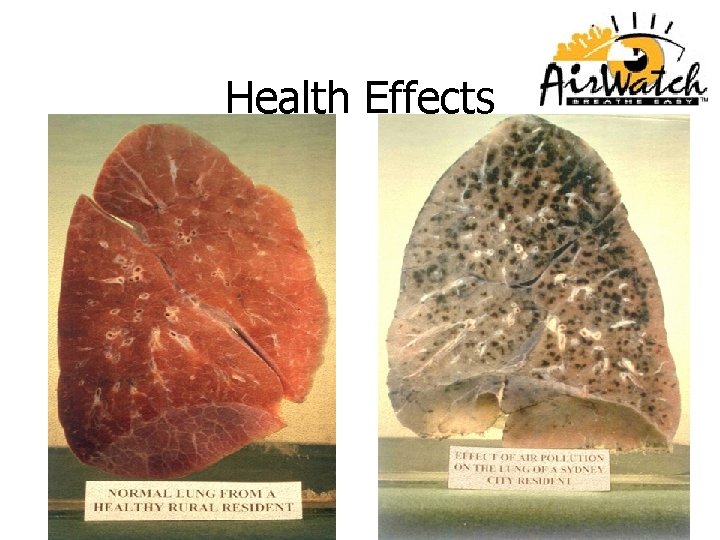
Health Effects
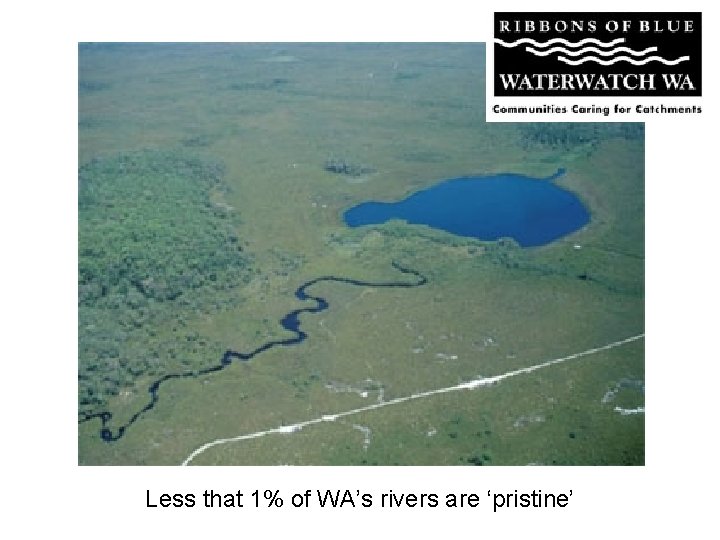
Less that 1% of WA’s rivers are ‘pristine’
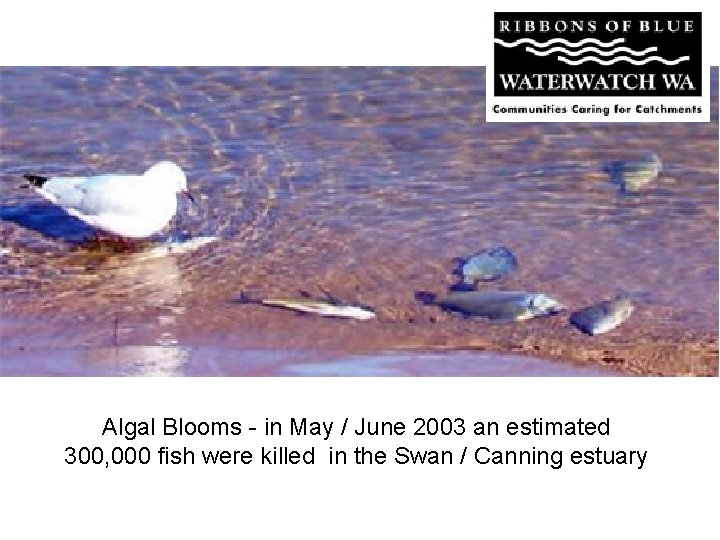
Algal Blooms - in May / June 2003 an estimated 300, 000 fish were killed in the Swan / Canning estuary
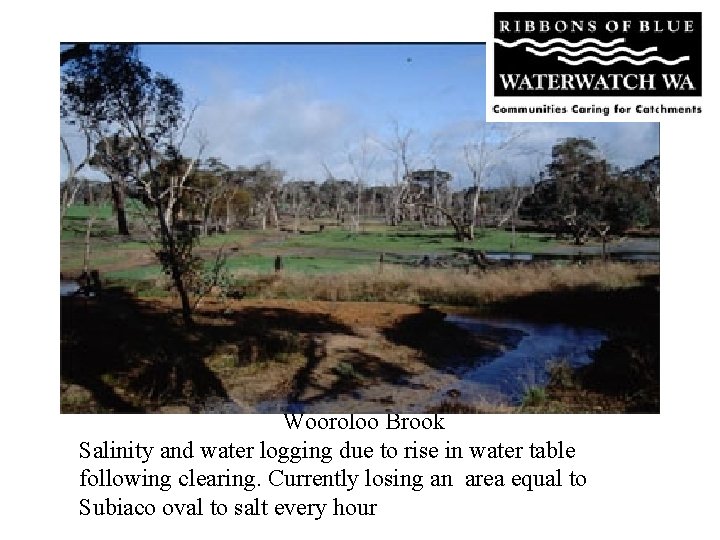
Wooroloo Brook Salinity and water logging due to rise in water table following clearing. Currently losing an area equal to Subiaco oval to salt every hour
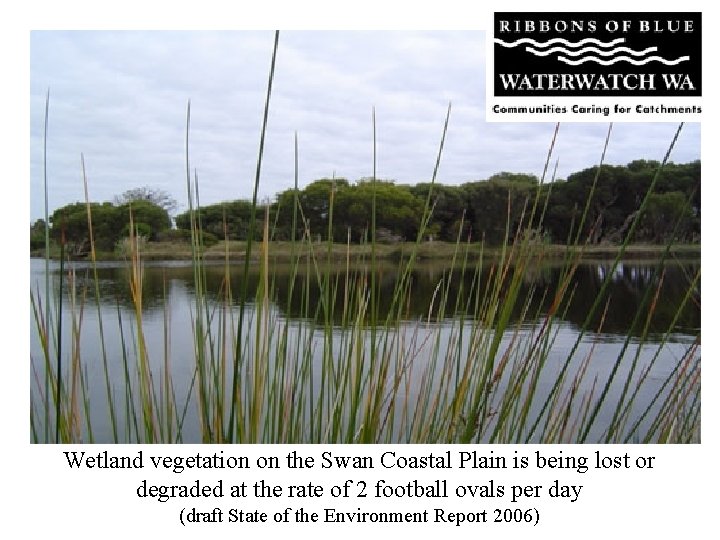
Wetland vegetation on the Swan Coastal Plain is being lost or degraded at the rate of 2 football ovals per day (draft State of the Environment Report 2006)
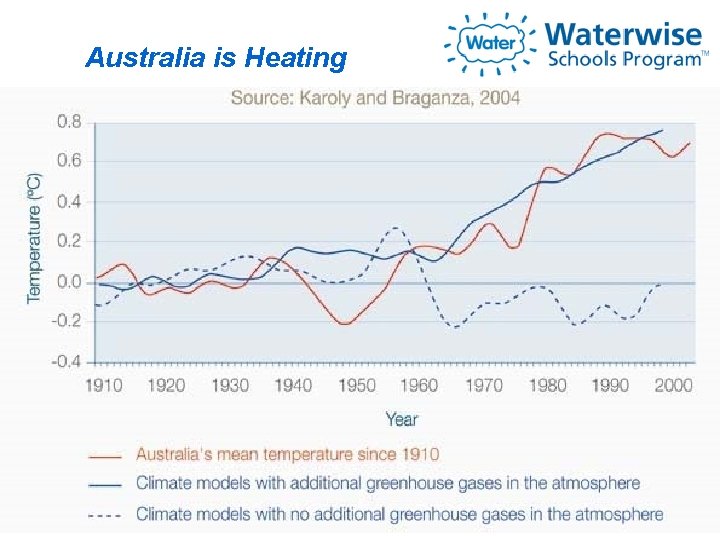
Australia is Heating
What are the Implications? Warming will change general climatic patterns and there will be greater climatic variability
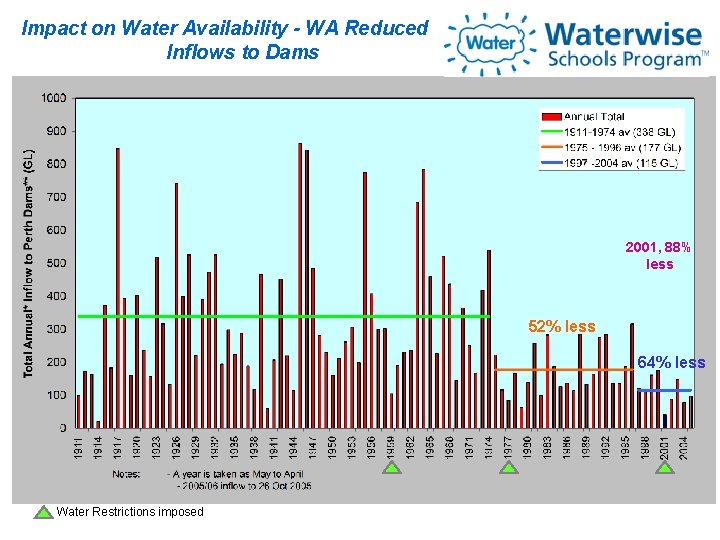
Impact on Water Availability - WA Reduced Inflows to Dams 2001, 88% less 52% less 64% less Water Restrictions imposed
Impact of a Drying Climate § Extended low rainfall indicates a drying climate – 10 -20 per cent reduction in rainfall in the South West of the state over the last 28 years § Subsequent reduction in run-off into our dams & reduced recharge of groundwater § Impact on the Integrated Water Supply Scheme § 2001 our dams in Perth experienced one of the lowest inflows on record and 2001 – 2004 worst 4 year period
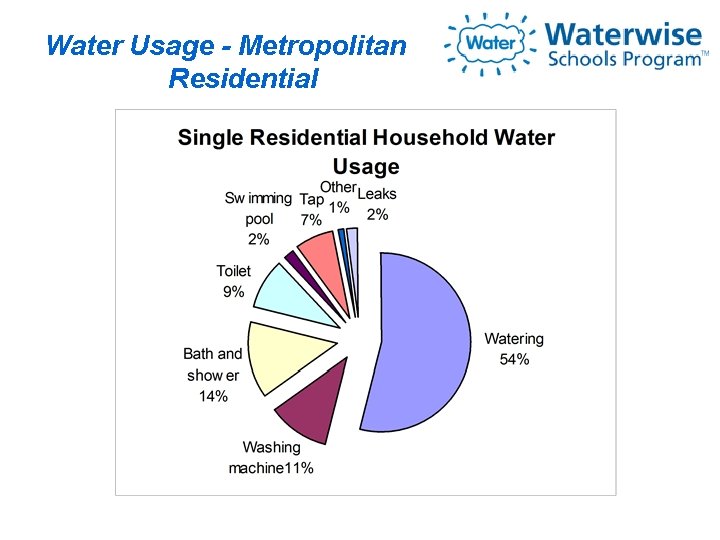
Water Usage - Metropolitan Residential