
Our Connected System Agenda WIOA Overview Our System
- Slides: 29
Our Connected System
Agenda • WIOA Overview • Our System • Our Services
WIOA Overview
WIOA Introduction • The Vision of WIOA • What would it mean for communities? • How might we get there?
National Vision of WIOA • Three hallmarks of Excellence 1. The needs of business and workers drive workforce solutions 2. One-Stop Centers provide excellent customer service and focus on continuous improvement 3. The workforce system actively supports vibrant regional economies and plays an active role in community and economic development
Which looks like? • • A system equalizing supply and demand A system that respectfully welcomes all A community that knows where to go for guidance A customer who gets what they need, without feeling like they are in a “system”
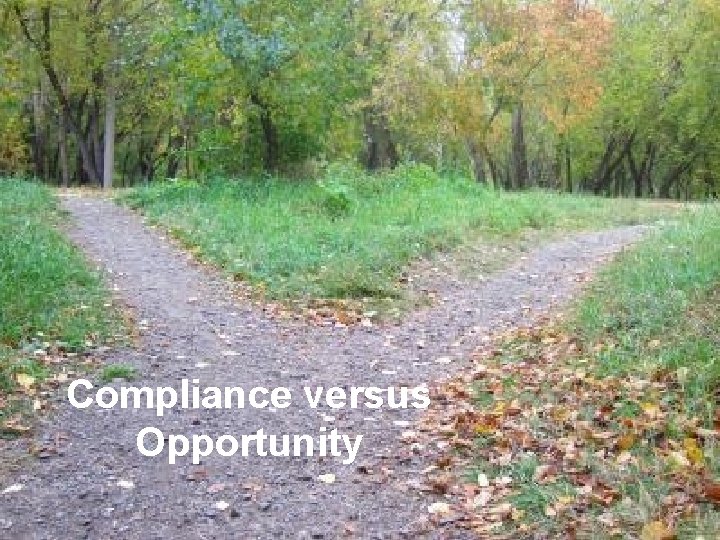
Compliance versus Opportunity
Implementation Steps--Planning • State level: – Five strategic goals for our state, built by the needs of the community – Four-year plan with detailed strategies • Local level: – Four-year plan for action in your specific planning region and local area
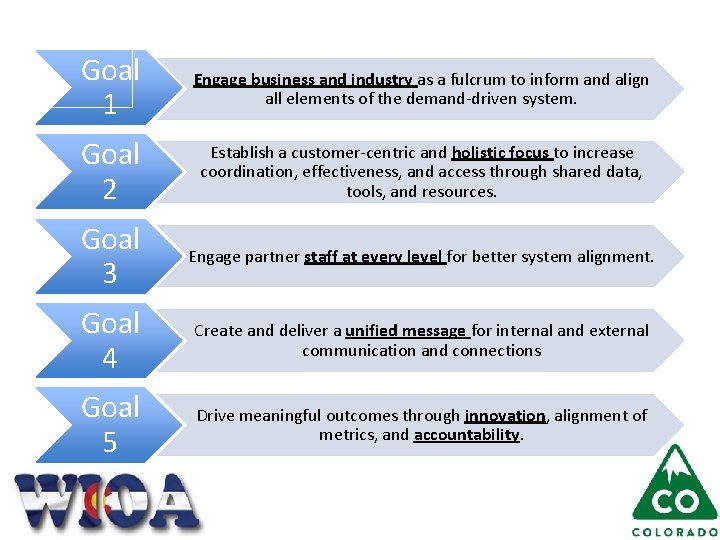
Goal 1 Engage business and industry as a fulcrum to inform and align all elements of the demand-driven system. Goal 2 Establish a customer-centric and holistic focus to increase coordination, effectiveness, and access through shared data, tools, and resources. Goal 3 Engage partner staff at every level for better system alignment. Goal 4 Create and deliver a unified message for internal and external communication and connections Goal 5 Drive meaningful outcomes through innovation, alignment of metrics, and accountability.
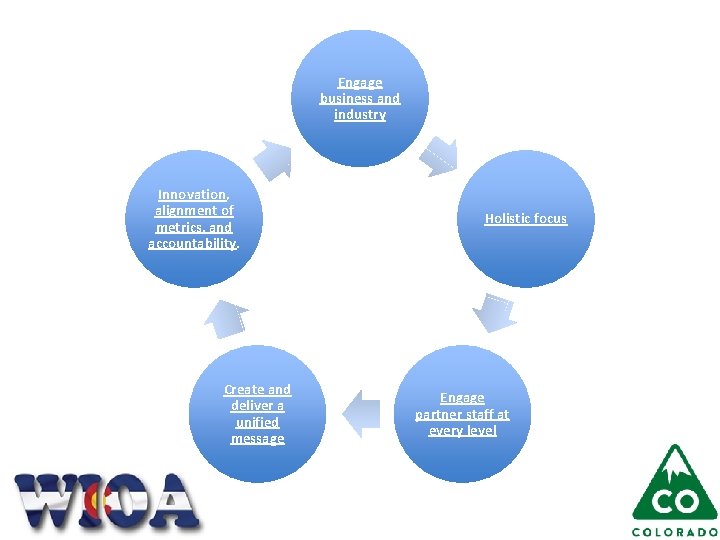
Engage business and industry Innovation, alignment of metrics, and accountability. Create and deliver a unified message Holistic focus Engage partner staff at every level
Implementation Steps--Action • MOUs between partner programs and local workforce boards • Job Seeker Services Lean Initiative – Staff Training – Crosswalk of Services – Universal Triage
Our System
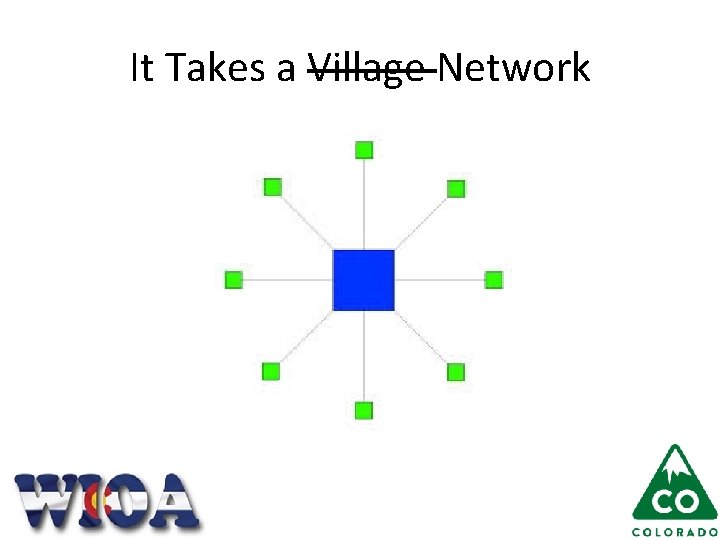
It Takes a Village Network
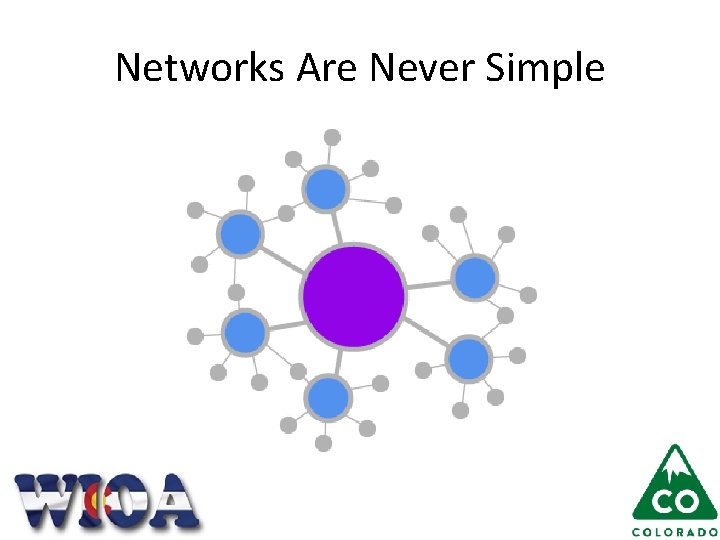
Networks Are Never Simple
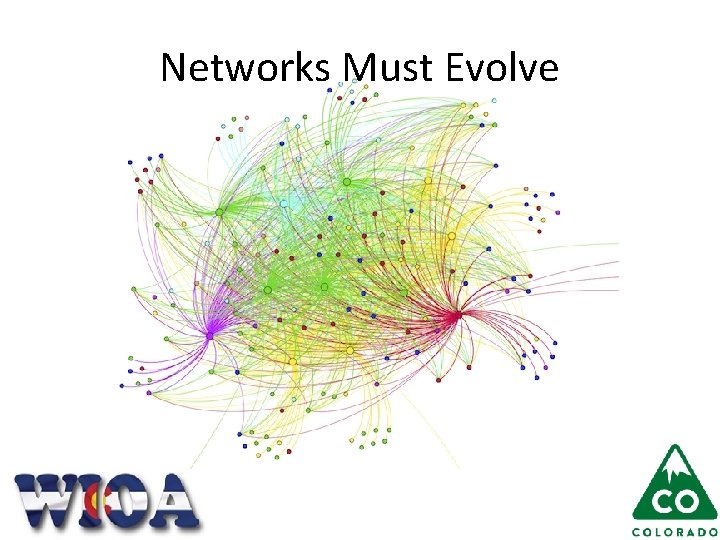
Networks Must Evolve
Our Services
Our Services • No Wrong Door • Customer-Driven • Connected
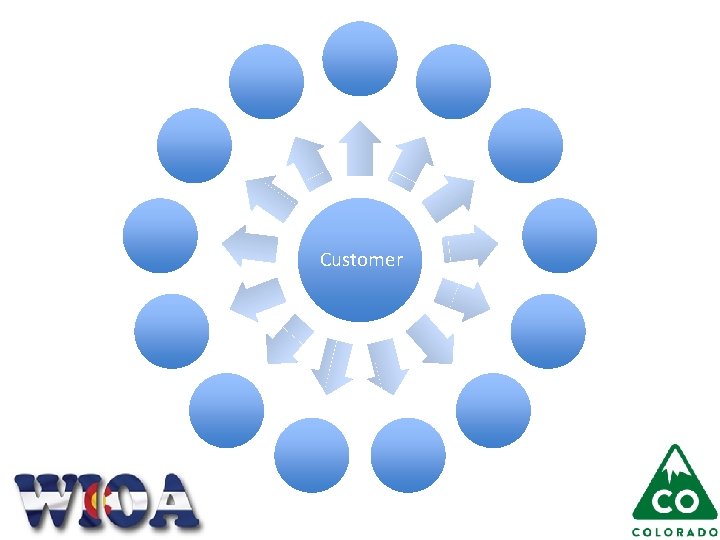
Customer
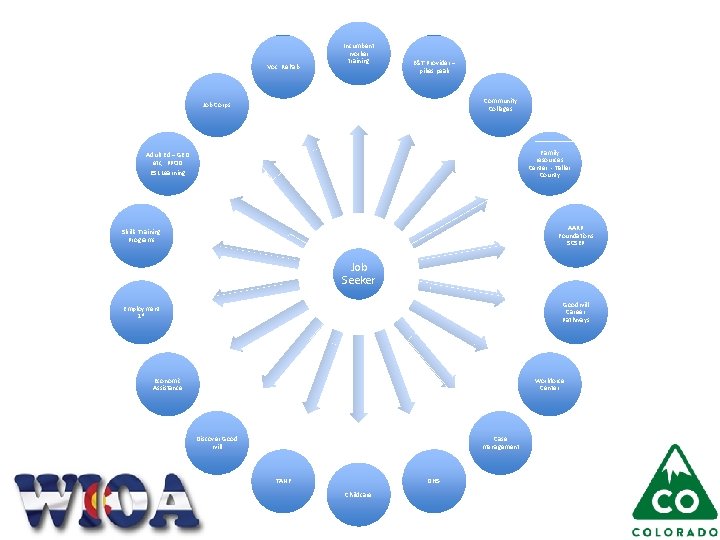
Voc. Rehab Incumbent worker training E&T Provider – pikes peak Community Colleges Job Corps Family resources Center - Teller County Adult Ed – GED etc, . PPOD ESL Learning AARP Foundations SCSEP Skills Training Programs Job Seeker Goodwill Career Pathways Employment 1 st Economic Assistance Workforce Center Discover Good will Case management TANF DHSChildcare
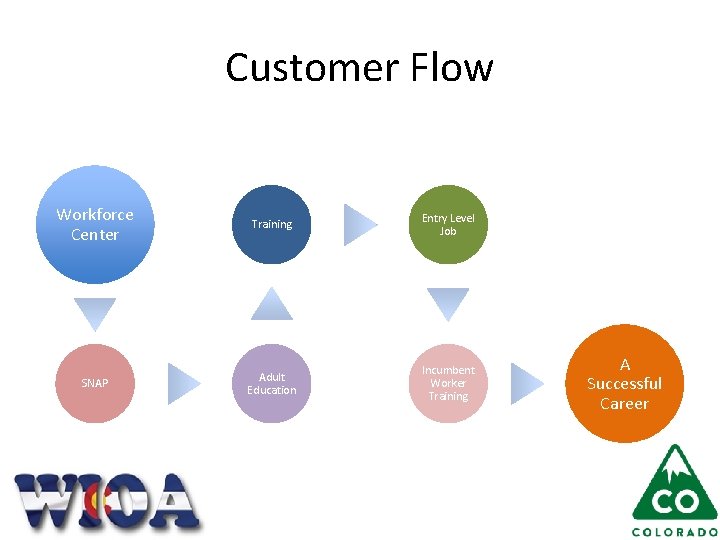
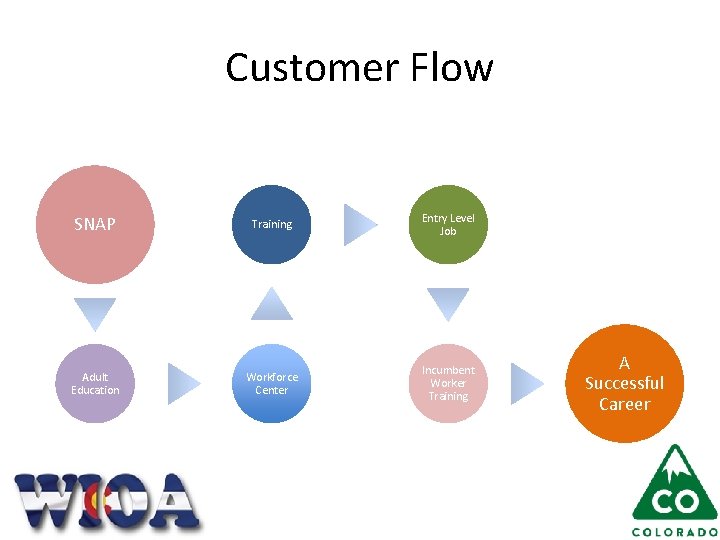
Customer Flow Workforce Center Training Entry Level Job SNAP Adult Education Incumbent Worker Training A Successful Career
Customer Flow SNAP Training Entry Level Job Adult Education Workforce Center Incumbent Worker Training A Successful Career
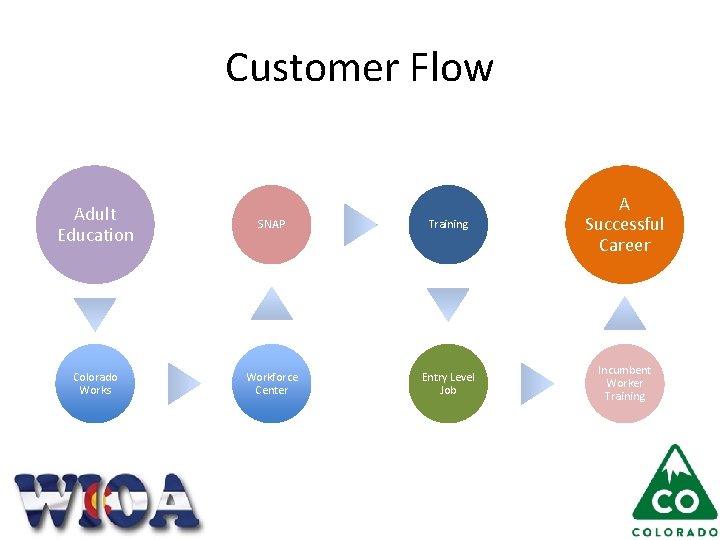
Customer Flow Adult Education SNAP Training A Successful Career Colorado Works Workforce Center Entry Level Job Incumbent Worker Training
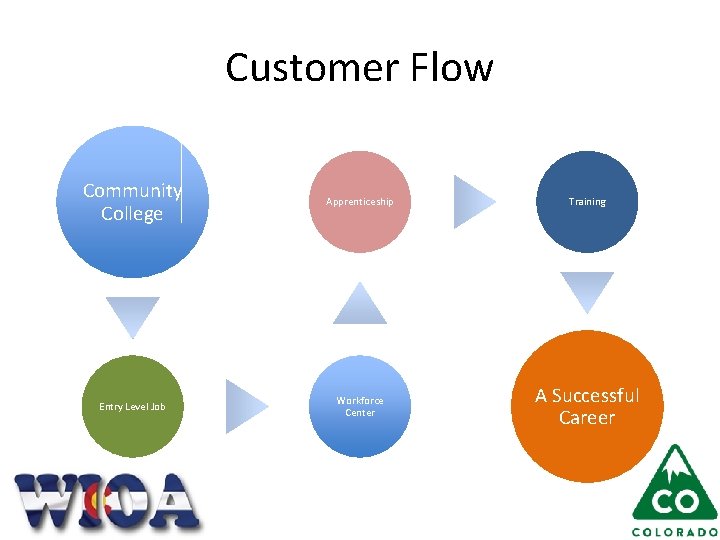
Customer Flow Community College Apprenticeship Training Entry Level Job Workforce Center A Successful Career
Next Steps • Eligibility and Referrals
Questions
Common Language Agency Terminology 1. Write a label that describes your role on an index card: case manager, teacher, counselor, etc. 2. Write a term you use to refer to those you serve: client, student, participant. . . 3. Sort cards into like piles at your table 4. Take turns describing your role
Eligibility and Benefits Desk Aid What and Why? No wrong door tool. Rows All WIOA partners with similar end goals Columns Age, selective service, work status Income considerations Local services grant provides Contact and referral notes
Family Profile and Desk Aid Reflect on the family profile And then…. 1. Read over the Desk Aid 2. Fill in local details from your agency a. orientations, contacts, and referral preferences 3. Each share details and referral preferences 4. Identify gaps
Survey Write your agency at the top of the survey Please complete the back side of the survey Are there areas that you still have questions about? What help do you need?