
Our Conceptual Model Seasonal cycle of nutrients and
- Slides: 18
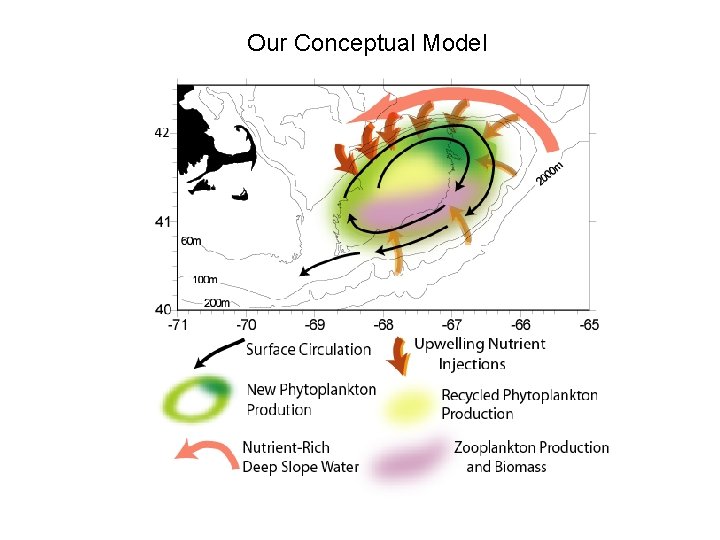
Our Conceptual Model
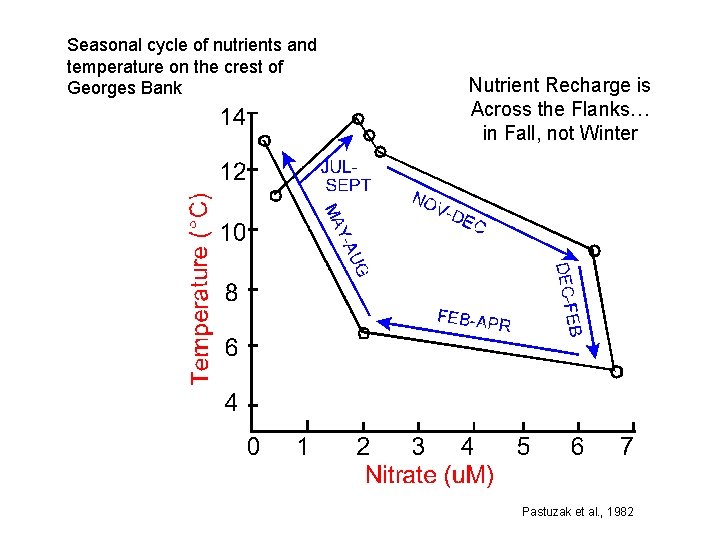
Seasonal cycle of nutrients and temperature on the crest of Georges Bank Nutrient Recharge is Across the Flanks… in Fall, not Winter Pastuzak et al. , 1982
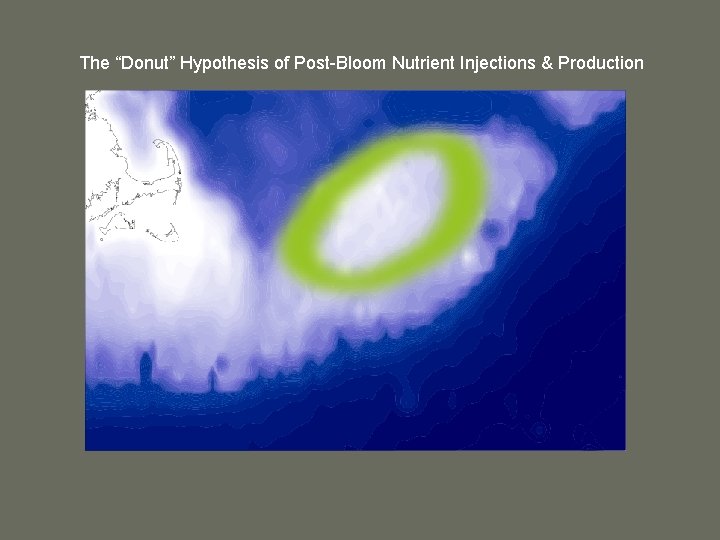
The “Donut” Hypothesis of Post-Bloom Nutrient Injections & Production
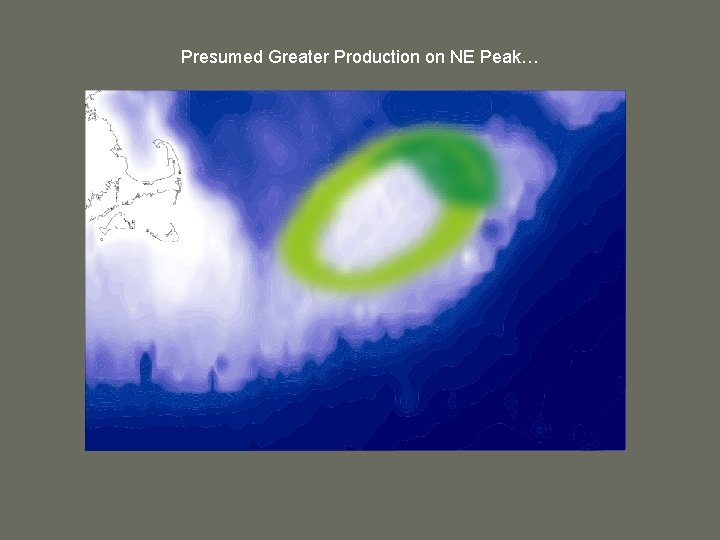
Presumed Greater Production on NE Peak…
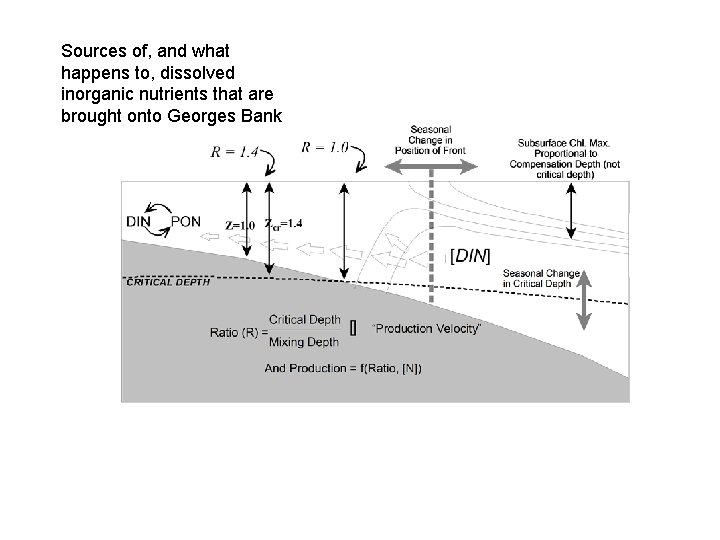
Sources of, and what happens to, dissolved inorganic nutrients that are brought onto Georges Bank
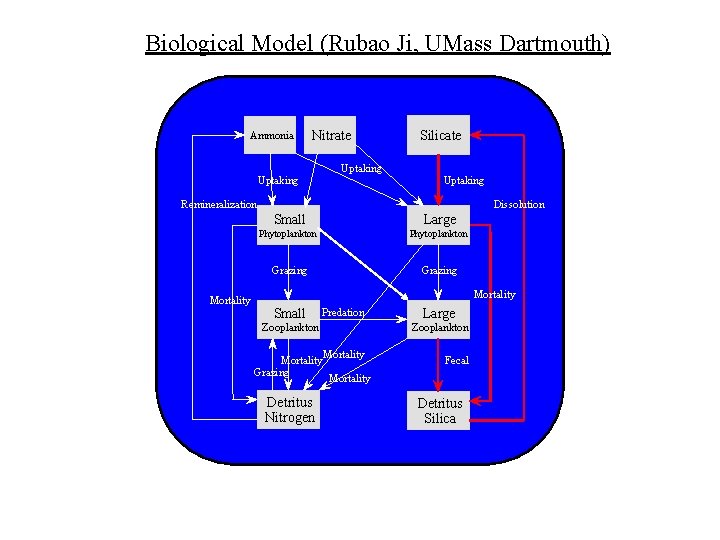
Biological Model (Rubao Ji, UMass Dartmouth) Ammonia Nitrate Silicate Uptaking Remineralization Mortality Dissolution Small Large Phytoplankton Grazing Mortality Small Predation Zooplankton Mortality Grazing Detritus Nitrogen Large Zooplankton Mortality Fecal Mortality Detritus Silica
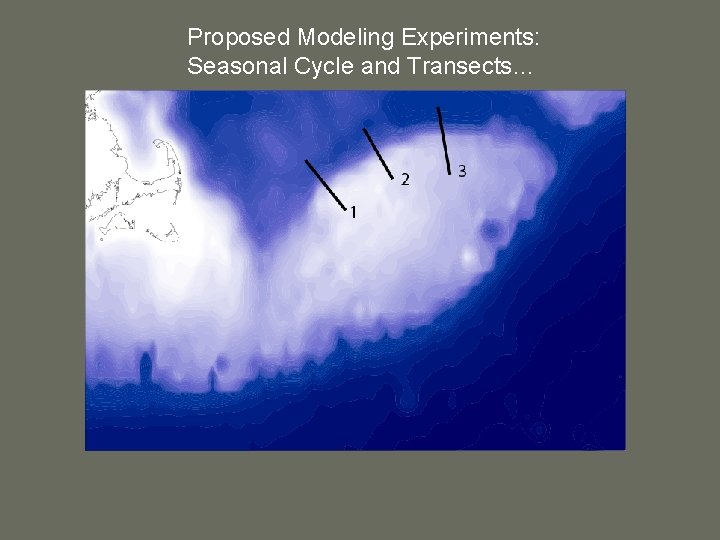
Proposed Modeling Experiments: Seasonal Cycle and Transects…
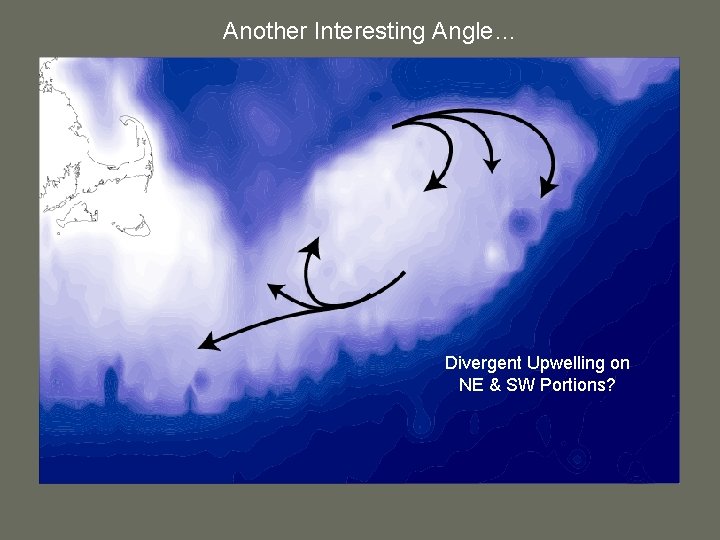
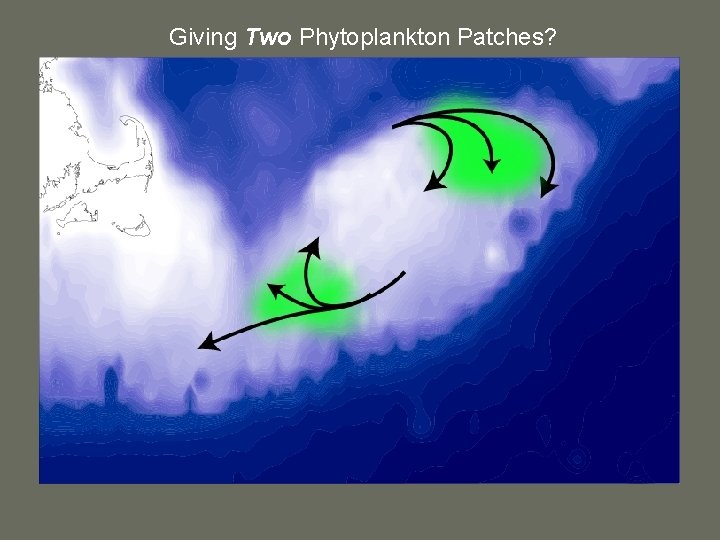
Another Interesting Angle… Divergent Upwelling on NE & SW Portions?
Giving Two Phytoplankton Patches?
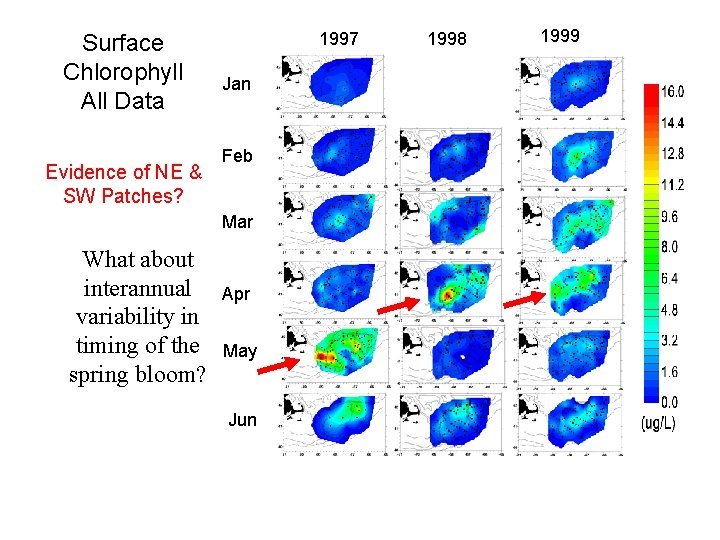
Surface Chlorophyll All Data Evidence of NE & SW Patches? 1997 Jan Feb Mar What about interannual variability in timing of the spring bloom? Apr May Jun 1998 1999
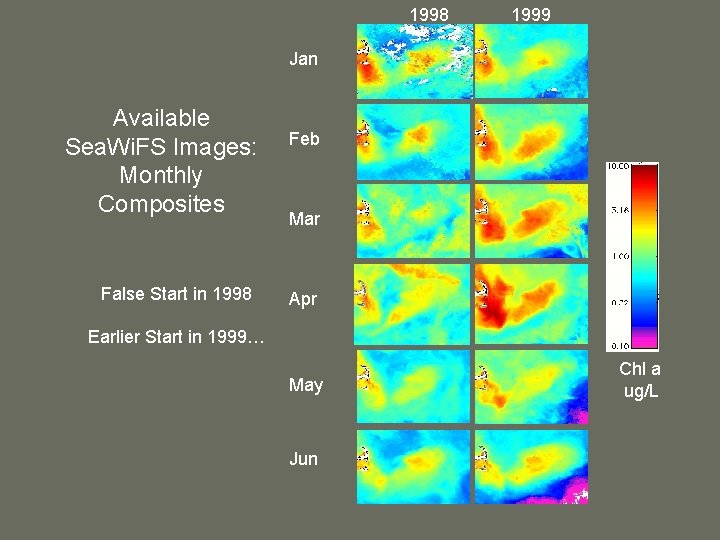
1998 1999 Jan Available Sea. Wi. FS Images: Monthly Composites False Start in 1998 Feb Mar Apr Earlier Start in 1999… May Jun Chl a ug/L
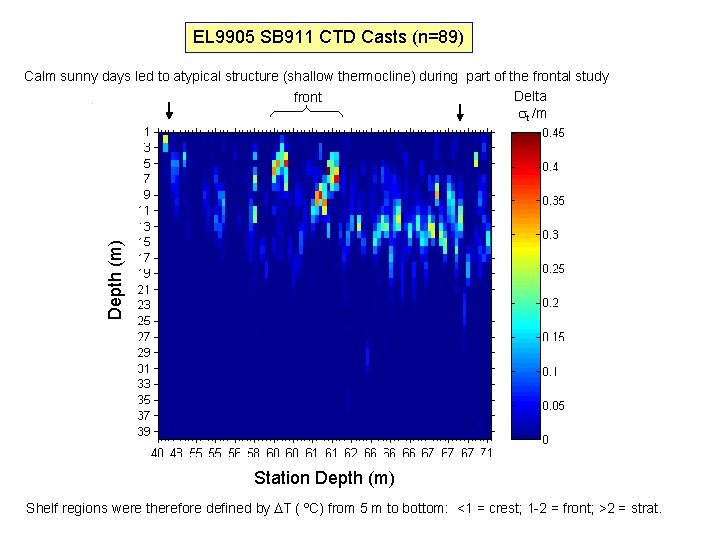
EL 9905 SB 911 CTD Casts (n=89) Depth (m) Calm sunny days led to atypical structure (shallow thermocline) during part of the frontal study Delta front t /m Station Depth (m) Shelf regions were therefore defined by T ( ºC) from 5 m to bottom: <1 = crest; 1 -2 = front; >2 = strat.
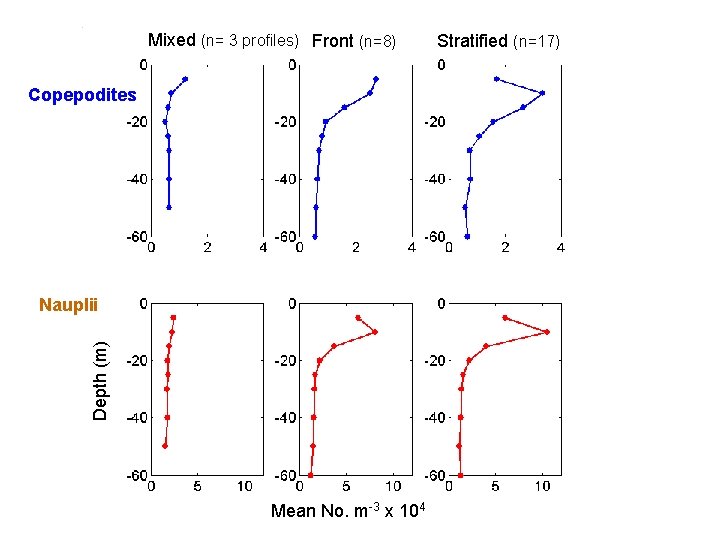
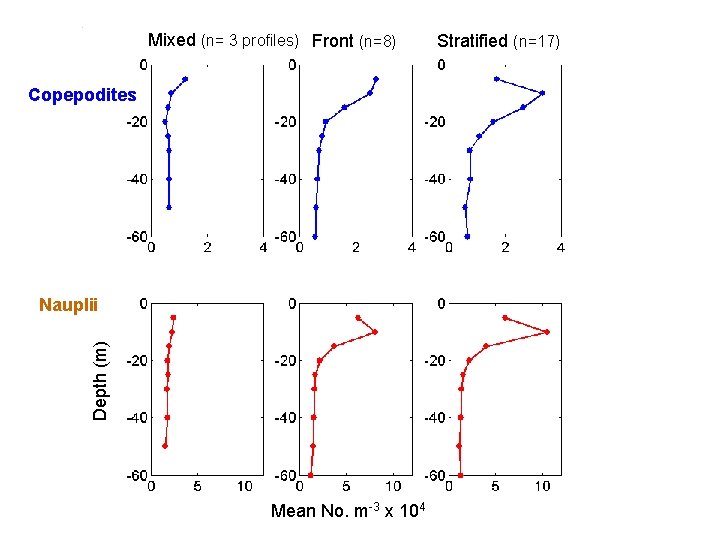
Mixed (n= 3 profiles) Front (n=8) Copepodites Depth (m) Nauplii Mean No. m-3 x 10⁴ Stratified (n=17)
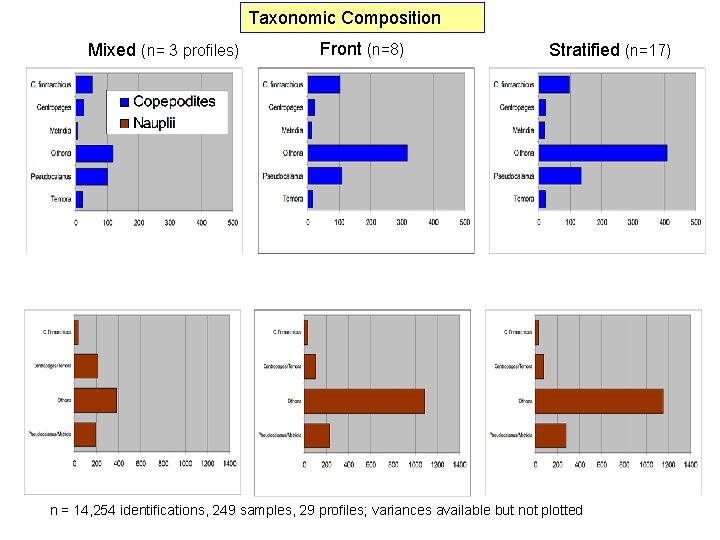
Taxonomic Composition Mixed (n= 3 profiles) Front (n=8) Stratified (n=17) n = 14, 254 identifications, 249 samples, 29 profiles; variances available but not plotted
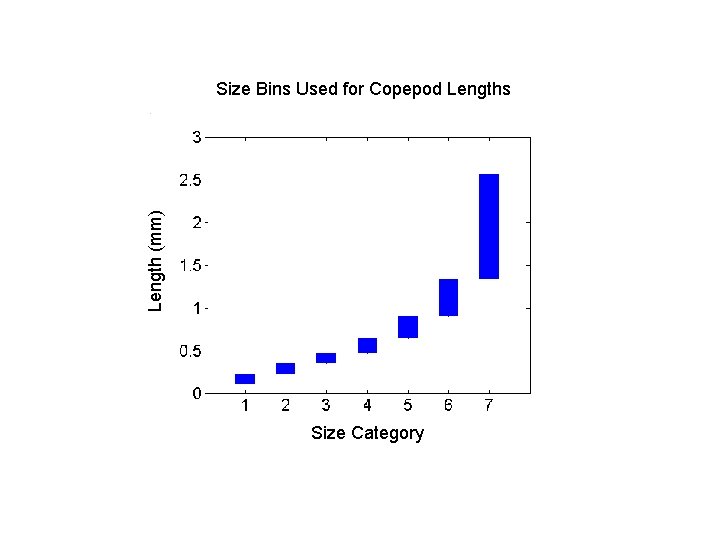
Length (mm) Size Bins Used for Copepod Lengths Size Category
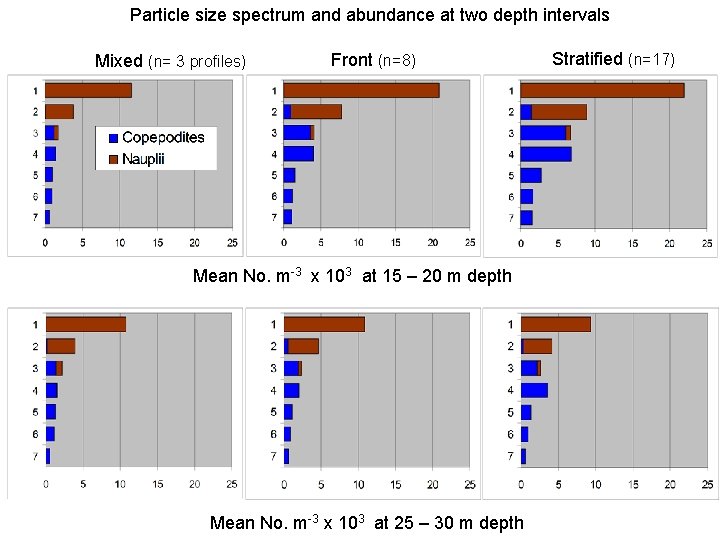
Particle size spectrum and abundance at two depth intervals Mixed (n= 3 profiles) Front (n=8) Mean No. m-3 x 10³ at 15 – 20 m depth Mean No. m-3 x 10³ at 25 – 30 m depth Stratified (n=17)
Mixed (n= 3 profiles) Front (n=8) Copepodites Depth (m) Nauplii Mean No. m-3 x 10⁴ Stratified (n=17)
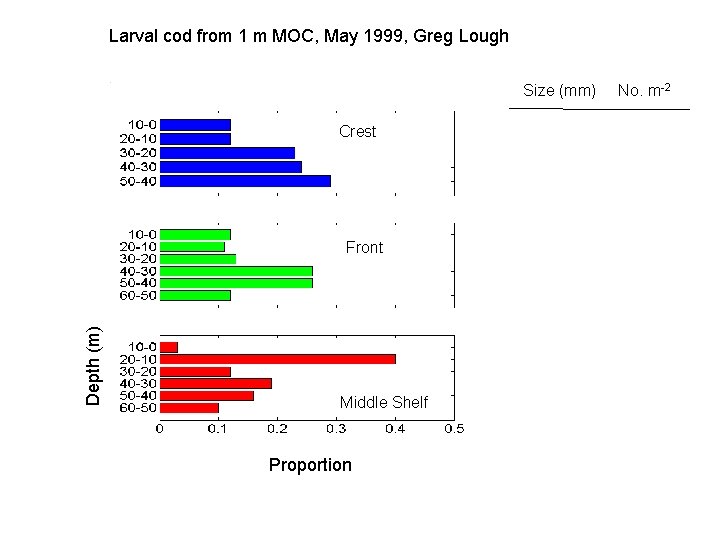
Larval cod from 1 m MOC, May 1999, Greg Lough Size (mm) Crest Depth (m) Front Middle Shelf Proportion No. m-2