
Our Brains Drawing of the brain from 1543
Our Brains !!
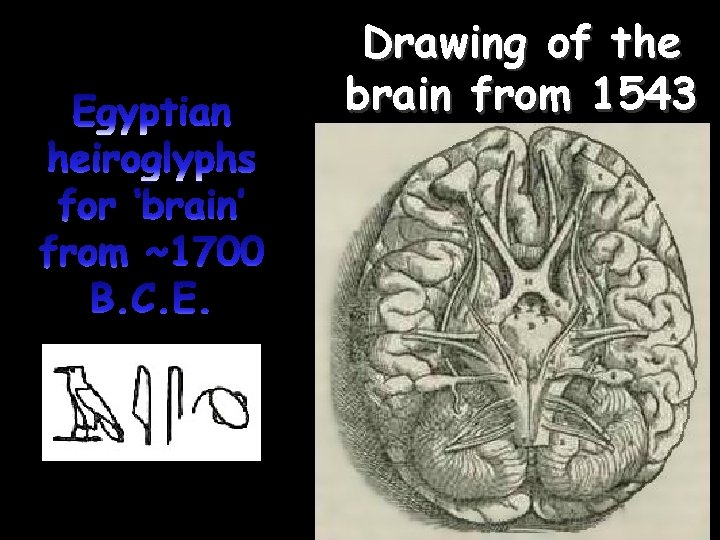
Drawing of the brain from 1543
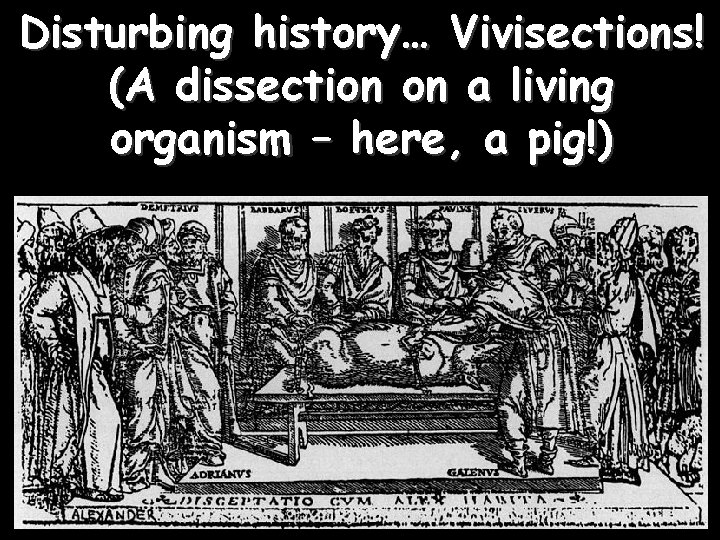
Disturbing history… Vivisections! (A dissection on a living organism – here, a pig!)
Another brain-based Activity! 1/16/2022 1. Take a piece of A 4 paper, or a folded newspaper. 2. Cut/rip a hole in the middle, and hold it out at arm’s length. Look through the hole and focus on an object on the wall. 3. Move the paper towards your face, never losing sight of the object. KEEP IT IN FOCUS!! 4. Which eye is dominant? ? This gives a clue to which part of your brain might be dominant as well!
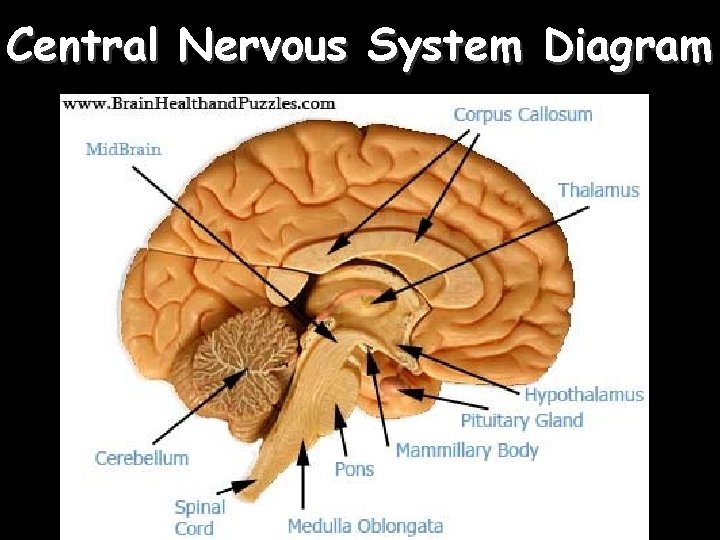
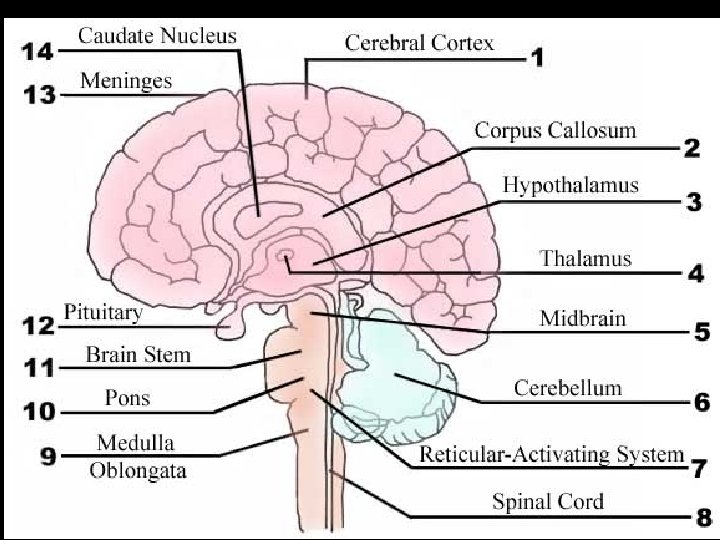
Central Nervous System Diagram
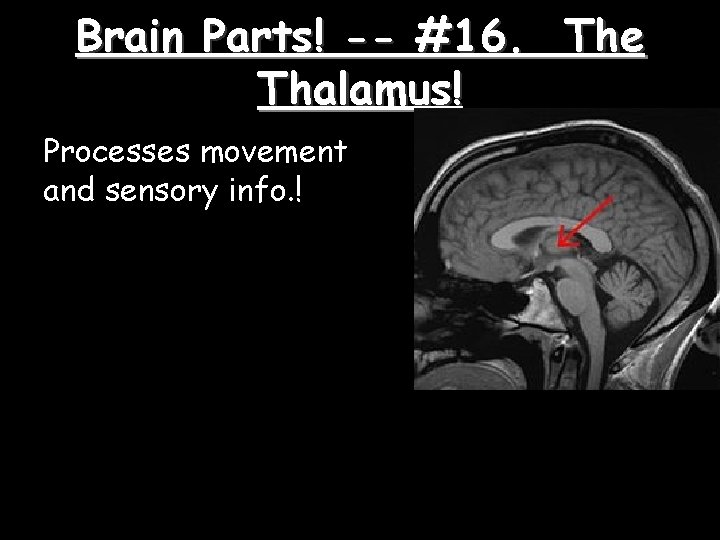
Brain Parts! -- #16. The Thalamus! Processes movement and sensory info. !
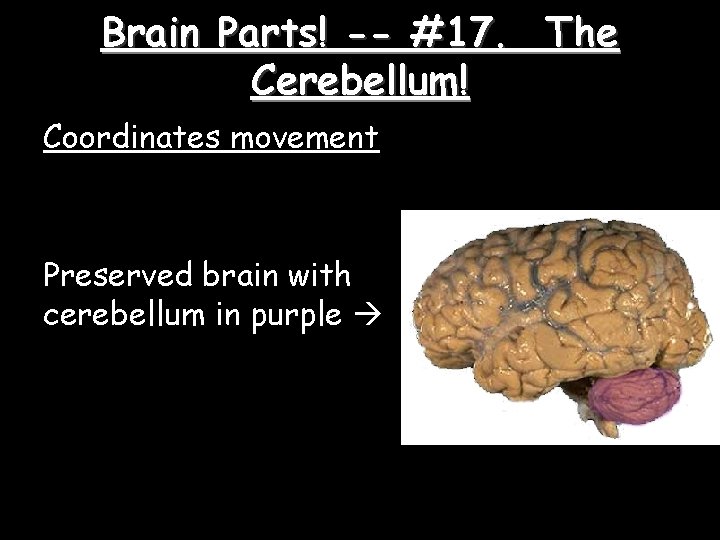
Brain Parts! -- #17. The Cerebellum! Coordinates movement Preserved brain with cerebellum in purple
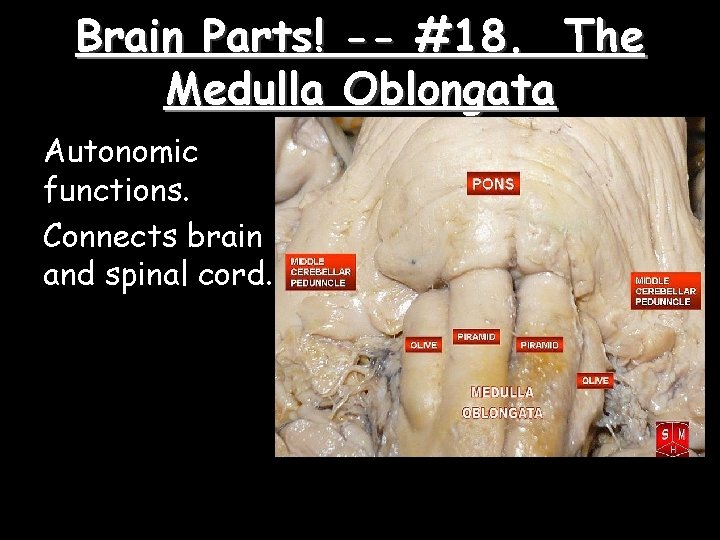
Brain Parts! Medulla Autonomic functions. Connects brain and spinal cord. -- #18. The Oblongata
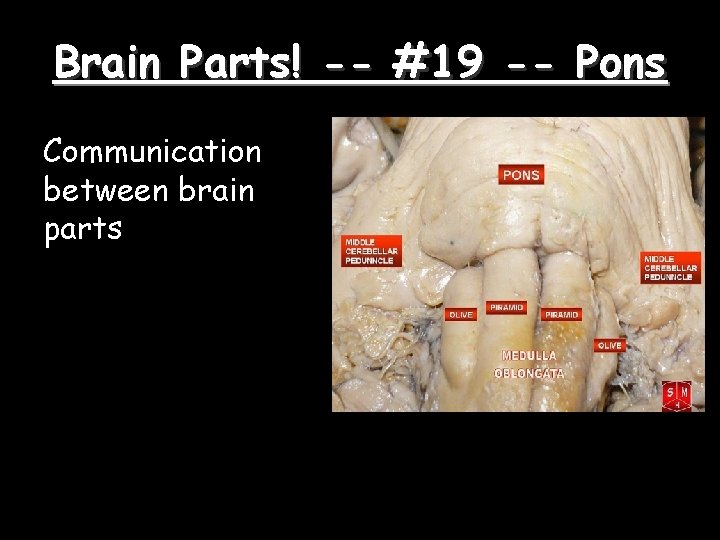
Brain Parts! -- #19 -- Pons Communication between brain parts
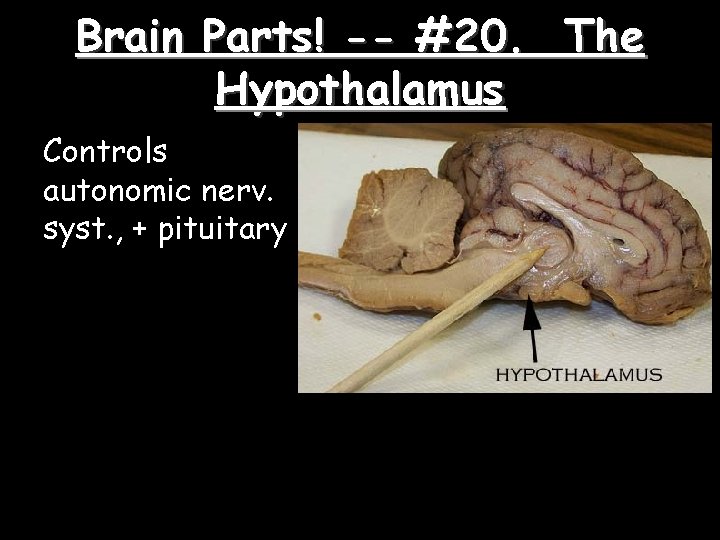
Brain Parts! -- #20. The Hypothalamus Controls autonomic nerv. syst. , + pituitary
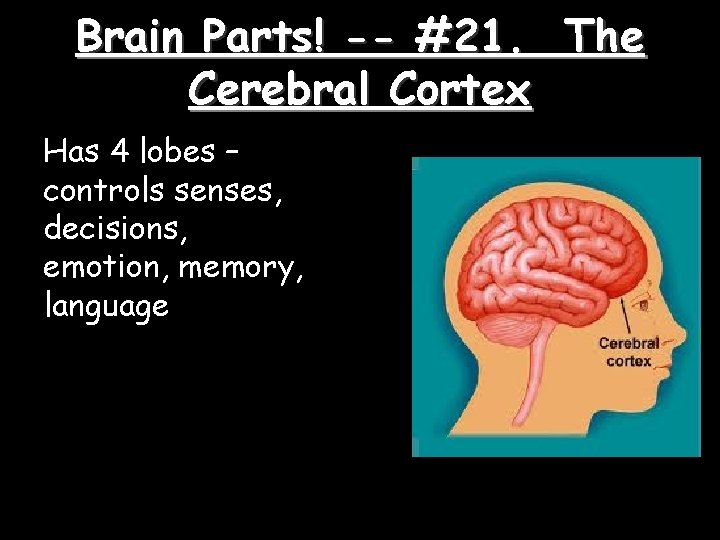
Brain Parts! -- #21. The Cerebral Cortex Has 4 lobes – controls senses, decisions, emotion, memory, language
22) • A cell that carries messages through the nervous system is called a:
23) • A quick, automatic response to a stimulus is a:
# 24) • What part of your eye uses small muscles to change its shape so you can focus on near or distant objects?
25) • The cochlea and semicircular canals can be found in the:
Next Page; (438) 1) What role does the nervous system play in the functions of the body? Write your best answer! Controls, monitors and regulates almost all of our body’s functions – including other organ systems!! 2) What are the sources of stimulation that start a nerve impulse? Sensory information – light, temperature, touch, smell, motion – from our environment – or from other neurons.
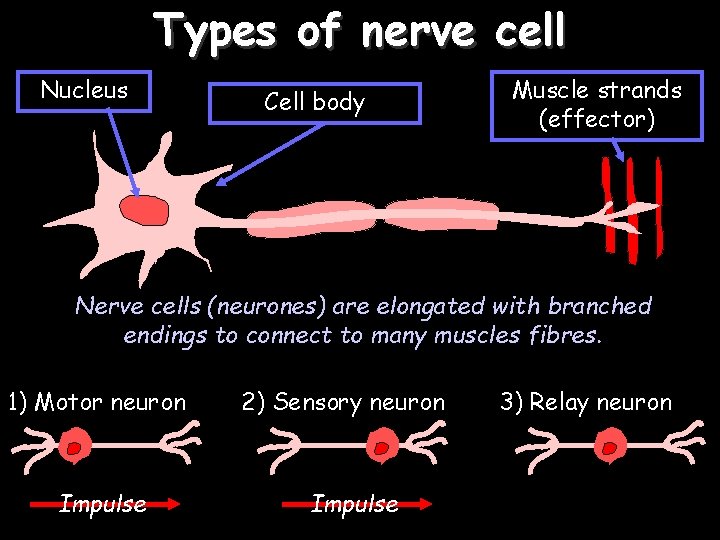
Types of nerve cell Nucleus Cell body Muscle strands (effector) Nerve cells (neurones) are elongated with branched endings to connect to many muscles fibres. 1) Motor neuron Impulse 2) Sensory neuron Impulse 3) Relay neuron
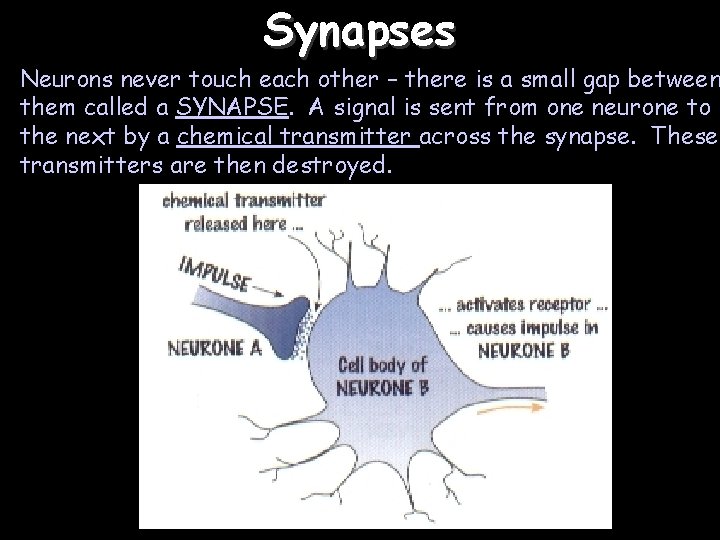
Synapses Neurons never touch each other – there is a small gap between them called a SYNAPSE. A signal is sent from one neurone to the next by a chemical transmitter across the synapse. These transmitters are then destroyed.
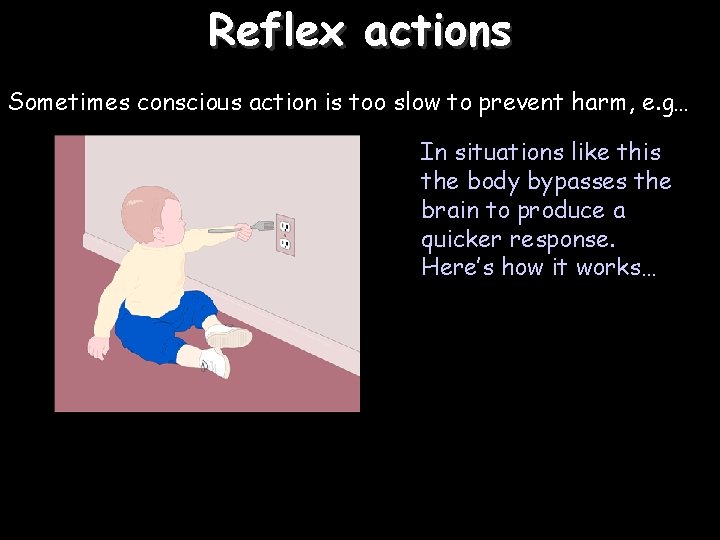
Reflex actions Sometimes conscious action is too slow to prevent harm, e. g… In situations like this the body bypasses the brain to produce a quicker response. Here’s how it works…

Reflex actions
- Slides: 21