
Other Senses Chemical Senses Smell Taste Audition Somatic

- Slides: 20
Other Senses • Chemical Senses – Smell – Taste • Audition • Somatic (kinesthesia/touch/pain)
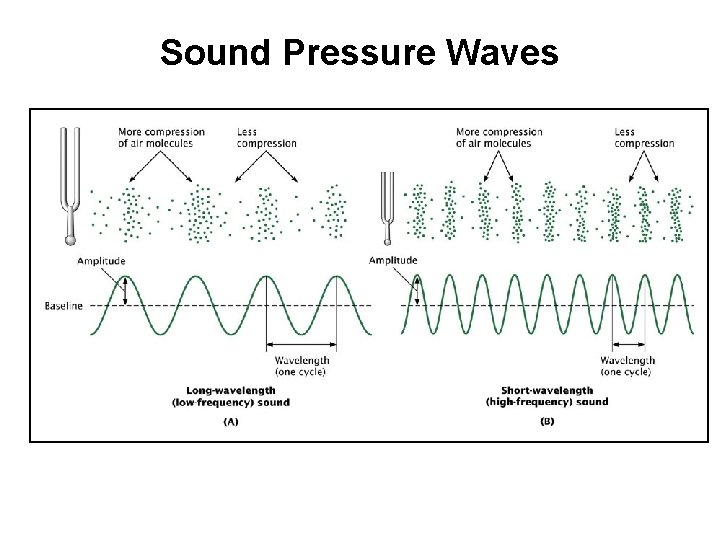
Sound Pressure Waves
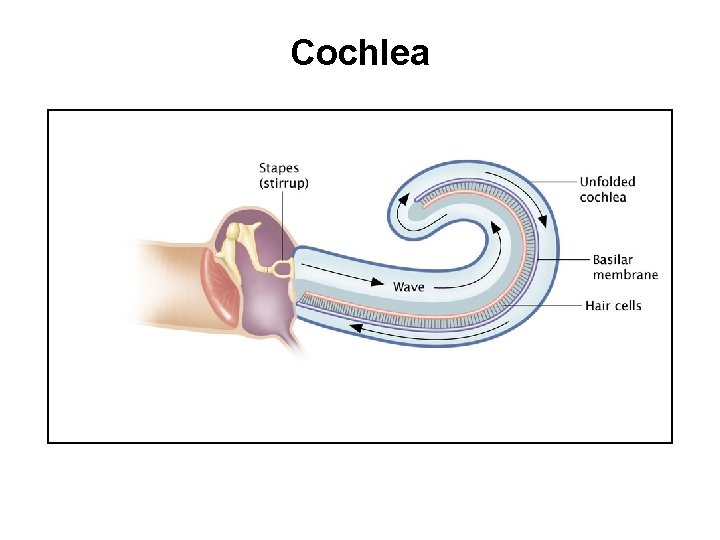
Cochlea
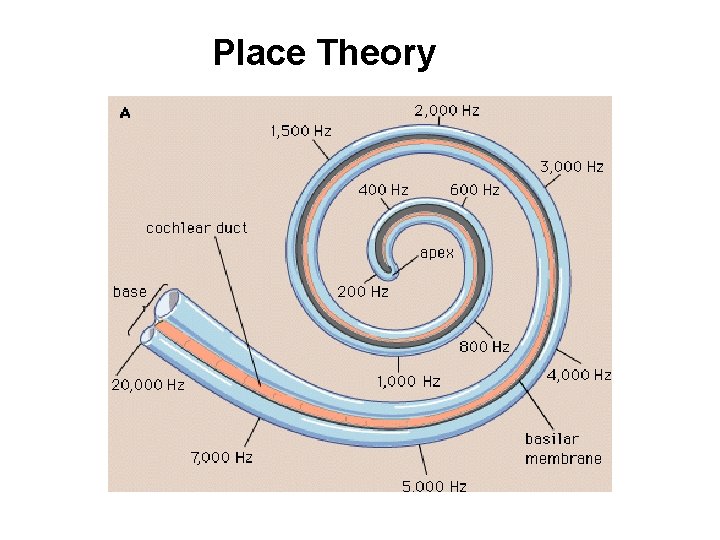
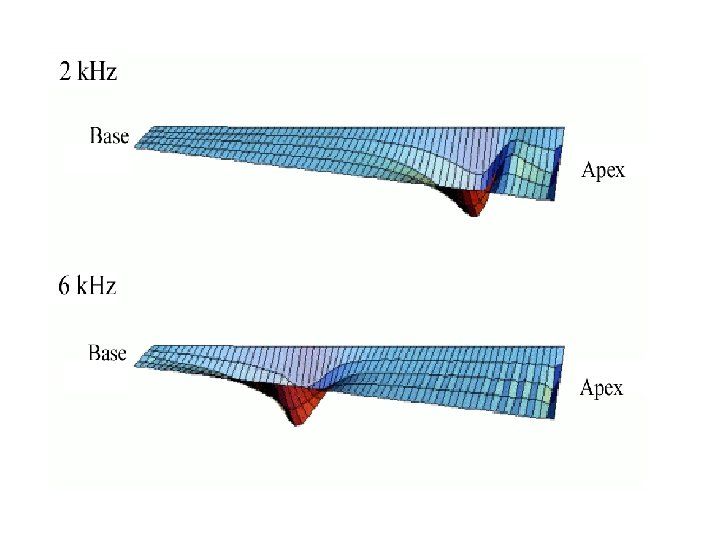
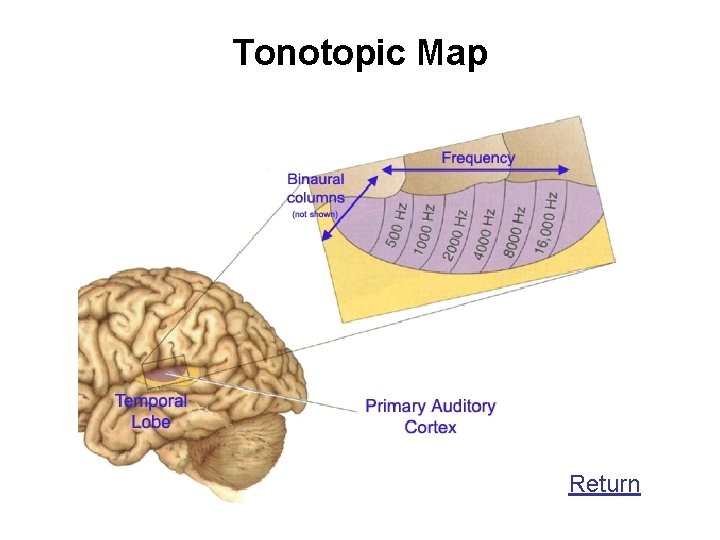
Pitch • Place Theory: Hair cells at a particular “place” respond most to a particular frequency – Middle and High Frequencies. • Volley Theory: Firing rate of an auditory nerve matches a sound wave’s frequency – Low Frequencies.
Place Theory
Tonotopic Map Return
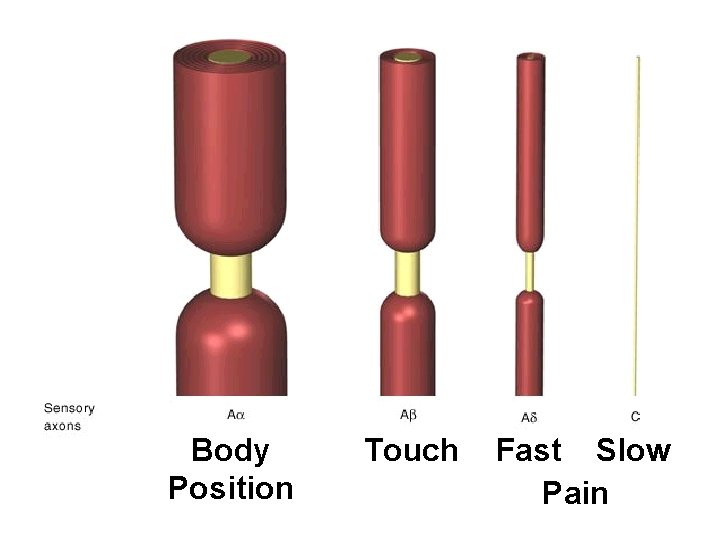
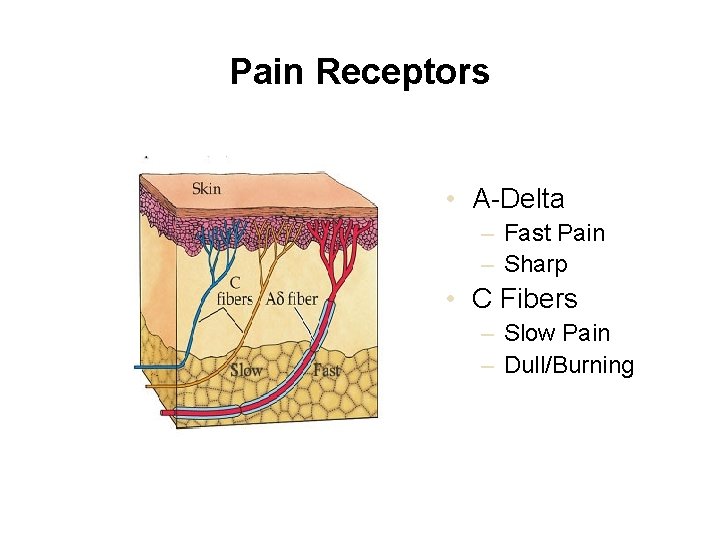
Body Position Touch Fast Slow Pain
Pain Receptors • A-Delta – Fast Pain – Sharp • C Fibers – Slow Pain – Dull/Burning
Gate Control Theory • Gate Closed – No Pain • Gate Open – Pain • Spinal Cord • Activated: – Touch (A-Beta) – Brain (Descending) • Endorphins
Attention
Definition • Focused processing (different than simply being dimly aware)
Purpose of Attention • Direct our sensory systems toward certain stimuli. • Select information for processing. • Allocate the mental energy required for processing. • Coordinate several tasks at once
Shifting Attention • Overt orienting involves pointing sensory systems at a particular stimulus. • Covert orienting involves shifting attention without moving a muscle.
Characteristics • Improves mental processing. • Takes effort. • Limited/selective (e. g. , dichotic listening, cocktail party phenomenon).
Cocktail Party Demo {Class Only}
Failures of Attention • • • Inattentional blindness Dual task interference (Stroop) Visual neglect Attention Deficit Hyperactivity Disorder {Class Only}
Return
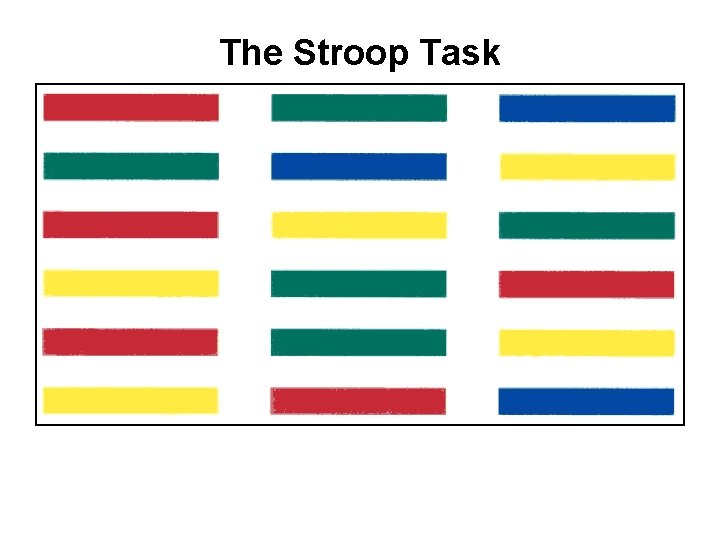
The Stroop Task Name the color of each bar as rapidly as you can Source: Stroop, J. R. (1935). "Studies of Interference in Serial Verbal Reactions. " JOURNAL OF EXPERIMENTAL PSYCHOLOGY, 18, 643 -662.
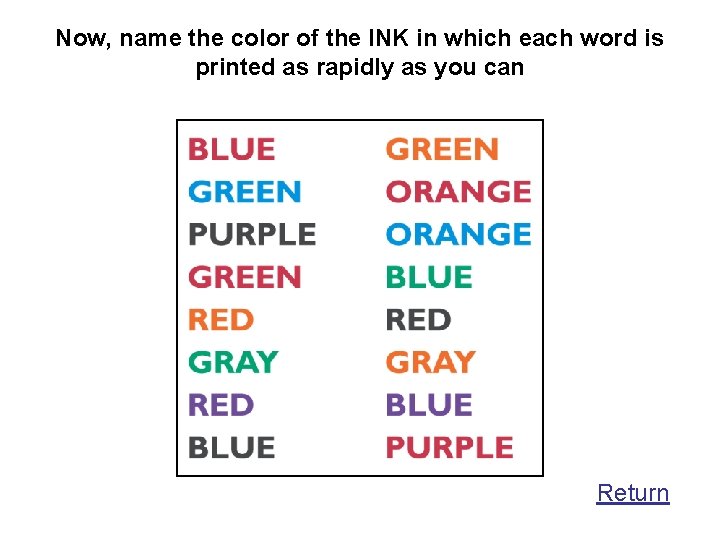
Now, name the color of the INK in which each word is printed as rapidly as you can Source: Stroop, J. R. (1935). "Studies of Interference in Serial Verbal Reactions. " JOURNAL OF EXPERIMENTAL PSYCHOLOGY, 18, 643 -662. Return