
Other planetary systems Are there other solar systems
- Slides: 16
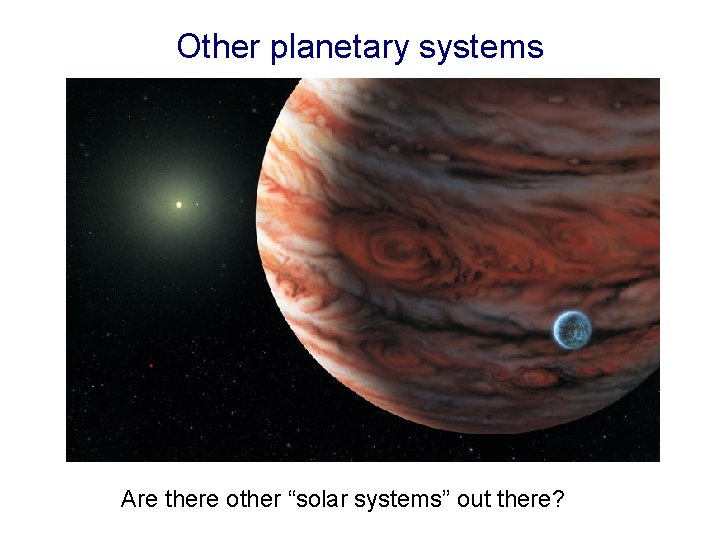
Other planetary systems Are there other “solar systems” out there?
Can we see the processes of planetary formation going on in other star systems? When small particles condense, they are heated by the starlight, and radiate in the infrared. A star at the beginning of the planetesimal formation process will be bright at infrared wavelengths as well as in visible light
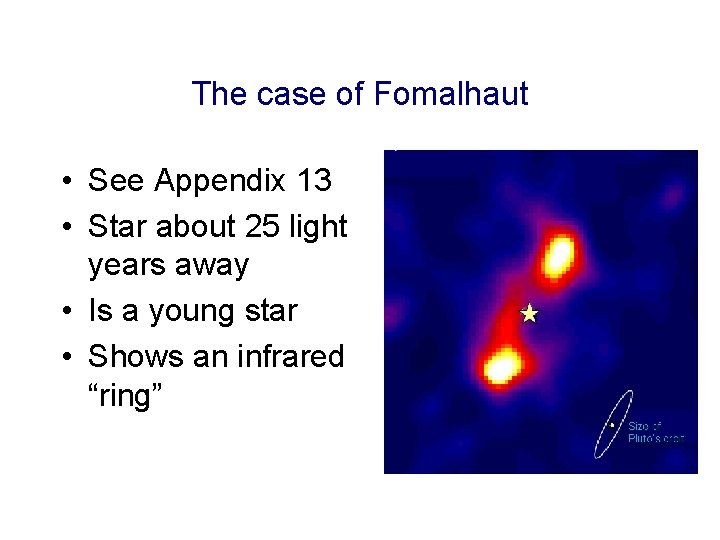
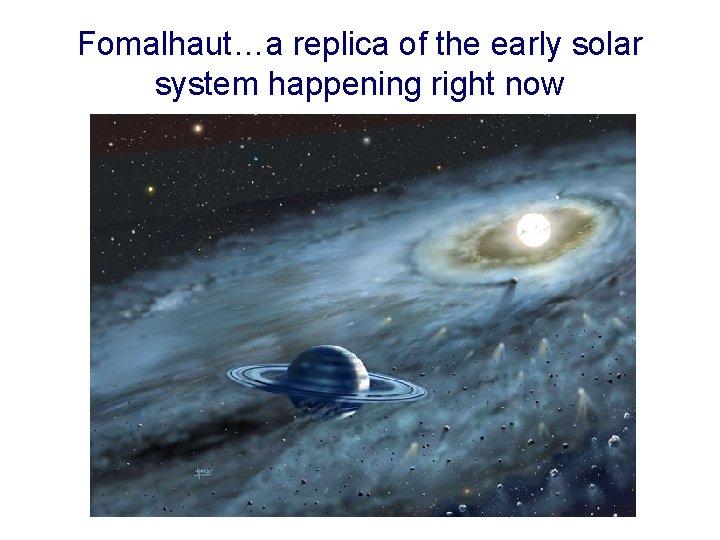
The case of Fomalhaut • See Appendix 13 • Star about 25 light years away • Is a young star • Shows an infrared “ring”
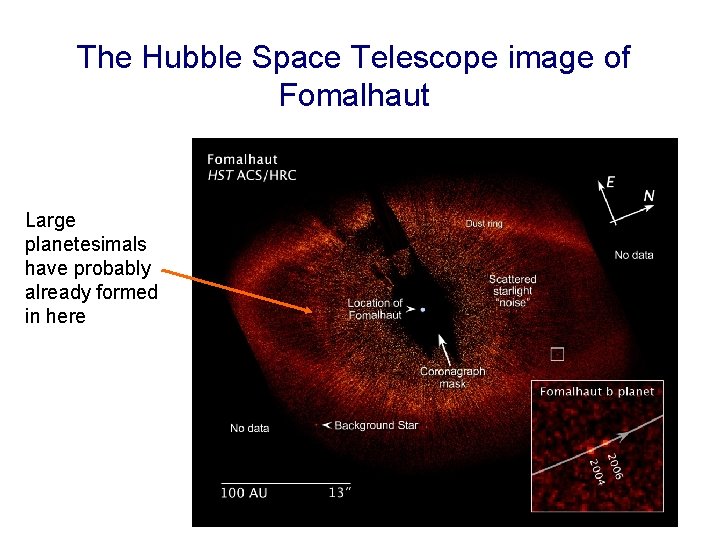
The Hubble Space Telescope image of Fomalhaut Large planetesimals have probably already formed in here
Fomalhaut…a replica of the early solar system happening right now
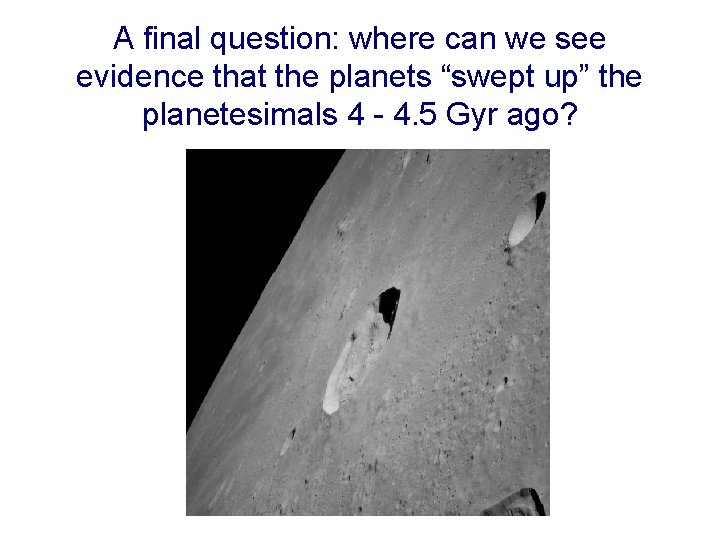
A final question: where can we see evidence that the planets “swept up” the planetesimals 4 - 4. 5 Gyr ago?
A final question: where can we see evidence that the planets “swept up” the planetesimals 4 - 4. 5 Gyr ago?
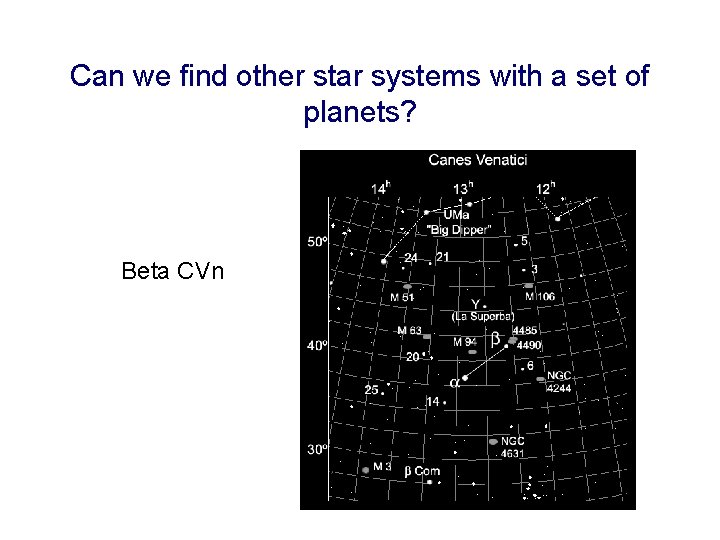
Can we find other star systems with a set of planets? Beta CVn
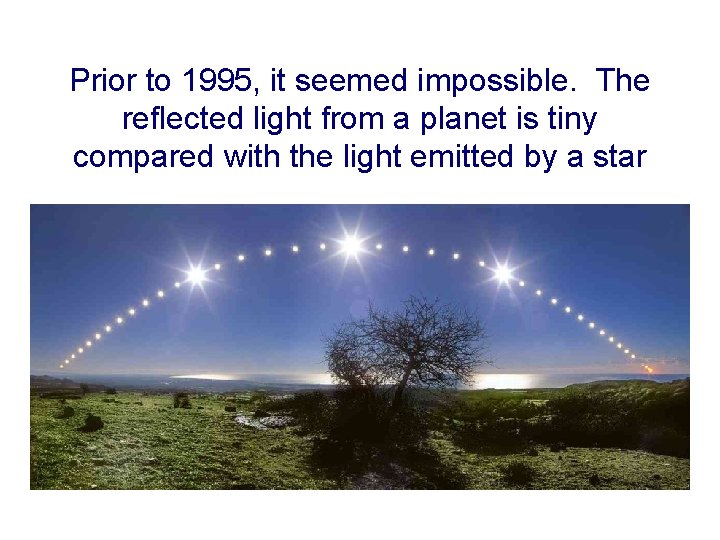
Prior to 1995, it seemed impossible. The reflected light from a planet is tiny compared with the light emitted by a star
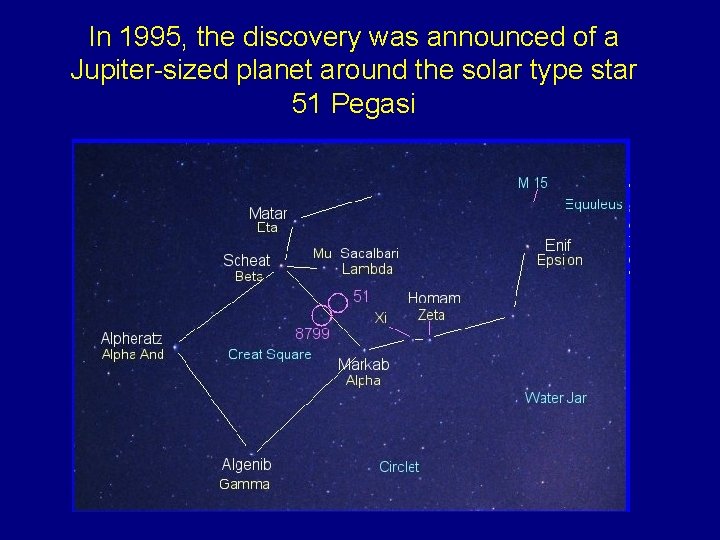
In 1995, the discovery was announced of a Jupiter-sized planet around the solar type star 51 Pegasi
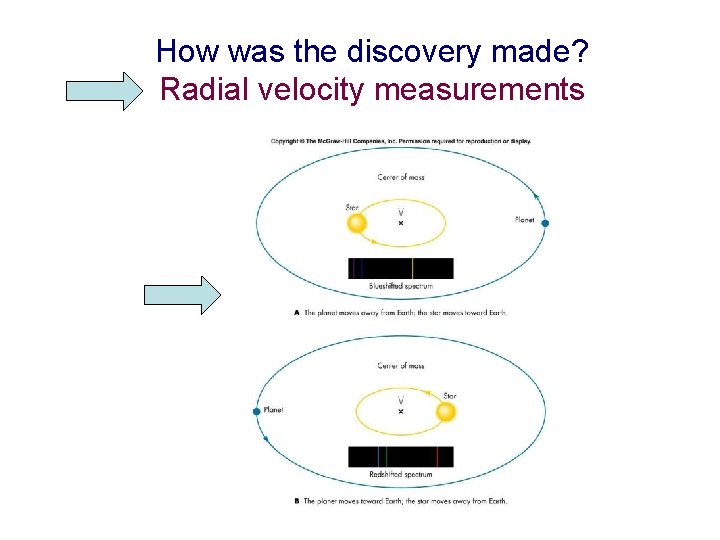
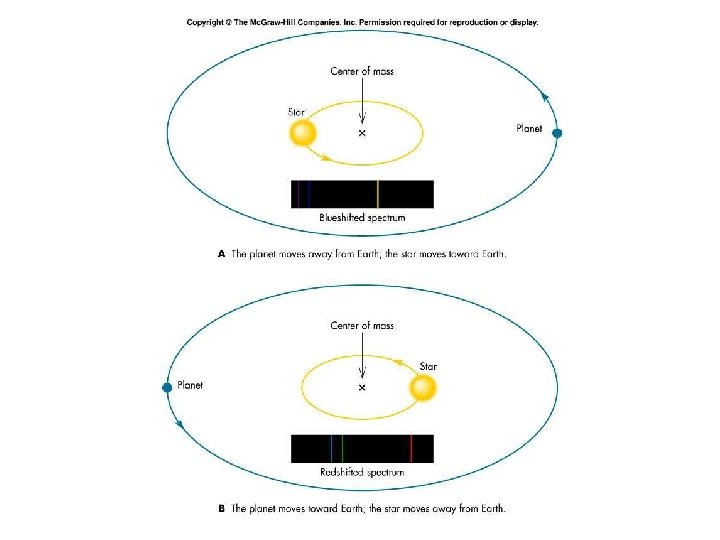
How was the discovery made? Radial velocity measurements
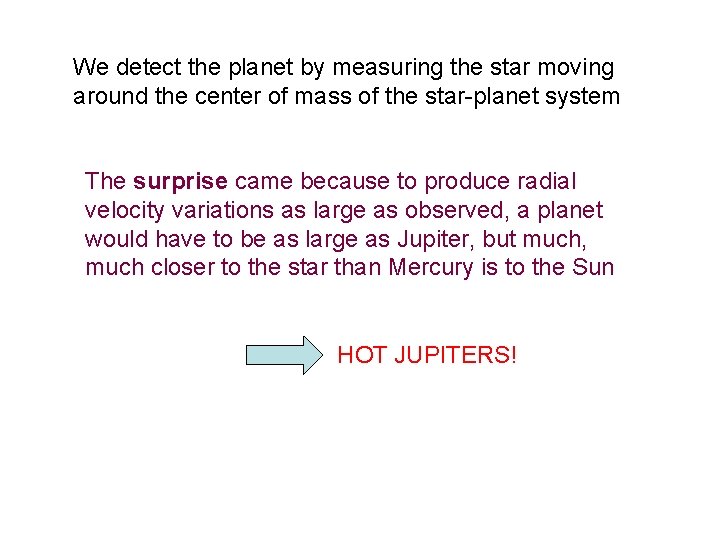
We detect the planet by measuring the star moving around the center of mass of the star-planet system The surprise came because to produce radial velocity variations as large as observed, a planet would have to be as large as Jupiter, but much, much closer to the star than Mercury is to the Sun HOT JUPITERS!
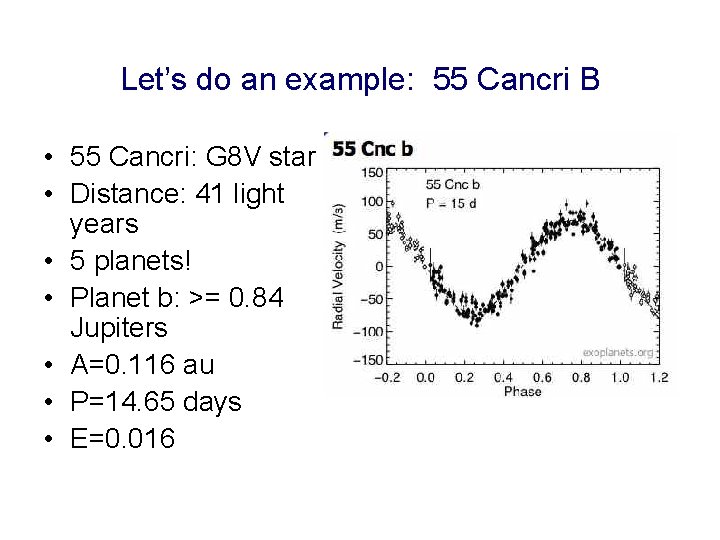
Let’s do an example: 55 Cancri B • 55 Cancri: G 8 V star • Distance: 41 light years • 5 planets! • Planet b: >= 0. 84 Jupiters • A=0. 116 au • P=14. 65 days • E=0. 016
What we know now…the exoplanet catalog http: //exoplanets. org
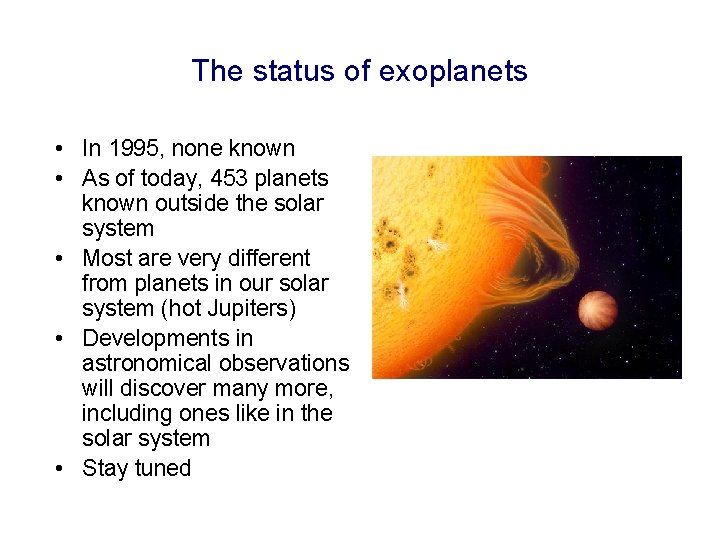
The status of exoplanets • In 1995, none known • As of today, 453 planets known outside the solar system • Most are very different from planets in our solar system (hot Jupiters) • Developments in astronomical observations will discover many more, including ones like in the solar system • Stay tuned