
Other Patterns of Inheritance Learning Objectives Explain the
Other Patterns of Inheritance

Learning Objectives • Explain the principle of independent assortment
Mendel asked. . . Does segregation of one pair of alleles affect the segregation of another pair of alleles?
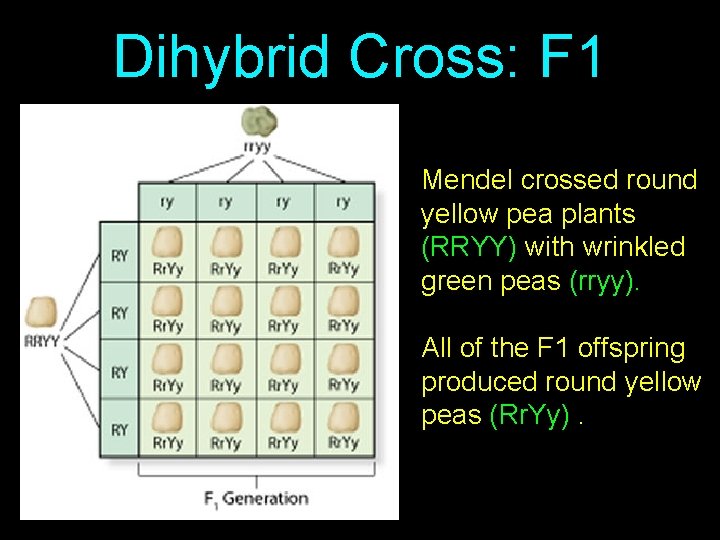
Dihybrid Cross: F 1 Mendel crossed round yellow pea plants (RRYY) with wrinkled green peas (rryy). All of the F 1 offspring produced round yellow peas (Rr. Yy).
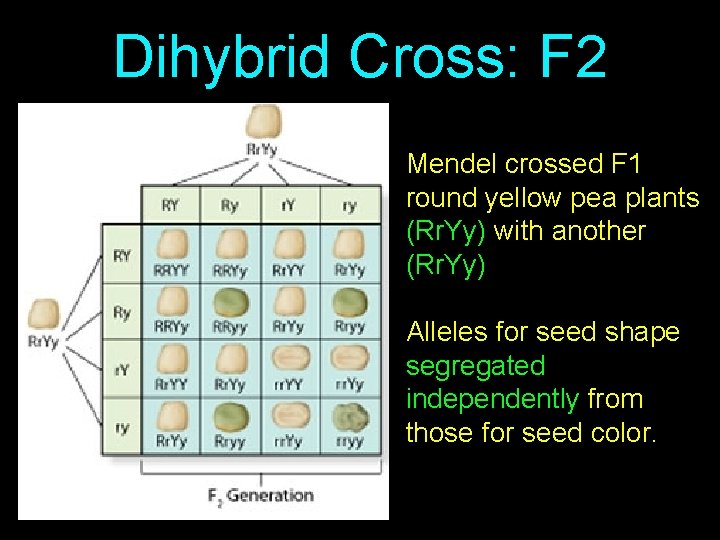
Dihybrid Cross: F 2 Mendel crossed F 1 round yellow pea plants (Rr. Yy) with another (Rr. Yy) Alleles for seed shape segregated independently from those for seed color.
The Principle of Independent Assortment Genes for different traits CAN segregate independently.
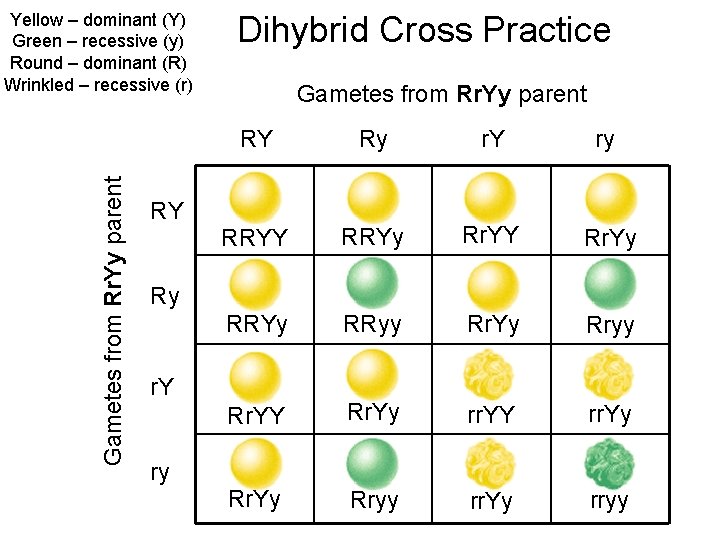
Gametes from Rr. Yy parent Yellow – dominant (Y) Green – recessive (y) Round – dominant (R) Wrinkled – recessive (r) RY Dihybrid Cross Practice Gametes from Rr. Yy parent RY Ry r. Y ry RRYY RRYy Rr. YY Rr. Yy RRyy Rr. Yy Rryy Rr. YY Rr. Yy rr. YY rr. Yy Rryy rr. Yy rryy Ry r. Y ry
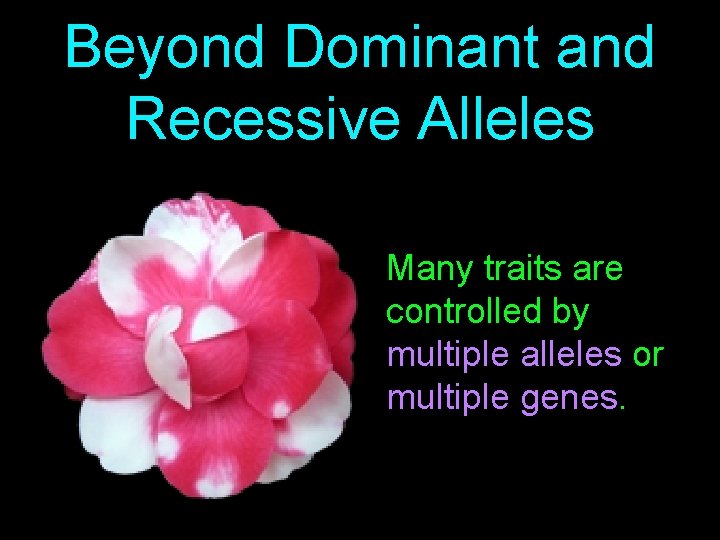
Beyond Dominant and Recessive Alleles Many traits are controlled by multiple alleles or multiple genes.
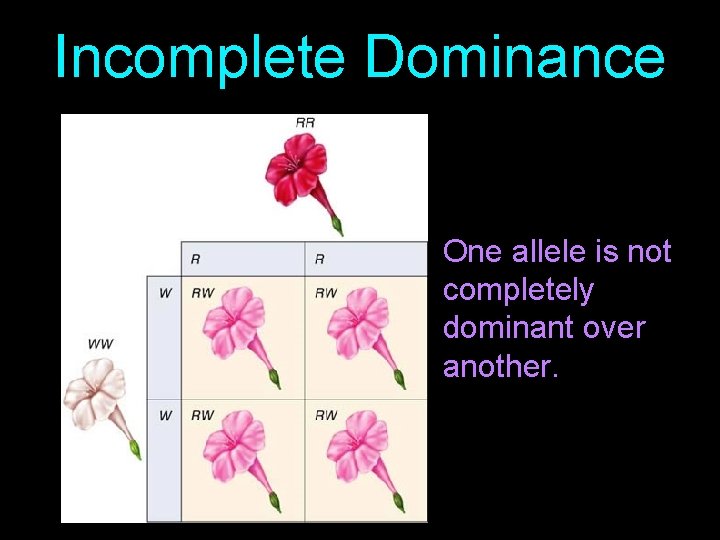
Incomplete Dominance One allele is not completely dominant over another.
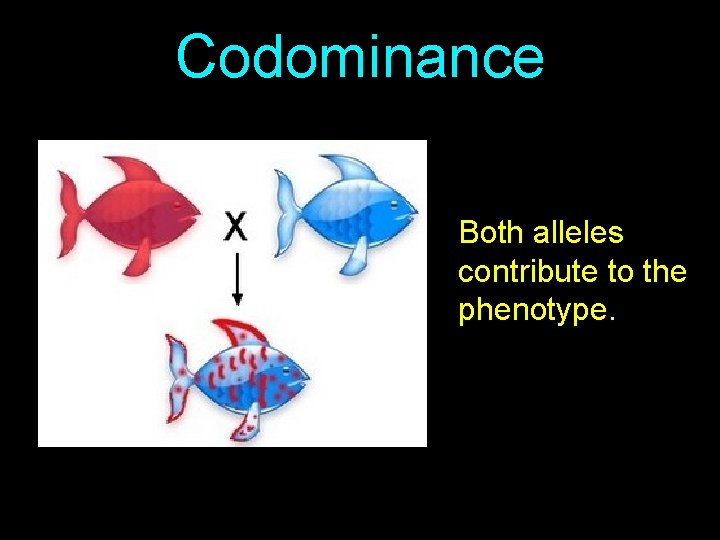
Codominance Both alleles contribute to the phenotype.
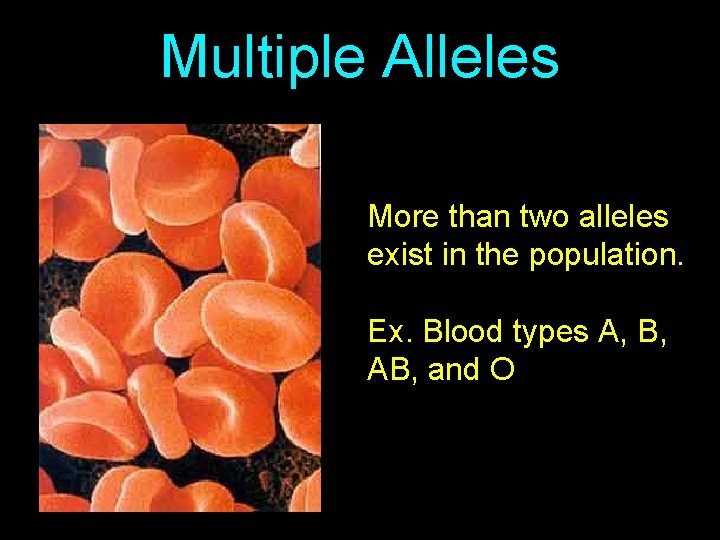
Multiple Alleles More than two alleles exist in the population. Ex. Blood types A, B, AB, and O
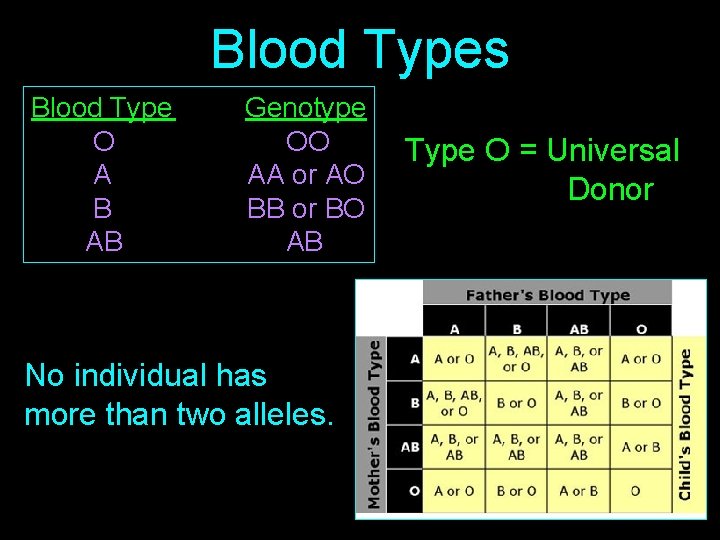
Blood Types Blood Type O A B AB Genotype OO AA or AO BB or BO AB No individual has more than two alleles. Type O = Universal Donor
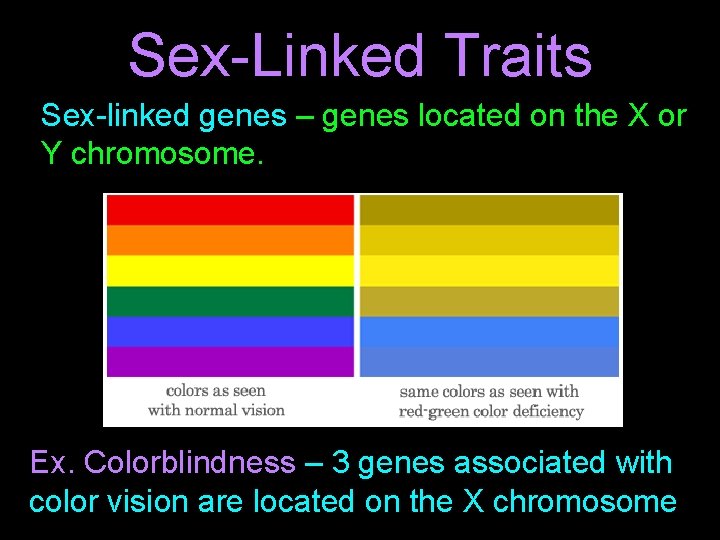
Sex-Linked Traits Sex-linked genes – genes located on the X or Y chromosome. Ex. Colorblindness – 3 genes associated with color vision are located on the X chromosome
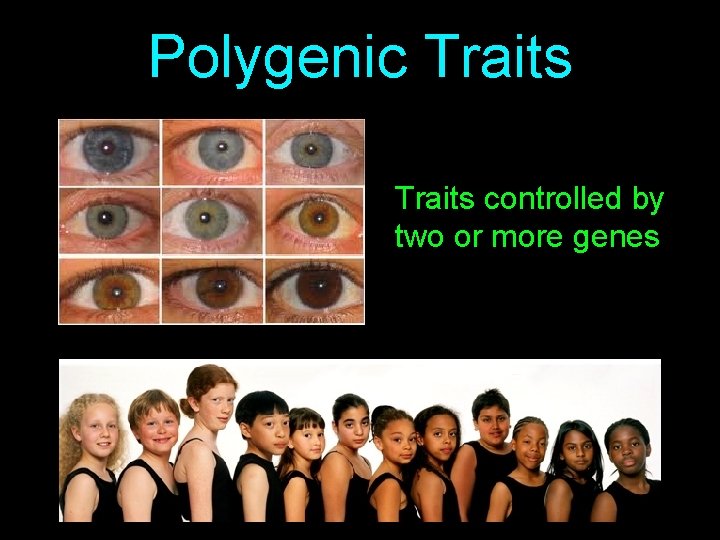
Polygenic Traits controlled by two or more genes
You. Tube Video Blood Types

Stop Here
Mendel’s Law of Segregation During gamete formation, the alleles for each gene segregate from each other so that each gamete carries only one allele for each gene.
Mendel’s Law of Independent Assortment Genes for different traits can segregate independently during the formation of gametes.
Mendel’s Law of Dominance Some alleles are dominant while others are recessive; an organism with at least one dominant allele will display the effect of the dominant allele.
- Slides: 19