
OTEC Background Causes Schemes Principle of Working Efficiency
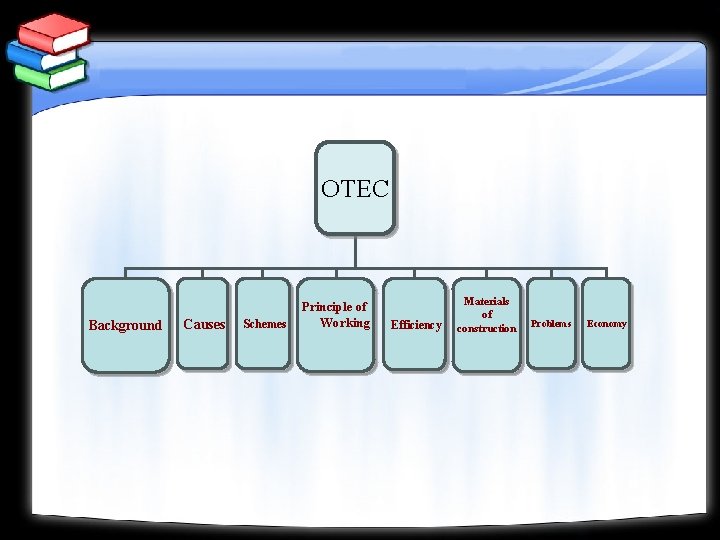
OTEC Background Causes Schemes Principle of Working Efficiency Materials of construction Problems Economy
OBJECTIVES OF CHAPTER 2 (OTEC) By the end of the chapter students should be able to: Presenting the importance of OTEC as a means for producing an economical, renewable and non- polluting power source. Presenting the technologies used for making use of the temperature difference between top and bottom sea water to produce energy. Such techniques are: the open cycle sea thermal plant and the close d cycle. Clarifying the means of improving the performance of the systems used for extracting energy from sea water. Help making the students satisfied that a temperature difference of sea water could be easily transformed into a useful energy source. Specifying causes and basis of ocean thermal energy conversion (OTEC) systems. Understand Schemes and Principle of working Describe Efficiency of (OTEC) systems Determine some Materials of construction: Determine the Problems of (OTEC) Explain the importance of economic (OTEC) Become familiar with Principle of working

INTRODUCTION Ocean thermal energy conversion (OTEC) is a method for generating electricity which uses the temperature difference that exists between deep and shallow waters — within 20° of the equator in the tropics — to run a heat engine. Since the Earth's oceans are continually heated by the sun and cover nearly 70% of the Earth's surface, this temperature difference contains a vast amount of solar energy which could potentially be harnessed for human use. If this extraction could be done profitably on a large scale, it could be a solution to some of the human population's energy problems. The total energy available is one or two orders of magnitude higher than other ocean energy options such as wave power, but the small size of the temperature difference makes energy extraction difficult and expensive. Hence, existing OTEC systems have an overall efficiency of only 1 to 3%. Nevertheless, the energy carrier, seawater, has an access cost associated with it and no cost for the material itself.
Glossary of chapter 2 Ocean thermal energy conversion OTEC Ocean Thermal Energy Conversion

A body of water containing brackish (highly saline) water that forms layers of differing salinity (stratifies) that absorb and trap solar energy. Solar ponds can be used to provide heat for industrial or agricultural processes, building heating and cooling, and to generate electricity. For more details see salt gradient solar pond.
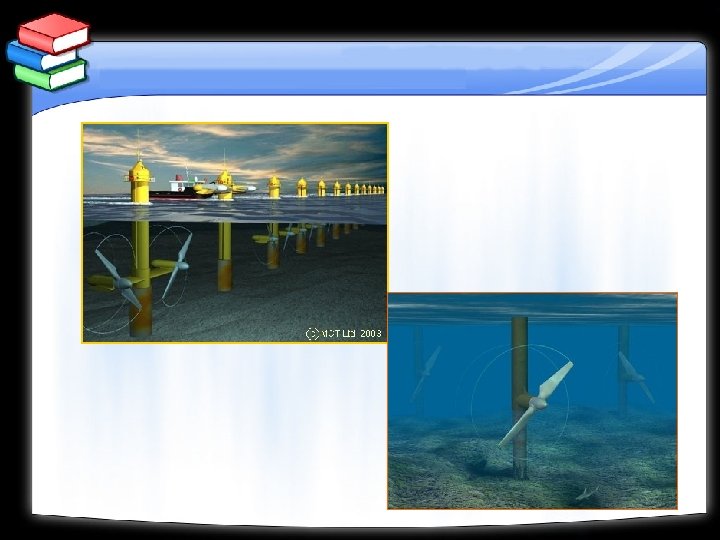
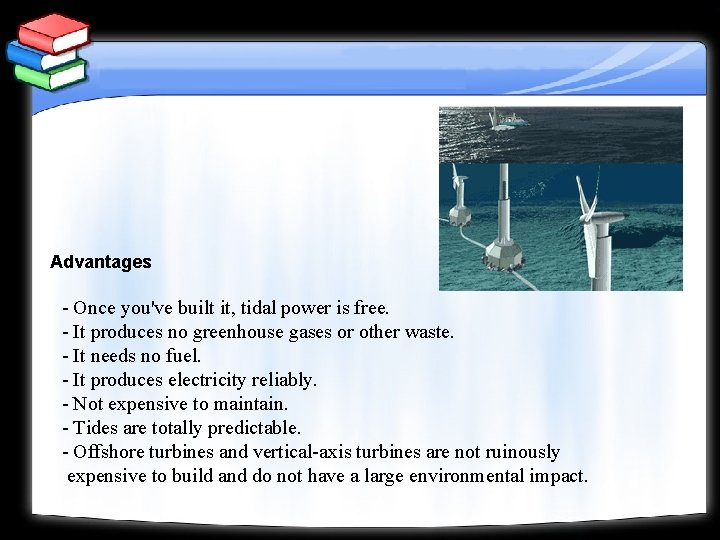
Advantages - Once you've built it, tidal power is free. - It produces no greenhouse gases or other waste. - It needs no fuel. - It produces electricity reliably. - Not expensive to maintain. - Tides are totally predictable. - Offshore turbines and vertical-axis turbines are not ruinously expensive to build and do not have a large environmental impact.

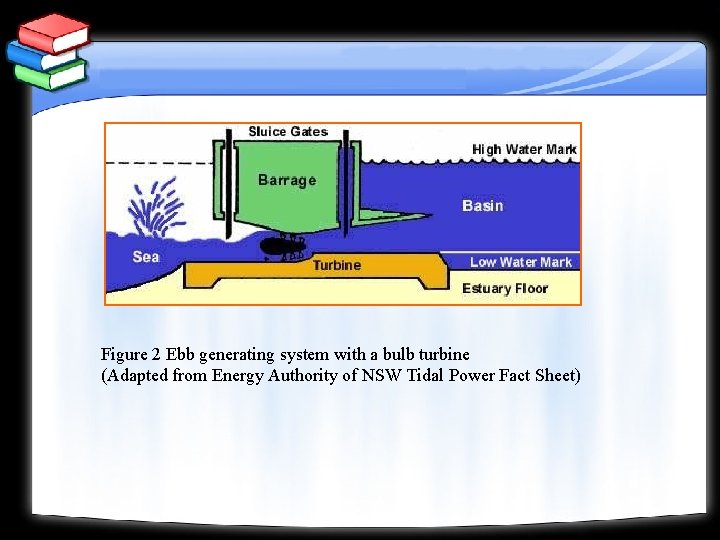
Figure 2 Ebb generating system with a bulb turbine (Adapted from Energy Authority of NSW Tidal Power Fact Sheet)
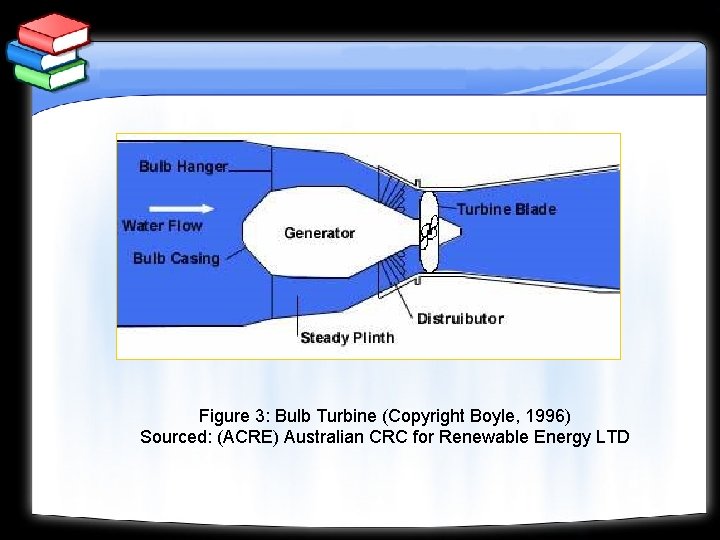
Figure 3: Bulb Turbine (Copyright Boyle, 1996) Sourced: (ACRE) Australian CRC for Renewable Energy LTD
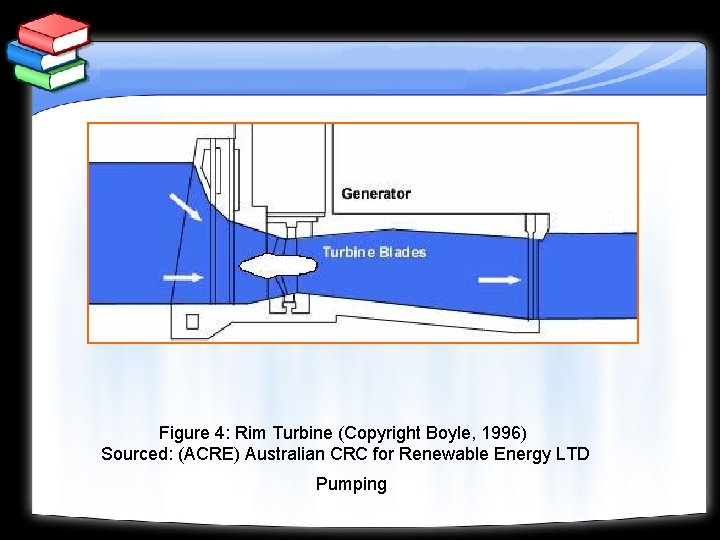
Figure 4: Rim Turbine (Copyright Boyle, 1996) Sourced: (ACRE) Australian CRC for Renewable Energy LTD Pumping
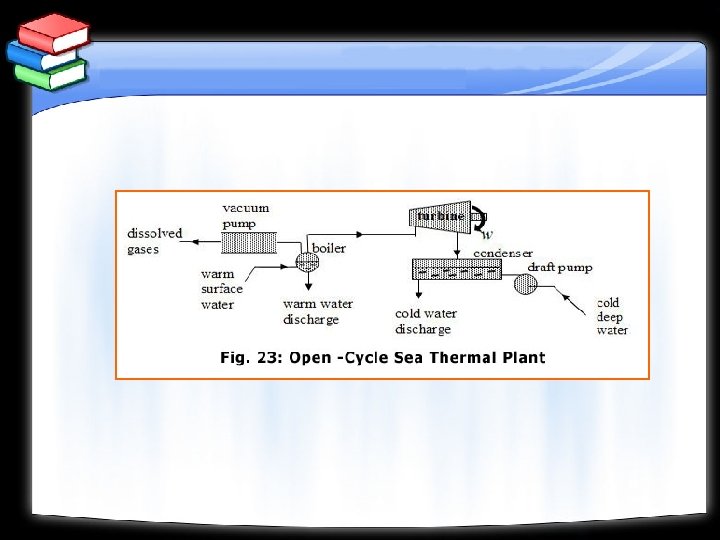
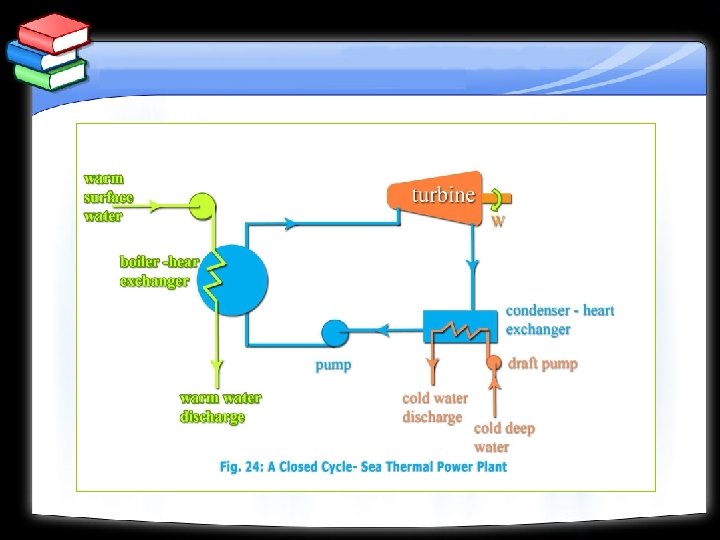
Activities The following activities could be performed on different chapters of the course: Chapter 2 (Ocean thermal energy conversion): Reports: Students are asked to prepare a report showing an open cycle sea thermal plant and a closed one. The heat transfer fluid used in each cycle should be mentioned and it should be clarified why it is selected for such a purpose. Net Search: Students can search on the net to which coastal countries are using OTEC extensively.
• Students can check in the net to see if there are other ways for harnessing OTEC other than those mentioned in the course. Chating: • Students can chat on how the difference of temperature of ocean could be a valuable source of energy. Forum: • Students should study the cahracteristic properties required for a heat transfer fluid used in a sera thermal plant and accordingly decide what other materials could be used.
Summary Ocean Thermal Energy Conversion (OTEC) This chapter introduces the sources of OTEC, its potential and the schemes used for using it. Both open cycle sea thermal plant and closed cycles are illustrated. The advantages of this type of energy are given. The problems associated with the use of OTEC are also illustrated as well as the economy of this type of energy.
- Slides: 16