
Osteoporosis Canada Recommendations for Preventing Fracture in Long








- Slides: 43
Osteoporosis Canada Recommendations for Preventing Fracture in Long Term Care
c Innovation & Education that Transforms Senior's Lives T E O steoporosis Ca nada O steoporose Canada
On behalf of Osteoporosis Canada’s Scientific Advisory Committee, we acknowledge: • Alexandra Papaioannou, MD MSc FRCP(C) FACP • • Nancy Santesso, Ph. D MLIS BASc RD Suzanne Morin, MD MSc FRCP FACP Sid Feldman, MD CCFP FCFP Jonathan Adachi, MD FRCPC Richard Crilly, MD MRCP(UK) FRCPC Lora Giangregorio, Ph. D Susan Jaglal, BSc MSc Ph. D • • Robert Josse, MD BS BSc Sharon Kaasalainen, BSc. N MSc Ph. D Paul Katz, MD CMD Andrea Moser, MD MSc CCFP FCFP Hope Weiler, RD Ph. D Susan Whiting, Ph. D Angela Cheung, MD Ph. D FRCPC CCD Papaioannou A et al. CMAJ. 2015
Objectives • Learn how to apply the 2015 Fracture Prevention Recommendations for frail older adults in long-term care • Improve fracture risk assessment and identification of residents at high risk • Learn how to choose non-pharmacological and pharmacological therapies for residents at high risk of fracture Papaioannou A et al. CMAJ. 2015
How common are fractures in older adults in long-term care?
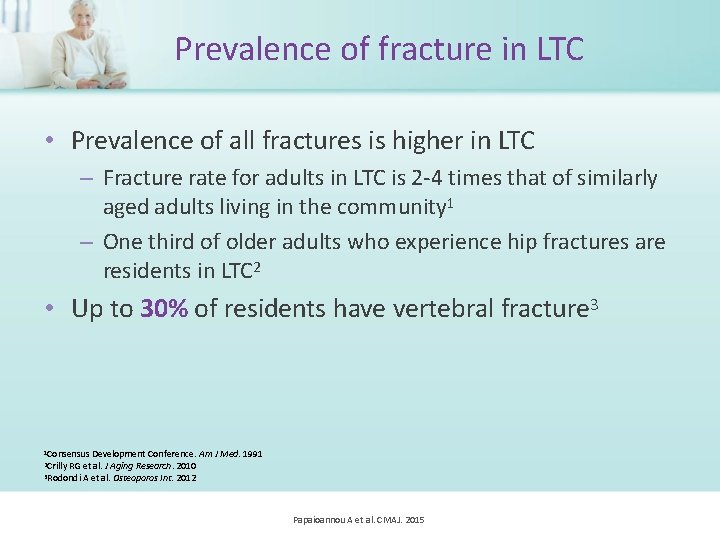
Prevalence of fracture in LTC • Prevalence of all fractures is higher in LTC – Fracture rate for adults in LTC is 2 -4 times that of similarly aged adults living in the community 1 – One third of older adults who experience hip fractures are residents in LTC 2 • Up to 30% of residents have vertebral fracture 3 1 Consensus Development Conference. Am J Med. 1991 RG et al. J Aging Research. 2010 3 Rodondi A et al. Osteoporos Int. 2012 2 Crilly Papaioannou A et al. CMAJ. 2015
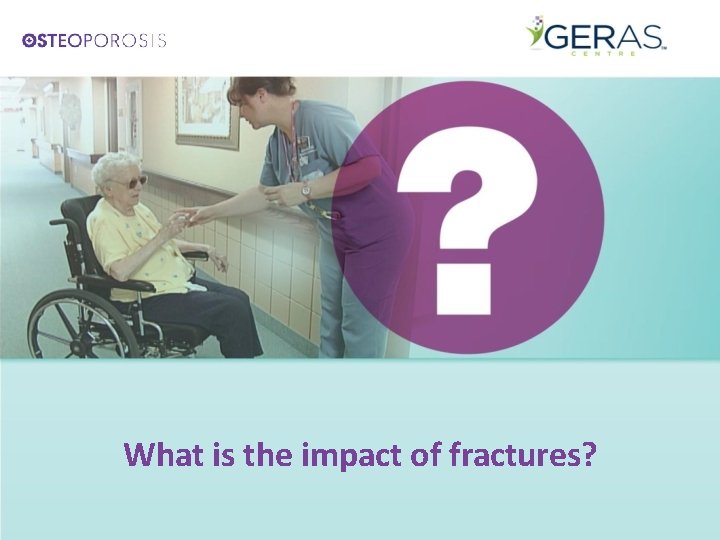
What is the impact of fractures?
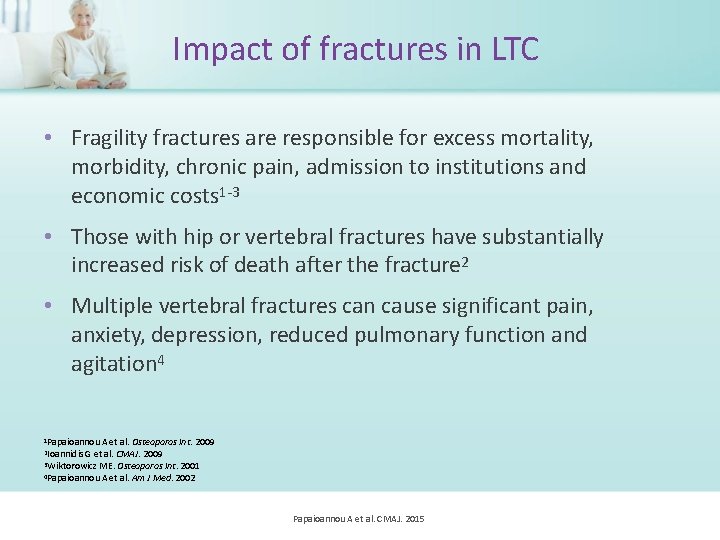
Impact of fractures in LTC • Fragility fractures are responsible for excess mortality, morbidity, chronic pain, admission to institutions and economic costs 1 -3 • Those with hip or vertebral fractures have substantially increased risk of death after the fracture 2 • Multiple vertebral fractures can cause significant pain, anxiety, depression, reduced pulmonary function and agitation 4 1 Papaioannou A et al. Osteoporos Int. 2009 et al. CMAJ. 2009 3 Wiktorowicz ME. Osteoporos Int. 2001 4 Papaioannou A et al. Am J Med. 2002 2 Ioannidis G Papaioannou A et al. CMAJ. 2015
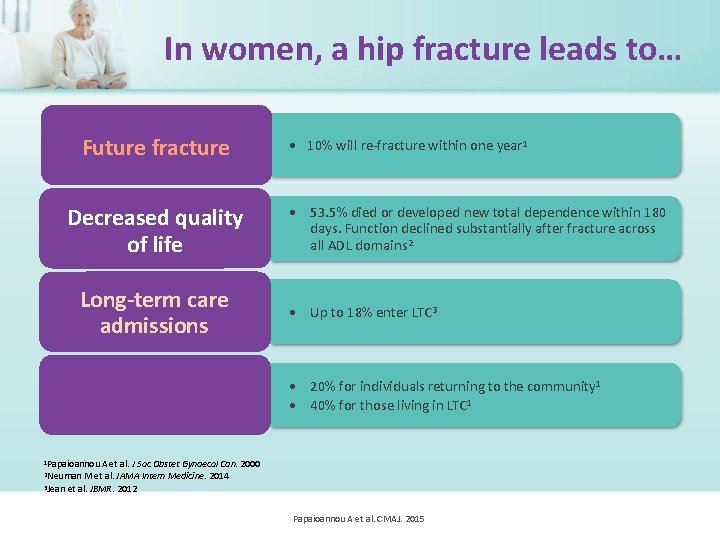
In women, a hip fracture leads to… Future fracture Decreased quality of life Long-term care admissions 1 -year Mortality • 10% will re-fracture within one year 1 • 53. 5% died or developed new total dependence within 180 days. Function declined substantially after fracture across all ADL domains 2 • Up to 18% enter LTC 3 • 20% for individuals returning to the community 1 • 40% for those living in LTC 1 1 Papaioannou A et al. J Soc Obstet Gynaecol Can. 2000 M et al. JAMA Intern Medicine. 2014 3 Jean et al. JBMR. 2012 2 Neuman Papaioannou A et al. CMAJ. 2015
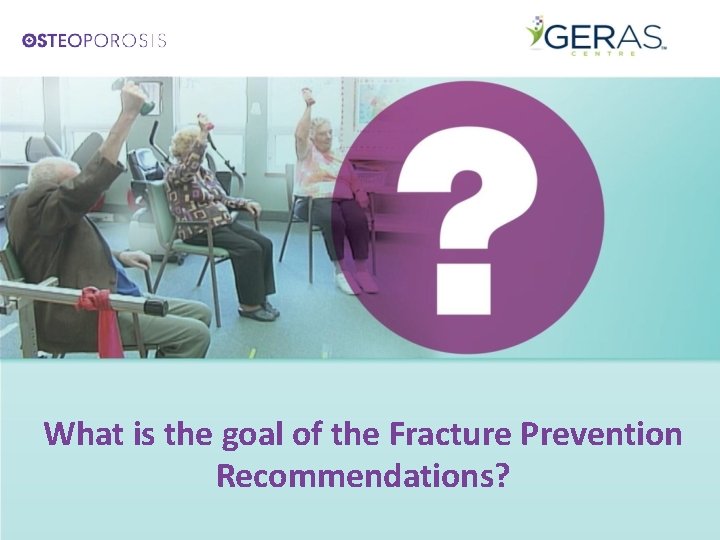
What is the goal of the Fracture Prevention Recommendations?
Reduce immobility, pain, transfers to hospital and improve quality of living of residents Papaioannou A et al. CMAJ. 2015
The Recommendations
• The proposed recommendations integrate falls and osteoporosis assessment taking into consideration lifespan, renal impairment and simultaneous risks of falls and fractures • Recommendations consider various treatment strategies in addition to pharmacotherapy
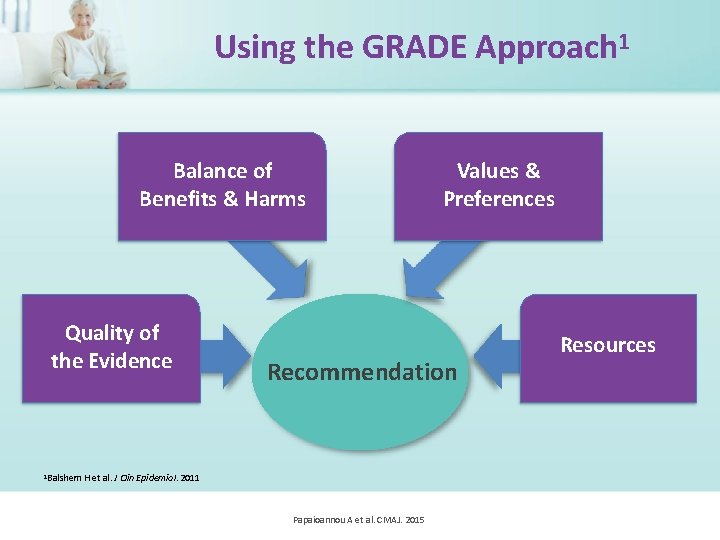
How were the recommendations developed?
Using the GRADE Approach 1 Balance of Benefits & Harms Quality of the Evidence 1 Balshem Values & Preferences Recommendation H et al. J Clin Epidemiol. 2011 Papaioannou A et al. CMAJ. 2015 Resources
How can the recommendations be interpreted?
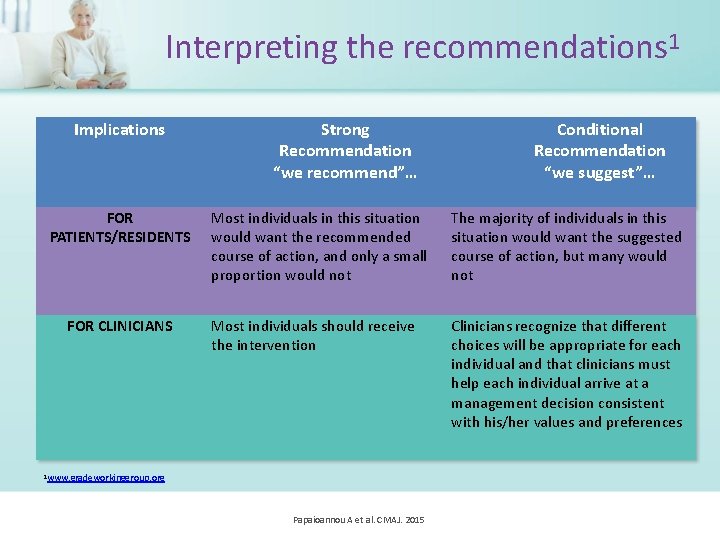
Interpreting the recommendations 1 Implications FOR PATIENTS/RESIDENTS FOR CLINICIANS Strong Recommendation “we recommend”… Conditional Recommendation “we suggest”… Most individuals in this situation would want the recommended course of action, and only a small proportion would not The majority of individuals in this situation would want the suggested course of action, but many would not Most individuals should receive the intervention Clinicians recognize that different choices will be appropriate for each individual and that clinicians must help each individual arrive at a management decision consistent with his/her values and preferences 1 www. gradeworkinggroup. org Papaioannou A et al. CMAJ. 2015
How do we assess high risk of fracture in LTC?
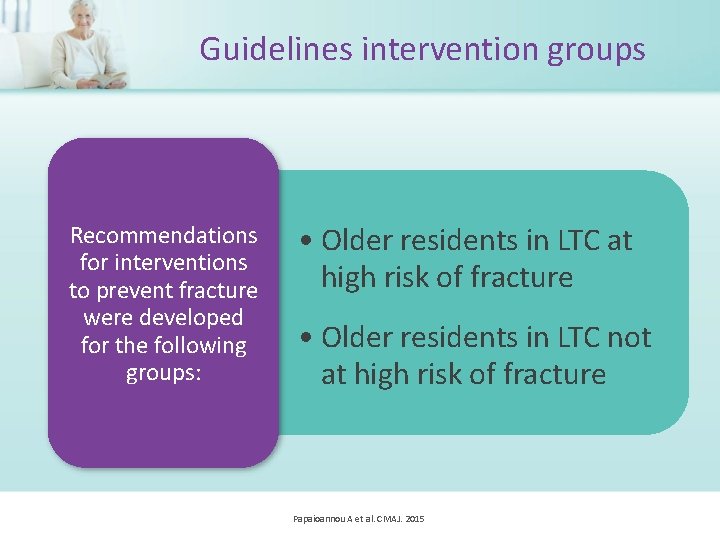
Guidelines intervention groups Recommendations for interventions to prevent fracture were developed for the following groups: • Older residents in LTC at high risk of fracture • Older residents in LTC not at high risk of fracture Papaioannou A et al. CMAJ. 2015
Who is at HIGH risk for fractures?
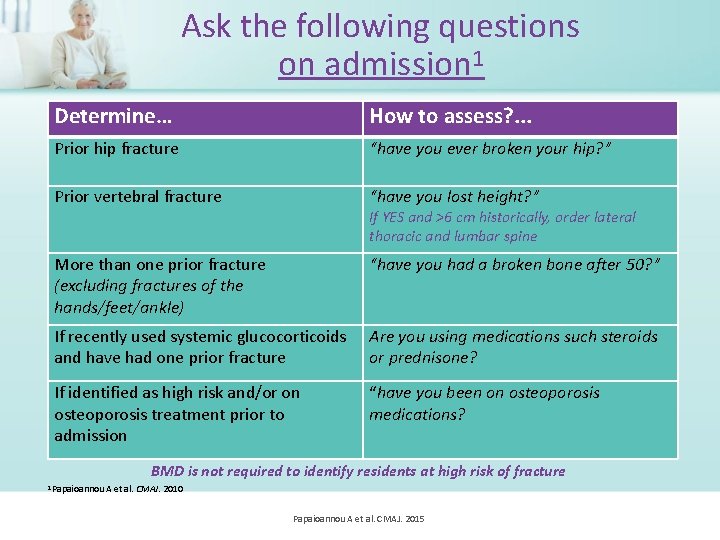
Ask the following questions on admission 1 Determine… How to assess? . . . Prior hip fracture “have you ever broken your hip? ” Prior vertebral fracture “have you lost height? ” More than one prior fracture (excluding fractures of the hands/feet/ankle) “have you had a broken bone after 50? ” If recently used systemic glucocorticoids and have had one prior fracture Are you using medications such steroids or prednisone? If identified as high risk and/or on osteoporosis treatment prior to admission “have you been on osteoporosis medications? If YES and >6 cm historically, order lateral thoracic and lumbar spine BMD is not required to identify residents at high risk of fracture 1 Papaioannou A et al. CMAJ. 2010 Papaioannou A et al. CMAJ. 2015
If the answer is YES to any of the previous questions, the resident is considered at HIGH RISK for fracture Papaioannou A et al. CMAJ. 2015
What are the recommendations for calcium and vitamin D?
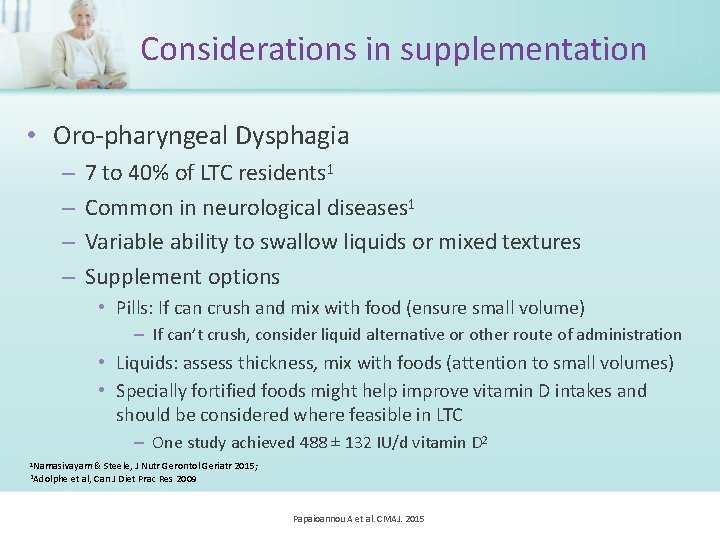
Considerations in supplementation • Oro-pharyngeal Dysphagia – – 7 to 40% of LTC residents 1 Common in neurological diseases 1 Variable ability to swallow liquids or mixed textures Supplement options • Pills: If can crush and mix with food (ensure small volume) – If can’t crush, consider liquid alternative or other route of administration • Liquids: assess thickness, mix with foods (attention to small volumes) • Specially fortified foods might help improve vitamin D intakes and should be considered where feasible in LTC – One study achieved 488 ± 132 IU/d vitamin D 2 1 Namasivayam & 2 Adolphe Steele, J Nutr Gerontol Geriatr 2015; et al, Can J Diet Prac Res 2009 Papaioannou A et al. CMAJ. 2015
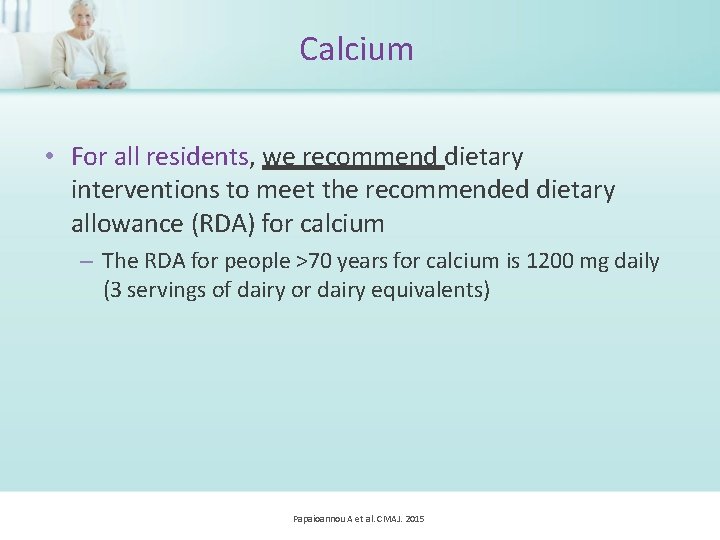
Calcium • For all residents, we recommend dietary interventions to meet the recommended dietary allowance (RDA) for calcium – The RDA for people >70 years for calcium is 1200 mg daily (3 servings of dairy or dairy equivalents) Papaioannou A et al. CMAJ. 2015
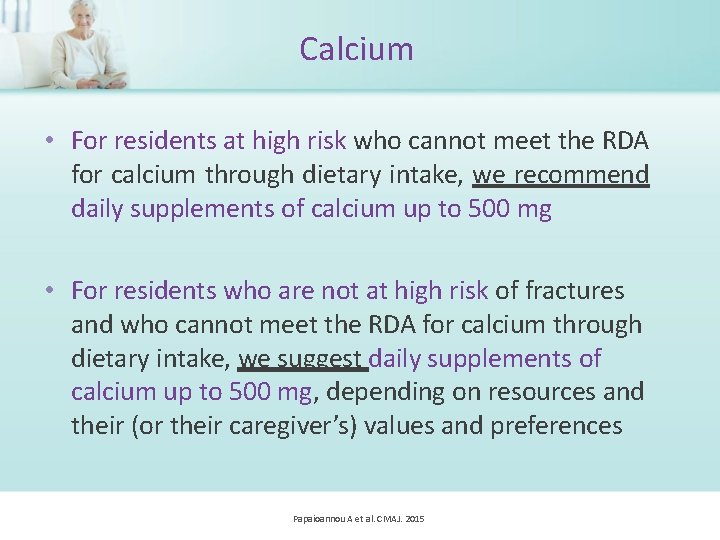
Calcium • For residents at high risk who cannot meet the RDA for calcium through dietary intake, we recommend daily supplements of calcium up to 500 mg • For residents who are not at high risk of fractures and who cannot meet the RDA for calcium through dietary intake, we suggest daily supplements of calcium up to 500 mg, depending on resources and their (or their caregiver’s) values and preferences Papaioannou A et al. CMAJ. 2015
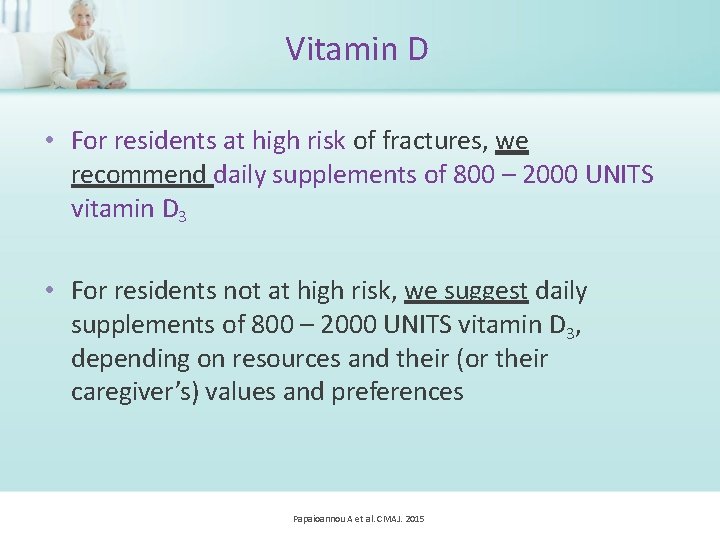
Vitamin D • For residents at high risk of fractures, we recommend daily supplements of 800 – 2000 UNITS vitamin D 3 • For residents not at high risk, we suggest daily supplements of 800 – 2000 UNITS vitamin D 3, depending on resources and their (or their caregiver’s) values and preferences Papaioannou A et al. CMAJ. 2015
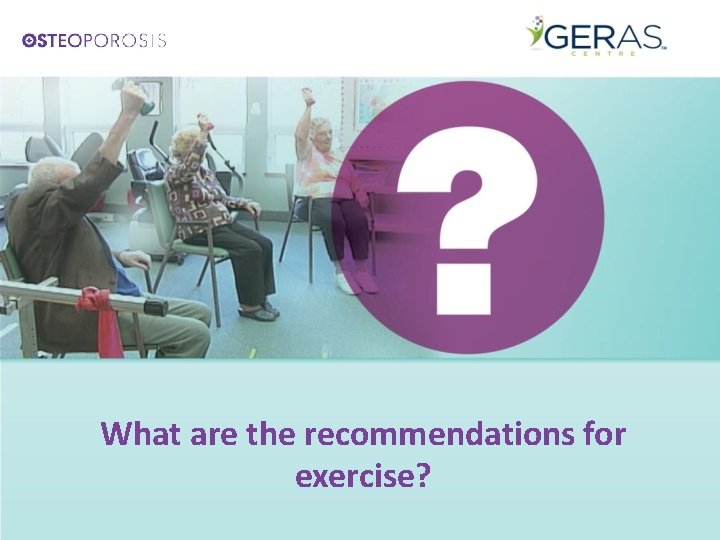
What are the recommendations for exercise?
Exercise • For residents at high risk of fractures, we suggest balance, strength and functional training exercises only when part of a multifactorial intervention to prevent falls – This recommendation places a high value on avoiding the small increase in falls which may occur among individuals at high risk of falls who participate in exercises, such as balance, strength and functional training • For residents not at high risk, we suggest balance, strength and functional training exercises to prevent falls – This recommendation places a high value on the probably small reduction in falls that is achieved with exercise, as falls may lead to serious injuries. It also places high value on the other benefits that exercise could provide. Papaioannou A et al. CMAJ. 2015
What are multifactorial interventions and recommendations?
Multifactorial interventions • Any combination of interventions that are tailored to an individual’s risk to reduce falls. • Such interventions may include: – medication reviews, assessment of environmental hazards, use of assistive devices, exercise, management of urinary incontinence and educational interventions directed to staff For all residents, we suggest multifactorial interventions that are individually tailored to reduce the risk of falls and fractures Papaioannou A et al. CMAJ. 2015
What are the recommendations for the use of hip protectors?
Hip protectors • For residents who are mobile and at high risk of fractures, we recommend hip protectors • For residents who are not at high risk of fracture but are mobile, we suggest hip protectors depending on resources available and the residents’ values and preferences. Papaioannou A et al. CMAJ. 2015
What are pharmacological therapy recommendations for older adults?
We calculated effects of benefits and harms at one year or more and therefore, these recommendations apply to older persons with life expectancy greater than one year Papaioannou A et al. CMAJ. 2015
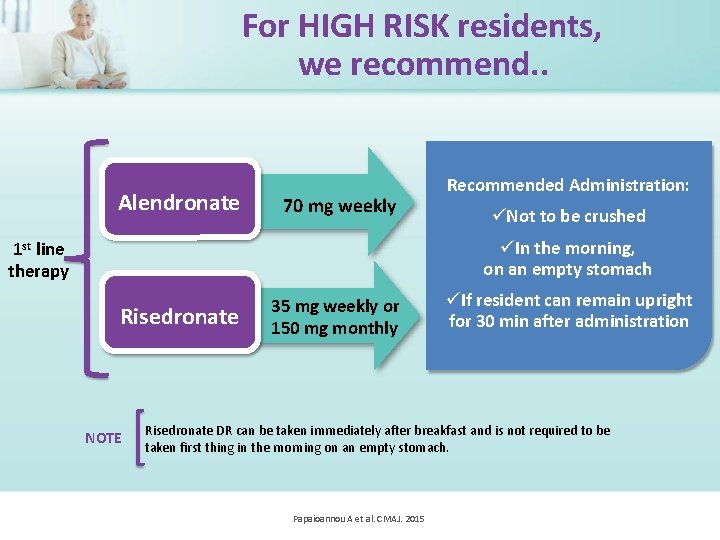
For HIGH RISK residents, we recommend. . Alendronate 70 mg weekly Recommended Administration: Not to be crushed In the morning, on an empty stomach 1 st line therapy Risedronate NOTE 35 mg weekly or 150 mg monthly If resident can remain upright for 30 min after administration Risedronate DR can be taken immediately after breakfast and is not required to be taken first thing in the morning on an empty stomach. Papaioannou A et al. CMAJ. 2015
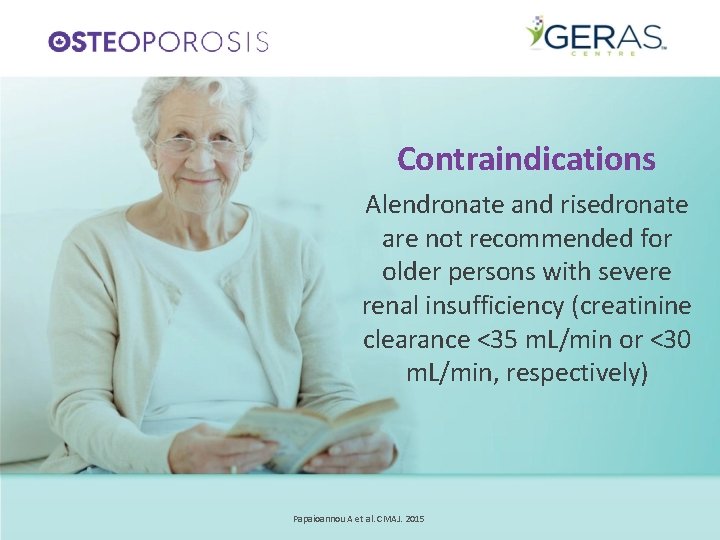
Contraindications Alendronate and risedronate are not recommended for older persons with severe renal insufficiency (creatinine clearance <35 m. L/min or <30 m. L/min, respectively) Papaioannou A et al. CMAJ. 2015
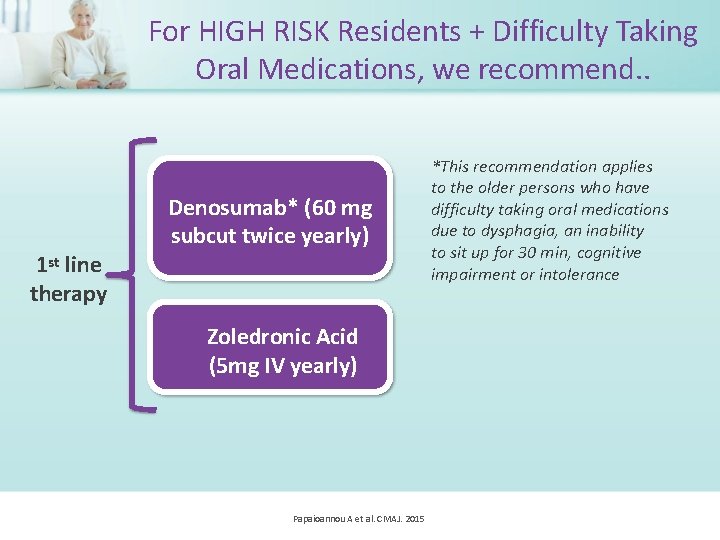
For HIGH RISK Residents + Difficulty Taking Oral Medications, we recommend. . 1 st line therapy Denosumab* (60 mg subcut twice yearly) Zoledronic Acid (5 mg IV yearly) Papaioannou A et al. CMAJ. 2015 *This recommendation applies to the older persons who have difficulty taking oral medications due to dysphagia, an inability to sit up for 30 min, cognitive impairment or intolerance
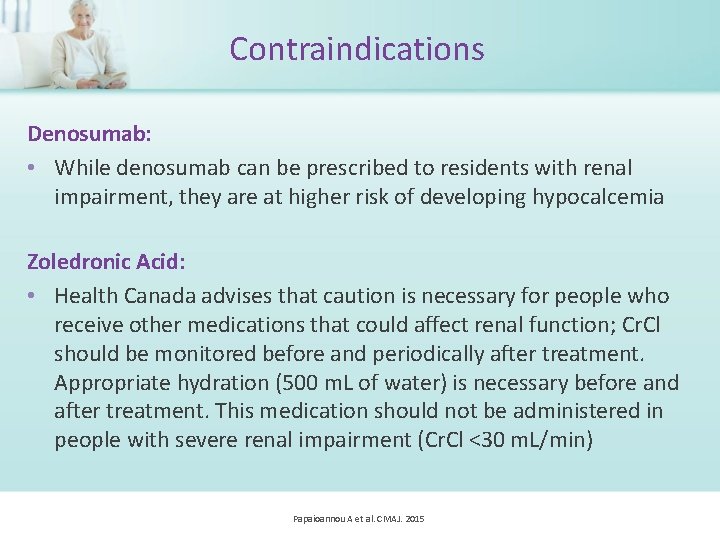
Contraindications Denosumab: • While denosumab can be prescribed to residents with renal impairment, they are at higher risk of developing hypocalcemia Zoledronic Acid: • Health Canada advises that caution is necessary for people who receive other medications that could affect renal function; Cr. Cl should be monitored before and periodically after treatment. Appropriate hydration (500 m. L of water) is necessary before and after treatment. This medication should not be administered in people with severe renal impairment (Cr. Cl <30 m. L/min) Papaioannou A et al. CMAJ. 2015
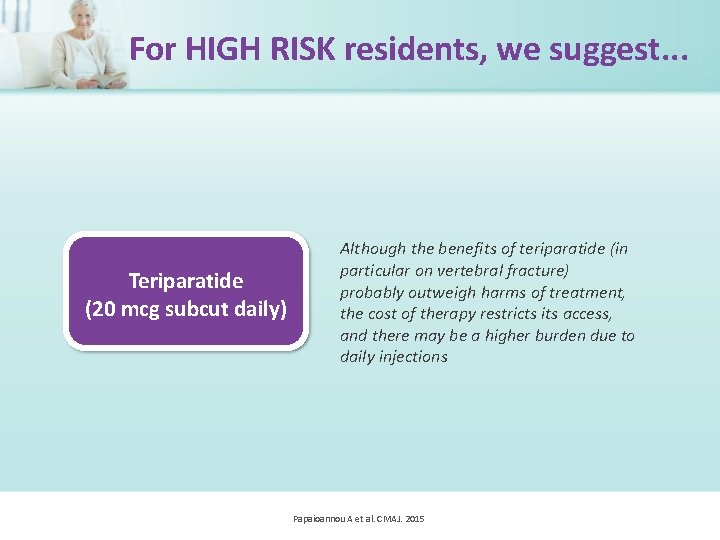
For HIGH RISK residents, we suggest. . . Teriparatide (20 mcg subcut daily) Although the benefits of teriparatide (in particular on vertebral fracture) probably outweigh harms of treatment, the cost of therapy restricts its access, and there may be a higher burden due to daily injections Papaioannou A et al. CMAJ. 2015
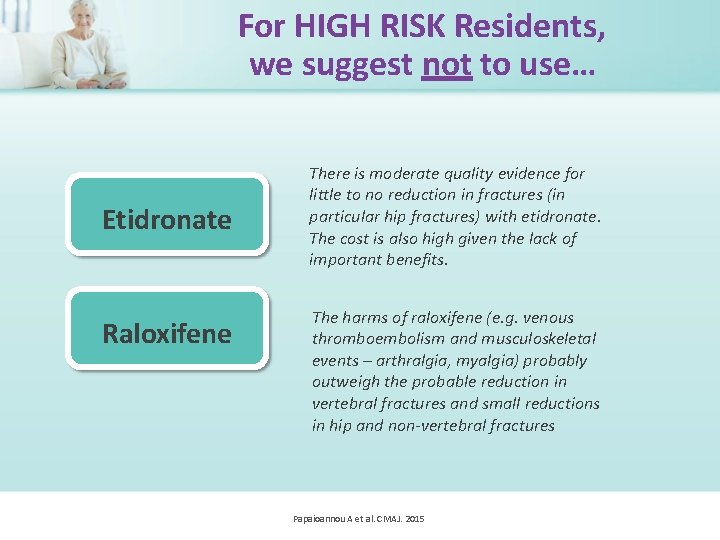
For HIGH RISK Residents, we suggest not to use… Etidronate Raloxifene There is moderate quality evidence for little to no reduction in fractures (in particular hip fractures) with etidronate. The cost is also high given the lack of important benefits. The harms of raloxifene (e. g. venous thromboembolism and musculoskeletal events – arthralgia, myalgia) probably outweigh the probable reduction in vertebral fractures and small reductions in hip and non-vertebral fractures Papaioannou A et al. CMAJ. 2015
Summary • Determine risk of fracture on resident’s admission • Calcium and vitamin D supplementation • Exercise, hip protectors and multifactorial interventions • Pharmacological therapy for residents at high risk Papaioannou A et al. CMAJ. 2015
For access to recommendations and other tools and resources, please visit: Osteoporosis Canada at: www. osteoporosis. ca OR Ontario Osteoporosis Strategy at: www. osteostrategy. on. ca Papaioannou A et al. CMAJ. 2015