
OSTEOARTHRITIS Osteoarthritis OA is a common degenerative disease


- Slides: 42
OSTEOARTHRITIS
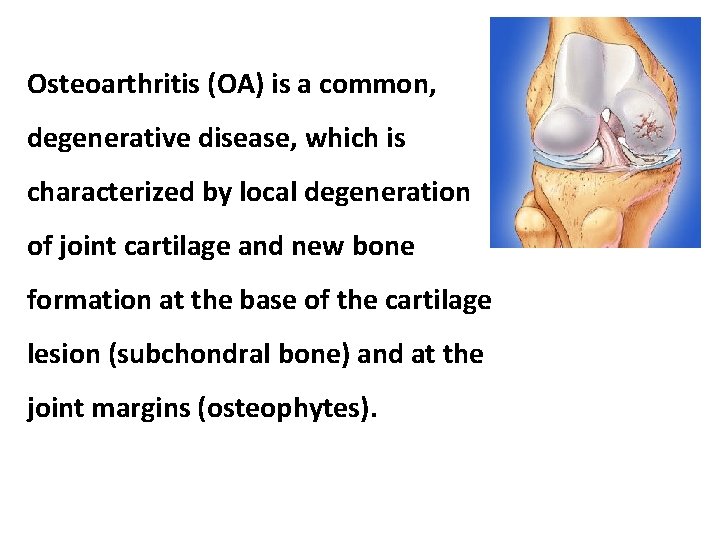
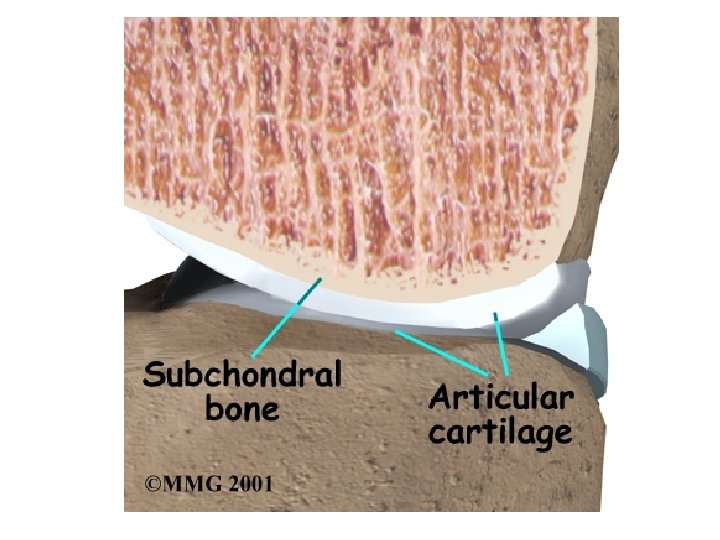
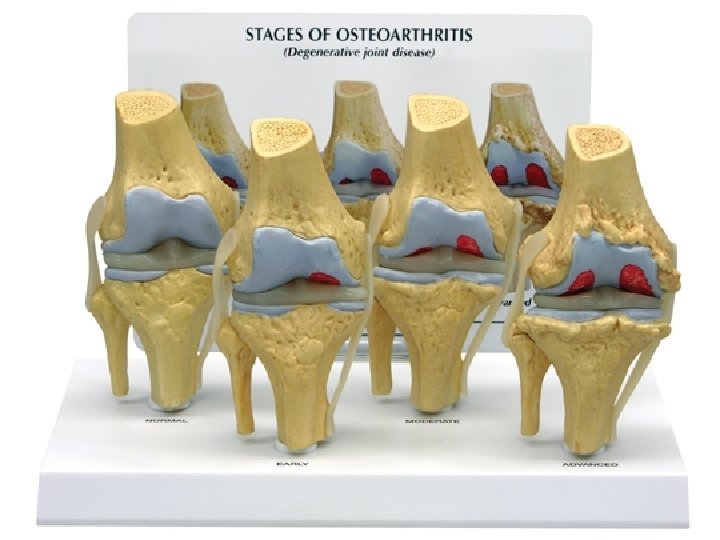
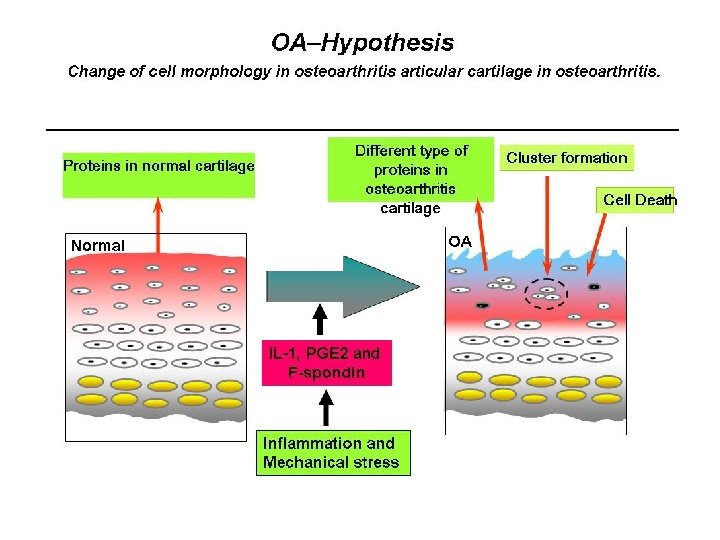
Osteoarthritis (OA) is a common, degenerative disease, which is characterized by local degeneration of joint cartilage and new bone formation at the base of the cartilage lesion (subchondral bone) and at the joint margins (osteophytes).
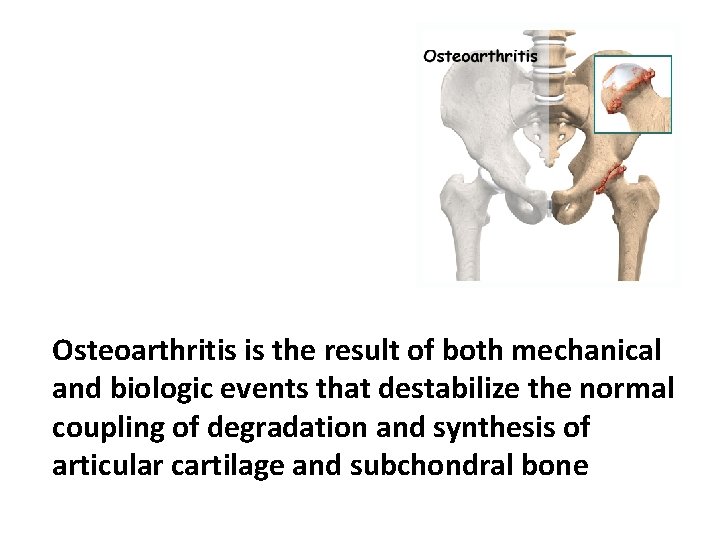
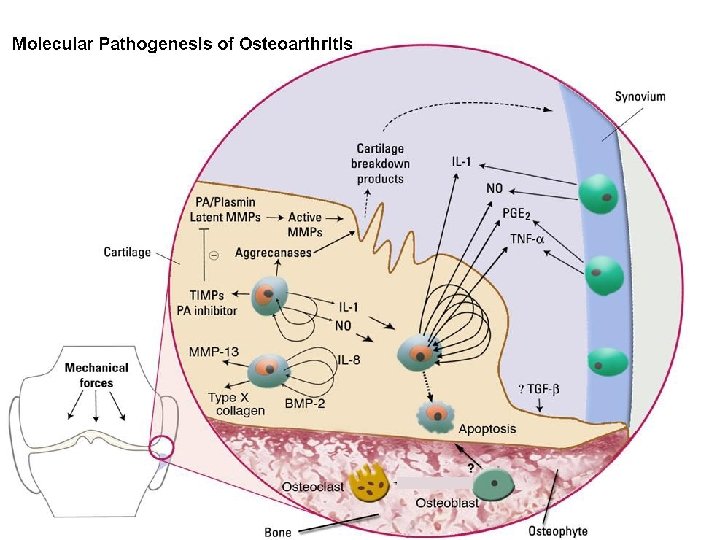
Osteoarthritis is the result of both mechanical and biologic events that destabilize the normal coupling of degradation and synthesis of articular cartilage and subchondral bone
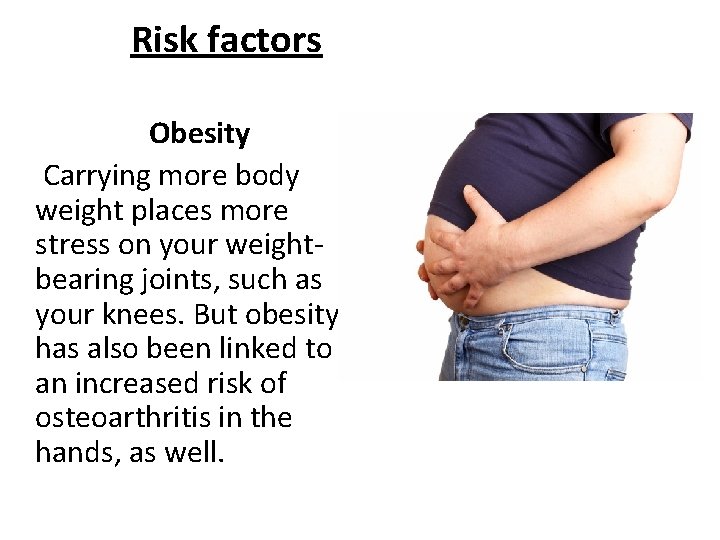
Risk factors • Older age - Osteoarthritis typically occurs in older adults. People under 40 rarely experience osteoarthritis. • Sex - Women are more likely to develop osteoarthritis, though it isn't clear why. • Bone deformities - Some people are born with malformed joints or defective cartilage, which can increase the risk of osteoarthritis. • Joint injuries - Injuries, such as those that occur when playing sports or from an accident, may increase the risk of osteoarthritis. • Obesity - Carrying more body weight places more stress on your weight-bearing joints, such as your knees. But obesity has also been linked to an increased risk of osteoarthritis in the hands, as well. • Other diseases - that affect the bones and joints. Bone and joint diseases that increase the risk of osteoarthritis include gout, rheumatoid arthritis, Paget's disease of bone and septic arthritis.
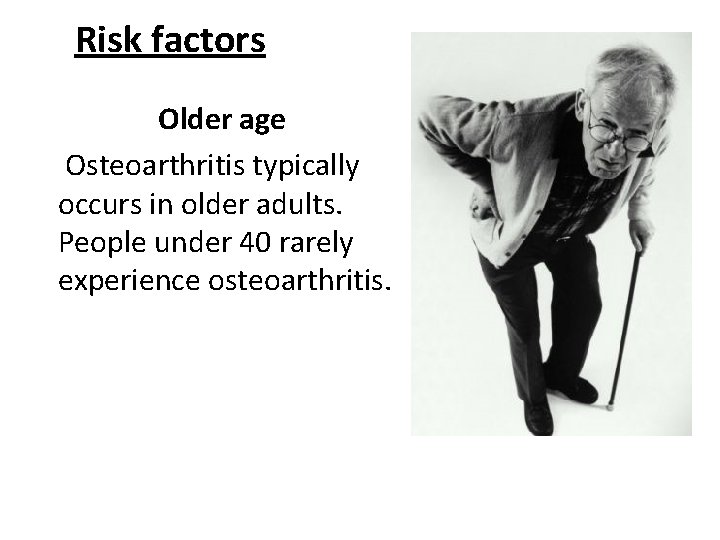
Risk factors Older age Osteoarthritis typically occurs in older adults. People under 40 rarely experience osteoarthritis.
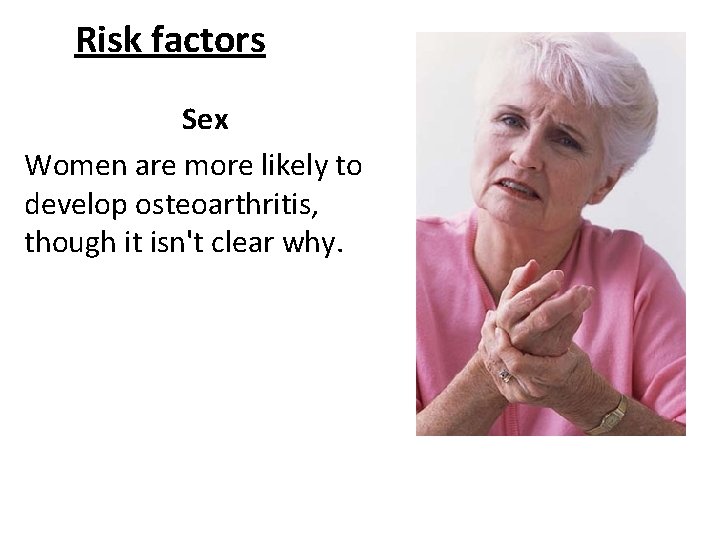
Risk factors Sex Women are more likely to develop osteoarthritis, though it isn't clear why.
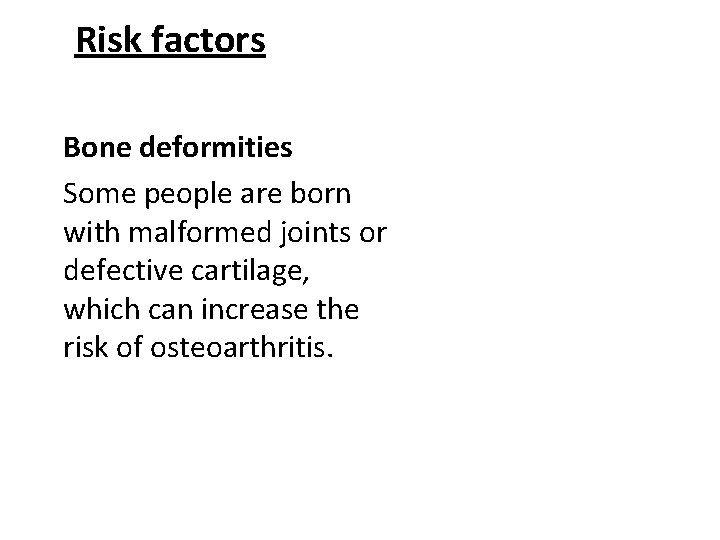
Risk factors Bone deformities Some people are born with malformed joints or defective cartilage, which can increase the risk of osteoarthritis.
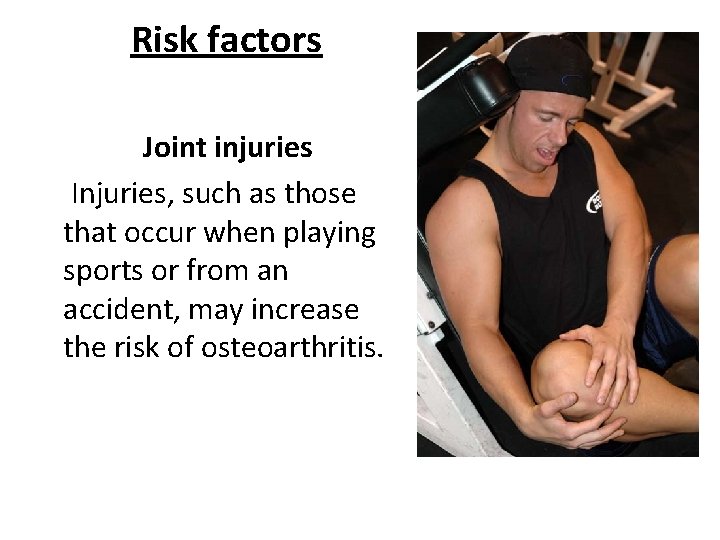
Risk factors Joint injuries Injuries, such as those that occur when playing sports or from an accident, may increase the risk of osteoarthritis.
Risk factors Obesity Carrying more body weight places more stress on your weightbearing joints, such as your knees. But obesity has also been linked to an increased risk of osteoarthritis in the hands, as well.
Risk factors Other diseases That affect the bones and joints. Bone and joint diseases that increase the risk of osteoarthritis include gout, rheumatoid arthritis, Paget's disease of bone and septic arthritis.
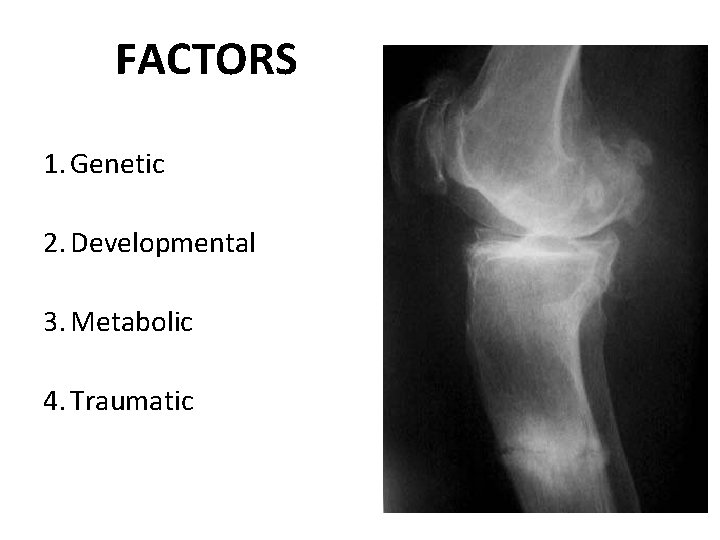
FACTORS 1. Genetic 2. Developmental 3. Metabolic 4. Traumatic
Classification Primary • Aging • Sex • • • Secondary Congenital disorders of joints Diabetes. Inflammatory diseases (such as Perthes' disease), (Lyme disease), and all chronic forms of arthritis (e. g. costochondritis, gout, and rheumatoid arthritis). In gout, uric acid crystals cause the cartilage to degenerate at a faster pace. Injury to joints, as a result of an accident or orthodontic operations. Septic arthritis (infection of a joint ) Ligamentous deterioration or instability may be a factor. Marfan syndrome Obesity Alkaptonuria Hemochromatosis and Wilson's disease
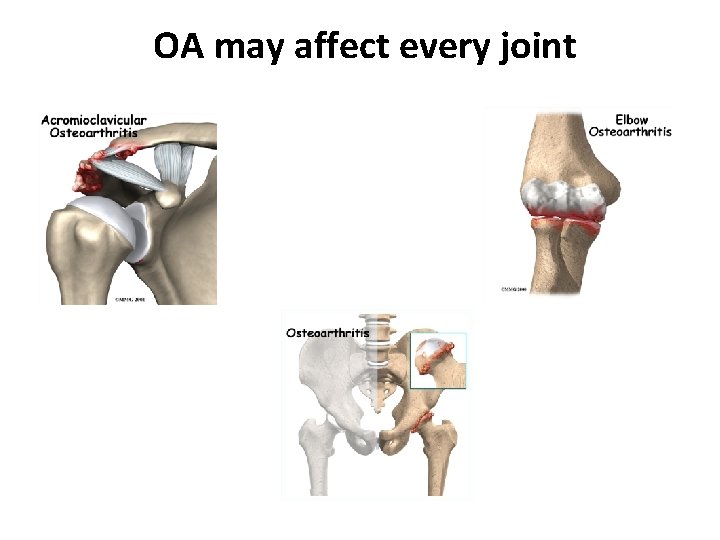
OA may affect every joint
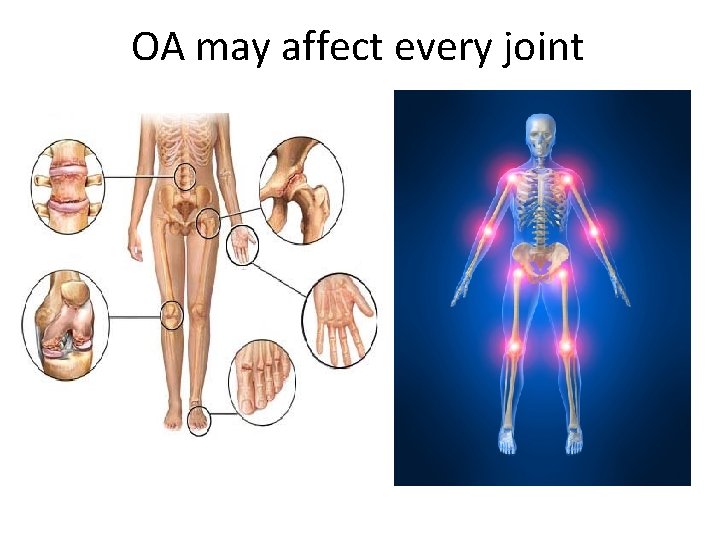
OA may affect every joint
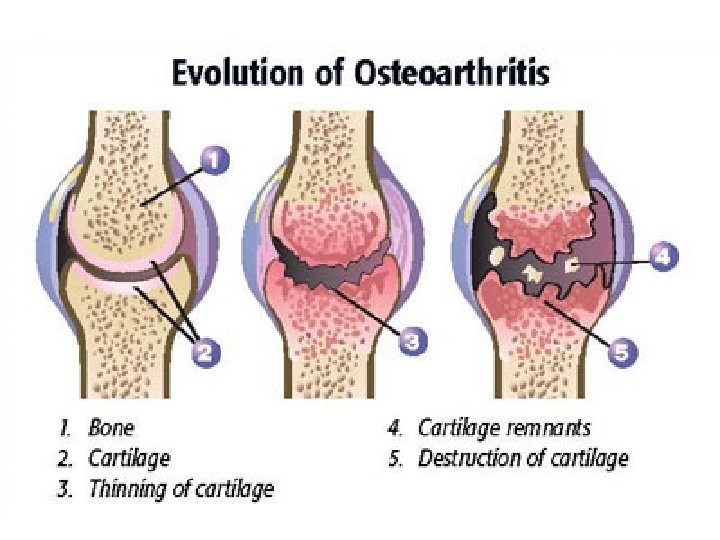
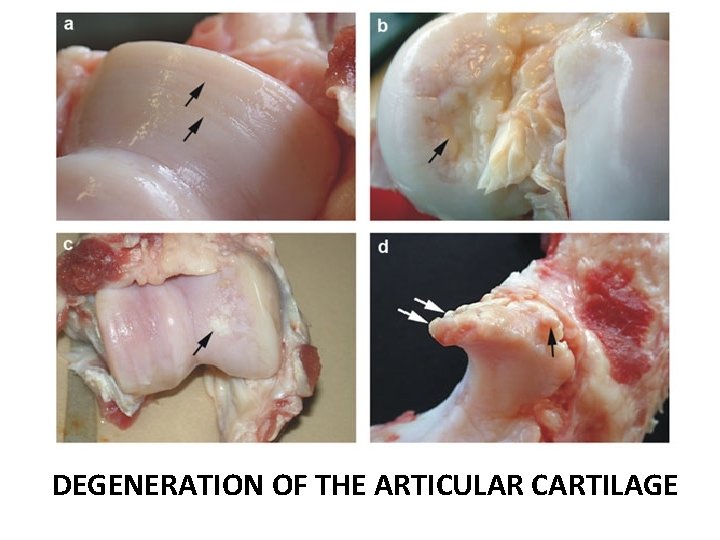
DEGENERATION OF THE ARTICULAR CARTILAGE
Symptoms • Pain in a joint during or after use, or after a period of inactivity • Tenderness in the joint when you apply light pressure • Stiffness in a joint, that may be most noticeable when you wake up in the morning or after a period of inactivity • Loss of flexibility make it difficult to use the joint • Grating sensation when you use the joint • Bone spurs, which appear as hard lumps, may form around the affected joint • Swelling in some cases
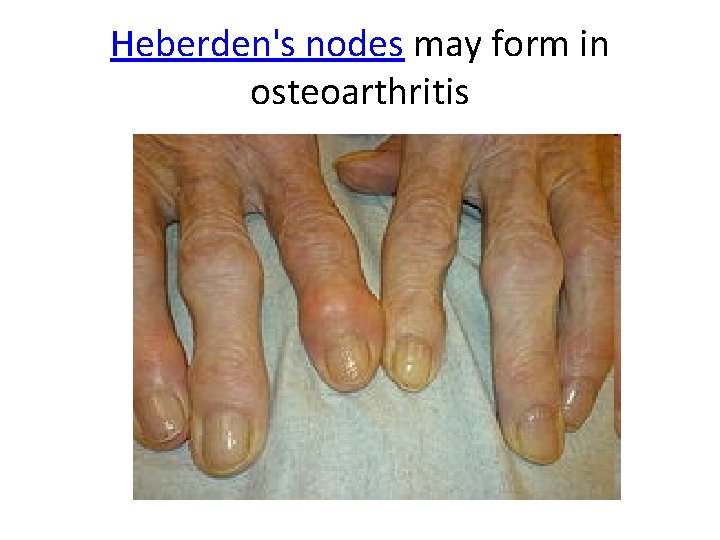
Heberden's nodes may form in osteoarthritis
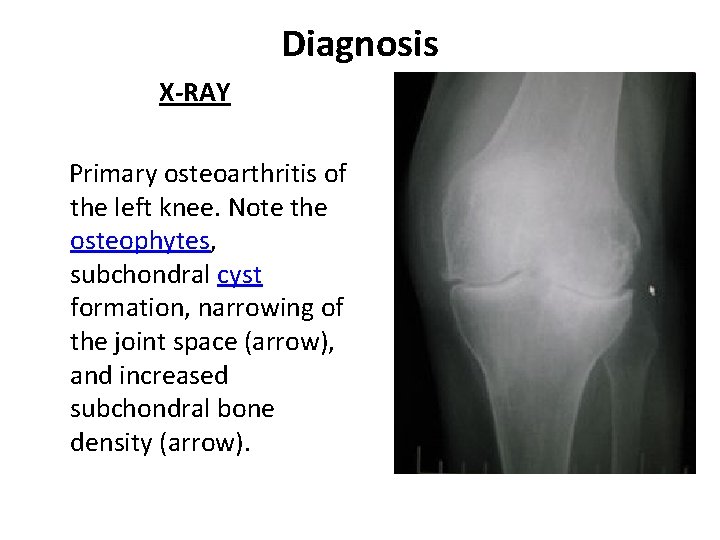
Diagnosis X-RAY Primary osteoarthritis of the left knee. Note the osteophytes, subchondral cyst formation, narrowing of the joint space (arrow), and increased subchondral bone density (arrow).
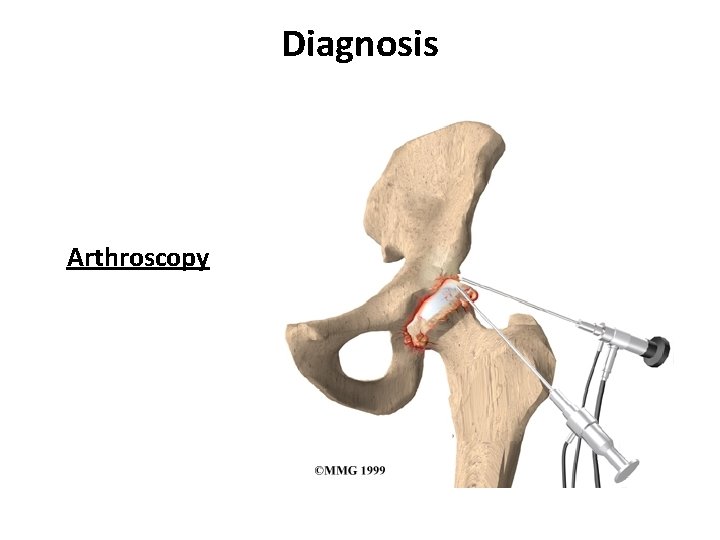
Diagnosis Arthroscopy
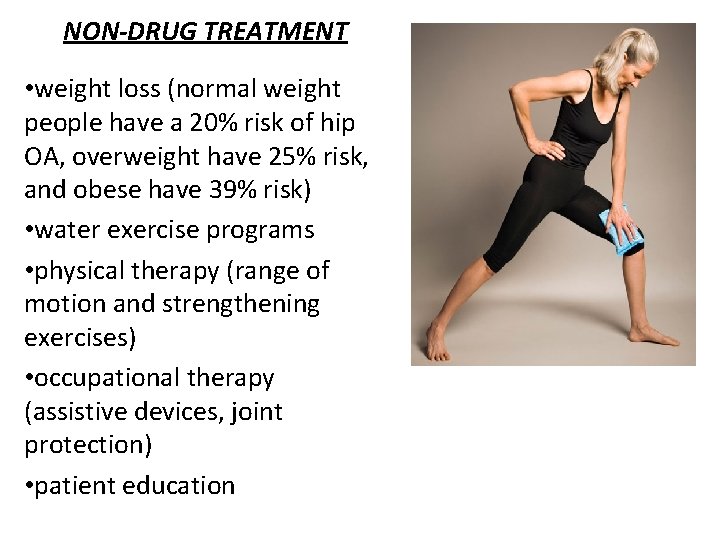
NON-DRUG TREATMENT • weight loss (normal weight people have a 20% risk of hip OA, overweight have 25% risk, and obese have 39% risk) • water exercise programs • physical therapy (range of motion and strengthening exercises) • occupational therapy (assistive devices, joint protection) • patient education
DRUG TREATMENT • Acetaminophen • Non-steroidal antiinflammatory drugs • Tanezumab (monoclonal antibody) • Chondroitin sulfate • Glucosamine • S-Adenosyl methionine
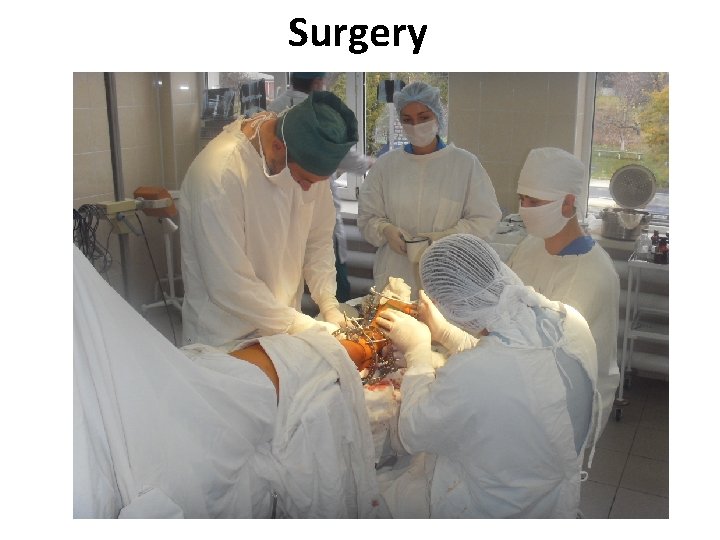
Surgery
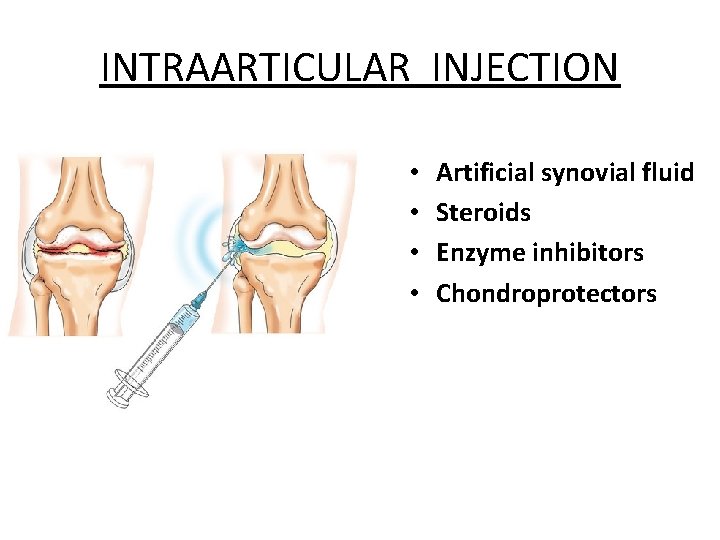
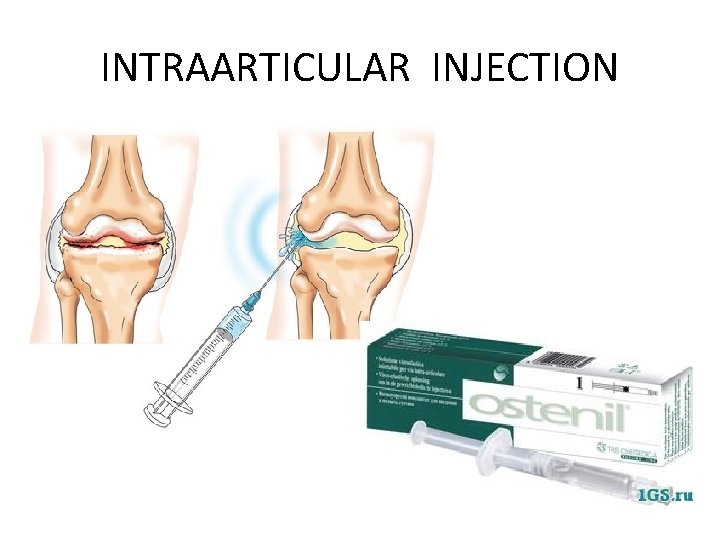
INTRAARTICULAR INJECTION • • Artificial synovial fluid Steroids Enzyme inhibitors Chondroprotectors
INTRAARTICULAR INJECTION
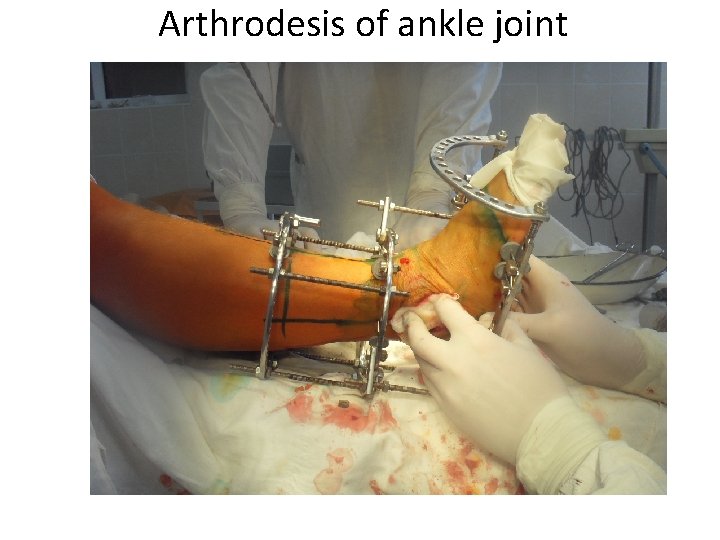
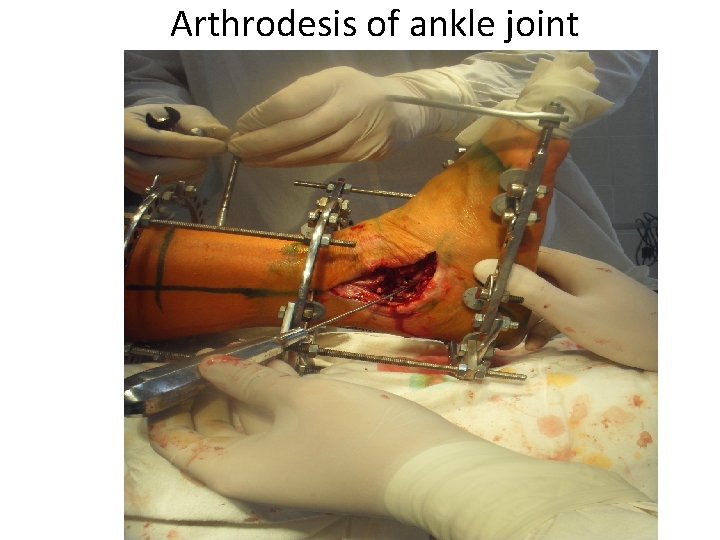
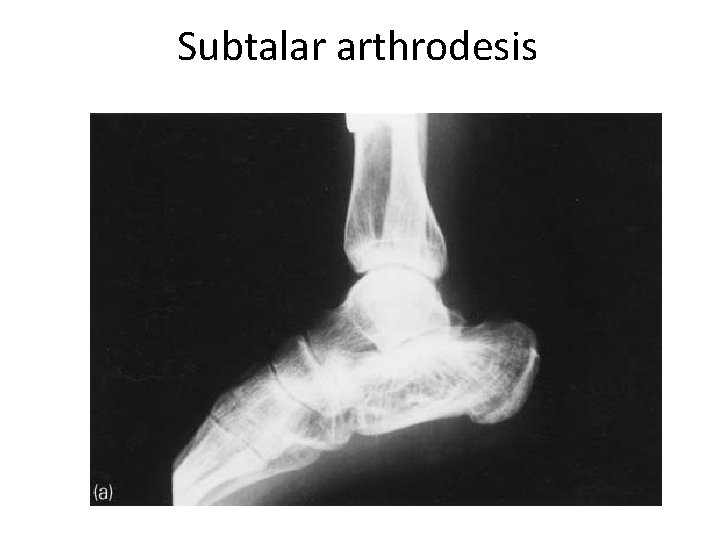
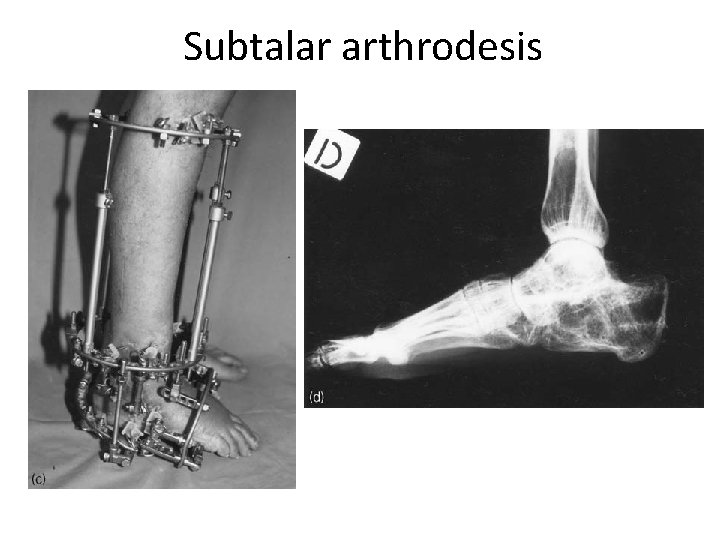
Surgeory • • Autologous chondrocyte implantation Microfracture surgery Arthroscopic surgery Osteotomy Limb lengthening Arthrodesis Joint replacement
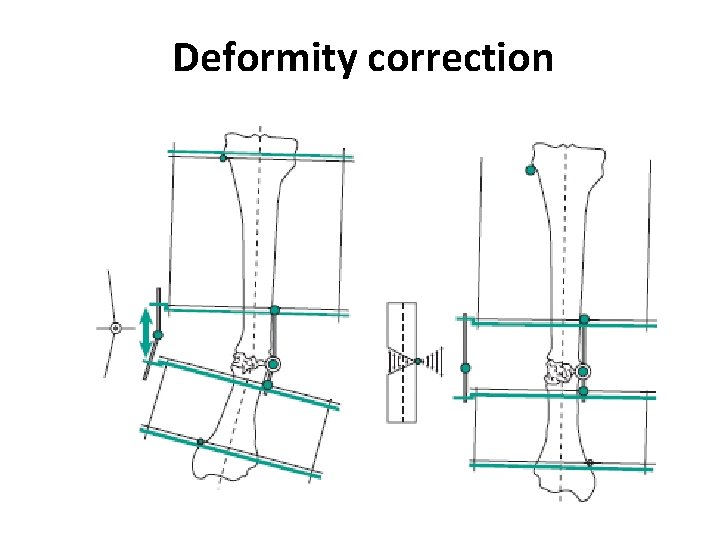
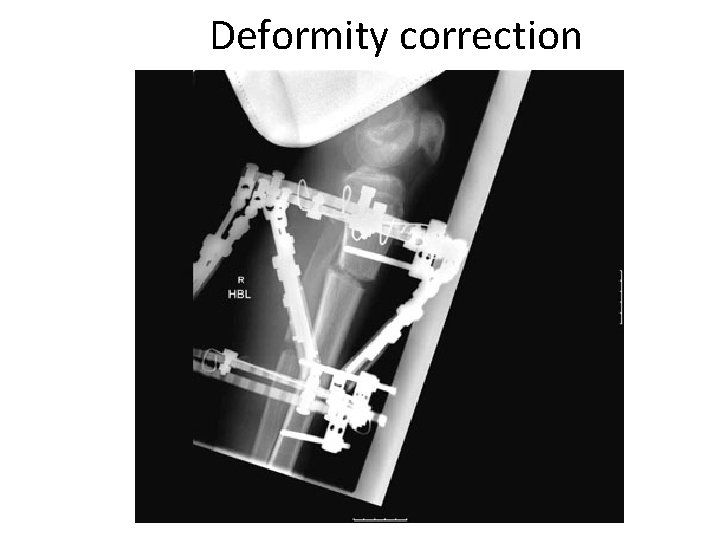
Deformity correction
Deformity correction
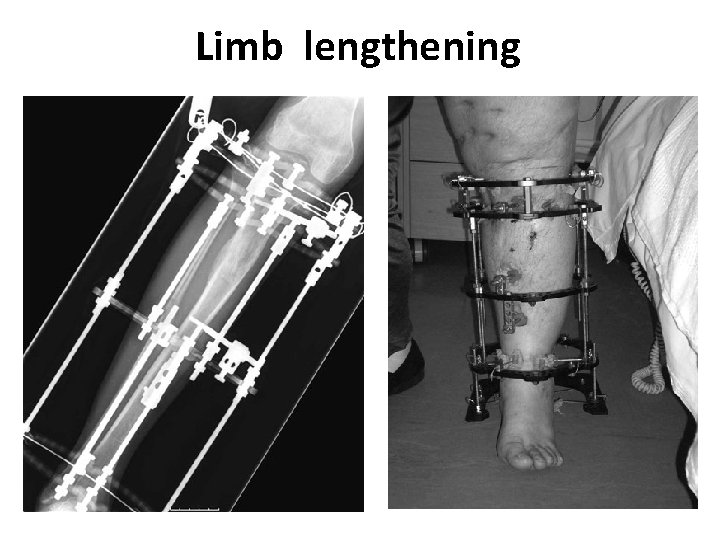
Limb lengthening
Arthrodesis of ankle joint
Arthrodesis of ankle joint
Subtalar arthrodesis
Subtalar arthrodesis
TOTAL SHOULDER REPLACEMENT
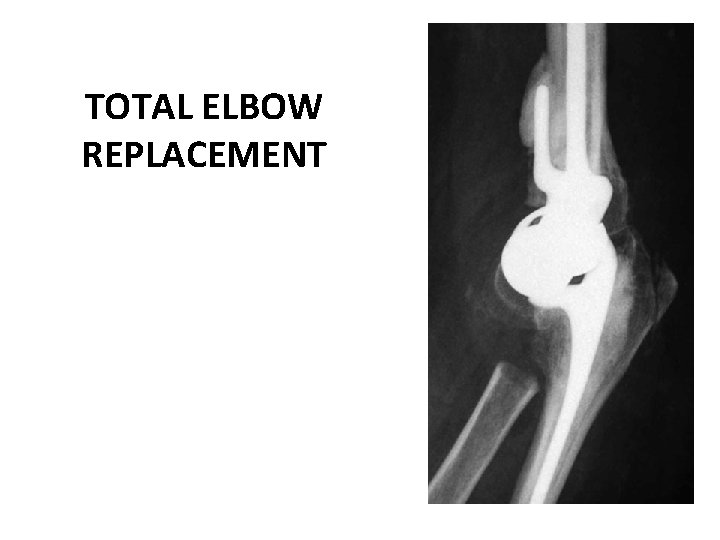
TOTAL ELBOW REPLACEMENT
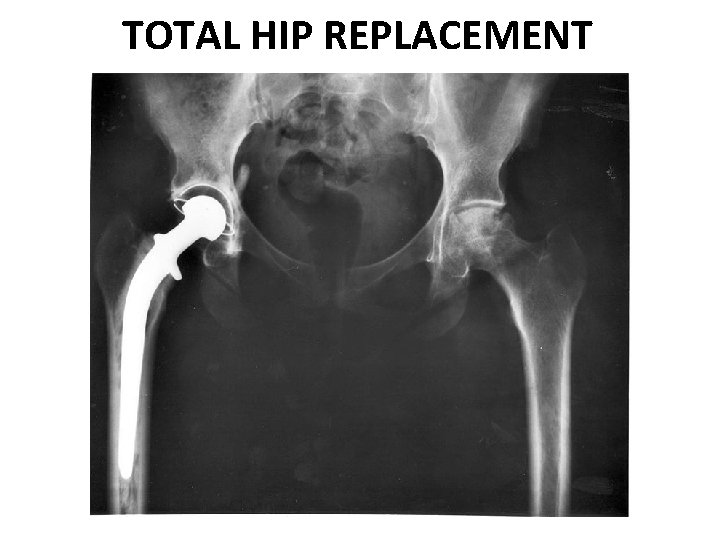
TOTAL HIP REPLACEMENT
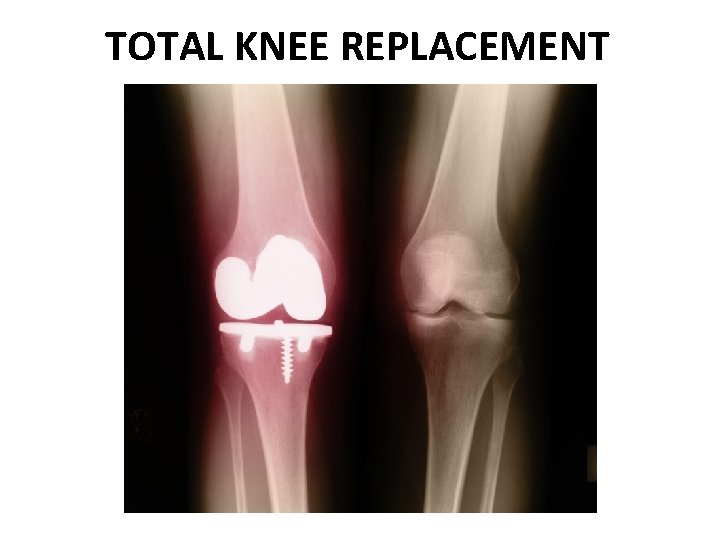
TOTAL KNEE REPLACEMENT
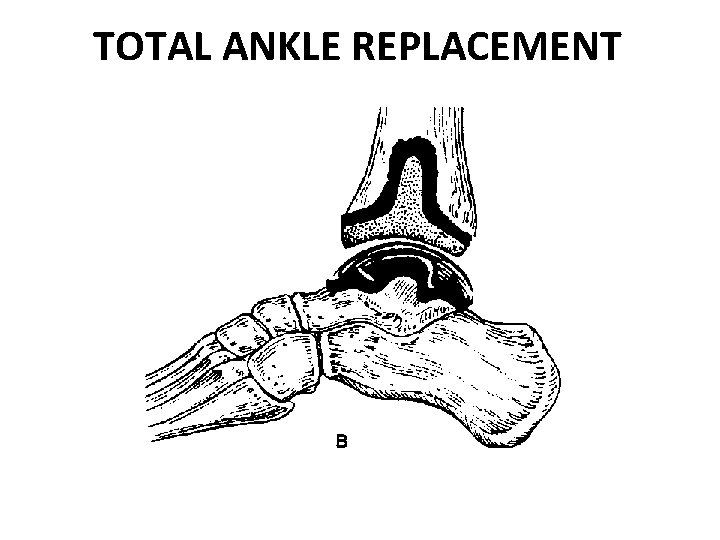
TOTAL ANKLE REPLACEMENT