
Osteoarthritis Nichola Caiger F 1 Objectives To refresh
Osteoarthritis Nichola Caiger, F 1

Objectives � To ◦ ◦ ◦ refresh your knowledge of: S/S of OA Risk factors for OA Investigations Management of OA Complications of OA
Case � Mr S is a 78 y/o man, c/o knee pain ◦ ΔΔ
Differential diagnosis in an adult � Rheumatoid arthritis � Osteoarthritis � Gout � Psuedogout � Septic arthritis � Haemarthrosis � Benign/malignant tumour � Referred pain � Muscle strain � Bakers cyst � Bursitis � Fracture � Torn ligament � Meniscal tear � Tendonitis � Etc.
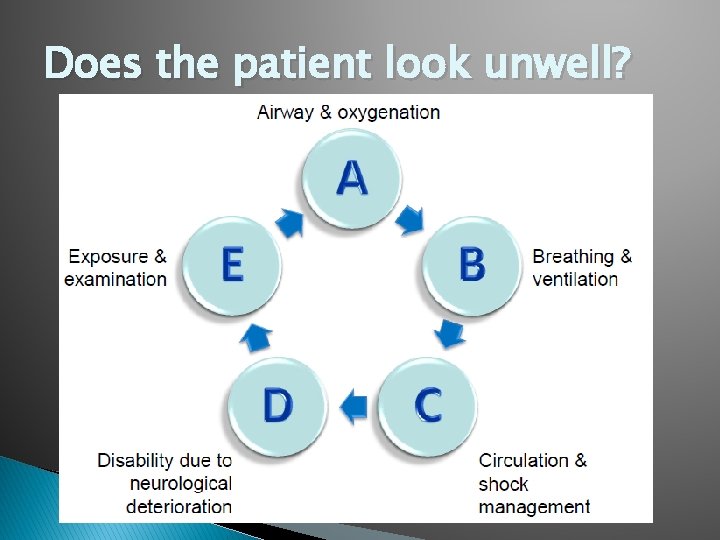
Does the patient look unwell?

Typical history?
Typical history � Minimal morning stiffness � Pain worse on movement � Pain worse at the end of the day � Pain relieved by rest � Often affects weight bearing joints � Reduced ROM � Joint may ‘lock’ or ‘give way’ � Joint swelling and tenderness � Joints feel like they are ‘grating’ or ‘cracking’ � Weakness and muscle wasting � Unilateral at onset (often bilateral with time) � Stiffness after rest � Rest pain when severe

Affected joints
Risk factors include…
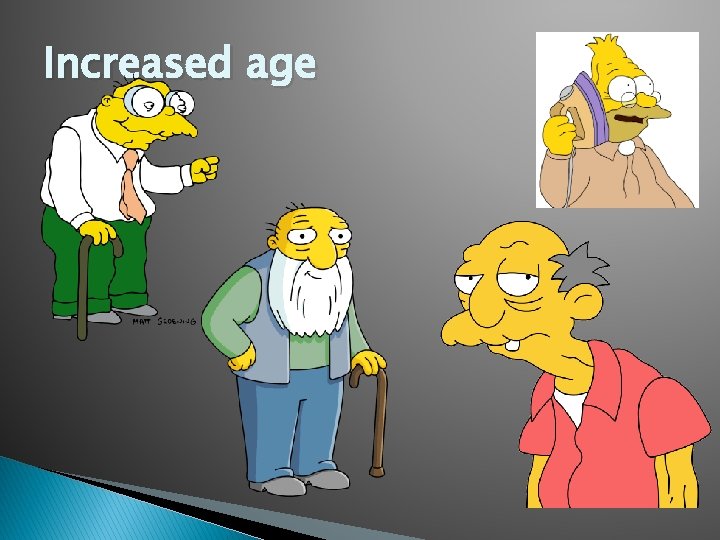
Increased age
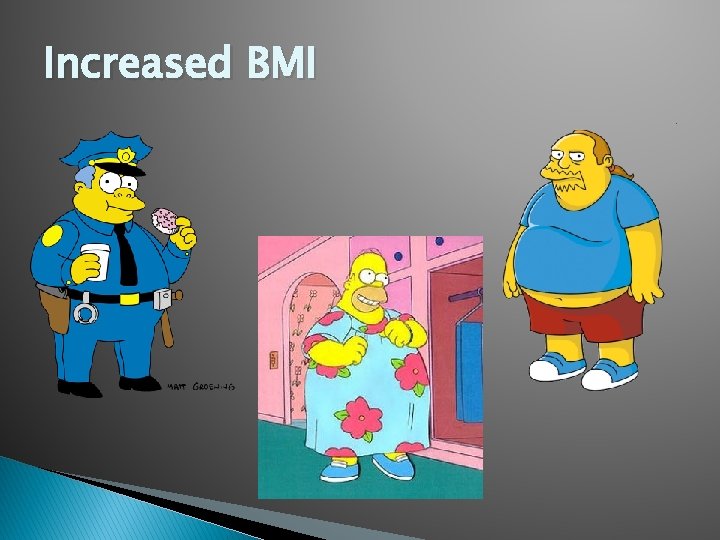
Increased BMI
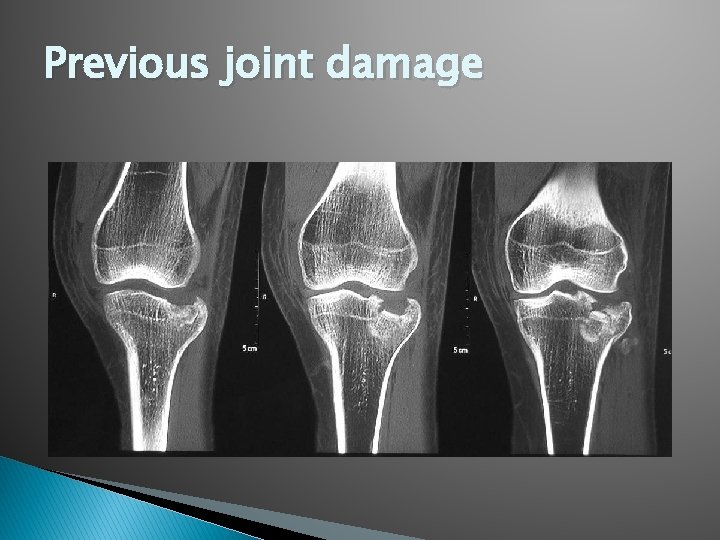
Previous joint damage
Female gender
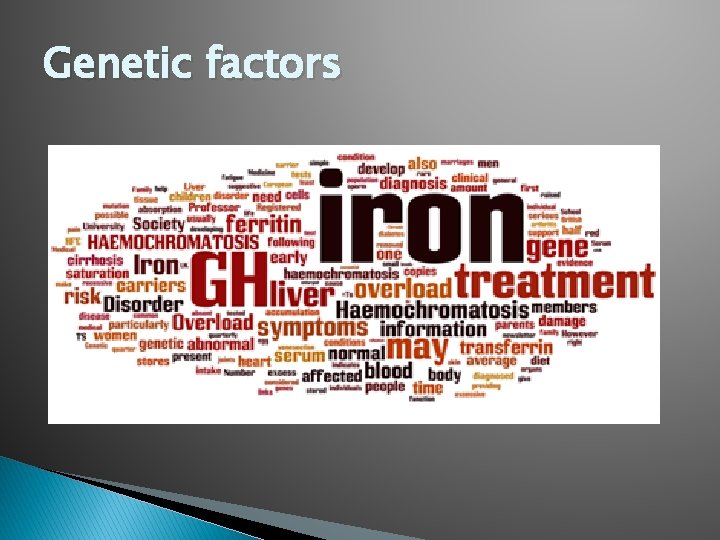
Genetic factors
Remaining case history � PMH ◦ Tibial plateau # as a teen ◦ Previous meniscectomy � FH ◦ Dad had bilateral hip replacements � DH ◦ Paracetamol & topical ibuprofen for pain � SH ◦ Retired ◦ Walks with a stick ◦ Lives in a residential home ◦ Non-smoker, teetotal � ICE ◦ Worried he won’t be able to walk any more

Examination findings?
Examination � Reduced ROM � Pain on movement � Joint swelling � Joint tenderness � Crepitus � Absence of systemic features suggestive of RA � Deformity � Bouchard’s/Heberden’s nodes � Joint instability � Muscle weakness/wasting
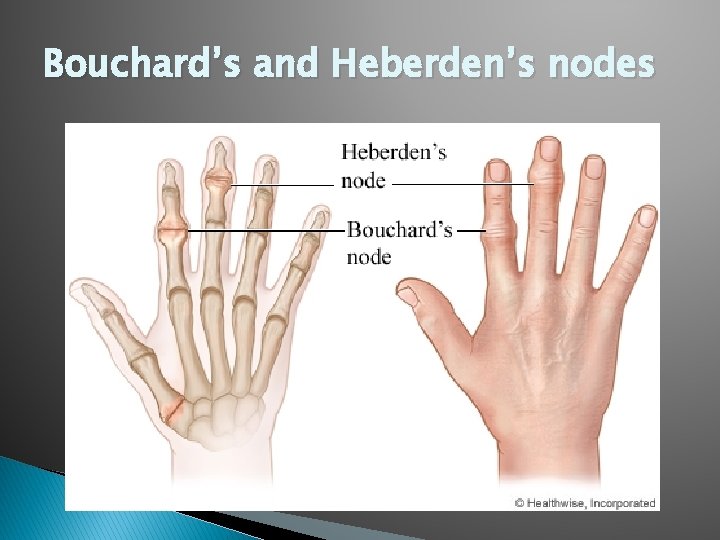
Bouchard’s and Heberden’s nodes

Investigations?
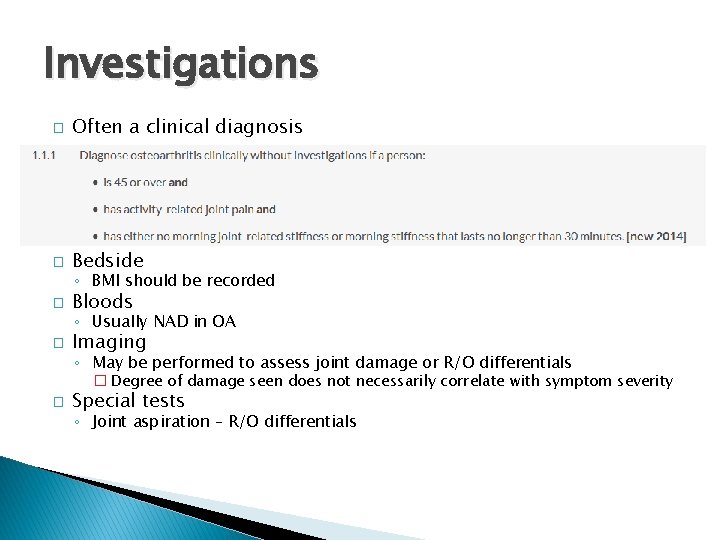
Investigations � Often a clinical diagnosis � Bedside ◦ BMI should be recorded � Bloods ◦ Usually NAD in OA � Imaging ◦ May be performed to assess joint damage or R/O differentials � Degree of damage seen does not necessarily correlate with symptom severity � Special tests ◦ Joint aspiration – R/O differentials

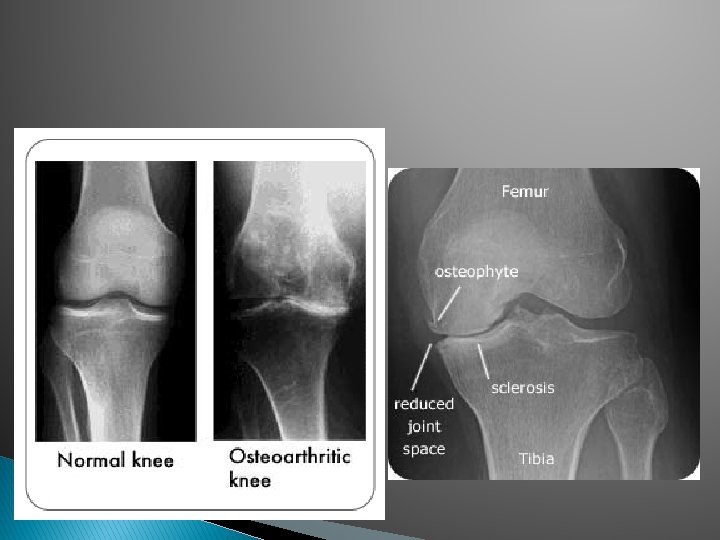
X-ray findings?
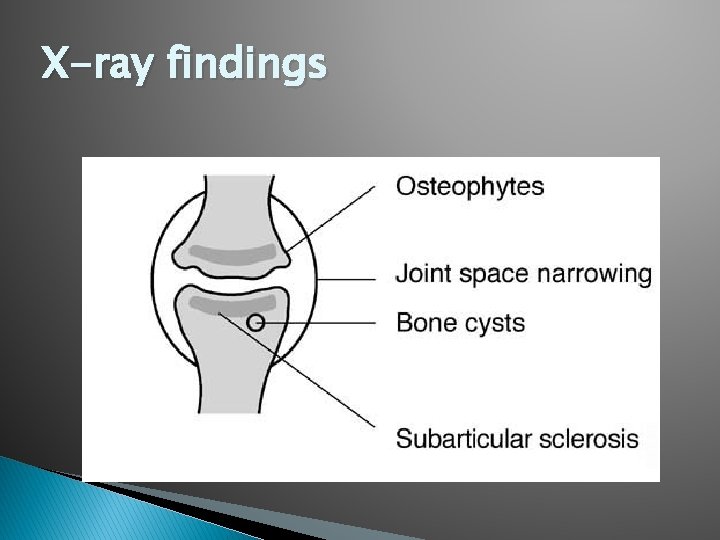
X-ray findings

Management?
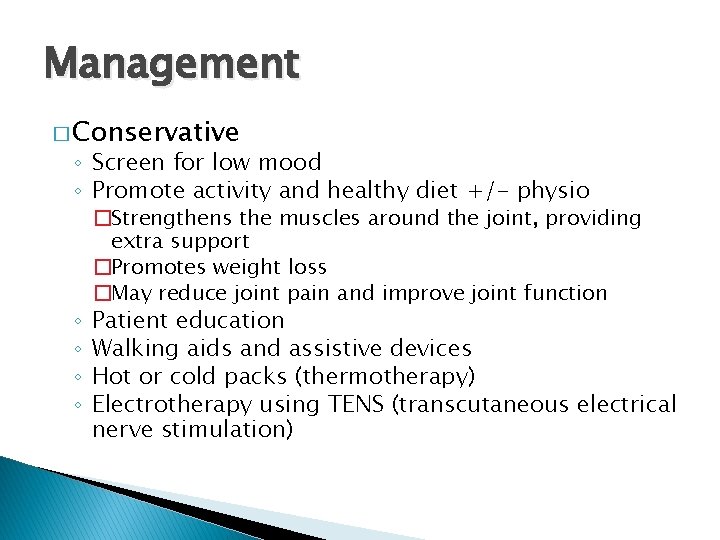
Management � Conservative ◦ Screen for low mood ◦ Promote activity and healthy diet +/- physio ◦ ◦ �Strengthens the muscles around the joint, providing extra support �Promotes weight loss �May reduce joint pain and improve joint function Patient education Walking aids and assistive devices Hot or cold packs (thermotherapy) Electrotherapy using TENS (transcutaneous electrical nerve stimulation)
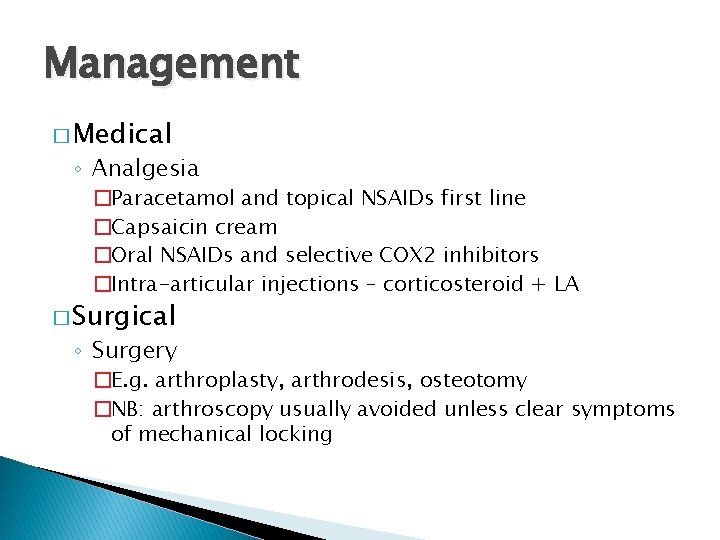
Management � Medical ◦ Analgesia �Paracetamol and topical NSAIDs first line �Capsaicin cream �Oral NSAIDs and selective COX 2 inhibitors �Intra-articular injections – corticosteroid + LA � Surgical ◦ Surgery �E. g. arthroplasty, arthrodesis, osteotomy �NB: arthroscopy usually avoided unless clear symptoms of mechanical locking
Complications � Reduced ◦ ◦ mobility and chronic pain Loss of independence Effects on employment, social life, hobbies etc. Risk of low mood May affect quality of sleep
Key points � Holistic approach to the patient ◦ Biopsychosocial � In finals you are expected to act like a safe F 1, you do not have to know all of the answers! � Use the ABCDE approach with all acutely unwell patients � Have a system and practice using it

References � http: //www. patient. co. uk/doctor/osteoarthrit is-pro � http: //www. nhs. uk/conditions/Osteoarthritis /Pages/Introduction. aspx � http: //www. nice. org. uk/guidance/CG 177 � http: //pathways. nice. org. uk/pathways/osteo arthritis � Oxford Handbook of Clinical Medicine
- Slides: 30