
Ossification Osteogenesis Ossification Osteogenesis Parts of the fetal
- Slides: 13
Ossification = Osteogenesis
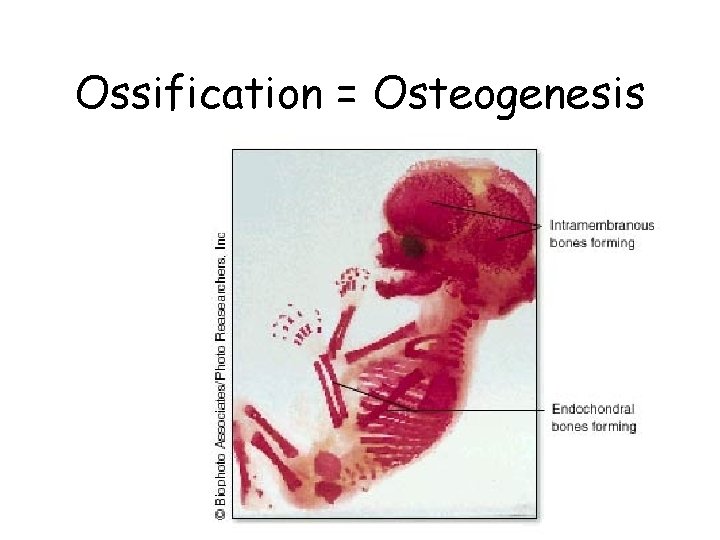
Ossification = Osteogenesis • Parts of the fetal skeleton form during the first few weeks after conception • By the end of the 8 th week, the skeletal pattern is formed : cartilage & connective tissue membranes
There are two classifications of ossification: Intramembranous: Endochondral: *Replacement of sheetlike connective hyaline cartilage tissue with bony tissue *Primarily in flat bones of skull & some irregular bones *Most bones are formed this way
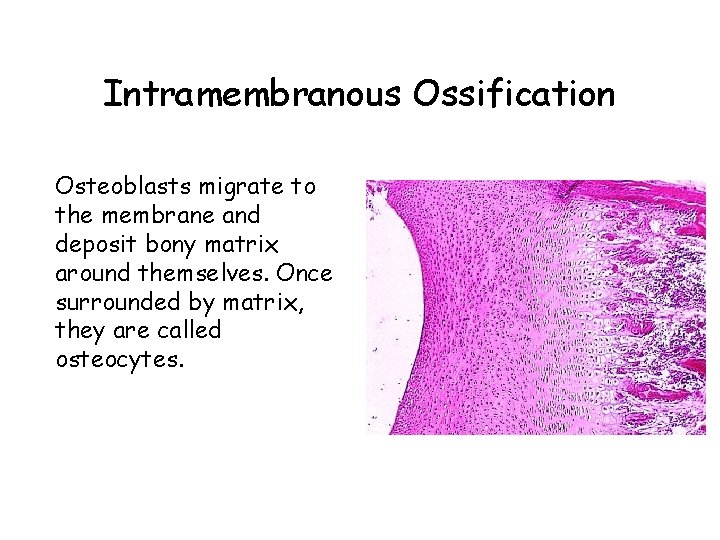
Intramembranous Ossification Osteoblasts migrate to the membrane and deposit bony matrix around themselves. Once surrounded by matrix, they are called osteocytes.
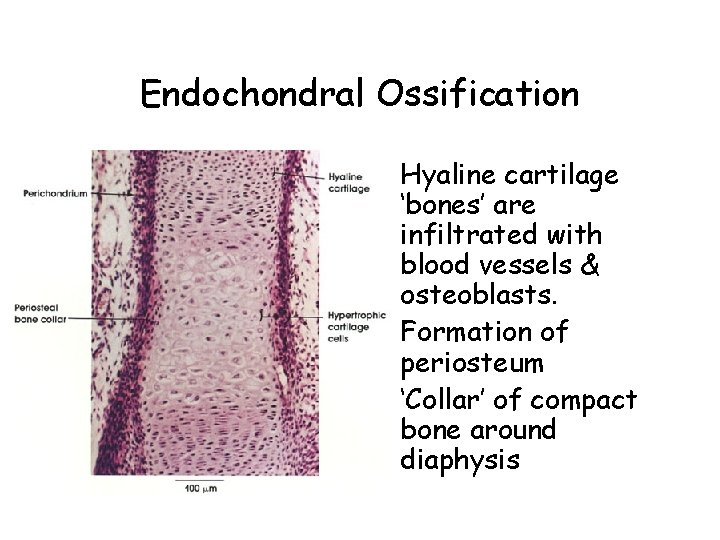
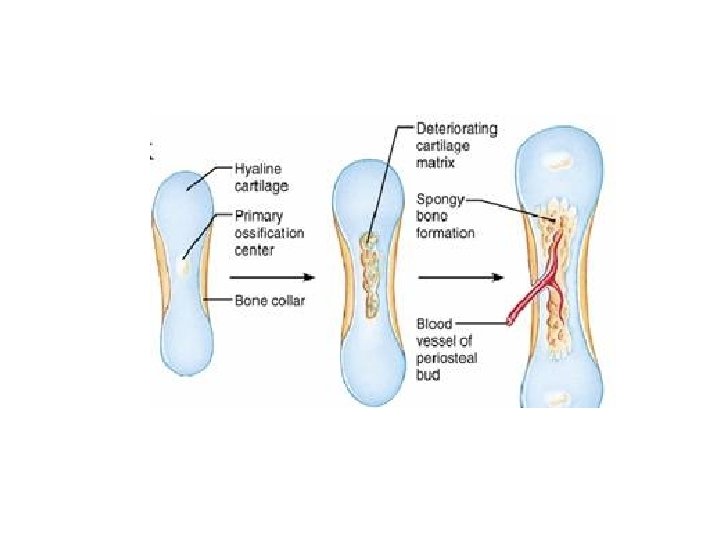
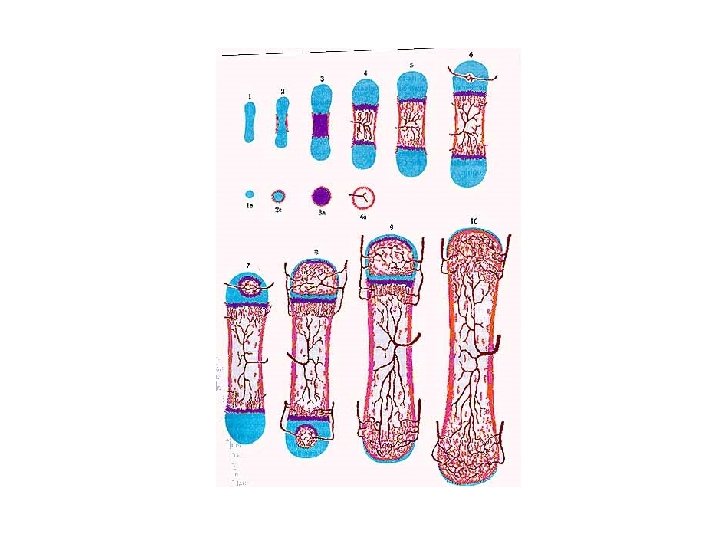
Endochondral Ossification • Hyaline cartilage ‘bones’ are infiltrated with blood vessels & osteoblasts. • Formation of periosteum • ‘Collar’ of compact bone around diaphysis
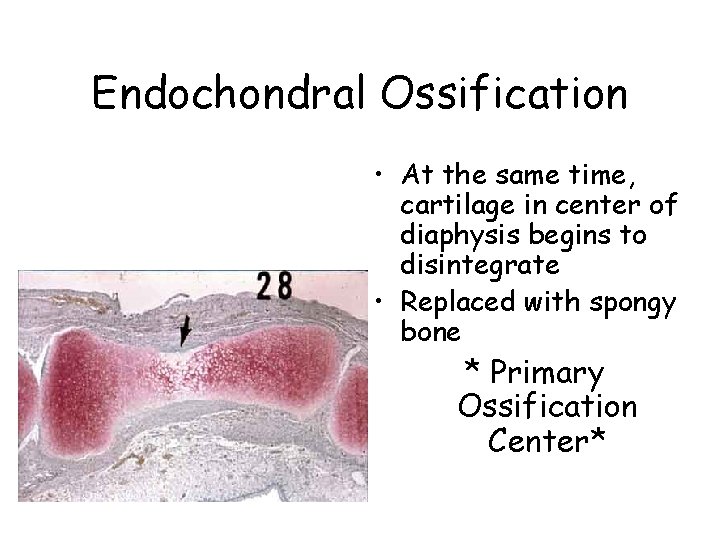
Endochondral Ossification • At the same time, cartilage in center of diaphysis begins to disintegrate • Replaced with spongy bone * Primary Ossification Center*
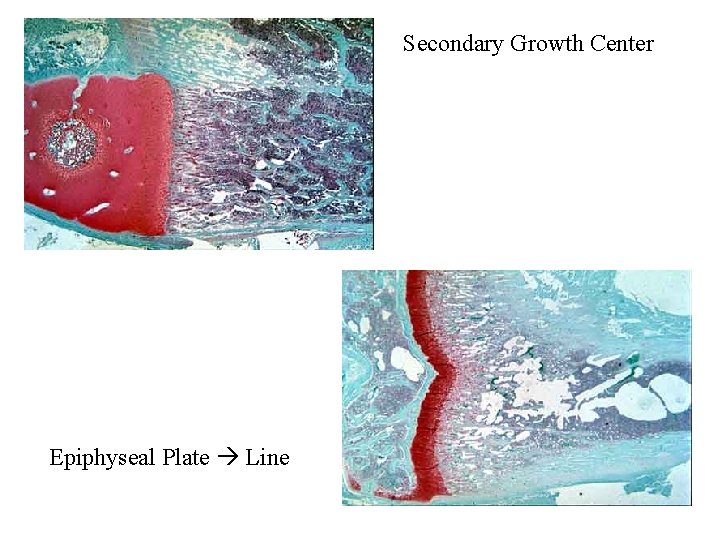
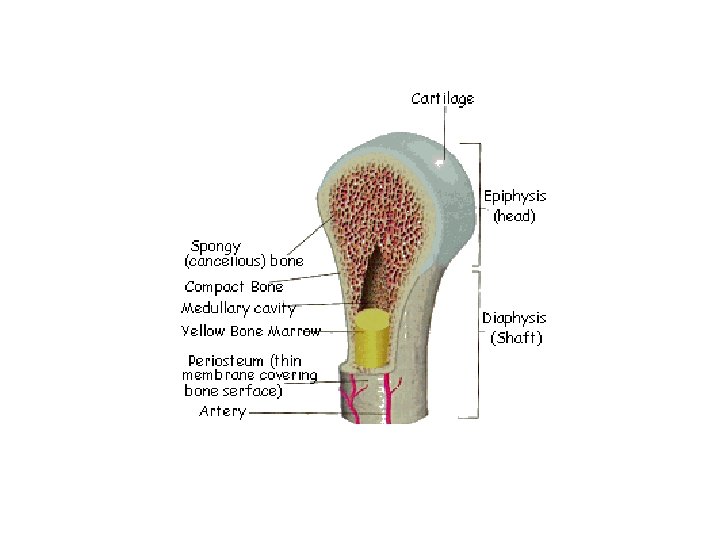
Ossification continues from the primary ossification center towards the ends of the bones. After spongy bone is formed in diaphysis, osteoclasts break it down to open up medullary cavity The cartilage in the epiphysis continues to grow, so developing bone increases in length After birth, secondary ossification centers form in epiphyses – ossification is similar, except spongy bone is not broken down. Once ossification is complete – the cartilage is all replaced except at the surface of the epiphysis [articular cartilage] and between the diaphysis and epiphysis [epiphyseal plate]
Secondary Growth Center Epiphyseal Plate Line
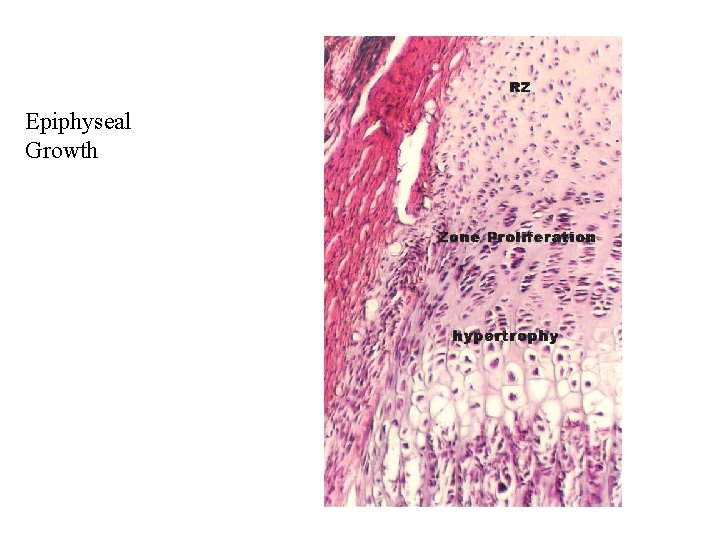
Epiphyseal Growth
Appositional Growth Although bone length growth stops in the ’ 20 s, bones can continue to increase in thickness or diameter throughout life in response to stress from increased muscle activity or weight. Osteoblasts in the periosteum form compact bone around the external bone surface Osteoclasts in the endosteum break down bone around the medullary cavity