
Osseous Tissue Bone Tissue 1 Cells Osteocytes mature
Osseous Tissue (Bone Tissue)
1. Cells • • • Osteocytes— mature bone cells Osteoblasts— bone-forming cells (germ cells or “bud” cells) Osteoclasts —bone-destroying cells (“breakers”) 2. Matrix A. primarily collagen fibers flexibility tensile strength (the strength to endure stretching forces) B. calcium salts (hardness) contain calcium and phosphorus great compressional strength (the strength to endure squeezing forces)
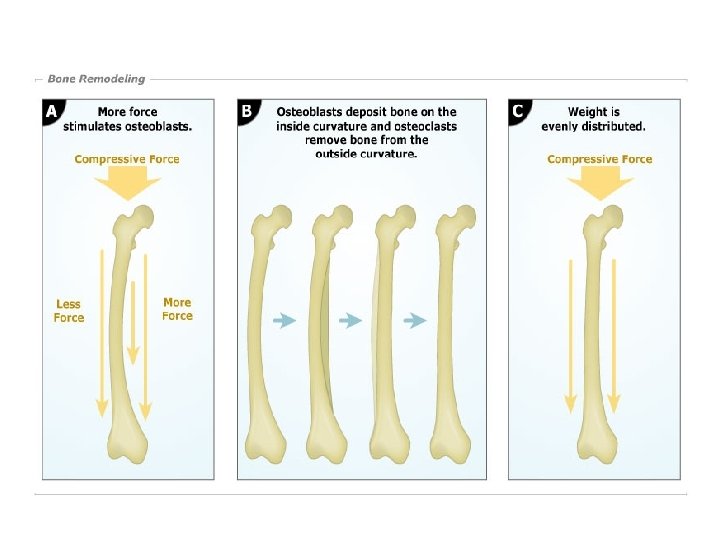
Bone Remodeling • constant balance of bone deposit and removal that occurs throughout your life • bone deposit occurs at a greater rate when bone is injured • bone reabsorption allows calcium of degraded bone matrix to move into the blood. About 10% of bone is replaced every year in an adult skeleton
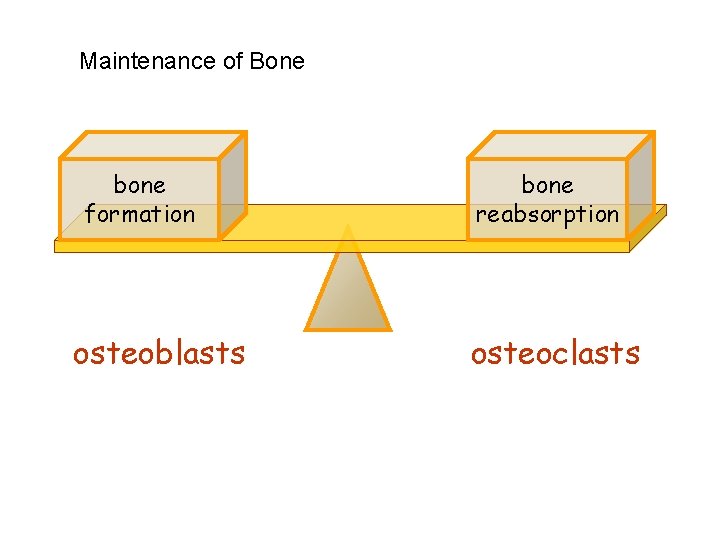
Maintenance of Bone bone formation osteoblasts bone reabsorption osteoclasts
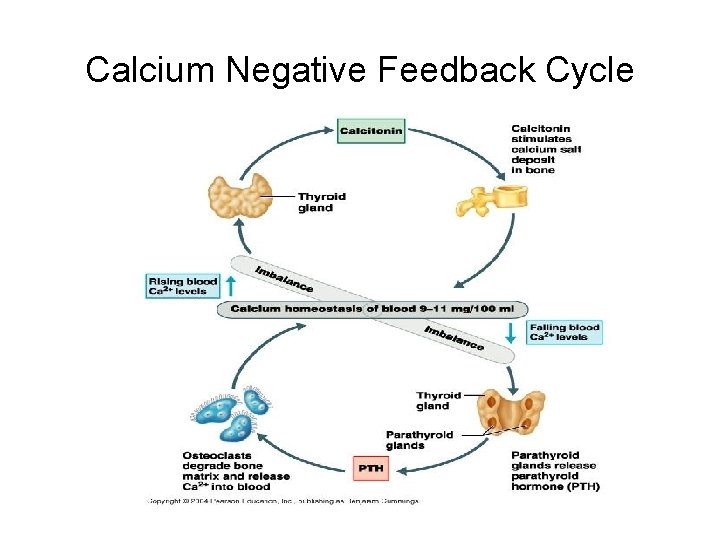
Calcium Negative Feedback Cycle
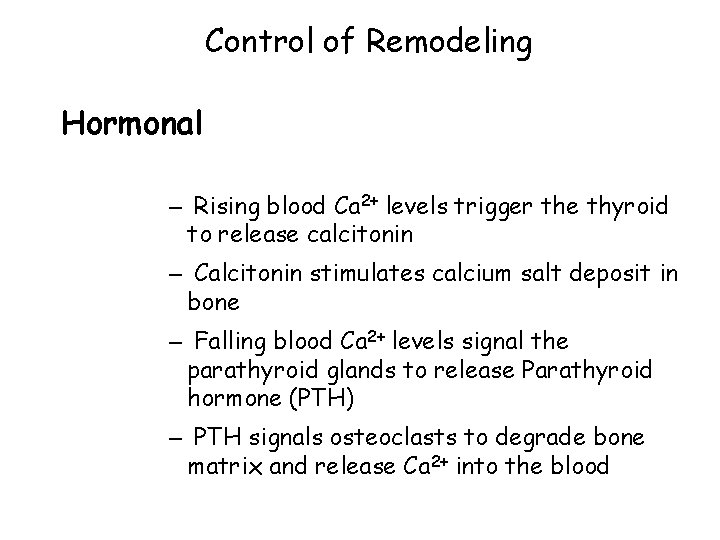
Control of Remodeling Hormonal – Rising blood Ca 2+ levels trigger the thyroid to release calcitonin – Calcitonin stimulates calcium salt deposit in bone – Falling blood Ca 2+ levels signal the parathyroid glands to release Parathyroid hormone (PTH) – PTH signals osteoclasts to degrade bone matrix and release Ca 2+ into the blood
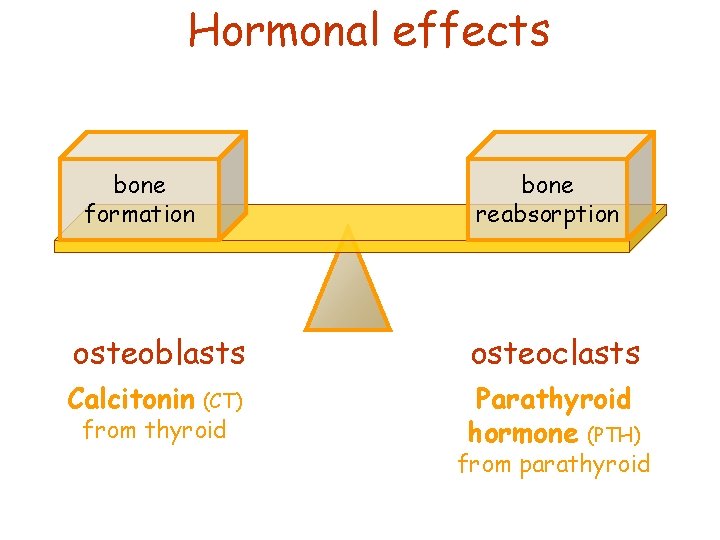
Hormonal effects bone formation bone reabsorption osteoblasts osteoclasts Calcitonin Parathyroid hormone (PTH) (CT) from thyroid from parathyroid
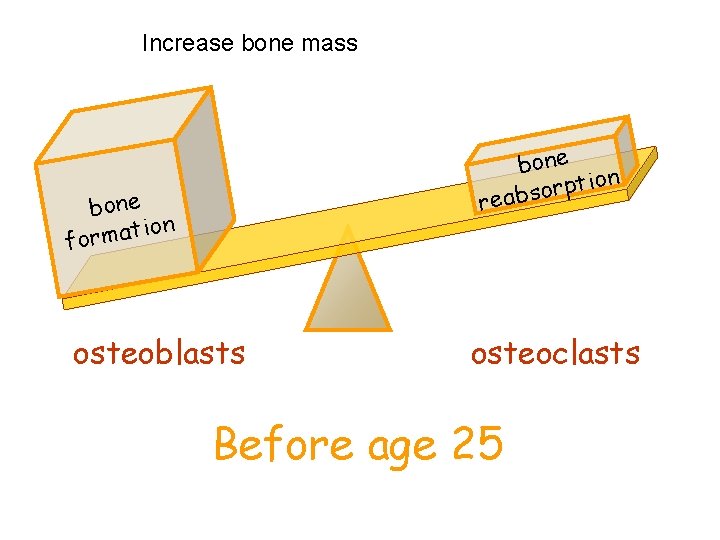
Increase bone mass bone on i t p r o reabs bone ion t a m r o f osteoblasts osteoclasts Before age 25
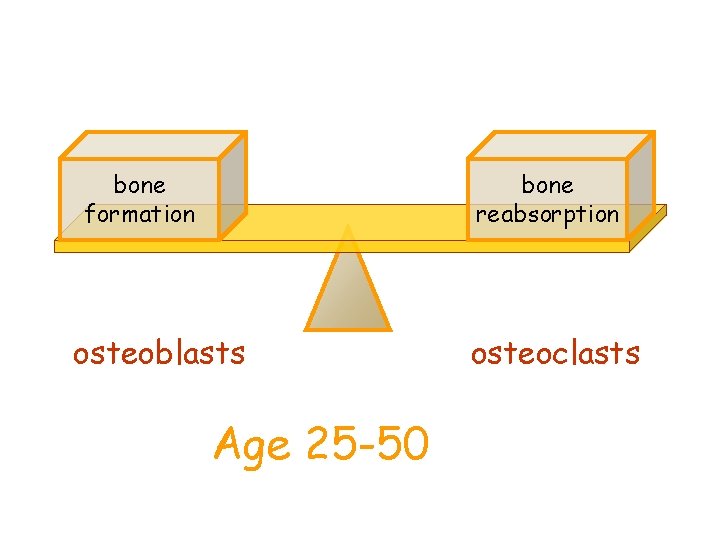
bone formation bone reabsorption osteoblasts Age 25 -50 osteoclasts
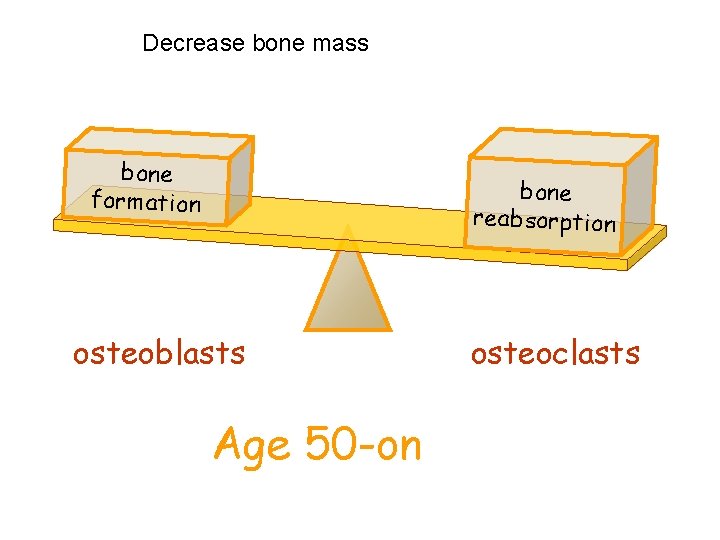
Decrease bone mass bone formation bone reabsorption osteoblasts Age 50 -on osteoclasts
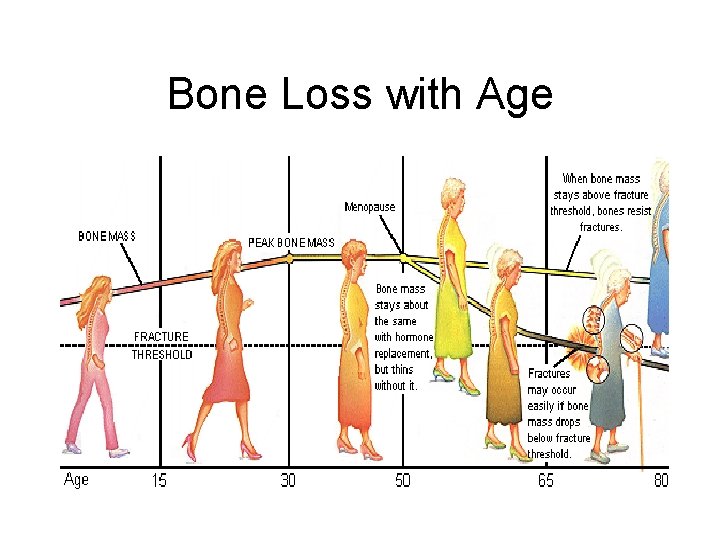
Bone Loss with Age
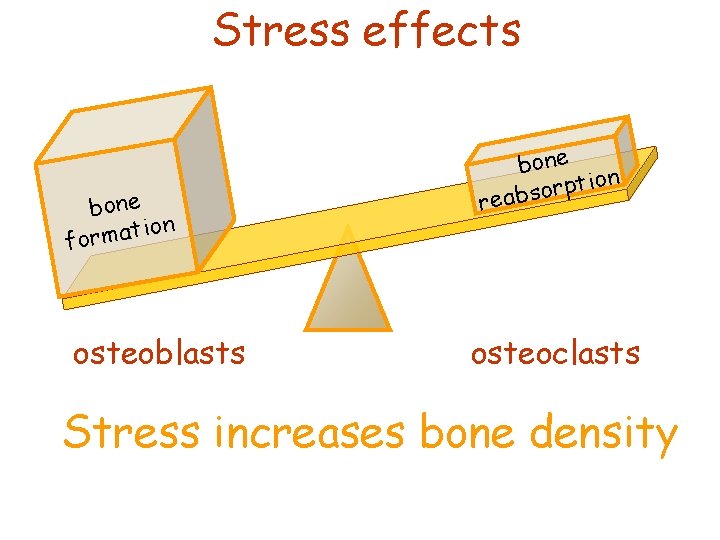
Stress effects bone ion t a m r o f osteoblasts bone on i t p r o reabs osteoclasts Stress increases bone density

http: //www. youtube. com/watch? v=y. FJ 4 isw. Riu 4&feature=related
- Slides: 14