
Osseous Tissue and the Skeletal System Anatomy FUNCTIONS
- Slides: 51
Osseous Tissue and the Skeletal System Anatomy
FUNCTIONS OF BONES l 1. Support Framework l Cradles organs l Pillars l
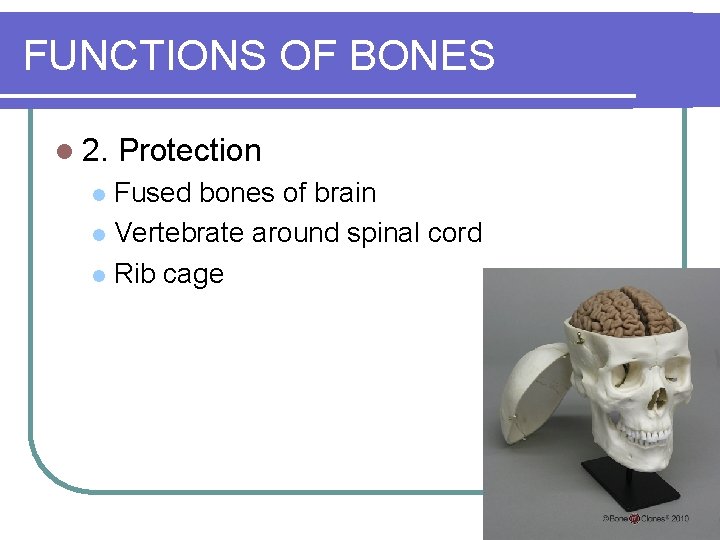
FUNCTIONS OF BONES l 2. Protection Fused bones of brain l Vertebrate around spinal cord l Rib cage l
FUNCTIONS OF BONES l 3. Movement Skeletal muscles use bones as levers l Arrangement of bones determines movement l
FUNCTIONS OF BONES l 4. Mineral storage Calcium and phosphate l Minerals released into blood stream by bone l
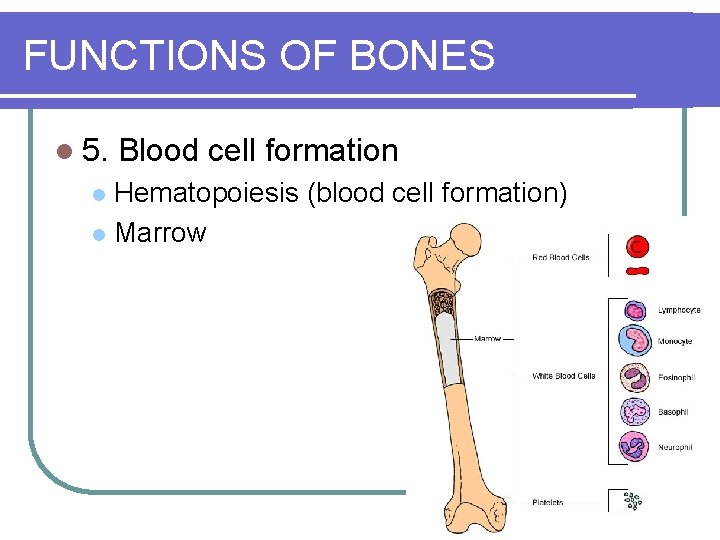
FUNCTIONS OF BONES l 5. Blood cell formation Hematopoiesis (blood cell formation) l Marrow l
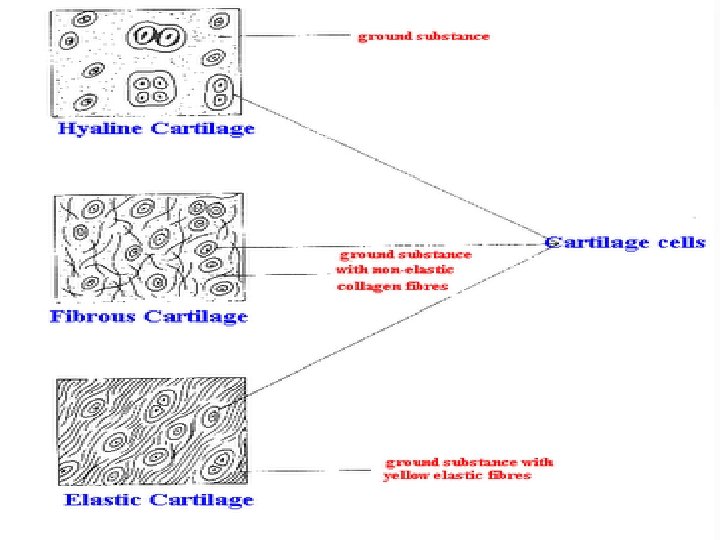
SKELETAL CARTILAGE l Made of various cartilage tissue (water) l Contains Hyaline l Elastic l Fibrocartilage l
GROWTH OF CARITLAGE l Grows in 2 ways Appositional (growth from outside) l Interstitial (growth from inside) l
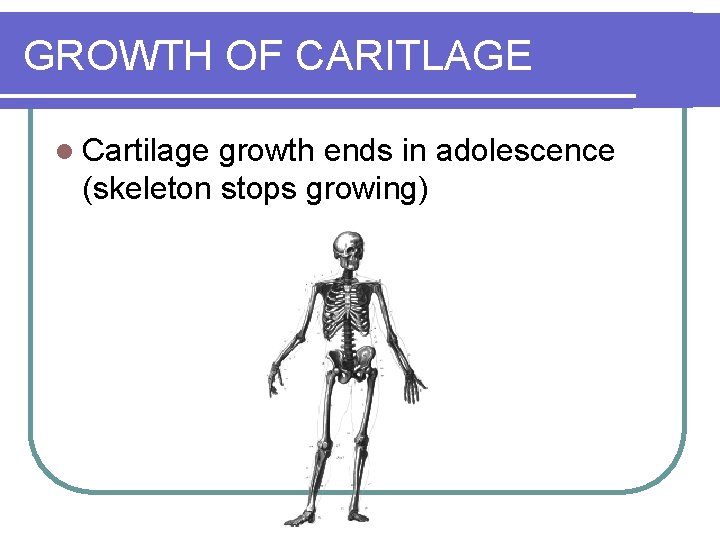
GROWTH OF CARITLAGE l Cartilage growth ends in adolescence (skeleton stops growing)
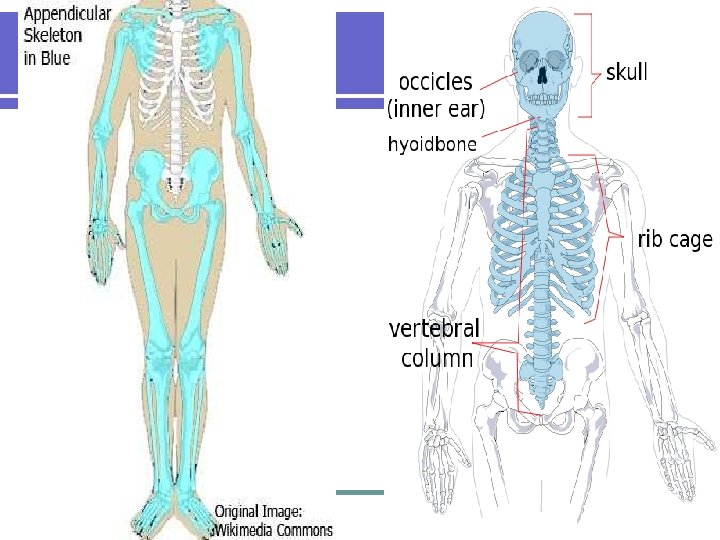
CLASSIFICATION OF BONES l 206 bones l Axial skeleton (skull, vertebrate, rib cage) l Protect, support, carrying other bones l Appendicular (upper and lower limbs and girdle) l Movement, manipulate environment
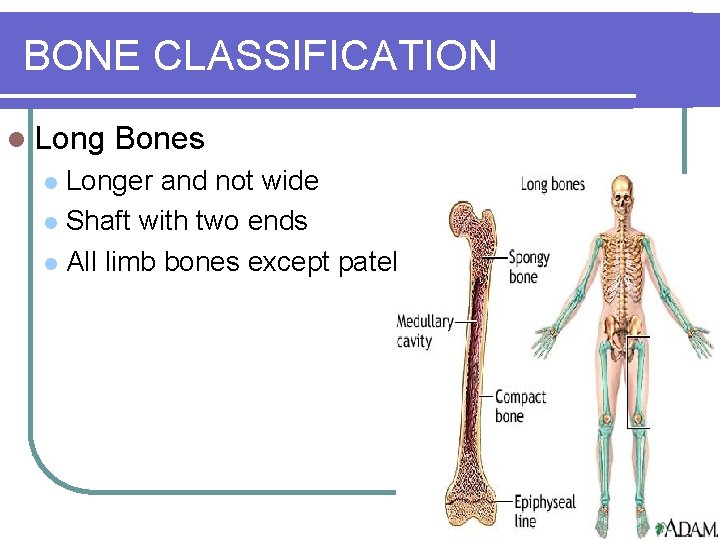
BONE CLASSIFICATION l Long Bones Longer and not wide l Shaft with two ends l All limb bones except patella l
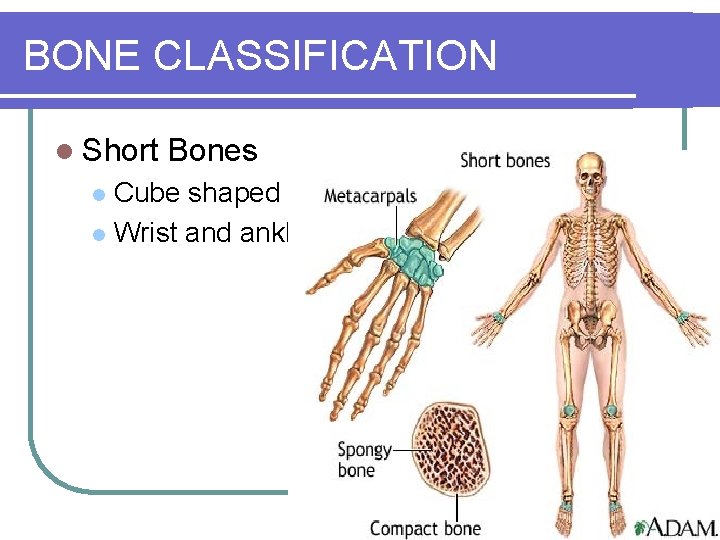
BONE CLASSIFICATION l Short Bones Cube shaped l Wrist and ankle l
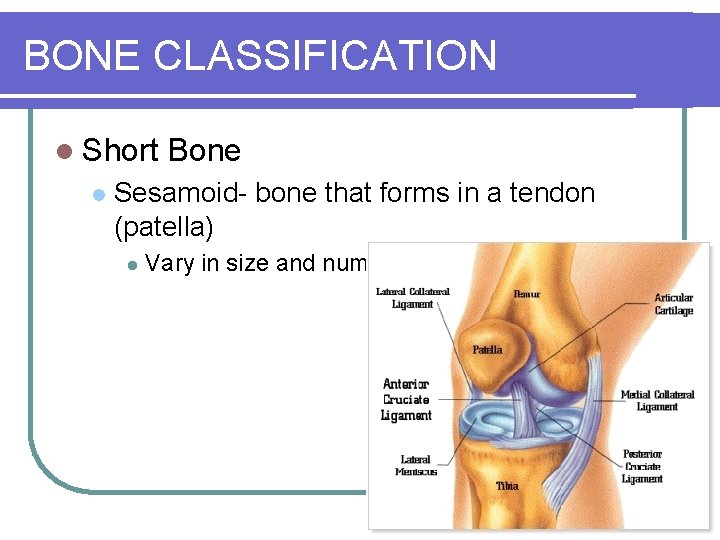
BONE CLASSIFICATION l Short l Bone Sesamoid- bone that forms in a tendon (patella) l Vary in size and number
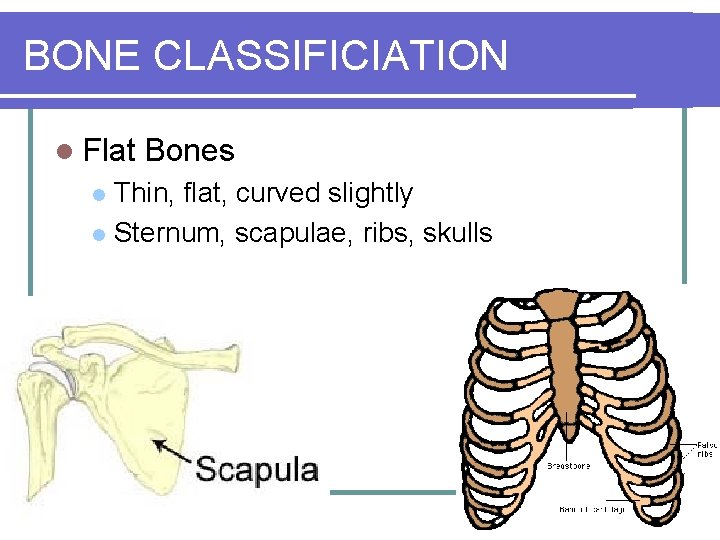
BONE CLASSIFICIATION l Flat Bones Thin, flat, curved slightly l Sternum, scapulae, ribs, skulls l
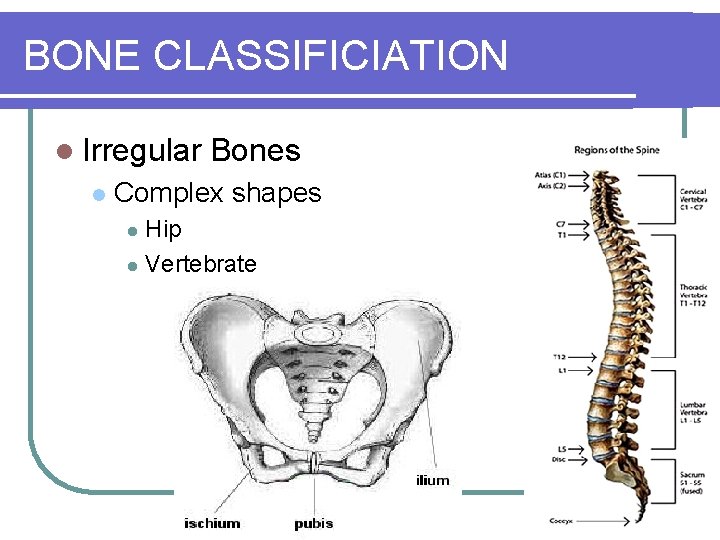
BONE CLASSIFICIATION l Irregular l Bones Complex shapes Hip l Vertebrate l
Chemical Composition of Bone l Inorganic and Organic substances l Organic Osteoid makes up 1/3 matrix (strength/flexibility) l Inorganic mineral salts, calcium phosphate, calcium salts
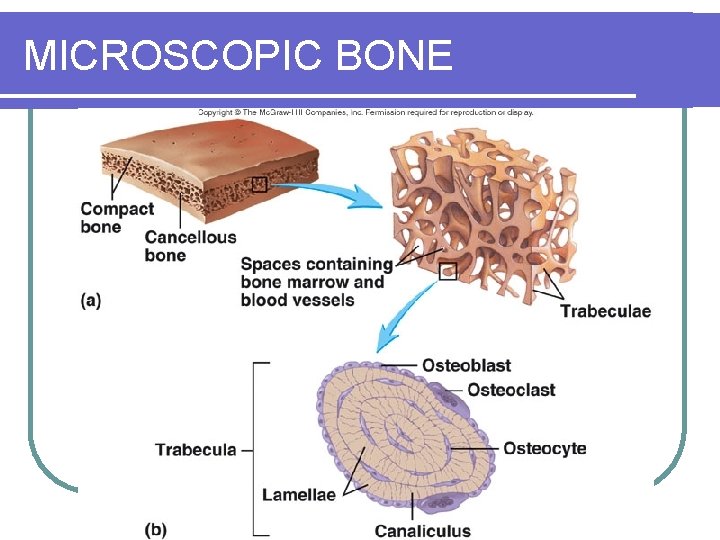
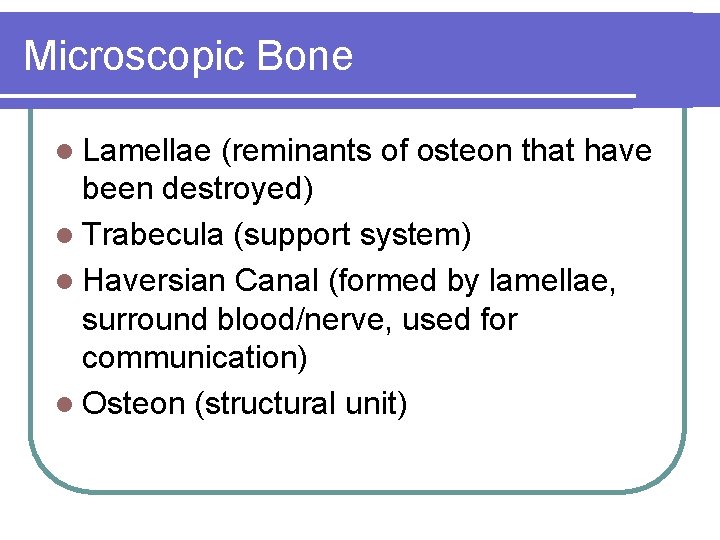
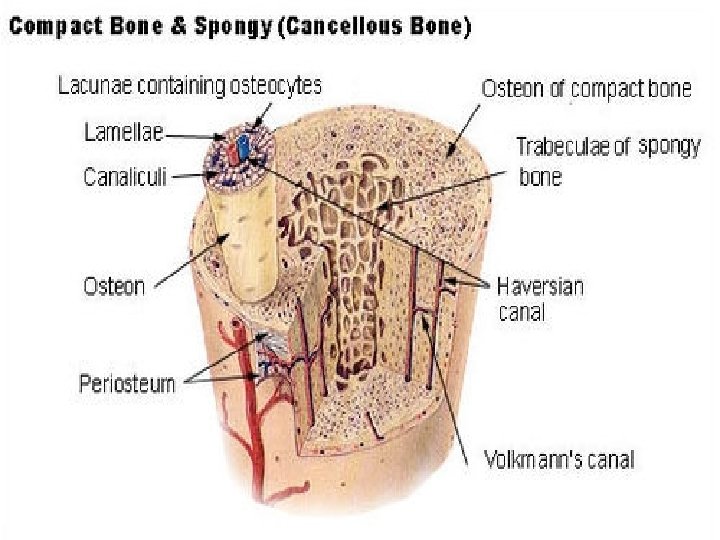
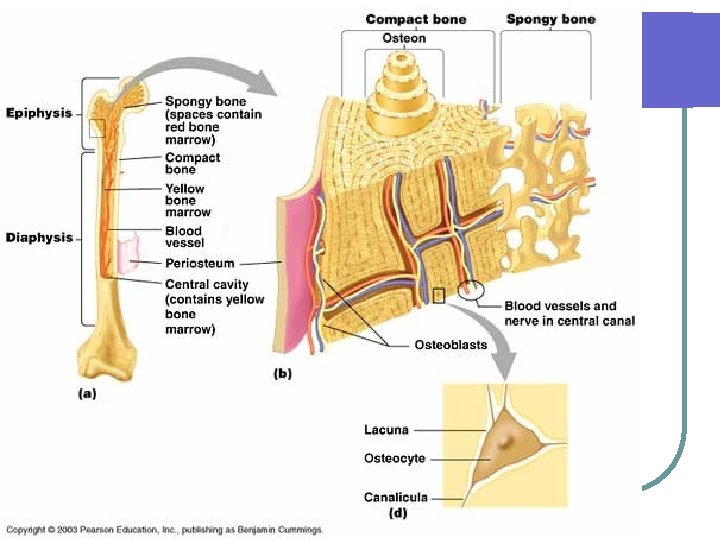
Microscopic Bone l Osteoblast (a cell in which bone develops from) l Osteoclast (a cell that breaks down bone for minerals) l Osteocyte (star shaped, most abundant, develop bone, transports nutrients) l Canaliculus (channel in bone)
MICROSCOPIC BONE
Microscopic Bone l Lamellae (reminants of osteon that have been destroyed) l Trabecula (support system) l Haversian Canal (formed by lamellae, surround blood/nerve, used for communication) l Osteon (structural unit)
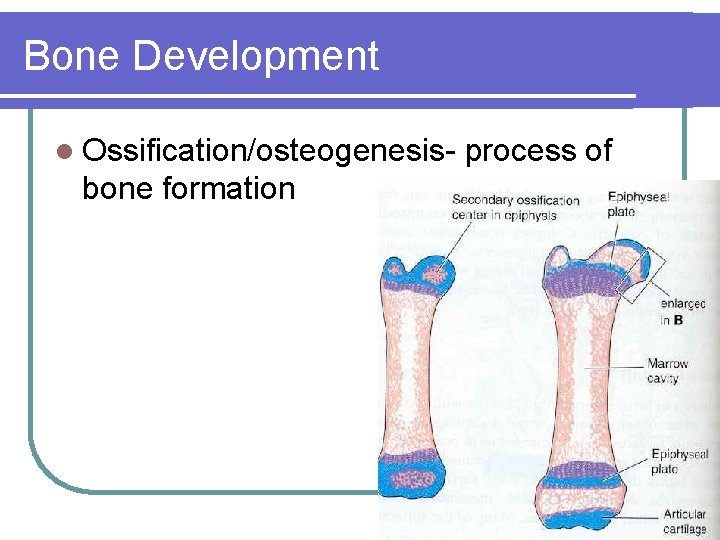
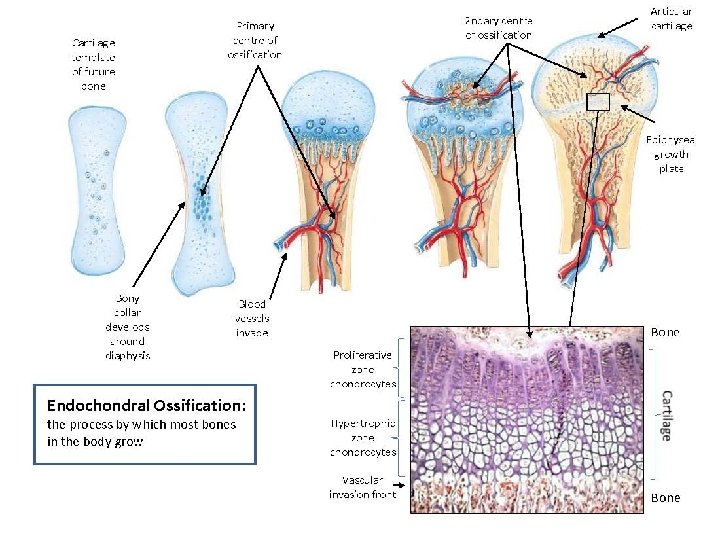
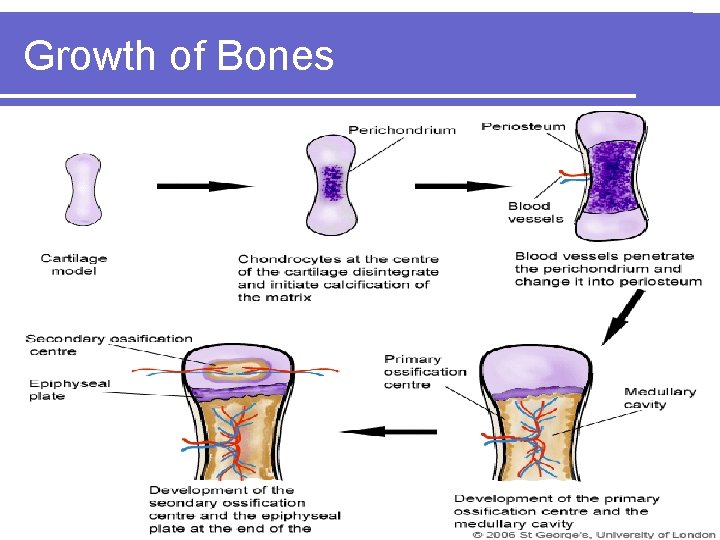
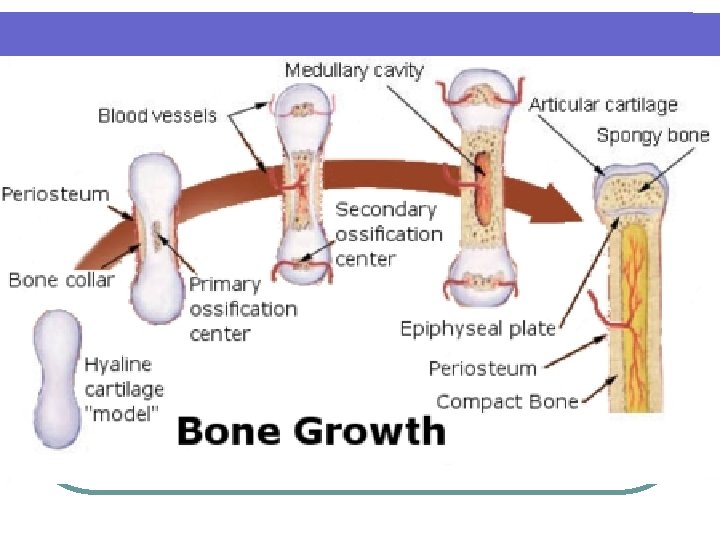
Bone Development l Ossification/osteogenesis- bone formation process of
Growth of Bones
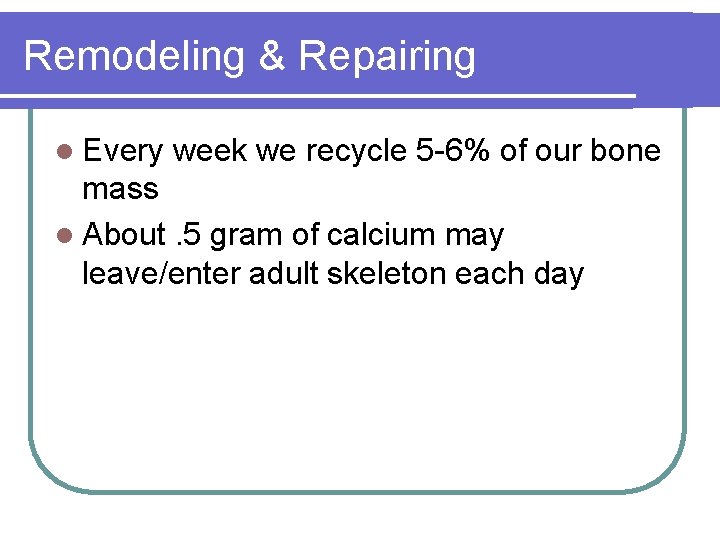
Remodeling & Repairing l Every week we recycle 5 -6% of our bone mass l About. 5 gram of calcium may leave/enter adult skeleton each day
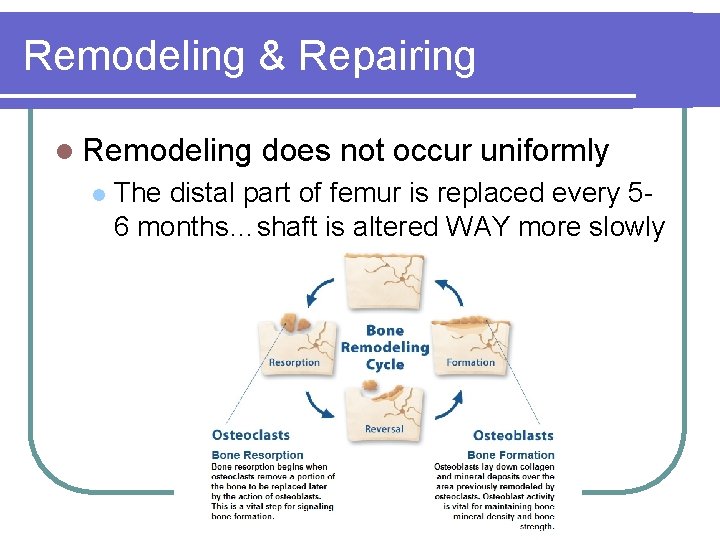
Remodeling & Repairing l Remodeling l does not occur uniformly The distal part of femur is replaced every 56 months…shaft is altered WAY more slowly
Remodeling & Repairing l Bone Deposit Occurs wherever bone is injured l Need a healthy diet of proteins, vitamin C, D, A and minerals l
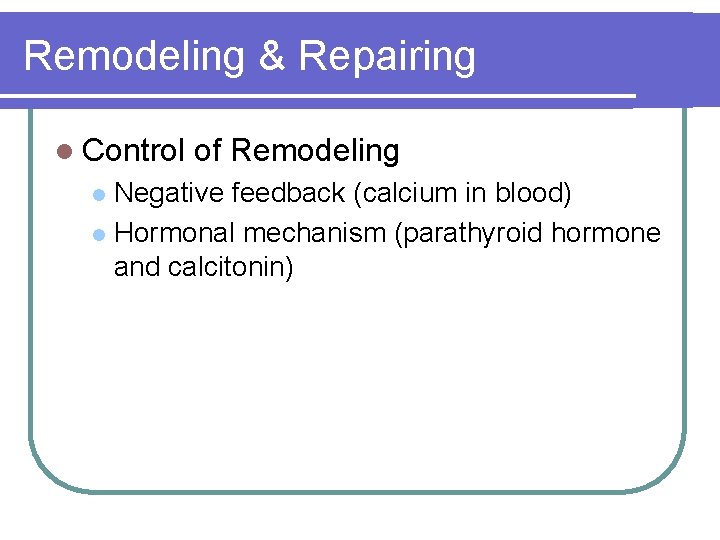
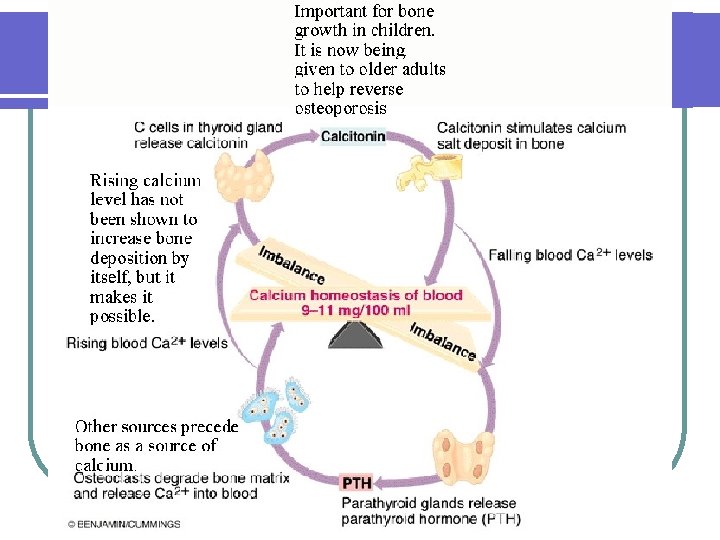
Remodeling & Repairing l Control of Remodeling Negative feedback (calcium in blood) l Hormonal mechanism (parathyroid hormone and calcitonin) l
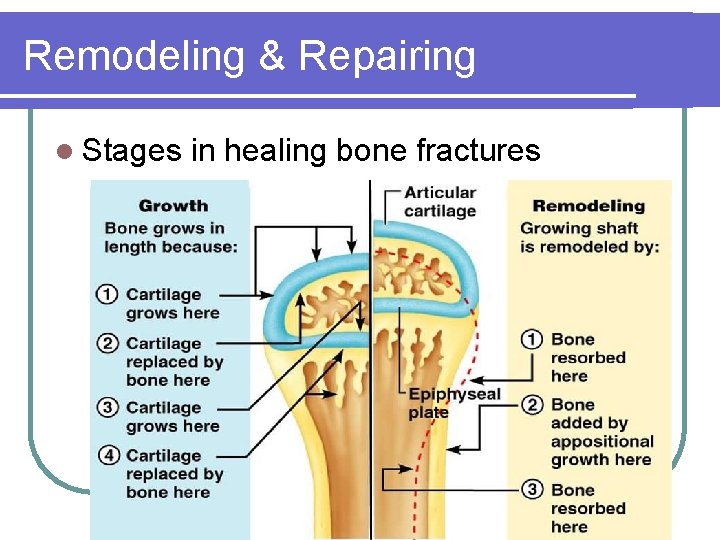
Remodeling & Repairing l Stages in healing bone fractures
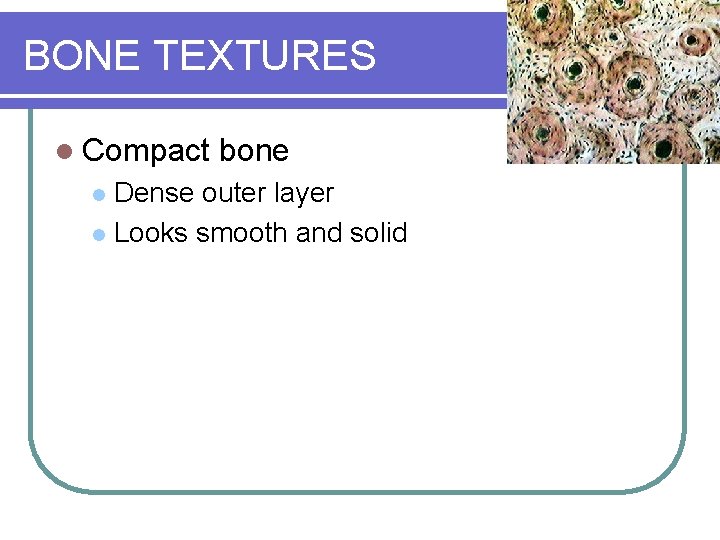
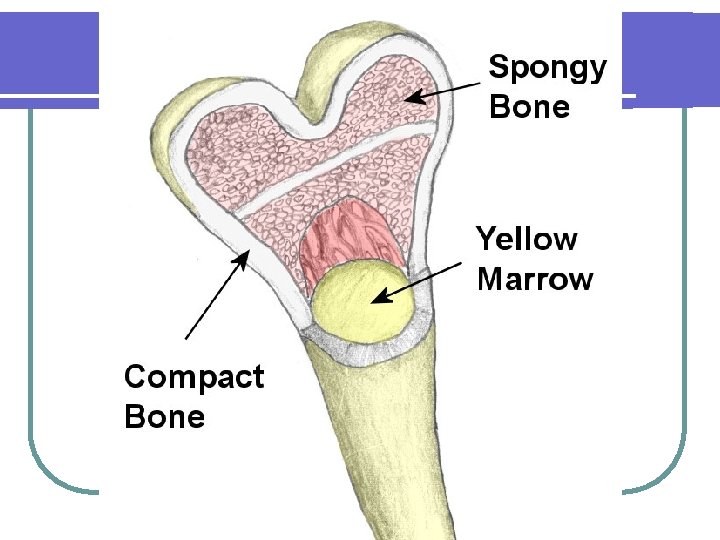
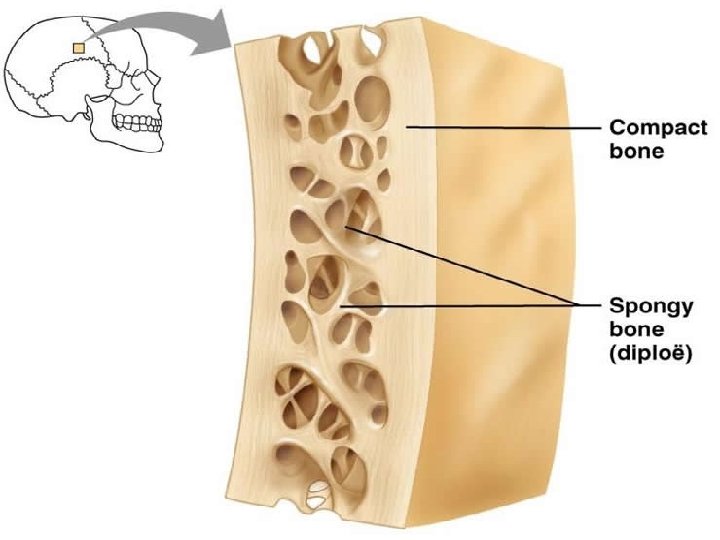
BONE TEXTURES l Compact bone Dense outer layer l Looks smooth and solid l
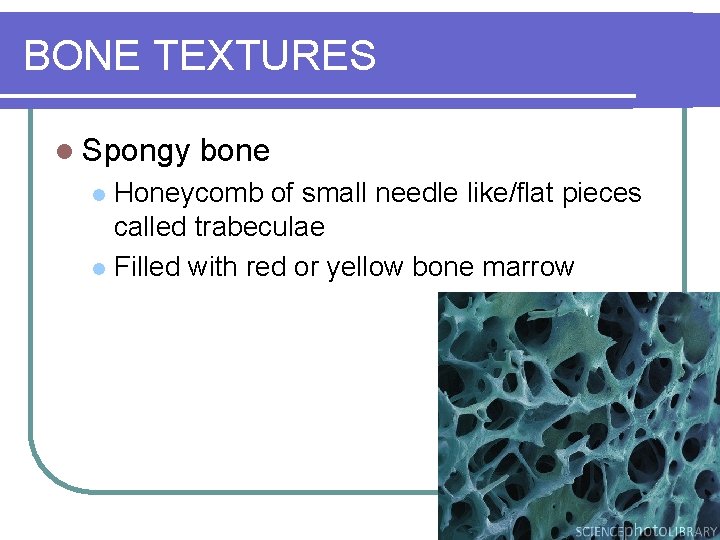
BONE TEXTURES l Spongy bone Honeycomb of small needle like/flat pieces called trabeculae l Filled with red or yellow bone marrow l
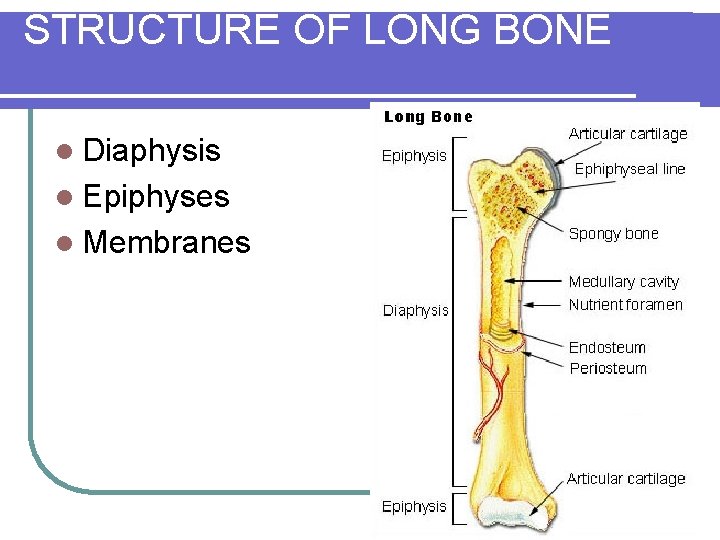
STRUCTURE OF LONG BONE l Diaphysis l Epiphyses l Membranes
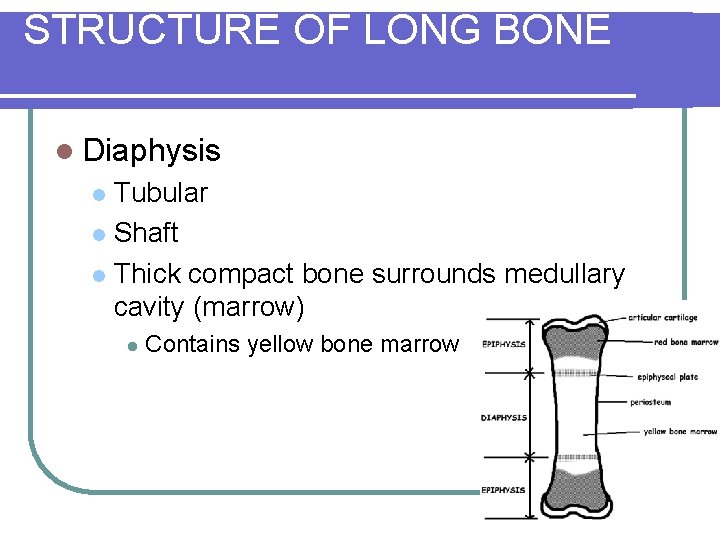
STRUCTURE OF LONG BONE l Diaphysis Tubular l Shaft l Thick compact bone surrounds medullary cavity (marrow) l l Contains yellow bone marrow
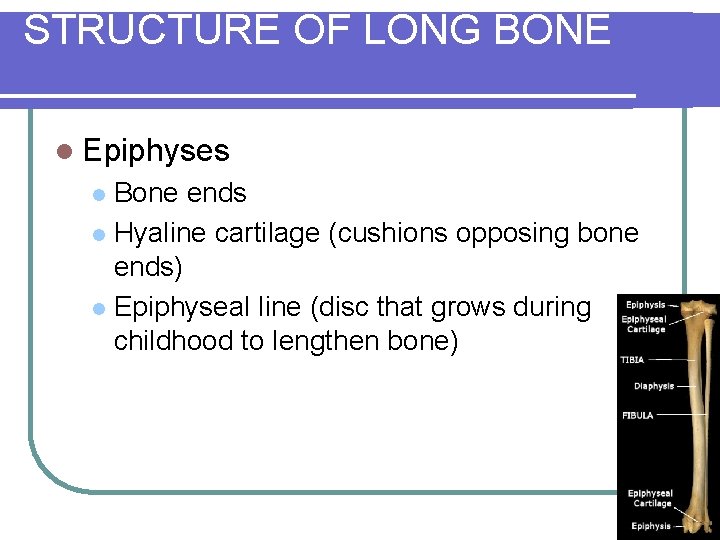
STRUCTURE OF LONG BONE l Epiphyses Bone ends l Hyaline cartilage (cushions opposing bone ends) l Epiphyseal line (disc that grows during childhood to lengthen bone) l
STRUCTURE OF LONG BONE l Membranes External surface covered by periosteum (double layer, glistening, white membrane) l Contains bone forming cells (osteoblasts) l Contains bone destroying cells (osteoclasts) l
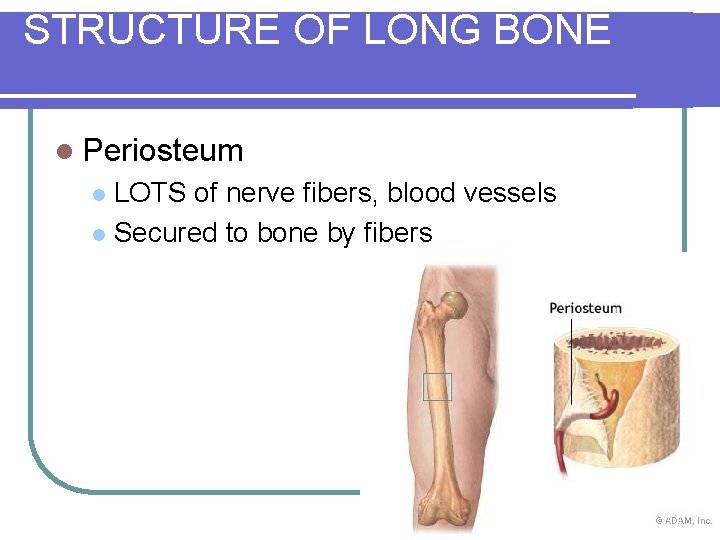
STRUCTURE OF LONG BONE l Periosteum LOTS of nerve fibers, blood vessels l Secured to bone by fibers l
STRUCTURE OF SHORT, IRREGULAR, FLAT BONES l Simple l Periosteum l Compact l Marrow and spongy bone
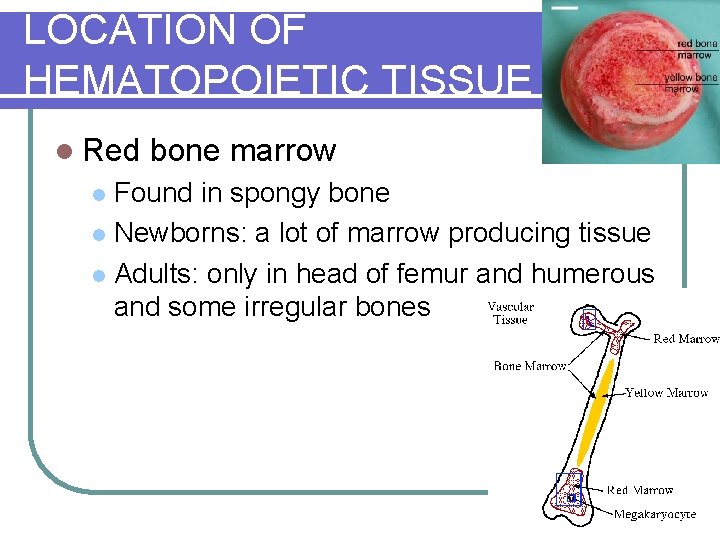
LOCATION OF HEMATOPOIETIC TISSUE l Red bone marrow Found in spongy bone l Newborns: a lot of marrow producing tissue l Adults: only in head of femur and humerous and some irregular bones l
Location of Yellow Marrow l Stores fat in case of extreme starvation l Can turn into red bone marrow l Emergencies and anemia l Located inside bone
Location of Articular Cartilage l Covers the ends of bones and joints
Osteomalacia l Adults bones soften l Weak muscles l Bone pain l Lack vitamin D l Environmental and genetic
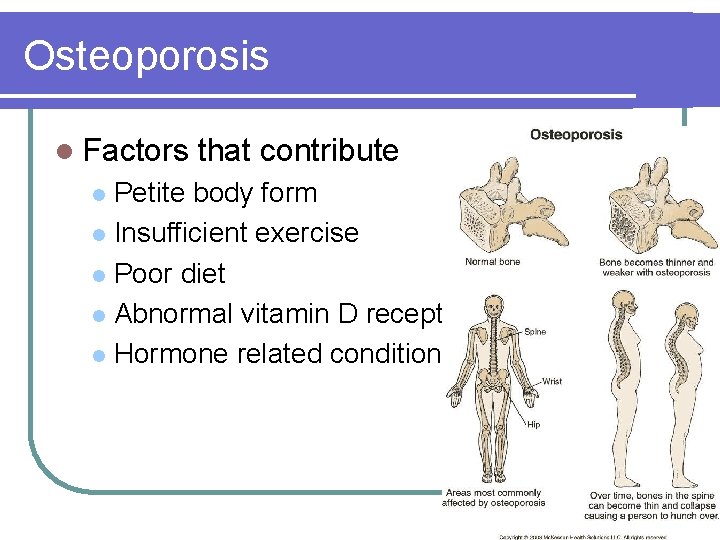
Osteoporosis l Bone reabsorption outpaces bone deposit l Bones become so fragile that a sneeze or stepping off a curb can cause a break l Most often in senior citizens and postmenipausal women l Sex hormone production can also promote disorder
Osteoporosis l Factors that contribute Petite body form l Insufficient exercise l Poor diet l Abnormal vitamin D receptors l Hormone related conditions l
Osteoporosis l Treatments Calcium and vitamin D supplements l Weight bearing exercises l Hormone replacement therapy l Can be prevented/delayed drink your MILK, drink FLUORIDATED water, exercise!
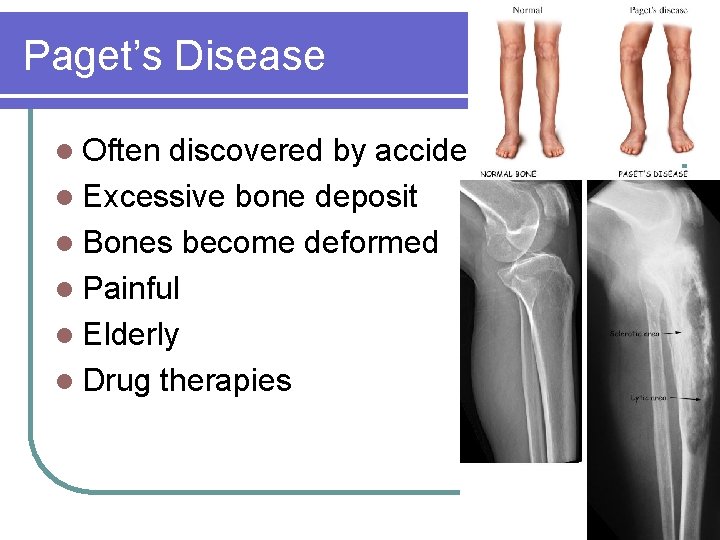
Paget’s Disease l Often discovered by accident l Excessive bone deposit l Bones become deformed l Painful l Elderly l Drug therapies