
OSPAR Assessment needs for incidental bycatch OSPARHELCOM workshop

OSPAR Assessment needs for incidental by-catch OSPAR-HELCOM workshop to examine possibilities for developing indicators for incidental bycatch of birds and marine mammals Copenhagen, 3 -5 September Lena Avellan, OSPAR Deputy Secretary

Why is OSPAR arranging this workshop? Incidental by-catch identified as key threat to threatened and/or declining species and species covered by common indicators OSPAR applies – Ecosystem Based Management of Human Activities – Precautionary Principle Common indicators to assess the by-catch pressure currenty insufficient Recognition of ongoing work in several forums and the need for clarity on the most relevant work to be undertaken within OSPAR competency Good experiences in the past of joint workshops/meetings Ø Thorough discussions needed to inform future action
OSPAR Convention Annex V, Article 4 § 1. In accordance with the penultimate recital of the Convention, no programme or measure concerning a question relating to the management of fisheries shall be adopted under this Annex. However where the Commission considers that action is desirable in relation to such a question, it shall draw that question to the attention of the authority or international body competent for that question. Where action within the competence of the Commission is desirable to complement or support action by those authorities or bodies, the Commission shall endeavour to cooperate with them.
OSPAR Convention OSPAR Agreement on the Meaning of certain concepts in Annex V to the 1992 OSPAR Convention on the Protection and Conservation of the Ecosystems and Biological Diversity of the Maritime Area (Reference number: 1998 -15. 2) OSPAR agreed that references in Annex V to the 1992 OSPAR Convention on the Protection and Conservation of the Ecosystems and Biological Diversity of the Maritime Area to “questions relating to the management of fisheries” are references to the questions on which action can be taken under such instruments as those constituting: a. the Common Fisheries Policy of the European Community; b. the corresponding legislation of Contracting Parties which are not Member States of the European Union; or c. the corresponding legislation in force in the Faroe Islands, Greenland, the Channel Islands and the Isle of Man. d. the North East Atlantic Fisheries Commission and the North Atlantic Salmon Commission whether or not such action has been taken. For the avoidance of doubt, in the context of the OSPAR Convention, the management of fisheries includes the management of marine mammals.
OSPAR North East Atlantic Environment Strategy (NEAES) Current work priorities defined in NEAES 2010 -2020 Ongoing work to develop NEAES 2020 -2030 Part I: strategic objectives Part II: operational objectives
OSPAR Convention Annex V, Article 4 § 1. In accordance with the penultimate recital of the Convention, no programme or measure concerning a question relating to the management of fisheries shall be adopted under this Annex. However where the Commission considers that action is desirable in relation to such a question, it shall draw athat t h g i question to the attention of the authority or international m at ? h e W k i l within the body competent for that question. Where action k o o l competence of the Commission is desirable to complement or support action by those authorities or bodies, the Commission shall endeavour to cooperate with them.
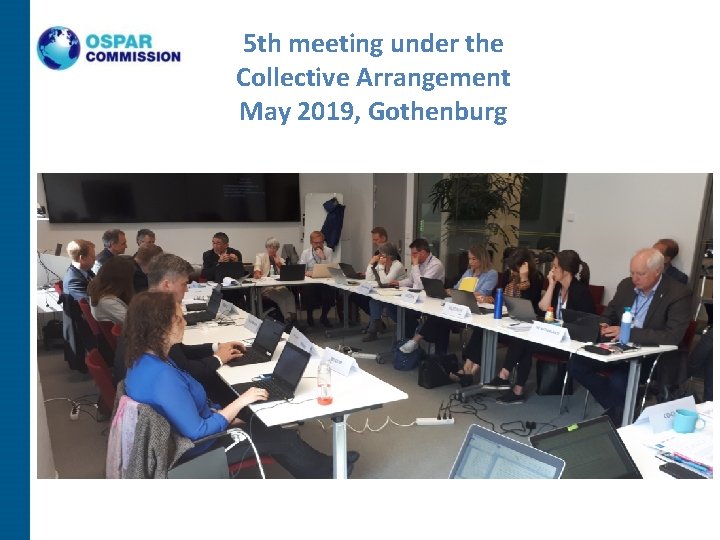
5 th meeting under the Collective Arrangement May 2019, Gothenburg
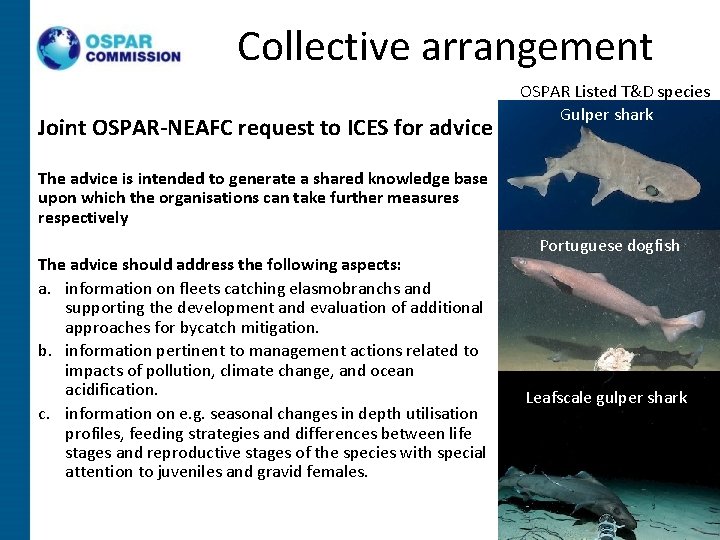
Collective arrangement Joint OSPAR-NEAFC request to ICES for advice OSPAR Listed T&D species Gulper shark The advice is intended to generate a shared knowledge base upon which the organisations can take further measures respectively The advice should address the following aspects: a. information on fleets catching elasmobranchs and supporting the development and evaluation of additional approaches for bycatch mitigation. b. information pertinent to management actions related to impacts of pollution, climate change, and ocean acidification. c. information on e. g. seasonal changes in depth utilisation profiles, feeding strategies and differences between life stages and reproductive stages of the species with special attention to juveniles and gravid females. Portuguese dogfish Leafscale gulper shark
OSPAR threatened and/or declining species Listed mammals and birds for which incidental by-catch has been identified as a threat Little shearwater (Puffinus assimilis baroli) [Audobon’s shearwater (Puffinus lherminieri] – – Severity: Low It generally does not follow ships and is probably therefore less at risk from fisheries by-catch Balearic shearwater (Puffinus mauretanicus) – – – Severity: Not stated makes extensive use of fisheries discards. This fact, in addition to a potential increase in response to the decline in traditional prey species, means that it may also be adversely affected by incoming fishing policies directed at reducing Accidental bycatch on longlines and in fishing nets as a result of its congregatory behaviour and close association with fishing vessels. It can result in occasional instances of ‘mass mortality’ if large rafts of birds are present. Black legged kittiwake (Rissa tridactyla) – – Severity; Not stated Bycatch mortality in fisheries especially off the north-western United Kingdom Iberian guillemot (Uria aalge) – – Severity; High Gillnet bycatch, particularly after the spread of synthetic fishing nets, is considered as the main factor causing the observed large-scale decline in Iberian guillemot populations. Thick-billed murre (Uria lomvia) – – Severity: Not stated Incidental capture in fishing nets. Previously, (in the early 1970 s), offshore and nearshore driftnet fisheries for Atlantic Salmon Salmo salar took huge numbers of U. lomvia off south-west Greenland, mainly in late autumn
OSPAR threatened and/or declining species Listed mammals and birds for which incidental by-catch has been identified as a threat Harbour porpoise (Phocoena phocoena) – – Severity; High Large numbers of animals are taken as by-catch by a variety of fisheries. Porpoises are taken incidentally in several different gear types (driftnets, pelagic trawls, etc. ), but mostly in bottom-set gillnets Bowhead whale (Balena mysticetus) – – Severity: Low Entanglement in fishing gears can cause mortality or serious injury. As far as the OSPAR area Svalbard-Barents Sea (Spitsbergen) subpopulation is concerned, incidental mortality or serious injury from entanglement in fishing gear has not been reported. Blue whale (Balenoptera musculus) – – Severity: Not stated Entanglement in fishing gear. Although few entanglements have been reported, the risk exists. Northern right whale (Eubalena glacialis) – – Severity; Not stated Entanglement in fishing gears can cause mortality or serious injury. Because some of these deaths probably pass undetected, reported rates are considered as minimum estimates
OSPAR threatened and/or declining species Priority action by OSPAR Contracting Parties • Roadmap for the implementation of collective actions within the Recommendations for the protection and conservation of OSPAR listed Species and Habitats • Status assessments Guidance on the Development of Status Assessments for the OSPAR List of Threatened and/or Declining Species and Habitats (Agreement 2019 -05) Ø Assessing the status of these listed species and taking action to protect them is an OSPAR priority Ø Whether Listed species are appropriate to address through a common indicator requires further discussion during the workshop
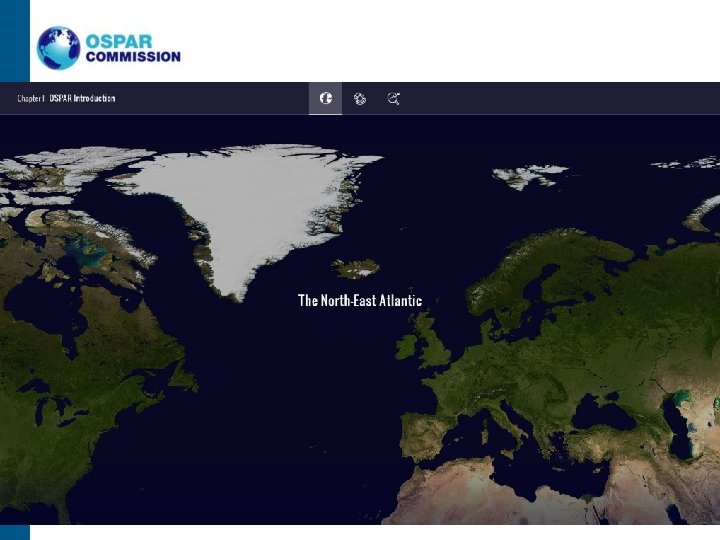
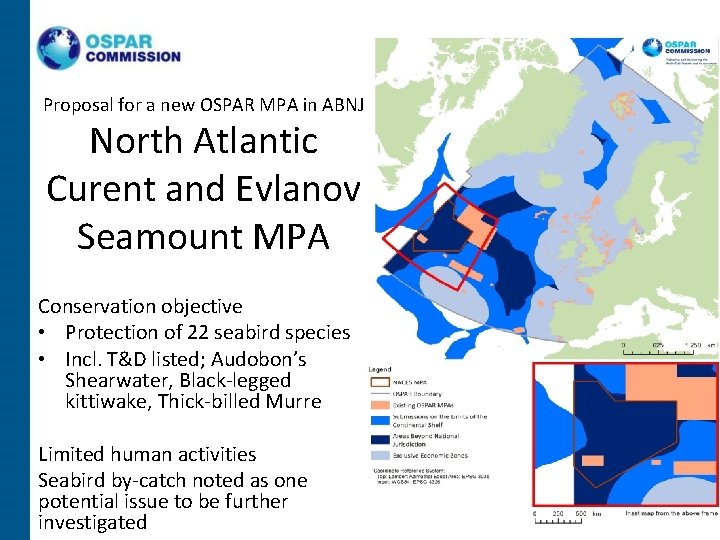
Proposal for a new OSPAR MPA in ABNJ North Atlantic Curent and Evlanov Seamount MPA Conservation objective • Protection of 22 seabird species • Incl. T&D listed; Audobon’s Shearwater, Black-legged kittiwake, Thick-billed Murre Limited human activities Seabird by-catch noted as one potential issue to be further investigated
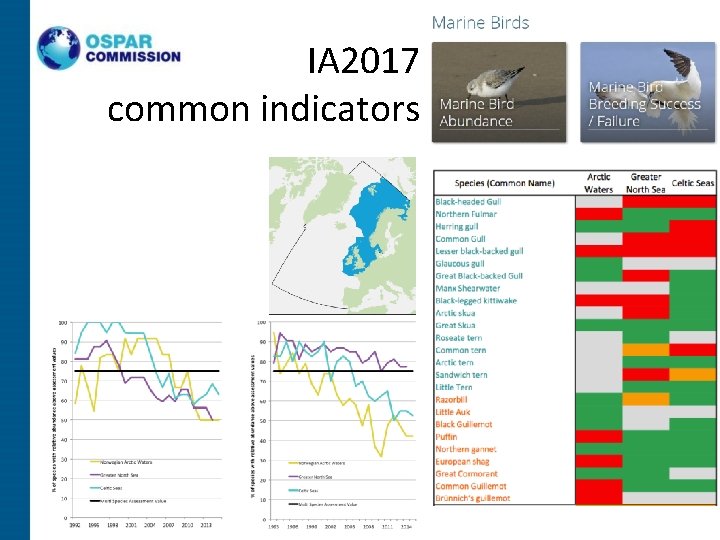
IA 2017 common indicators
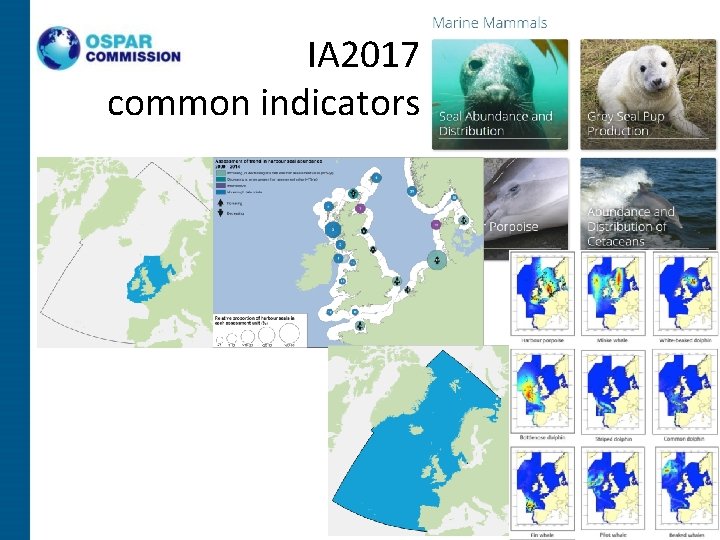
IA 2017 common indicators
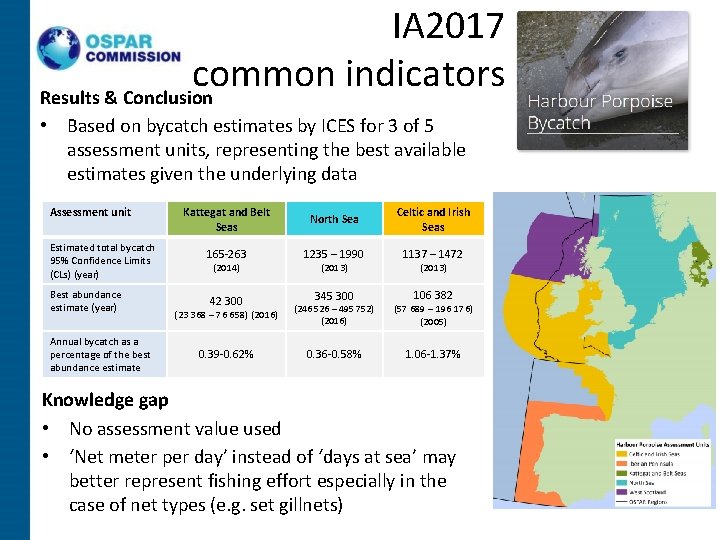
IA 2017 common indicators Results & Conclusion • Based on bycatch estimates by ICES for 3 of 5 assessment units, representing the best available estimates given the underlying data Assessment unit Estimated total bycatch 95% Confidence Limits (CLs) (year) Best abundance estimate (year) Annual bycatch as a percentage of the best abundance estimate Kattegat and Belt Seas North Sea Celtic and Irish Seas 165 -263 1235 – 1990 1137 – 1472 42 300 345 300 (2014) (2013) 106 382 (23 368 – 76 658) (2016) (246 526 – 495 752) (2016) (57 689 – 196 176) (2005) 0. 39 -0. 62% 0. 36 -0. 58% 1. 06 -1. 37% Knowledge gap • No assessment value used • ‘Net meter per day’ instead of ‘days at sea’ may better represent fishing effort especially in the case of net types (e. g. set gillnets)
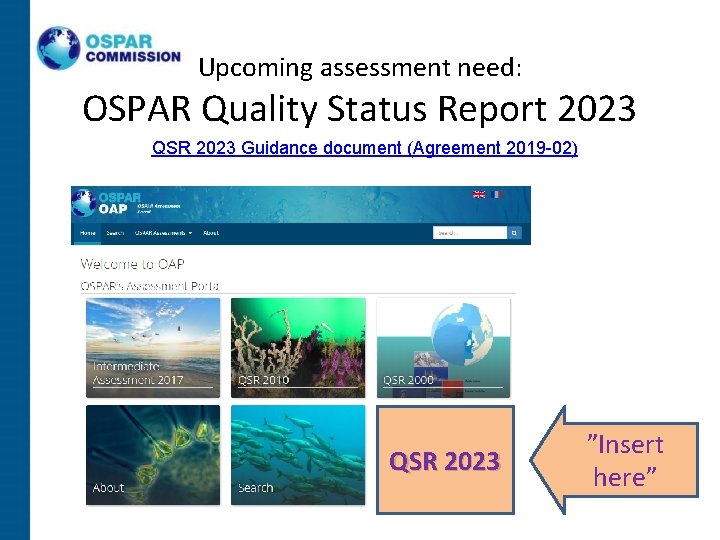
Upcoming assessment need: OSPAR Quality Status Report 2023 QSR 2023 Guidance document (Agreement 2019 -02) QSR 2023 ”Insert here”
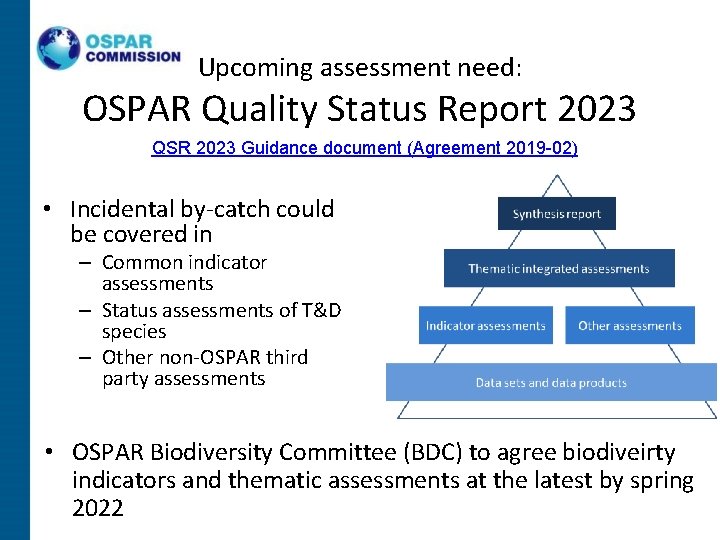
Upcoming assessment need: OSPAR Quality Status Report 2023 QSR 2023 Guidance document (Agreement 2019 -02) • Incidental by-catch could be covered in – Common indicator assessments – Status assessments of T&D species – Other non-OSPAR third party assessments • OSPAR Biodiversity Committee (BDC) to agree biodiveirty indicators and thematic assessments at the latest by spring 2022
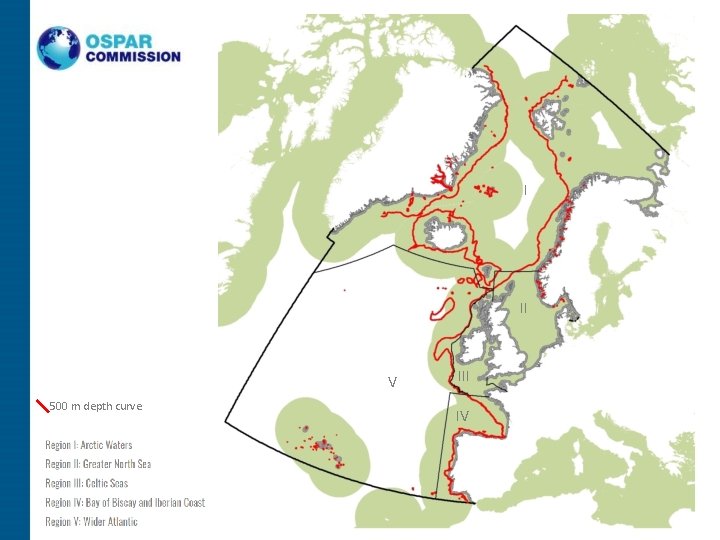
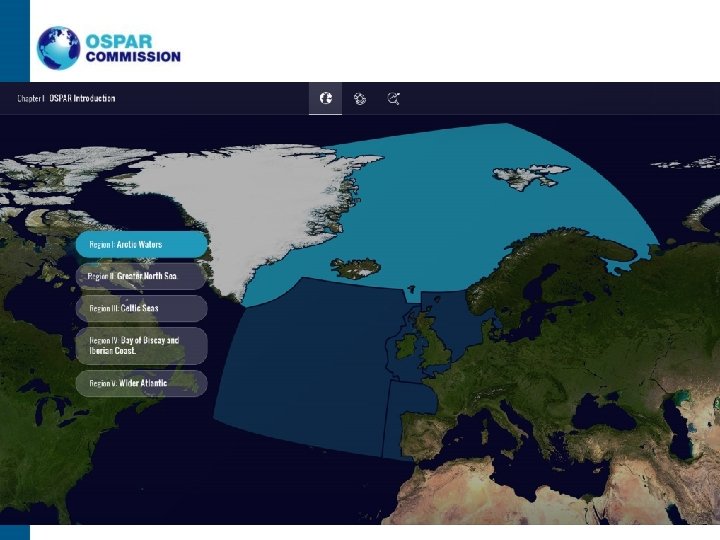
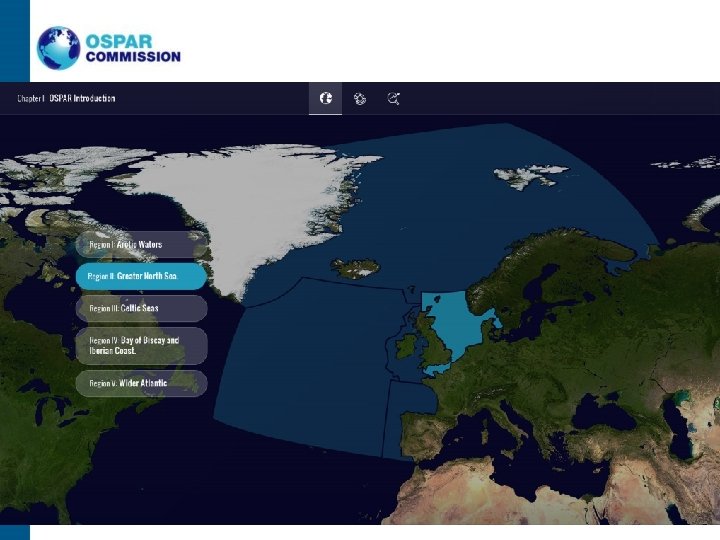
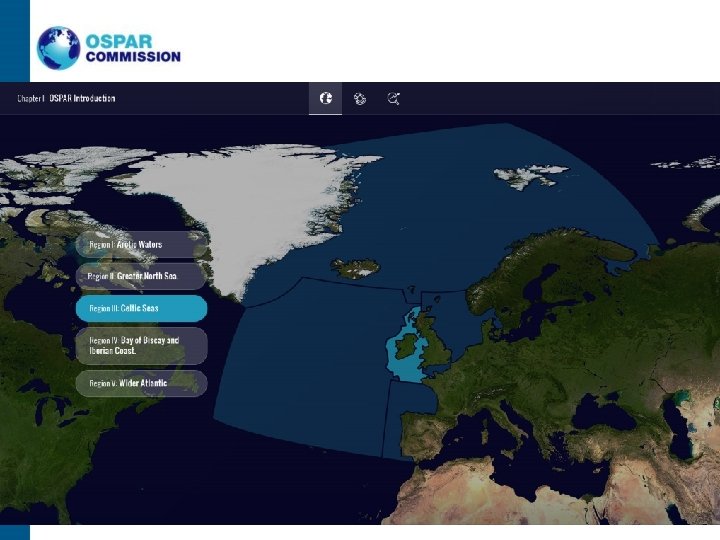
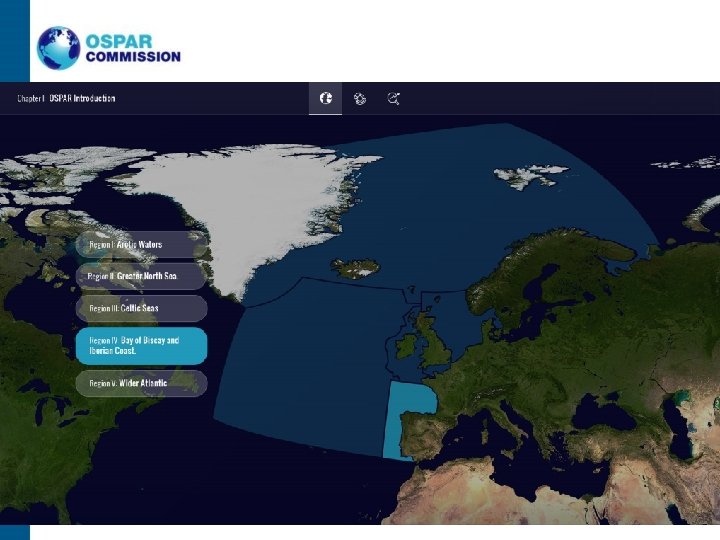
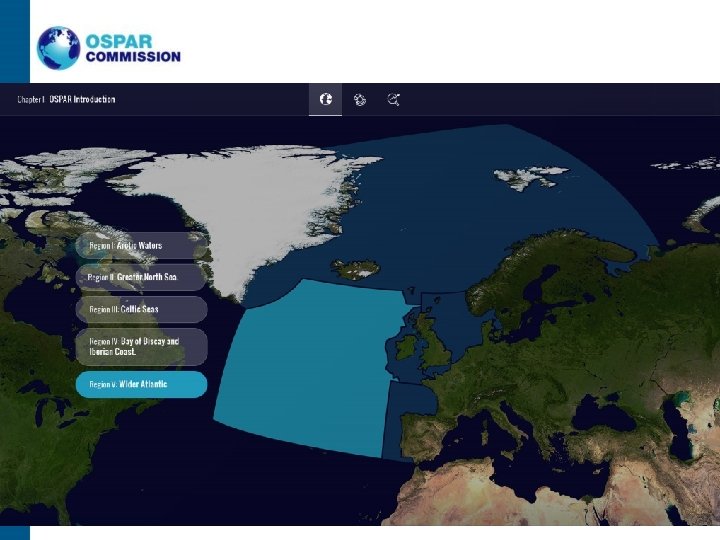
I II V 500 m depth curve III IV
What does OSPAR need from this workshop? Description of current state-of-play ’scoping study’ Proposal for common indicators, incl general concept and threshold value Specific recommended next steps for QSR 2023 Recommendations on next steps in the longer term Ø Proposals and material in a format to support further deliberation at ICG-COBAM 2019 and BDC 2020
- Slides: 25