
Osmotic and Ionic Regulation All animals face osmotic
- Slides: 13
Osmotic and Ionic Regulation All animals face osmotic and ionic stresses. Stresses depend on environment: • Aquatic • Marine • Freshwater • Brackish (estuarine) • Terrestrial
Regardless of their environment, all animals must be capable of maintaining isosmoticity between the ICF (intracellular fluid) and ECF (extracellular fluid). Regulating ICF osmotic conc. in response to changes in the osmotic conc. of the ECF is called: Cell Volume Regulation
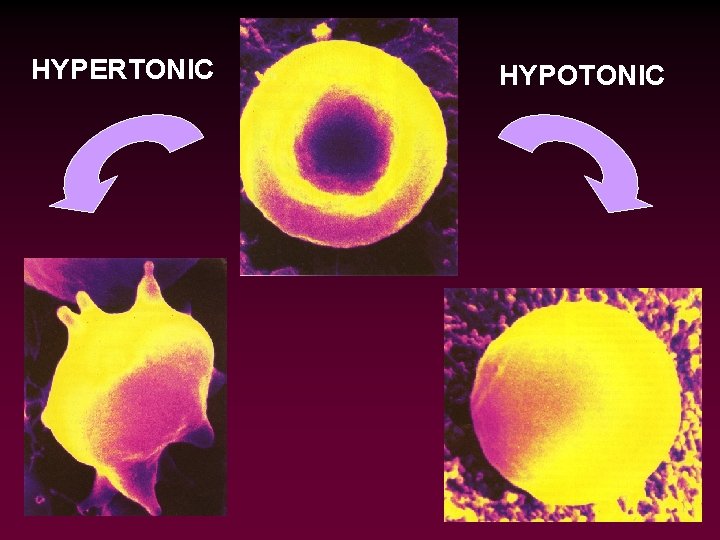
HYPERTONIC HYPOTONIC
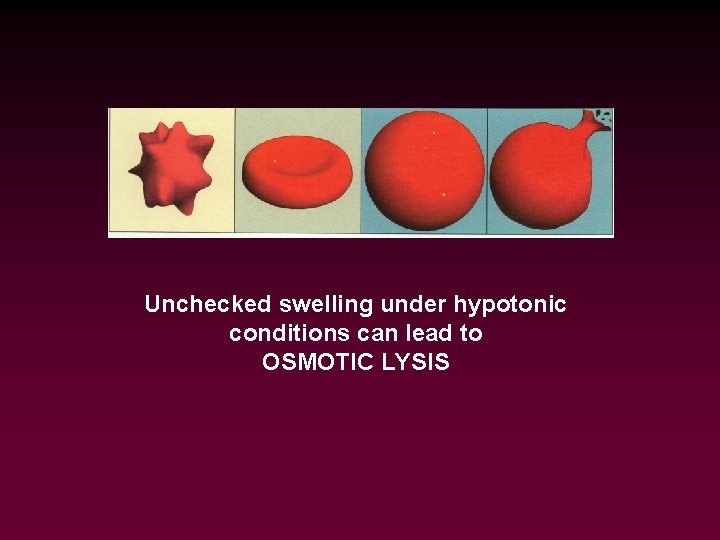
Unchecked swelling under hypotonic conditions can lead to OSMOTIC LYSIS
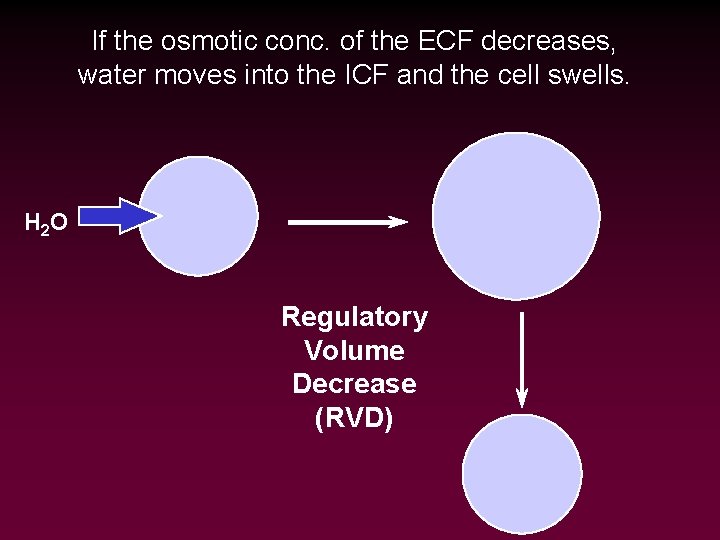
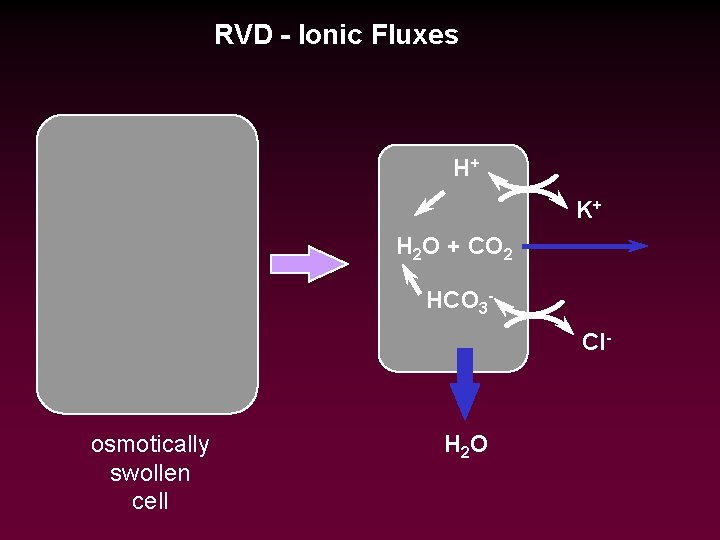
If the osmotic conc. of the ECF decreases, water moves into the ICF and the cell swells. H 2 O Regulatory Volume Decrease (RVD)
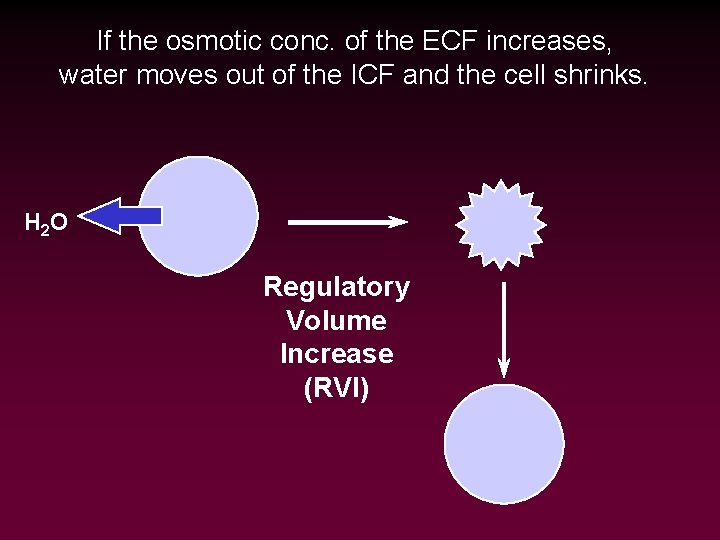
If the osmotic conc. of the ECF increases, water moves out of the ICF and the cell shrinks. H 2 O Regulatory Volume Increase (RVI)
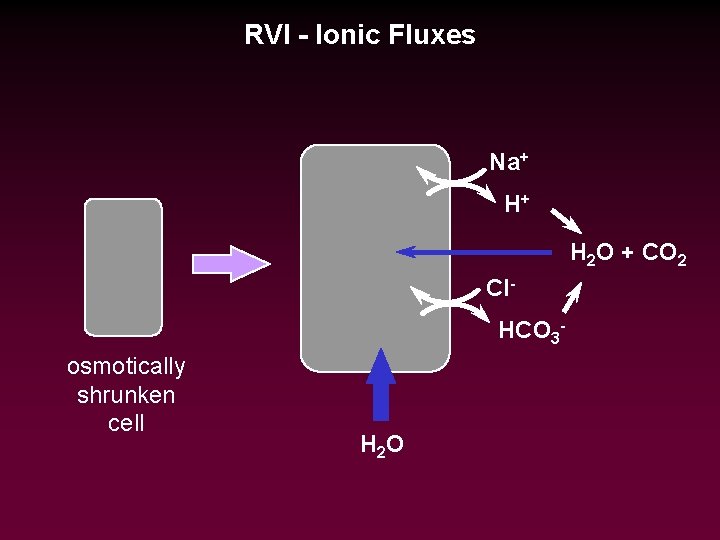
RVI - Ionic Fluxes Na+ H+ H 2 O + CO 2 Cl. HCO 3 osmotically shrunken cell H 2 O
RVD - Ionic Fluxes H+ K+ H 2 O + CO 2 HCO 3 Cl- osmotically swollen cell H 2 O
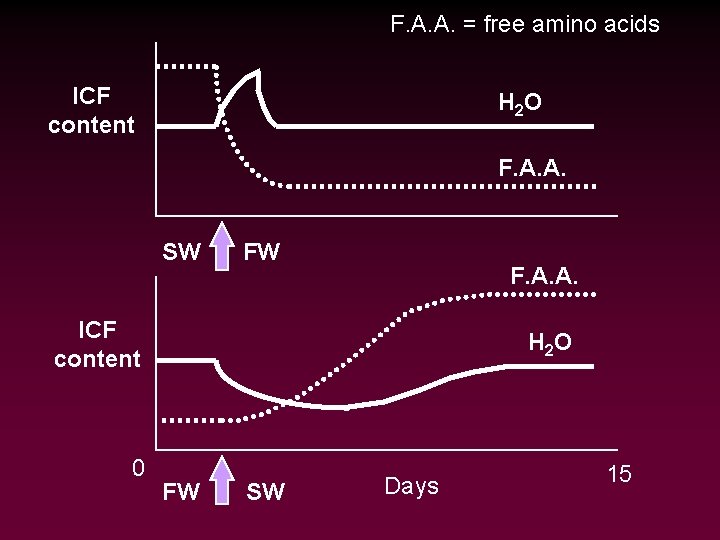
F. A. A. = free amino acids ICF content H 2 O F. A. A. SW FW F. A. A. ICF content 0 H 2 O FW SW Days 15
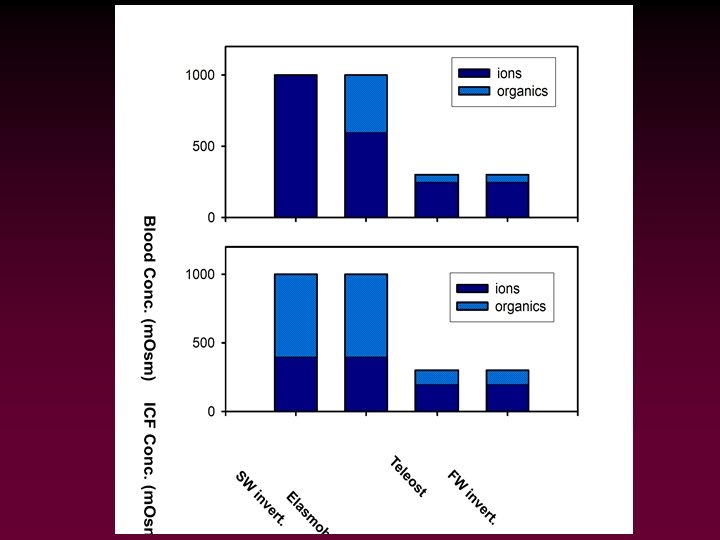
Animals can reduce the amount of volume regulation their cells must do by regulating ECF osmotic concentrations. Osmotic and ionic regulation occurs in both aquatic and terrestrial spp. We’ll look at aquatic organisms first
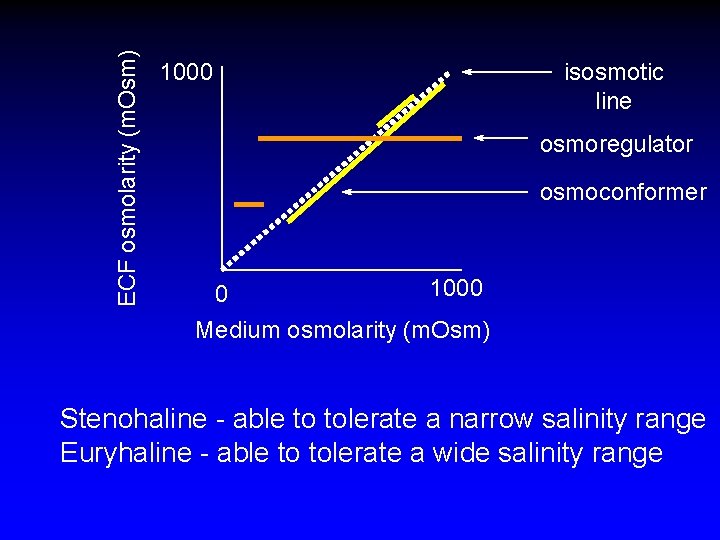
ECF osmolarity (m. Osm) 1000 isosmotic line osmoregulator osmoconformer 1000 0 Medium osmolarity (m. Osm) Stenohaline - able to tolerate a narrow salinity range Euryhaline - able to tolerate a wide salinity range
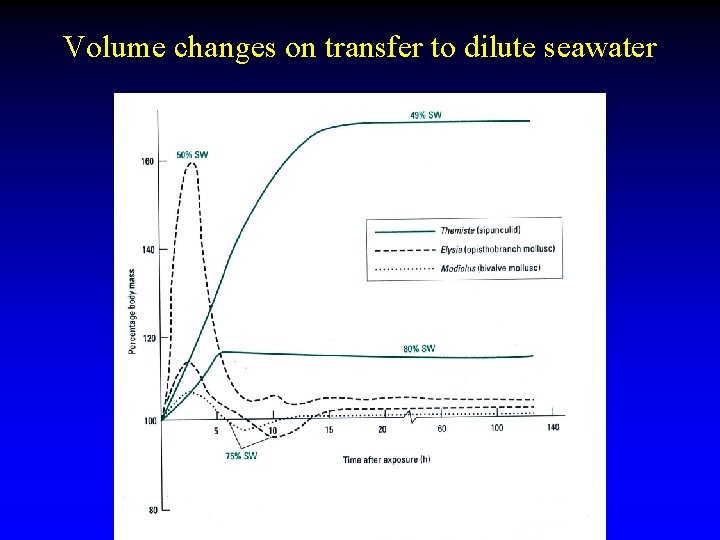
Volume changes on transfer to dilute seawater