
Osmosis vs Diffusion The movement of molecules from

- Slides: 10
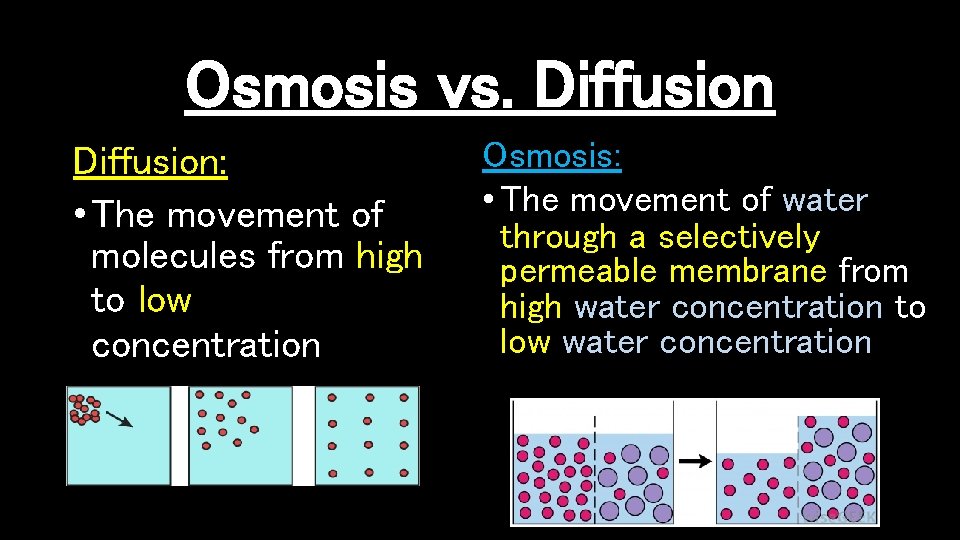
Osmosis vs. Diffusion: • The movement of molecules from high to low concentration Osmosis: • The movement of water through a selectively permeable membrane from high water concentration to low water concentration
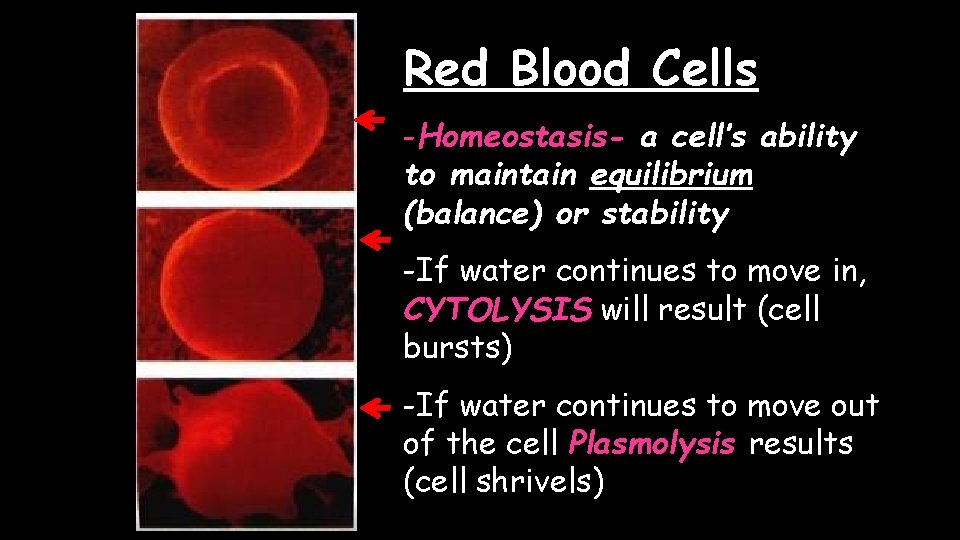
Red Blood Cells -Homeostasis- a cell’s ability to maintain equilibrium (balance) or stability -If water continues to move in, CYTOLYSIS will result (cell bursts) -If water continues to move out of the cell Plasmolysis results (cell shrivels)
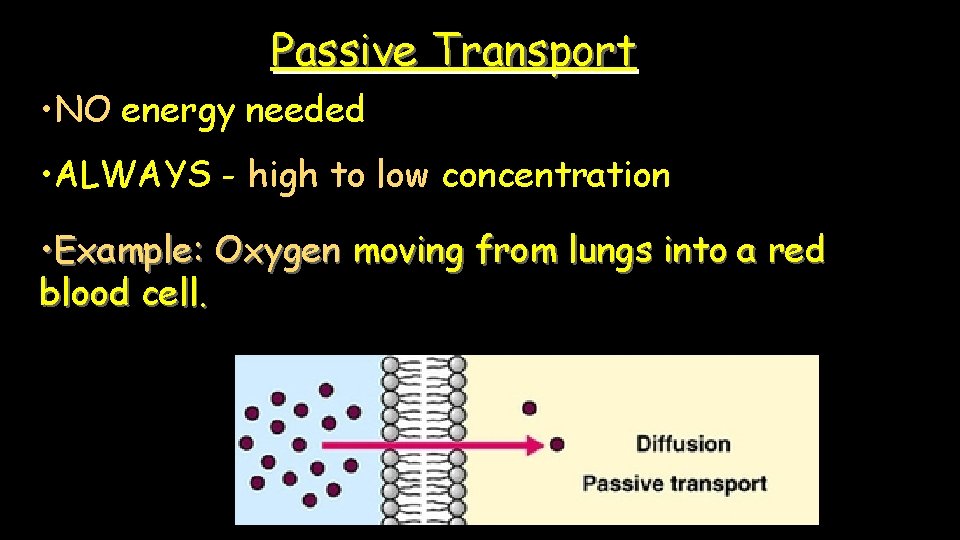
Passive Transport • NO energy needed • ALWAYS - high to low concentration • Example: Oxygen moving from lungs into a red blood cell.
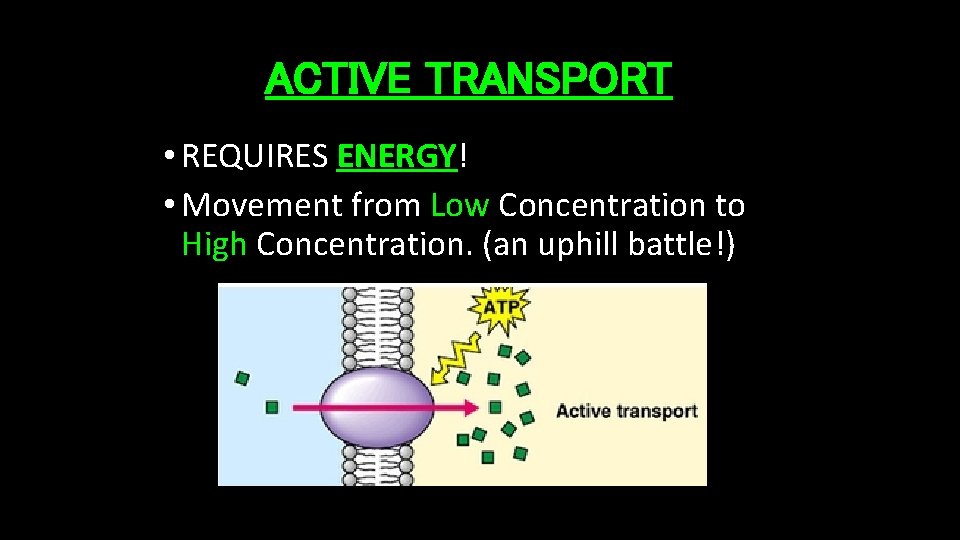
ACTIVE TRANSPORT • REQUIRES ENERGY! • Movement from Low Concentration to High Concentration. (an uphill battle!)
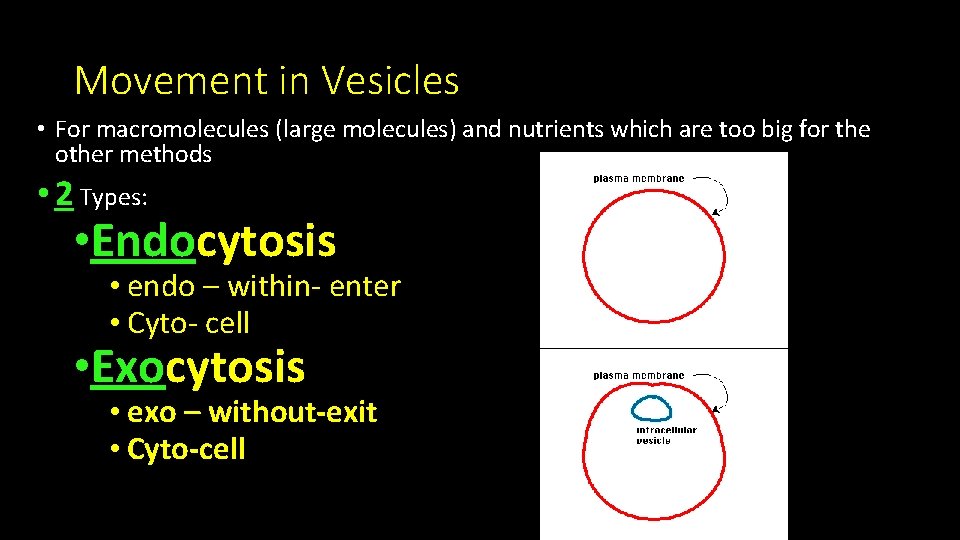
Movement in Vesicles • For macromolecules (large molecules) and nutrients which are too big for the other methods • 2 Types: • Endocytosis • endo – within- enter • Cyto- cell • Exocytosis • exo – without-exit • Cyto-cell
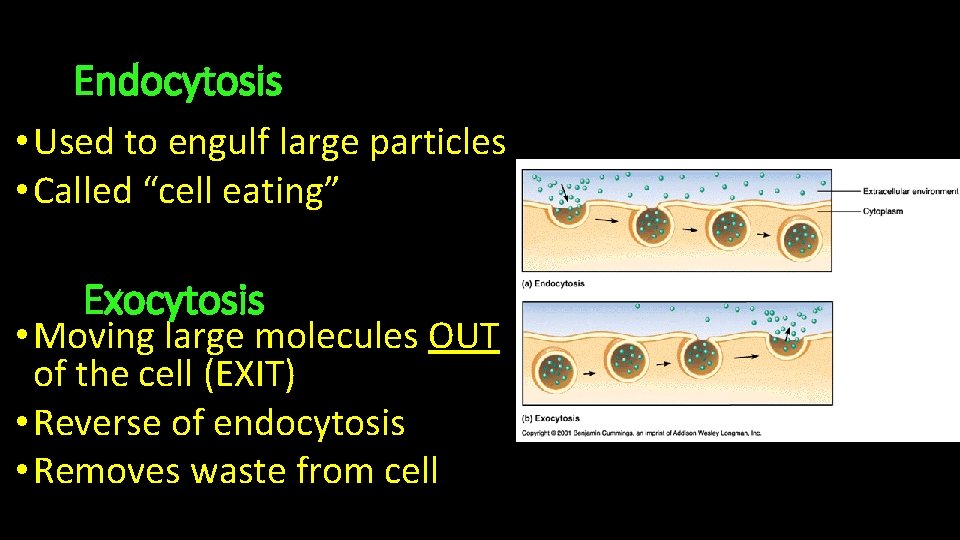
Endocytosis • Used to engulf large particles • Called “cell eating” Exocytosis • Moving large molecules OUT of the cell (EXIT) • Reverse of endocytosis • Removes waste from cell
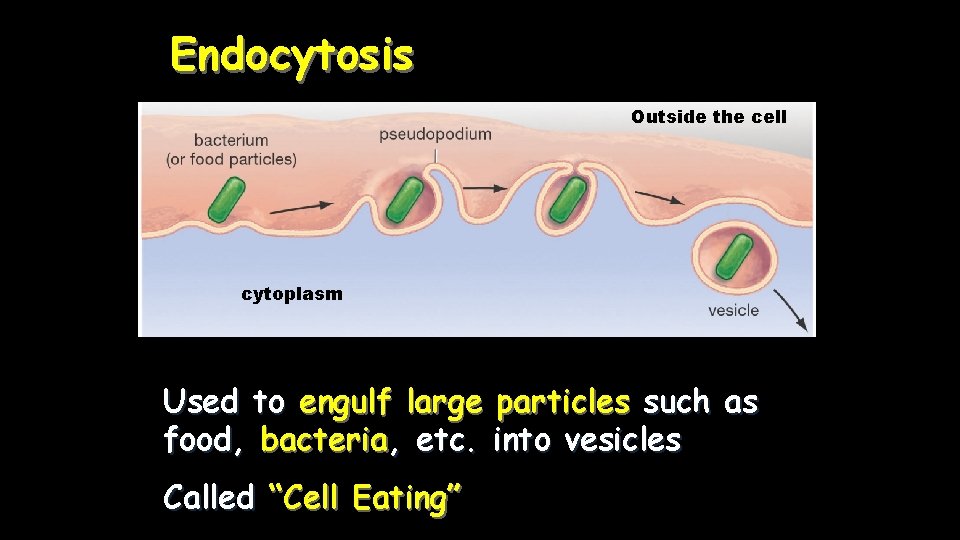
Endocytosis Outside the cell cytoplasm Used to engulf large particles such as food, bacteria, etc. into vesicles Called “Cell Eating”
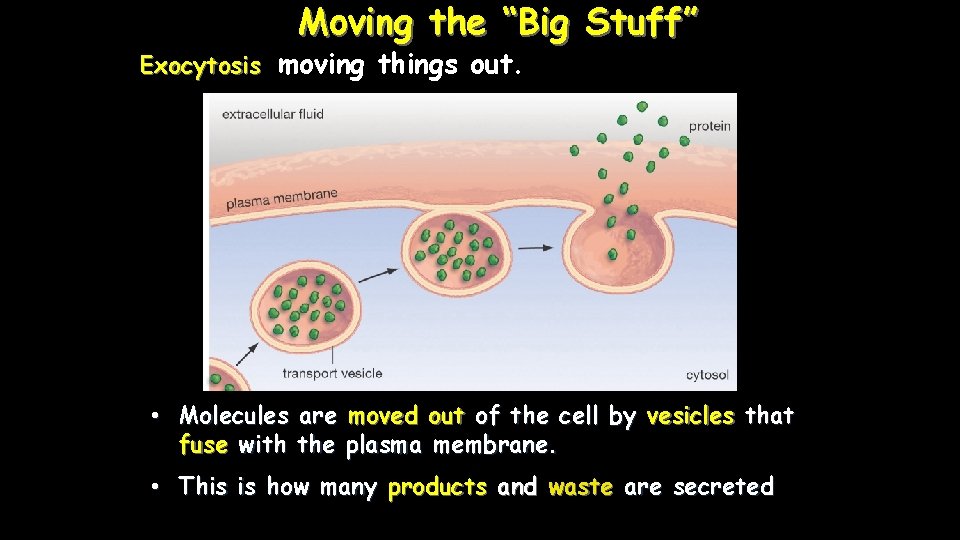
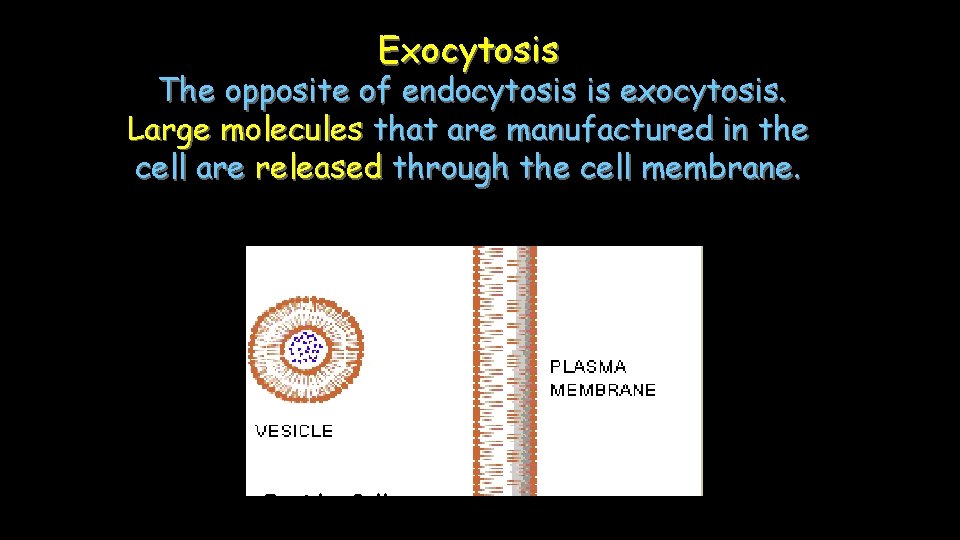
Moving the “Big Stuff” Exocytosis moving things out. • Molecules are fuse with the moved out of the cell by vesicles that plasma membrane. • This is how many products and waste are secreted
Exocytosis The opposite of endocytosis is exocytosis. Large molecules that are manufactured in the cell are released through the cell membrane. Inside Cell environment
Endocytosis and Exocytosis in Action • http: //www. stolaf. edu/people/giannini/flashanimat/cellstructures/p hagocitosis. swf