
OSHA Focal Points Series LockoutTagout Provided By Pennsylvania

“OSHA Focal Points” Series Lockout/Tagout Provided By: Pennsylvania OSHA Consultation
Lesson Overview Purpose: To provide workers with need-to-know information regarding the control of hazardous energy. Topics: ◦ ◦ ◦ ◦ Scope Application Purpose Definitions Energy Control Program/Procedures Material and Hardware Periodic Inspection Training and Communication 2
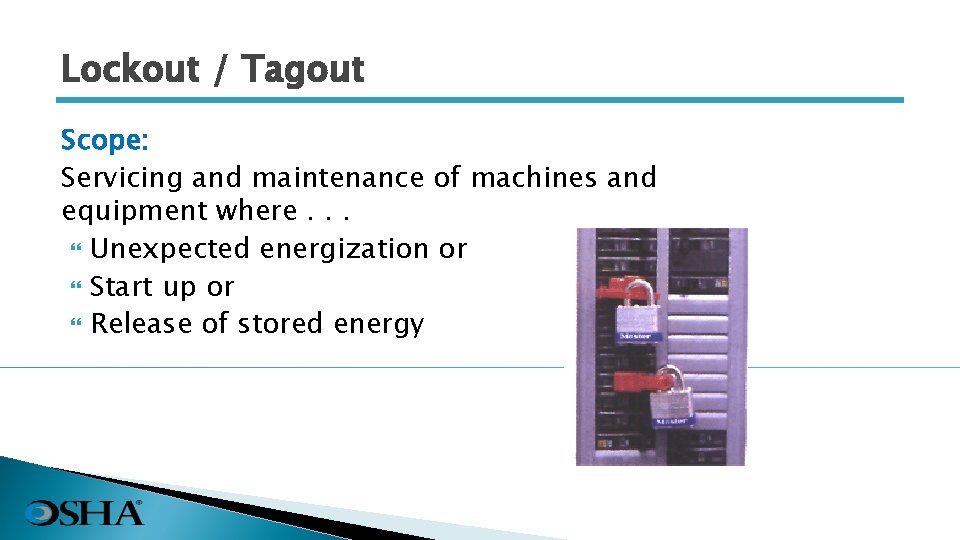
Lockout / Tagout Scope: Servicing and maintenance of machines and equipment where. . . Unexpected energization or Start up or Release of stored energy
Lockout / Tagout: Definitions Energized ◦ Connected to energy source ◦ Contains residual or stored energy Energy Source ◦ Electrical, mechanical, hydraulic, pneumatic, chemical, thermal, gravity, etc.

Lockout / Tagout: Program Energy Control Program: Energy Control Procedures Periodic Inspections Employee Training Source of photos: OSHA
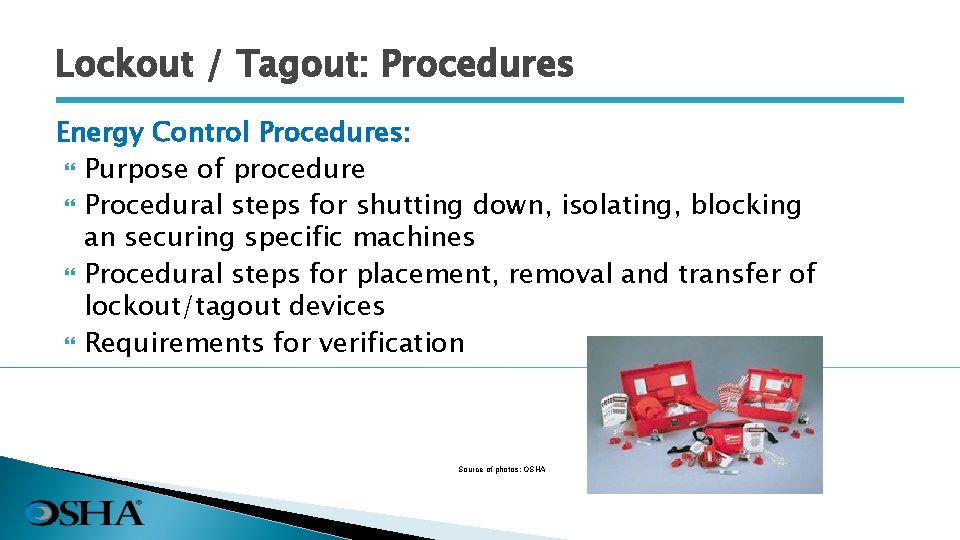
Lockout / Tagout: Procedures Energy Control Procedures: Purpose of procedure Procedural steps for shutting down, isolating, blocking an securing specific machines Procedural steps for placement, removal and transfer of lockout/tagout devices Requirements for verification Source of photos: OSHA
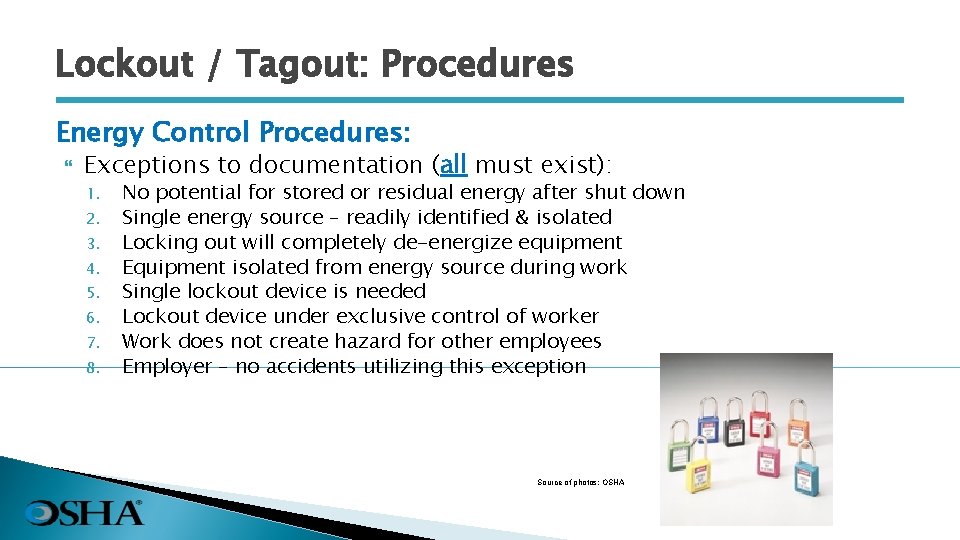
Lockout / Tagout: Procedures Energy Control Procedures: Exceptions to documentation (all must exist): 1. 2. 3. 4. 5. 6. 7. 8. No potential for stored or residual energy after shut down Single energy source – readily identified & isolated Locking out will completely de-energize equipment Equipment isolated from energy source during work Single lockout device is needed Lockout device under exclusive control of worker Work does not create hazard for other employees Employer – no accidents utilizing this exception Source of photos: OSHA
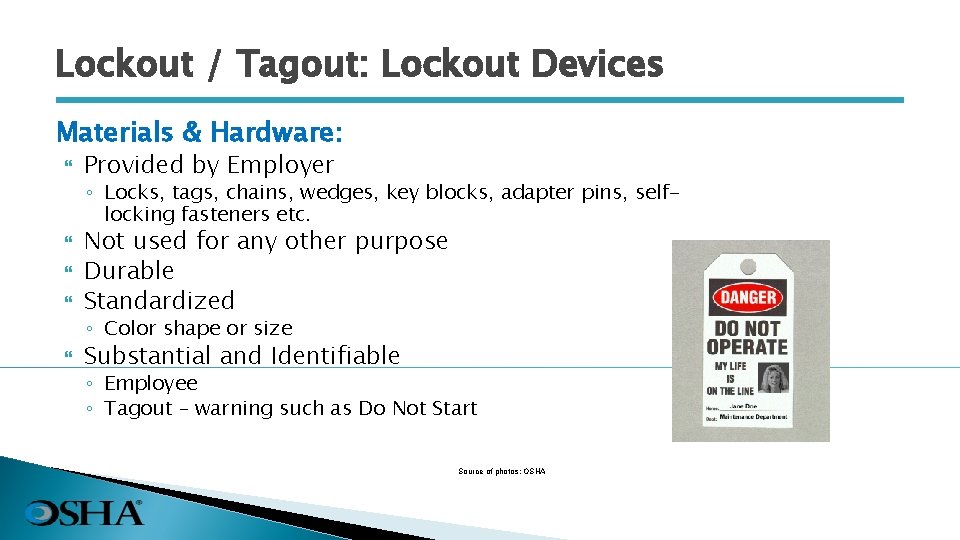
Lockout / Tagout: Lockout Devices Materials & Hardware: Provided by Employer ◦ Locks, tags, chains, wedges, key blocks, adapter pins, selflocking fasteners etc. Not used for any other purpose Durable Standardized ◦ Color shape or size Substantial and Identifiable ◦ Employee ◦ Tagout – warning such as Do Not Start Source of photos: OSHA

Lockout / Tagout: Audits Periodic Inspection: At least annually Ensures procedure and requirements of standard are being met Conducted by authorized employee ◦ Not the one utilizing energy ◦ control procedures Correct deviations or inadequacies Include interview with authorized and affected employees working with LOTO program
Lockout / Tagout: Audits Periodic Inspection: Identify machine or equipment utilizing lockout/tagout Date of inspection Employees included in inspection Person performing inspection
Lockout / Tagout: Training: Authorized ◦ ◦ Recognition of hazardous energy sources Type and magnitude of energy available Methods and means for energy isolation and control Limitations of tags Affected ◦ Purpose and use of energy control procedure ◦ Limitations of tags Other ◦ Knowledge of procedure ◦ Prohibited from attempting re-energization ◦ Limitations of tags
Lockout / Tagout: Training Retraining: Change in job assignment Change in machines, equipment Change in processes present a new hazard Change in energy control procedures Whenever periodic inspection shows deviations or inadequacies Must reestablish employee proficiency Certified
Lockout / Tagout Shift Change: Specific procedures must be utilized ◦ Ensure continuity of lockout/tagout ◦ Provisions for orderly transfer of lockout/tagout devices
Lockout / Tagout: 3 rd Parties Contractors: Inform each other of respective lockout/tagout procedures On-site employer ensure employees understand comply with restrictions and prohibitions of outside employer’s energy control program
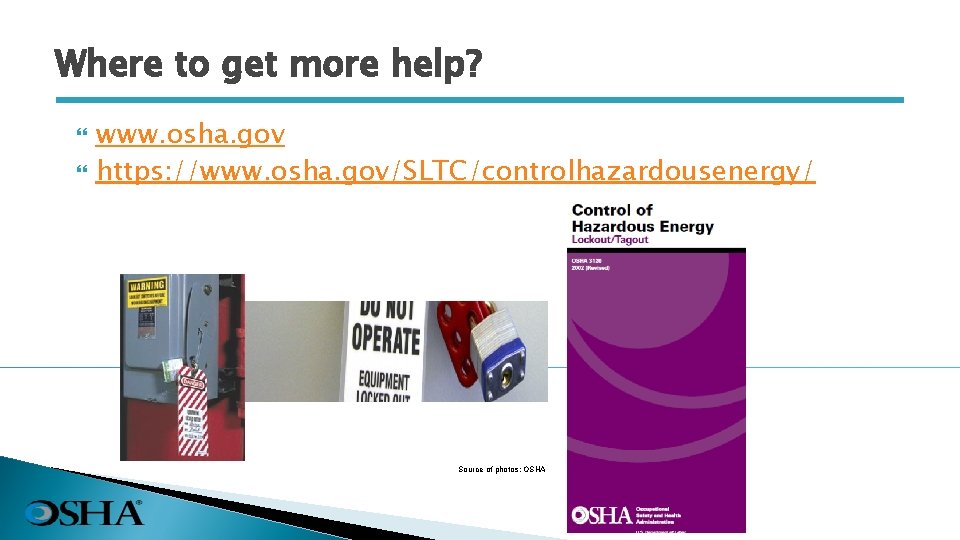
Where to get more help? www. osha. gov https: //www. osha. gov/SLTC/controlhazardousenergy/ Source of photos: OSHA 15
- Slides: 15