
OSH BAROMETER Data Visualisation tool Status of Occupational
OSH BAROMETER Data Visualisation tool Status of Occupational Safety and Health in the European Union ACSH 4 th Workshop on National Strategies on 15 th & 16 th October 2018 in Luxembourg Safety and health at work is everyone’s concern. It’s good for you. It’s good for business. Lothar Lieck Senior Project Manager EU-OSHA http: //osha. europa. eu 1
Introduction: Objectives, collaborators and development Objectives Design and develop a reliable and stable information system on OSH in Europe, based on data of the relevant national and European data providers. The system provides up-to-date online information for all interested parties and stakeholders about the status of OSH in the European Union Every three years EU-OSHA will prepare an analytical report based on these data. Collaborators DG Employment National contact points in Member States Data providers and data holding EU institutions (Eurostat, Eurofound, EU-OSHA itself, etc. ) Data providers and data holding institutions in Member States http: //osha. europa. eu 2
Introduction: Objectives, collaborators and development Visualisations Design in line with other EUOSHA tools (Ageing workforce, Costs and benefits, ESENER). Following common principles like agile design, colour selection etc. Visually and structurally harmonised descriptions of all Member States for all indicators, particularly the qualitative data (national Visualisation is not only a graphical exercise but requires substantial decisions: Selection of data to be presented. Combination of different data sets. strategies, social dialogue) Compare function when useful: Comparison of Member States or Member States and the EU-level. Major messages can be very much influenced by data selection and data presentation. http: //osha. europa. eu 3
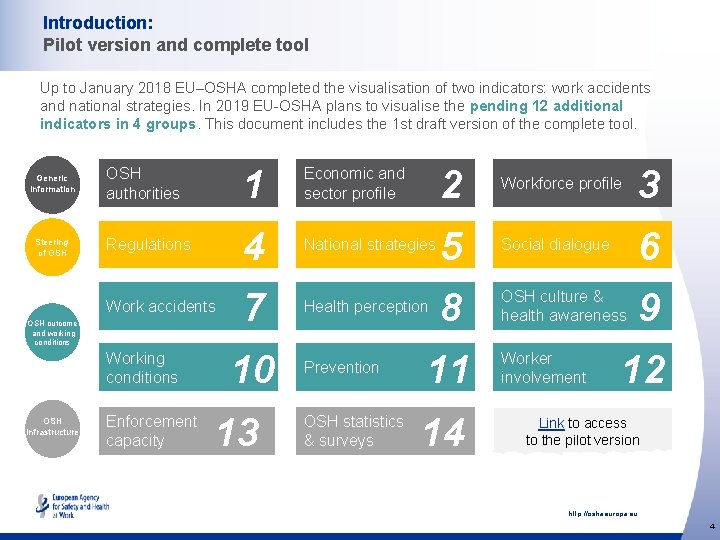
Introduction: Pilot version and complete tool Up to January 2018 EU–OSHA completed the visualisation of two indicators: work accidents and national strategies. In 2019 EU-OSHA plans to visualise the pending 12 additional indicators in 4 groups. This document includes the 1 st draft version of the complete tool. Generic information Steering of OSH 1 Economic and sector profile 2 Workforce profile 3 Regulations 4 National strategies 5 Social dialogue 6 Work accidents 7 Health perception 8 OSH culture & health awareness 9 OSH authorities OSH outcome and working conditions Working conditions OSH infrastructure Enforcement capacity 10 13 Prevention OSH statistics & surveys 11 1 14 Worker involvement 12 Link to access to the pilot version http: //osha. europa. eu 4
OSH BAROMETER Data visualisation tool Status of the Occupational Safety and Health in the European Union Homepage http: //osha. europa. eu 5
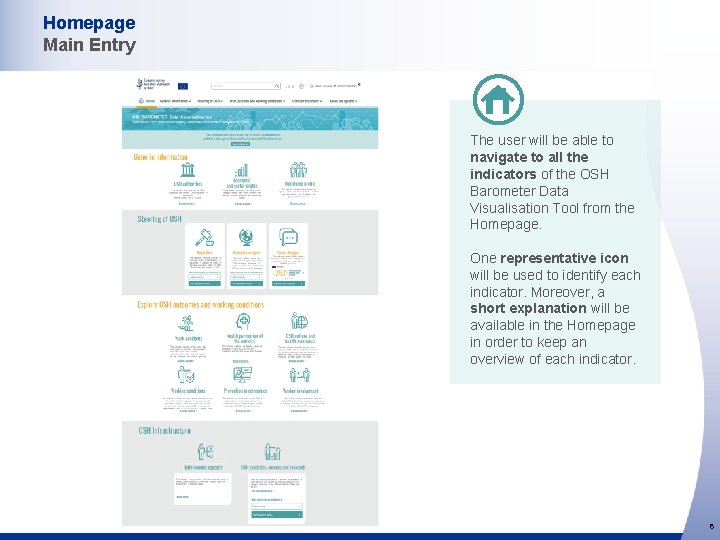
Homepage Main Entry The user will be able to navigate to all the indicators of the OSH Barometer Data Visualisation Tool from the Homepage. One representative icon will be used to identify each indicator. Moreover, a short explanation will be available in the Homepage in order to keep an overview of each indicator. http: //osha. europa. eu 6
OSH authorities Economic and sector profile Workforce profile OSH BAROMETER Data visualisation tool Status of the Occupational Safety and Health in the European Union Generic Information 1 http: //osha. europa. eu 7
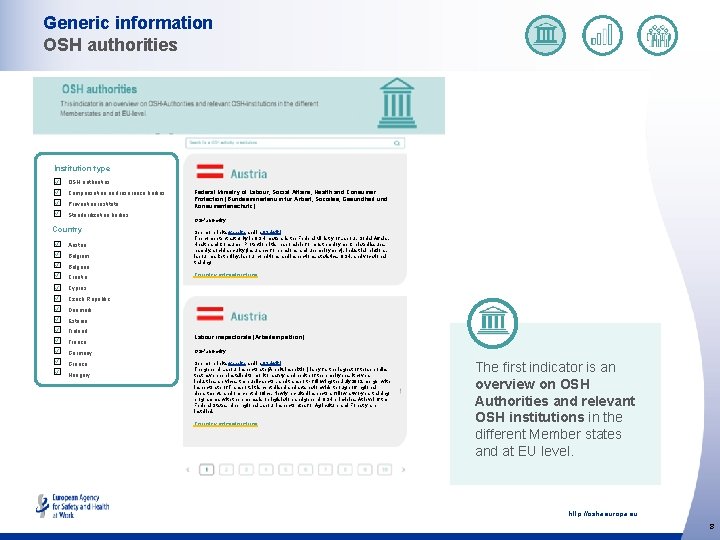
Generic information OSH authorities Institution type OSH authorities Compensation and insurance bodies Prevention institute Standardization bodies Country Austria Cyprus Belgium Bulgaria Croatia Federal Ministry of Labour, Social Affairs, Health and Consumer Protection (Bundesministerium für Arbeit, Soziales, Gesundheit und Konsumentenschutz) OSH authority See more in its website and in OSHwiki The competent authority in OSH matters is the Federal Ministry of Labour, Social Affairs, Health and Consumer Protection. It is responsible for most employment related issues, namely: social security (insurance for pensions and unemployment), industrial relations, labour market policy, labour conditions and inspections, statistics, OSH, and vocational training. Country infrastructure Czech Republic Denmark Estonia Finland France Labour inspectorate (Arbeitsinpektion) Germany OSH authority Greece See more in its website and in OSHwiki The general Labour Inspectorate (Arbeitsinspektion) is by far the largest of those bodies that have been installed to monitor safety and health of the employees. It covers industries, services, the public sector, and transport - following the July 2012 merger with Inspectorate of Transport. It is centralised and acts nationwide through 16 regional departments and one central office. Newly recruited inspectors follow a two-year training programme, with the emphasis on legislation and general OSH principles. At level of the Federal States, nine regional Labour Inspectorates for Agriculture and Forestry are installed. Hungary Country infrastructure The first indicator is an overview on OSH Authorities and relevant OSH institutions in the different Member states and at EU level. http: //osha. europa. eu 8
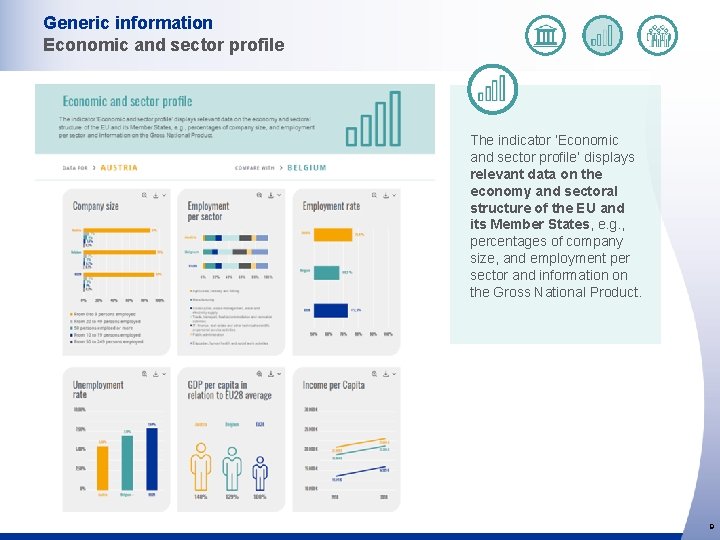
Generic information Economic and sector profile The indicator ‘Economic and sector profile’ displays relevant data on the economy and sectoral structure of the EU and its Member States, e. g. , percentages of company size, and employment per sector and information on the Gross National Product. http: //osha. europa. eu 9
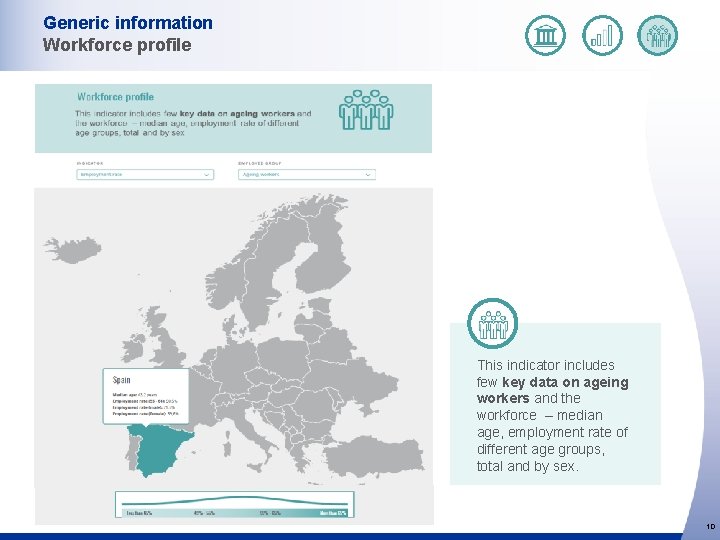
Generic information Workforce profile This indicator includes few key data on ageing workers and the workforce – median age, employment rate of different age groups, total and by sex. http: //osha. europa. eu 10
Regulations National strategies Social dialogue OSH BAROMETER Data visualisation tool Status of the Occupational Safety and Health in the European Union Steering of OSH 2 http: //osha. europa. eu 11
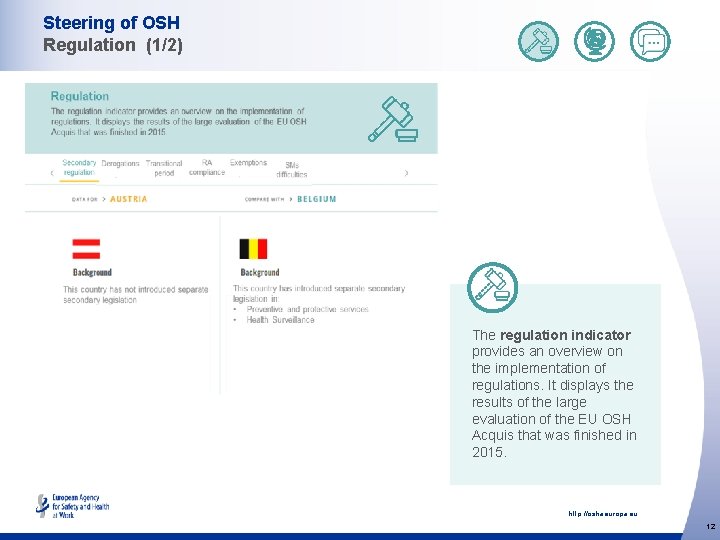
Steering of OSH Regulation (1/2) The regulation indicator provides an overview on the implementation of regulations. It displays the results of the large evaluation of the EU OSH Acquis that was finished in 2015. http: //osha. europa. eu 12
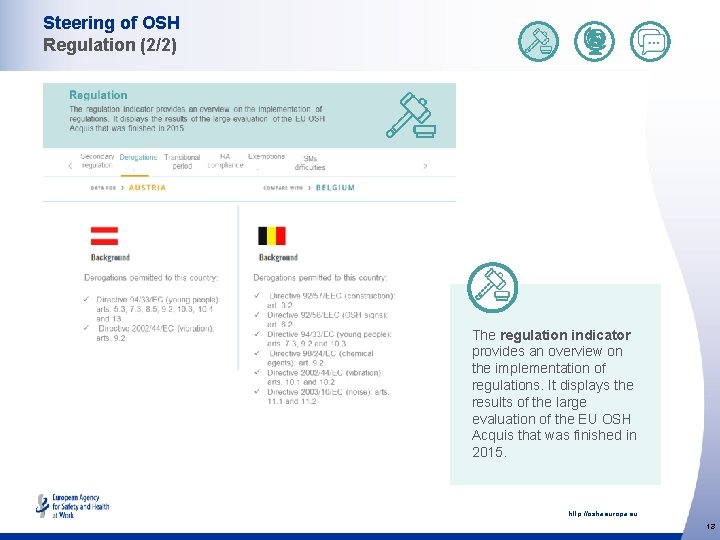
Steering of OSH Regulation (2/2) The regulation indicator provides an overview on the implementation of regulations. It displays the results of the large evaluation of the EU OSH Acquis that was finished in 2015. http: //osha. europa. eu 13
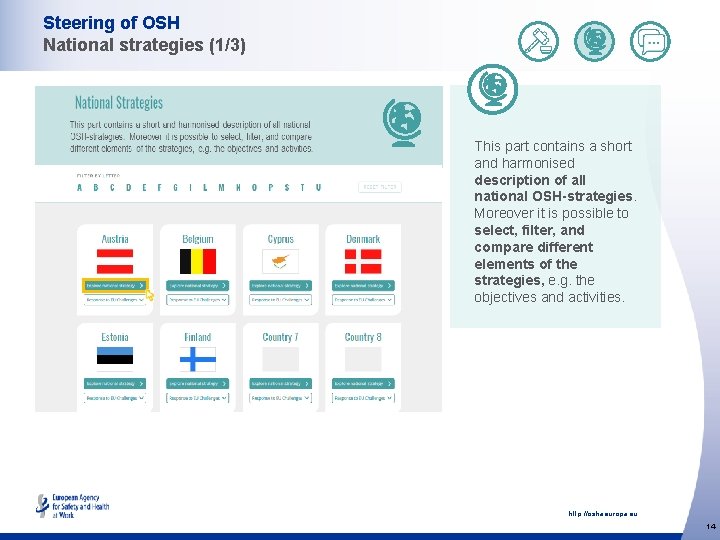
Steering of OSH National strategies (1/3) This part contains a short and harmonised description of all national OSH-strategies. Moreover it is possible to select, filter, and compare different elements of the strategies, e. g. the objectives and activities. http: //osha. europa. eu 14
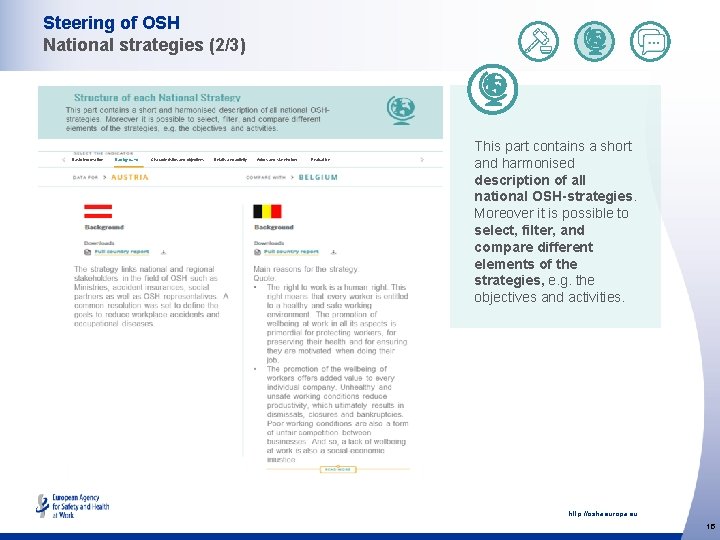
Steering of OSH National strategies (2/3) Basic information Background Characteristics and objectives Details and activity Actors and stakeholders Evaluation This part contains a short and harmonised description of all national OSH-strategies. Moreover it is possible to select, filter, and compare different elements of the strategies, e. g. the objectives and activities. http: //osha. europa. eu 15
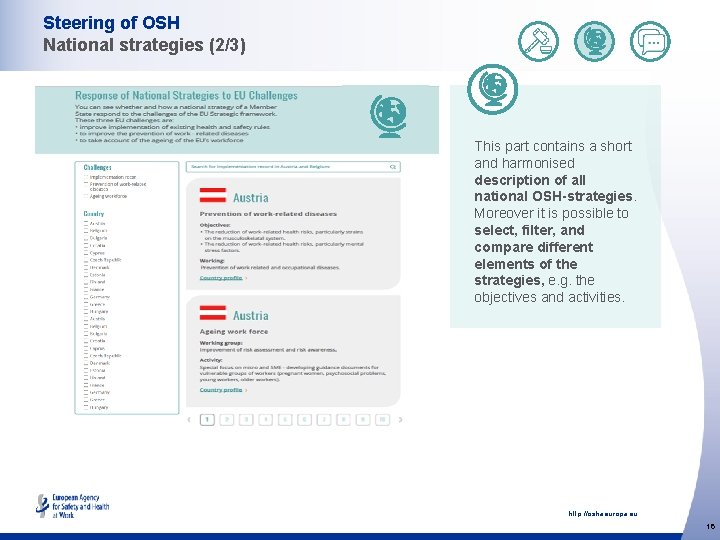
Steering of OSH National strategies (2/3) This part contains a short and harmonised description of all national OSH-strategies. Moreover it is possible to select, filter, and compare different elements of the strategies, e. g. the objectives and activities. http: //osha. europa. eu 16
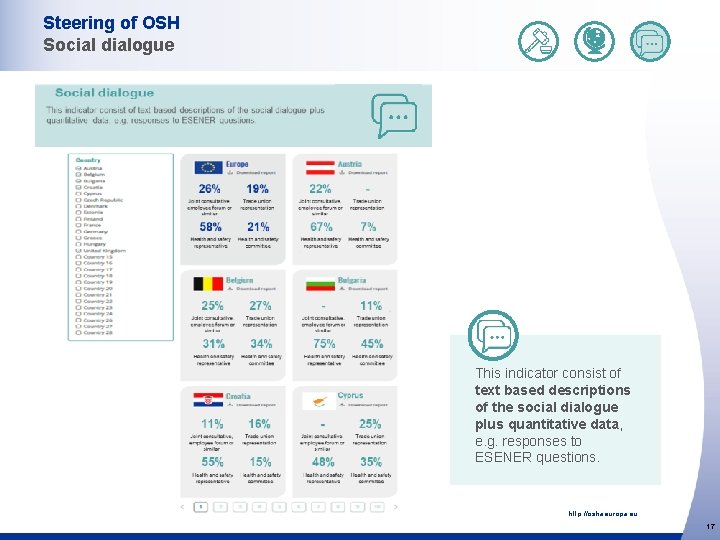
Steering of OSH Social dialogue This indicator consist of text based descriptions of the social dialogue plus quantitative data, e. g. responses to ESENER questions. http: //osha. europa. eu 17
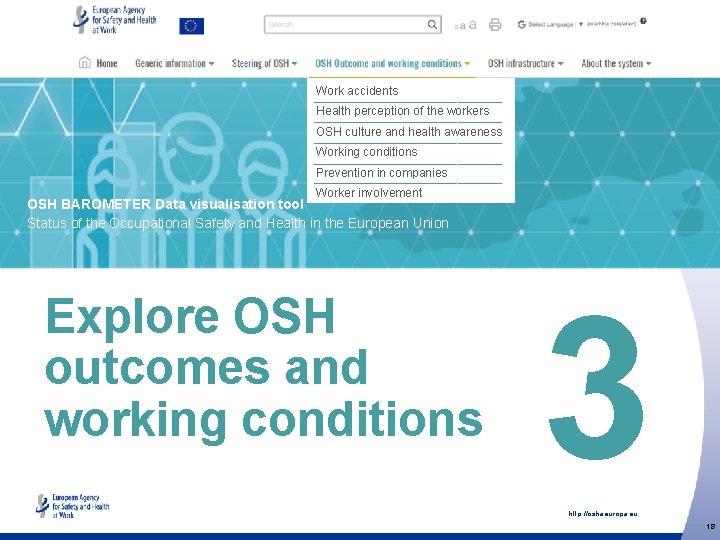
Work accidents Health perception of the workers OSH culture and health awareness Working conditions Prevention in companies Worker involvement OSH BAROMETER Data visualisation tool Status of the Occupational Safety and Health in the European Union Explore OSH outcomes and working conditions 3 http: //osha. europa. eu 18
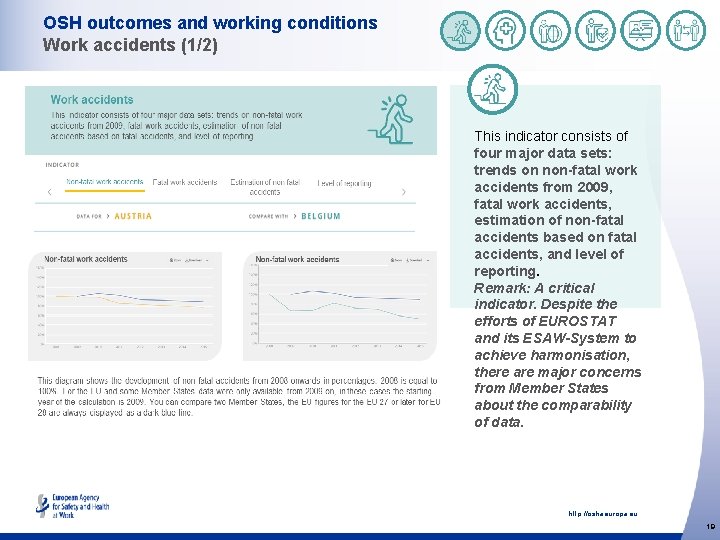
OSH outcomes and working conditions Work accidents (1/2) This indicator consists of four major data sets: trends on non-fatal work accidents from 2009, fatal work accidents, estimation of non-fatal accidents based on fatal accidents, and level of reporting. Remark: A critical indicator. Despite the efforts of EUROSTAT and its ESAW-System to achieve harmonisation, there are major concerns from Member States about the comparability of data. http: //osha. europa. eu 19
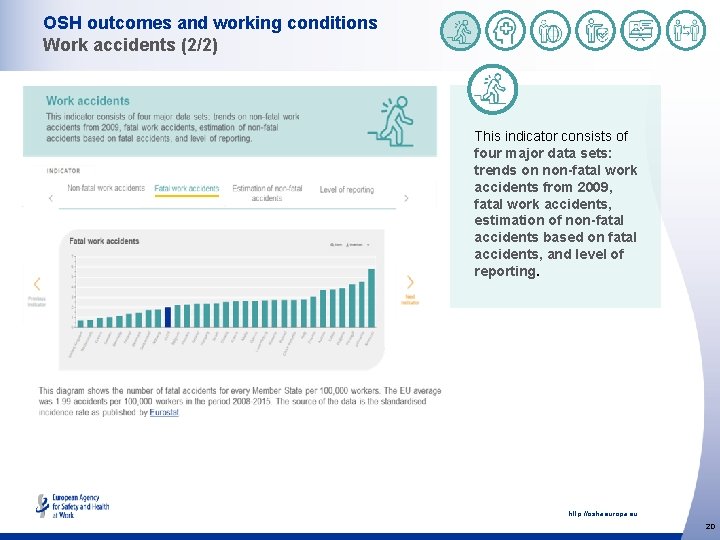
OSH outcomes and working conditions Work accidents (2/2) This indicator consists of four major data sets: trends on non-fatal work accidents from 2009, fatal work accidents, estimation of non-fatal accidents based on fatal accidents, and level of reporting. http: //osha. europa. eu 20
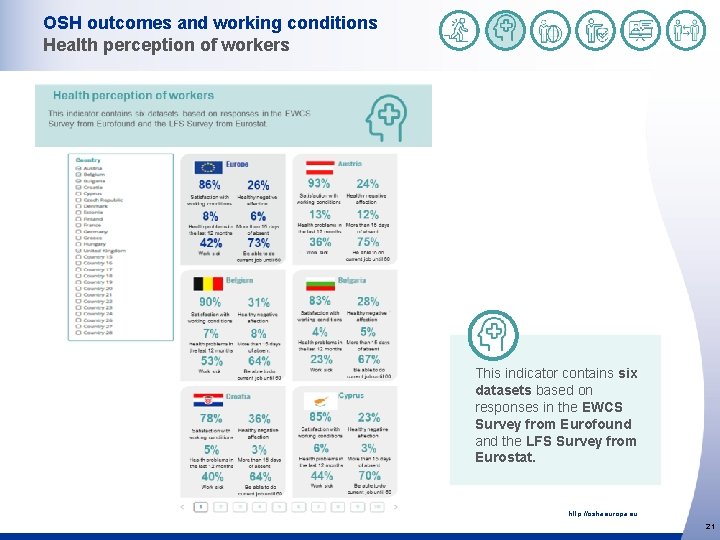
OSH outcomes and working conditions Health perception of workers This indicator contains six datasets based on responses in the EWCS Survey from Eurofound and the LFS Survey from Eurostat. http: //osha. europa. eu 21
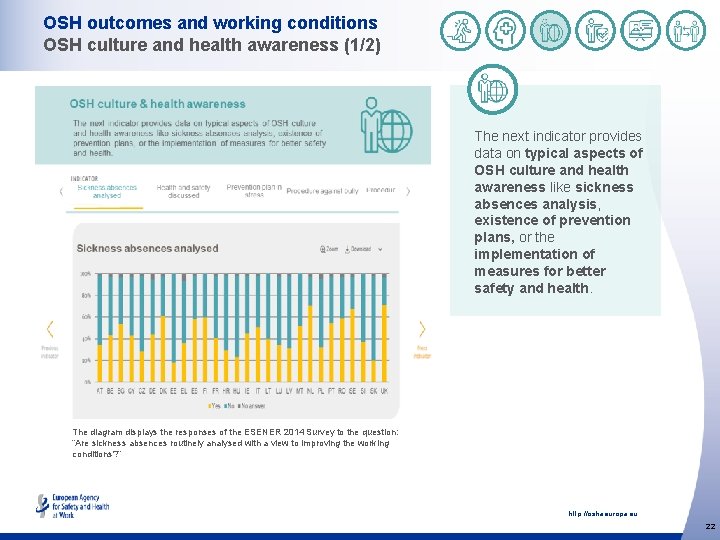
OSH outcomes and working conditions OSH culture and health awareness (1/2) The next indicator provides data on typical aspects of OSH culture and health awareness like sickness absences analysis, existence of prevention plans, or the implementation of measures for better safety and health. The diagram displays the responses of the ESENER 2014 Survey to the question: “Are sickness absences routinely analysed with a view to improving the working conditions? ” http: //osha. europa. eu 22
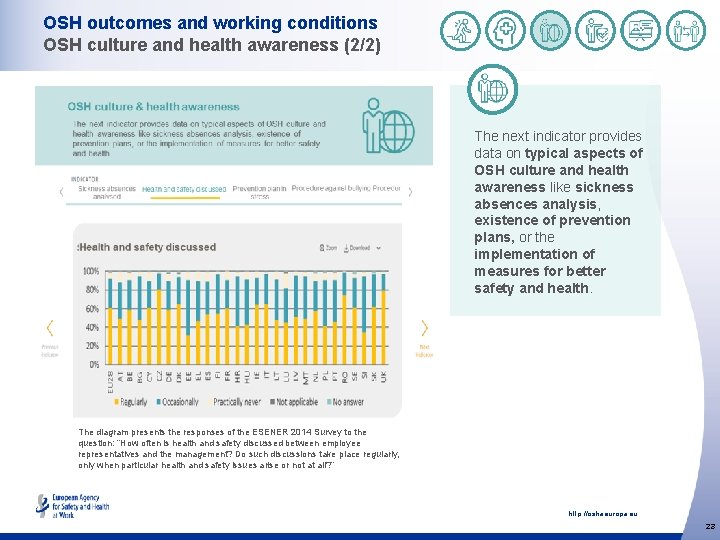
OSH outcomes and working conditions OSH culture and health awareness (2/2) The next indicator provides data on typical aspects of OSH culture and health awareness like sickness absences analysis, existence of prevention plans, or the implementation of measures for better safety and health. The diagram presents the responses of the ESENER 2014 Survey to the question: “How often is health and safety discussed between employee representatives and the management? Do such discussions take place regularly, only when particular health and safety issues arise or not at all? ” http: //osha. europa. eu 23
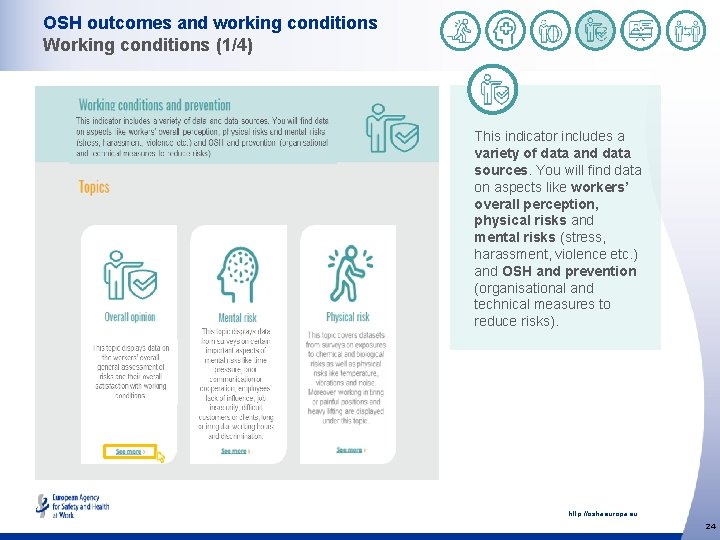
OSH outcomes and working conditions Working conditions (1/4) This indicator includes a variety of data and data sources. You will find data on aspects like workers’ overall perception, physical risks and mental risks (stress, harassment, violence etc. ) and OSH and prevention (organisational and technical measures to reduce risks). http: //osha. europa. eu 24
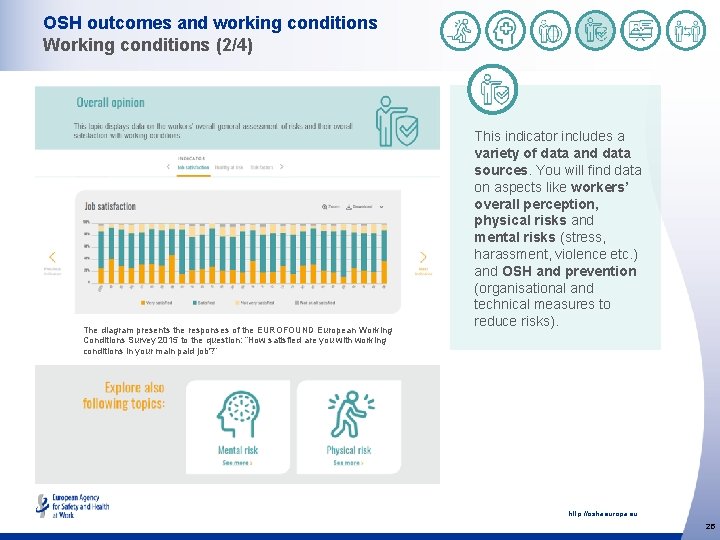
OSH outcomes and working conditions Working conditions (2/4) The diagram presents the responses of the EUROFOUND European Working Conditions Survey 2015 to the question: “How satisfied are you with working conditions in your main paid job? ” This indicator includes a variety of data and data sources. You will find data on aspects like workers’ overall perception, physical risks and mental risks (stress, harassment, violence etc. ) and OSH and prevention (organisational and technical measures to reduce risks). http: //osha. europa. eu 25
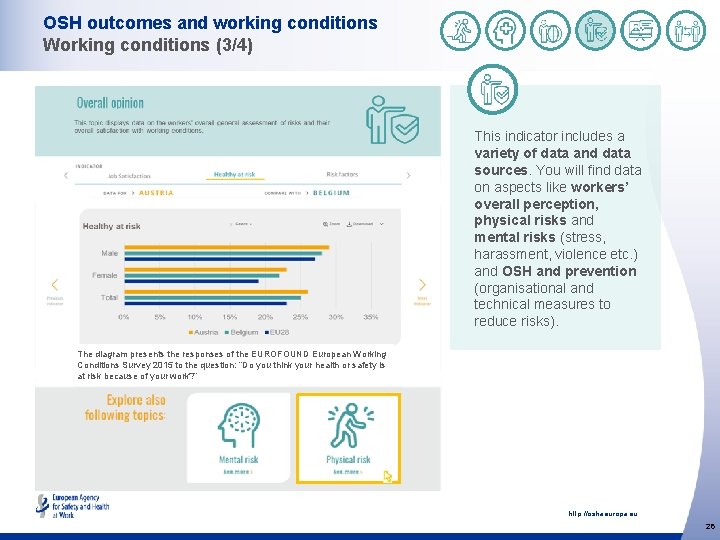
OSH outcomes and working conditions Working conditions (3/4) This indicator includes a variety of data and data sources. You will find data on aspects like workers’ overall perception, physical risks and mental risks (stress, harassment, violence etc. ) and OSH and prevention (organisational and technical measures to reduce risks). The diagram presents the responses of the EUROFOUND European Working Conditions Survey 2015 to the question: “Do you think your health or safety is at risk because of your work? ” http: //osha. europa. eu 26
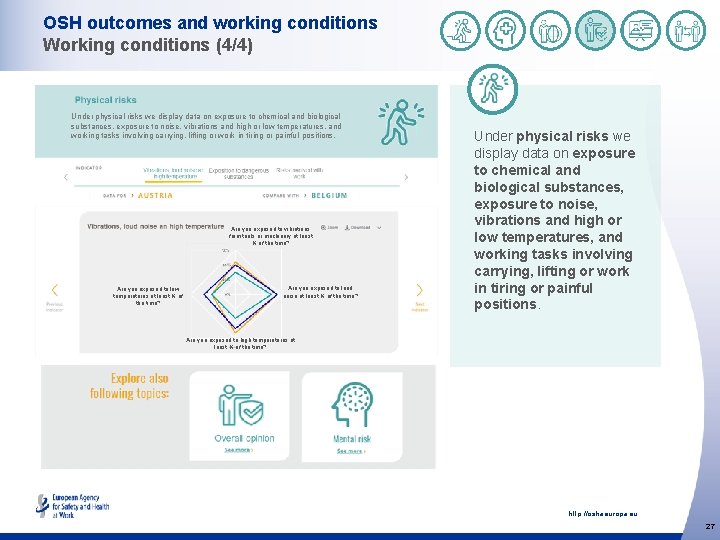
OSH outcomes and working conditions Working conditions (4/4) Under physical risks we display data on exposure to chemical and biological substances, exposure to noise, vibrations and high or low temperatures, and working tasks involving carrying, lifting or work in tiring or painful positions. Are you exposed to vibrations from tools or machinery at least ¼ of the time? Are you exposed to low temperatures at least ¼ of the time? Are you exposed to loud noise at least ¼ of the time? Under physical risks we display data on exposure to chemical and biological substances, exposure to noise, vibrations and high or low temperatures, and working tasks involving carrying, lifting or work in tiring or painful positions. Are you exposed to high temperatures at least ¼ of the time? http: //osha. europa. eu 27
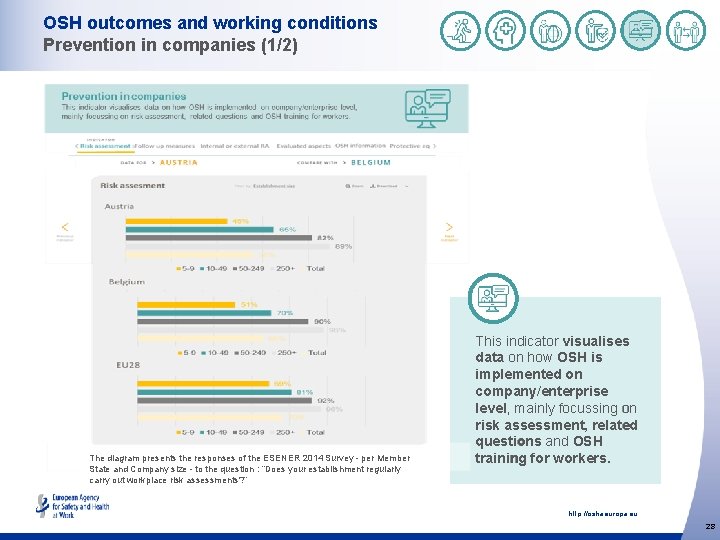
OSH outcomes and working conditions Prevention in companies (1/2) The diagram presents the responses of the ESENER 2014 Survey - per Member State and Company size - to the question : “Does your establishment regularly carry out workplace risk assessments? ” This indicator visualises data on how OSH is implemented on company/enterprise level, mainly focussing on risk assessment, related questions and OSH training for workers. http: //osha. europa. eu 28
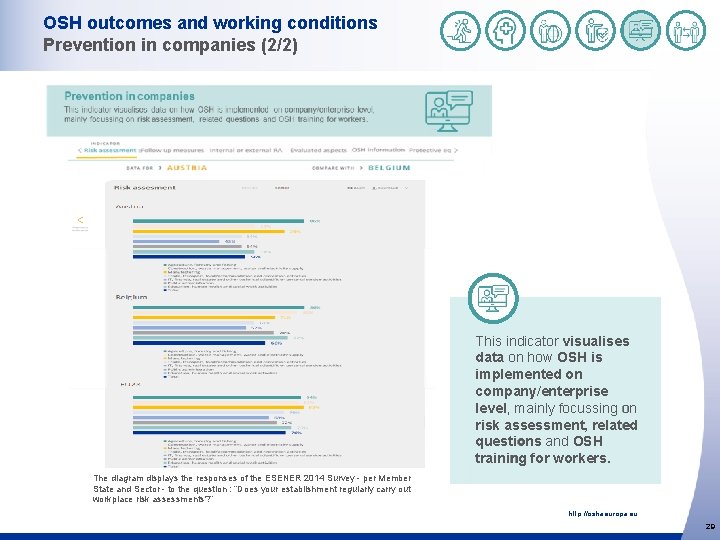
OSH outcomes and working conditions Prevention in companies (2/2) This indicator visualises data on how OSH is implemented on company/enterprise level, mainly focussing on risk assessment, related questions and OSH training for workers. The diagram displays the responses of the ESENER 2014 Survey - per Member State and Sector - to the question : “Does your establishment regularly carry out workplace risk assessments? ” http: //osha. europa. eu 29
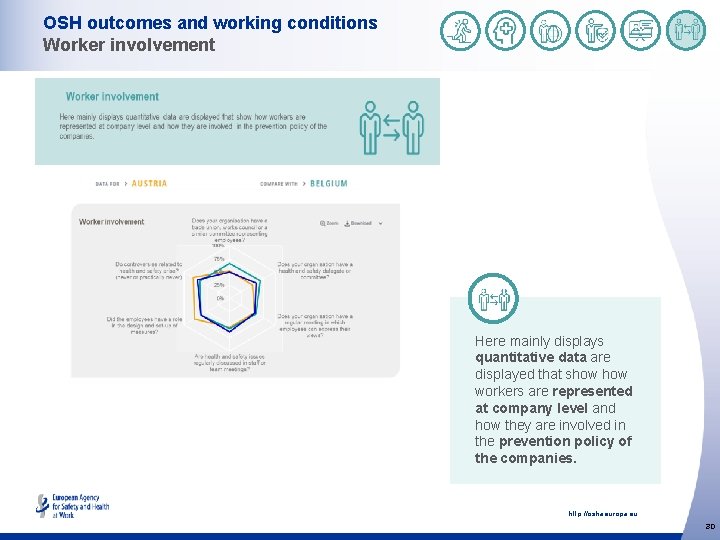
OSH outcomes and working conditions Worker involvement Here mainly displays quantitative data are displayed that show workers are represented at company level and how they are involved in the prevention policy of the companies. http: //osha. europa. eu 30
Enforcement capacity OSH statistic, surveys and research OSH BAROMETER Data visualisation tool Status of the Occupational Safety and Health in the European Union OSH infrastructure 4 http: //osha. europa. eu 31
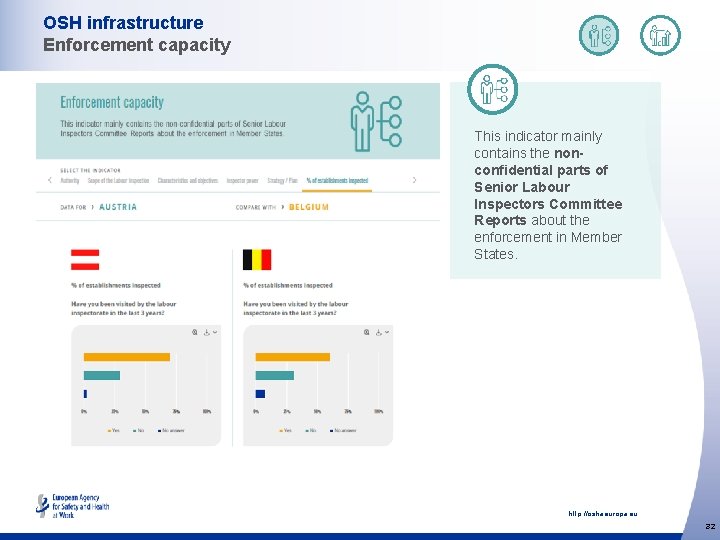
OSH infrastructure Enforcement capacity This indicator mainly contains the nonconfidential parts of Senior Labour Inspectors Committee Reports about the enforcement in Member States. http: //osha. europa. eu 32
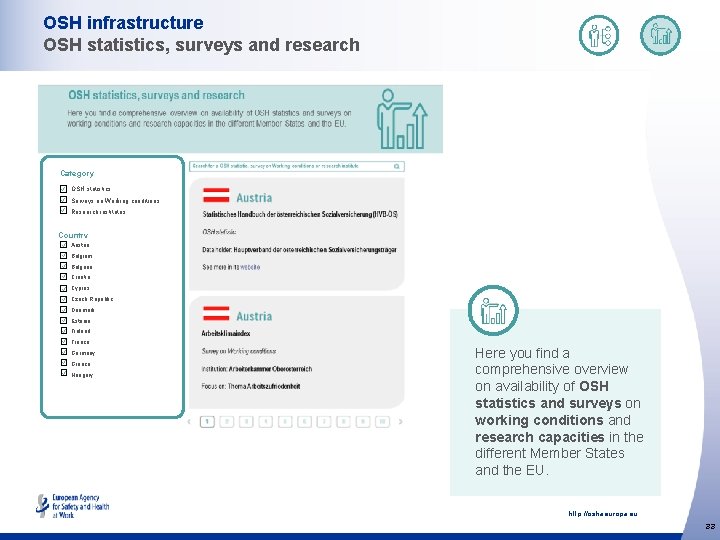
OSH infrastructure OSH statistics, surveys and research Category OSH statistics Surveys on Working conditions Research institutes Country Austria Belgium Bulgaria Croatia Cyprus Czech Republic Denmark Estonia Finland France Germany Greece Hungary Here you find a comprehensive overview on availability of OSH statistics and surveys on working conditions and research capacities in the different Member States and the EU. http: //osha. europa. eu 33
Thank you ! 34 http: //osha. europa. eu 34
- Slides: 34