
Oscillations and Waves Microworld Macroworld Lect 5 Equilibrium
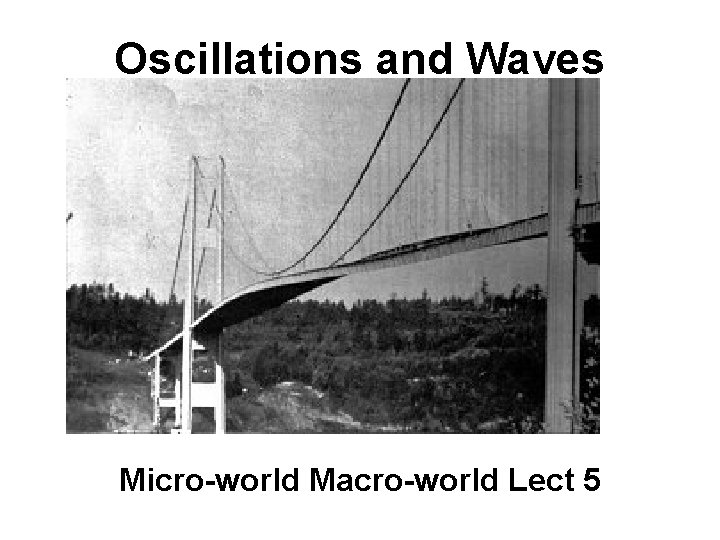
Oscillations and Waves Micro-world Macro-world Lect 5
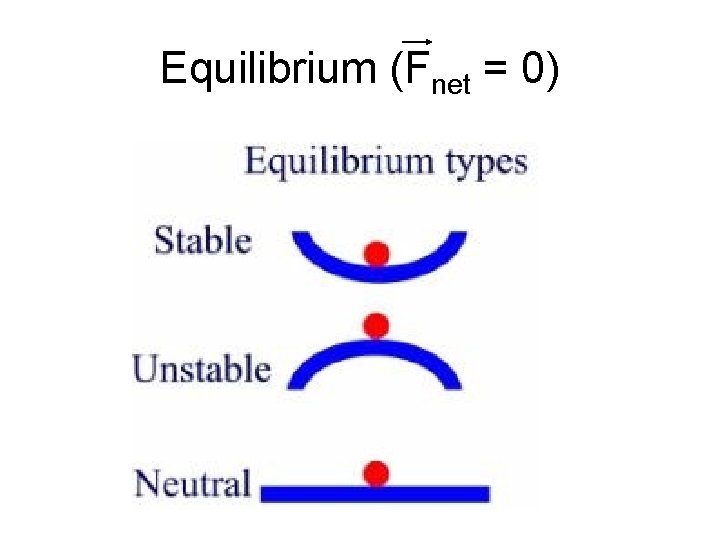
Equilibrium (Fnet = 0)
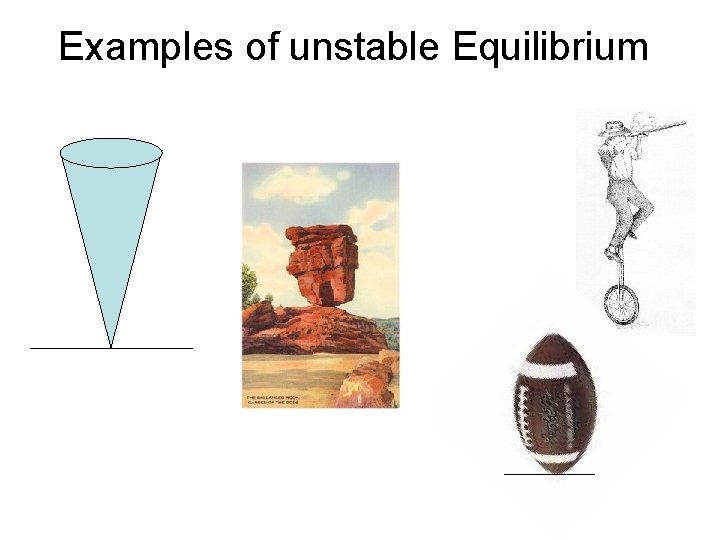
Examples of unstable Equilibrium
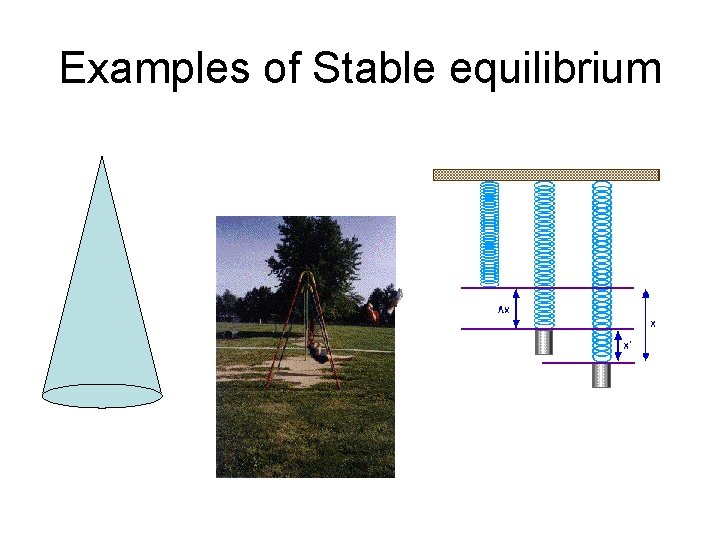
Examples of Stable equilibrium
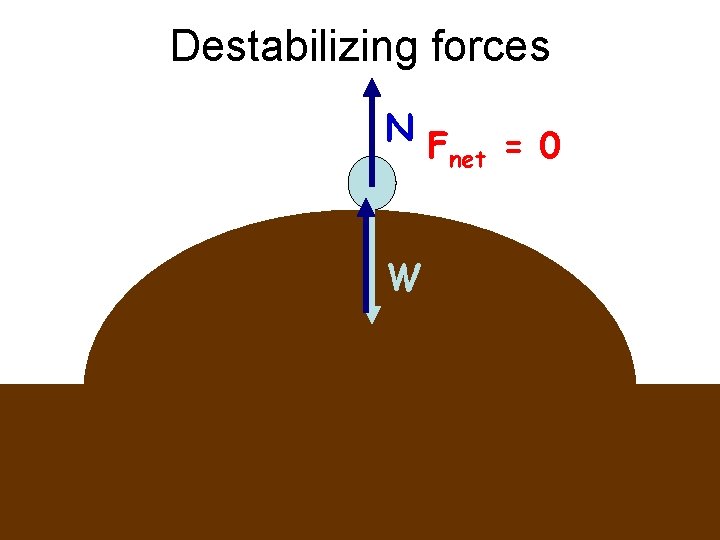
Destabilizing forces NF = 0 net W
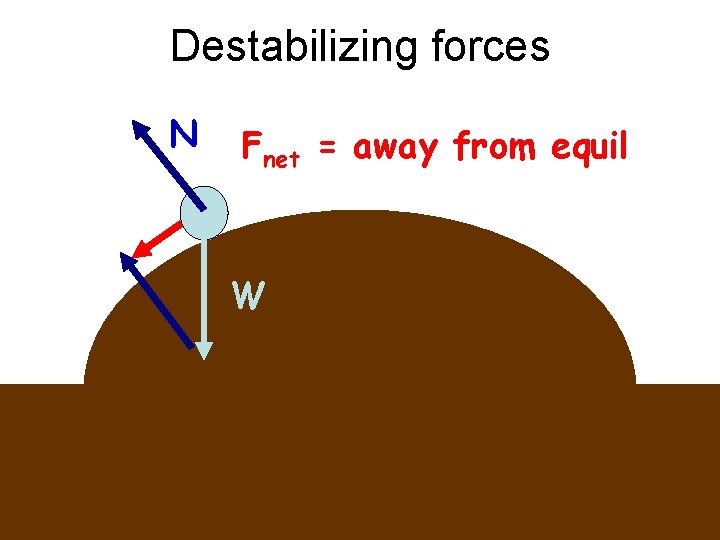
Destabilizing forces N Fnet = away from equil W
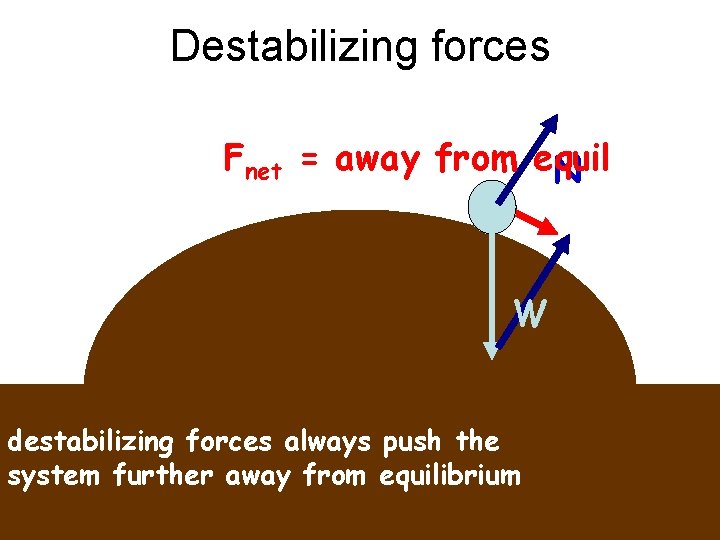
Destabilizing forces Fnet = away from equil N W destabilizing forces always push the system further away from equilibrium
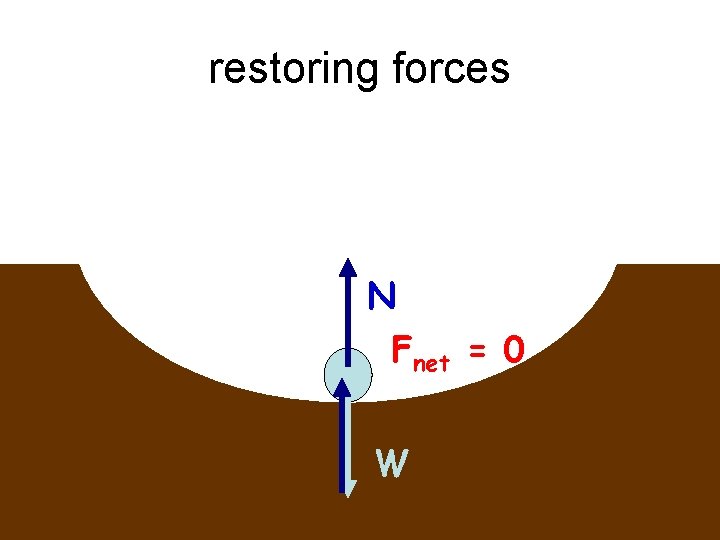
restoring forces N Fnet = 0 W
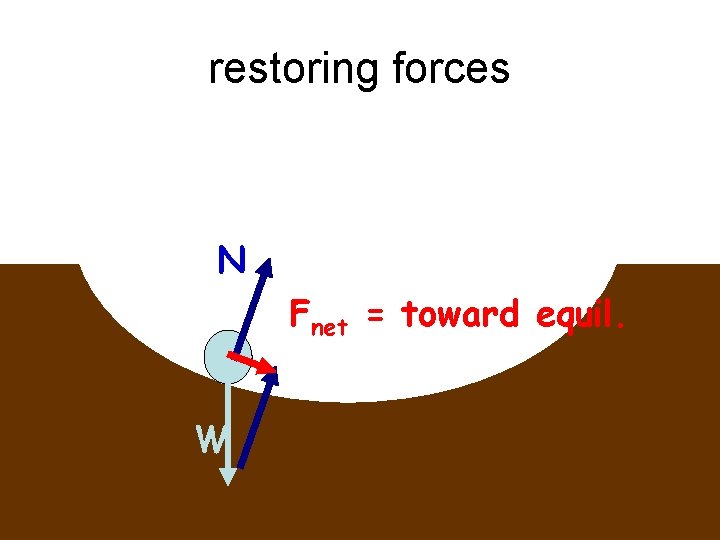
restoring forces N Fnet = toward equil. W
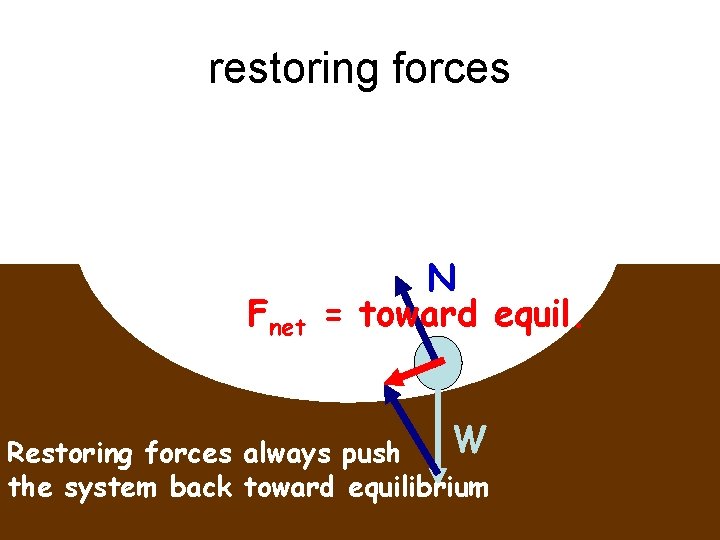
restoring forces Fnet N = toward equil. W Restoring forces always push the system back toward equilibrium
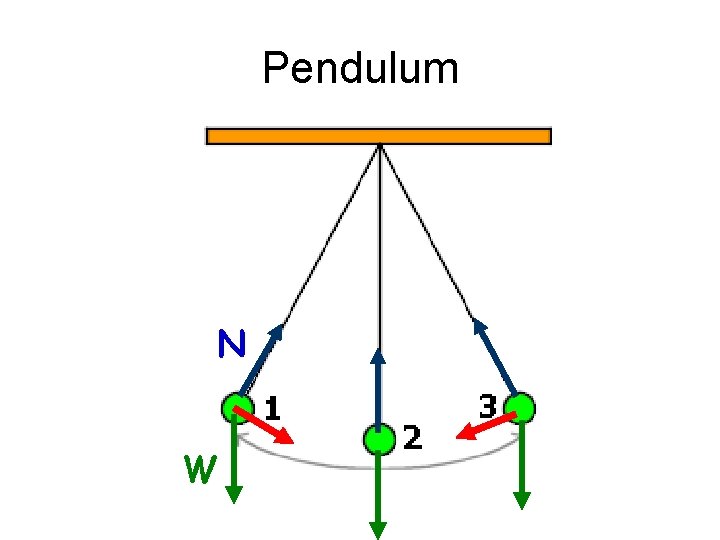
Pendulum N W
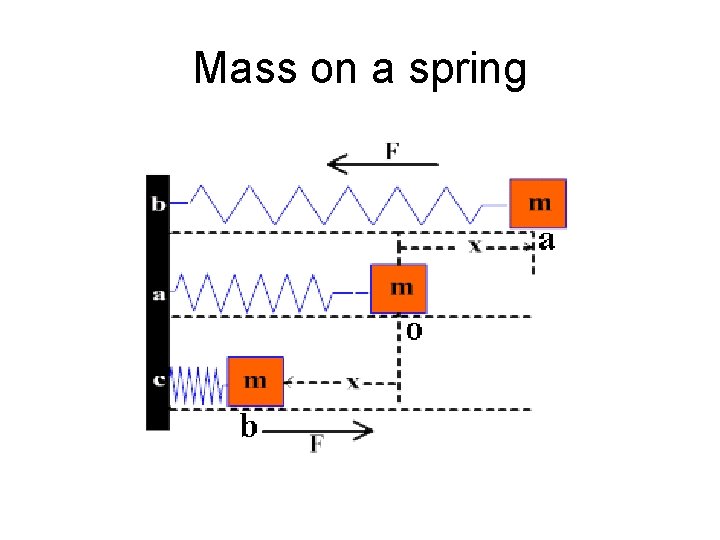
Mass on a spring
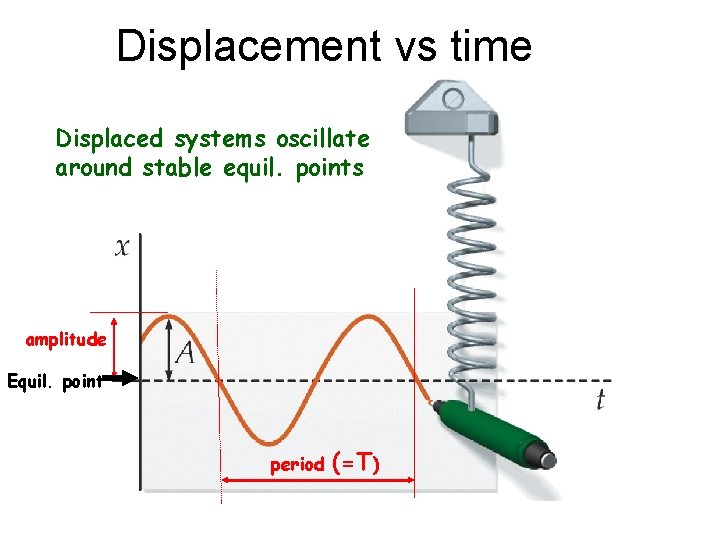
Displacement vs time Displaced systems oscillate around stable equil. points amplitude Equil. point period (=T)
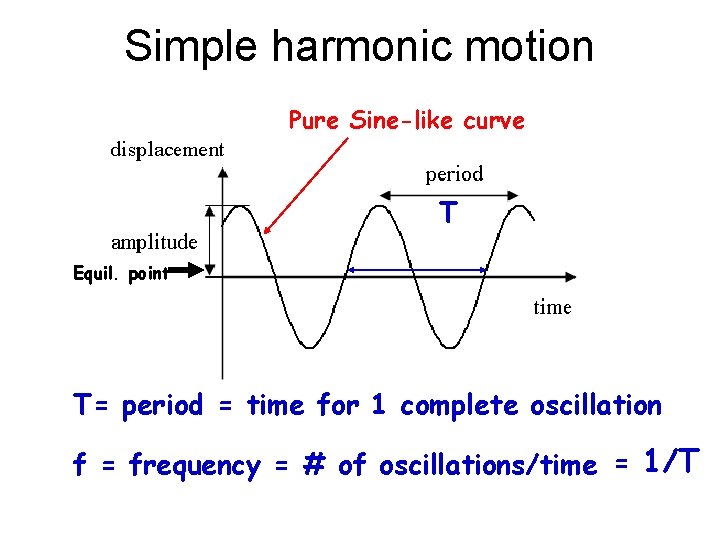
Simple harmonic motion Pure Sine-like curve T Equil. point T= period = time for 1 complete oscillation f = frequency = # of oscillations/time = 1/T
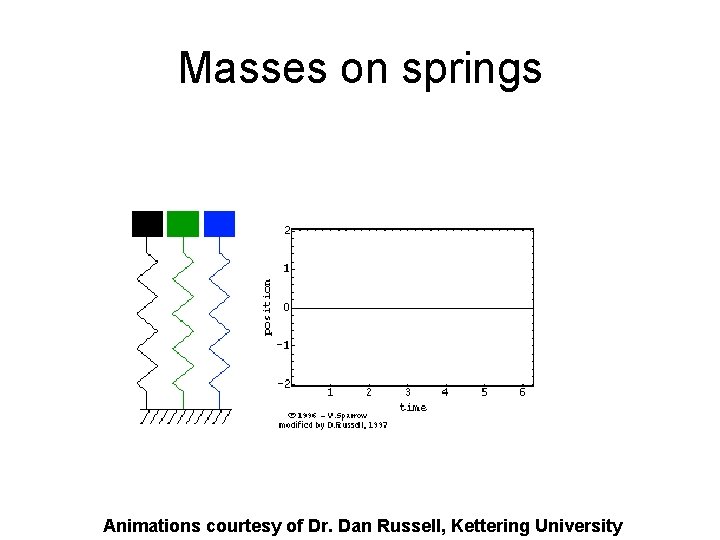
Masses on springs Animations courtesy of Dr. Dan Russell, Kettering University
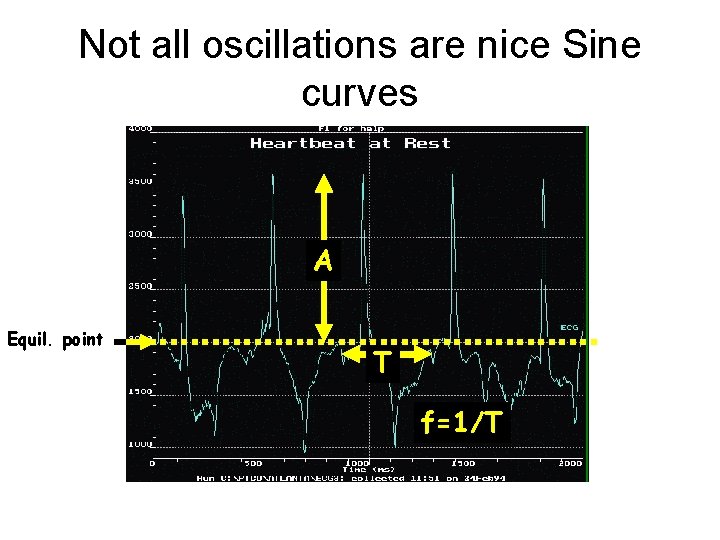
Not all oscillations are nice Sine curves A Equil. point T f=1/T
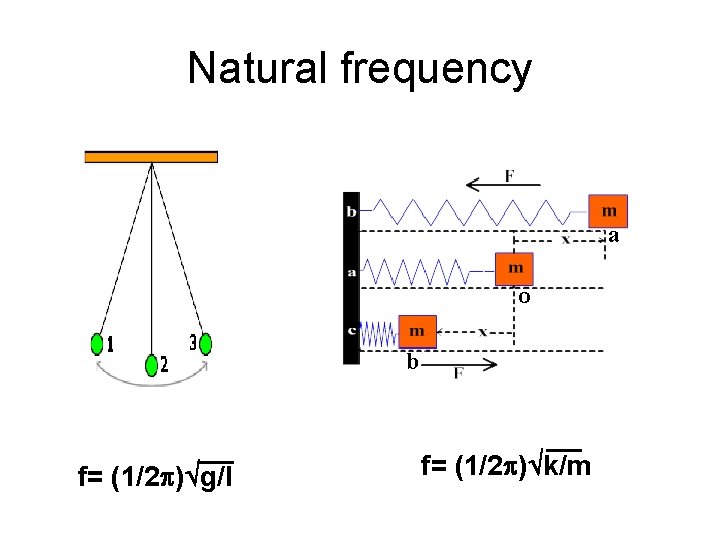
Natural frequency f= (1/2 p) g/l f= (1/2 p) k/m
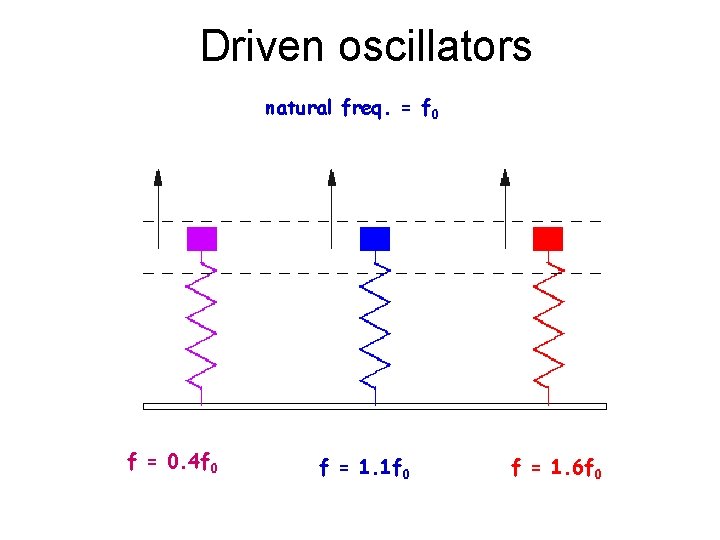
Driven oscillators natural freq. = f 0 f = 0. 4 f 0 f = 1. 1 f 0 f = 1. 6 f 0
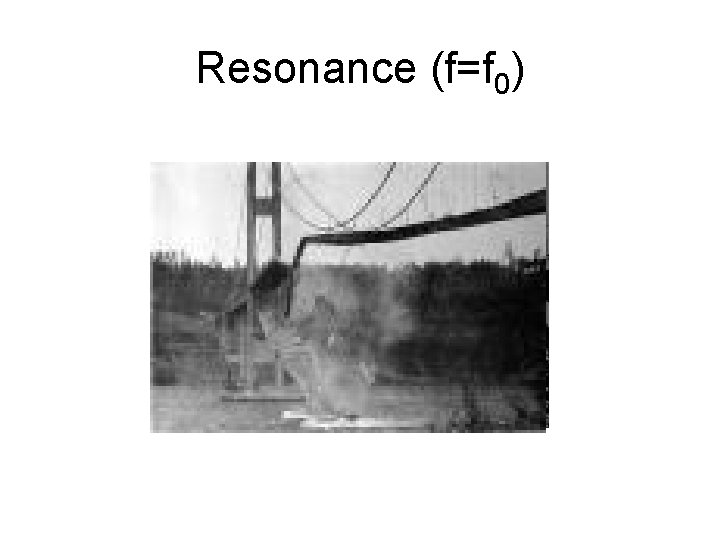
Resonance (f=f 0)
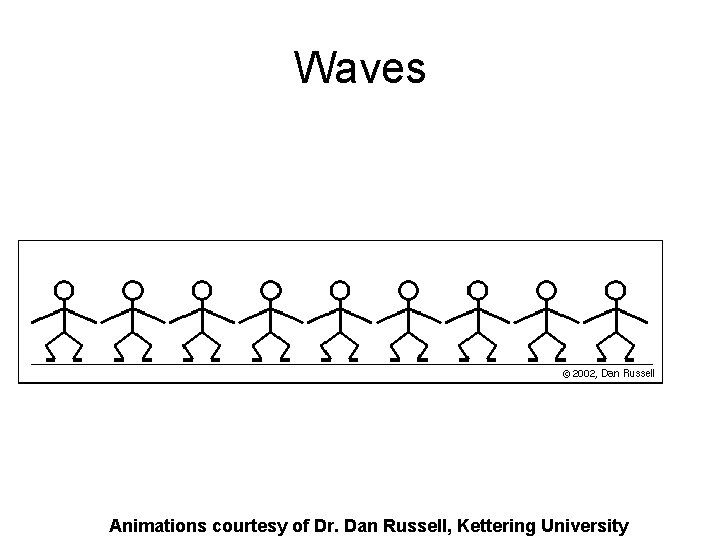
Waves Animations courtesy of Dr. Dan Russell, Kettering University
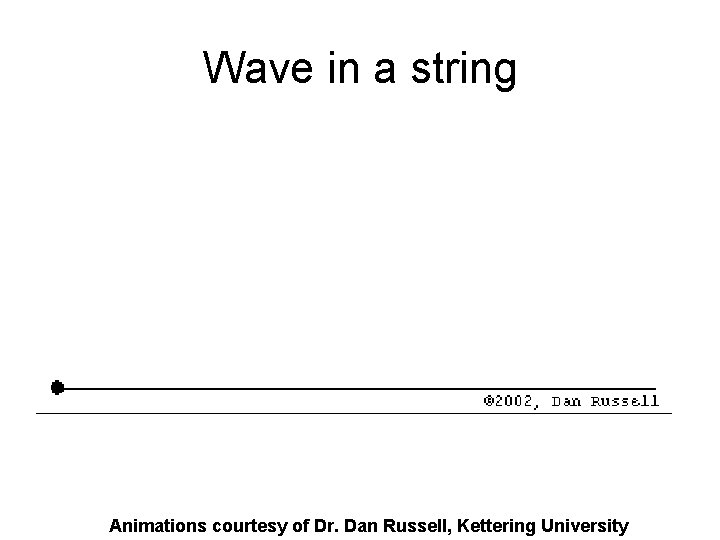
Wave in a string Animations courtesy of Dr. Dan Russell, Kettering University

Pulsed Sound Wave
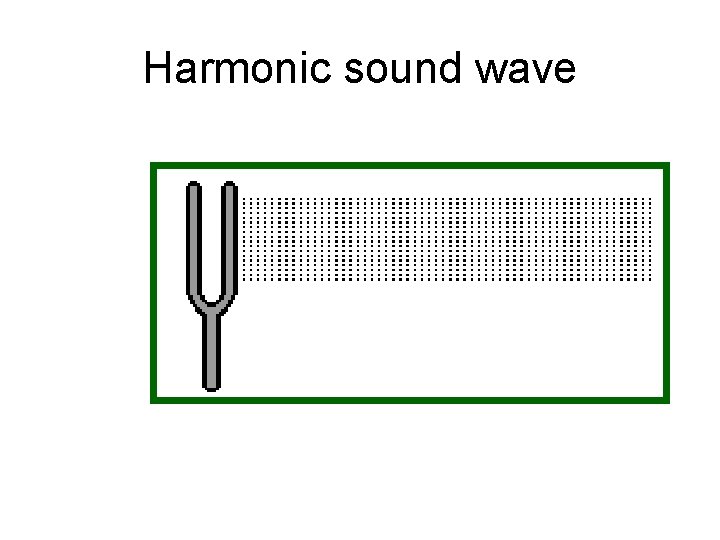
Harmonic sound wave
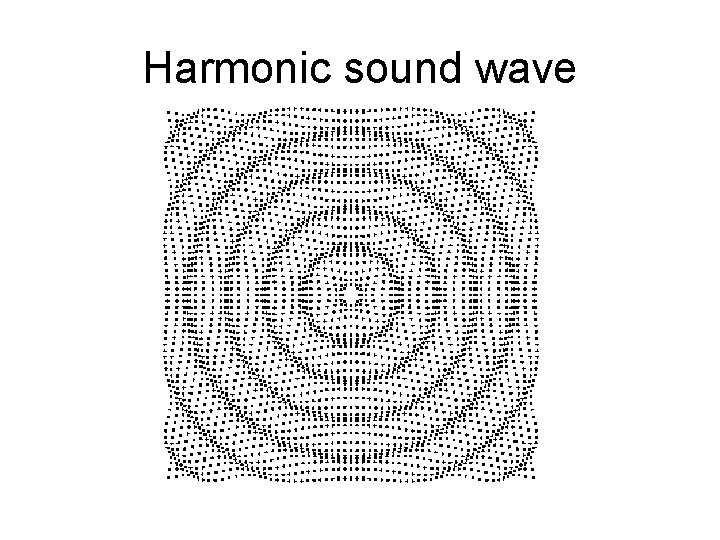
Harmonic sound wave
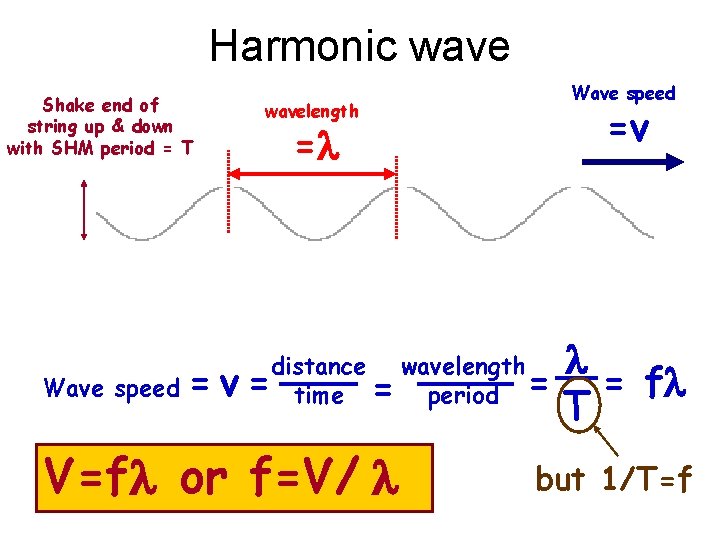
Harmonic wave Shake end of string up & down with SHM period = T Wave speed wavelength =v =l distance time =v= = V=fl or f=V/ l wavelength period l = = fl T but 1/T=f
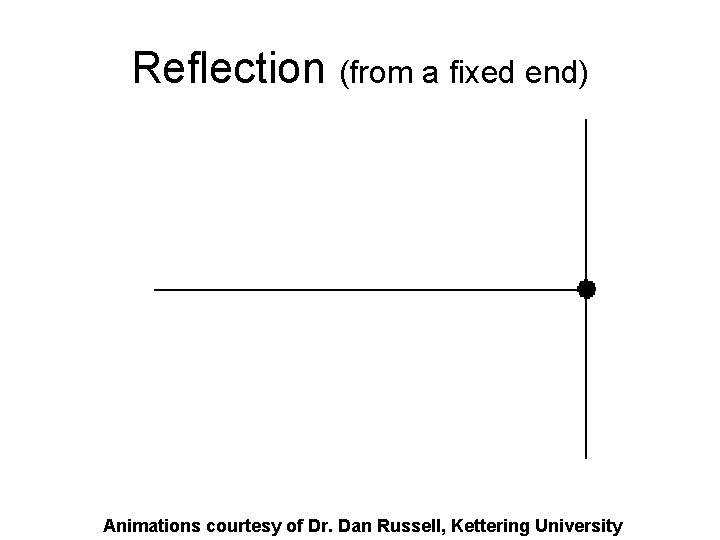
Reflection (from a fixed end) Animations courtesy of Dr. Dan Russell, Kettering University
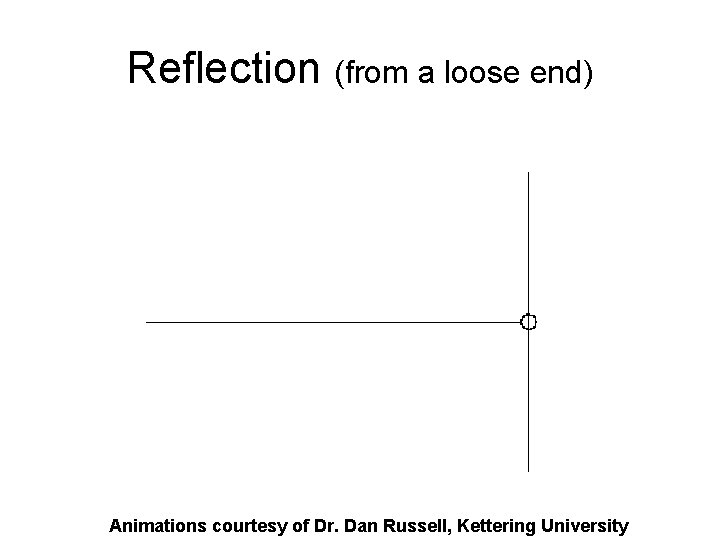
Reflection (from a loose end) Animations courtesy of Dr. Dan Russell, Kettering University
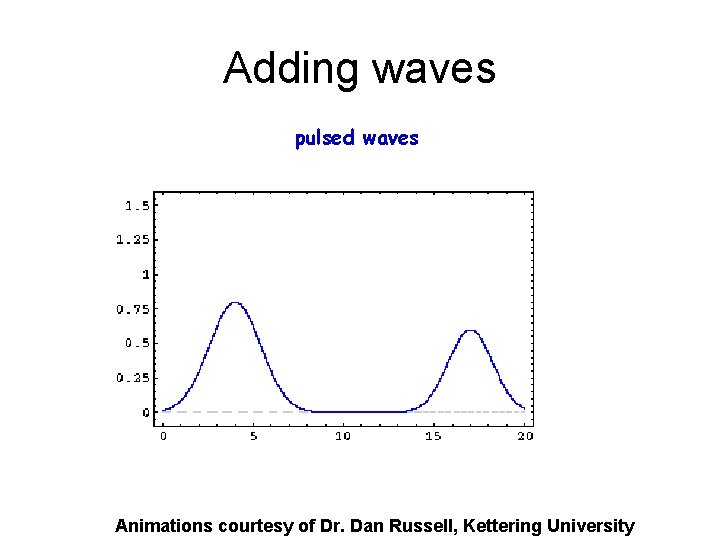
Adding waves pulsed waves Animations courtesy of Dr. Dan Russell, Kettering University
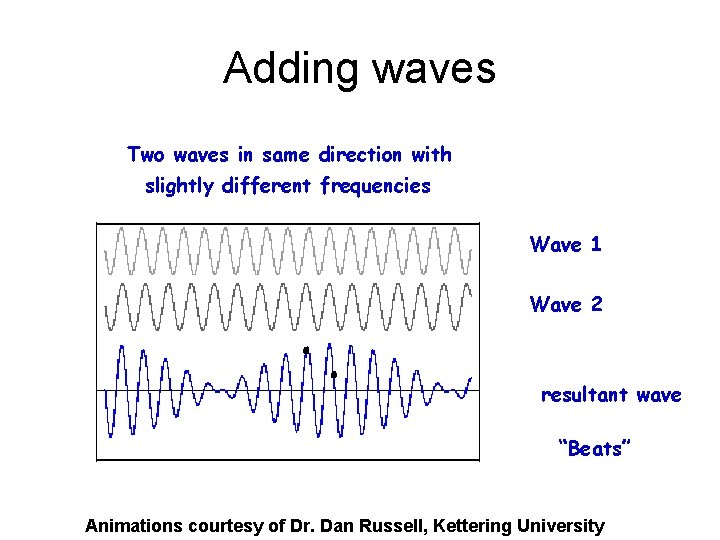
Adding waves Two waves in same direction with slightly different frequencies Wave 1 Wave 2 resultant wave “Beats” Animations courtesy of Dr. Dan Russell, Kettering University
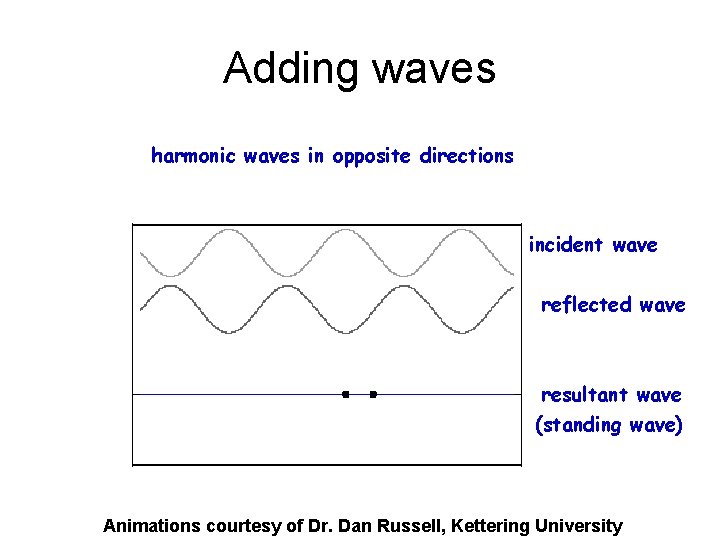
Adding waves harmonic waves in opposite directions incident wave reflected wave resultant wave (standing wave) Animations courtesy of Dr. Dan Russell, Kettering University
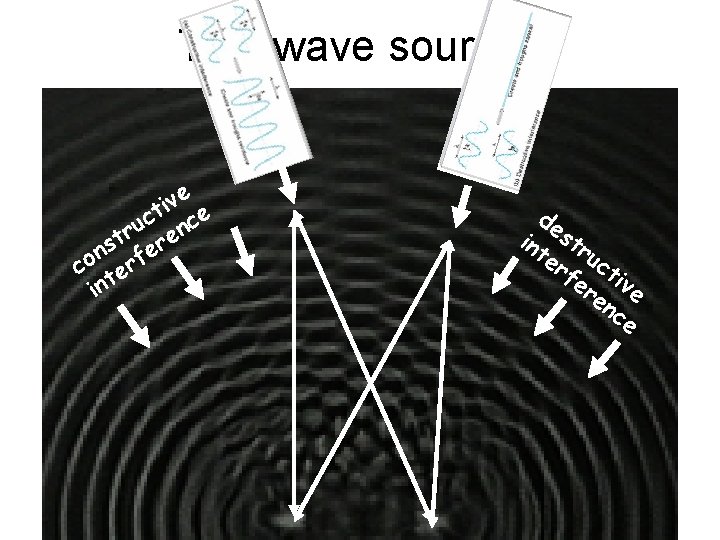
Two wave sources e v i t ce c ru ren t ns fe o c er int de in str te u rf cti er ve en ce
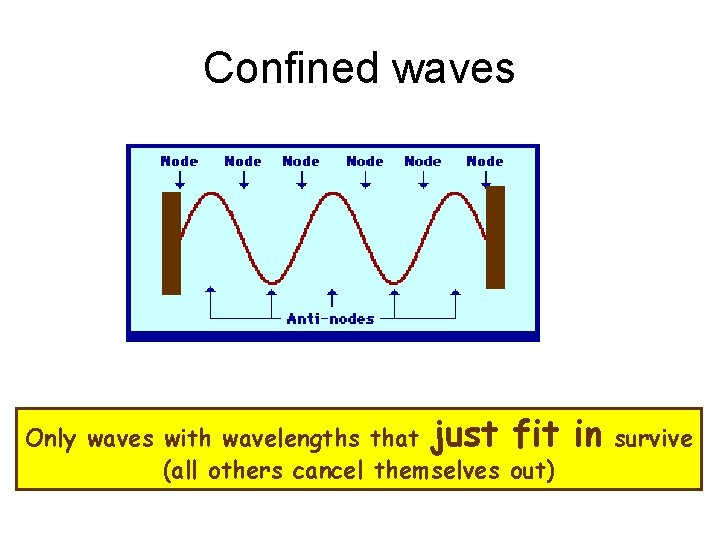
Confined waves Only waves with wavelengths that just fit (all others cancel themselves out) in survive
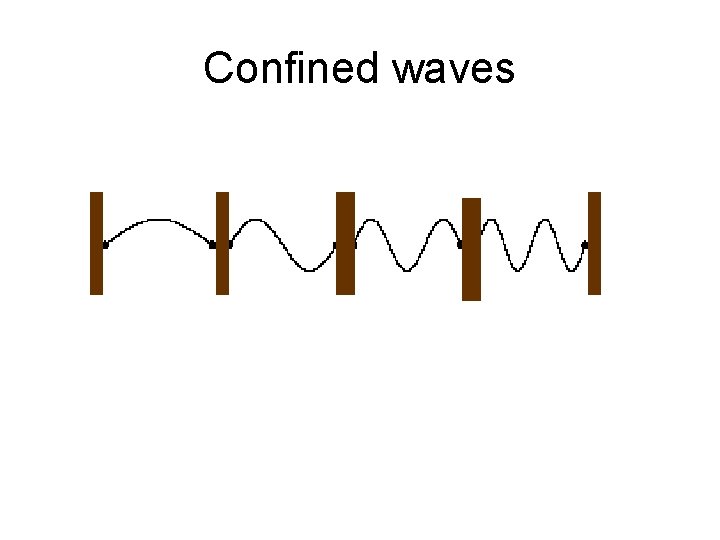
Confined waves
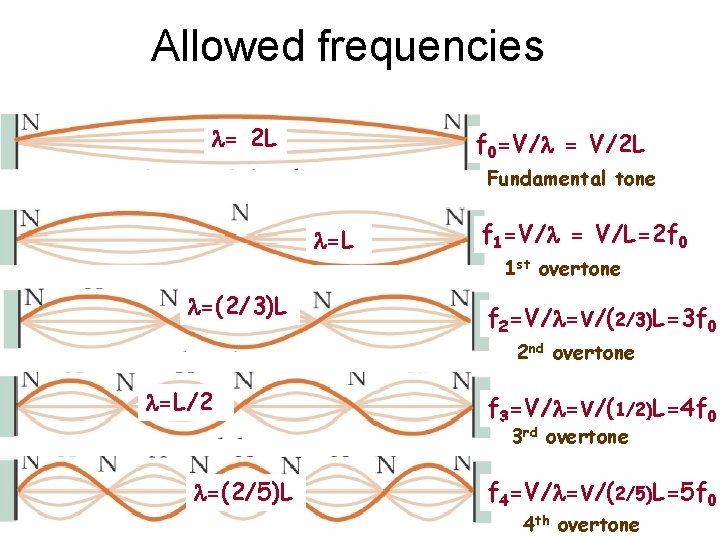
Allowed frequencies l= 2 L f 0=V/l = V/2 L Fundamental tone l=L l=(2/3)L f 1=V/l = V/L=2 f 0 1 st overtone f 2=V/l=V/(2/3)L=3 f 0 2 nd overtone l=L/2 f 3=V/l=V/(1/2)L=4 f 0 3 rd overtone l=(2/5)L f 4=V/l=V/(2/5)L=5 f 0 4 th overtone
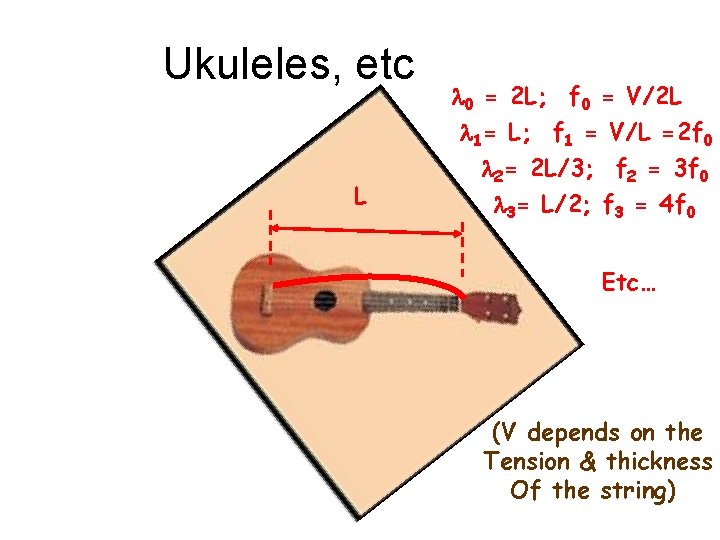
Ukuleles, etc L l 0 = 2 L; f 0 = V/2 L l 1= L; f 1 = V/L =2 f 0 l 2= 2 L/3; f 2 = 3 f 0 l 3= L/2; f 3 = 4 f 0 Etc… (V depends on the Tension & thickness Of the string)
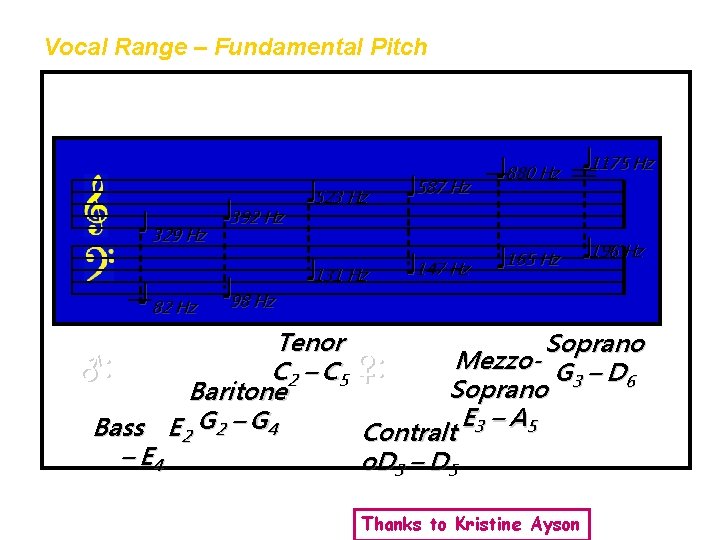
Vocal Range – Fundamental Pitch ♩ 329 Hz ♩ 392 Hz ♩ 82 Hz ♩ 98 Hz ♩ 523 Hz ♩ 131 Hz ♩ 587 Hz ♩ 147 Hz ♩ 880 Hz ♩ 1175 Hz ♩ 165 Hz ♩ 196 Hz Tenor Soprano Mezzo- G – D ♂: C 2 – C 5 ♀: 3 6 Soprano Baritone E 3 – A 5 Bass E 2 G 2 – G 4 Contralt – E 4 o. D 3 – D 5 Thanks to Kristine Ayson
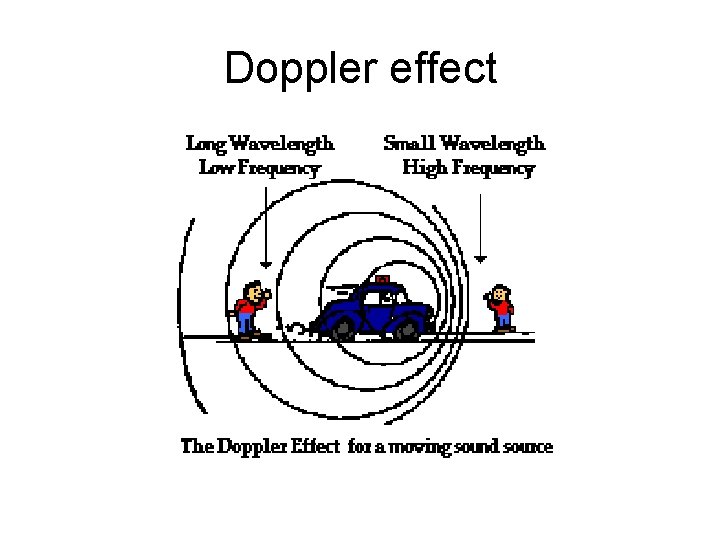
Doppler effect
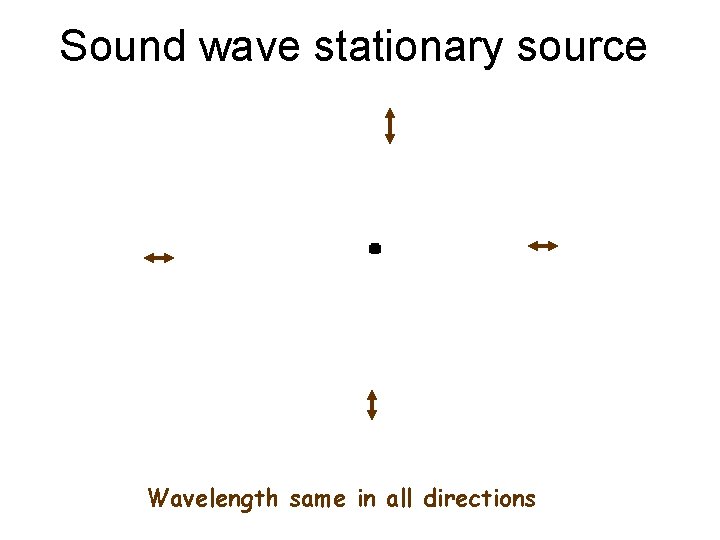
Sound wave stationary source Wavelength same in all directions
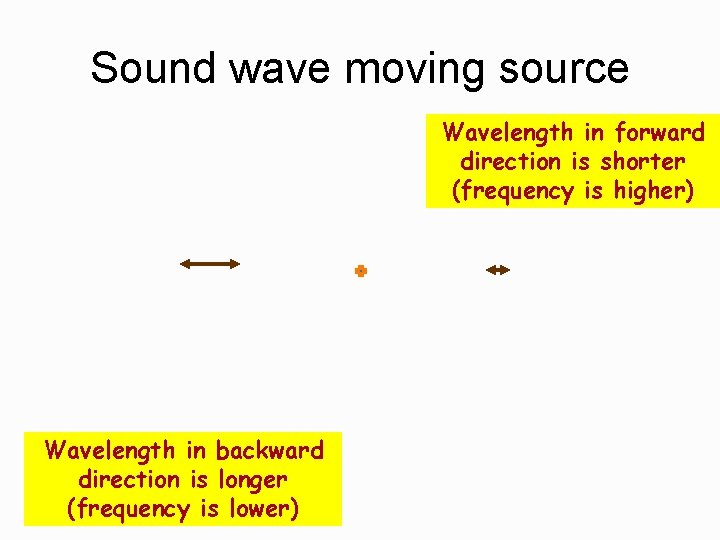
Sound wave moving source Wavelength in forward direction is shorter (frequency is higher) Wavelength in backward direction is longer (frequency is lower)
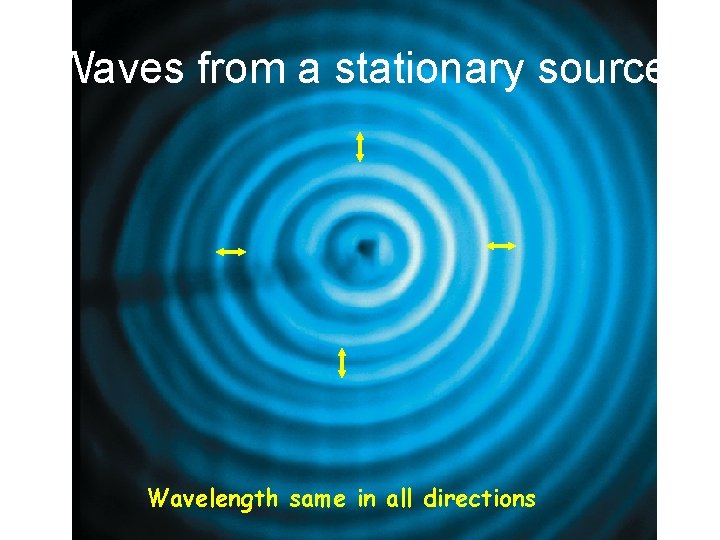
Waves from a stationary source Wavelength same in all directions
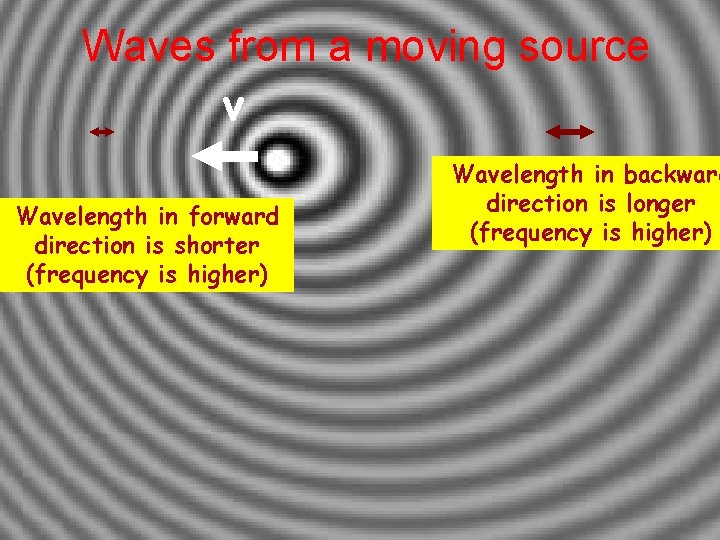
Waves from a moving source v Wavelength in forward direction is shorter (frequency is higher) Wavelength in backward direction is longer (frequency is higher)
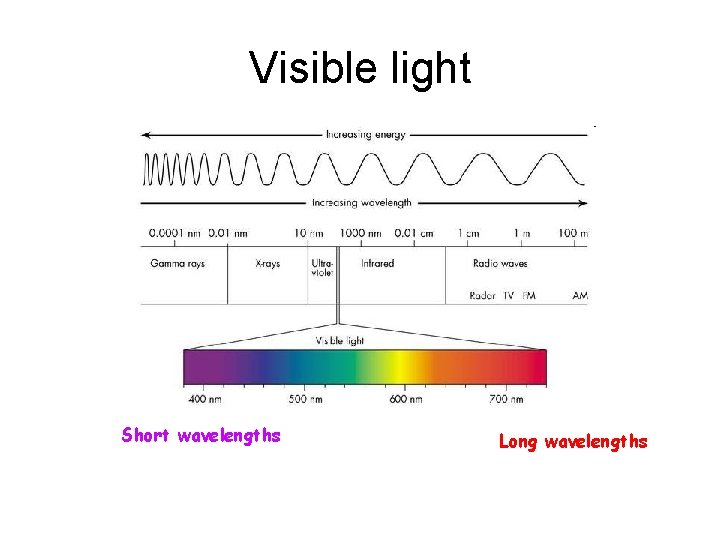
Visible light Short wavelengths Long wavelengths
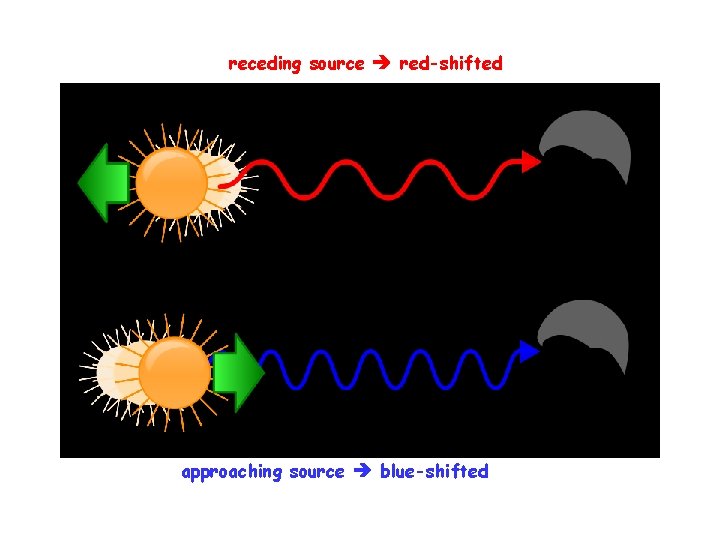
receding source red-shifted approaching source blue-shifted
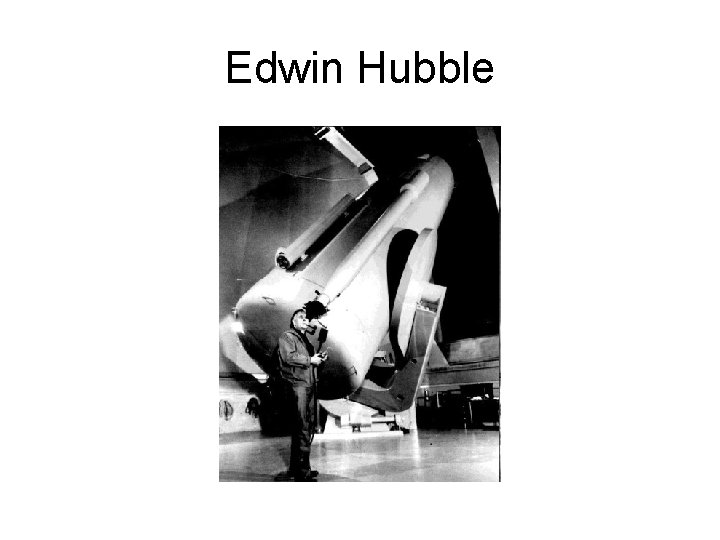
Edwin Hubble
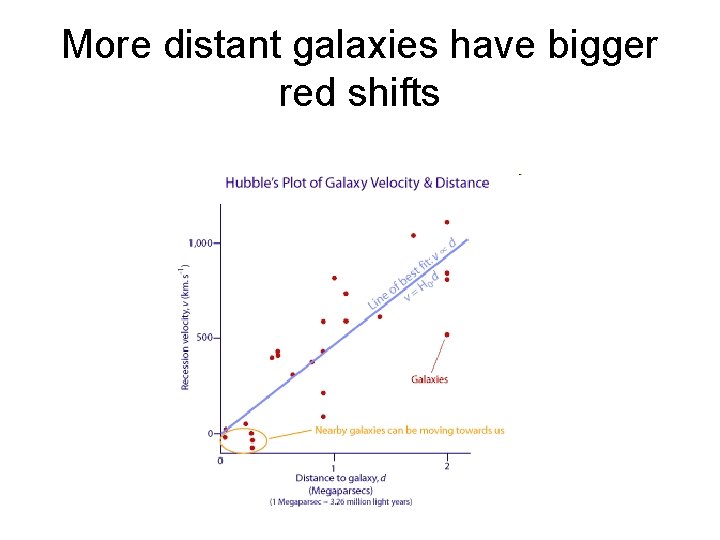
More distant galaxies have bigger red shifts
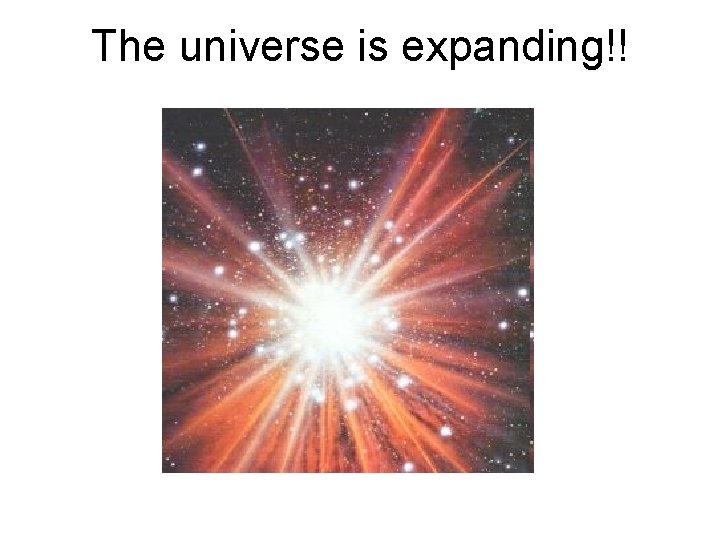
The universe is expanding!!
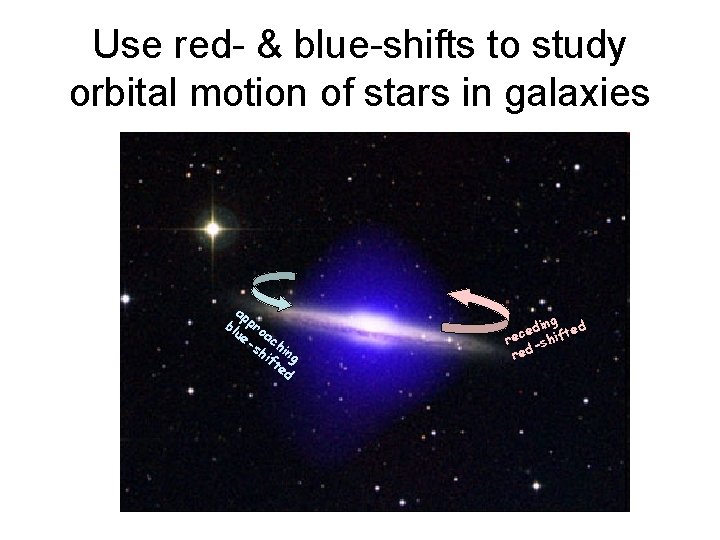
Use red- & blue-shifts to study orbital motion of stars in galaxies ap bl pro ue a -s ch hi ing ft ed g din ted e c re -shif red
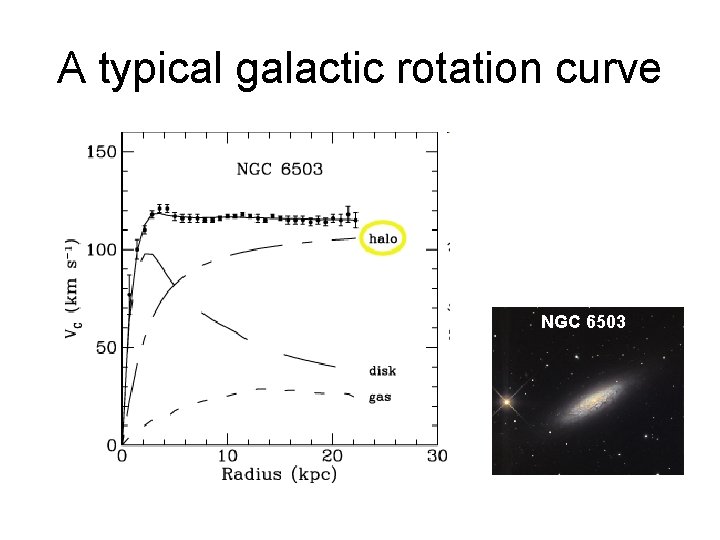
A typical galactic rotation curve NGC 6503
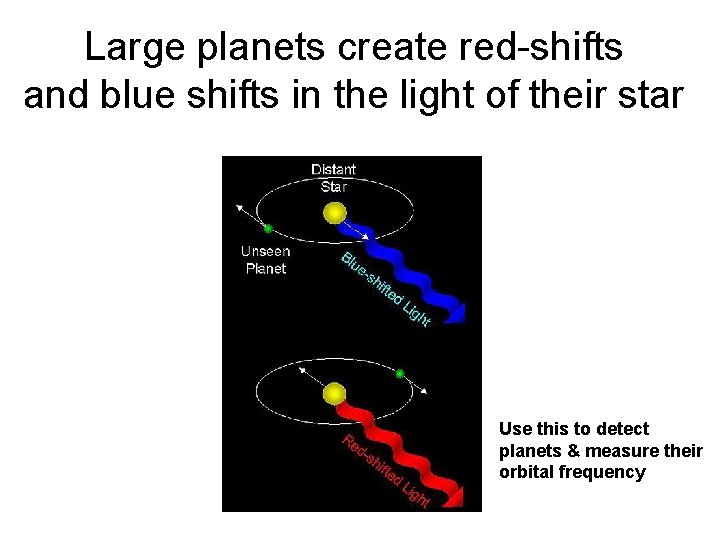
Large planets create red-shifts and blue shifts in the light of their star Use this to detect planets & measure their orbital frequency
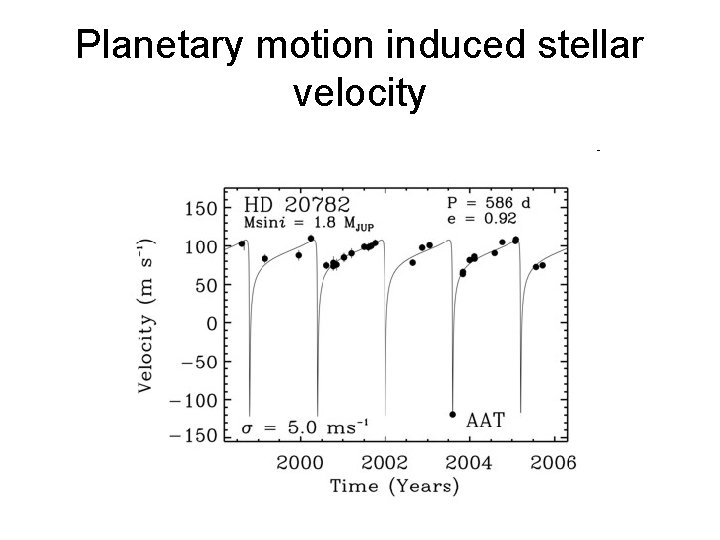
Planetary motion induced stellar velocity
- Slides: 51