
OS Fingerprinting and Tethering Detection in Mobile Networks
OS Fingerprinting and Tethering Detection in Mobile Networks Yi-Chao Chen The University of Texas at Austin Joint work: Yong Liao‡, Mario Baldi‡, Sung-Ju Lee‡, Lili Qiu† Narus Inc. ‡, The University of Texas at Austin† IMC 2014
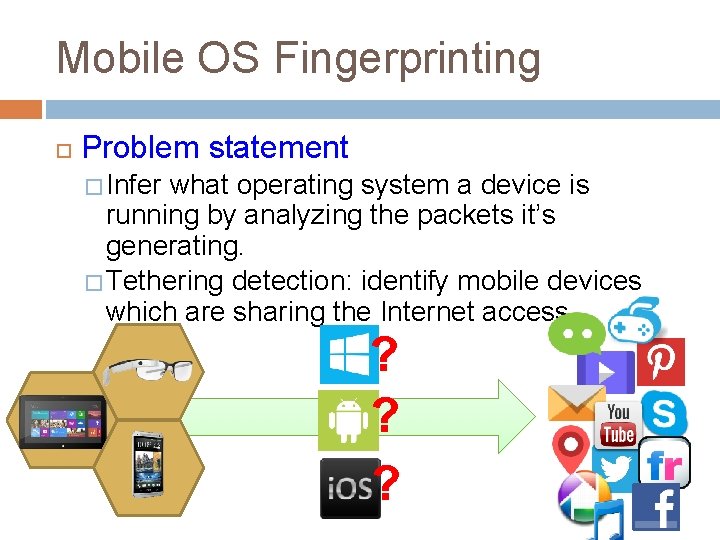
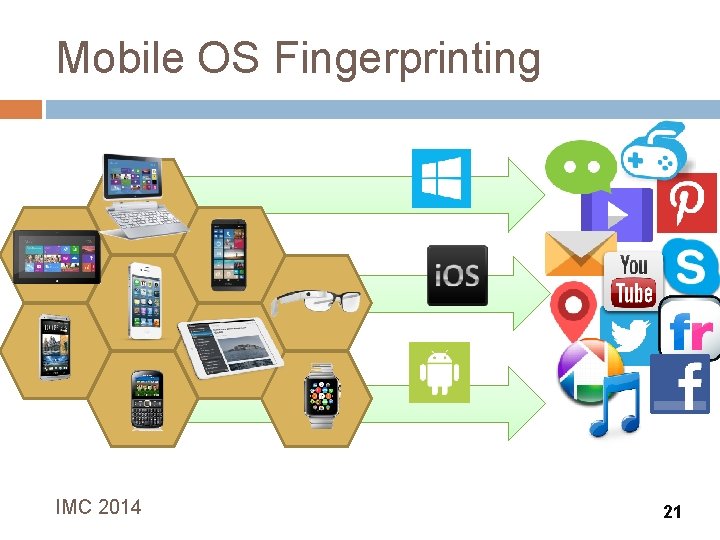
Mobile OS Fingerprinting Problem statement � Infer what operating system a device is running by analyzing the packets it’s generating. � Tethering detection: identify mobile devices which are sharing the Internet access ? ? ?
Importance Tethering detection � Billing for shared access in mobile networks Security � Policy IMC 2014 enforcement in enterprise networks 3
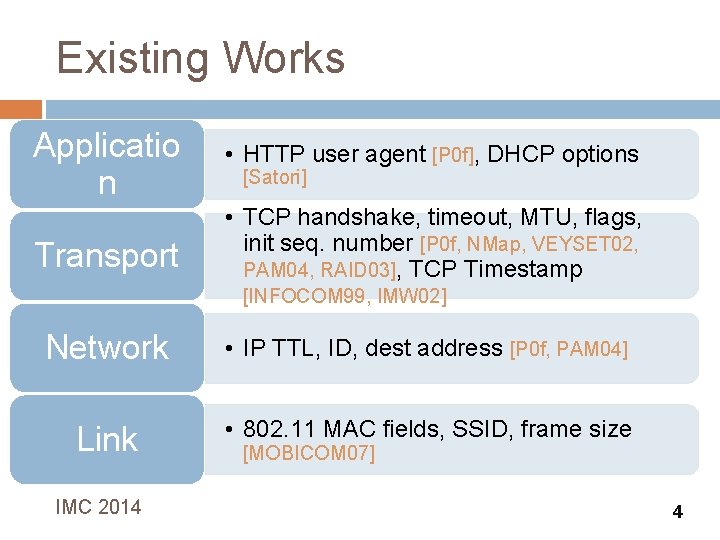
Existing Works Applicatio n Transport • HTTP user agent [P 0 f], DHCP options [Satori] • TCP handshake, timeout, MTU, flags, init seq. number [P 0 f, NMap, VEYSET 02, PAM 04, RAID 03], TCP Timestamp [INFOCOM 99, IMW 02] Network • IP TTL, ID, dest address [P 0 f, PAM 04] Link • 802. 11 MAC fields, SSID, frame size IMC 2014 [MOBICOM 07] 4
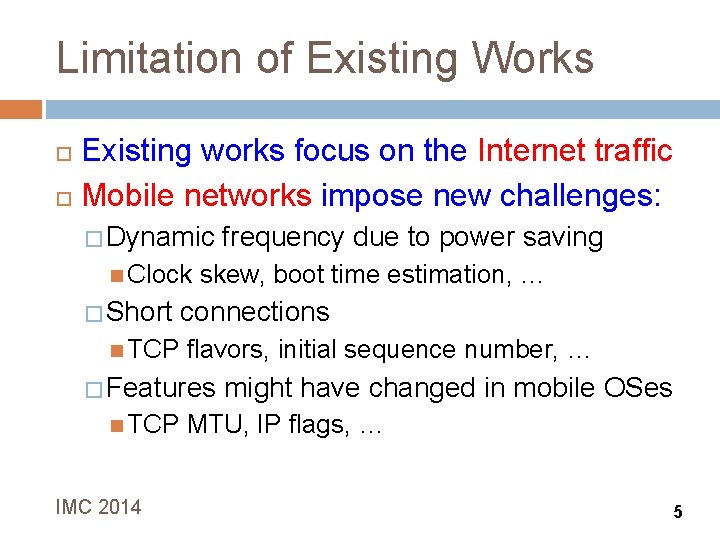
Limitation of Existing Works Existing works focus on the Internet traffic Mobile networks impose new challenges: � Dynamic Clock � Short TCP skew, boot time estimation, … connections flavors, initial sequence number, … � Features TCP IMC 2014 frequency due to power saving might have changed in mobile OSes MTU, IP flags, … 5
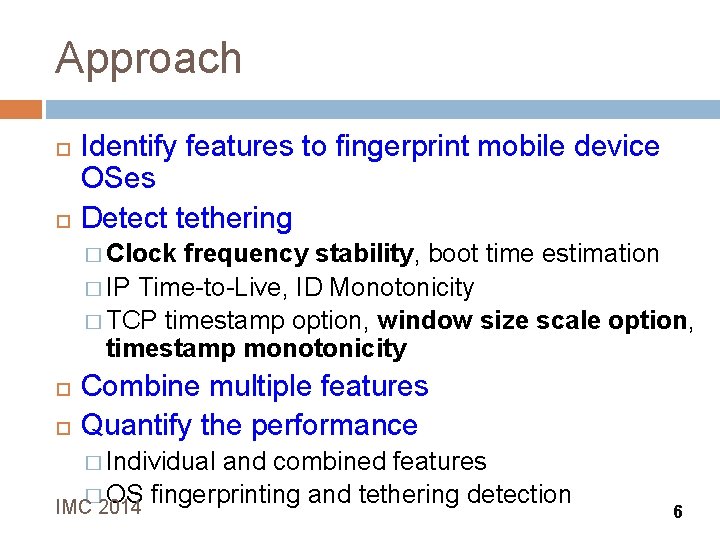
Approach Identify features to fingerprint mobile device OSes Detect tethering � Clock frequency stability, boot time estimation � IP Time-to-Live, ID Monotonicity � TCP timestamp option, window size scale option, timestamp monotonicity Combine multiple features Quantify the performance � Individual and combined features � OS fingerprinting and tethering detection IMC 2014 6
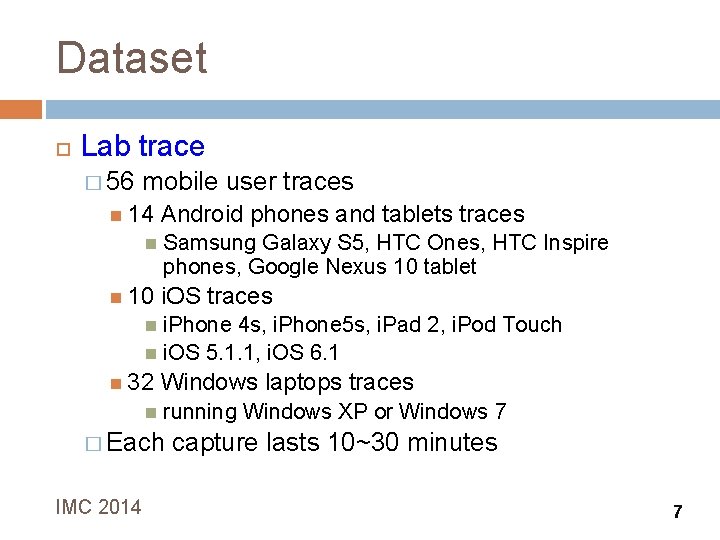
Dataset Lab trace � 56 mobile user traces 14 10 Android phones and tablets traces Samsung Galaxy S 5, HTC Ones, HTC Inspire phones, Google Nexus 10 tablet i. OS traces i. Phone 4 s, i. Phone 5 s, i. Pad 2, i. Pod Touch i. OS 5. 1. 1, i. OS 6. 1 32 Windows laptops traces running Windows XP or Windows 7 � Each IMC 2014 capture lasts 10~30 minutes 7
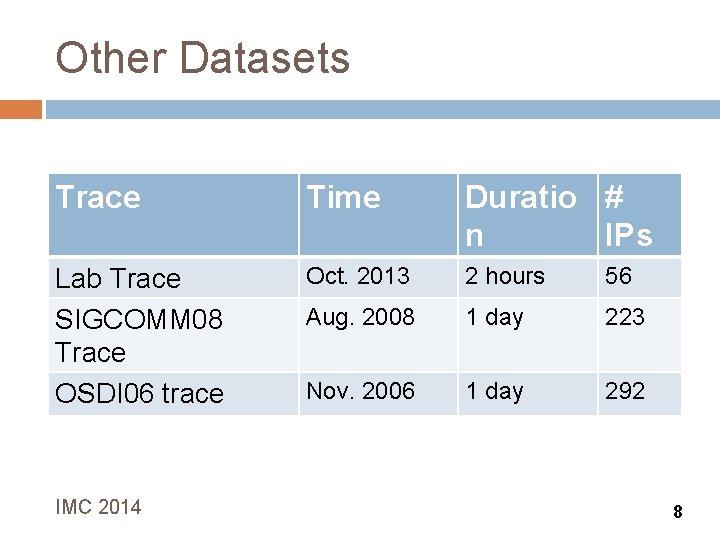
Other Datasets Trace Time Duratio # n IPs Lab Trace SIGCOMM 08 Trace OSDI 06 trace Oct. 2013 2 hours 56 Aug. 2008 1 day 223 Nov. 2006 1 day 292 IMC 2014 8
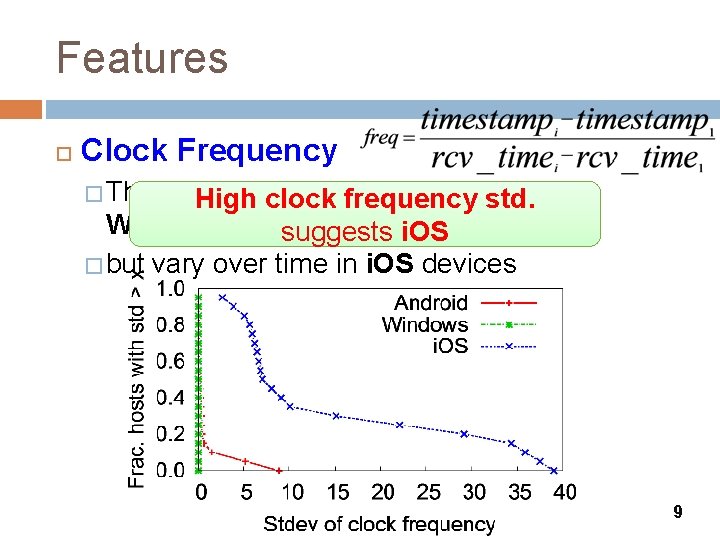
Features Clock Frequency � The frequency is stable in Android High clock frequency std. and Windows, suggests i. OS � but vary over time in i. OS devices 9
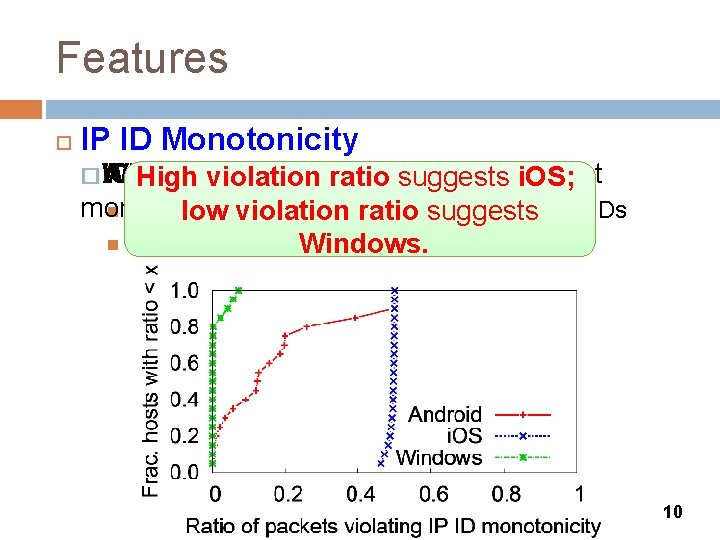
Features IP ID Monotonicity Android: � i. OS: Windows: randomize IP ID the consistently IP ID of each increase packet High violation ratio suggests i. OS; monotonically Somelow devices completely randomize the IP IDs violation ratio suggests Some periodically reset to random values. Windows. 10
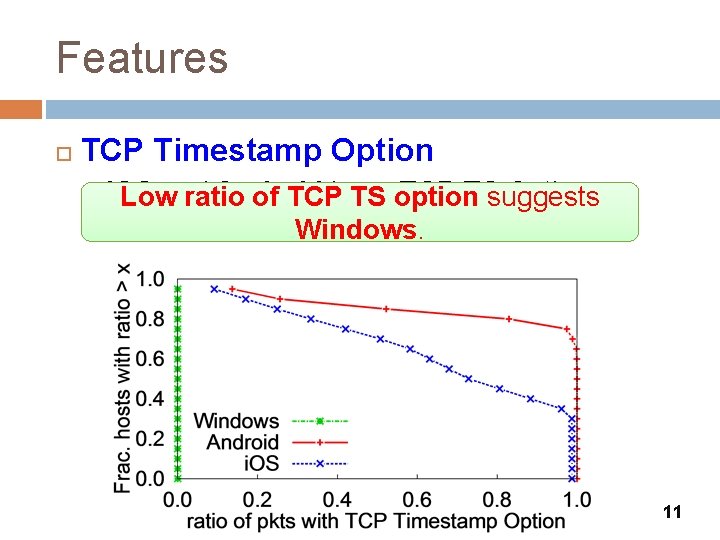
Features TCP Timestamp Option � i. OS and Android TCP TSsuggests Option, Low ratio of TCPhave TS option � but Windows doesn’t 11
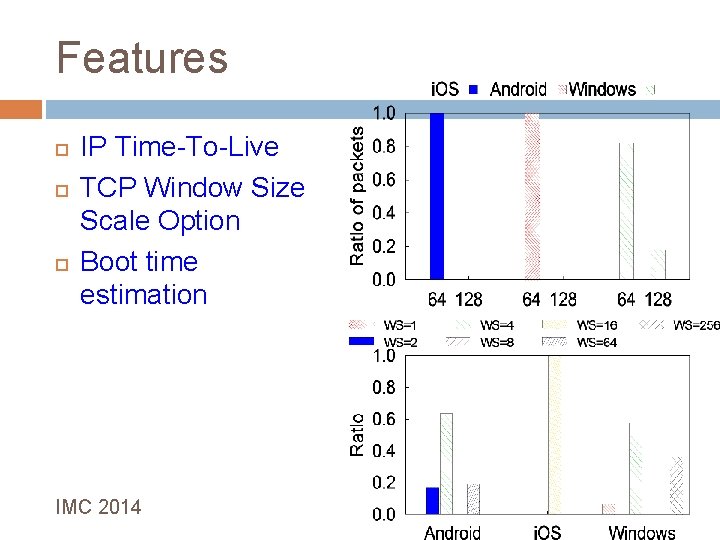
Features IP Time-To-Live TCP Window Size Scale Option Boot time estimation IMC 2014
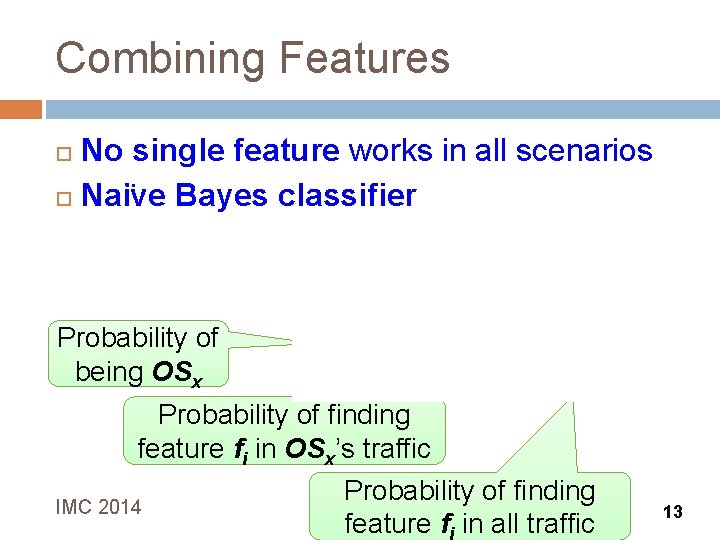
Combining Features No single feature works in all scenarios Nai ve Bayes classifier Probability of being OSx Probability of finding feature fi in OSx’s traffic Probability of finding IMC 2014 feature f in all traffic 13
Tethering Detection Apply the same technique for tethering detection. Features which identify mobile devices � IP Time-To-Live � TCP timestamp monotonicity � Clock frequency � Boot time estimation � Multiple OSes IMC 2014 14
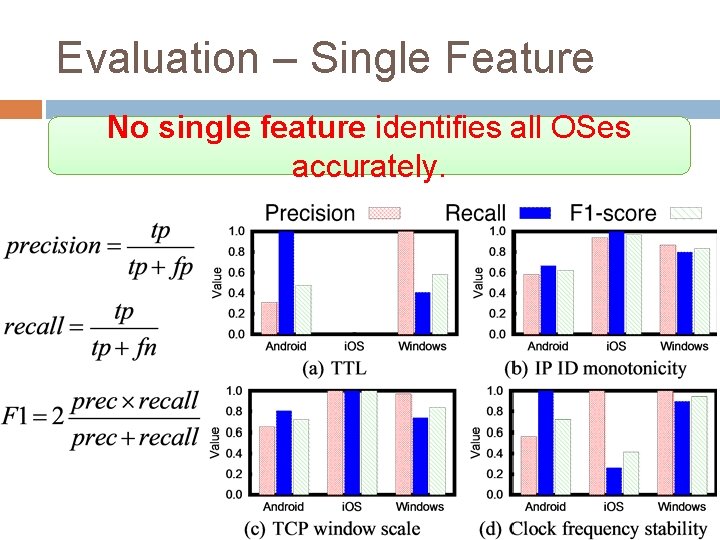
Evaluation – Single Feature No single feature identifies all OSes accurately.
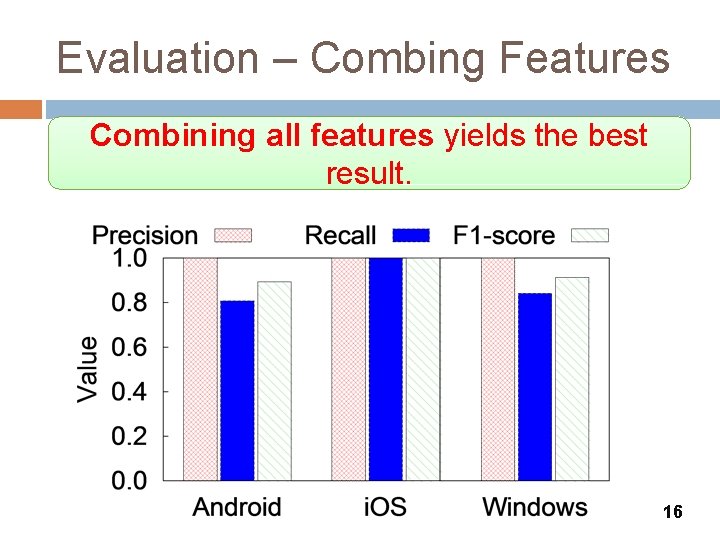
Evaluation – Combing Features Combining all features yields the best result. 16
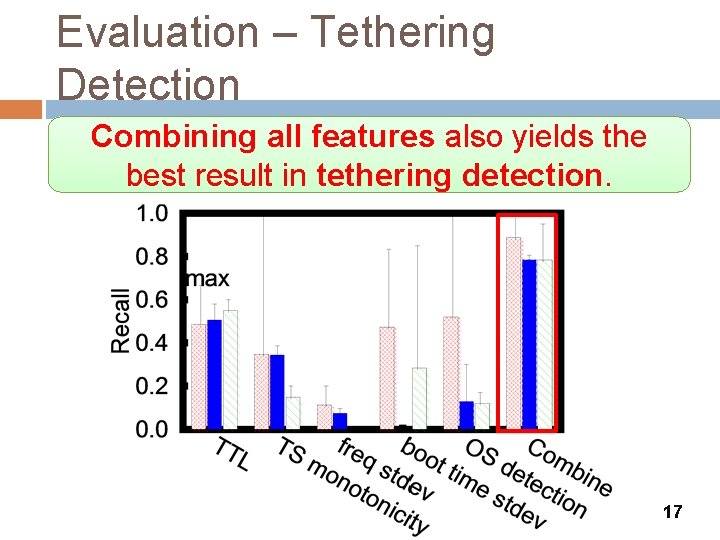
Evaluation – Tethering Detection Combining all features also yields the best result in tethering detection. 17
Conclusion Contributions � Identify new features for mobile OS fingerprinting and tethering detection � Develop a probabilistic scheme that combines multiple features Evaluate the individual and combined features � Combing multiple features yields the best performance � OS fingerprinting: 100% precision, 80% recall � Tethering detection: 79%-89% recall when targeting 80% precision IMC 2014 18
Thank You! yichao@cs. utexas. edu IMC 2014
20 Backup Slides IMC 2014
Mobile OS Fingerprinting IMC 2014 21
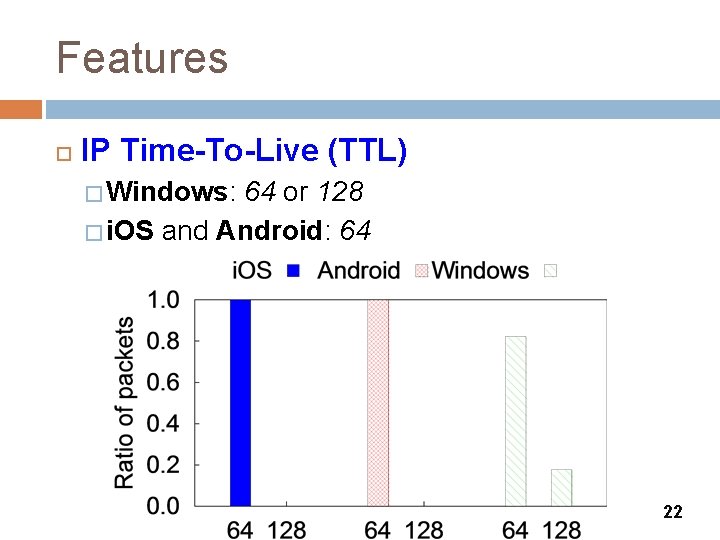
Features IP Time-To-Live (TTL) � Windows: 64 or 128 � i. OS and Android: 64 22
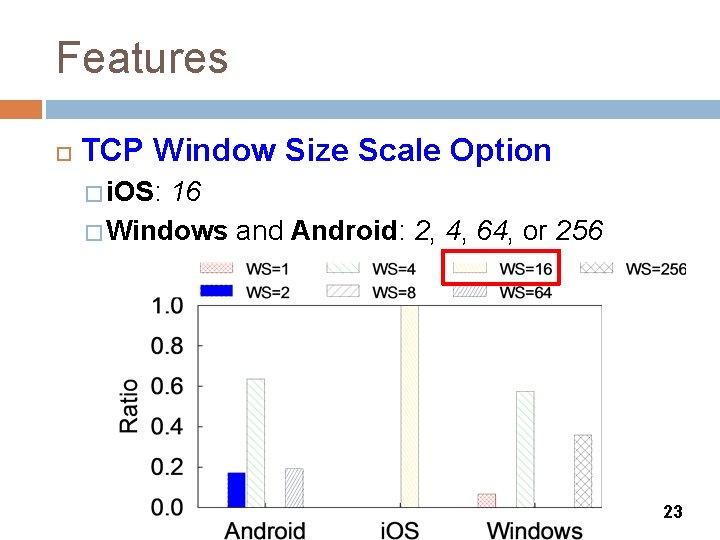
Features TCP Window Size Scale Option � i. OS: 16 � Windows and Android: 2, 4, 64, or 256 23
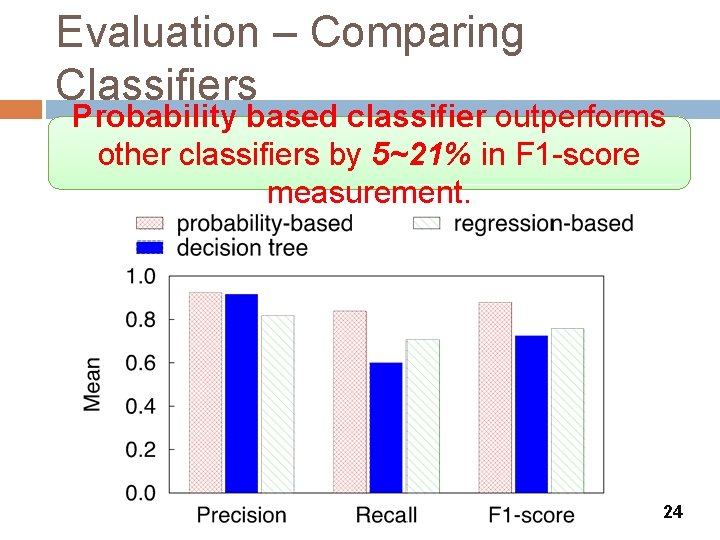
Evaluation – Comparing Classifiers Probability based classifier outperforms other classifiers by 5~21% in F 1 -score measurement. 24
- Slides: 24