
OS 352 22808 Exam I results next class
- Slides: 21
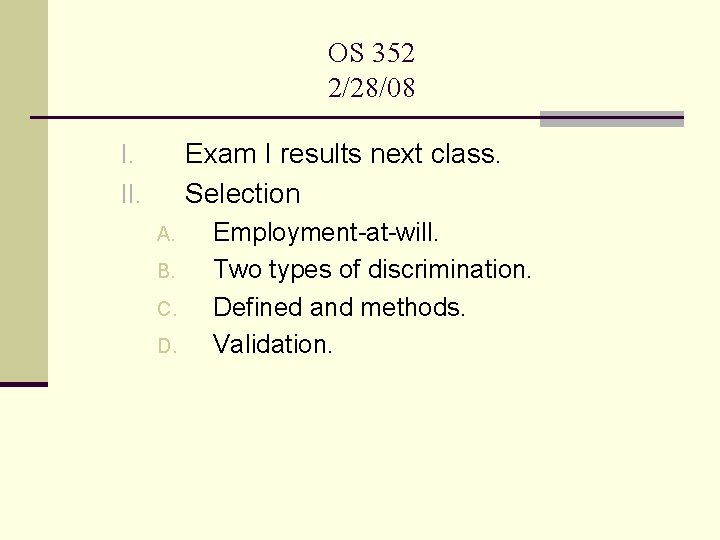
OS 352 2/28/08 Exam I results next class. Selection I. II. A. B. C. D. Employment-at-will. Two types of discrimination. Defined and methods. Validation.
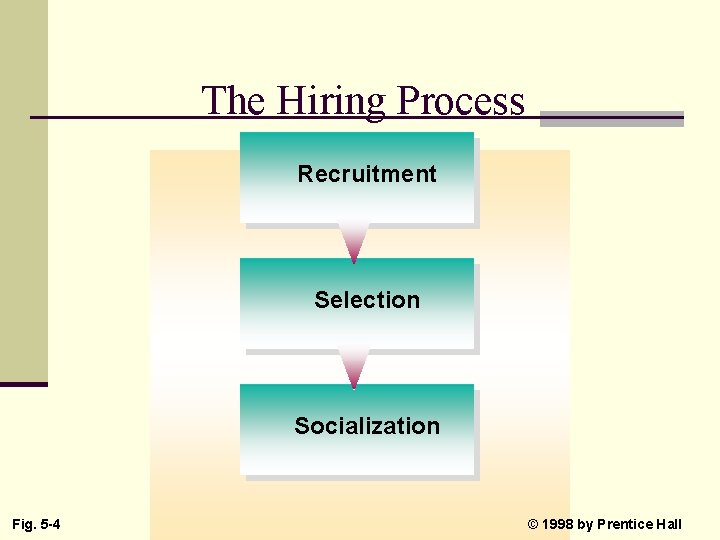
The Hiring Process Recruitment Selection Socialization Fig. 5 -4 © 1998 by Prentice Hall
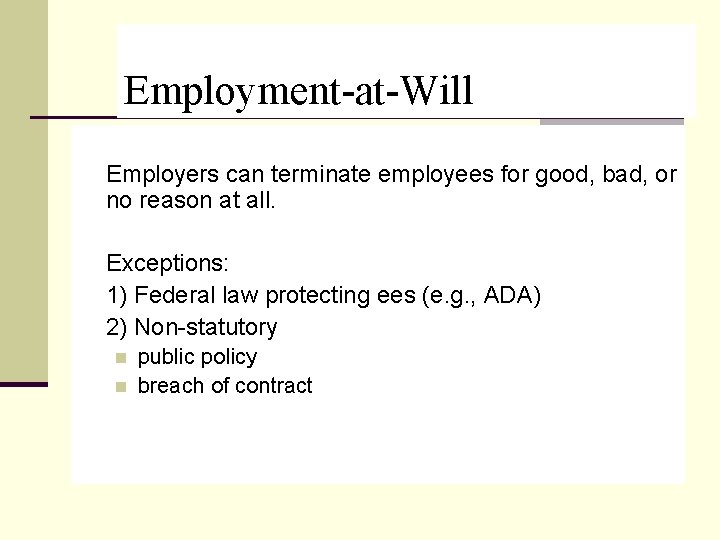
Employment-at-Will Employers can terminate employees for good, bad, or no reason at all. Exceptions: 1) Federal law protecting ees (e. g. , ADA) 2) Non-statutory n n public policy breach of contract
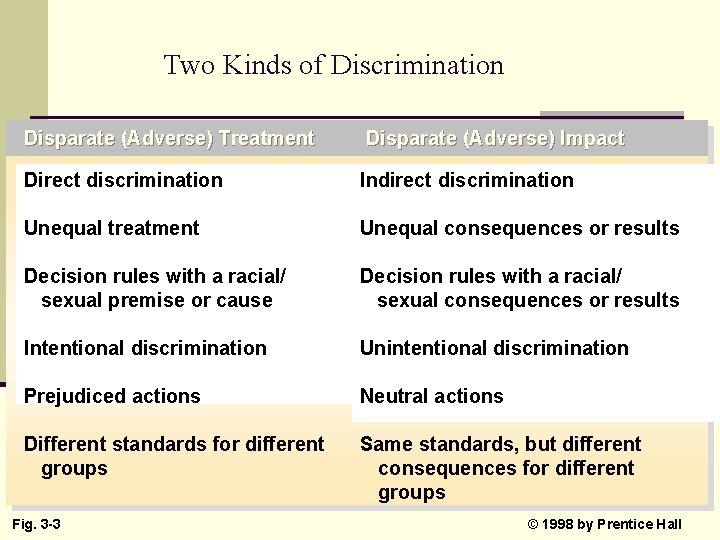
Two Kinds of Discrimination Disparate (Adverse) Treatment Disparate (Adverse) Impact Direct discrimination Indirect discrimination Unequal treatment Unequal consequences or results Decision rules with a racial/ sexual premise or cause Decision rules with a racial/ sexual consequences or results Intentional discrimination Unintentional discrimination Prejudiced actions Neutral actions Different standards for different groups Same standards, but different consequences for different groups Fig. 3 -3 © 1998 by Prentice Hall
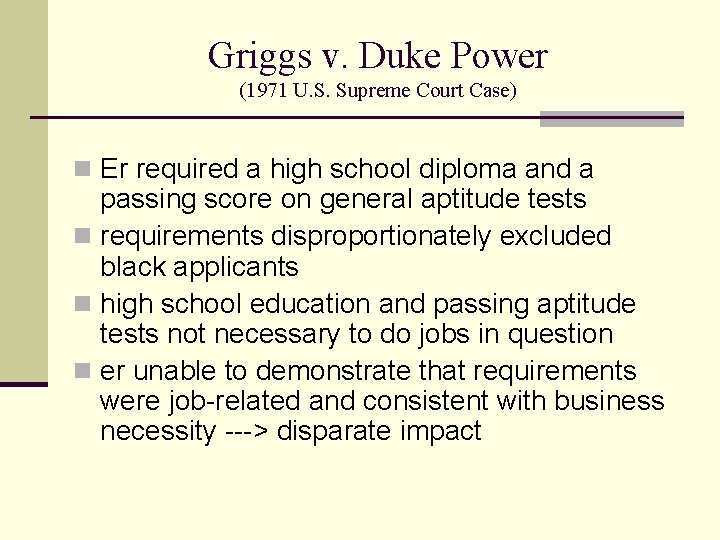
Griggs v. Duke Power (1971 U. S. Supreme Court Case) n Er required a high school diploma and a passing score on general aptitude tests n requirements disproportionately excluded black applicants n high school education and passing aptitude tests not necessary to do jobs in question n er unable to demonstrate that requirements were job-related and consistent with business necessity ---> disparate impact
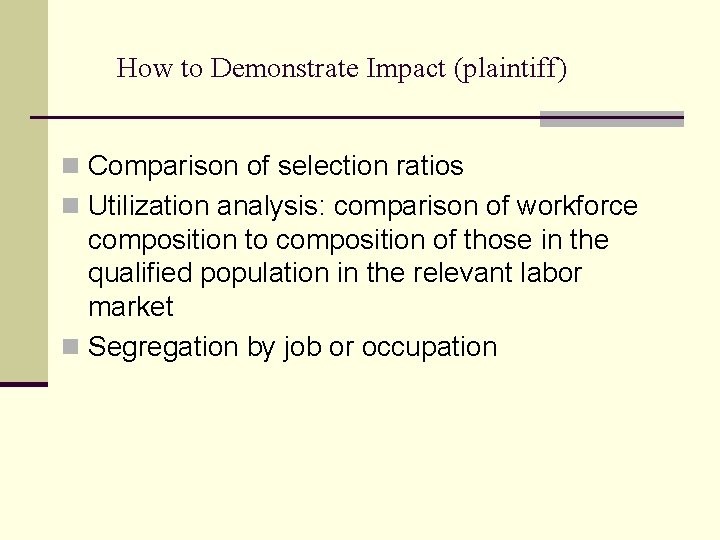
How to Demonstrate Impact (plaintiff) n Comparison of selection ratios n Utilization analysis: comparison of workforce composition to composition of those in the qualified population in the relevant labor market n Segregation by job or occupation
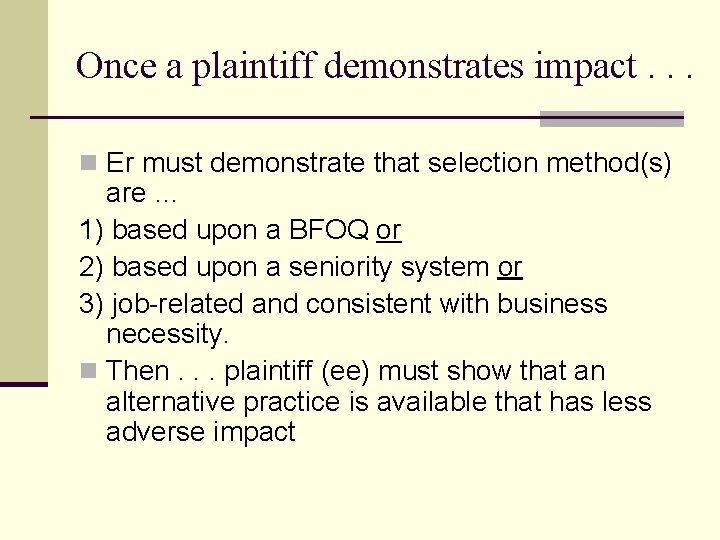
Once a plaintiff demonstrates impact. . . n Er must demonstrate that selection method(s) are … 1) based upon a BFOQ or 2) based upon a seniority system or 3) job-related and consistent with business necessity. n Then. . . plaintiff (ee) must show that an alternative practice is available that has less adverse impact
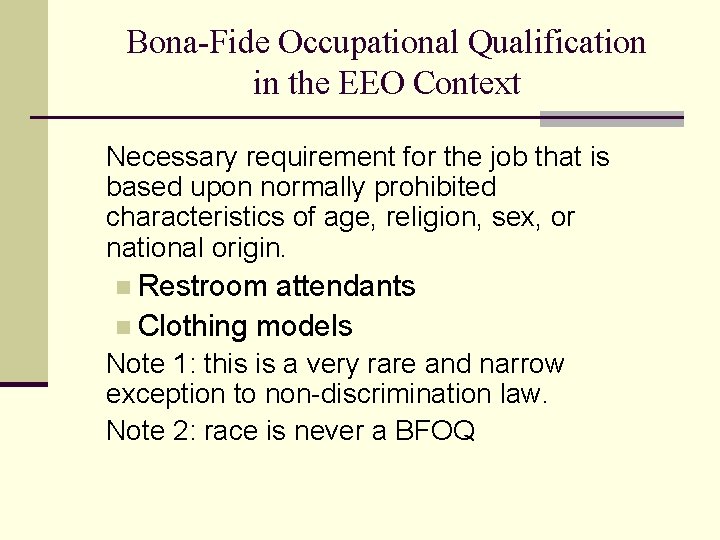
Bona-Fide Occupational Qualification in the EEO Context Necessary requirement for the job that is based upon normally prohibited characteristics of age, religion, sex, or national origin. n Restroom attendants n Clothing models Note 1: this is a very rare and narrow exception to non-discrimination law. Note 2: race is never a BFOQ
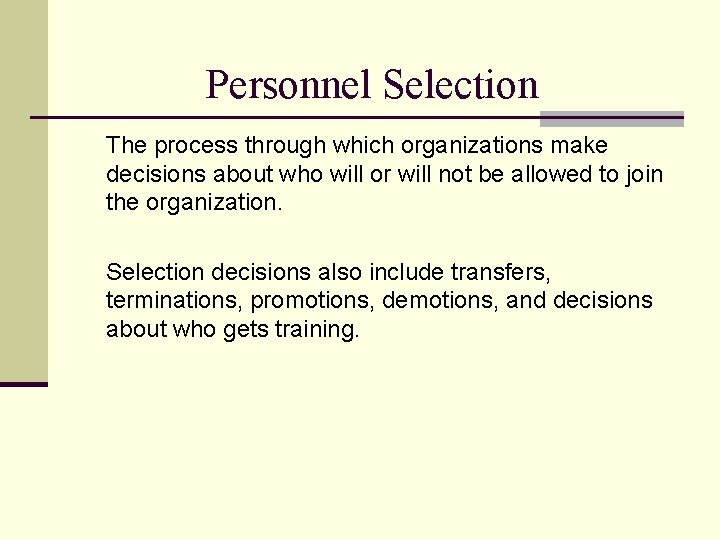
Personnel Selection The process through which organizations make decisions about who will or will not be allowed to join the organization. Selection decisions also include transfers, terminations, promotions, demotions, and decisions about who gets training.
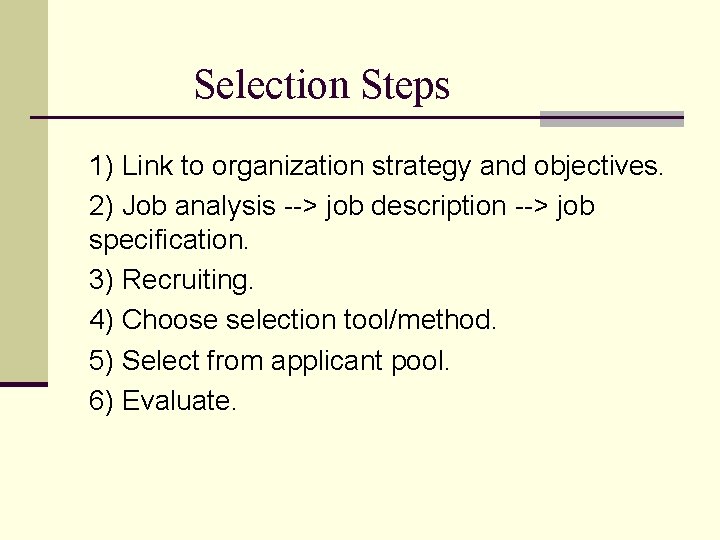
Selection Steps 1) Link to organization strategy and objectives. 2) Job analysis --> job description --> job specification. 3) Recruiting. 4) Choose selection tool/method. 5) Select from applicant pool. 6) Evaluate.
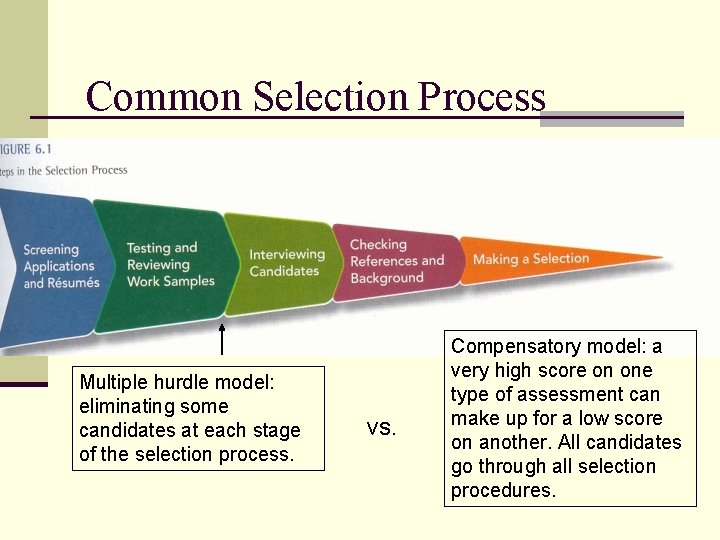
Common Selection Process Multiple hurdle model: eliminating some candidates at each stage of the selection process. vs. Compensatory model: a very high score on one type of assessment can make up for a low score on another. All candidates go through all selection procedures.
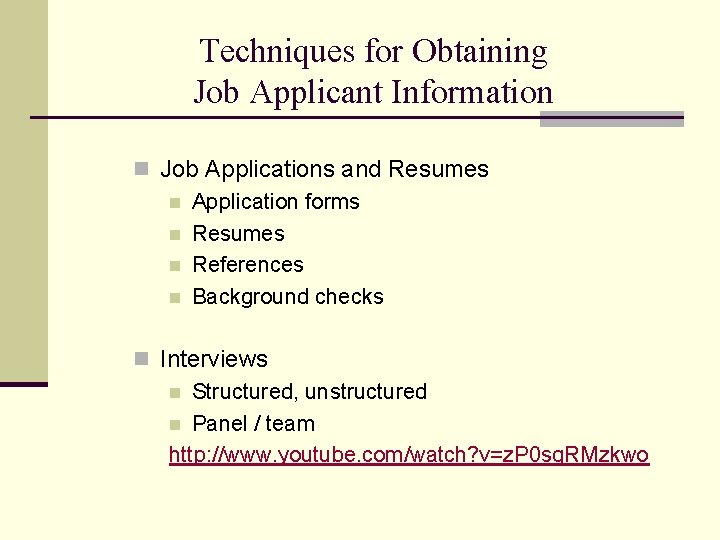
Techniques for Obtaining Job Applicant Information n Job Applications and Resumes n Application forms n Resumes n References n Background checks n Interviews n Structured, unstructured n Panel / team http: //www. youtube. com/watch? v=z. P 0 sq. RMzkwo
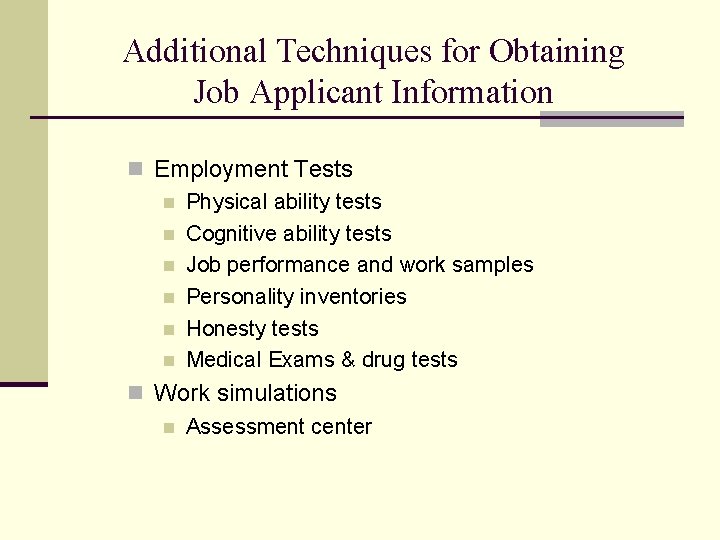
Additional Techniques for Obtaining Job Applicant Information n Employment Tests n Physical ability tests n Cognitive ability tests n Job performance and work samples n Personality inventories n Honesty tests n Medical Exams & drug tests n Work simulations n Assessment center
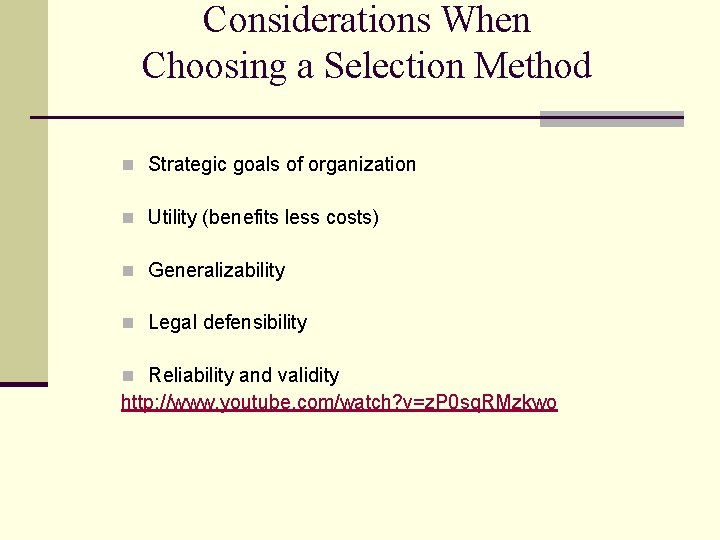
Considerations When Choosing a Selection Method n Strategic goals of organization n Utility (benefits less costs) n Generalizability n Legal defensibility n Reliability and validity http: //www. youtube. com/watch? v=z. P 0 sq. RMzkwo
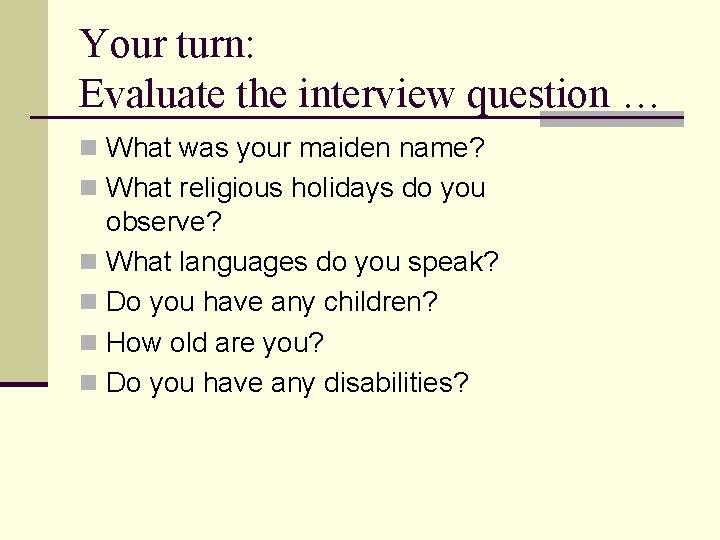
Your turn: Evaluate the interview question … n What was your maiden name? n What religious holidays do you observe? n What languages do you speak? n Do you have any children? n How old are you? n Do you have any disabilities?
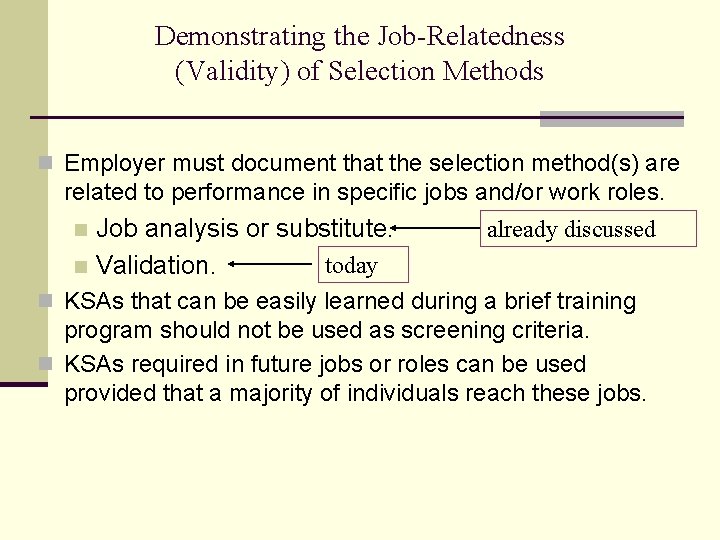
Demonstrating the Job-Relatedness (Validity) of Selection Methods n Employer must document that the selection method(s) are related to performance in specific jobs and/or work roles. Job analysis or substitute. today n Validation. n already discussed n KSAs that can be easily learned during a brief training program should not be used as screening criteria. n KSAs required in future jobs or roles can be used provided that a majority of individuals reach these jobs.
Reliability The extent to which a measurement is free from random error. Example: A vision test that provides a person with the same results 3 days in a row is reliable. A vision test that provides vastly different results is unreliable. Note: must have reliability to have validity.
Validity The extent to which performance on a measure (such as a test score) is related to what the measure is designed to assess (such as job performance). Example: The extent to which student performance on OS 352 Exam I is related to students’ degree of learning in the course.
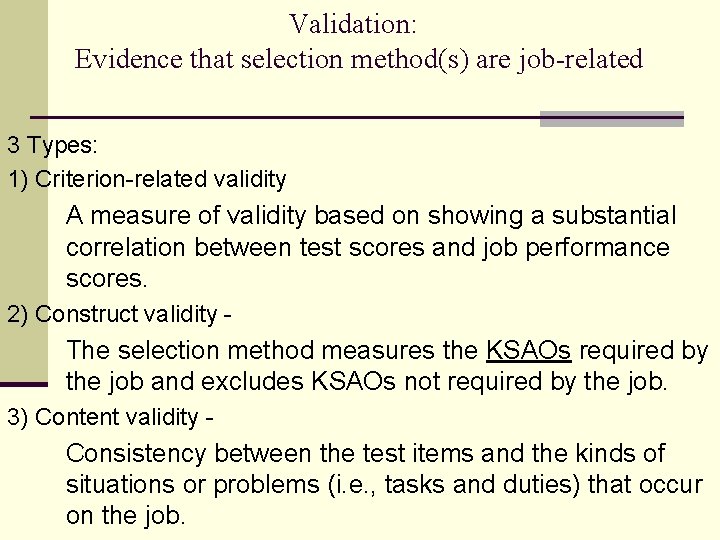
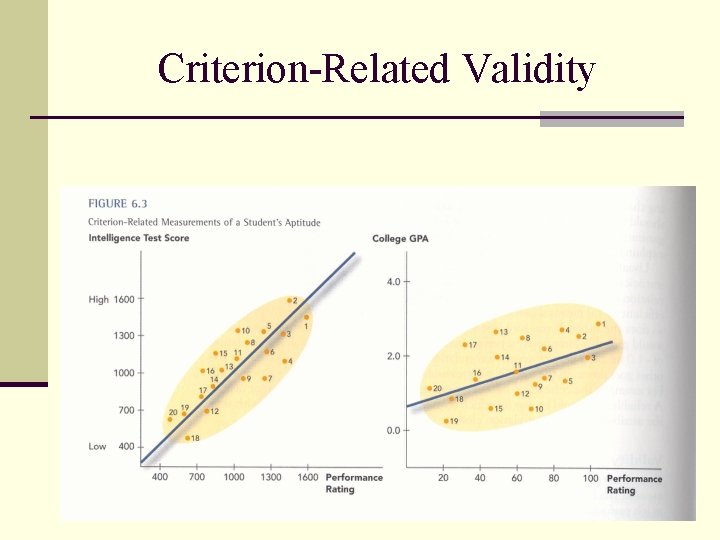
Validation: Evidence that selection method(s) are job-related 3 Types: 1) Criterion-related validity A measure of validity based on showing a substantial correlation between test scores and job performance scores. 2) Construct validity - The selection method measures the KSAOs required by the job and excludes KSAOs not required by the job. 3) Content validity - Consistency between the test items and the kinds of situations or problems (i. e. , tasks and duties) that occur on the job.
Criterion-Related Validity
Face Validity Extent to which a selection test or device makes sense or seems fair to the applicants. Example: questions about one’s political opinions may appear invalid to applicants for a chef job.