
Orthoptera vs Homoptera Hemiptera Hymenopterans 14 common families


- Slides: 23
Orthoptera vs Homoptera (Hemiptera)
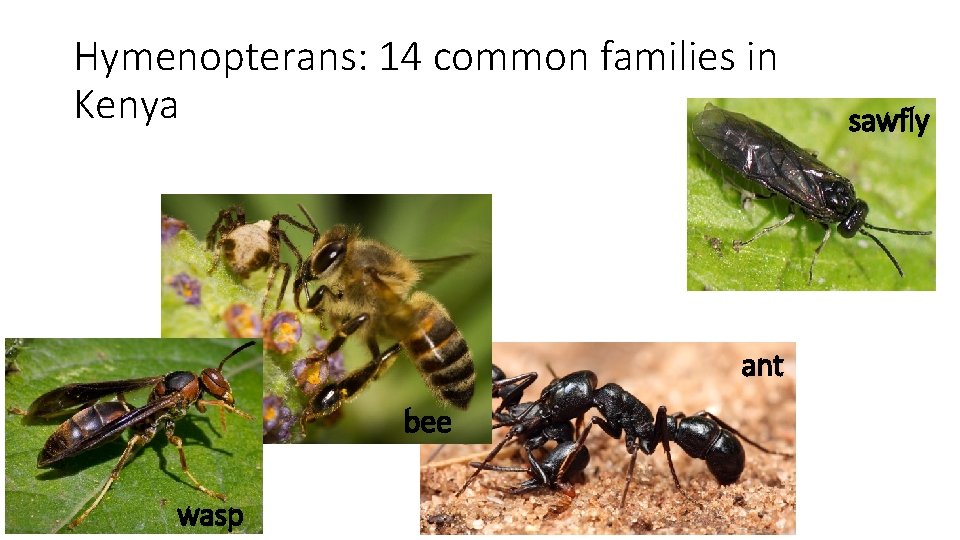
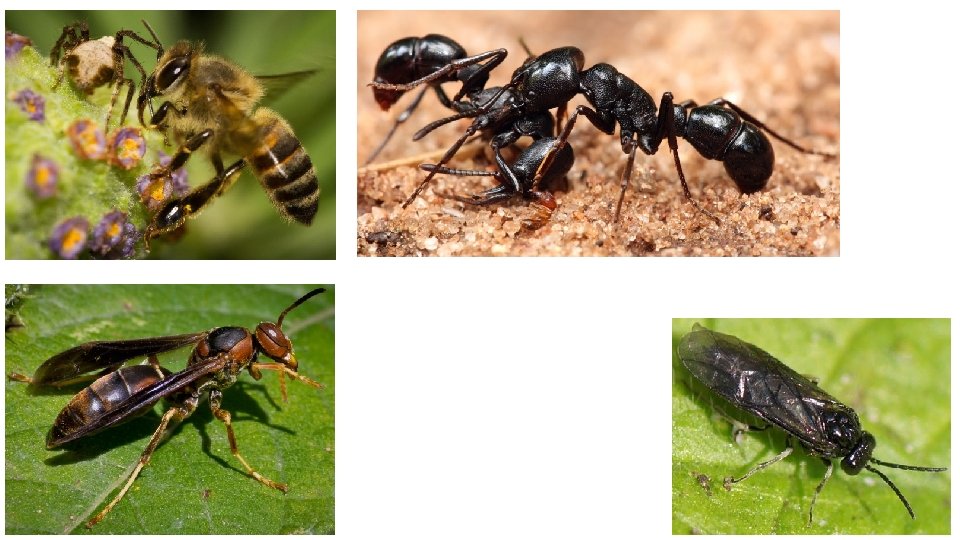
Hymenopterans: 14 common families in Kenya ant bee wasp sawfly
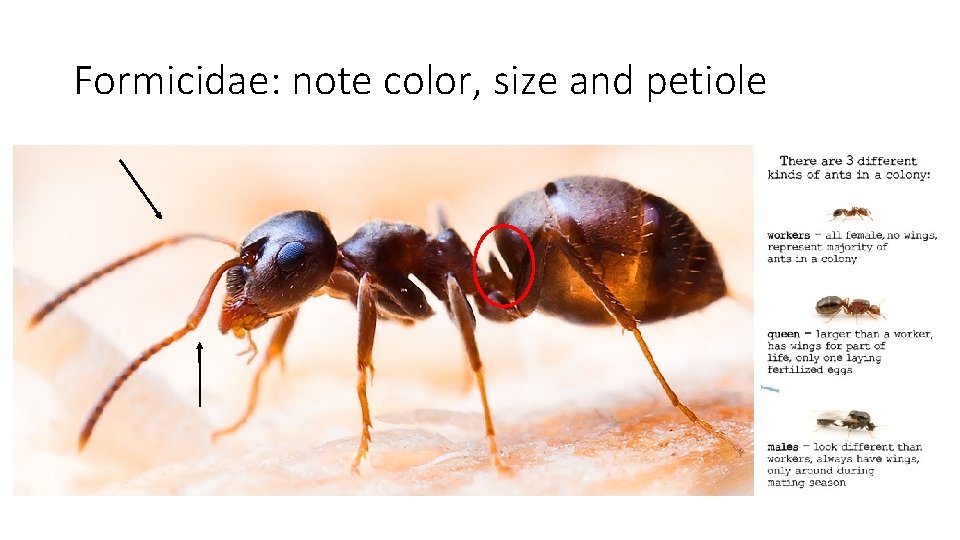
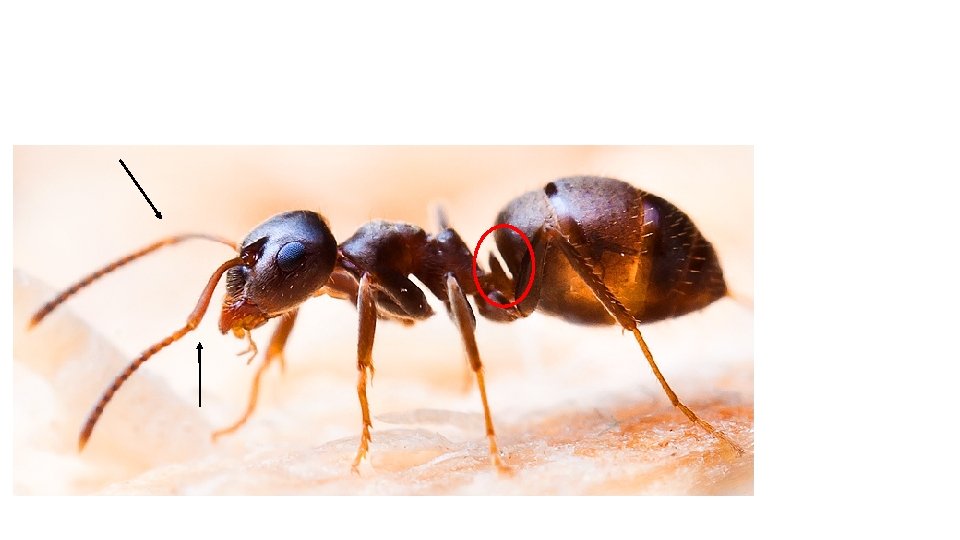
Formicidae: all ants belong to this family! • • • Elbowed antennae Small-medium size Red/brown/black Petiole: one/two/hard to see Social – keys are typically for the workers
Formicidae: note color, size and petiole
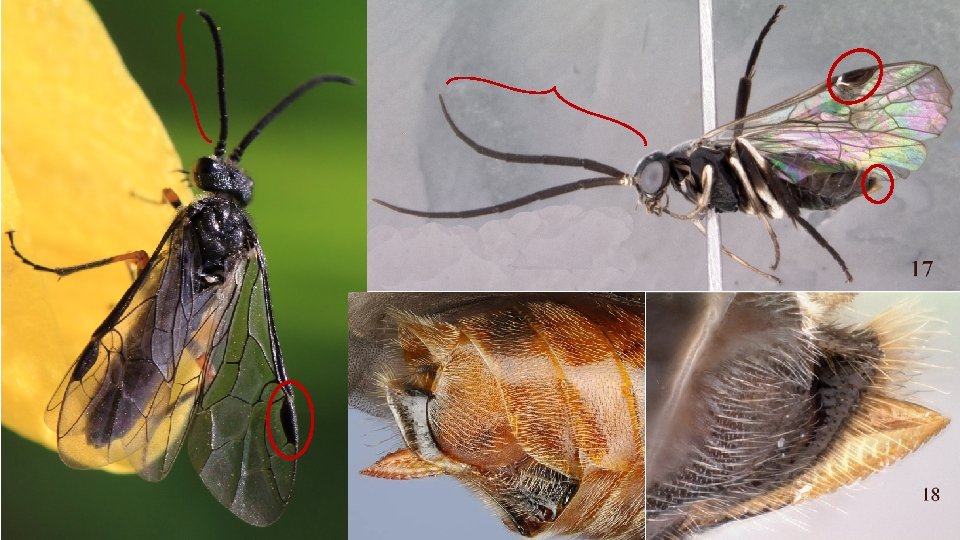
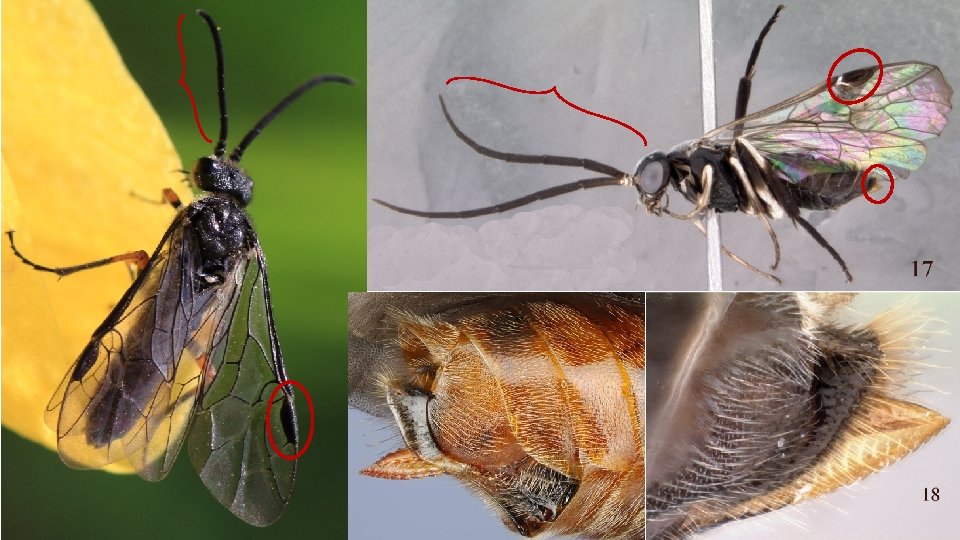
Tenthredinidae: commonest sawfly family No easily seen diagnostic features, but, they typically possess; • Saw-like ovipositor • 5 – 9 antennal flagellomeres • Clear separation of the first abdominal tergum from the metapleuron • 3 -20 mm long • No “narrow-waist“; no petiole • Often somewhat dorsoventrally flattened
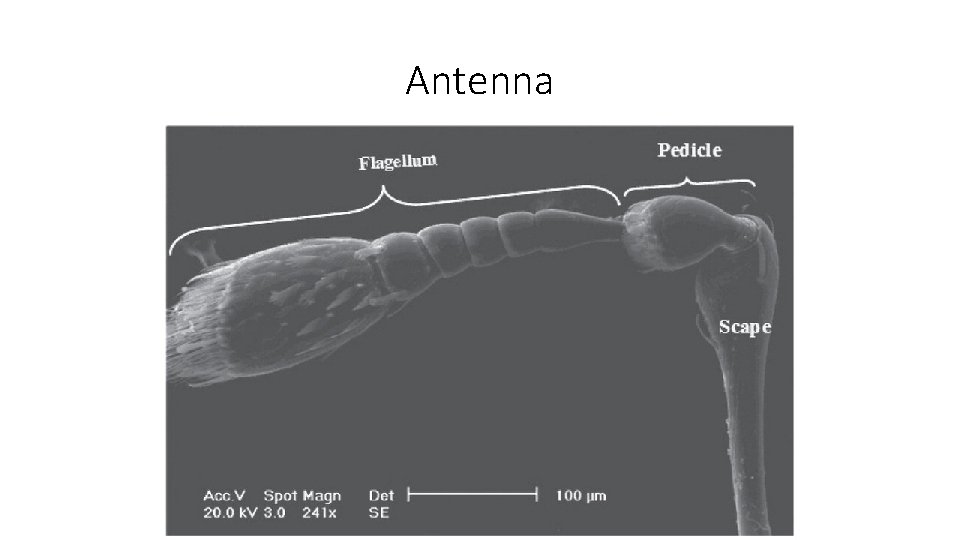
Antenna
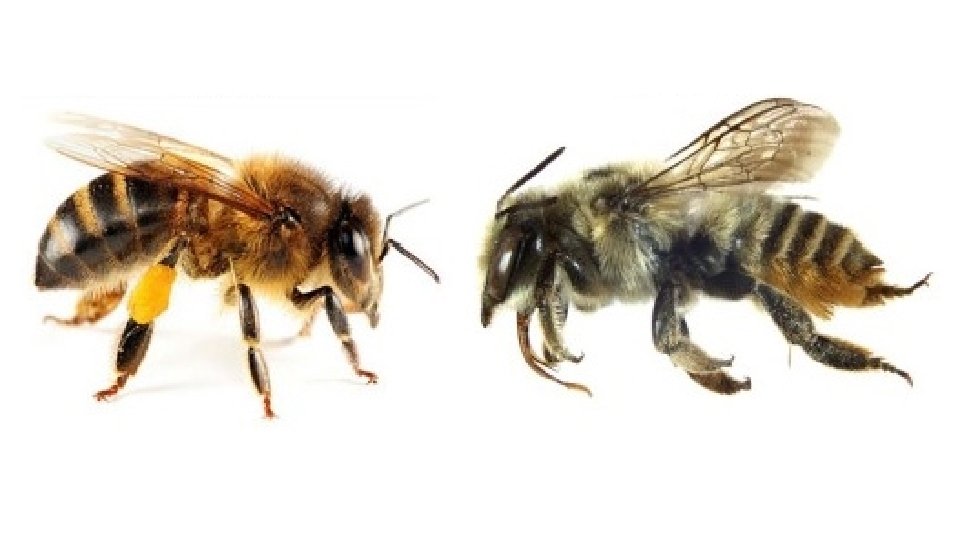
Bees: three major families in Kenya • Megachilidae (leaf cutting bees) • Apidae (honeybees, bumblebees and digger bees) • Halictidae (sweat bees)
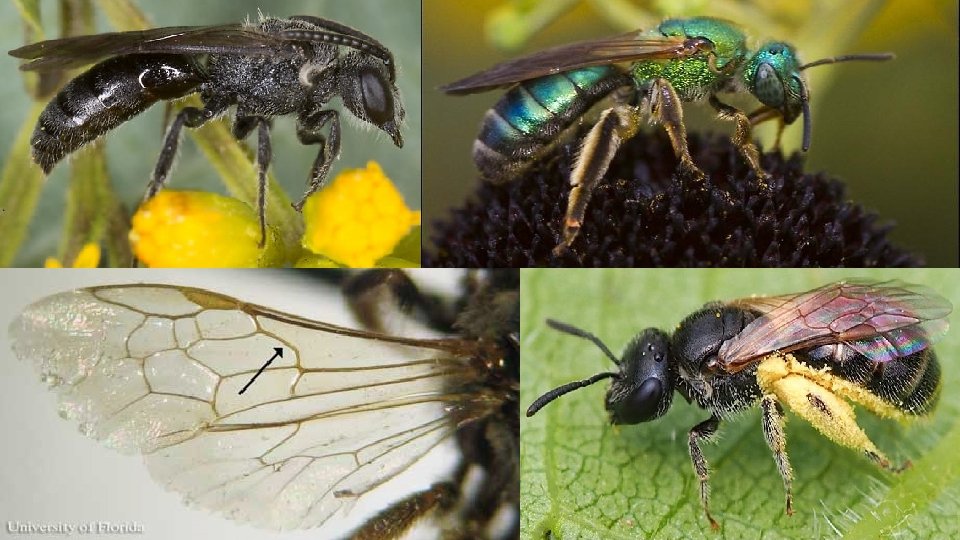
Antenna How can you tell a male from a female bee? Answer: no. of flagellomere! 10 in females, 11 in males Also, the presence of pollen collecting structures
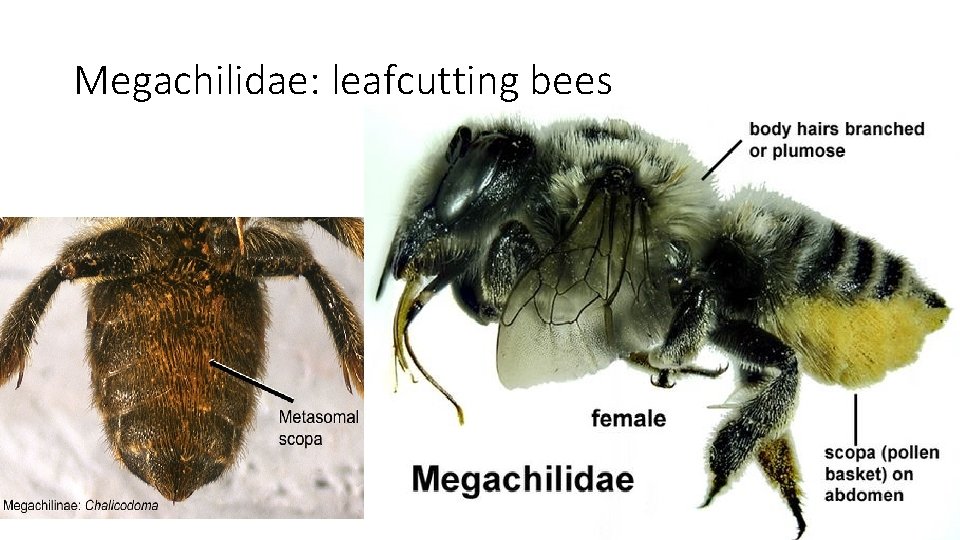
Megachilidae: leafcutting bees • Moderately-sized ~5 mm – 24 mm • Stout-bodied • Black bees • Body hairs plumose – recall a ♂ mosquito’s antennae? • ♀s, except the parasitic Coelioxys, possess scopa (for carrying pollen) on the underside of the abdomen rather than on the hind legs like other bees
Megachilidae: leafcutting bees
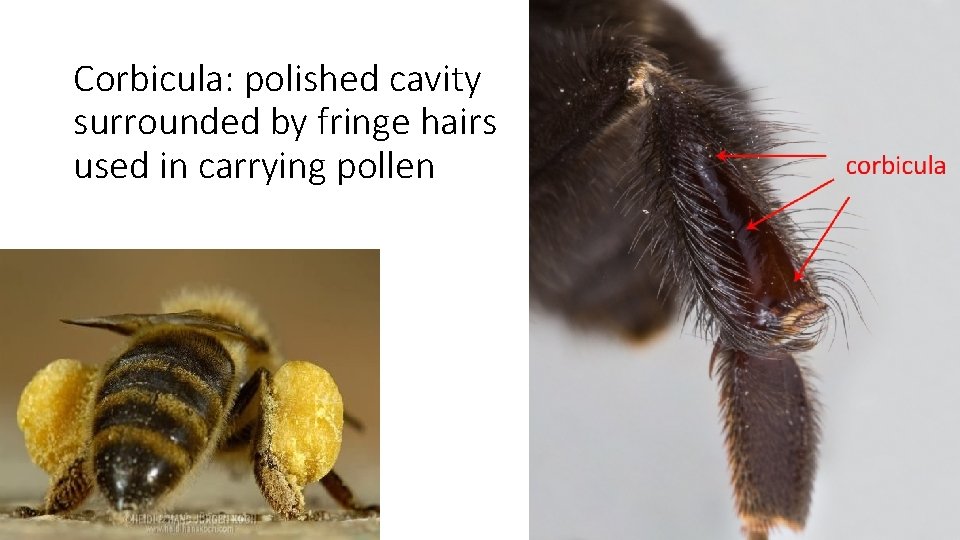
Apidae: honey/bumble/digger bees • Usually black and yellow • Covered in abundant plumose hair • First segment of hind tarsi enlarged and flattened; usually bearing a “pollen basket” aka corbicular
Corbicula: polished cavity surrounded by fringe hairs used in carrying pollen
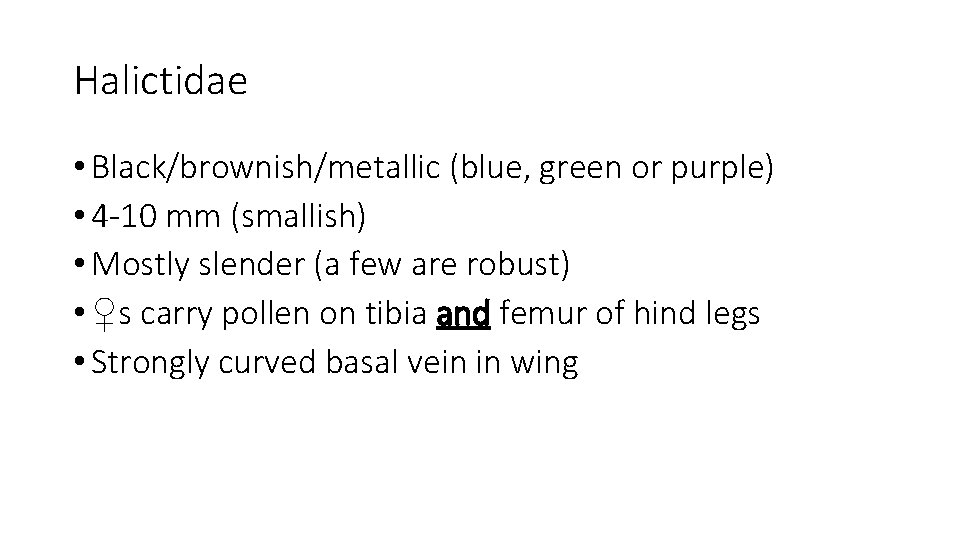
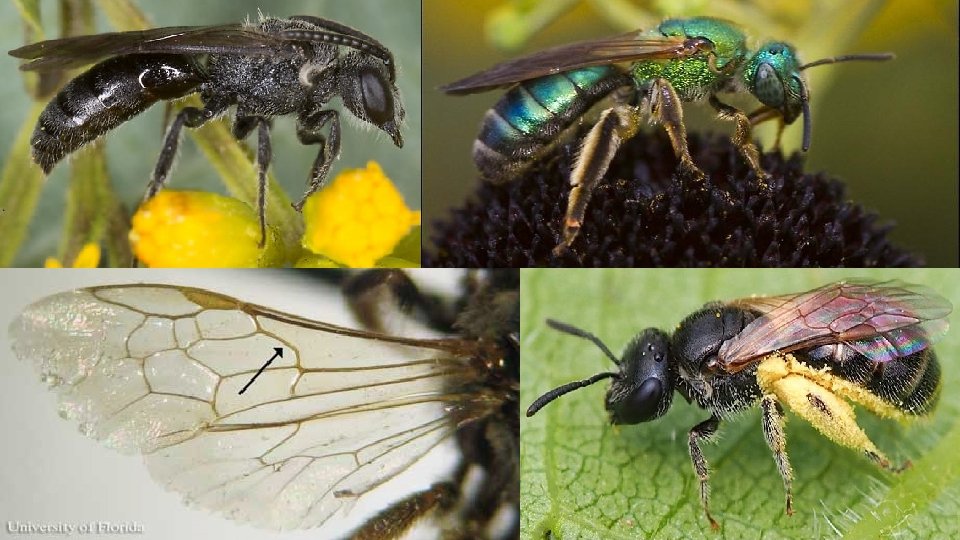
Halictidae • Black/brownish/metallic (blue, green or purple) • 4 -10 mm (smallish) • Mostly slender (a few are robust) • ♀s carry pollen on tibia and femur of hind legs • Strongly curved basal vein in wing
Recap
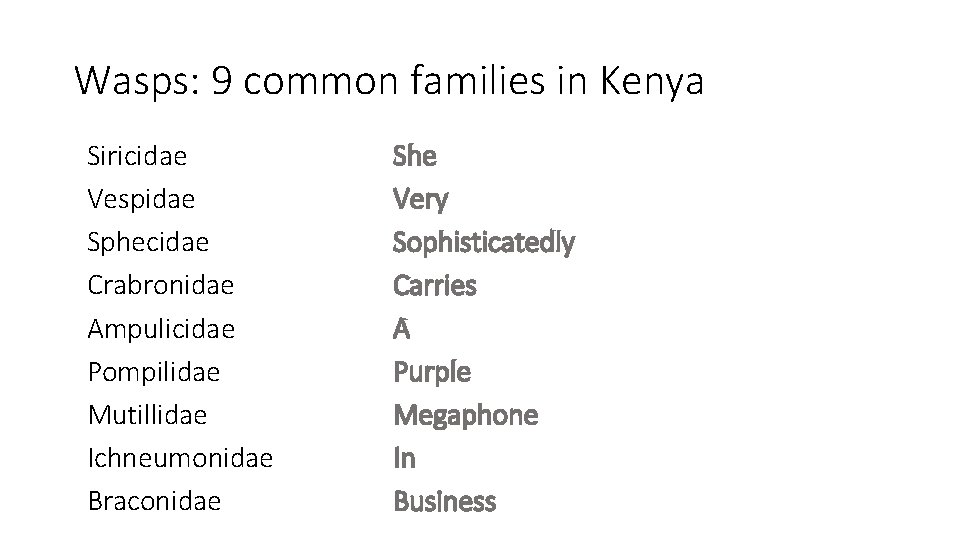
Wasps: 9 common families in Kenya Siricidae Vespidae Sphecidae Crabronidae Ampulicidae Pompilidae Mutillidae Ichneumonidae Braconidae She Very Sophisticatedly Carries A Purple Megaphone In Business