
Orthopaedic Issues in Persons with Down Syndrome Dr

- Slides: 34
Orthopaedic Issues in Persons with Down Syndrome Dr R Sankar, D Ortho. , FRCSI, FRCS(Ortho). Consultant Orthopaedic Surgeon Chennai.
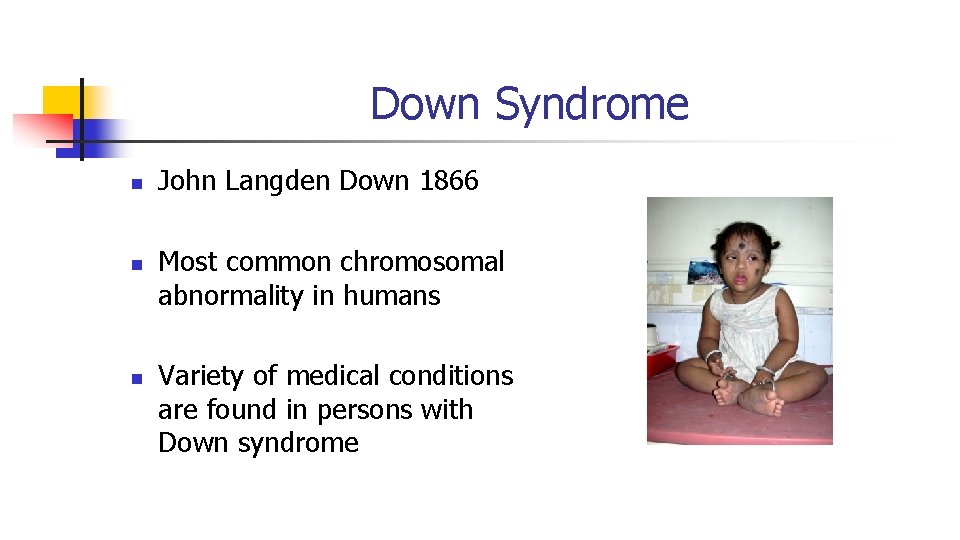
Down Syndrome n n n John Langden Down 1866 Most common chromosomal abnormality in humans Variety of medical conditions are found in persons with Down syndrome
Life Expectancy n n Medical conditions affect life expectancy & level of function As treatment of associated medical conditions (eg. Heart problems) improved, life expectancy has increased
Quality of Life n Good motor function n n Children <11 years n n A prerequisite to integrate into mainstream society and lead independent, fulfilling lives. Immobility & tube feeding are poor predictors 11 -30 years n Ambulation is the best predictor
Orthopaedic Issues n Hypotonia (low muscle tone), Generalised Ligamentous Laxity & Joint Hypermobility n n n Cervical Spine (Neck) Instability Scoliosis (Curvature of spine) Hip Instability Patellar (Knee cap) Instability Knee & Foot Disorders Arthropathy of Down Syndrome
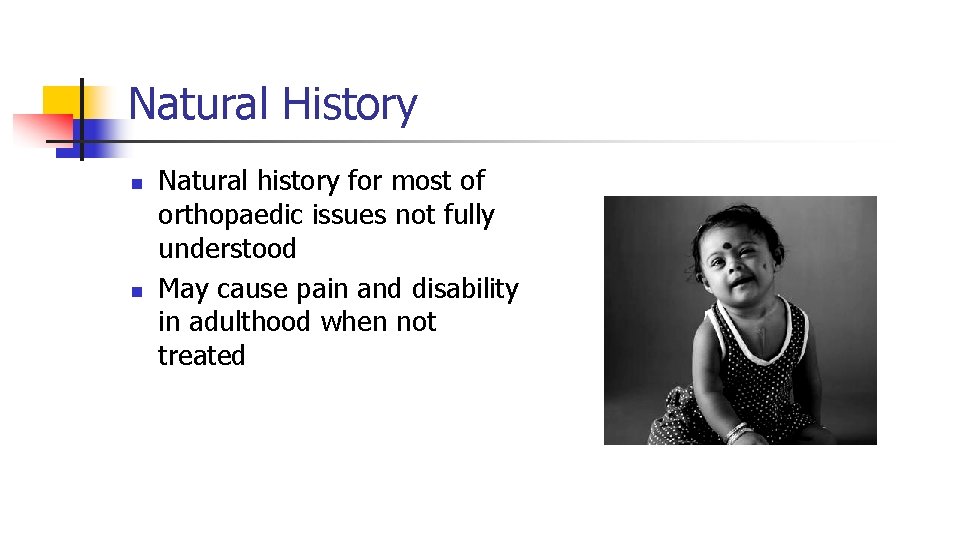
Natural History n n Natural history for most of orthopaedic issues not fully understood May cause pain and disability in adulthood when not treated
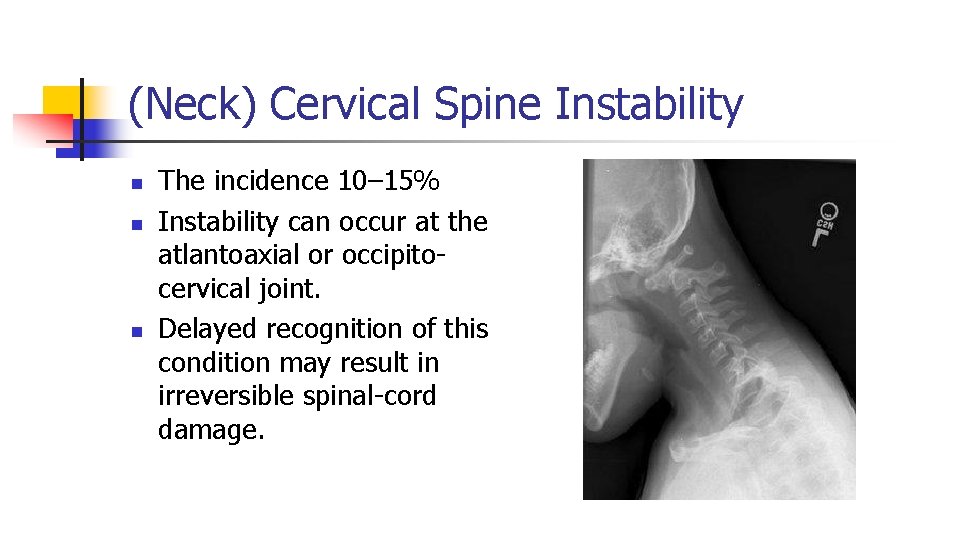
(Neck) Cervical Spine Instability n n n The incidence 10– 15% Instability can occur at the atlantoaxial or occipitocervical joint. Delayed recognition of this condition may result in irreversible spinal-cord damage.
Cervical Spine Instability n n What age should you suspect? What is the common signs and symptoms to give a clue for diagnosis? When will you investigate? When is treatment needed?
Cervical Spine Instability n What age should you suspect? n n n 5 -15 years Most children are asymptomatic 1 -2 % children will have symptomatic instability
Cervical Spine Instability n What are the common signs and symptoms to give a clue for diagnosis? n n Neck pain Sensory deficits (pins & needles, numbness) Bladder incontinence Subtle symptoms n n n Decreased tolerance for activities Altered gait Loss of ambulatory skills
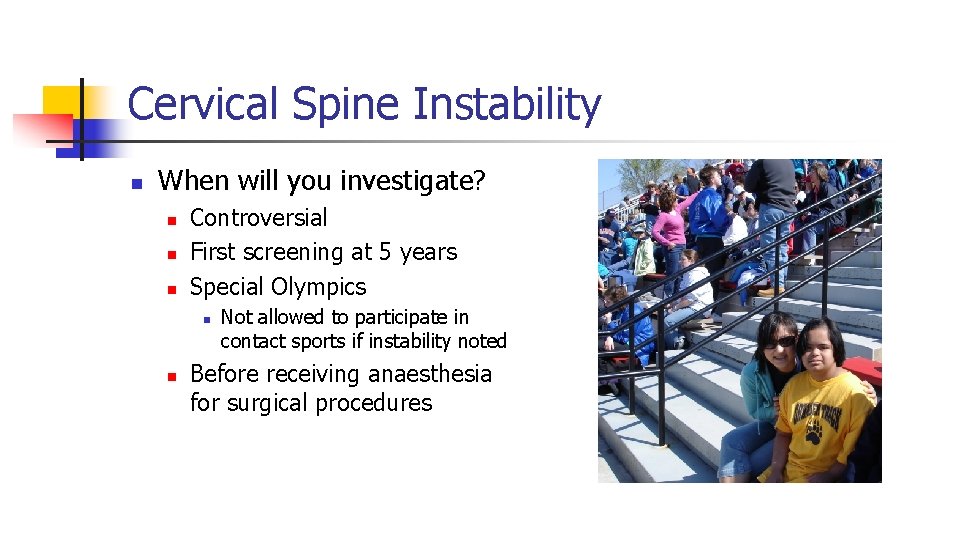
Cervical Spine Instability n When will you investigate? n n n Controversial First screening at 5 years Special Olympics n n Not allowed to participate in contact sports if instability noted Before receiving anaesthesia for surgical procedures
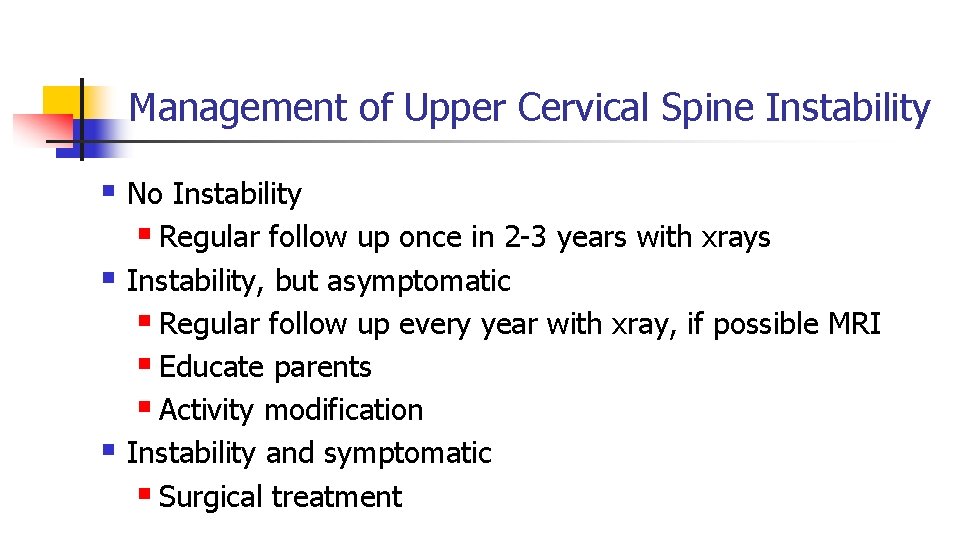
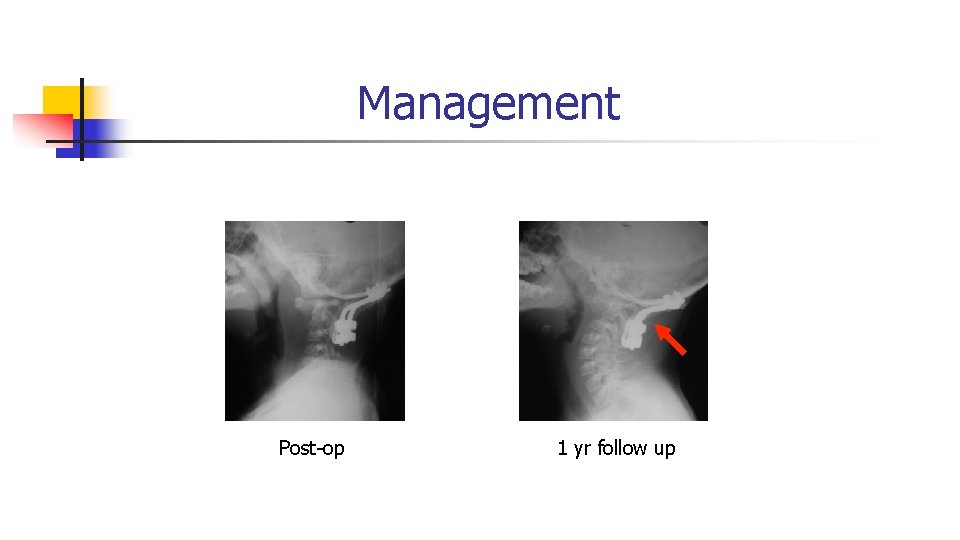
Management of Upper Cervical Spine Instability § No Instability § Regular follow up once in 2 -3 years with xrays § Instability, but asymptomatic § Regular follow up every year with xray, if possible MRI § Educate parents § Activity modification § Instability and symptomatic § Surgical treatment
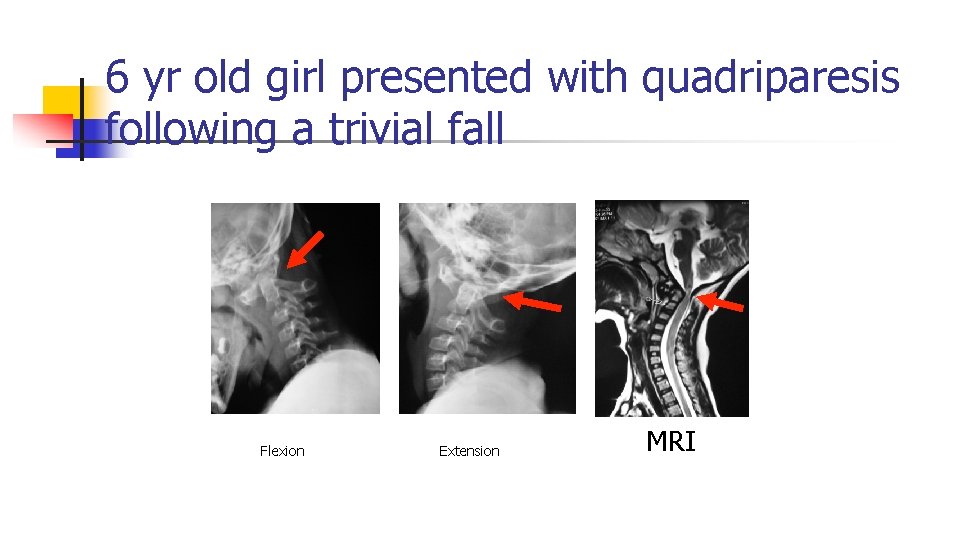
6 yr old girl presented with quadriparesis following a trivial fall Flexion Extension MRI
Management Post-op 1 yr follow up
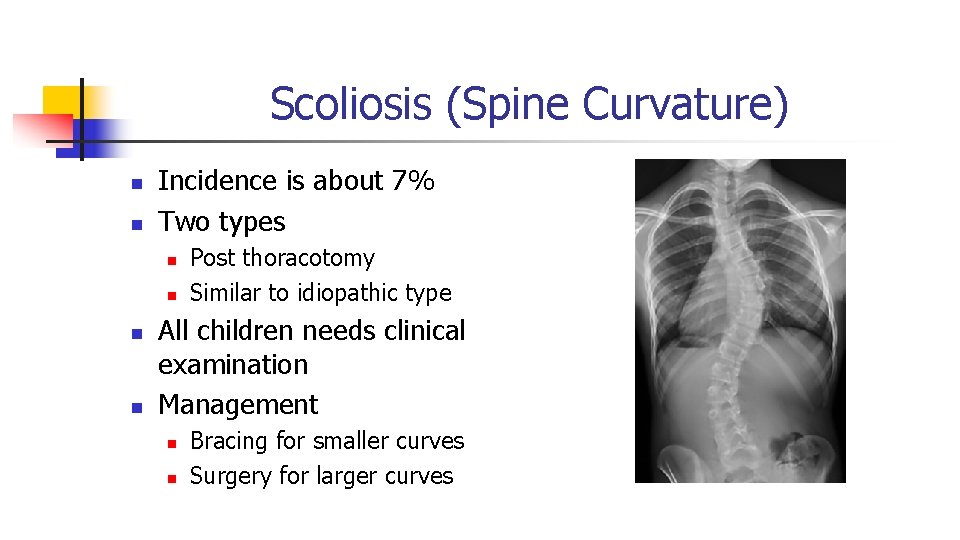
Scoliosis (Spine Curvature) n n Incidence is about 7% Two types n n Post thoracotomy Similar to idiopathic type All children needs clinical examination Management n n Bracing for smaller curves Surgery for larger curves
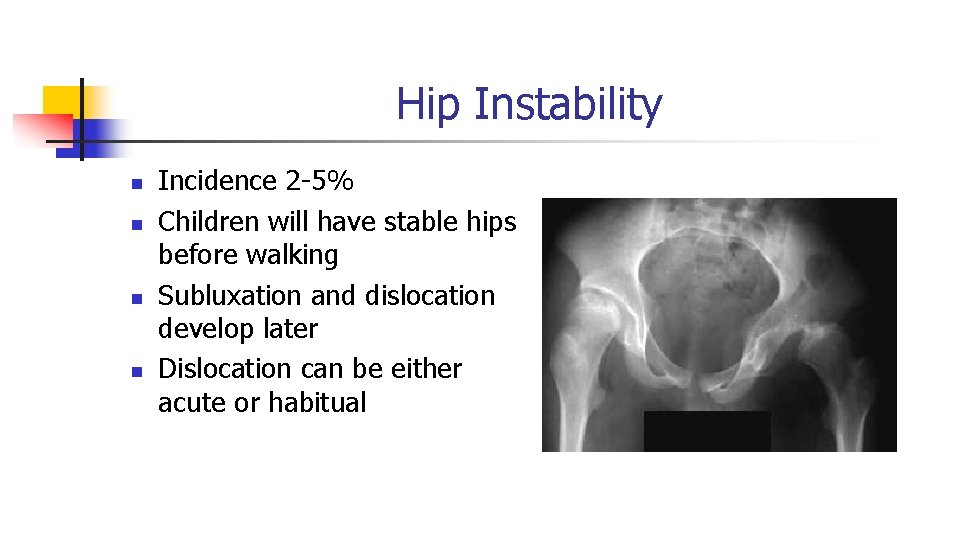
Hip Instability n n Incidence 2 -5% Children will have stable hips before walking Subluxation and dislocation develop later Dislocation can be either acute or habitual
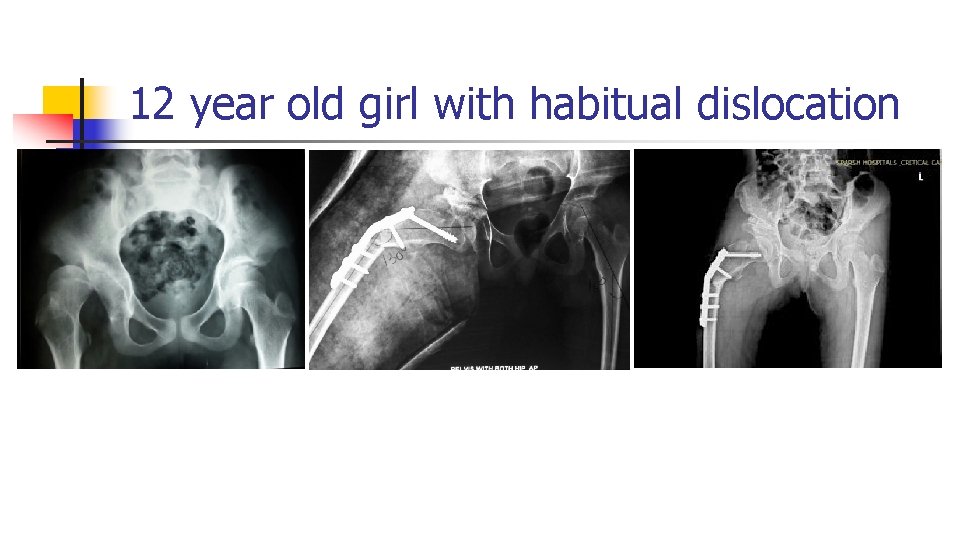
Hip Instability n Acute dislocation n n 7 -8 years Sudden onset of limp or refusal to walk MUA and immobilasation Habitual (repeated) dislocation n Hips dislocate without trauma and reduce on its own Repeated dislocation leads to arthritis Surgical reconstruction to minimize long term problems
12 year old girl with habitual dislocation
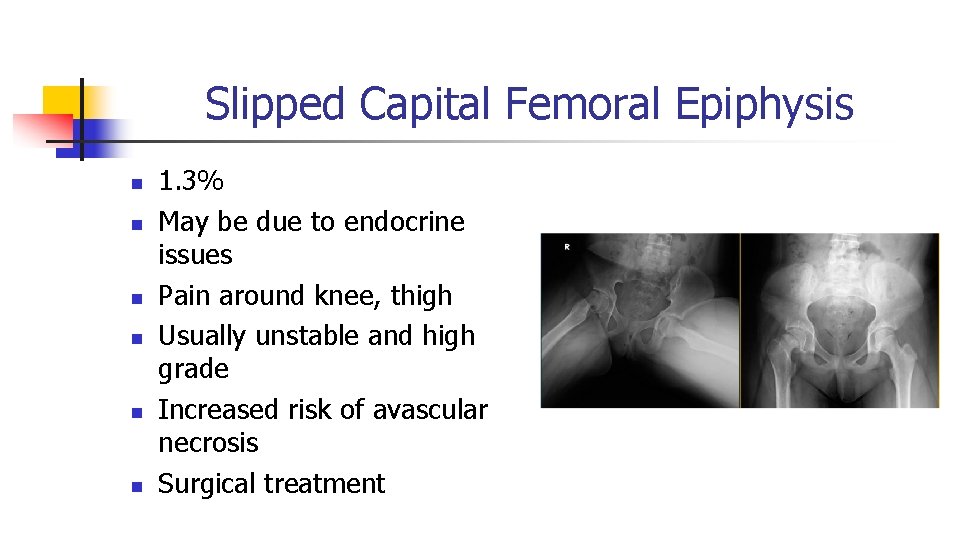
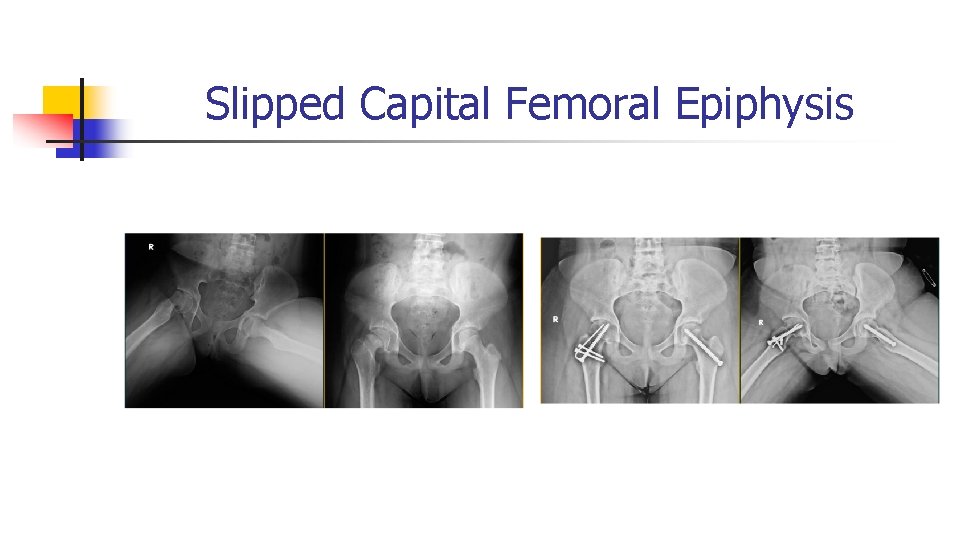
Slipped Capital Femoral Epiphysis n n n 1. 3% May be due to endocrine issues Pain around knee, thigh Usually unstable and high grade Increased risk of avascular necrosis Surgical treatment
Slipped Capital Femoral Epiphysis
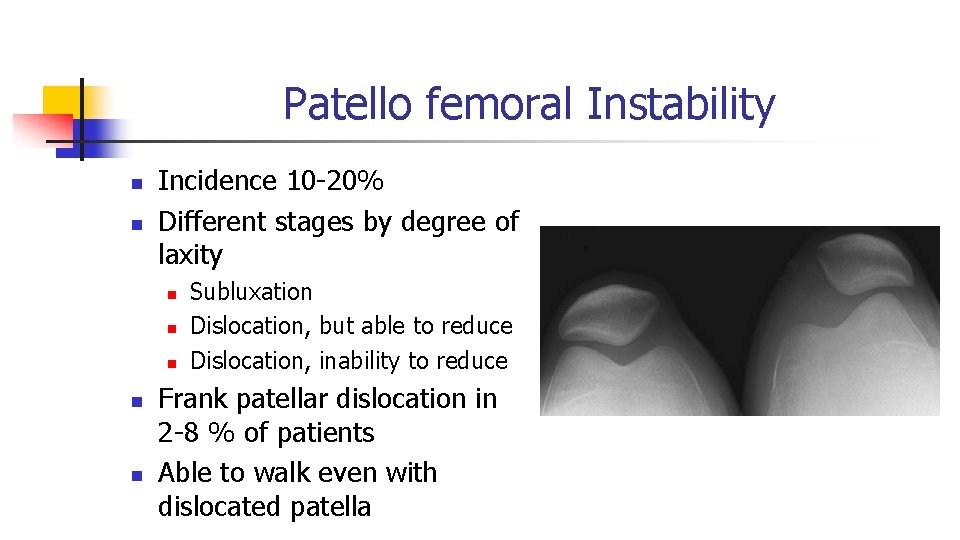
Patello femoral Instability n n Incidence 10 -20% Different stages by degree of laxity n n n Subluxation Dislocation, but able to reduce Dislocation, inability to reduce Frank patellar dislocation in 2 -8 % of patients Able to walk even with dislocated patella
Patello femoral Instability n Non surgical Management n n n Knee brace Activity modification Surgical Management n n When there is persistent symptoms in spite of conservative treatment Surgery improves gait
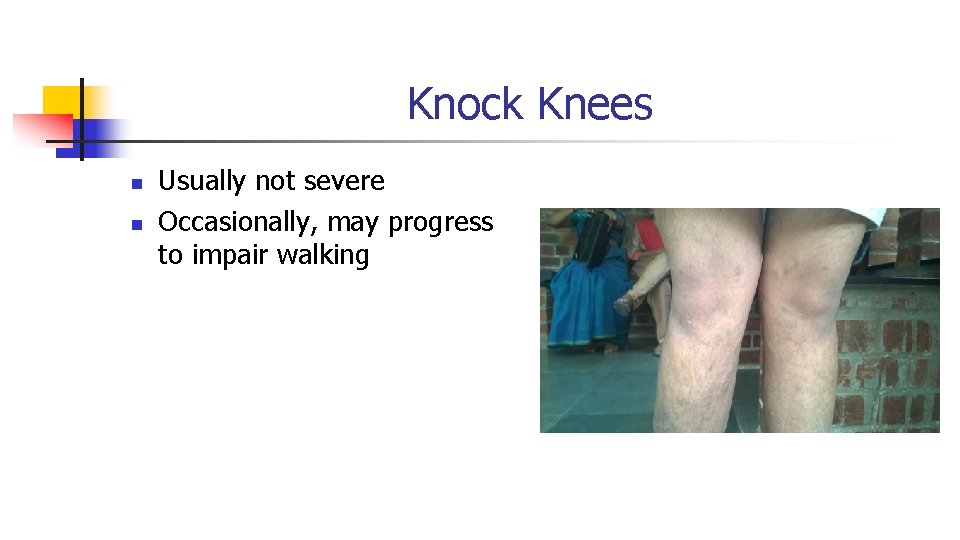
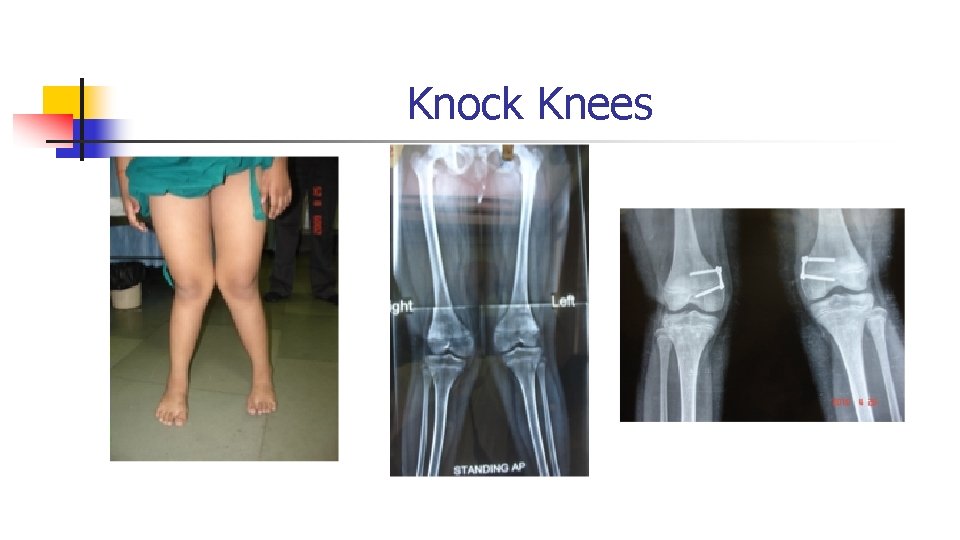
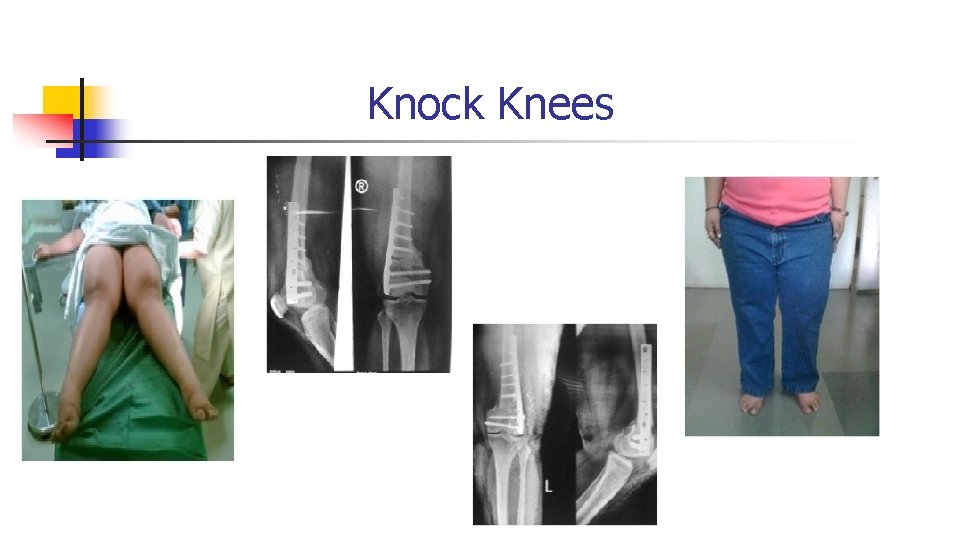
Knock Knees n n Usually not severe Occasionally, may progress to impair walking
Knock Knees
Knock Knees
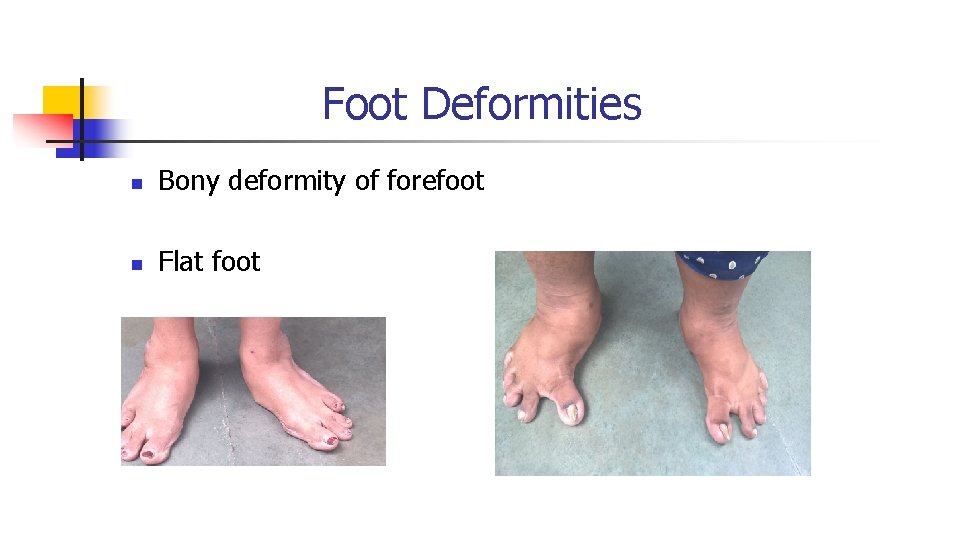
Foot Deformities n Bony deformity of forefoot n Flat foot
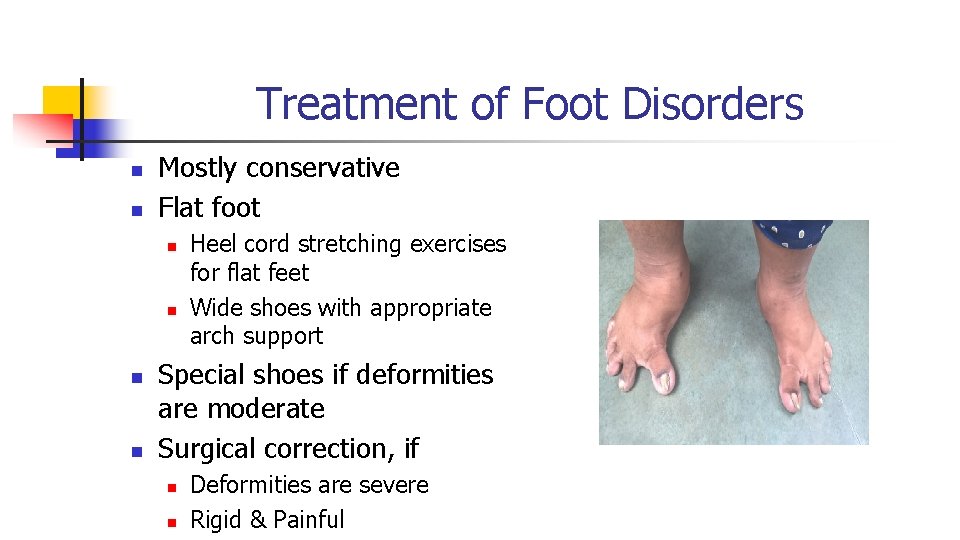
Treatment of Foot Disorders n n Mostly conservative Flat foot n n Heel cord stretching exercises for flat feet Wide shoes with appropriate arch support Special shoes if deformities are moderate Surgical correction, if n n Deformities are severe Rigid & Painful
Arthropathy of Down Syndrome n n n Occur in 1. 2 % of patients Similar to JRA Polyarticular, progressive with subluxation of joints Only medical management Involve Rheumatologist early
Anaesthetic risk n n It is a disease characterized with Multisystem involvement, posing a lot of challenges for anesthesia Cardiovascular – 40 -50% have congenital heart defects, atrioventricular septal defects being the most common
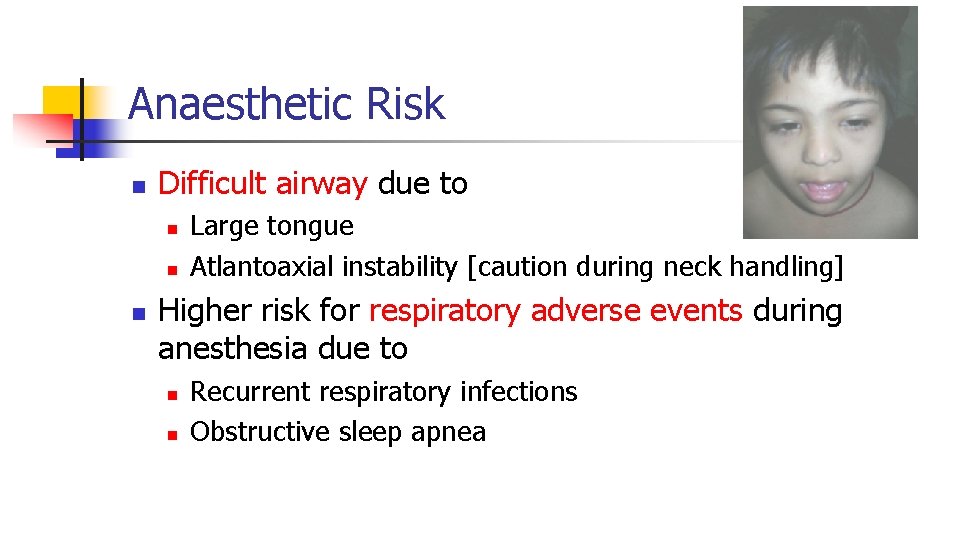
Anaesthetic Risk n Difficult airway due to n n n Large tongue Atlantoaxial instability [caution during neck handling] Higher risk for respiratory adverse events during anesthesia due to n n Recurrent respiratory infections Obstructive sleep apnea
Healing issues n n Infection Delayed wound healing Non union Resorption of bone graft in spine surgery
Summary n n 20% of all patients with Down syndrome experience orthopedic problems. Upper cervical spine instability has the most potential for morbidity and, consequently, requires close monitoring. Scoliosis, hip instability, patellar instability and foot problems can cause disability if left untreated. In some of these conditions, early diagnosis can prevent severe disability.
n Since approximately 20% of persons with Down syndrome have associated orthopaedic issues, orthopedic surgeons must be involved in the care of these individuals to help provide a mobile and pain-free life.
Thank you. sankarortho@gmail. com