
ORTHOGNATHIC JAW SURGERY BIMAXILLARY SLEEP SURGERY Sabine C
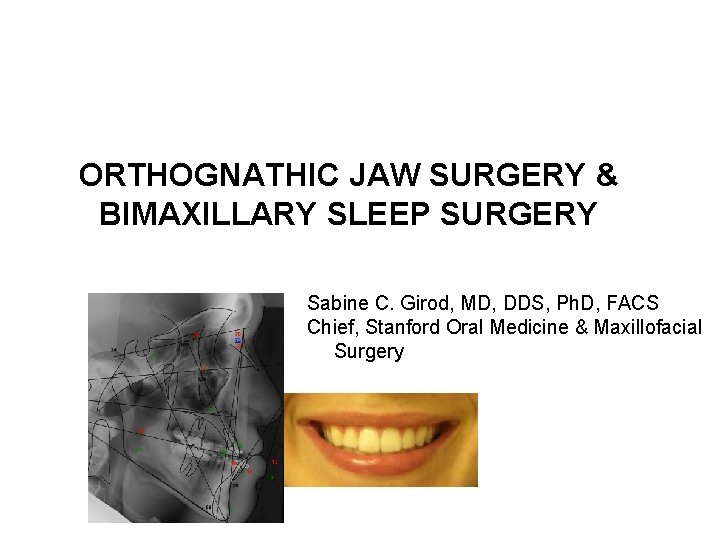
ORTHOGNATHIC JAW SURGERY & BIMAXILLARY SLEEP SURGERY Sabine C. Girod, MD, DDS, Ph. D, FACS Chief, Stanford Oral Medicine & Maxillofacial Surgery

What is Orthognathic Jaw Surgery? Insert movie Corrective jaw surgery when your jaw has grown out of alignment and can not be corrected with braces, e. g. a severe underbite like in this patient

What is Bimax Sleep Surgery? The same jaw surgery is also used in treatment of Sleep Apnea, so called “Bimax Surgery” to open the airway
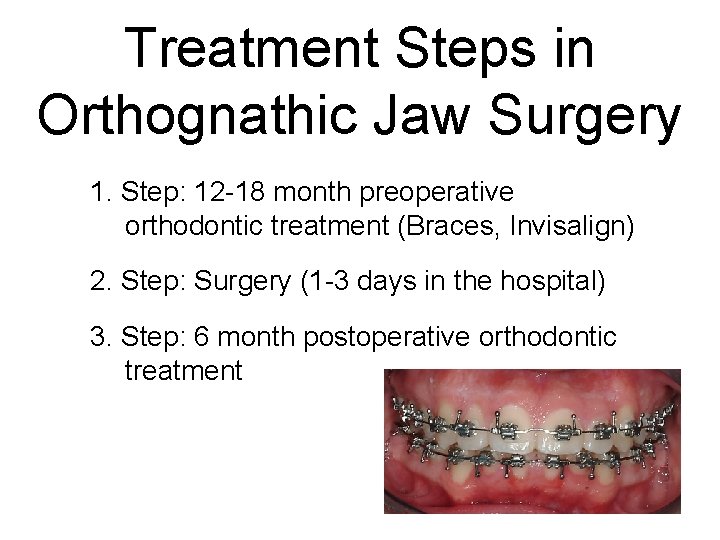
Treatment Steps in Orthognathic Jaw Surgery 1. Step: 12 -18 month preoperative orthodontic treatment (Braces, Invisalign) 2. Step: Surgery (1 -3 days in the hospital) 3. Step: 6 month postoperative orthodontic treatment

Surgical Procedure – Lower Jaw
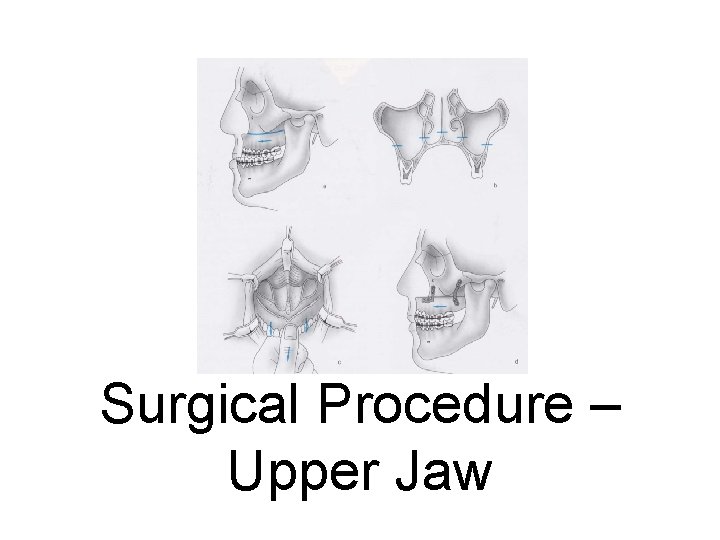
Surgical Procedure – Upper Jaw

Double Jaw or “Bimax” Surgery in the upper and lower jaw at the same time.
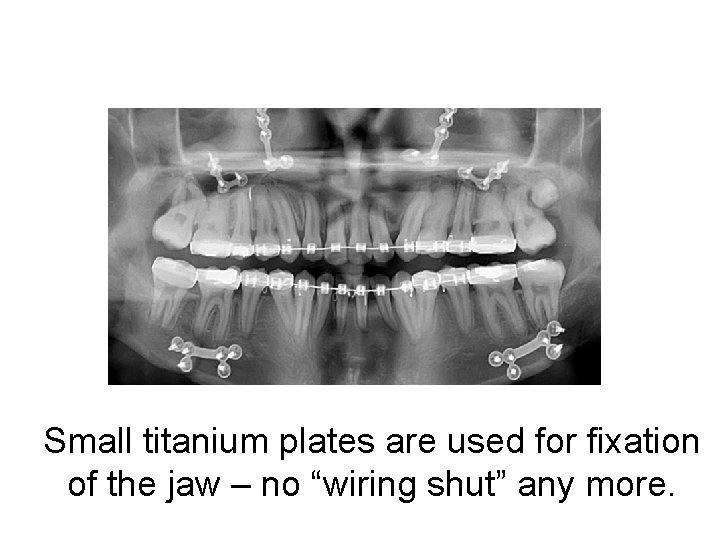
Small titanium plates are used for fixation of the jaw – no “wiring shut” any more.
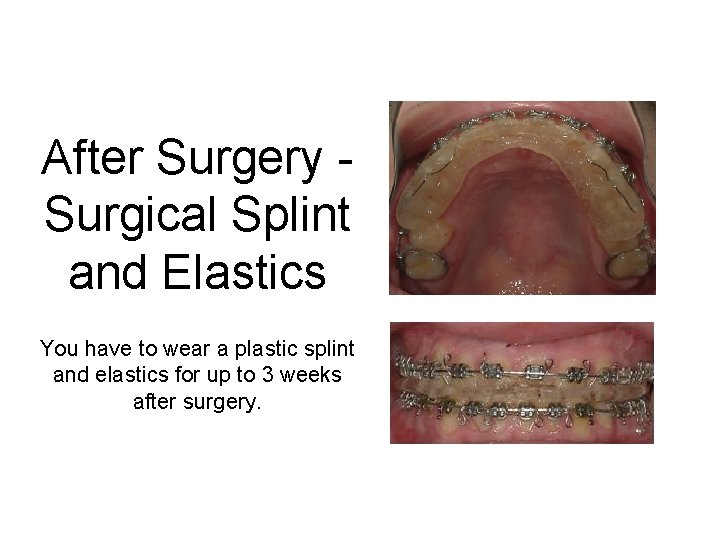
After Surgery Surgical Splint and Elastics You have to wear a plastic splint and elastics for up to 3 weeks after surgery.
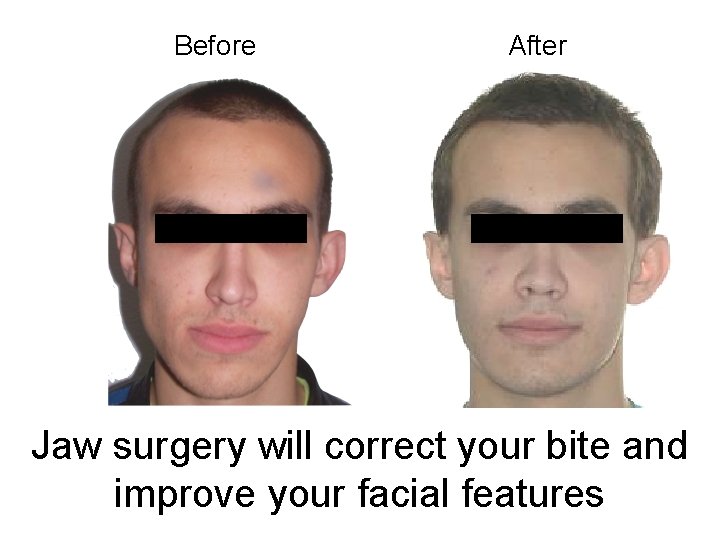
Before After Jaw surgery will correct your bite and improve your facial features
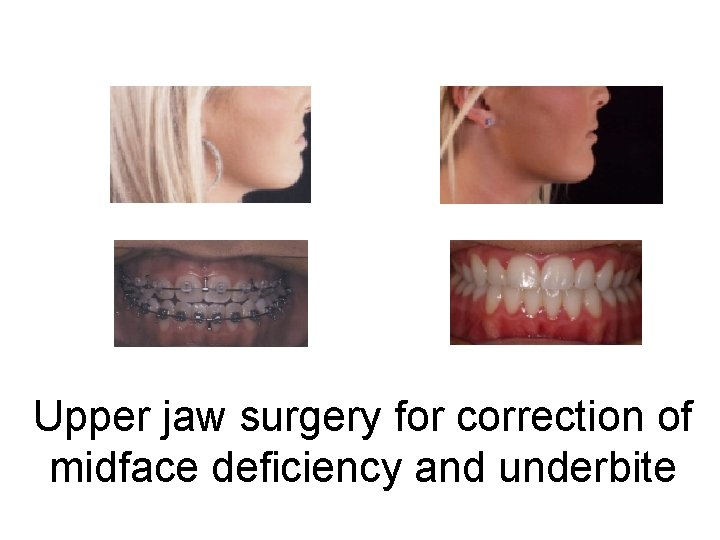
Upper jaw surgery for correction of midface deficiency and underbite

Bimax Surgery for Sleep Apnea Bimaxillary jaw advancement surgery is very successful in the treatment of severe sleep apnea. On the right you see a patients after 1015 mm advancement and significant opening of the airway after surgery.
Stanford Oral Medicine & Maxillofacial Surgery Sabine C. Girod, MD, DDS, Ph. D, FACS Chief, Stanford Oral Medicine & Maxillofacial Surgery Associate Professor of Surgery Stanford University Medical Center & Lucile Packard Children's Hospital 1000 Welch Road, Palo Alto, CA 94304 -5715 Patient Coordinator: Michelle Orozco (650) 736 -4355 MOrozco@stanfordmed. org
- Slides: 13