
Orion RAN Slicing for a Flexible and CostEffective
Orion RAN Slicing for a Flexible and Cost-Effective Multi-service Mobile Network Architecture Xenofon Foukas, Mahesh K. Karina, Kimon Kontovasilis
Introduction What’s important for a 5 G Network?
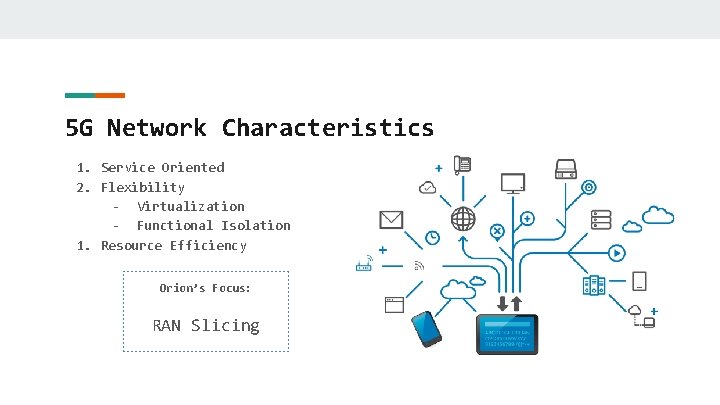
5 G Network Characteristics 1. Service Oriented 2. Flexibility - Virtualization - Functional Isolation 1. Resource Efficiency Orion’s Focus: RAN Slicing
Outline 1. 2. 3. 4. 5. 6. Background & Related Work Orion Overview Orion’s Design Evaluation Case Studies Extending Orion
Background & Related Work 1. RAN Slicing - w/ Functional Isolation - w/o Functional Isolation 1. Radio Resource Virtualization
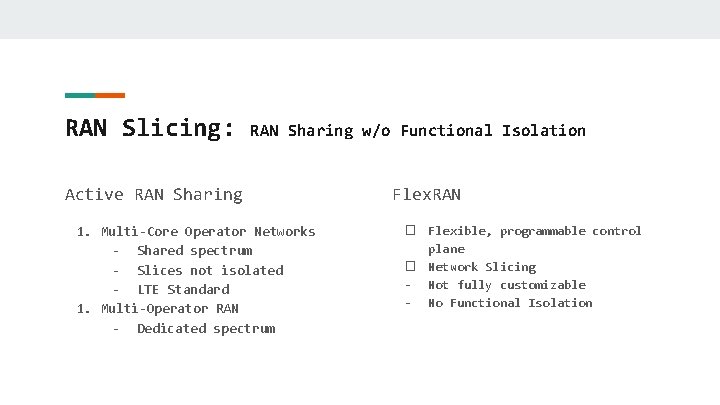
RAN Slicing: RAN Sharing w/o Functional Isolation Active RAN Sharing 1. Multi-Core Operator Networks - Shared spectrum - Slices not isolated - LTE Standard 1. Multi-Operator RAN - Dedicated spectrum Flex. RAN � Flexible, programmable control plane � Network Slicing - Not fully customizable - No Functional Isolation
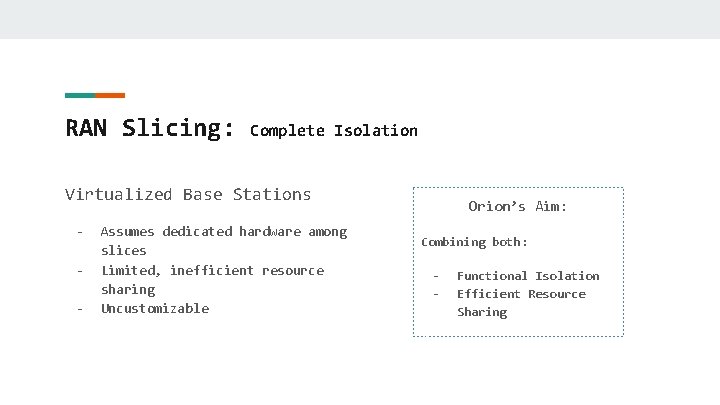
RAN Slicing: Complete Isolation Virtualized Base Stations - Assumes dedicated hardware among slices Limited, inefficient resource sharing Uncustomizable Orion’s Aim: Combining both: - Functional Isolation Efficient Resource Sharing
Radio Resource Virtualization Existing abstractions: - Too high level Don’t account for physical layer restrictions Orion’s Aim: - Dealing with physical constraints Introduce flexible abstractions
Orion Overview Key Design Points 1. Infrastructure vs. Service Provider Distinction 2. Strong Isolation Guarantee
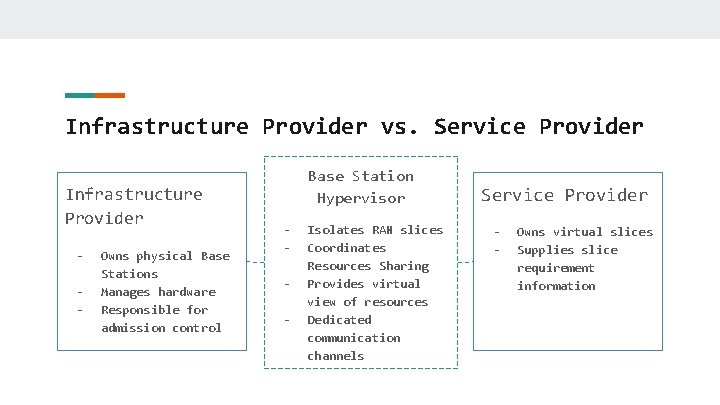
Infrastructure Provider vs. Service Provider Infrastructure Provider - Owns physical Base Stations Manages hardware Responsible for admission control Base Station Hypervisor - Isolates RAN slices Coordinates Resources Sharing Provides virtual view of resources Dedicated communication channels Service Provider - Owns virtual slices Supplies slice requirement information
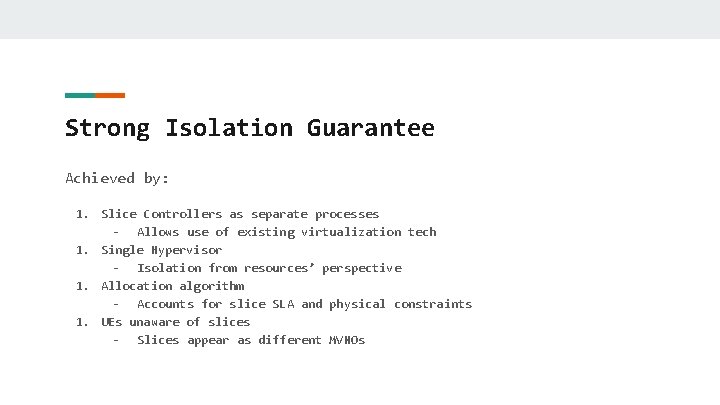
Strong Isolation Guarantee Achieved by: 1. Slice Controllers as separate processes - Allows use of existing virtualization tech 1. Single Hypervisor - Isolation from resources’ perspective 1. Allocation algorithm - Accounts for slice SLA and physical constraints 1. UEs unaware of slices - Slices appear as different MVNOs
Orion Design 1. Base Station Hypervisor 2. Virtual Control Plane 3. End-to-End Network Slicing
Base Station Hypervisor Intermediary for Communication: 1. Hypervisor to Slice - API to access/modify data plane state - Allocates virtualized resources 1. Slice to Hypervisor - Uses virtual resources for control plane operations - Sends commands to Hypervisor 4 Components: 1. 2. 3. 4. Slice Context Manager Radio Resource Manager Virtualization Manager UE Association Manager
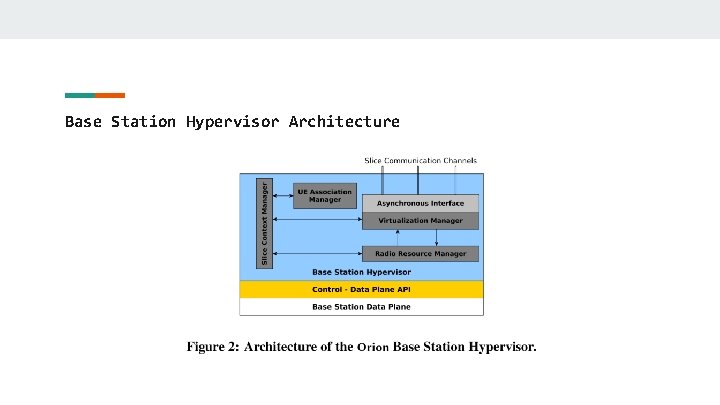
Base Station Hypervisor Architecture
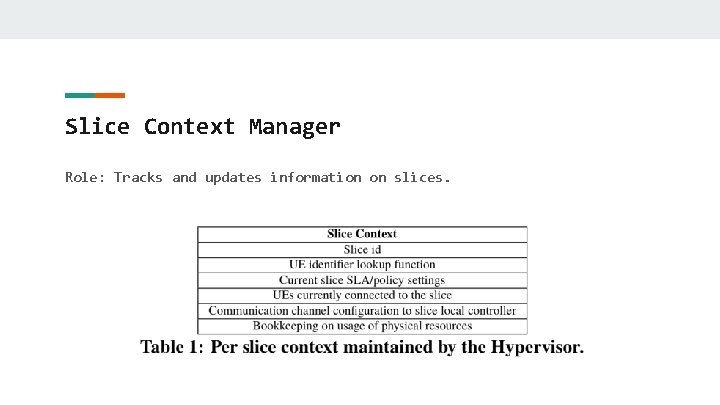
Slice Context Manager Role: Tracks and updates information on slices.
Slice Context Manager Slice Service Description 1. Service Level Agreement (SLA) - Service requirements - Unrestricted by Orion 1. List of UE identifiers - Used for mapping UEs to slices Admission Control - Checks active slices’ information Consults Infrastructure Provider’s admission policy to accept/reject
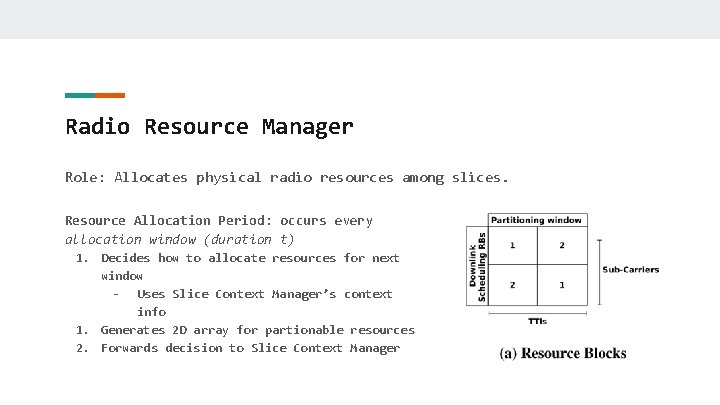
Radio Resource Manager Role: Allocates physical radio resources among slices. Resource Allocation Period: occurs every allocation window (duration t) 1. Decides how to allocate resources for next window - Uses Slice Context Manager’s context info 1. Generates 2 D array for partionable resources 2. Forwards decision to Slice Context Manager
Radio Resource Manager Upon Receiving Scheduling Decision: 1. Translates & updates data plane state - Uses custom API 1. Tracks slices’ physical resources - To inform future allocation
Virtualization Manager Role: Maintains isolation of slices from physical resources. Two Main Tasks 1. Present resource abstraction to slices 2. Present virtualized data plane state to slices
Virtualization Manager Radio Resource Abstraction - Uses Radio Resource Manager’s Resource Maps decisions from virtual to physical Omits: - Info irrelevant to slice Resource grid and Frequency Dimension information Allows Slice Control Plane full access to their own resources.
Virtualization Manager Radio Resource Abstraction Challenges: - How to hide physical grid layout from slices? How to follow physical constraints? - eg. Group Based Allocation, Frequency dependencies Resource Abstractions 1. v. RRB 2. v. RRB Pools
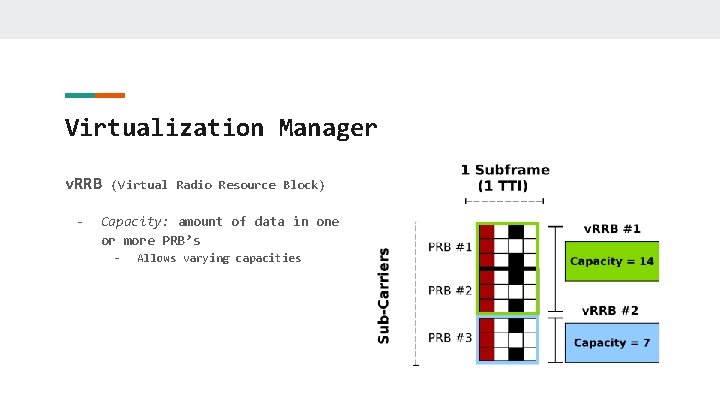
Virtualization Manager v. RRB - (Virtual Radio Resource Block) Capacity: amount of data in one or more PRB’s - Allows varying capacities
Virtualization Manager v. RRB Pools: groups of v. RRBS - Different pools for uplink/downlink 0 or more pools per slice Slices can only allocate resources in their pools Handles frequency dependency challenge
Virtualization Manager Data Plane Abstraction - Reveals relevant data plane state to slices - - Isolation: information reported in v. RRBs Provides cell-related configuration to slices - Provided to all slices Relevant Information? UE information is only reported to their slice.
UE Association Manager Role: Assigns UEs to slices. Two Steps: 1. Aiding Discovery 2. Attachment/Mapping
UE Association Manager (Step 1) Aiding Discovery of UE 1. Gets active slices from Slice Context Manager 2. Broadcast information through Base Station 3. UE enters attachment process after successful random access process Broadcast and Random Access processes of Base Stations kept internal to Hypervisor.
UE Association Manager (Step 2) Mapping UE to a Slice 1. UE supplies a unique ID 2. Manager maps UE to slice with a UE lookup function - Slice Context Manager maintains lookup functions for each slice 1. Updates list of active UEs in slice’s context 2. Notifies slice’s virtual control plane Virtual Manager takes control of UE.
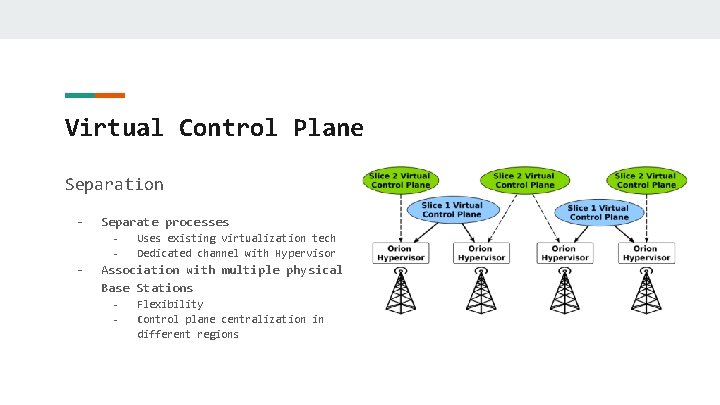
Virtual Control Plane Separation - Separate processes - - Uses existing virtualization tech Dedicated channel with Hypervisor Association with multiple physical Base Stations - Flexibility Control plane centralization in different regions
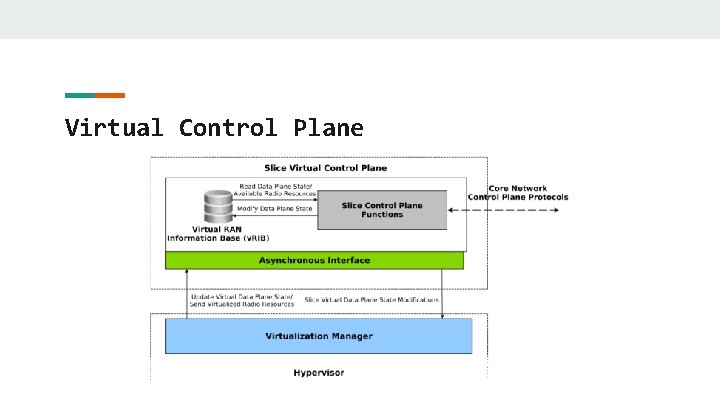
Virtual Control Plane
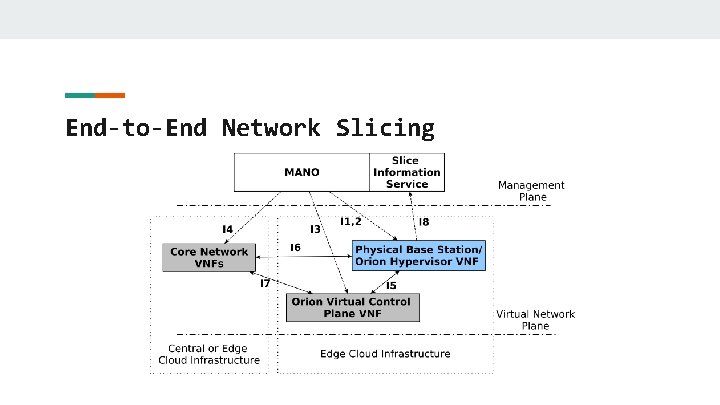
End-to-End Network Slicing
Evaluation 1. Scalability 2. vs. State of the Art 3. Impact of Communication Channel
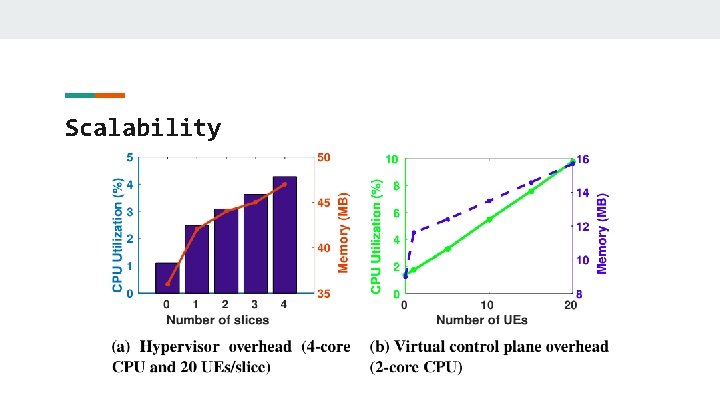
Scalability
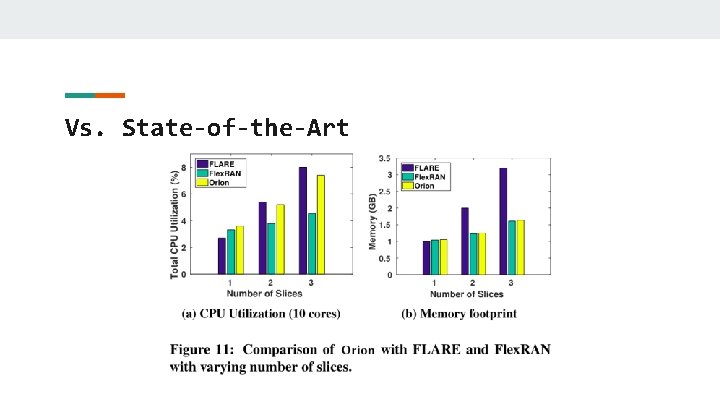
Vs. State-of-the-Art
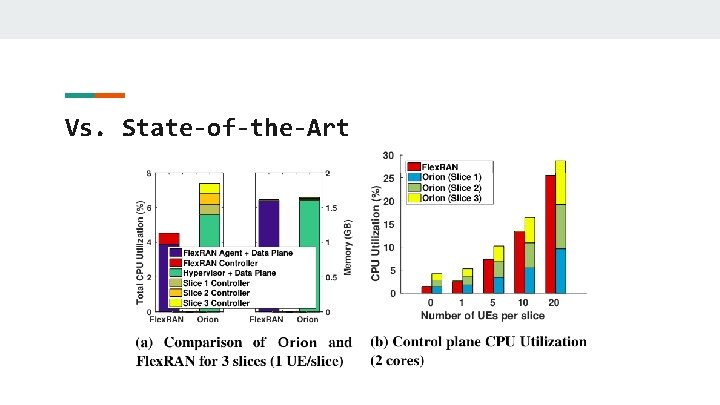
Vs. State-of-the-Art
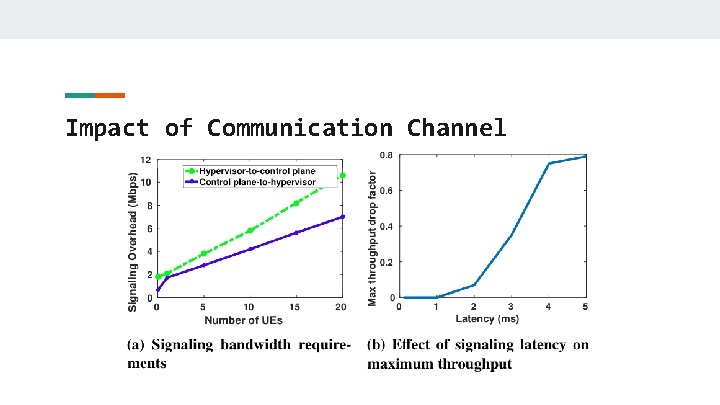
Impact of Communication Channel
Case Studies 1. Isolation Capabilities 2. Flexible Radio Resource Allocation 3. Deployment in End-to-end setting
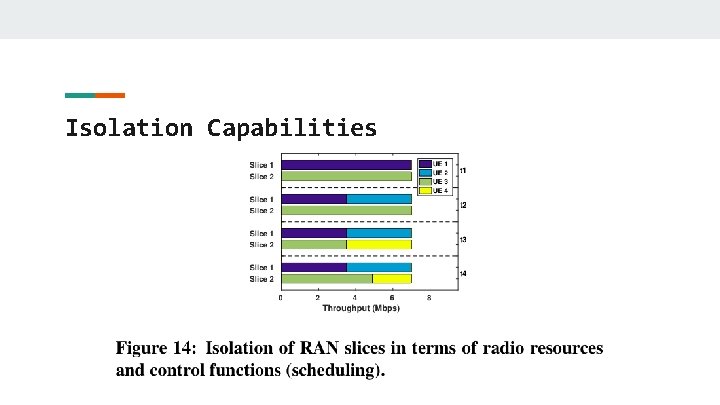
Isolation Capabilities
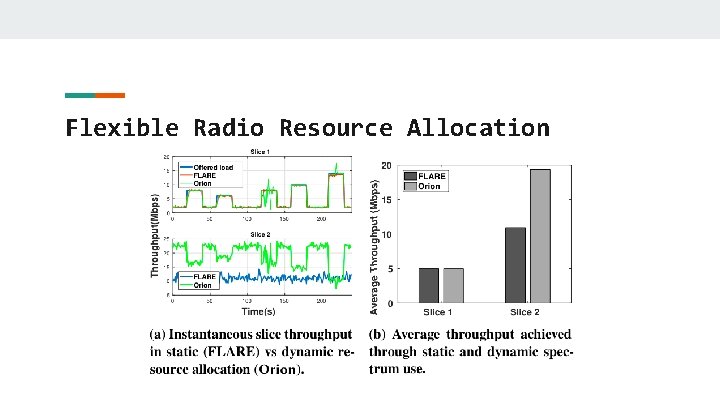
Flexible Radio Resource Allocation
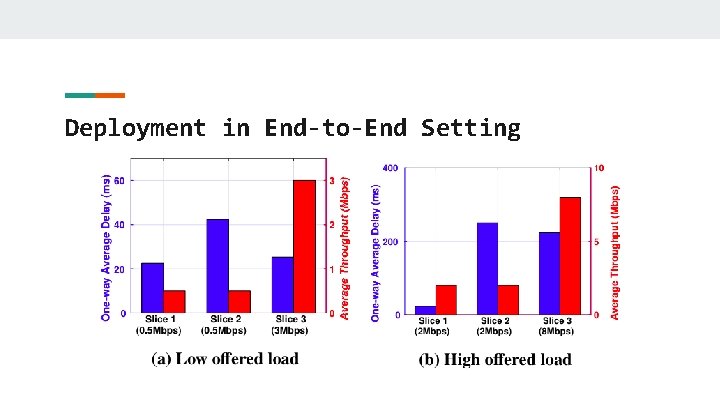
Deployment in End-to-End Setting
Conclusion Orion achieves both: - Functional Isolation - Efficient resource sharing Contributes towards: - Raa. S - multi-RAT settings
- Slides: 40