
Origins of Species Combining Darwins Theory with our
Origins of Species Combining Darwin’s Theory with our understanding of heredity.
Gene Pool n The combined genetic information for all members of a population. n # of times a particular allele occurs compared to other alleles is the relative frequency.
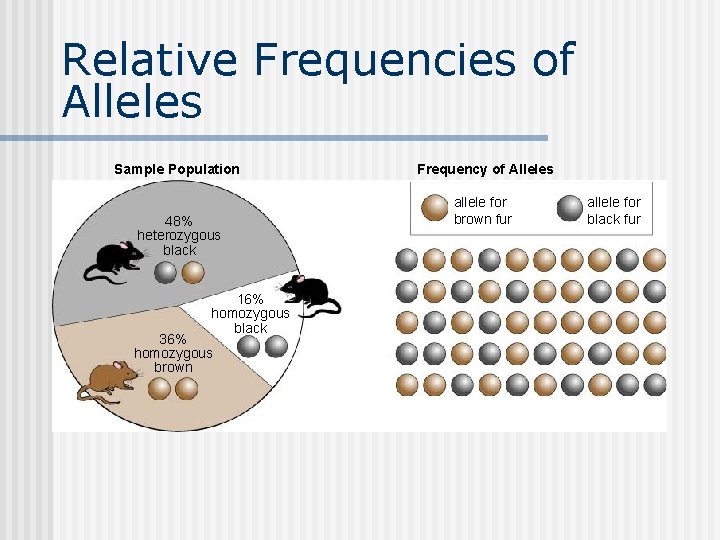
Relative Frequencies of Alleles Sample Population 48% heterozygous black 16% homozygous black 36% homozygous brown Frequency of Alleles allele for brown fur allele for black fur
Gene Pools need variation n For evolution to occur there must be variation of nature to select for or against. This requires mutations in the DNA n Gene Shuffling during sexual reproduction (Crossing Over) n
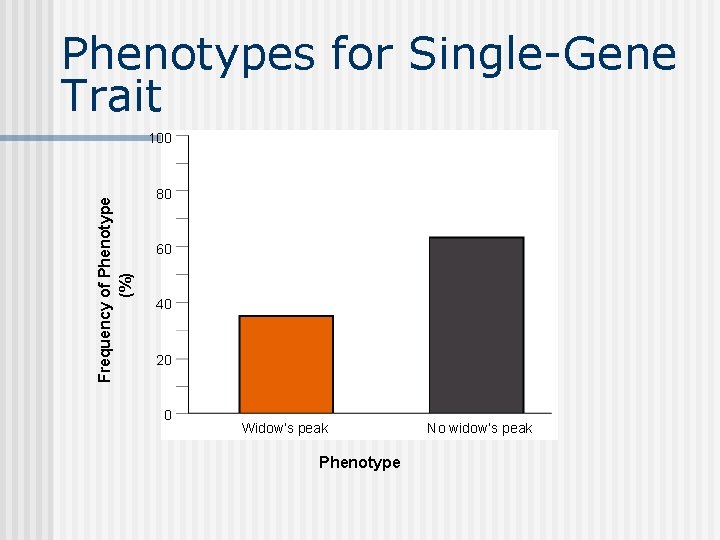
Phenotypes for Single-Gene Trait Frequency of Phenotype (%) 100 80 60 40 20 0 Widow’s peak Phenotype No widow’s peak
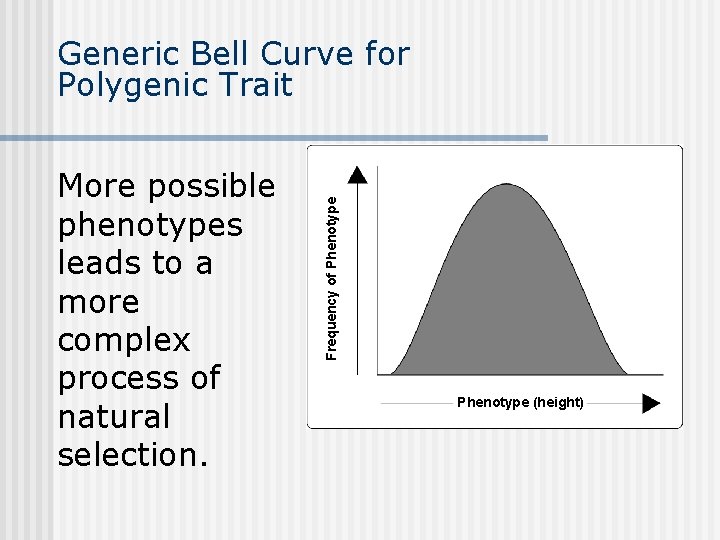
More possible phenotypes leads to a more complex process of natural selection. Frequency of Phenotype Generic Bell Curve for Polygenic Trait Phenotype (height)
Selection Patterns How a population changes overtime as nature selects for a particular trait.
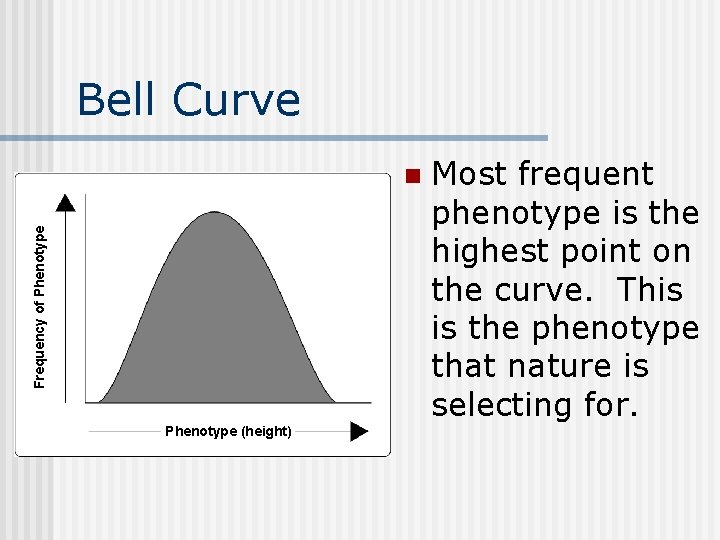
Bell Curve Frequency of Phenotype n Phenotype (height) Most frequent phenotype is the highest point on the curve. This is the phenotype that nature is selecting for.
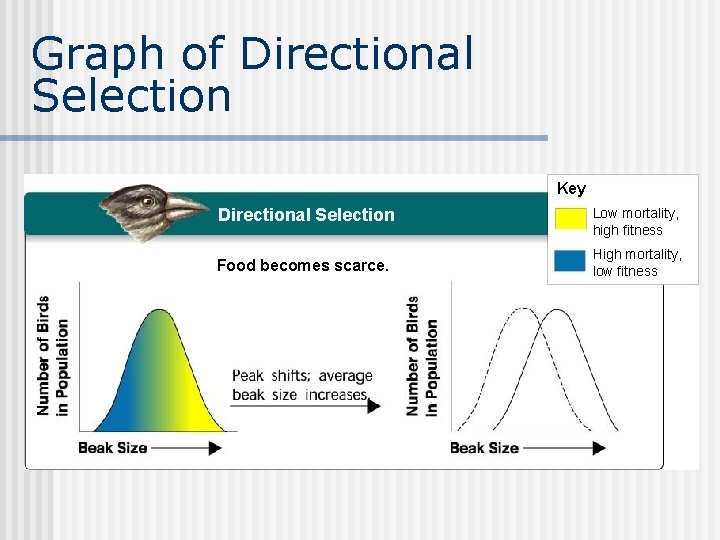
Graph of Directional Selection Key Directional Selection Food becomes scarce. Low mortality, high fitness High mortality, low fitness
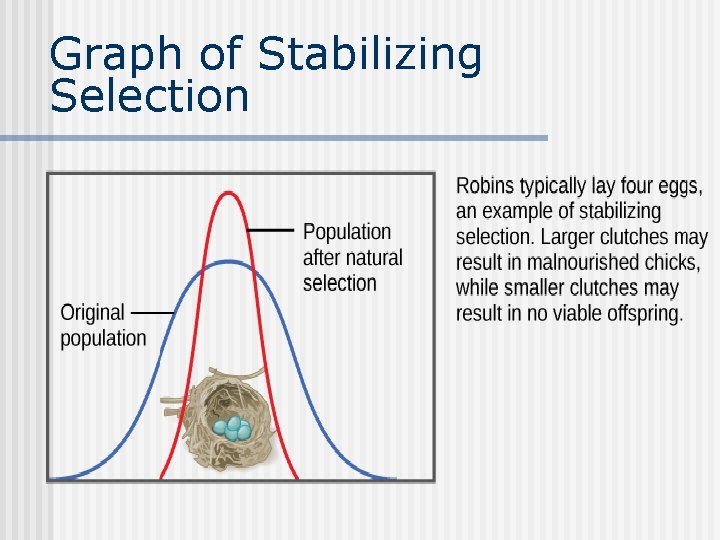
Graph of Stabilizing Selection
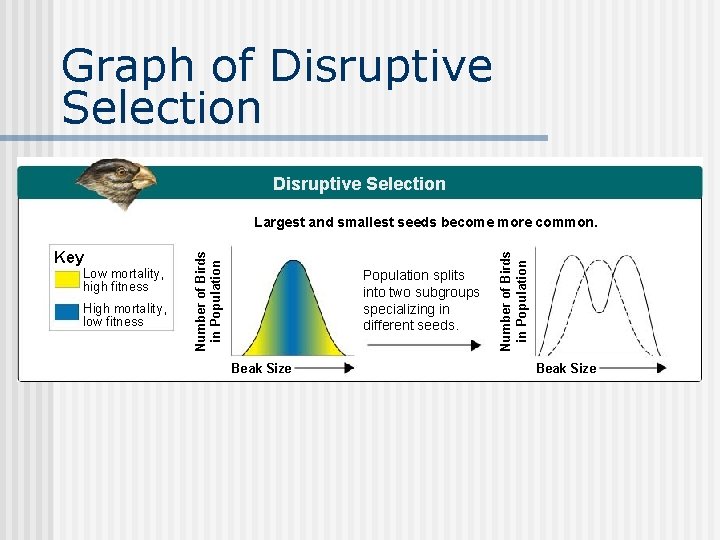
Graph of Disruptive Selection Low mortality, high fitness High mortality, low fitness Population splits into two subgroups specializing in different seeds. Beak Size Number of Birds in Population Key Number of Birds in Population Largest and smallest seeds become more common. Beak Size
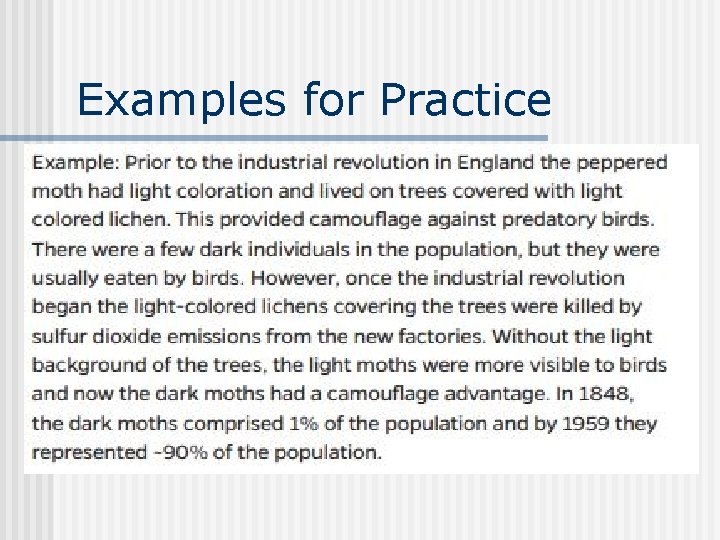
Examples for Practice
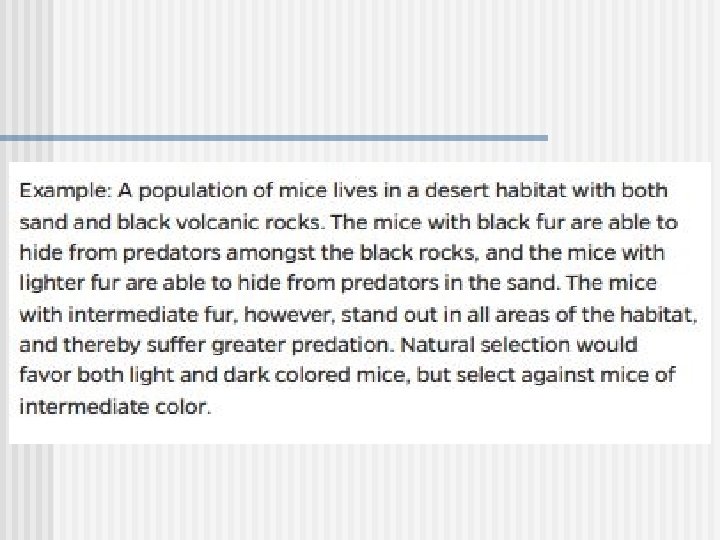
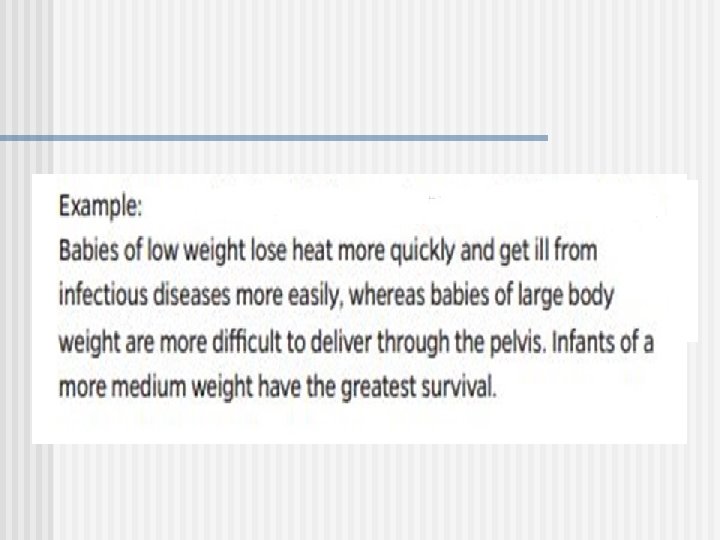
Activities: Natural Selection Simulation – Link on the Calendar Natural Selection Practice Worksheet
What is genetic drift? Random (By chance) change in allele frequency, based on the laws of probability n Examples – Bottleneck Effect or Founder Effect. n Process of a gene pool changing, usually reducing variations, due to some chance event n
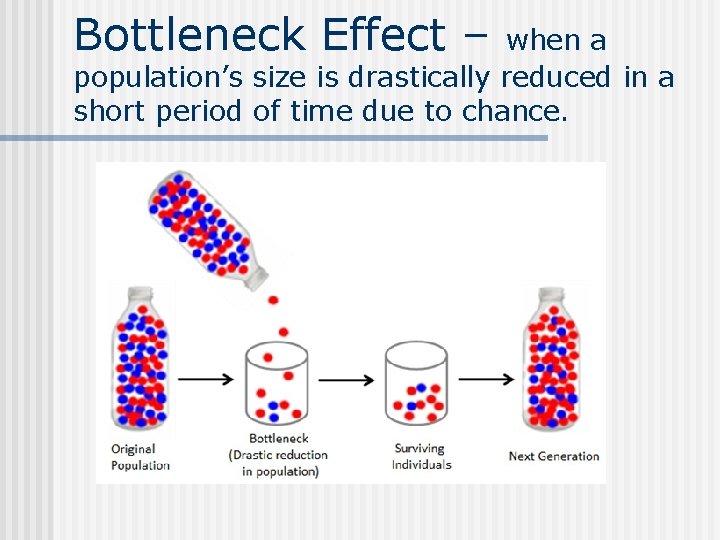
Bottleneck Effect – when a population’s size is drastically reduced in a short period of time due to chance.
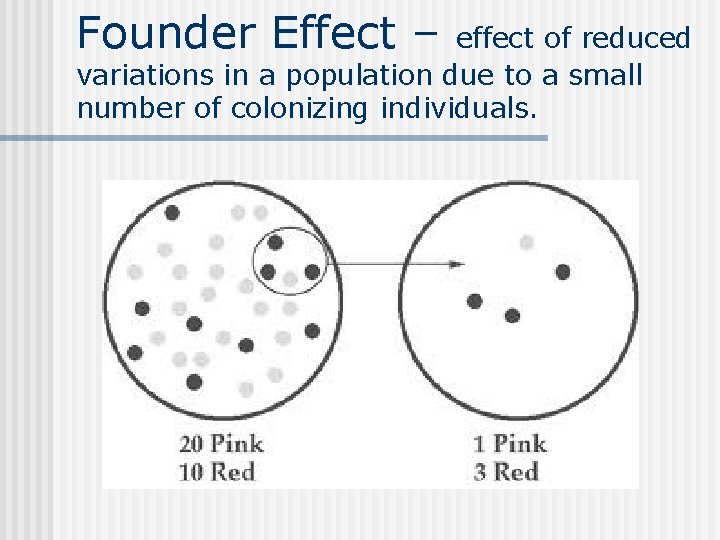
Founder Effect – effect of reduced variations in a population due to a small number of colonizing individuals.
Genetic drift? n n n Genetic drift may occur when a small group of individuals colonize a new habitat. If the relative frequency of alleles in this new population is different from the original parent population then this new population could be genetically different from the parent population. The new population is not caused by natural selection but simply chance.
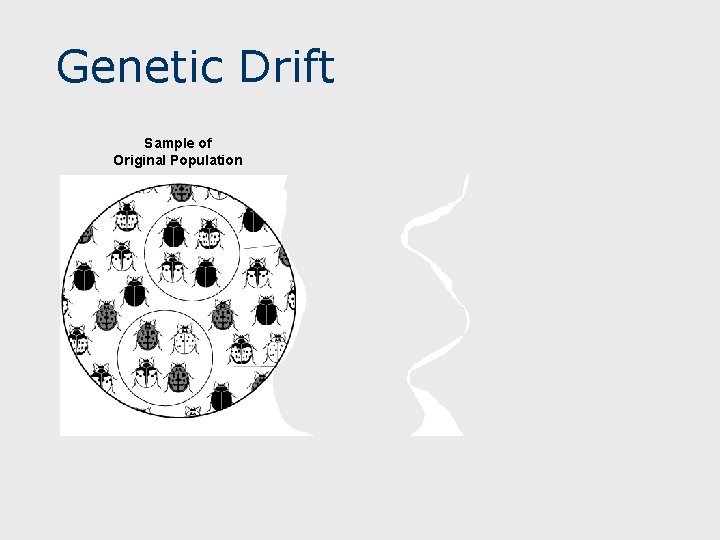
Genetic Drift Sample of Original Population Descendants Founding Population A Founding Population B
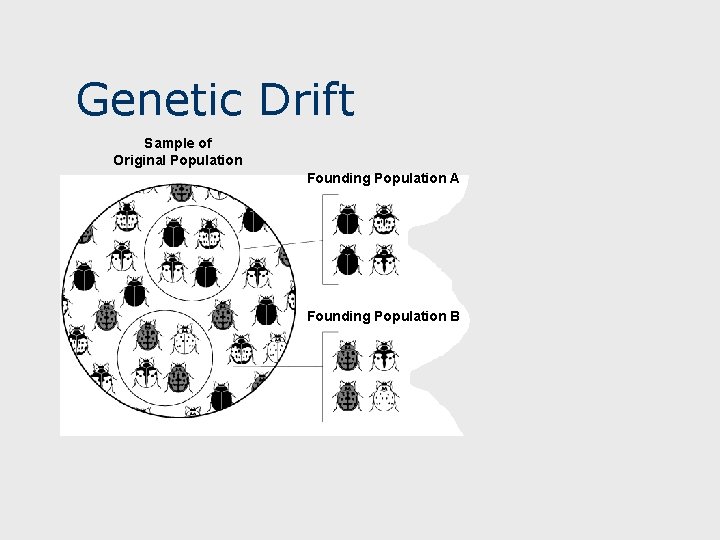
Genetic Drift Sample of Original Population Descendants Founding Population A Founding Population B
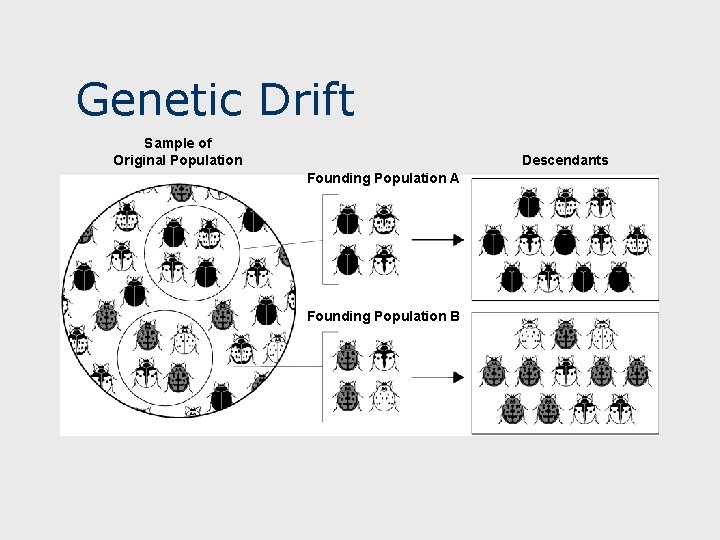
Genetic Drift Sample of Original Population Descendants Founding Population A Founding Population B
Genetic equilibrium n Allele frequencies in a population will remain constant unless on or more factors cause these frequencies to change.
Conditions necessary for genetic equilibrium to occur: 1. 2. 3. 4. 5. Random mating Very large population No immigration or emigration No mutations No natural selection
Speciation Formation of a new species
What is a species? Organisms that are able to interbreed & produce fertile offspring n Different breeds of dogs belong to the same species n
What is speciation and what causes it? New species may evolve for several reasons…. . All require reproductive isolation sperm cannot fertilize egg due to differences in genes & chromosomes n Ex- cats & dogs n
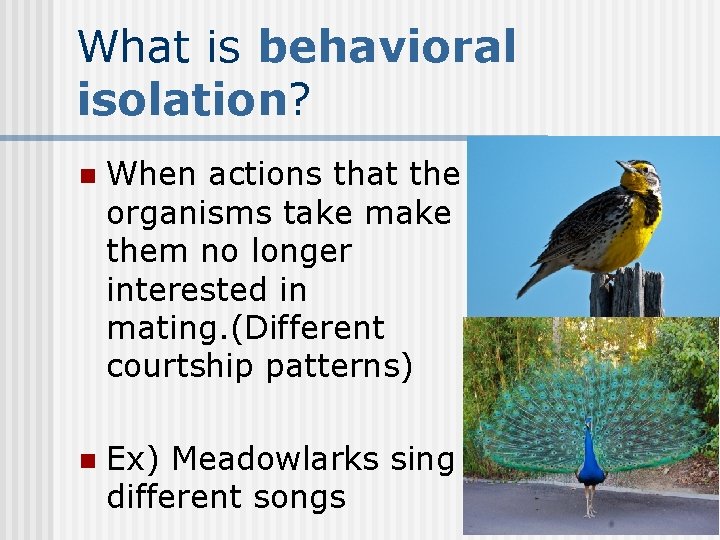
What is behavioral isolation? n When actions that the organisms take make them no longer interested in mating. (Different courtship patterns) n Ex) Meadowlarks sing different songs
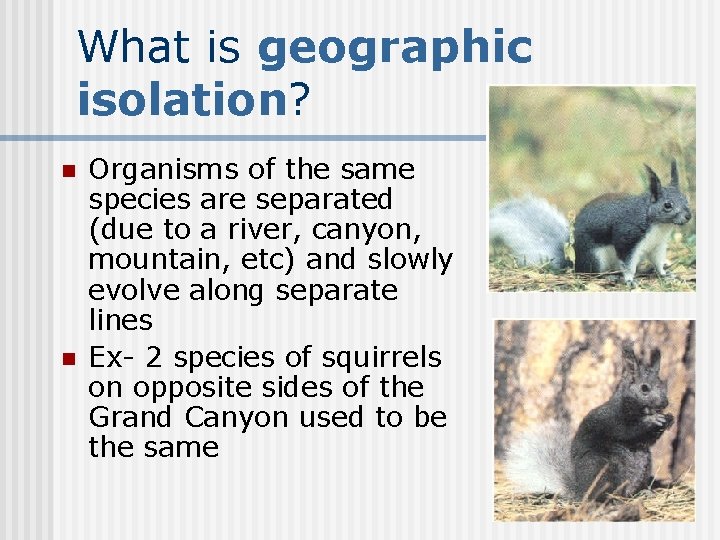
What is geographic isolation? n n Organisms of the same species are separated (due to a river, canyon, mountain, etc) and slowly evolve along separate lines Ex- 2 species of squirrels on opposite sides of the Grand Canyon used to be the same
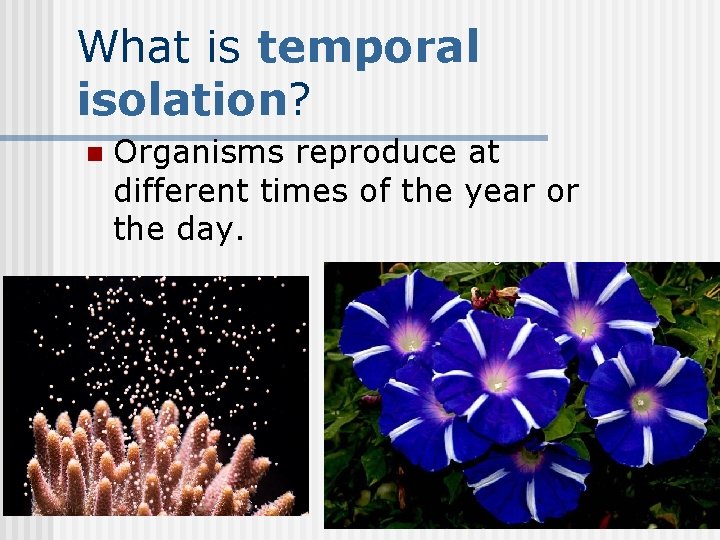
What is temporal isolation? n Organisms reproduce at different times of the year or the day.
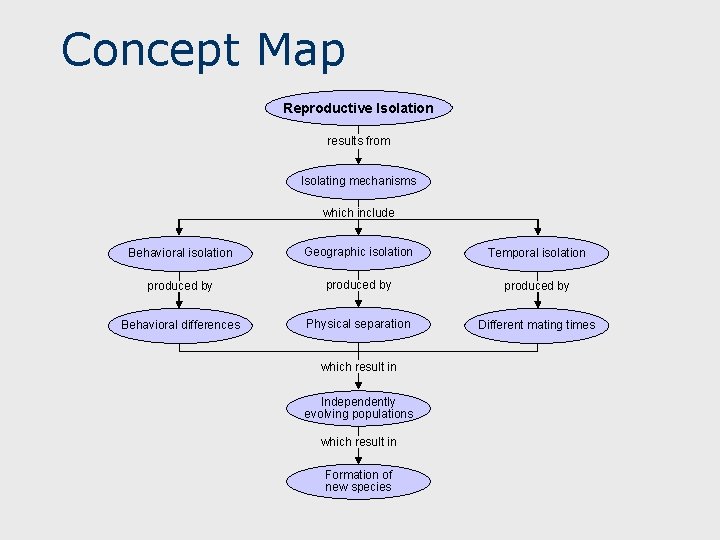
Concept Map Reproductive Isolation results from Isolating mechanisms which include Behavioral isolation Geographic isolation Temporal isolation produced by Behavioral differences Physical separation Different mating times which result in Independently evolving populations which result in Formation of new species
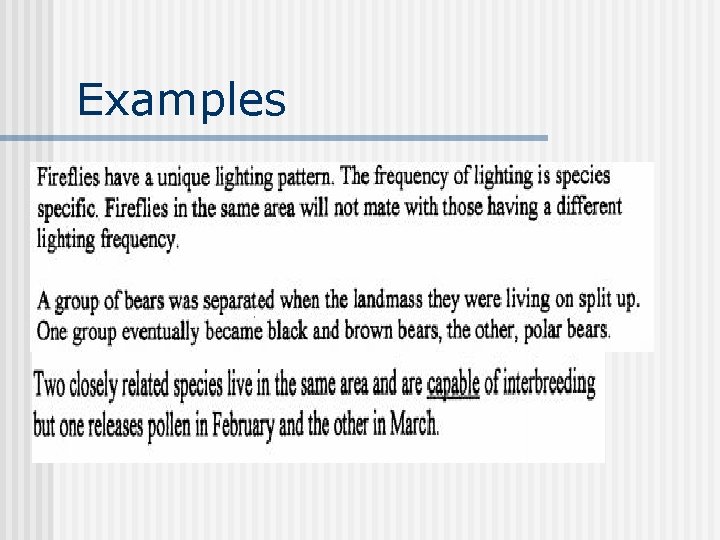
Examples
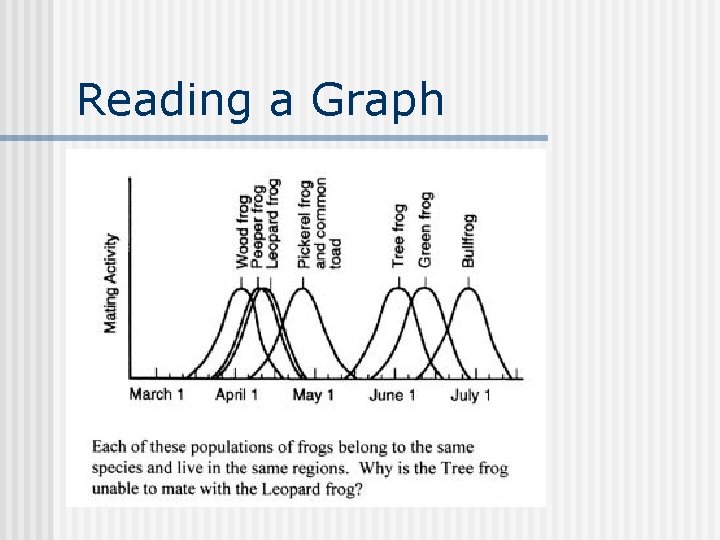
Reading a Graph
Patterns of Evolution Gradualism, Punctuated Equilibrium, Adaptive Radiation, Convergent Evolution, and Divergent Evolution
How fast does speciation occur? (2 theories) 1. 2. Gradualism- species change at a slow & steady pace, over millions of years Punctuated equilibrium- slow evolution, but with periods of “rapid” evolution; the rapid changes may be brought about by sudden changes in environmental conditions
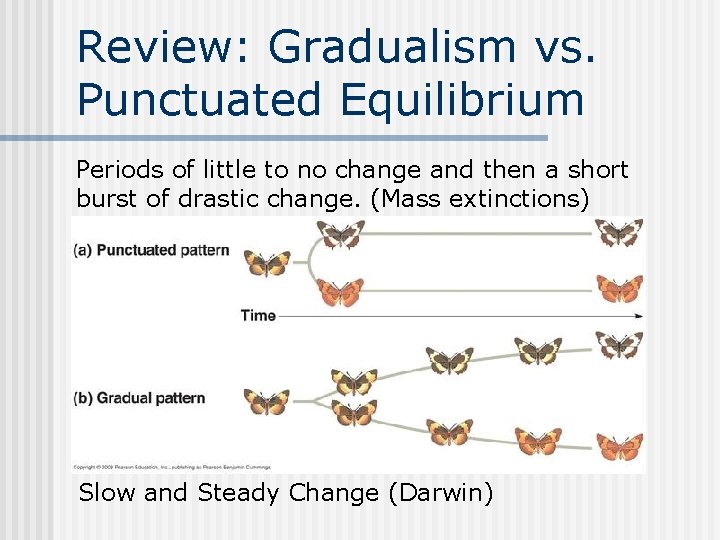
Review: Gradualism vs. Punctuated Equilibrium Periods of little to no change and then a short burst of drastic change. (Mass extinctions) Slow and Steady Change (Darwin)
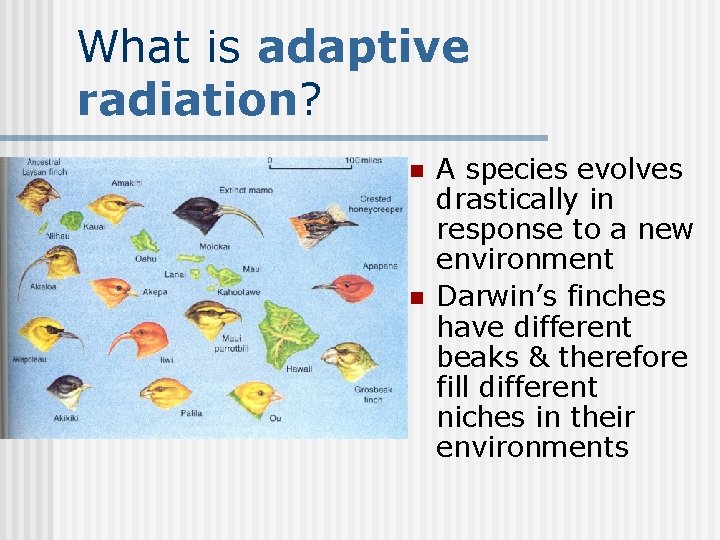
What is adaptive radiation? n n A species evolves drastically in response to a new environment Darwin’s finches have different beaks & therefore fill different niches in their environments
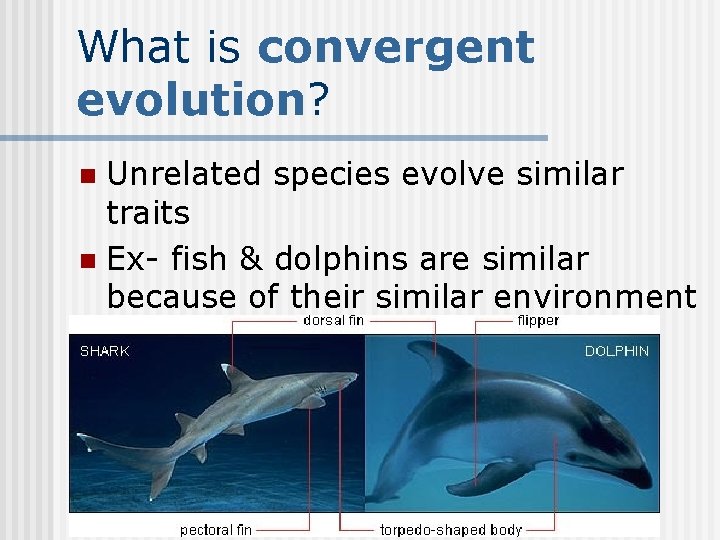
What is convergent evolution? Unrelated species evolve similar traits n Ex- fish & dolphins are similar because of their similar environment n
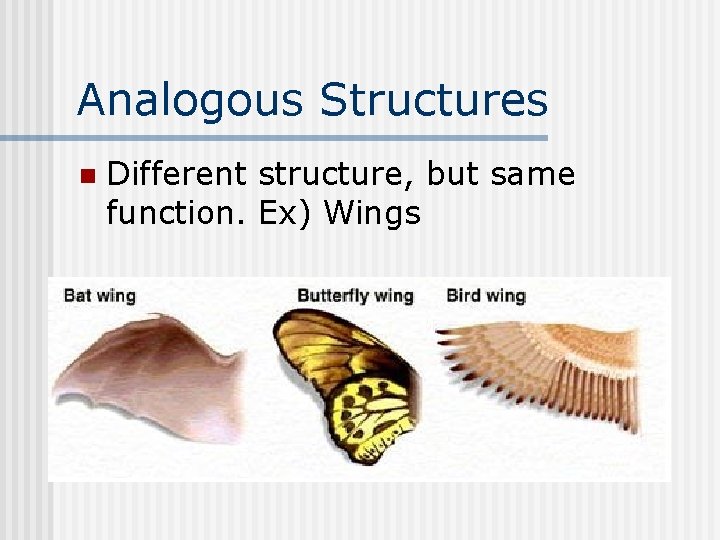
Analogous Structures n Different structure, but same function. Ex) Wings
What is divergent evolution? Over time organisms accumulate differences which eventually become enough to make them a new species. n Ex) Adaptive Radiation with Darwin’s finches. n
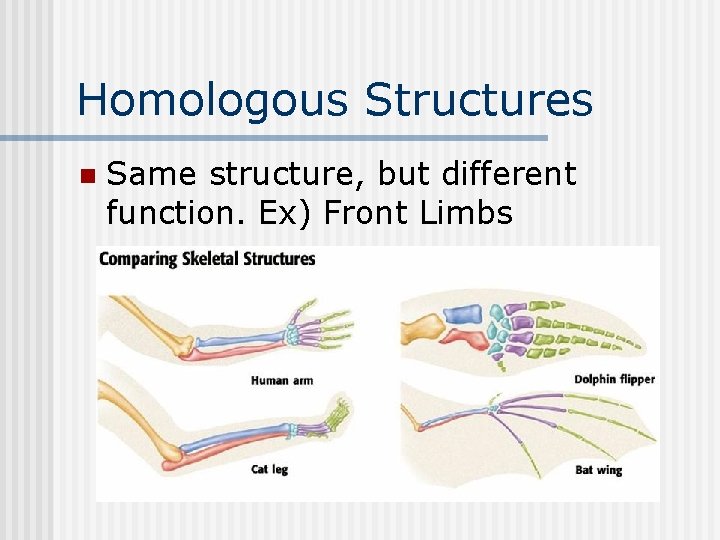
Homologous Structures n Same structure, but different function. Ex) Front Limbs
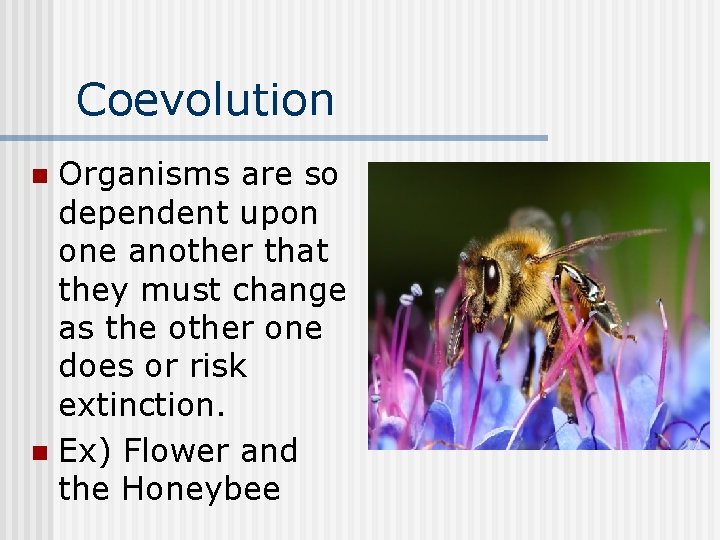
Coevolution Organisms are so dependent upon one another that they must change as the other one does or risk extinction. n Ex) Flower and the Honeybee n
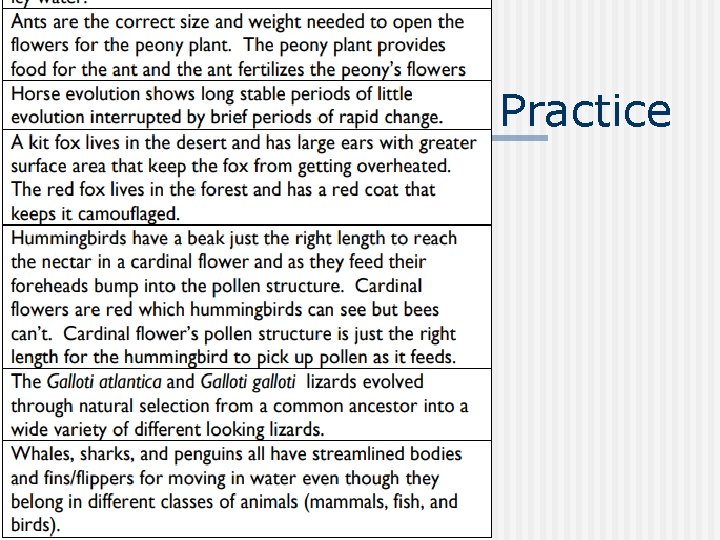
Practice
- Slides: 43