
Origins of Modern Humans Who was our earliest

- Slides: 48
Origins of Modern Humans
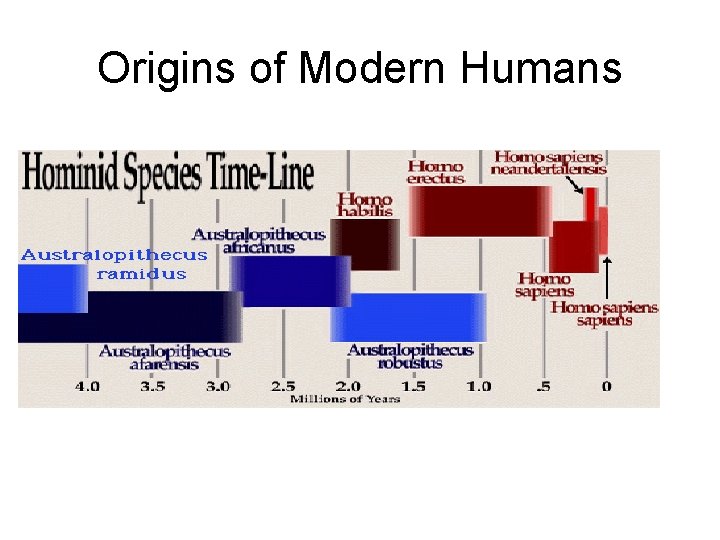
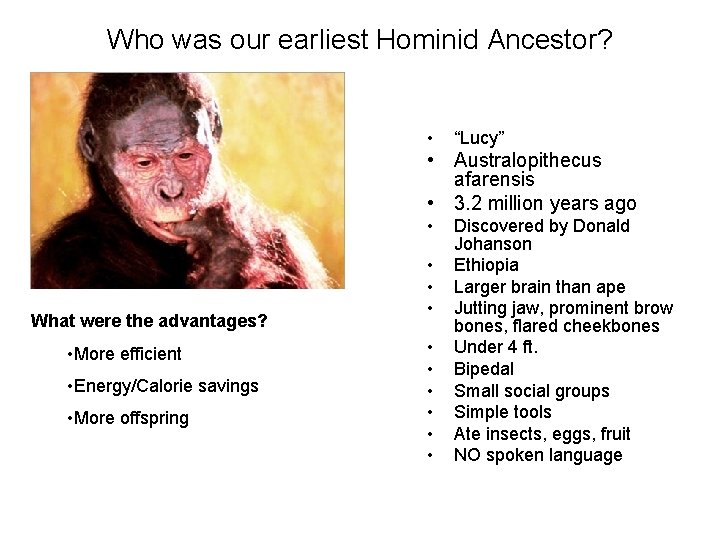
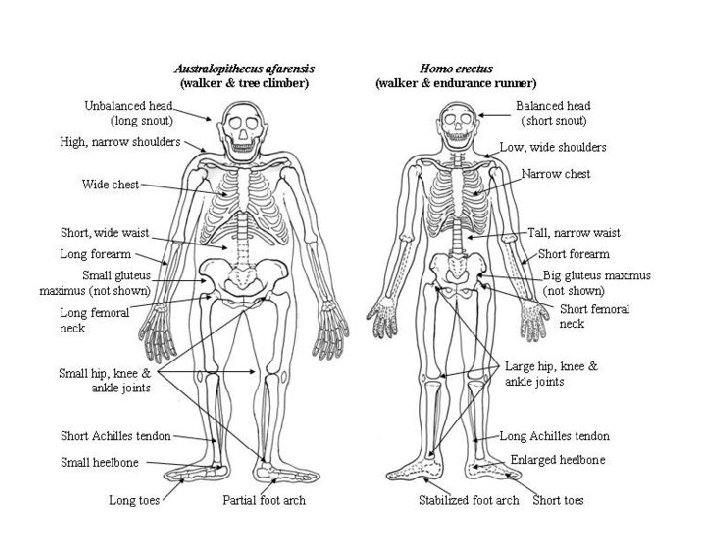
Who was our earliest Hominid Ancestor? • “Lucy” • Australopithecus afarensis • 3. 2 million years ago • What were the advantages? • More efficient • Energy/Calorie savings • More offspring • • • Discovered by Donald Johanson Ethiopia Larger brain than ape Jutting jaw, prominent brow bones, flared cheekbones Under 4 ft. Bipedal Small social groups Simple tools Ate insects, eggs, fruit NO spoken language
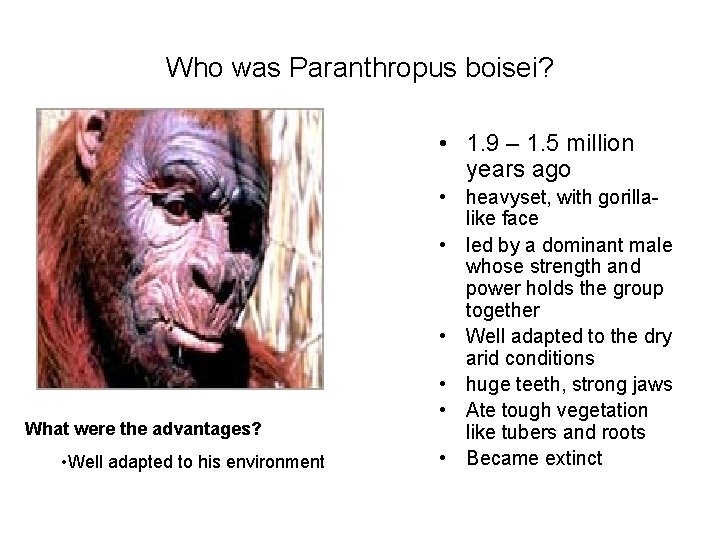
Who was Paranthropus boisei? • 1. 9 – 1. 5 million years ago What were the advantages? • Well adapted to his environment • heavyset, with gorillalike face • led by a dominant male whose strength and power holds the group together • Well adapted to the dry arid conditions • huge teeth, strong jaws • Ate tough vegetation like tubers and roots • Became extinct
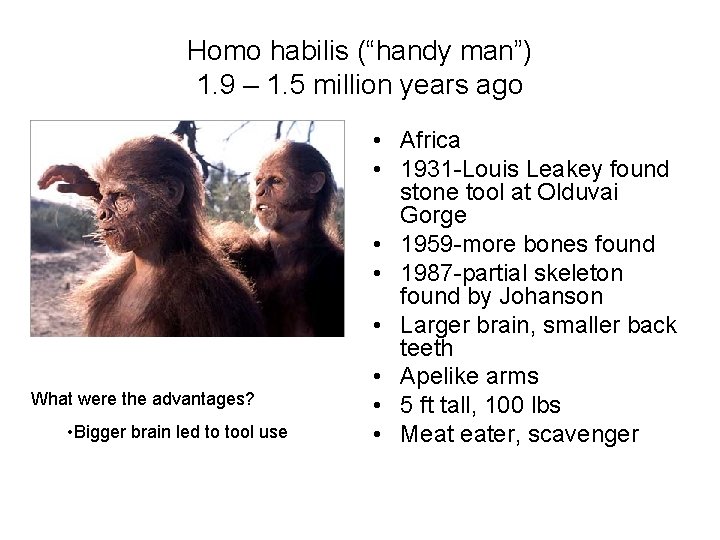
Homo habilis (“handy man”) 1. 9 – 1. 5 million years ago What were the advantages? • Bigger brain led to tool use • Africa • 1931 -Louis Leakey found stone tool at Olduvai Gorge • 1959 -more bones found • 1987 -partial skeleton found by Johanson • Larger brain, smaller back teeth • Apelike arms • 5 ft tall, 100 lbs • Meat eater, scavenger
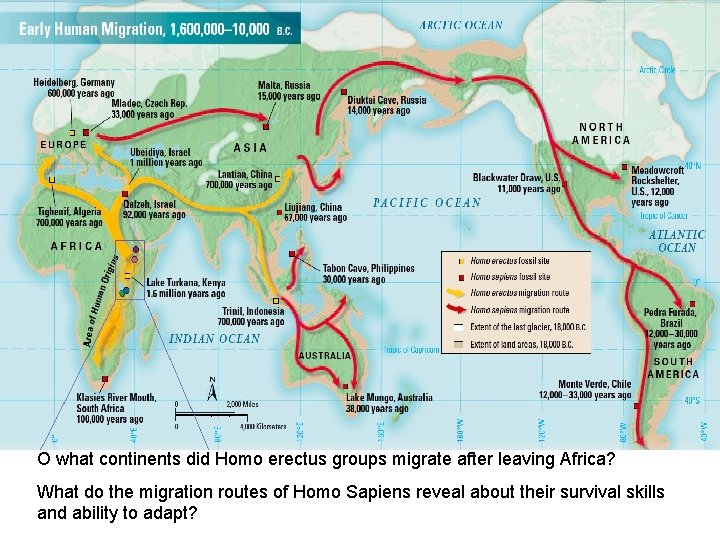
O what continents did Homo erectus groups migrate after leaving Africa? What do the migration routes of Homo Sapiens reveal about their survival skills and ability to adapt?
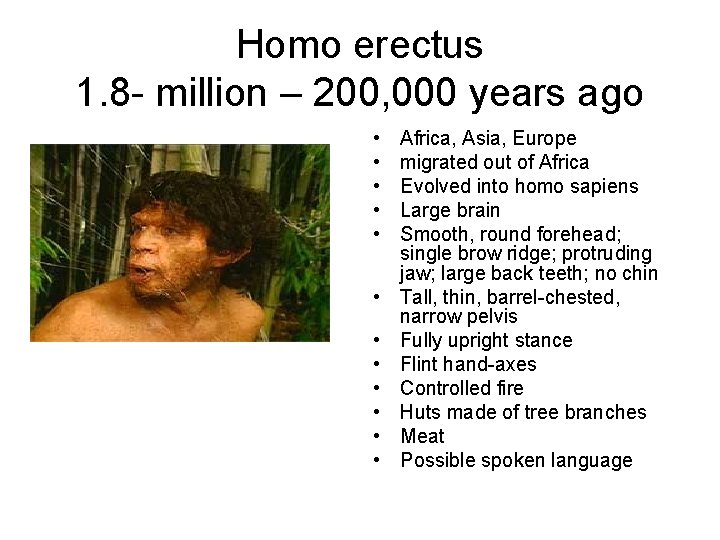
Homo erectus 1. 8 - million – 200, 000 years ago • • • Africa, Asia, Europe migrated out of Africa Evolved into homo sapiens Large brain Smooth, round forehead; single brow ridge; protruding jaw; large back teeth; no chin Tall, thin, barrel-chested, narrow pelvis Fully upright stance Flint hand-axes Controlled fire Huts made of tree branches Meat Possible spoken language
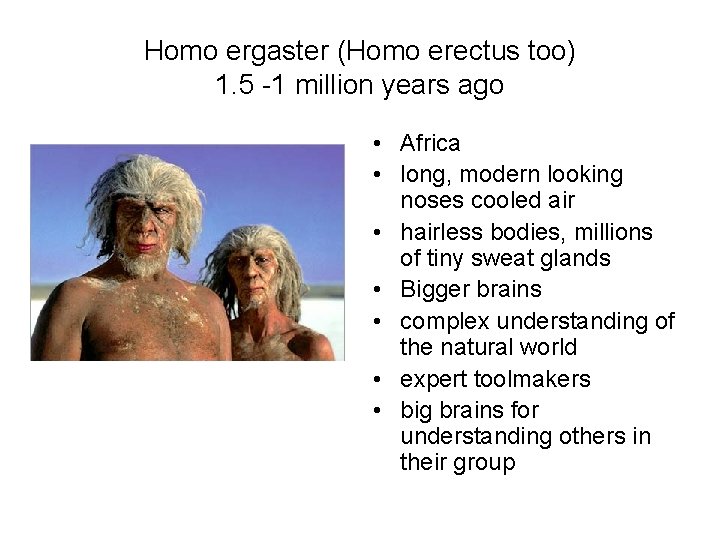
Homo ergaster (Homo erectus too) 1. 5 -1 million years ago • Africa • long, modern looking noses cooled air • hairless bodies, millions of tiny sweat glands • Bigger brains • complex understanding of the natural world • expert toolmakers • big brains for understanding others in their group
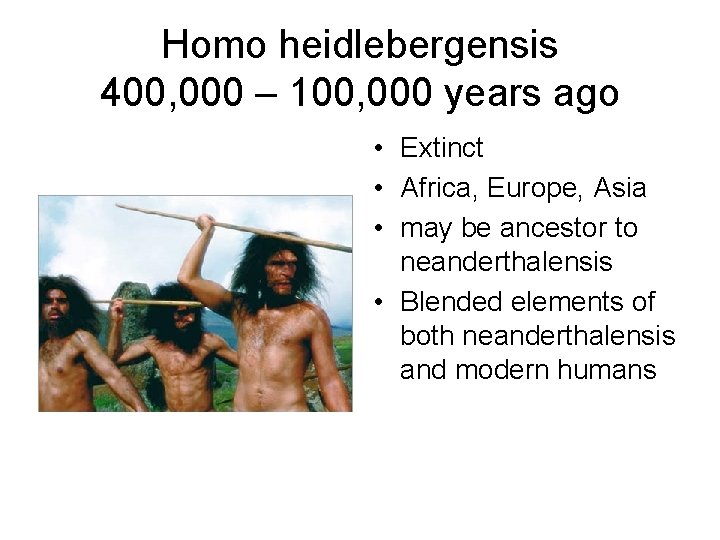
Homo heidlebergensis 400, 000 – 100, 000 years ago • Extinct • Africa, Europe, Asia • may be ancestor to neanderthalensis • Blended elements of both neanderthalensis and modern humans
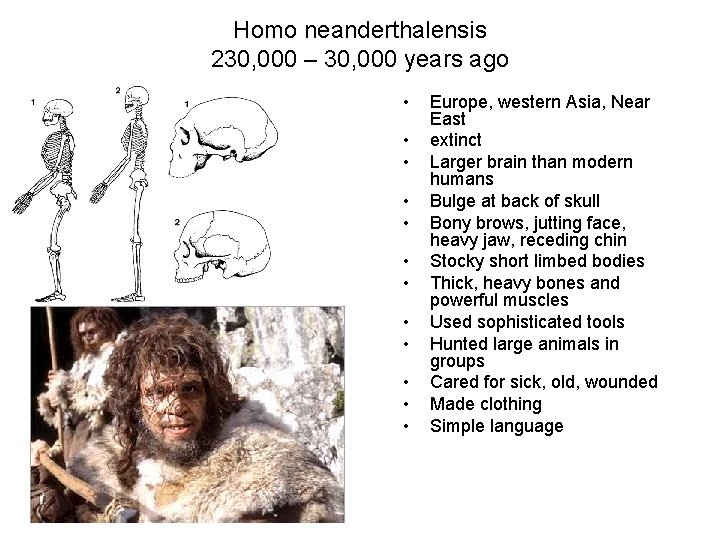
Homo neanderthalensis 230, 000 – 30, 000 years ago • • • Europe, western Asia, Near East extinct Larger brain than modern humans Bulge at back of skull Bony brows, jutting face, heavy jaw, receding chin Stocky short limbed bodies Thick, heavy bones and powerful muscles Used sophisticated tools Hunted large animals in groups Cared for sick, old, wounded Made clothing Simple language
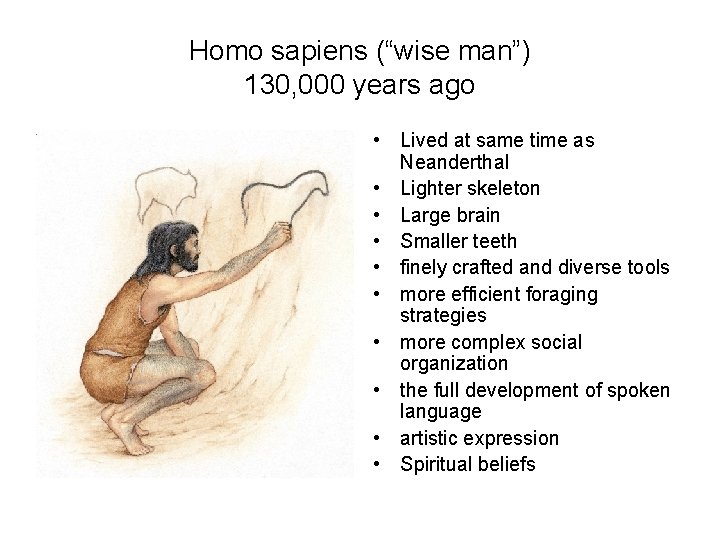
Homo sapiens (“wise man”) 130, 000 years ago • Lived at same time as Neanderthal • Lighter skeleton • Large brain • Smaller teeth • finely crafted and diverse tools • more efficient foraging strategies • more complex social organization • the full development of spoken language • artistic expression • Spiritual beliefs
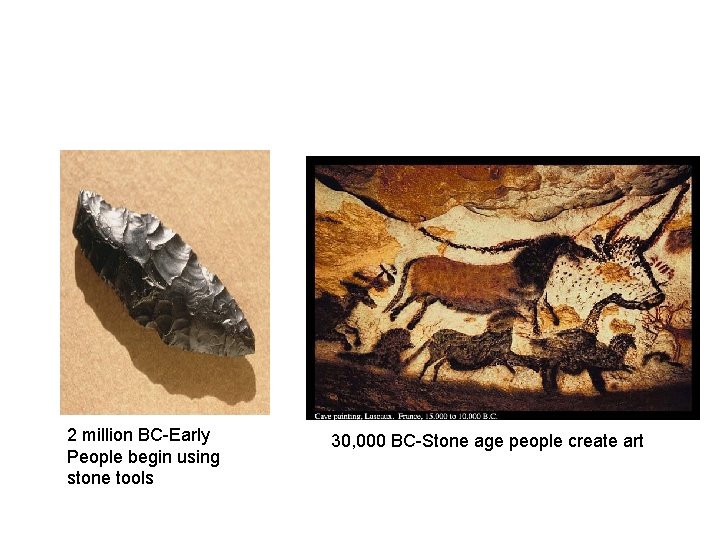
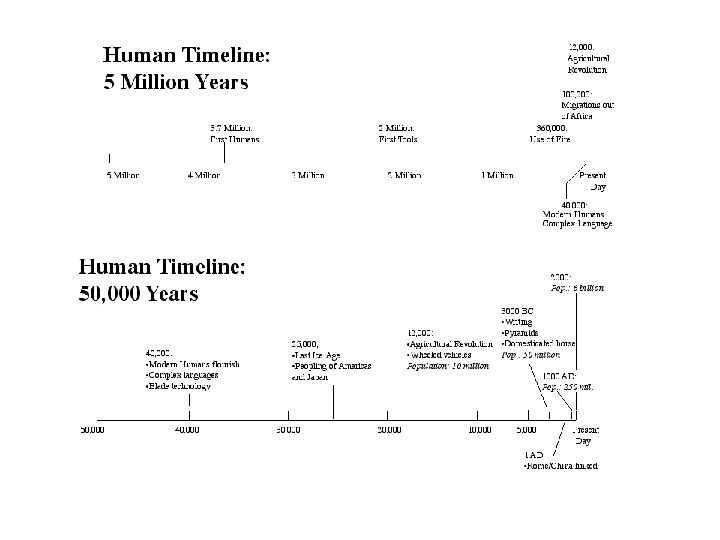
2 million BC-Early People begin using stone tools 30, 000 BC-Stone age people create art
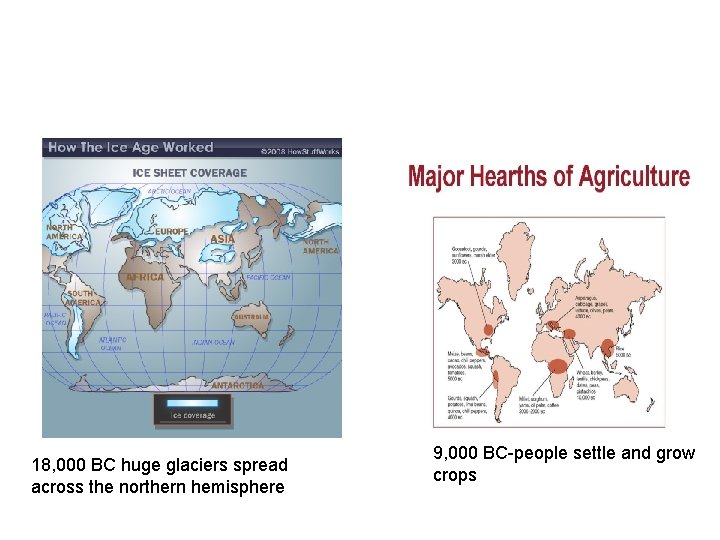
18, 000 BC huge glaciers spread across the northern hemisphere 9, 000 BC-people settle and grow crops
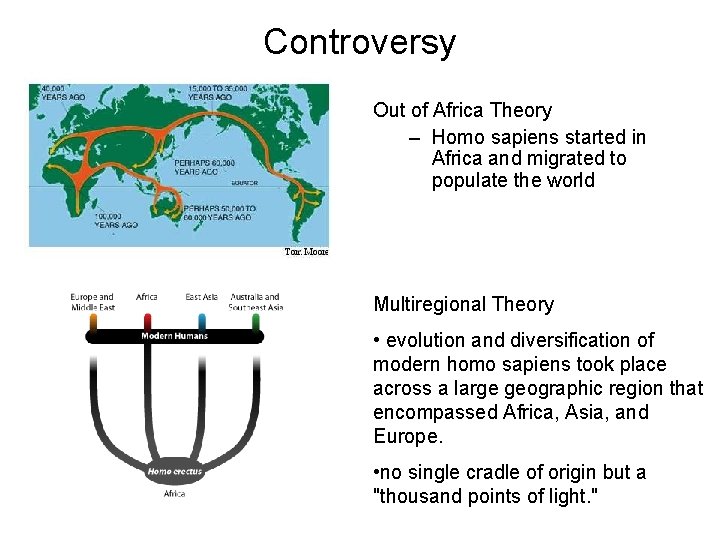
Controversy Out of Africa Theory – Homo sapiens started in Africa and migrated to populate the world Multiregional Theory • evolution and diversification of modern homo sapiens took place across a large geographic region that encompassed Africa, Asia, and Europe. • no single cradle of origin but a "thousand points of light. "
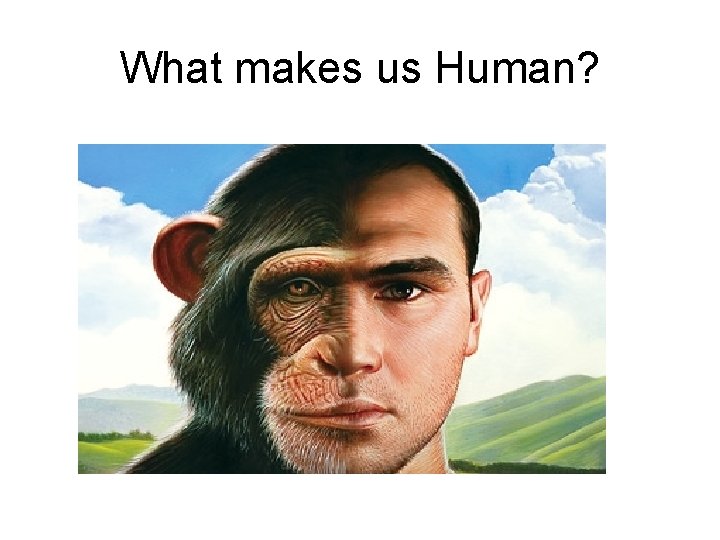
What makes us Human?
Unique Human Traits • • • self-awareness meta cognition “reading” others morality collaboration toward common goals speech symbolic cognition nimble thumbs conscience imagination impulse control altruism
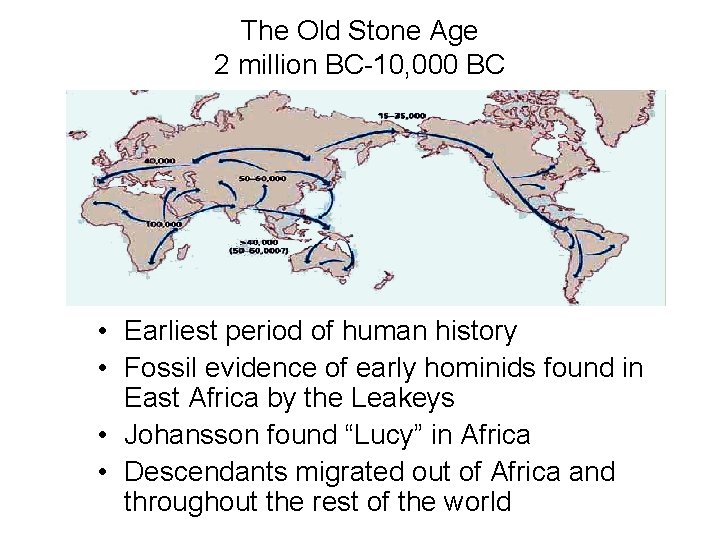
The Old Stone Age 2 million BC-10, 000 BC • Earliest period of human history • Fossil evidence of early hominids found in East Africa by the Leakeys • Johansson found “Lucy” in Africa • Descendants migrated out of Africa and throughout the rest of the world
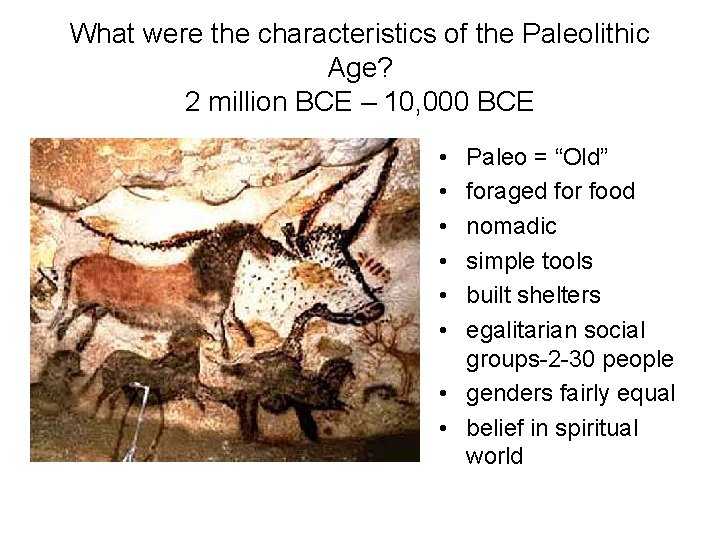
What were the characteristics of the Paleolithic Age? 2 million BCE – 10, 000 BCE • • • Paleo = “Old” foraged for food nomadic simple tools built shelters egalitarian social groups-2 -30 people • genders fairly equal • belief in spiritual world
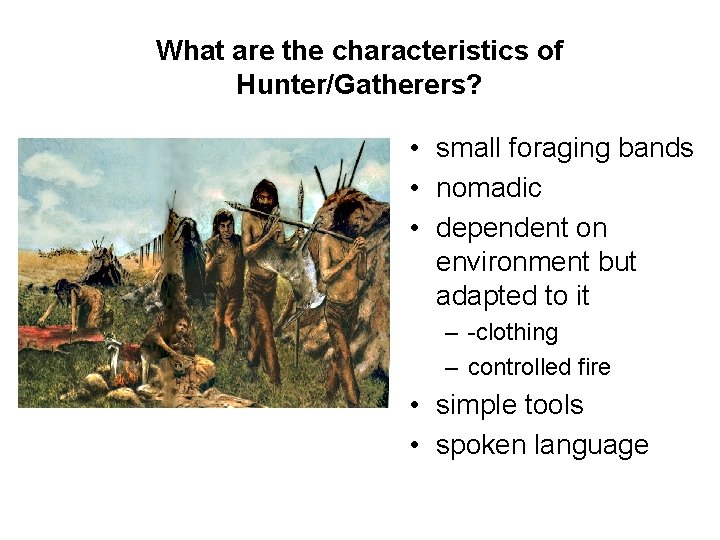
What are the characteristics of Hunter/Gatherers? • small foraging bands • nomadic • dependent on environment but adapted to it – -clothing – controlled fire • simple tools • spoken language
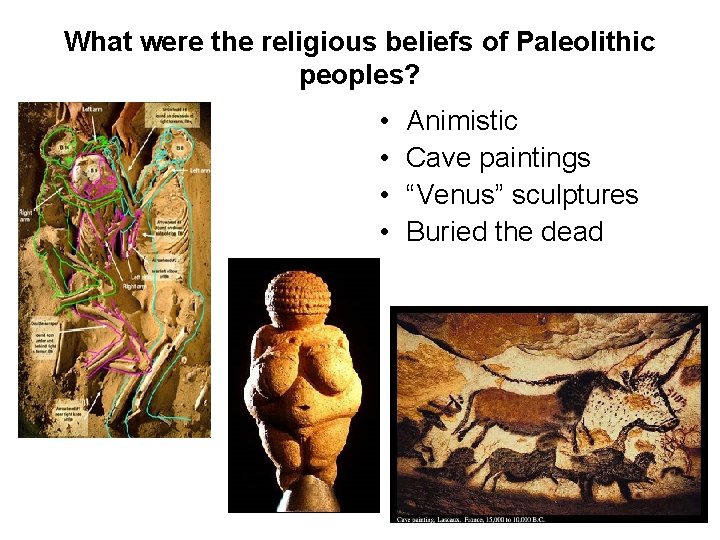
What were the religious beliefs of Paleolithic peoples? • • Animistic Cave paintings “Venus” sculptures Buried the dead
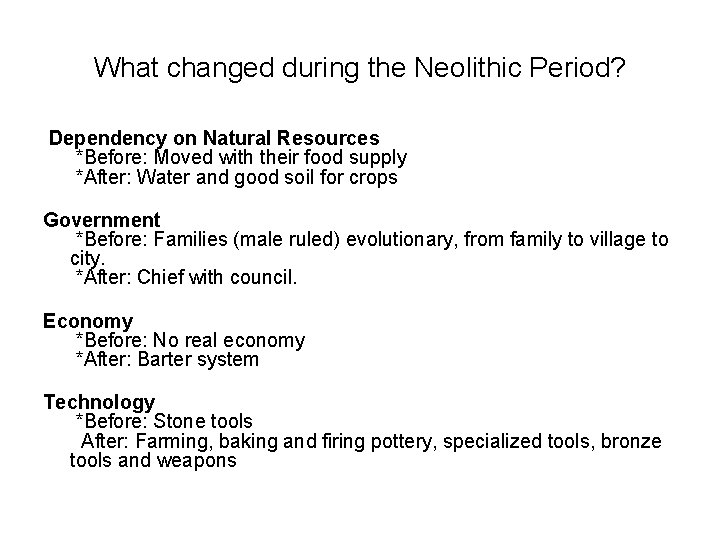
What changed during the Neolithic Period? Dependency on Natural Resources *Before: Moved with their food supply *After: Water and good soil for crops Government *Before: Families (male ruled) evolutionary, from family to village to city. *After: Chief with council. Economy *Before: No real economy *After: Barter system Technology *Before: Stone tools After: Farming, baking and firing pottery, specialized tools, bronze tools and weapons
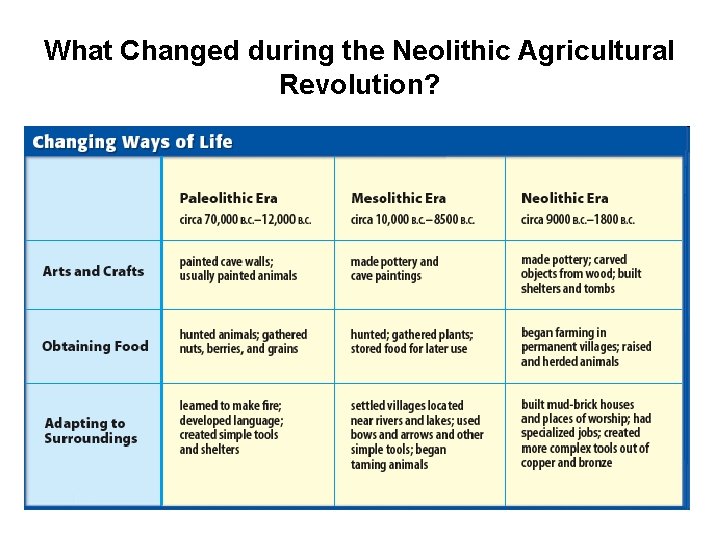
What Changed during the Neolithic Agricultural Revolution?
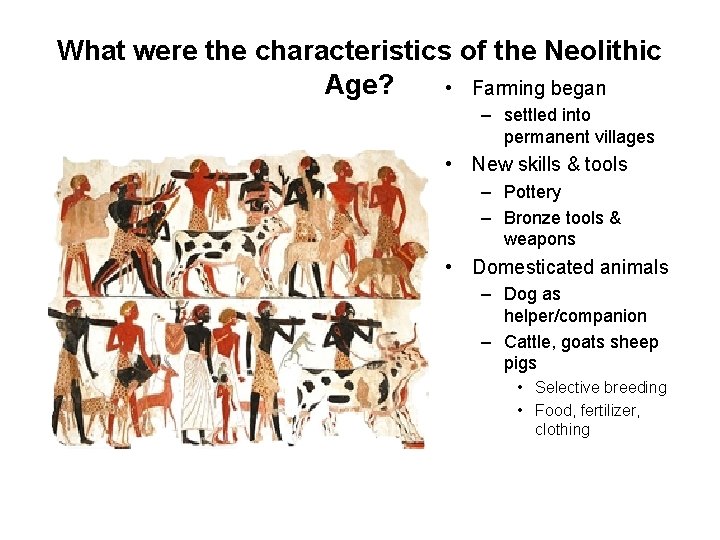
What were the characteristics of the Neolithic Age? • Farming began – settled into permanent villages • New skills & tools – Pottery – Bronze tools & weapons • Domesticated animals – Dog as helper/companion – Cattle, goats sheep pigs • Selective breeding • Food, fertilizer, clothing
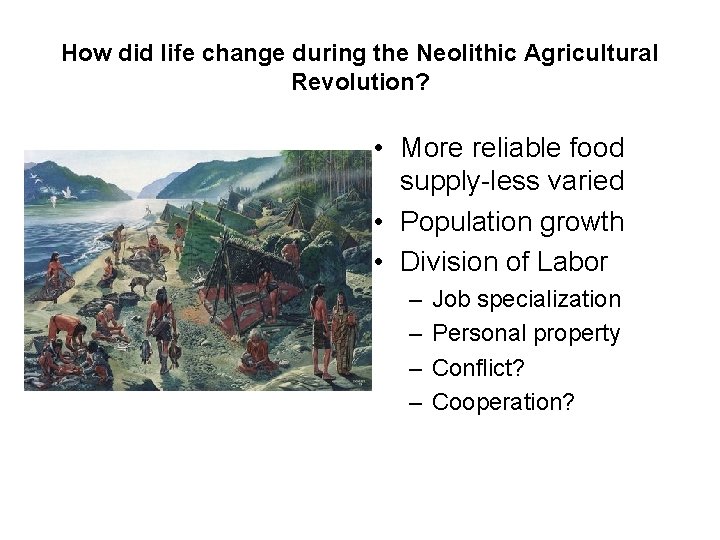
How did life change during the Neolithic Agricultural Revolution? • More reliable food supply-less varied • Population growth • Division of Labor – – Job specialization Personal property Conflict? Cooperation?
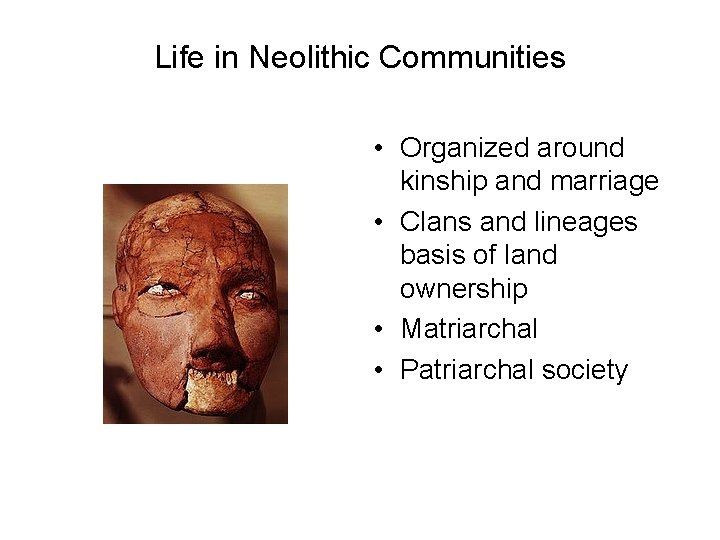
Life in Neolithic Communities • Organized around kinship and marriage • Clans and lineages basis of land ownership • Matriarchal • Patriarchal society
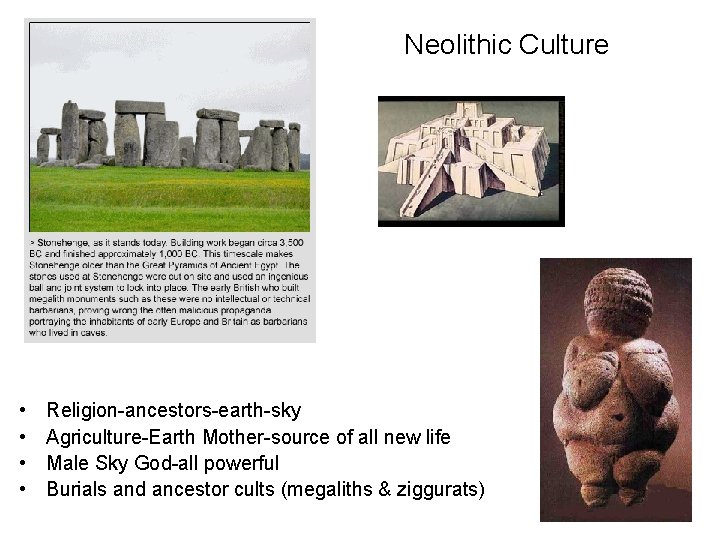
Neolithic Culture • • Religion-ancestors-earth-sky Agriculture-Earth Mother-source of all new life Male Sky God-all powerful Burials and ancestor cults (megaliths & ziggurats)
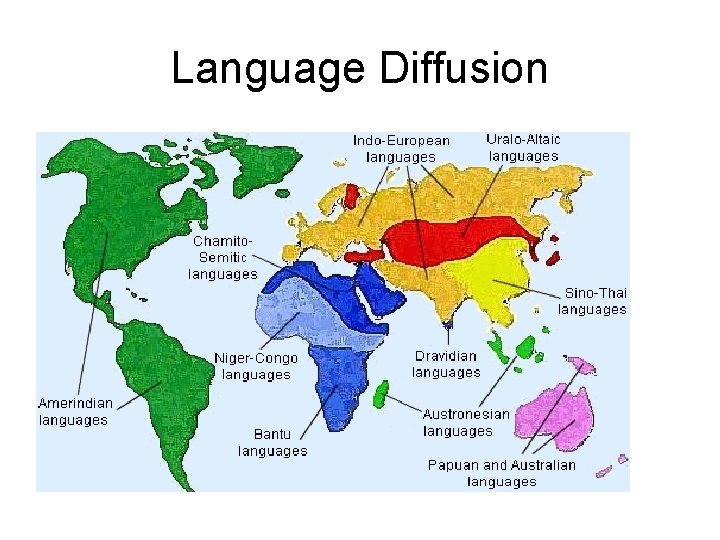
Language Diffusion
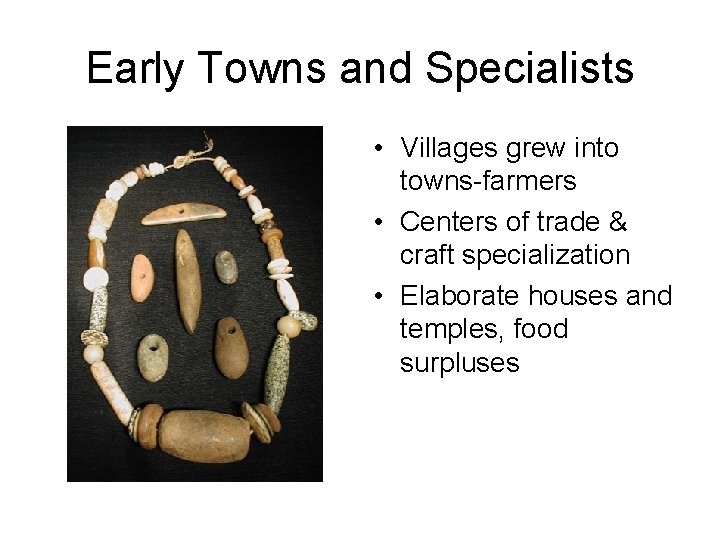
Early Towns and Specialists • Villages grew into towns-farmers • Centers of trade & craft specialization • Elaborate houses and temples, food surpluses
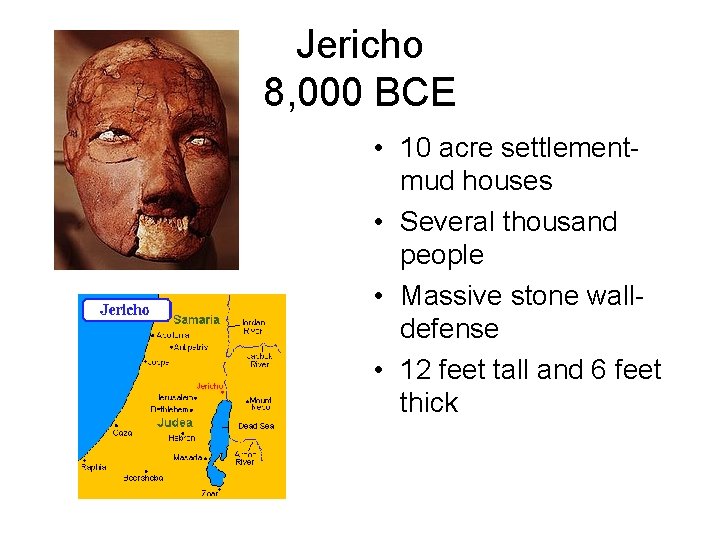
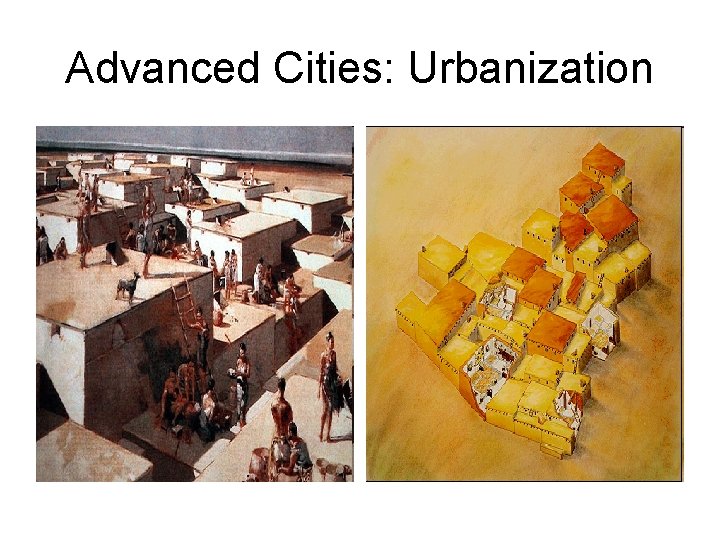
Jericho 8, 000 BCE • 10 acre settlementmud houses • Several thousand people • Massive stone walldefense • 12 feet tall and 6 feet thick
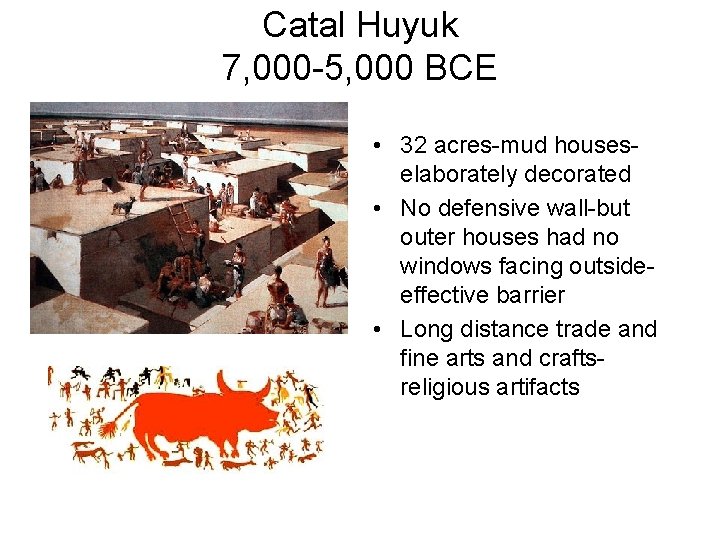
Catal Huyuk 7, 000 -5, 000 BCE • 32 acres-mud houseselaborately decorated • No defensive wall-but outer houses had no windows facing outsideeffective barrier • Long distance trade and fine arts and craftsreligious artifacts
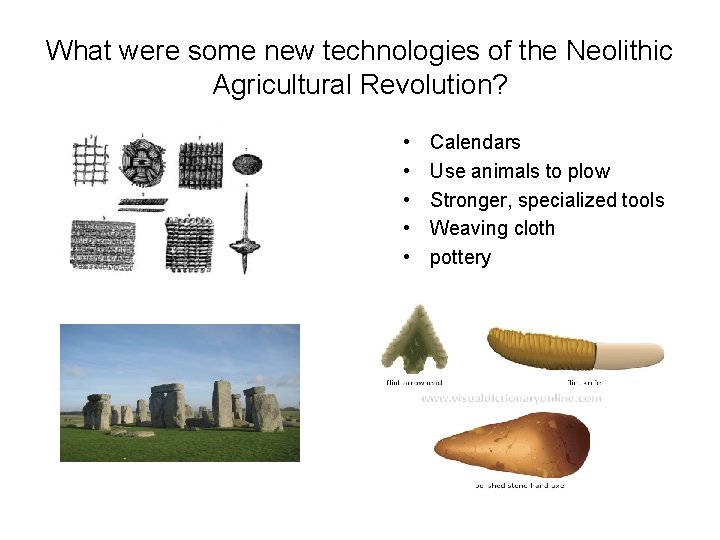
What were some new technologies of the Neolithic Agricultural Revolution? • • • Calendars Use animals to plow Stronger, specialized tools Weaving cloth pottery
Is the word “Civilization” problematic?
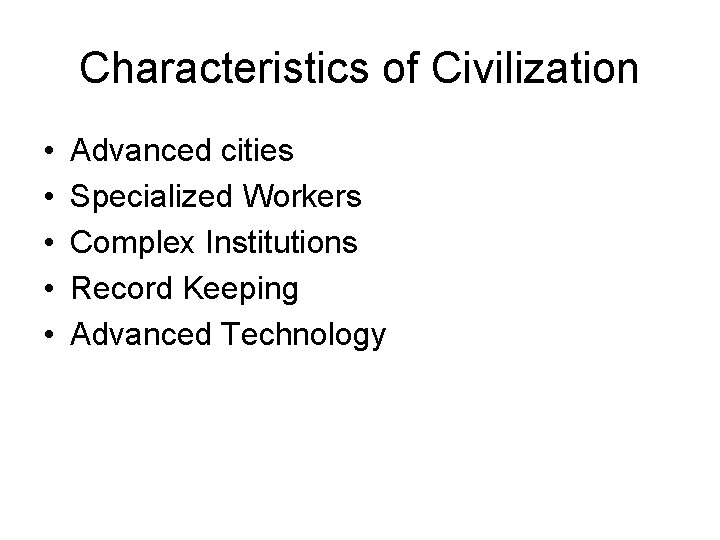
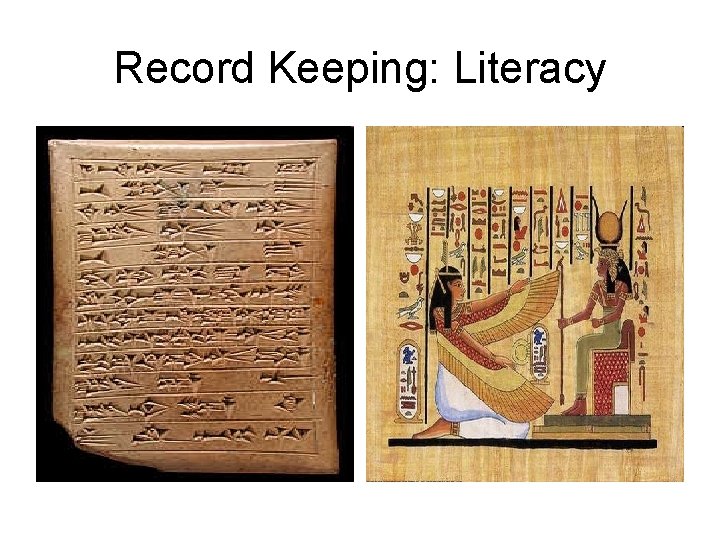
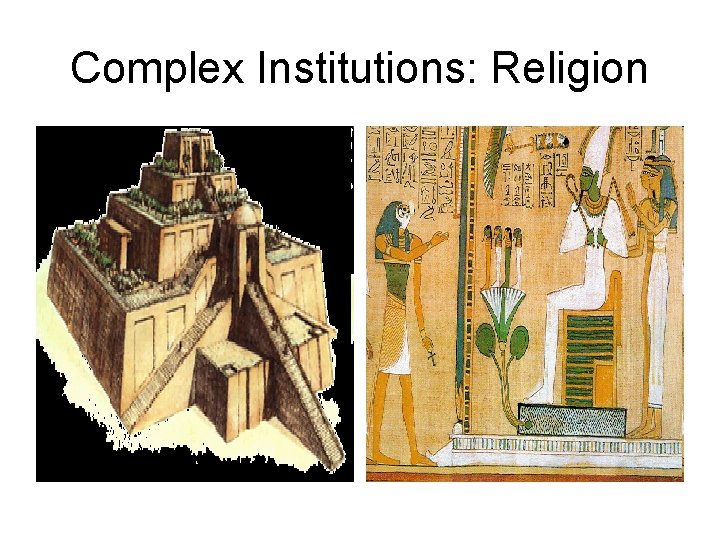
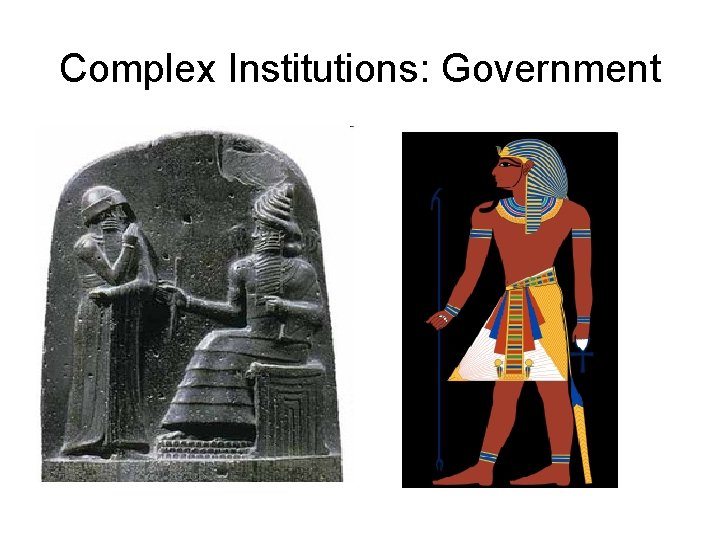
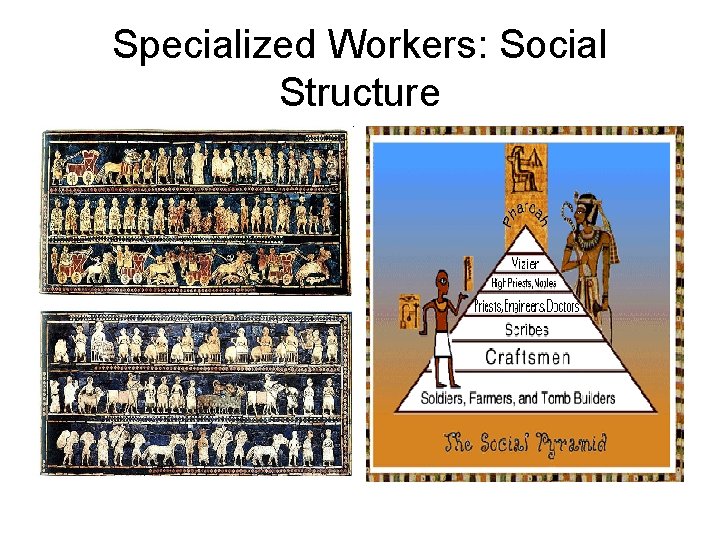
Characteristics of Civilization • • • Advanced cities Specialized Workers Complex Institutions Record Keeping Advanced Technology
Advanced Cities: Urbanization
Record Keeping: Literacy
Complex Institutions: Religion
Complex Institutions: Government
Specialized Workers: Social Structure
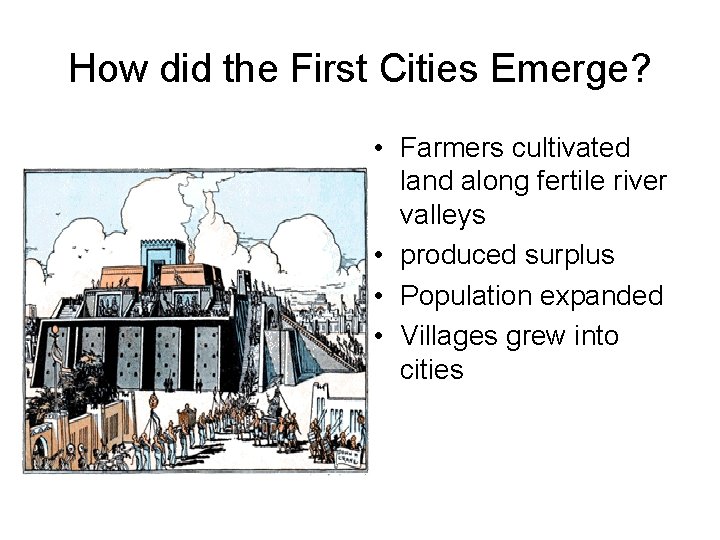
How did the First Cities Emerge? • Farmers cultivated land along fertile river valleys • produced surplus • Population expanded • Villages grew into cities
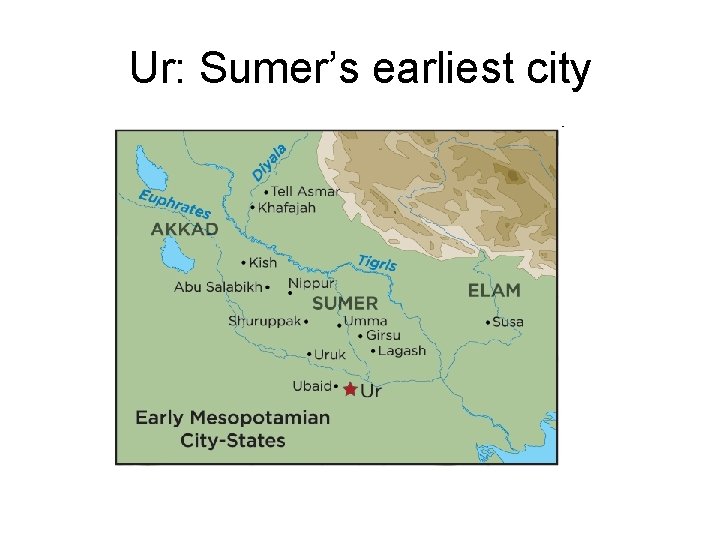
Ur: Sumer’s earliest city
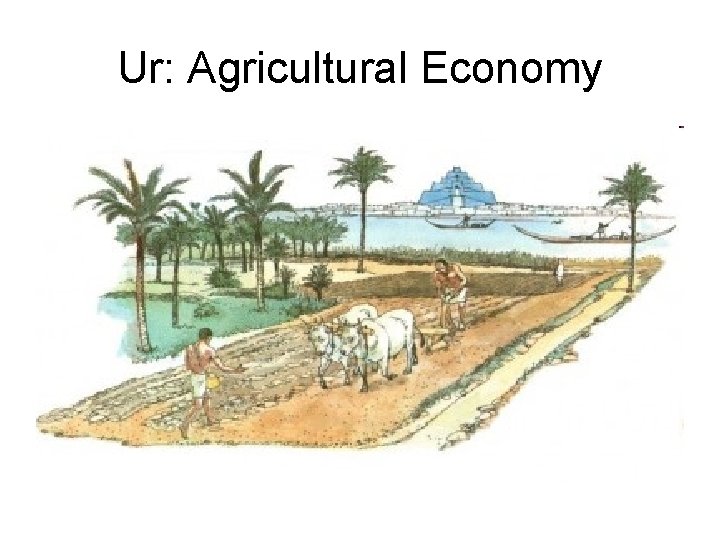
Ur: Agricultural Economy
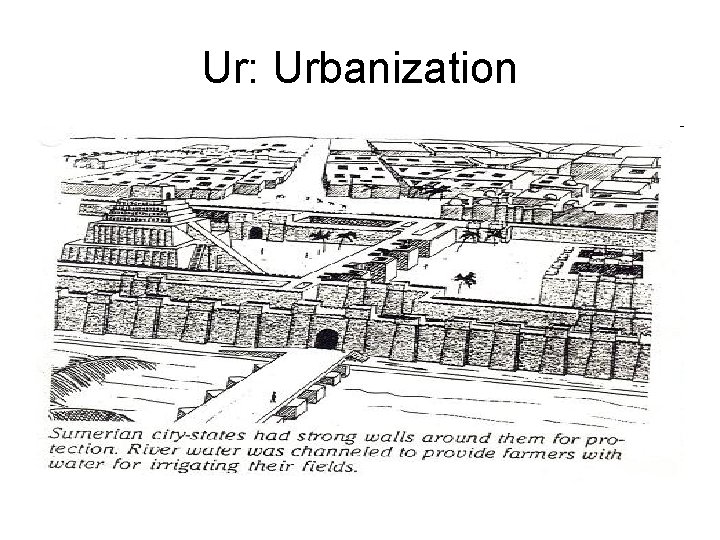
Ur: Urbanization
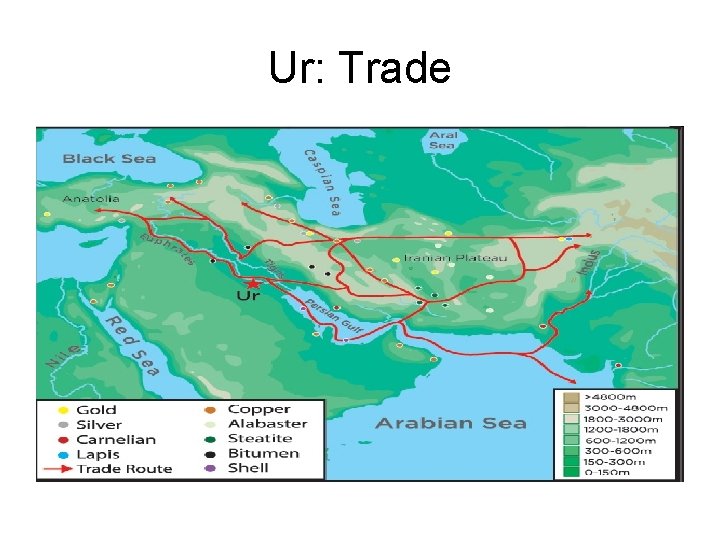
Ur: Trade
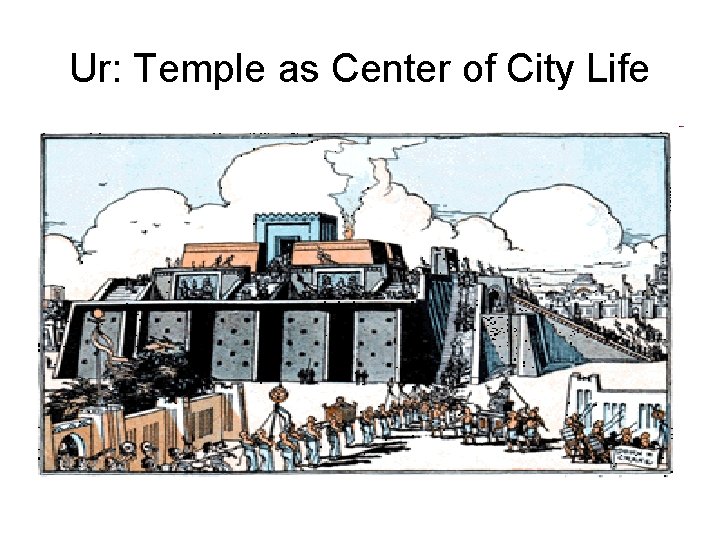
Ur: Temple as Center of City Life
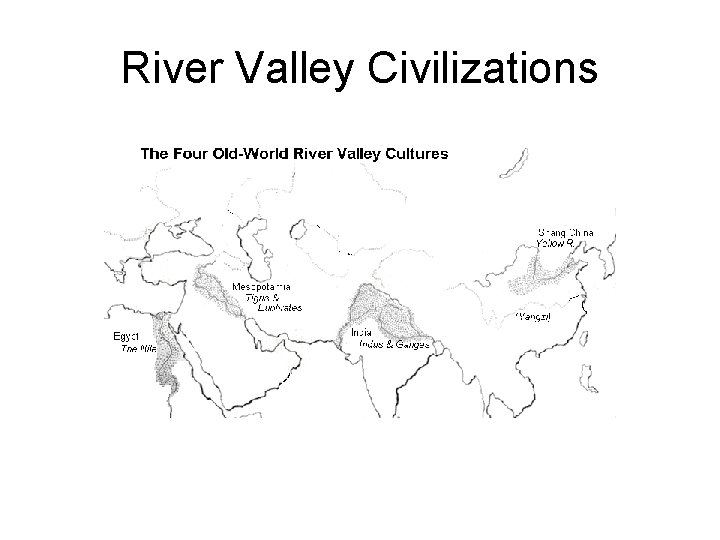
River Valley Civilizations