
Origins of life OR WHERE DID THE FIRST

- Slides: 13
Origins of life OR WHERE DID THE FIRST CELL COME FROM?
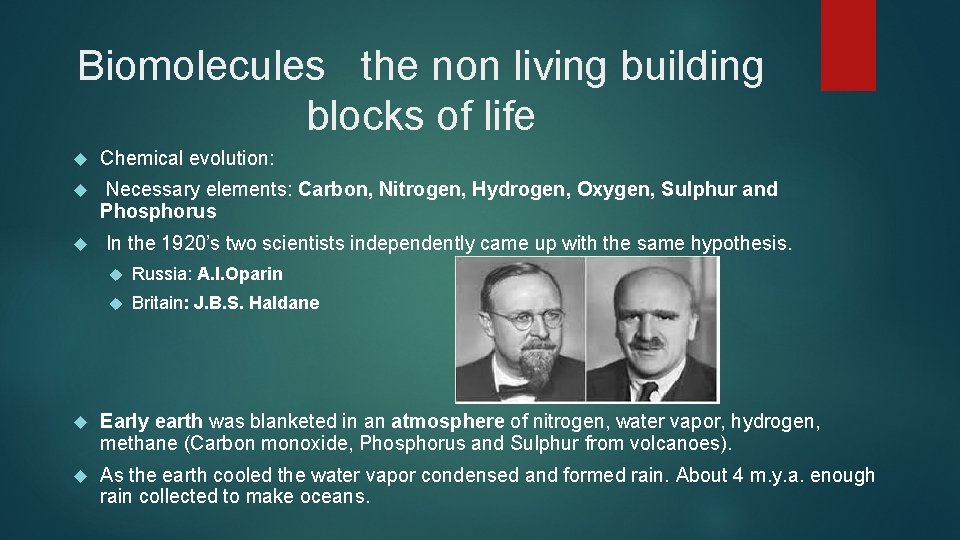
Biomolecules the non living building blocks of life Chemical evolution: Necessary elements: Carbon, Nitrogen, Hydrogen, Oxygen, Sulphur and Phosphorus In the 1920’s two scientists independently came up with the same hypothesis. Russia: A. I. Oparin Britain: J. B. S. Haldane Early earth was blanketed in an atmosphere of nitrogen, water vapor, hydrogen, methane (Carbon monoxide, Phosphorus and Sulphur from volcanoes). As the earth cooled the water vapor condensed and formed rain. About 4 m. y. a. enough rain collected to make oceans.
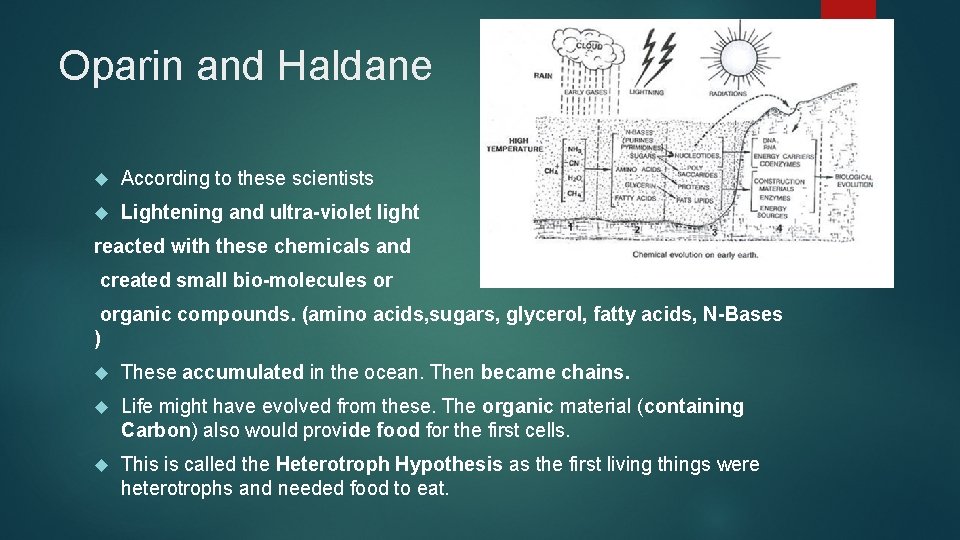
Oparin and Haldane According to these scientists Lightening and ultra-violet light reacted with these chemicals and created small bio-molecules or organic compounds. (amino acids, sugars, glycerol, fatty acids, N-Bases ) These accumulated in the ocean. Then became chains. Life might have evolved from these. The organic material (containing Carbon) also would provide food for the first cells. This is called the Heterotroph Hypothesis as the first living things were heterotrophs and needed food to eat.
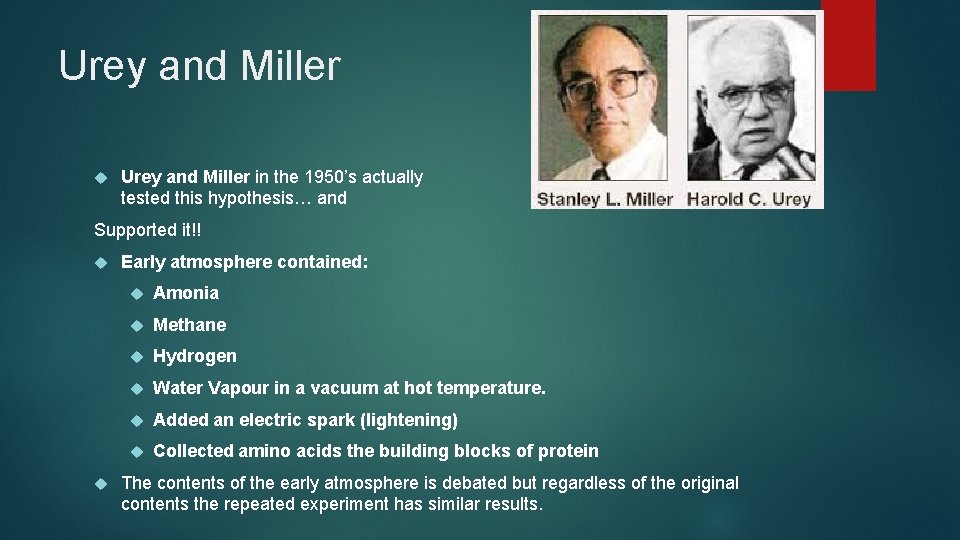
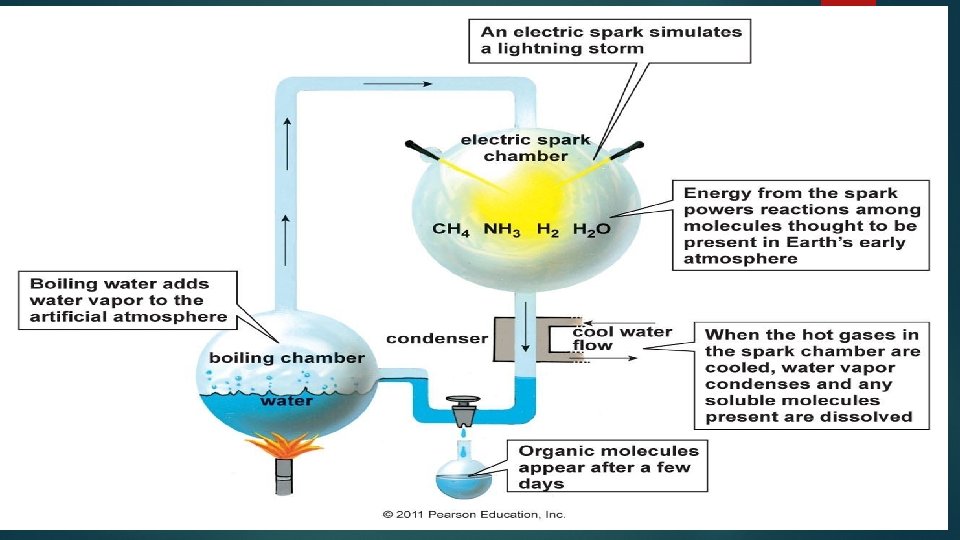
Urey and Miller in the 1950’s actually tested this hypothesis… and Supported it!! Early atmosphere contained: Amonia Methane Hydrogen Water Vapour in a vacuum at hot temperature. Added an electric spark (lightening) Collected amino acids the building blocks of protein The contents of the early atmosphere is debated but regardless of the original contents the repeated experiment has similar results.
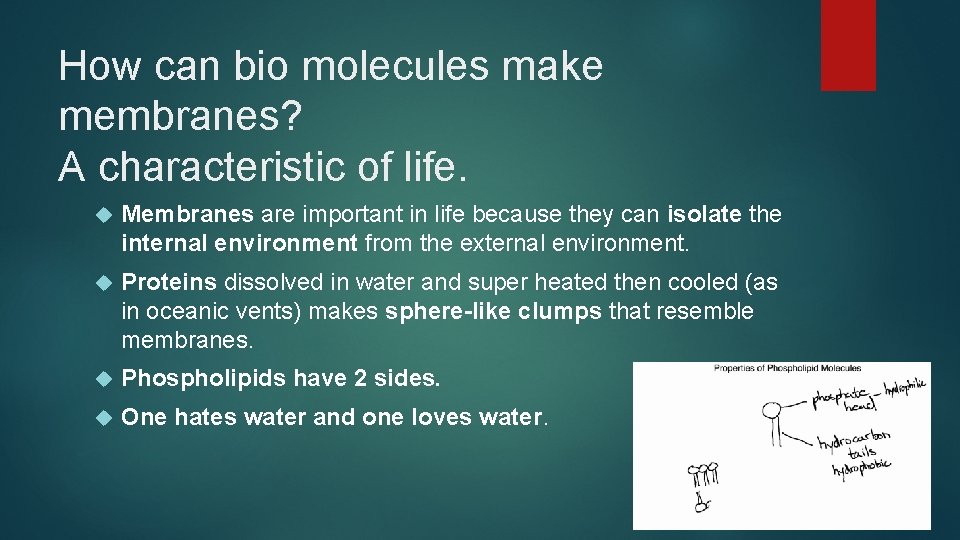
How can bio molecules make membranes? A characteristic of life. Membranes are important in life because they can isolate the internal environment from the external environment. Proteins dissolved in water and super heated then cooled (as in oceanic vents) makes sphere-like clumps that resemble membranes. Phospholipids have 2 sides. One hates water and one loves water.
Phospholipids to cells membranes? Phospholipid can clump together with their water hating tails on the inside and their water loving heads on the outside. From there it could evolve into the Famous lipid bi-layer of the eukaryotic cell.
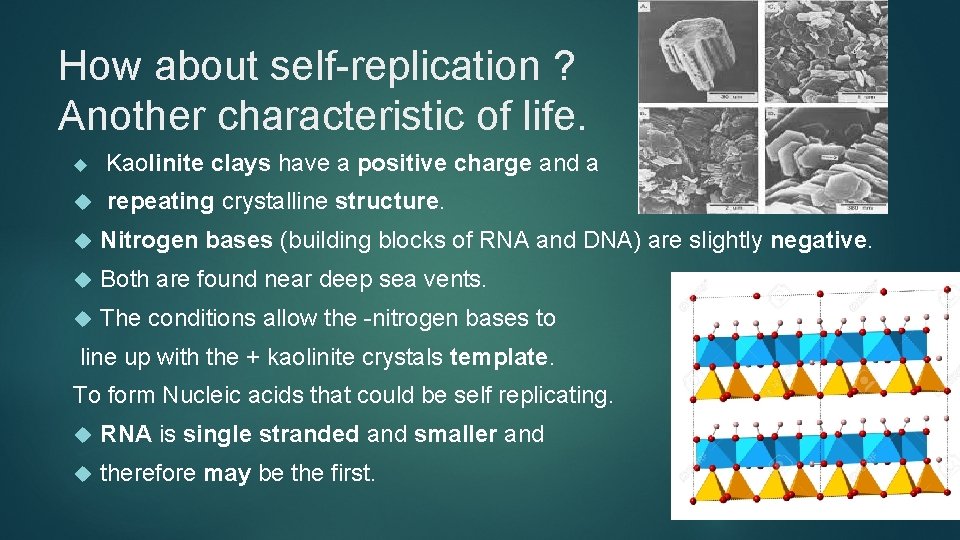
How about self-replication ? Another characteristic of life. Kaolinite clays have a positive charge and a repeating crystalline structure. Nitrogen bases (building blocks of RNA and DNA) are slightly negative. Both are found near deep sea vents. The conditions allow the -nitrogen bases to line up with the + kaolinite crystals template. To form Nucleic acids that could be self replicating. RNA is single stranded and smaller and therefore may be the first.
Which came first? The chicken or the egg? Proteins (enzymes) are needed to make DNA replicate DNA Did is needed to make proteins all this happen before, after, or during the Formation We’re of Membranes? ? ? still not sure.
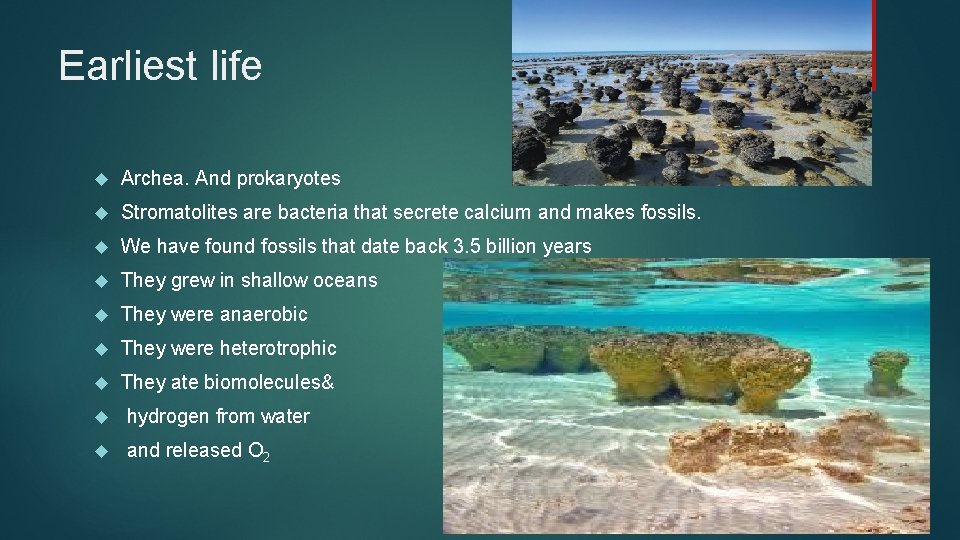
Earliest life Archea. And prokaryotes Stromatolites are bacteria that secrete calcium and makes fossils. We have found fossils that date back 3. 5 billion years They grew in shallow oceans They were anaerobic They were heterotrophic They ate biomolecules& hydrogen from water and released O 2
First great extinction 2. 3 BYA As Heterotrophs grew and multiplied they gobbled up the dissolved organic molecules. As there was less food organisms that make they’re own food (auto trophs) had an advantage. These photosynthetic organisms (Cyanobacteria)created oxygen as a waste product. This accumulated in the atmosphere. Oxygen was highly toxic. To most of the organisms (obligate anaerobes). Cyanobacteria and responsible for the extinction of more than 80% of life on earth (GOE)
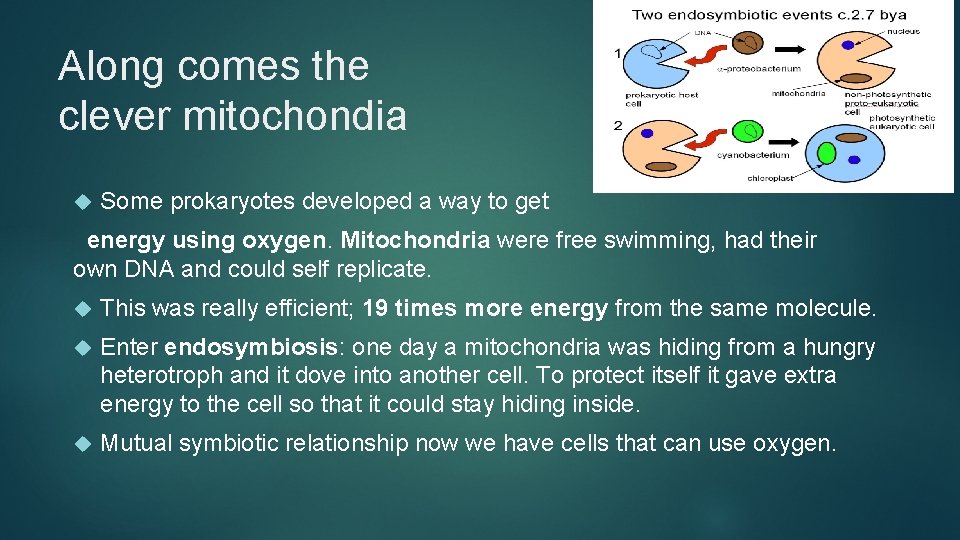
Along comes the clever mitochondia Some prokaryotes developed a way to get energy using oxygen. Mitochondria were free swimming, had their own DNA and could self replicate. This was really efficient; 19 times more energy from the same molecule. Enter endosymbiosis: one day a mitochondria was hiding from a hungry heterotroph and it dove into another cell. To protect itself it gave extra energy to the cell so that it could stay hiding inside. Mutual symbiotic relationship now we have cells that can use oxygen.
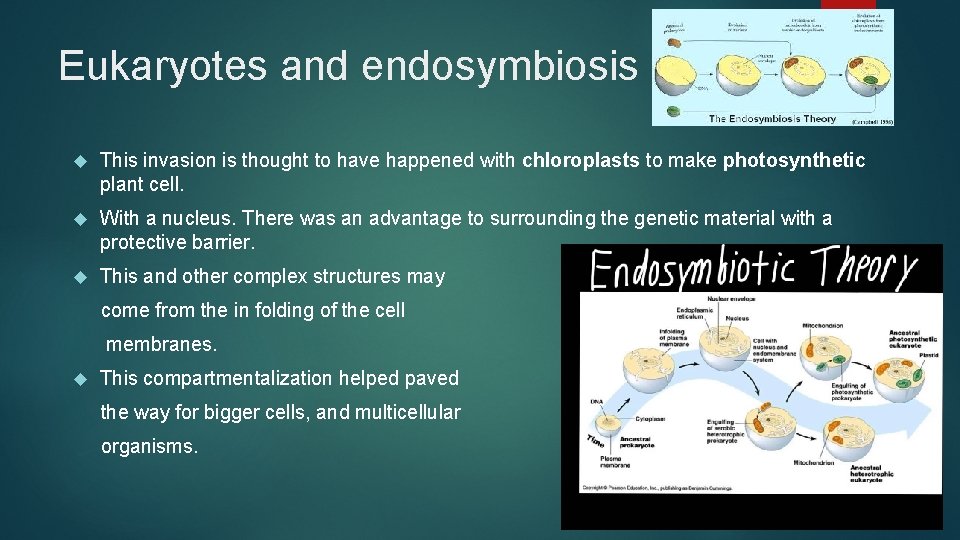
Eukaryotes and endosymbiosis This invasion is thought to have happened with chloroplasts to make photosynthetic plant cell. With a nucleus. There was an advantage to surrounding the genetic material with a protective barrier. This and other complex structures may come from the in folding of the cell membranes. This compartmentalization helped paved the way for bigger cells, and multicellular organisms.