
Origins of Genetic Variation Among Offspring Origins of


- Slides: 13
Origins of Genetic Variation Among Offspring
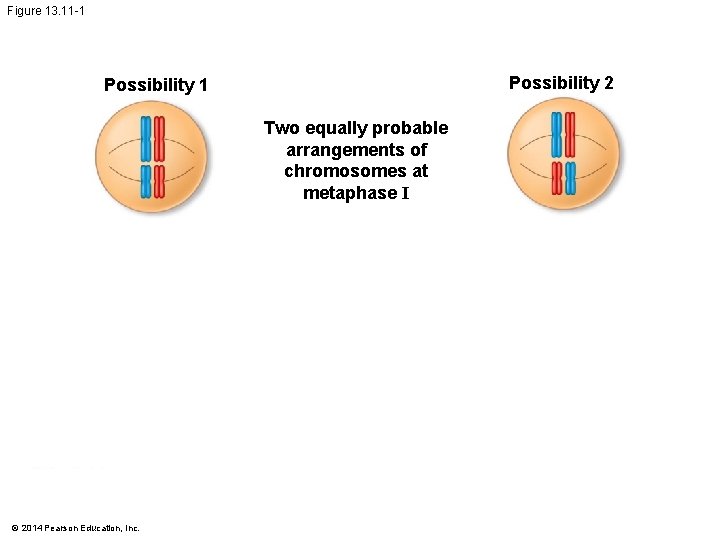
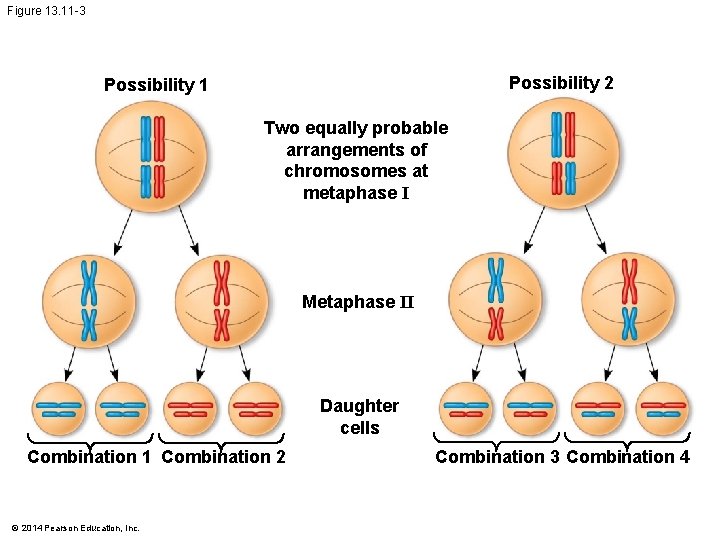
Origins of Genetic Variation Among Offspring 1. Independent Assortment of Chromosomes § Homologous pairs of chromosomes orient RANDOMLY at metaphase I of meiosis § In independent assortment, each pair of chromosomes sorts maternal and paternal homologs into daughter cells INDEPENDENTLY of the other pairs © 2014 Pearson Education, Inc.
Origins of Genetic Variation Among Offspring 1. Independent Assortment of Chromosomes § The number of combinations possible when chromosomes assort independently into gametes is 2 n, where n is the haploid number § For humans (n = 23), there are more than 8 million (!!!) (223) possible combinations of chromosomes © 2014 Pearson Education, Inc.
Figure 13. 11 -1 Possibility 2 Possibility 1 Two equally probable arrangements of chromosomes at metaphase I © 2014 Pearson Education, Inc.
Figure 13. 11 -2 Possibility 1 Two equally probable arrangements of chromosomes at metaphase I Metaphase II © 2014 Pearson Education, Inc.
Figure 13. 11 -3 Possibility 2 Possibility 1 Two equally probable arrangements of chromosomes at metaphase I Metaphase II Daughter cells Combination 1 Combination 2 © 2014 Pearson Education, Inc. Combination 3 Combination 4
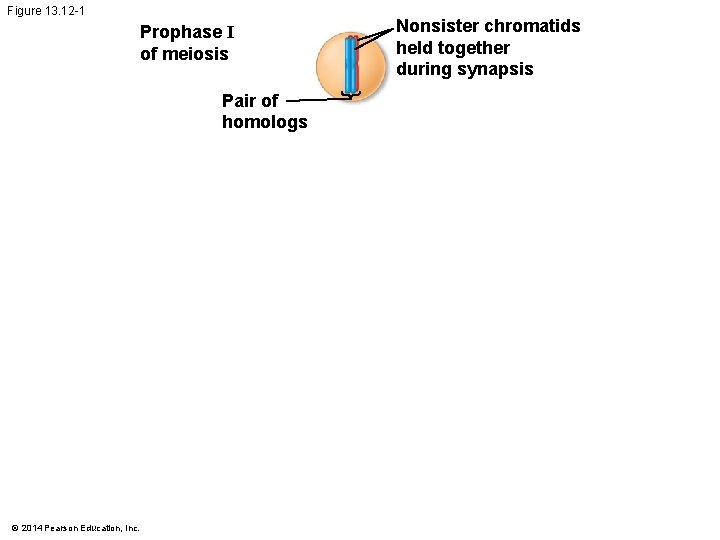
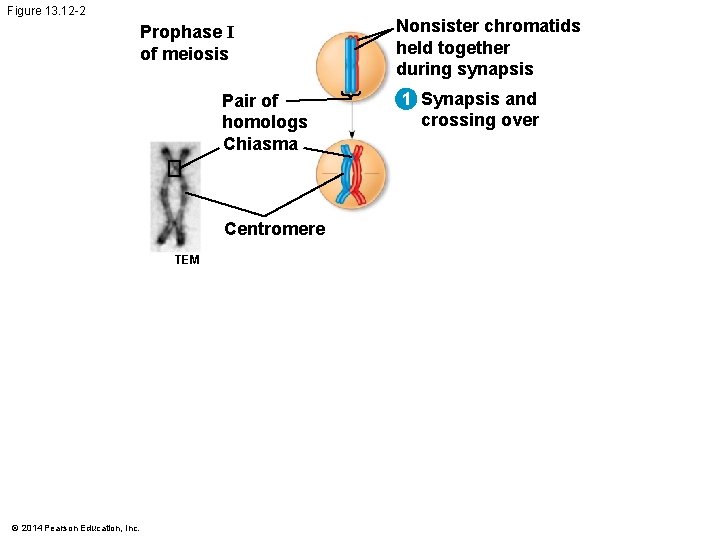
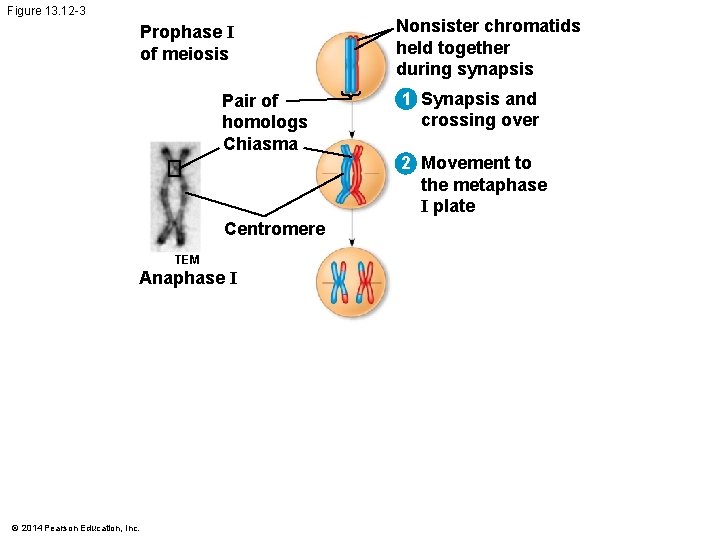
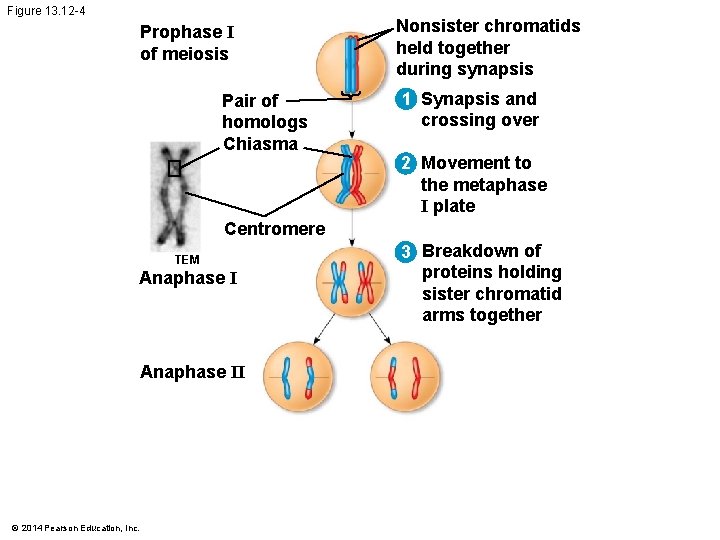
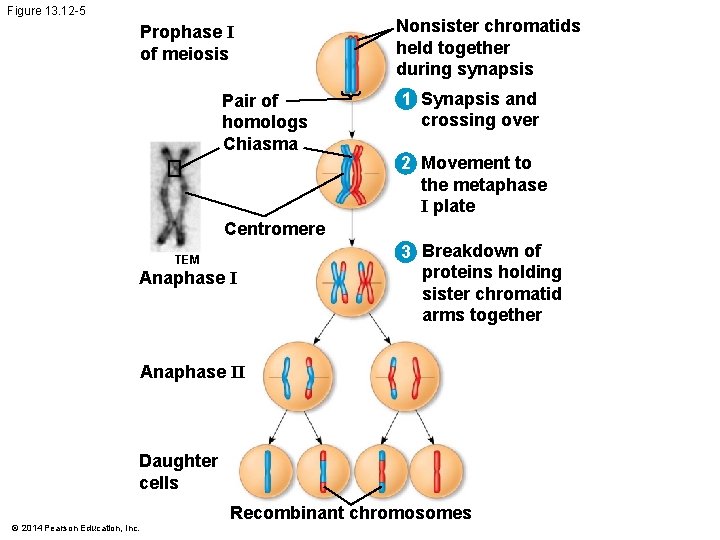
Origins of Genetic Variation Among Offspring 2. Crossing Over § Crossing over produces recombinant chromosomes, which combine DNA inherited from each parent § Crossing over contributes to genetic variation by COMBINING DNA from two parents into a single chromosome § In humans an average of one to three crossover events occurs per chromosome © 2014 Pearson Education, Inc.
Figure 13. 12 -1 Prophase I of meiosis Pair of homologs © 2014 Pearson Education, Inc. Nonsister chromatids held together during synapsis
Figure 13. 12 -2 Prophase I of meiosis Pair of homologs Chiasma Centromere TEM © 2014 Pearson Education, Inc. Nonsister chromatids held together during synapsis 1 Synapsis and crossing over
Figure 13. 12 -3 Prophase I of meiosis Pair of homologs Chiasma Centromere TEM Anaphase I © 2014 Pearson Education, Inc. Nonsister chromatids held together during synapsis 1 Synapsis and crossing over 2 Movement to the metaphase I plate
Figure 13. 12 -4 Prophase I of meiosis Pair of homologs Chiasma Nonsister chromatids held together during synapsis 1 Synapsis and crossing over 2 Movement to the metaphase I plate Centromere TEM Anaphase II © 2014 Pearson Education, Inc. 3 Breakdown of proteins holding sister chromatid arms together
Figure 13. 12 -5 Prophase I of meiosis Pair of homologs Chiasma Nonsister chromatids held together during synapsis 1 Synapsis and crossing over 2 Movement to the metaphase I plate Centromere TEM Anaphase I 3 Breakdown of proteins holding sister chromatid arms together Anaphase II Daughter cells © 2014 Pearson Education, Inc. Recombinant chromosomes
Origins of Genetic Variation Among Offspring 3. Random Fertilization § Random fertilization adds to genetic variation because ANY sperm from dad’s meiosis can fuse with ANY ovum (unfertilized egg) from mom’s meiosis § The fusion of two gametes (each with 8. 4 million possible chromosome combinations from independent assortment) produces a zygote with any of about 70 TRILLION (!!!) diploid combinations © 2014 Pearson Education, Inc.