
Origins of Eukaryotic Diversity Protists Diversity Rodophyta Red
- Slides: 47
Origins of Eukaryotic Diversity – Protists Diversity
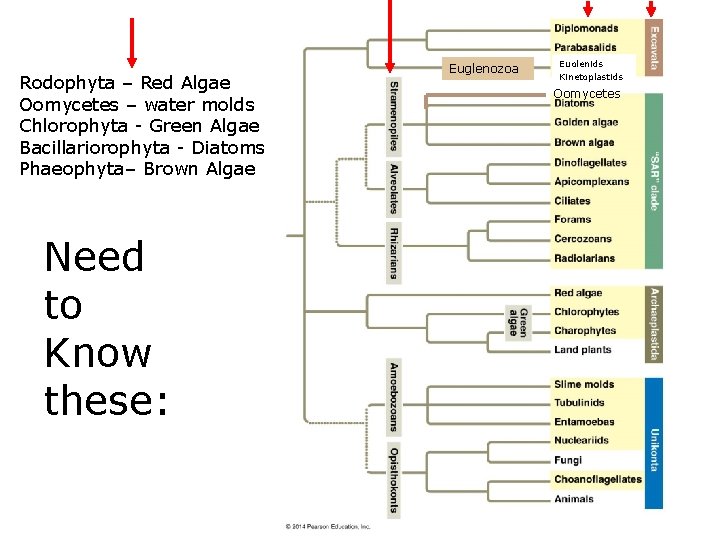
Rodophyta – Red Algae Oomycetes – water molds Chlorophyta - Green Algae Bacillariorophyta - Diatoms Phaeophyta– Brown Algae Need to Know these: Euglenozoa Euglenids Kinetoplastids Oomycetes
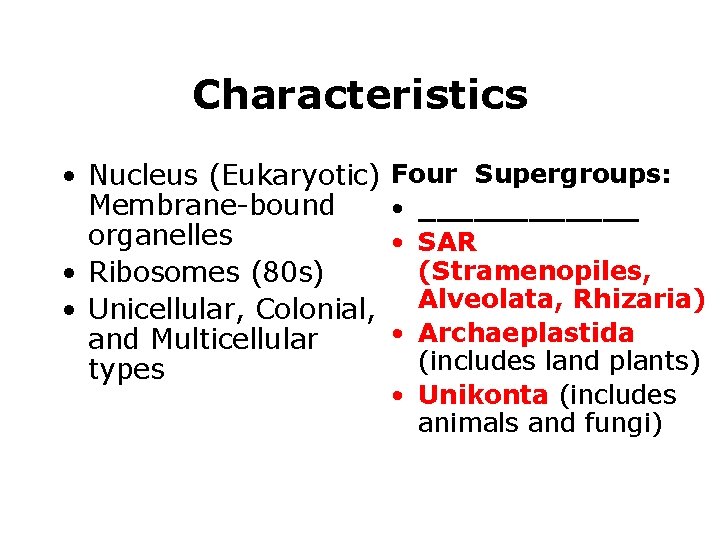
Characteristics • Nucleus (Eukaryotic) Membrane-bound organelles • Ribosomes (80 s) • Unicellular, Colonial, and Multicellular types Four Supergroups: • ______ • SAR (Stramenopiles, Alveolata, Rhizaria) • Archaeplastida (includes land plants) • Unikonta (includes animals and fungi)
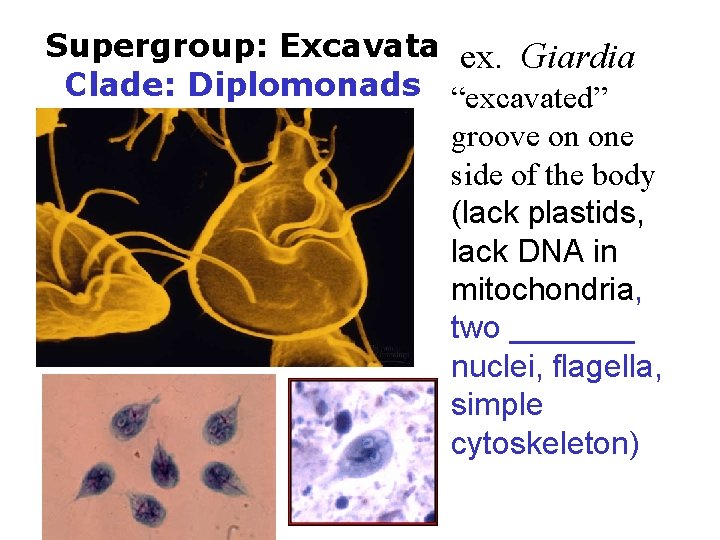
Supergroup: Excavata ex. Giardia Clade: Diplomonads “excavated” groove on one side of the body (lack plastids, lack DNA in mitochondria, two _______ nuclei, flagella, simple cytoskeleton)
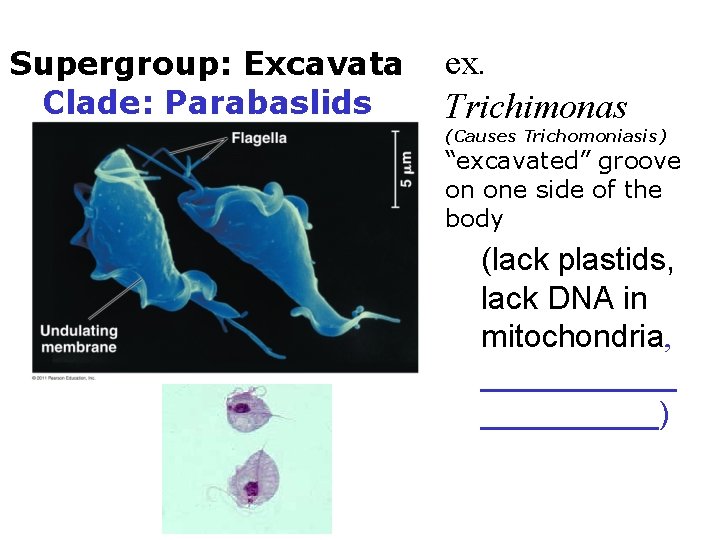
Supergroup: Excavata Clade: Parabaslids ex. Trichimonas (Causes Trichomoniasis) “excavated” groove on one side of the body (lack plastids, lack DNA in mitochondria, ______)
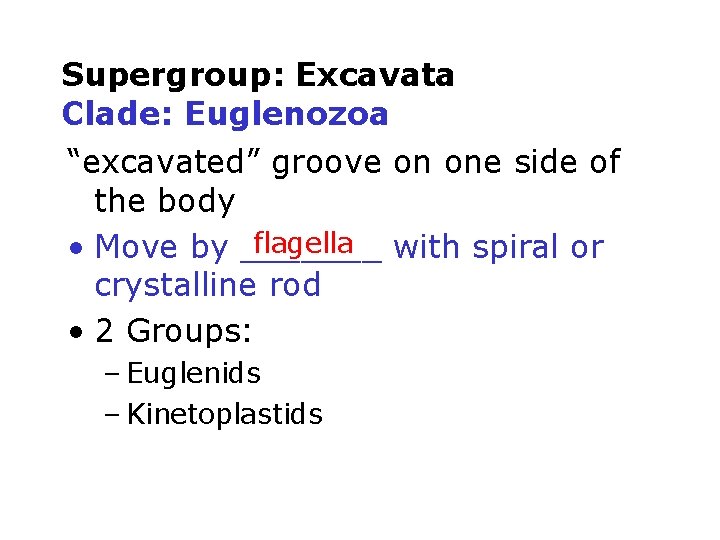
Supergroup: Excavata Clade: Euglenozoa “excavated” groove on one side of the body flagella with spiral or • Move by _______ crystalline rod • 2 Groups: – Euglenids – Kinetoplastids
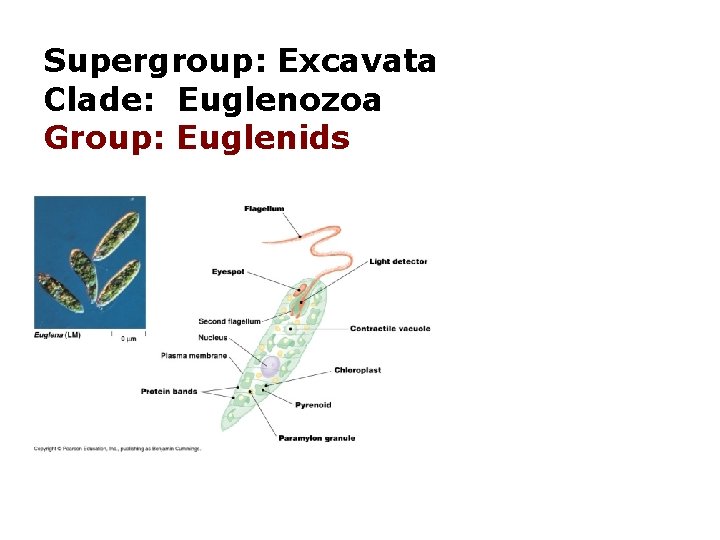
Supergroup: Excavata Clade: Euglenozoa Group: Euglenids
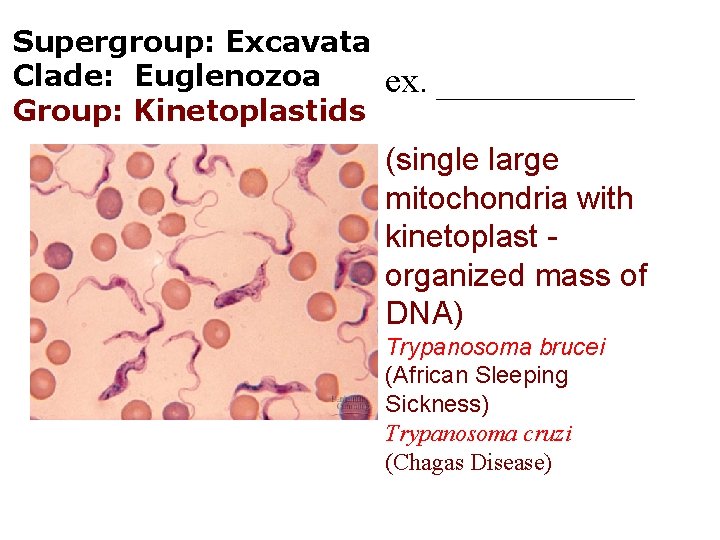
Supergroup: Excavata Clade: Euglenozoa Group: Kinetoplastids ex. ______ (single large mitochondria with kinetoplast organized mass of DNA) Trypanosoma brucei (African Sleeping Sickness) Trypanosoma cruzi (Chagas Disease)
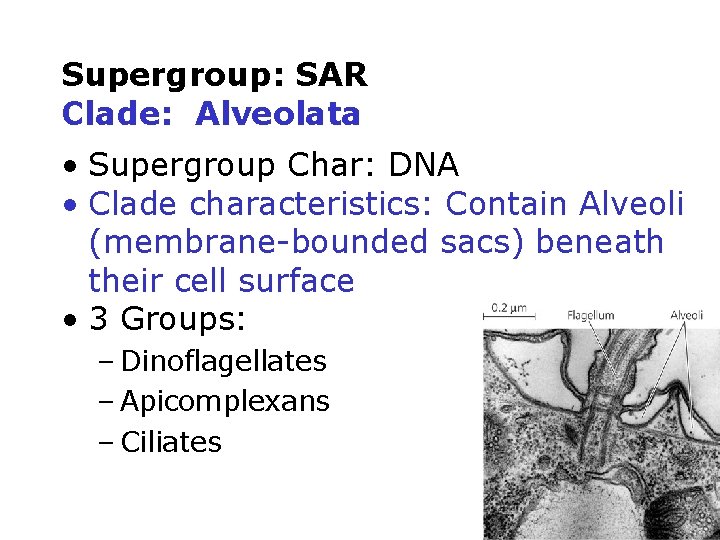
Supergroup: SAR Clade: Alveolata • Supergroup Char: DNA • Clade characteristics: Contain Alveoli (membrane-bounded sacs) beneath their cell surface • 3 Groups: – Dinoflagellates – Apicomplexans – Ciliates
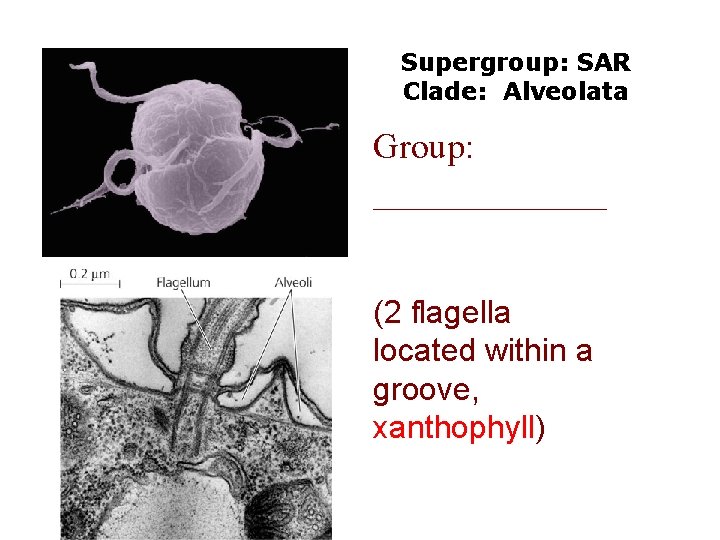
Supergroup: SAR Clade: Alveolata Group: _______ (2 flagella located within a groove, xanthophyll)
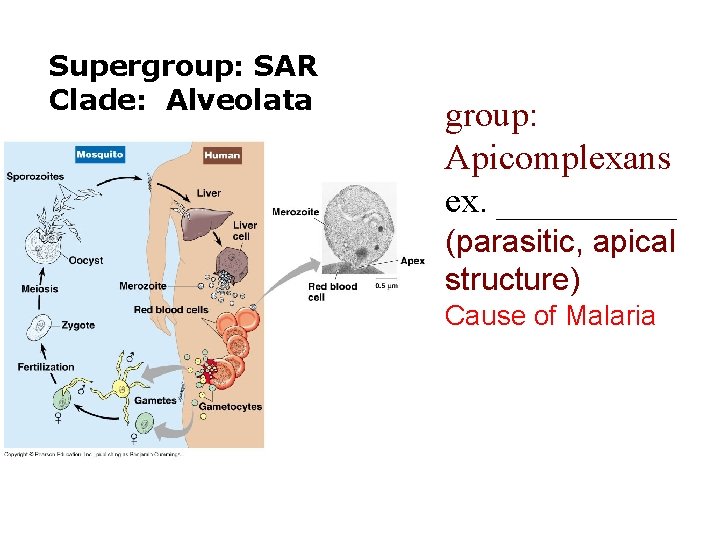
Supergroup: SAR Clade: Alveolata group: Apicomplexans ex. _____ (parasitic, apical structure) Cause of Malaria
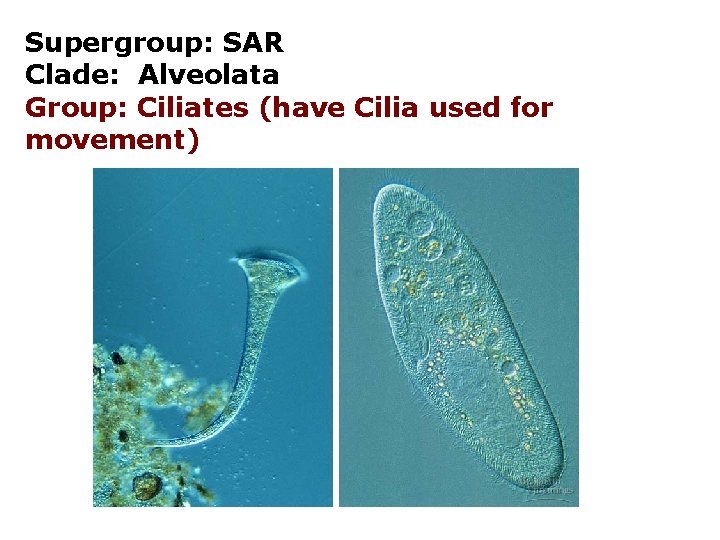
Supergroup: SAR Clade: Alveolata Group: Ciliates (have Cilia used for movement)
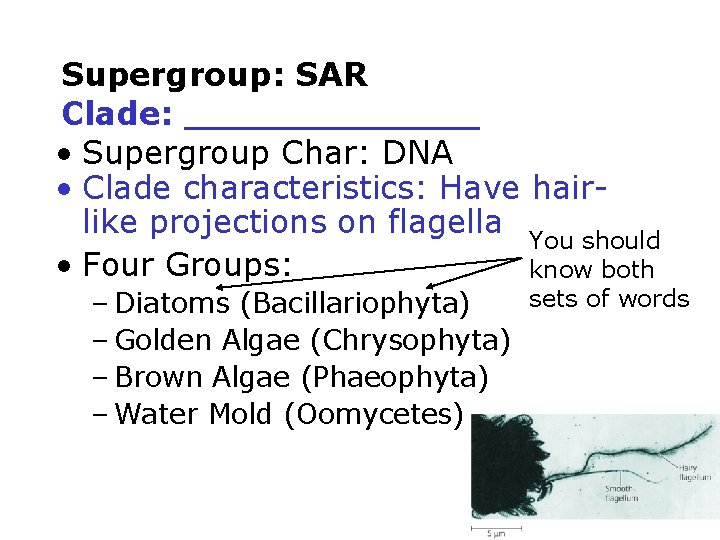
Supergroup: SAR Clade: _______ • Supergroup Char: DNA • Clade characteristics: Have hairlike projections on flagella You should • Four Groups: know both sets of words – Diatoms (Bacillariophyta) – Golden Algae (Chrysophyta) – Brown Algae (Phaeophyta) – Water Mold (Oomycetes)
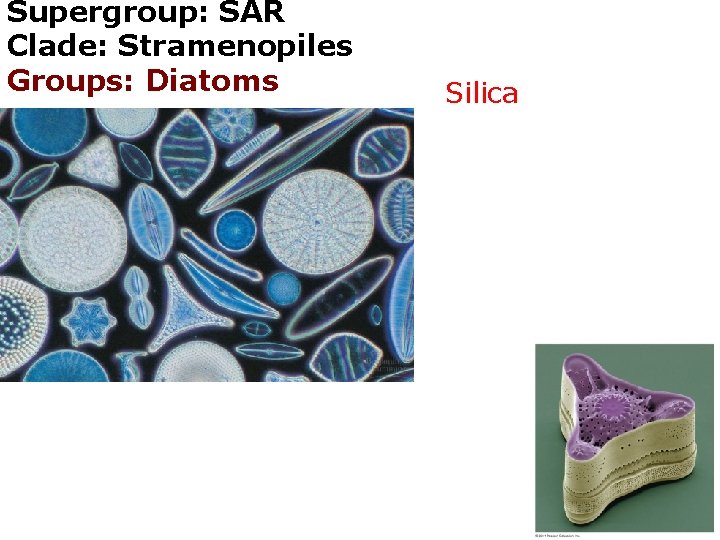
Supergroup: SAR Clade: Stramenopiles Groups: Diatoms Silica
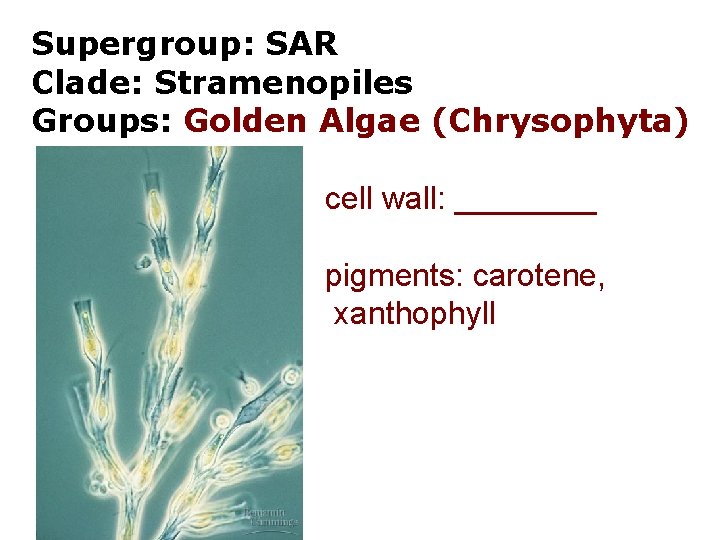
Supergroup: SAR Clade: Stramenopiles Groups: Golden Algae (Chrysophyta) cell wall: ____ pigments: carotene, xanthophyll
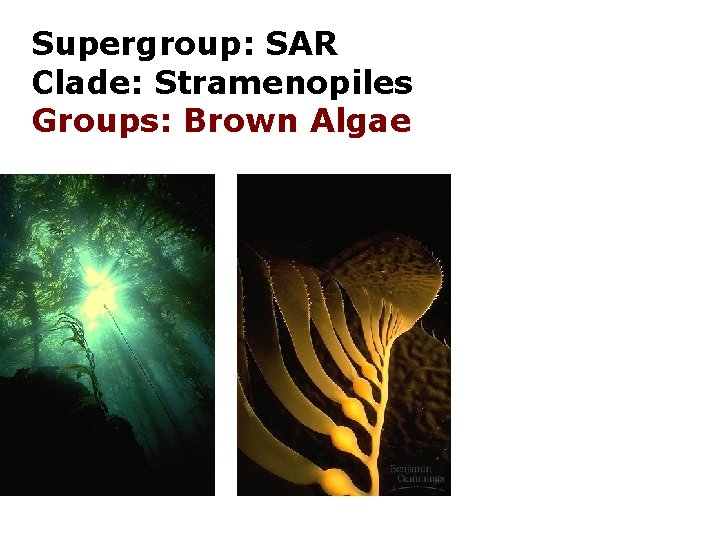
Supergroup: SAR Clade: Stramenopiles Groups: Brown Algae
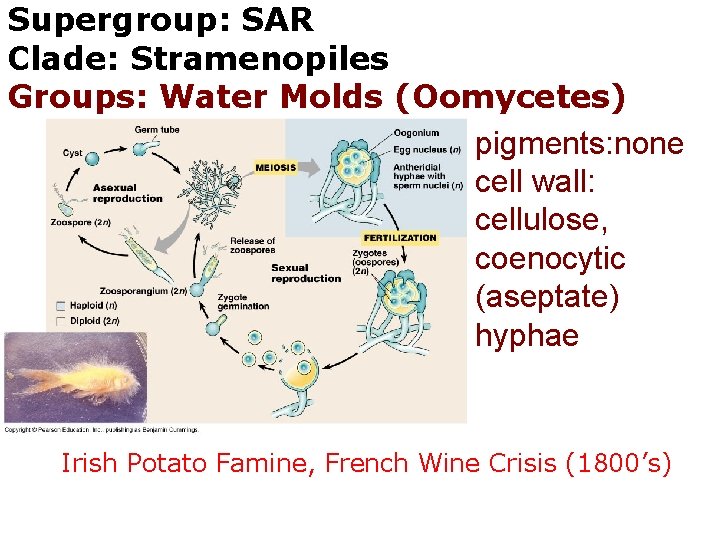
Supergroup: SAR Clade: Stramenopiles Groups: Water Molds (Oomycetes) pigments: none cell wall: cellulose, coenocytic (aseptate) hyphae Irish Potato Famine, French Wine Crisis (1800’s)
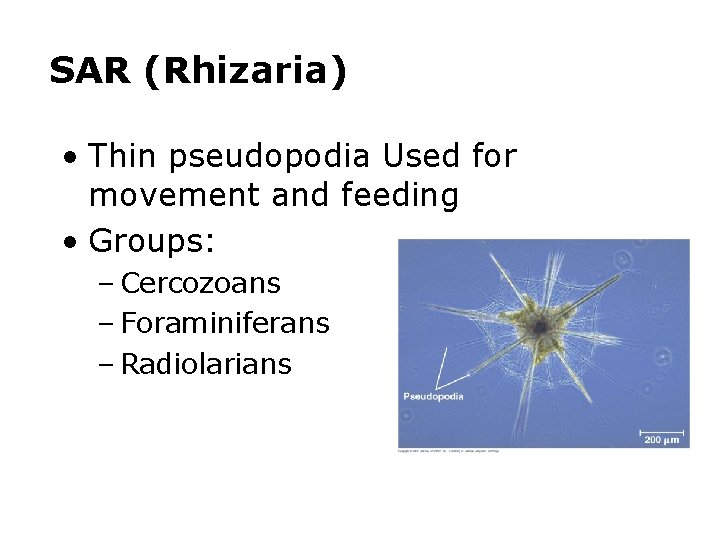
SAR (Rhizaria) • Thin pseudopodia Used for movement and feeding • Groups: – Cercozoans – Foraminiferans – Radiolarians
Supergroup: SAR Group: Cercozoans Plastids surrounded by four membranes (secondary endosymbiosis). chromatophore Sausage Shaped_______
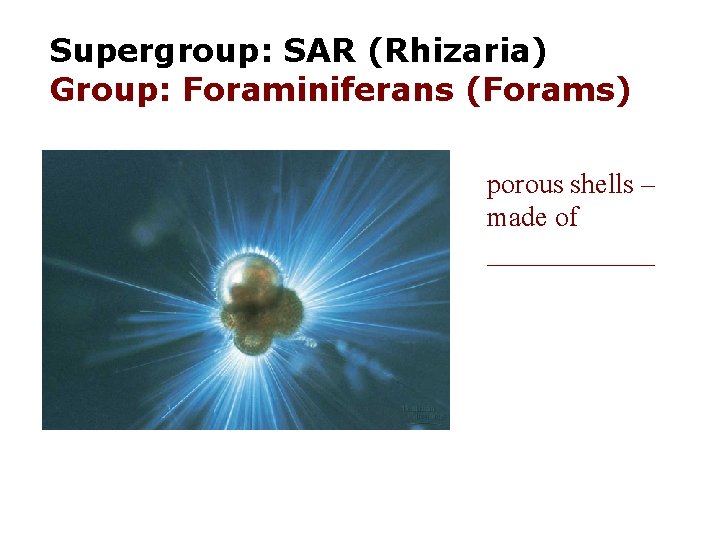
Supergroup: SAR (Rhizaria) Group: Foraminiferans (Forams) porous shells – made of ______
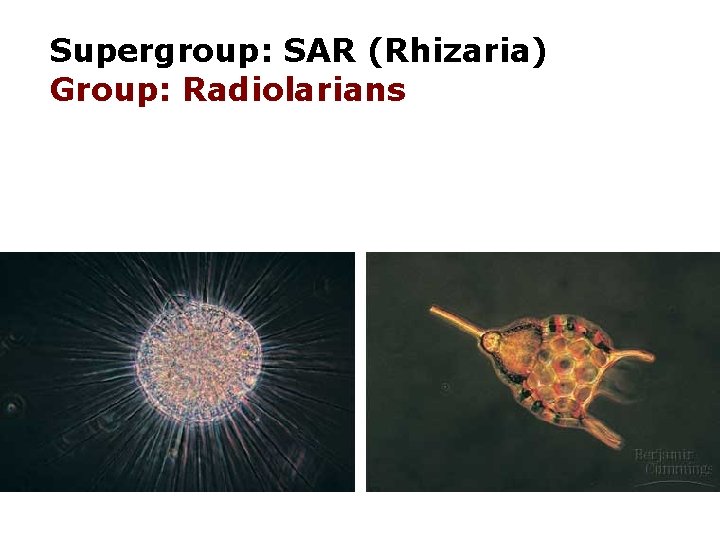
Supergroup: SAR (Rhizaria) Group: Radiolarians
Supergroup: Archaeplastida • Ancient protists that engulfed a cyanobacterium • Three Groups: – Red Algae (Rodophyta) – Green Algae (Chlorophyta) – Land Plants
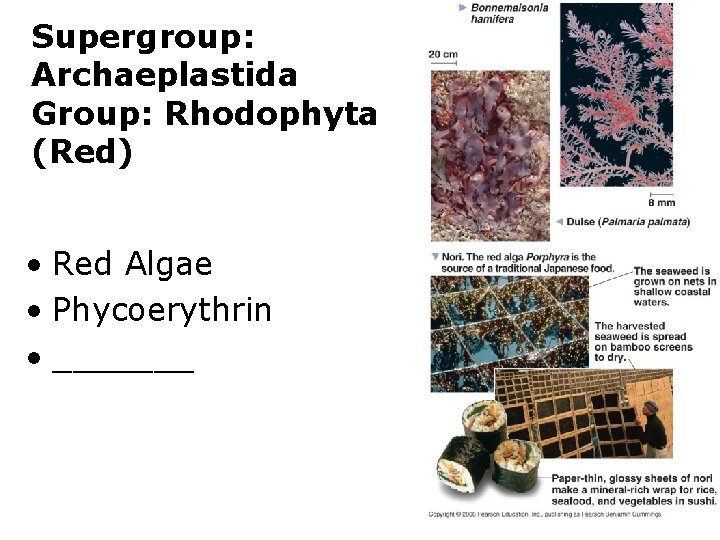
Supergroup: Archaeplastida Group: Rhodophyta (Red) • Red Algae • Phycoerythrin • _______
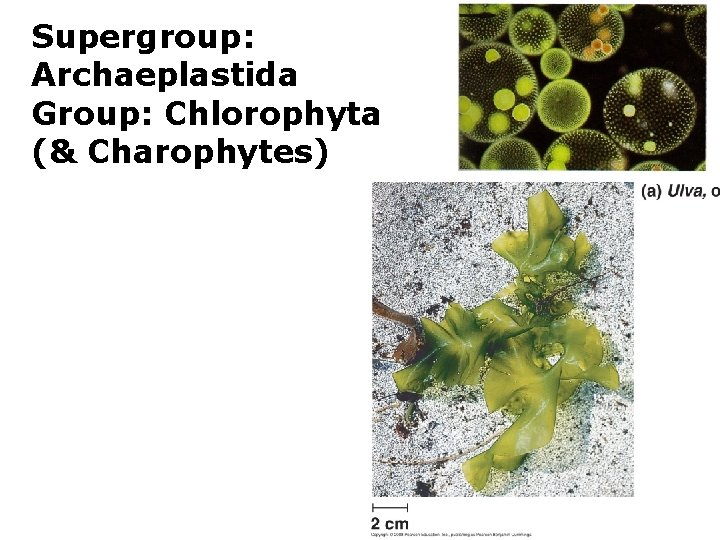
Supergroup: Archaeplastida Group: Chlorophyta (& Charophytes)
Supergroup: Unikonta • Very Diverse Group • Molecular Systematics links groups (but highly debatable) – Two Clades: • Amoebozoans • Opisthokonts
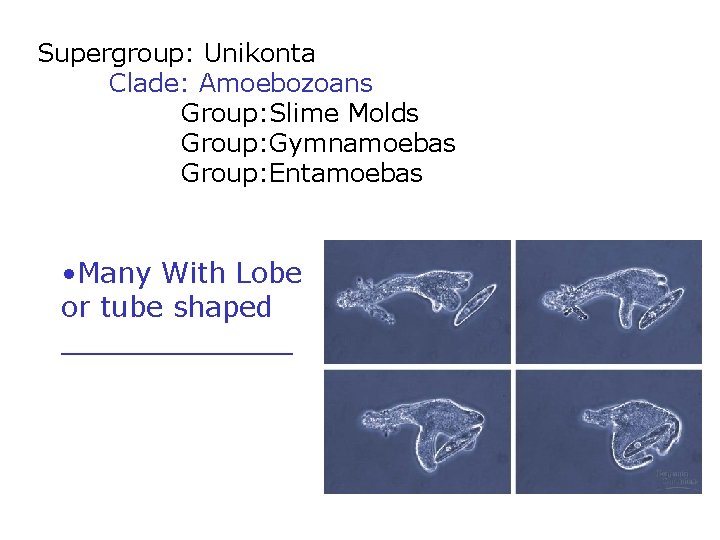
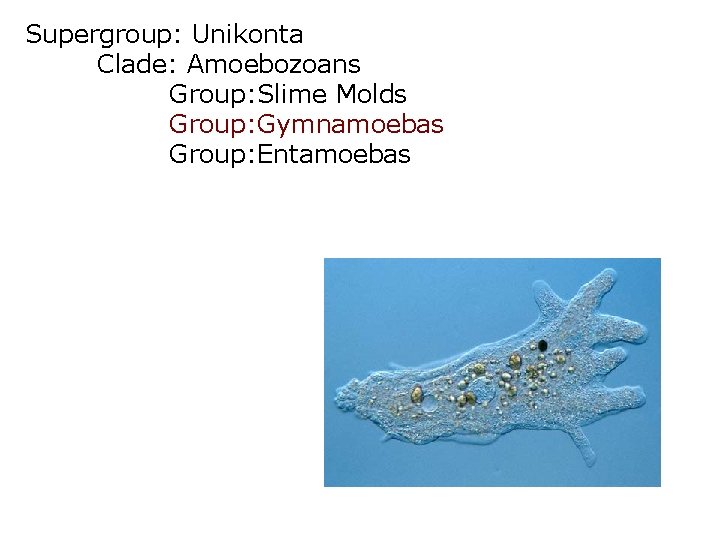
Supergroup: Unikonta Clade: Amoebozoans Group: Slime Molds Group: Gymnamoebas Group: Entamoebas • Many With Lobe or tube shaped _______
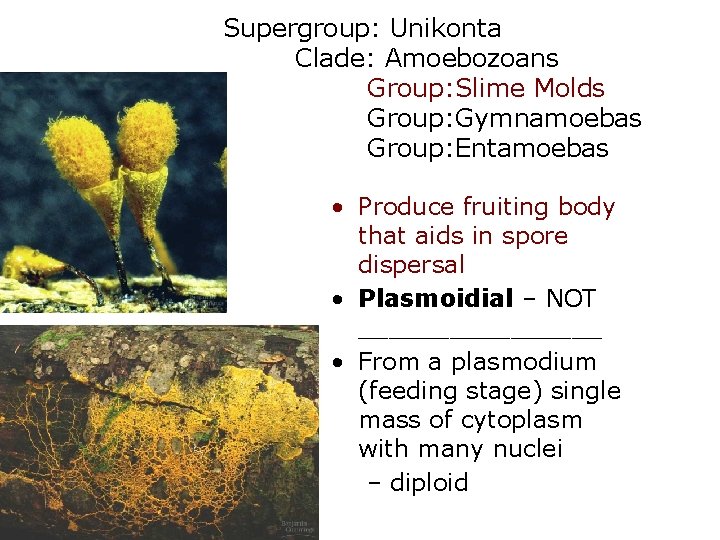
Supergroup: Unikonta Clade: Amoebozoans Group: Slime Molds Group: Gymnamoebas Group: Entamoebas • Produce fruiting body that aids in spore dispersal • Plasmoidial – NOT ________ • From a plasmodium (feeding stage) single mass of cytoplasm with many nuclei – diploid
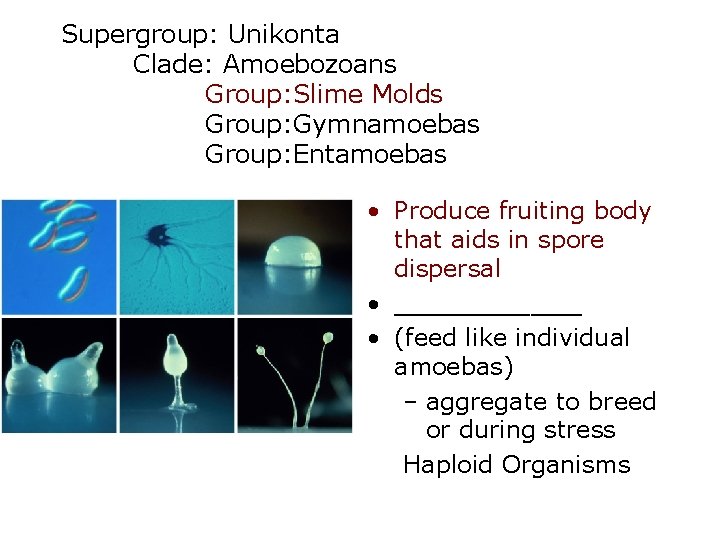
Supergroup: Unikonta Clade: Amoebozoans Group: Slime Molds Group: Gymnamoebas Group: Entamoebas • Produce fruiting body that aids in spore dispersal • ______ • (feed like individual amoebas) – aggregate to breed or during stress Haploid Organisms
Supergroup: Unikonta Clade: Amoebozoans Group: Slime Molds Group: Gymnamoebas Group: Entamoebas
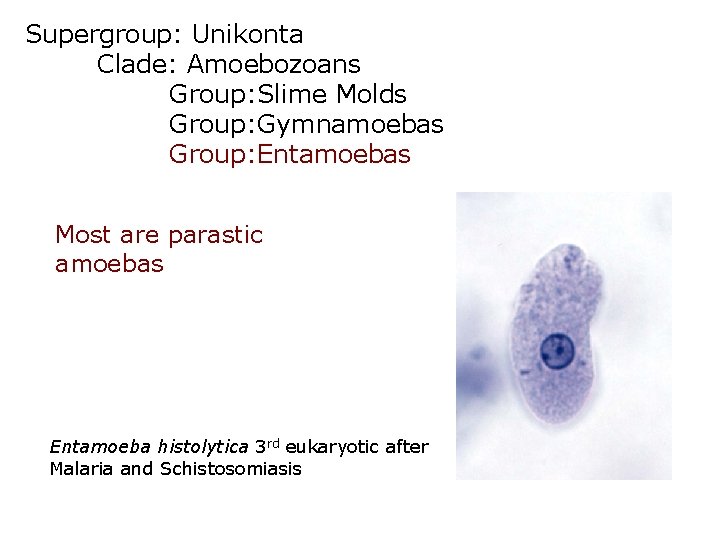
Supergroup: Unikonta Clade: Amoebozoans Group: Slime Molds Group: Gymnamoebas Group: Entamoebas Most are parastic amoebas Entamoeba histolytica 3 rd eukaryotic after Malaria and Schistosomiasis
Supergroup: Unikonta Clade: Opisthokonts Group: Nucleariids Group: Choanoflagellates Very Diverse Group: Nucleariids = most closely related to Fungi Choanoflagellates = most closely related to animals
Supergroup: Unikonta Clade: Opisthokonts Group: Nucleariids
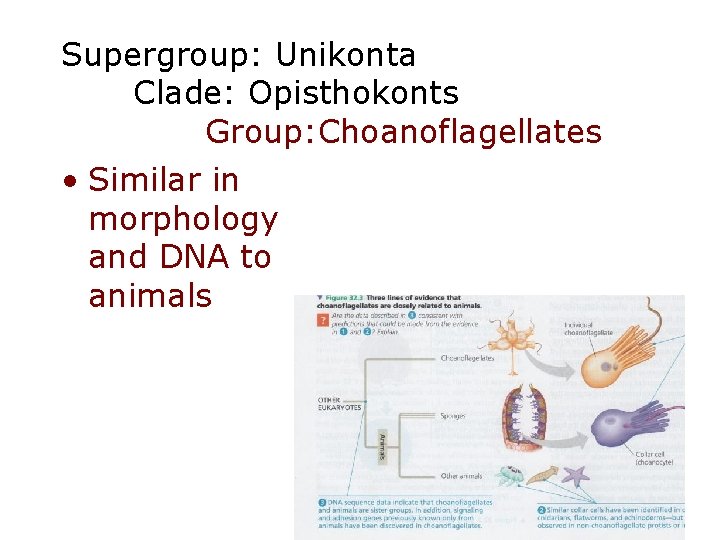
Supergroup: Unikonta Clade: Opisthokonts Group: Choanoflagellates • Similar in morphology and DNA to animals
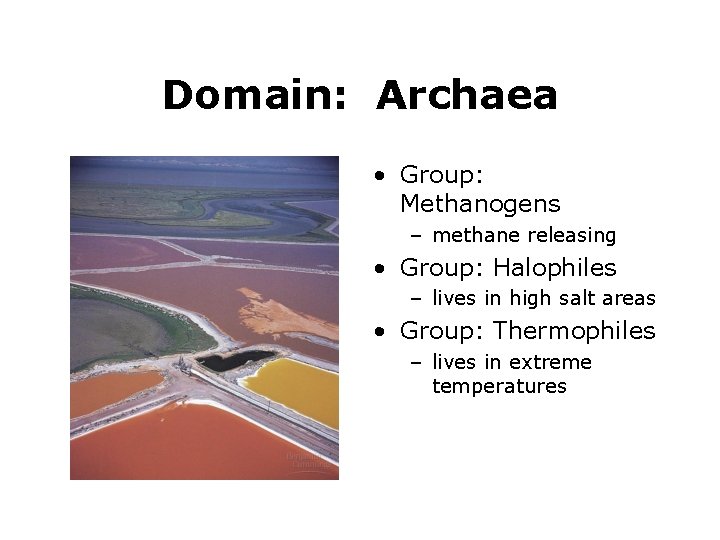
Domain: Archaea • Group: Methanogens – methane releasing • Group: Halophiles – lives in high salt areas • Group: Thermophiles – lives in extreme temperatures
Viruses
b
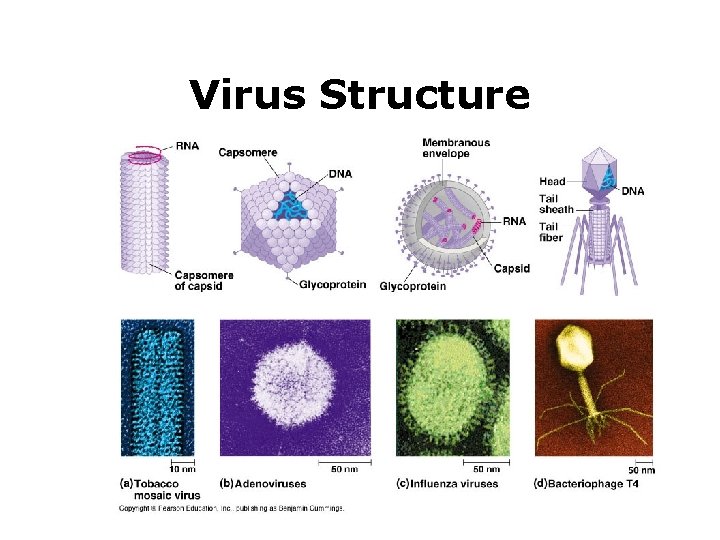
Virus Structure
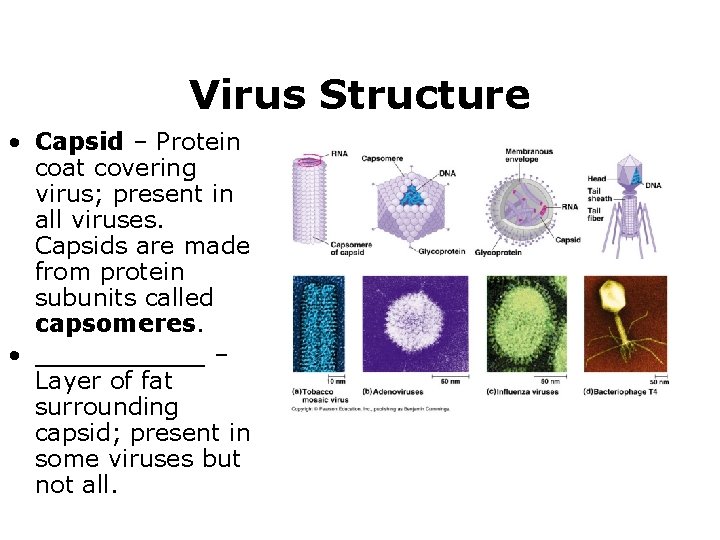
Virus Structure • Capsid – Protein coat covering virus; present in all viruses. Capsids are made from protein subunits called capsomeres. • _____ – Layer of fat surrounding capsid; present in some viruses but not all.
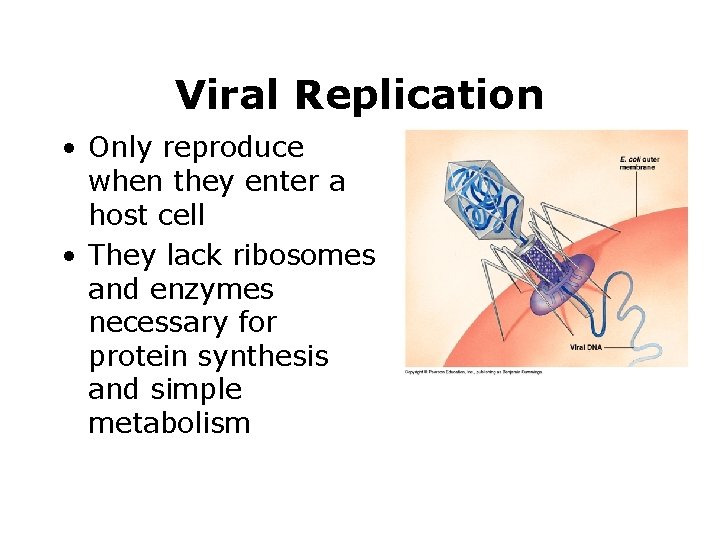
Viral Replication • Only reproduce when they enter a host cell • They lack ribosomes and enzymes necessary for protein synthesis and simple metabolism
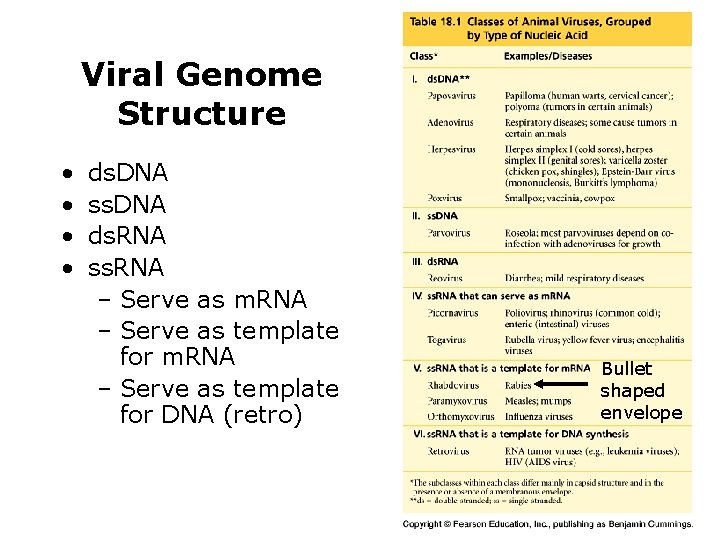
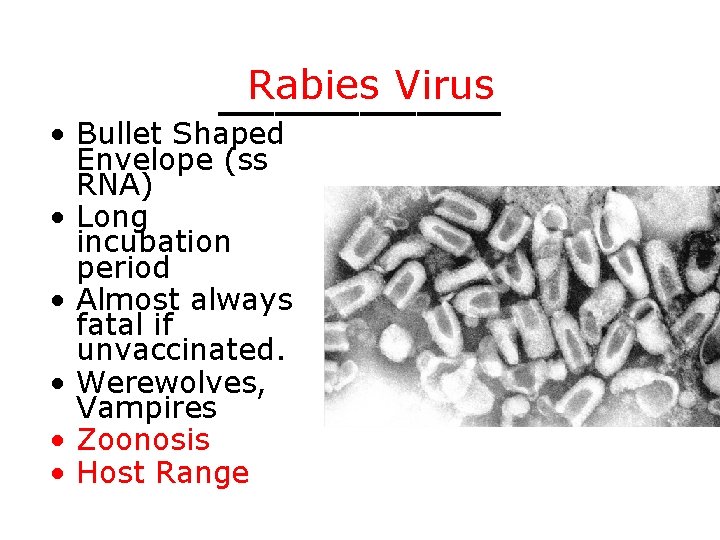
Viral Genome Structure • • ds. DNA ss. DNA ds. RNA ss. RNA – Serve as m. RNA – Serve as template for DNA (retro) Bullet shaped envelope
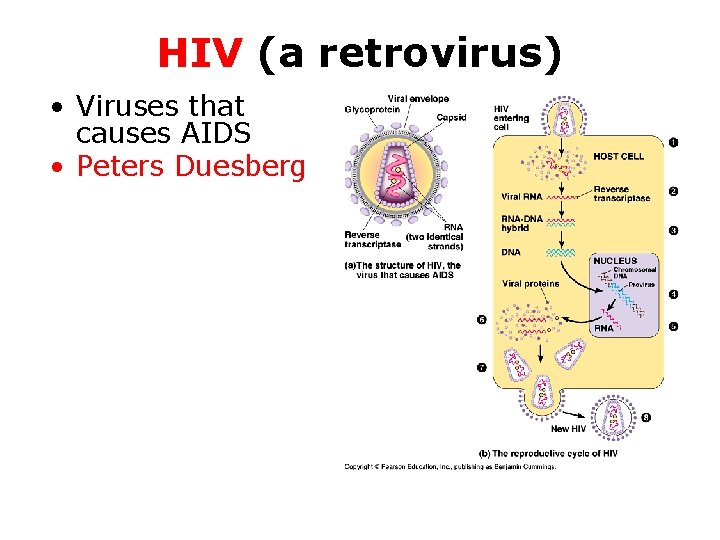
HIV (a retrovirus) • Viruses that causes AIDS • Peters Duesberg
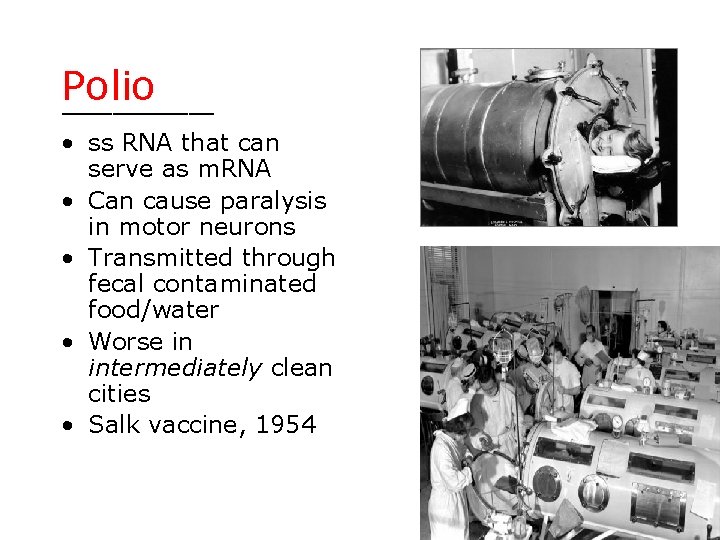
Polio ______ • ss RNA that can serve as m. RNA • Can cause paralysis in motor neurons • Transmitted through fecal contaminated food/water • Worse in intermediately clean cities • Salk vaccine, 1954
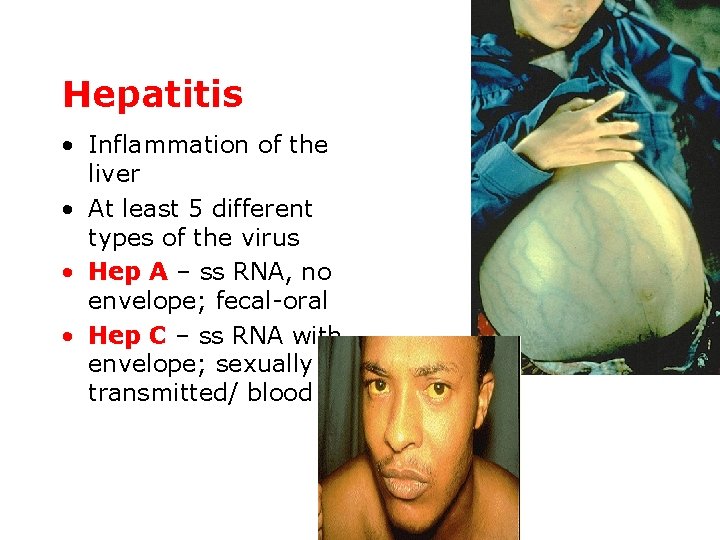
Hepatitis • Inflammation of the liver • At least 5 different types of the virus • Hep A – ss RNA, no envelope; fecal-oral • Hep C – ss RNA with envelope; sexually transmitted/ blood
Rabies Virus _____ • Bullet Shaped Envelope (ss RNA) • Long incubation period • Almost always fatal if unvaccinated. • Werewolves, Vampires • Zoonosis • Host Range
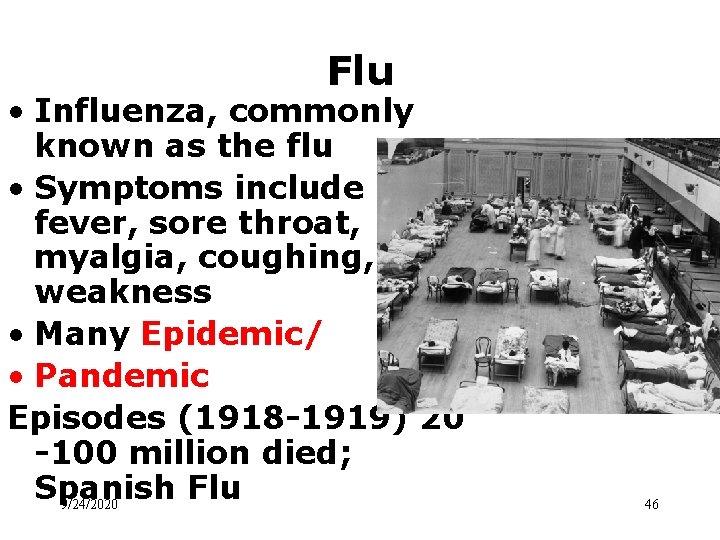
Flu • Influenza, commonly known as the flu • Symptoms include fever, sore throat, myalgia, coughing, weakness • Many Epidemic/ • Pandemic Episodes (1918 -1919) 20 -100 million died; Spanish Flu 9/24/2020 46
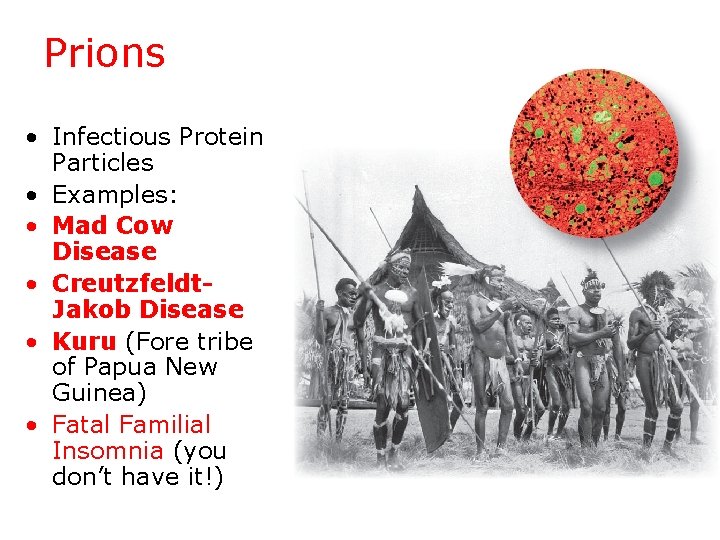
Prions • Infectious Protein Particles • Examples: • Mad Cow Disease • Creutzfeldt. Jakob Disease • Kuru (Fore tribe of Papua New Guinea) • Fatal Familial Insomnia (you don’t have it!)