
Origins of Civil Rights Posters In teams of
- Slides: 29
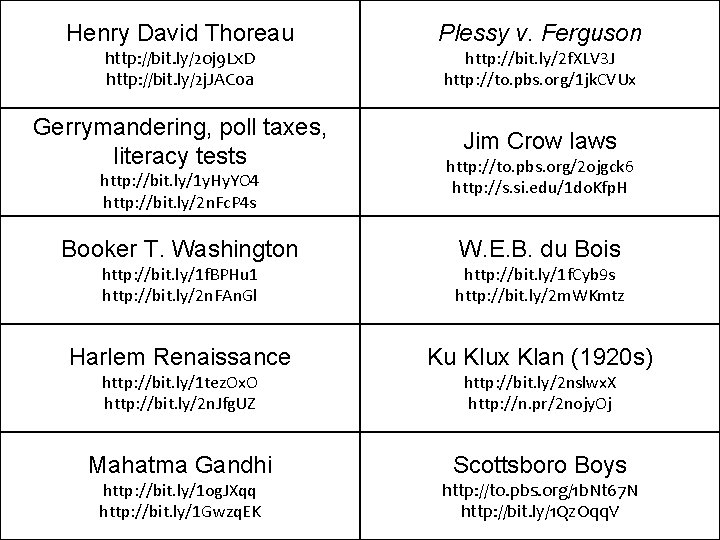
Origins of Civil Rights Posters • In teams of 2 -3, you will research and create a poster on an early civil rights event or person. • Research: • Use the two websites provided to start your research • Locate and use one additional credible resource • Cite all three websites on your poster • Poster: • Must include a brief description of the event or person • Include a description of how the event or person influenced the lives of African Americans • Include a statement on how this influences the Civil Rights Movement • Must include a picture that illustrates one or more of the above elements
The Origins of Civil Rights The Civil Rights Movement Begins
Compelling Question Is non-violent civil disobedience effective? Supporting Question How should people respond to injustice in society?
The Origins of Civil Rights Early Struggles for Equality
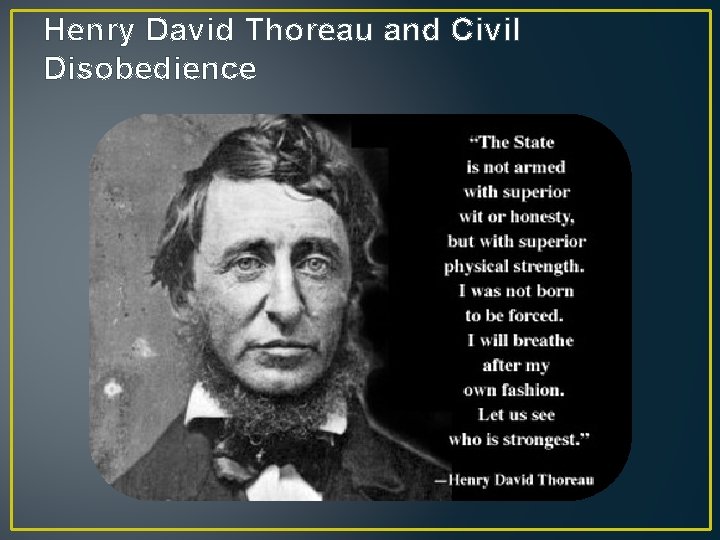
Henry David Thoreau and Civil Disobedience
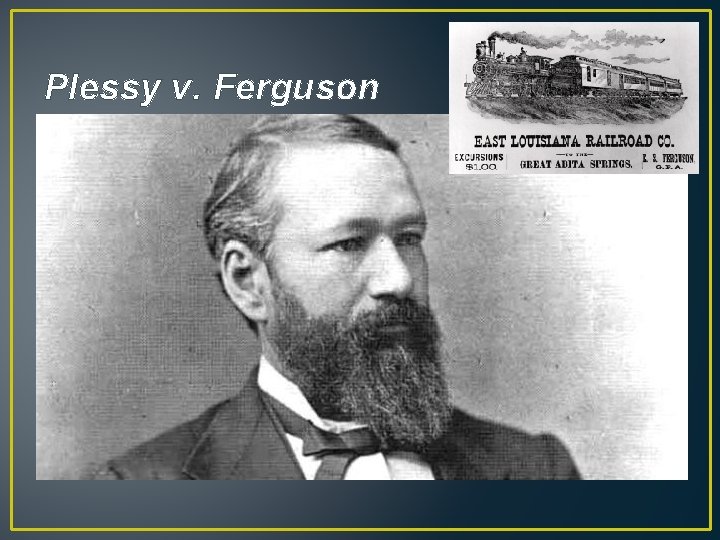
Plessy v. Ferguson
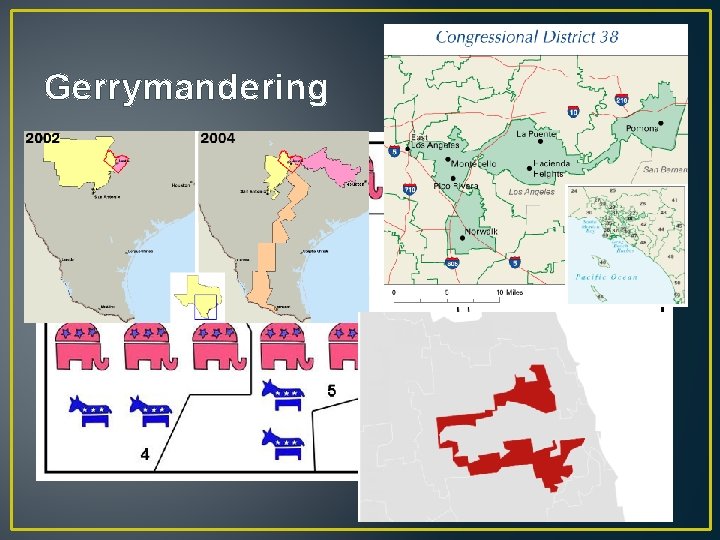
Gerrymandering
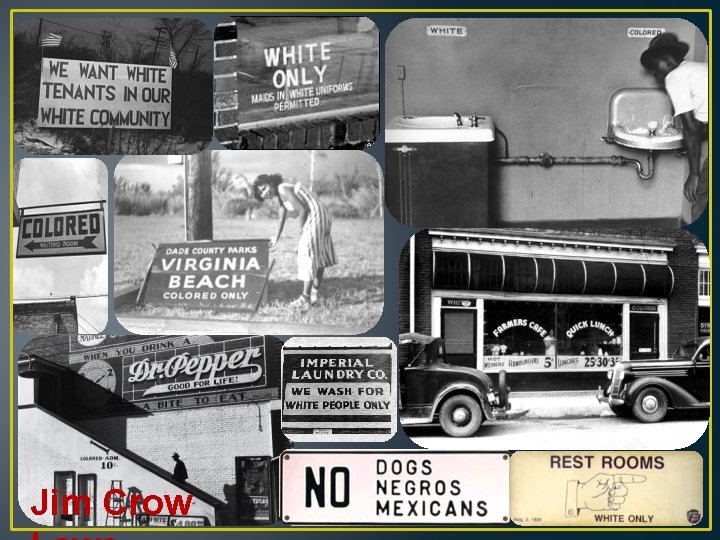
Jim Crow
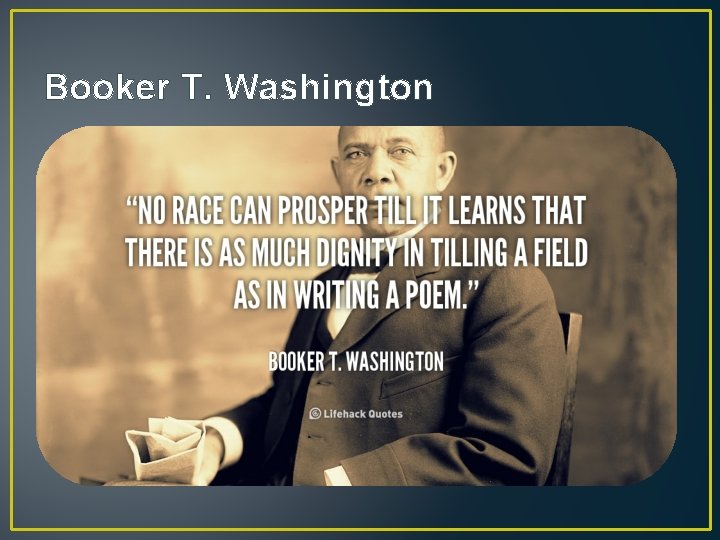
Booker T. Washington
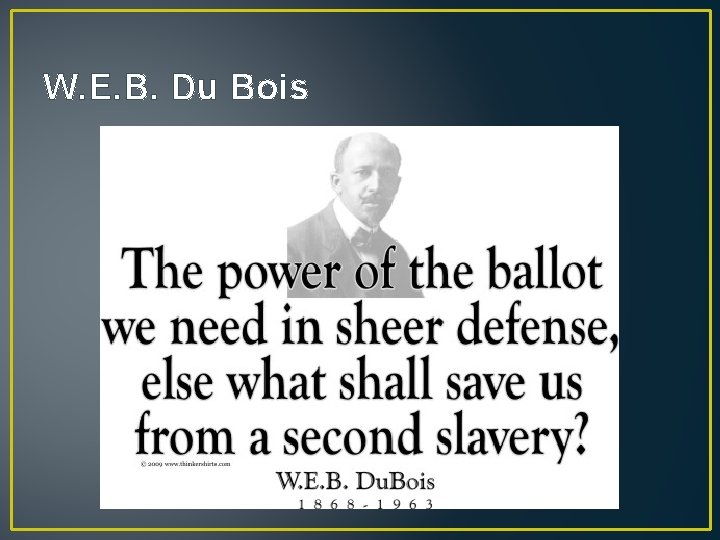
W. E. B. Du Bois
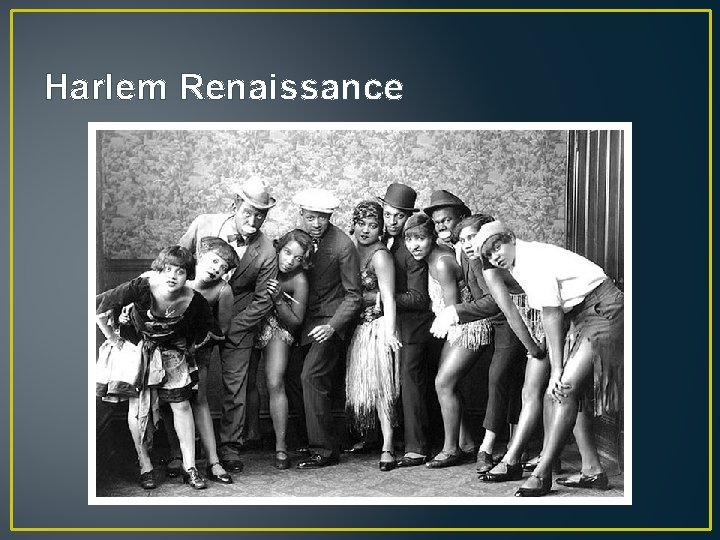
Harlem Renaissance
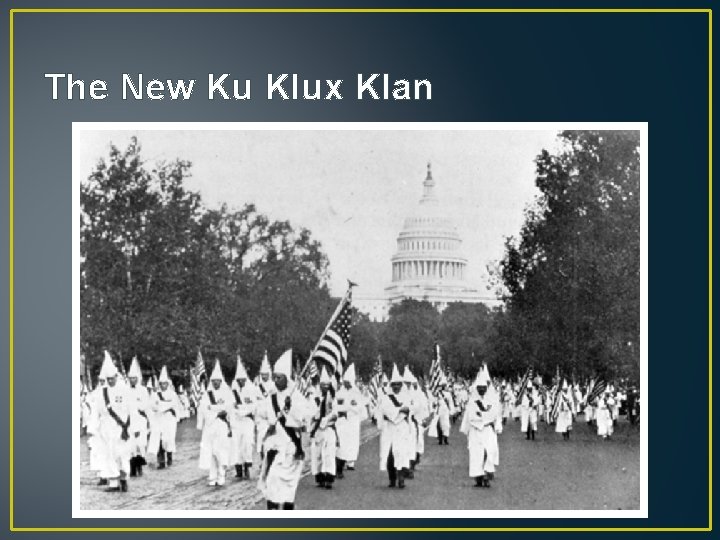
The New Ku Klux Klan
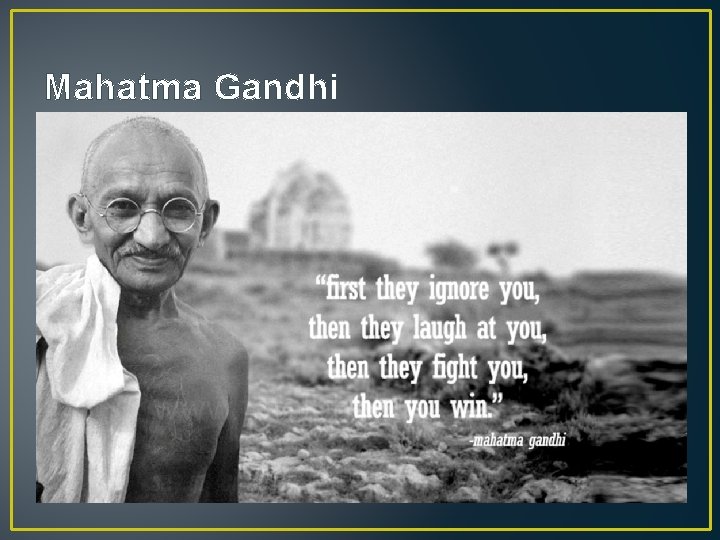
Mahatma Gandhi
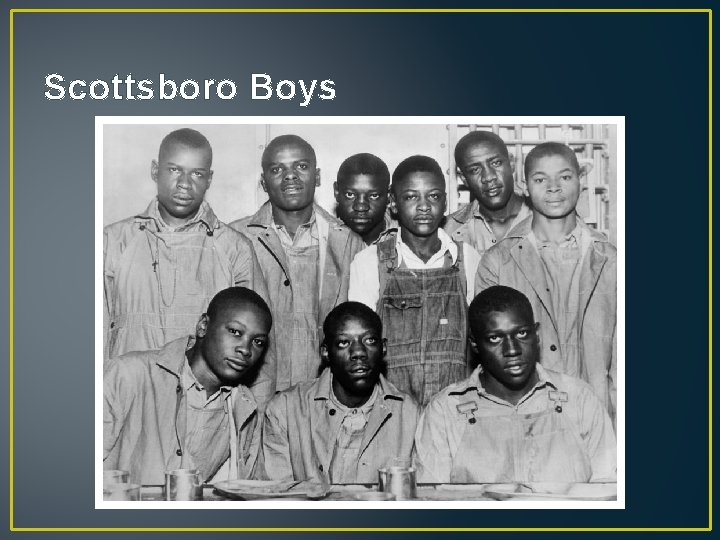
Scottsboro Boys
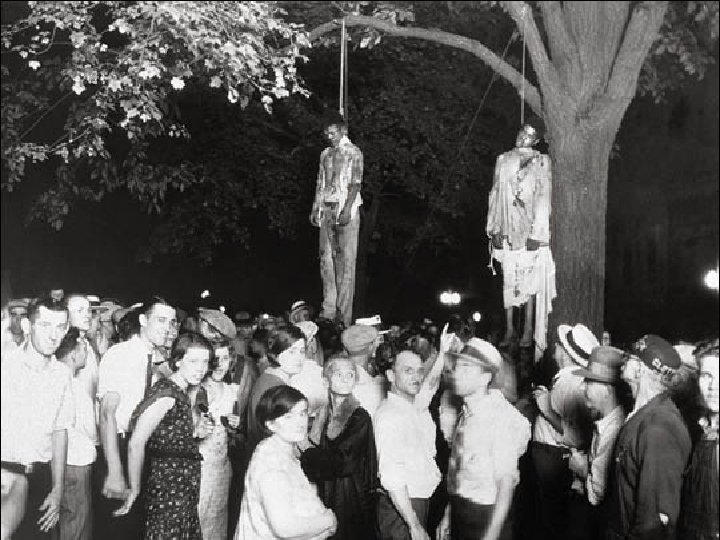
Jim Crow and Lynching Strange Fruit – Billie Holiday ----------------------------Southern trees bear strange fruit, Blood on the leaves and blood at the root, Black bodies swinging in the southern breeze, Strange fruit hanging from the poplar trees. Pastoral scene of the gallant south, The bulging eyes and the twisted mouth, Scent of magnolias, sweet and fresh, Then the sudden smell of burning flesh. Here is the fruit for the crows to pluck, For the rain to gather, for the wind to suck, For the sun to rot, for the trees to drop, Here is a strange and bitter crop.
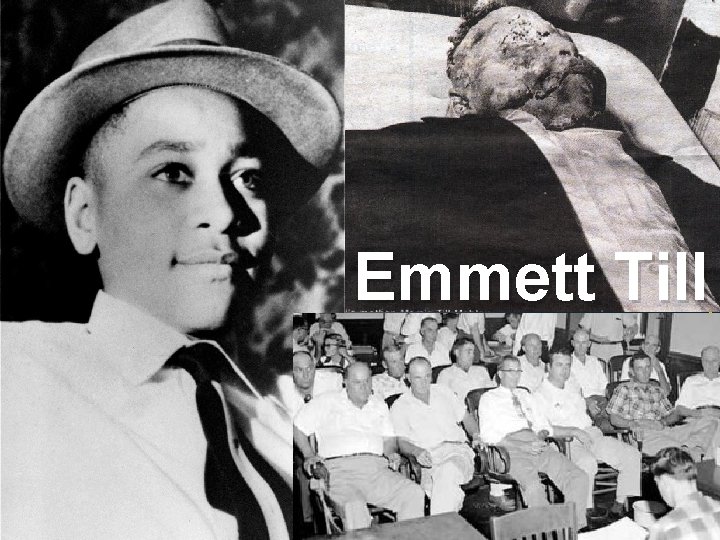
Emmett Till
Breaking the Color Barrier Early Battles to End Segregation
Groups You Need to Know: • National Association for the Advancement of Colored People (NAACP) • Congress of Racial Equality (CORE): Embraced a pacifist, non-violent approach to fighting racial segregation • Southern Christian Leadership Conference (SCLC): Adopted a nonviolent mass action strategy; open to all, regardless of race, religion, or background • Student Non-Violent Coordinating Committee (SNCC): a locally based, student-run organization that followed non-violent resistance tactics
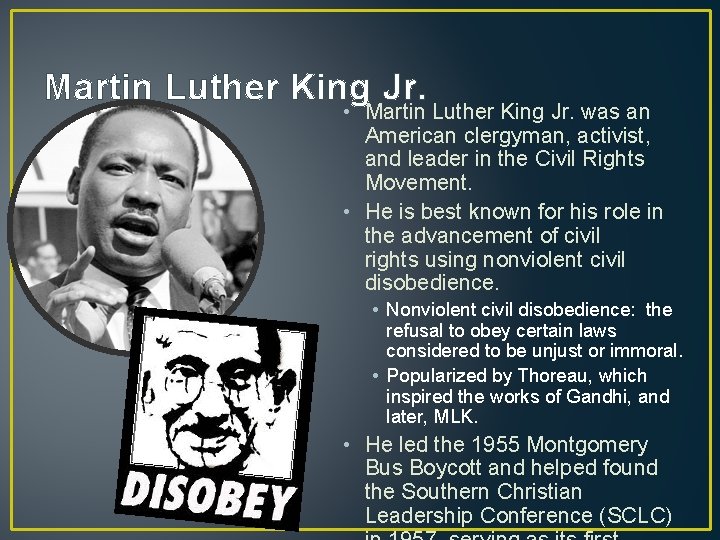
Martin Luther King Jr. • Martin Luther King Jr. was an American clergyman, activist, and leader in the Civil Rights Movement. • He is best known for his role in the advancement of civil rights using nonviolent civil disobedience. • Nonviolent civil disobedience: the refusal to obey certain laws considered to be unjust or immoral. • Popularized by Thoreau, which inspired the works of Gandhi, and later, MLK. • He led the 1955 Montgomery Bus Boycott and helped found the Southern Christian Leadership Conference (SCLC)
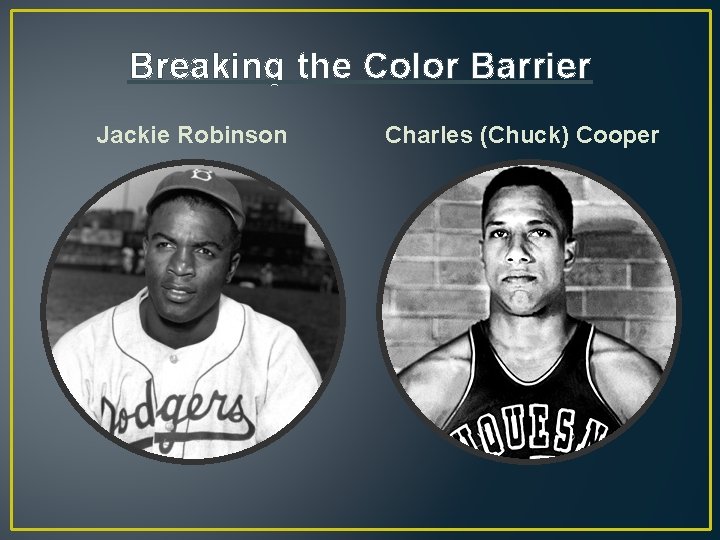
Breaking the Color Barrier Jackie Robinson Charles (Chuck) Cooper
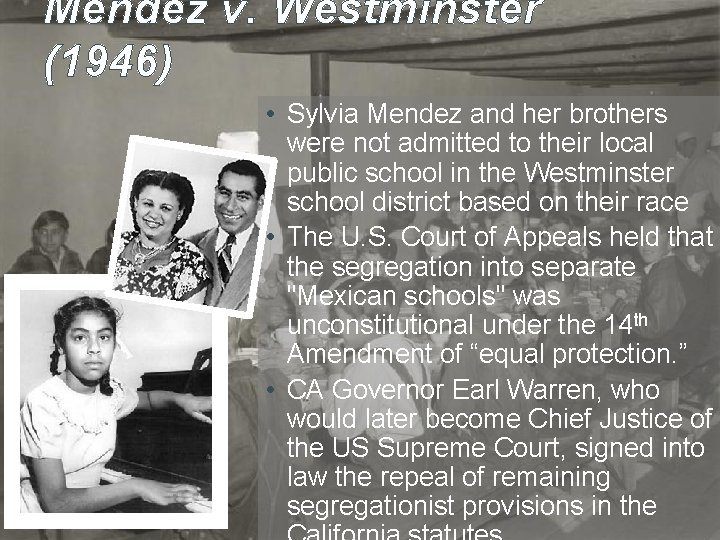
Mendez v. Westminster (1946) • Sylvia Mendez and her brothers were not admitted to their local public school in the Westminster school district based on their race • The U. S. Court of Appeals held that the segregation into separate "Mexican schools" was unconstitutional under the 14 th Amendment of “equal protection. ” • CA Governor Earl Warren, who would later become Chief Justice of the US Supreme Court, signed into law the repeal of remaining segregationist provisions in the
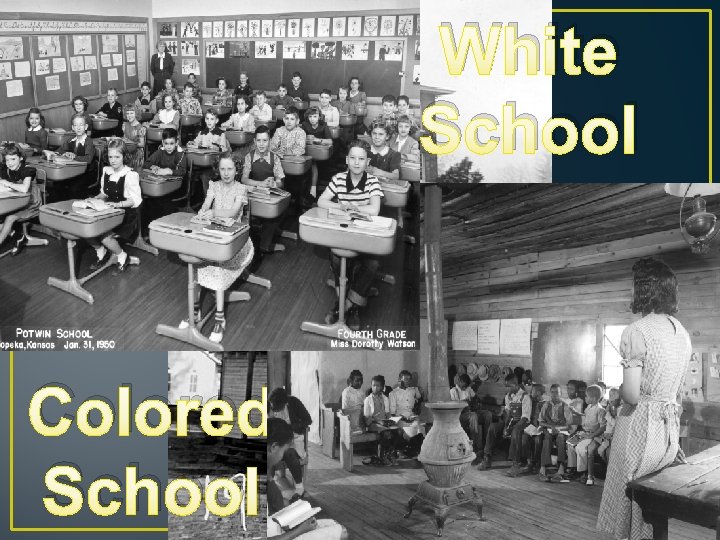
Separate, but Equal? • Black children were denied admission to public schools attended by white children under laws requiring or permitting segregation according to the races. • The white and black schools were supposed to be equal in terms of buildings, curricula, qualifications, and teacher salaries.
White School Colored School
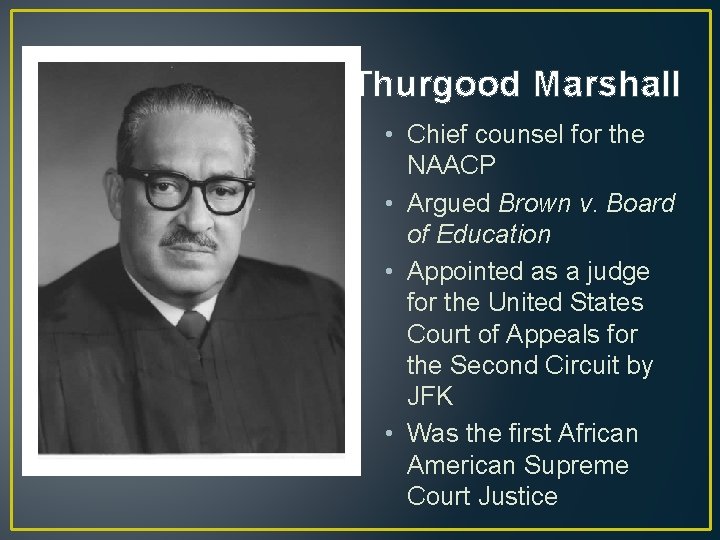
Thurgood Marshall • Chief counsel for the NAACP • Argued Brown v. Board of Education • Appointed as a judge for the United States Court of Appeals for the Second Circuit by JFK • Was the first African American Supreme Court Justice
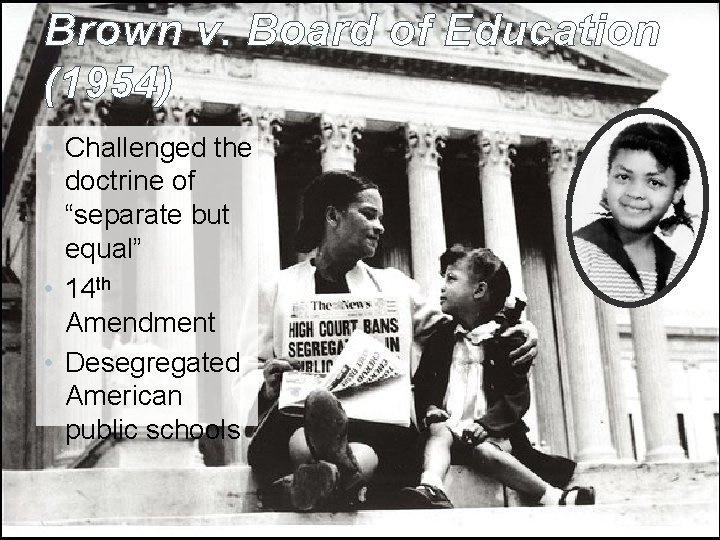
Brown v. Board of Education (1954) • Challenged the doctrine of “separate but equal” • 14 th Amendment • Desegregated American public schools
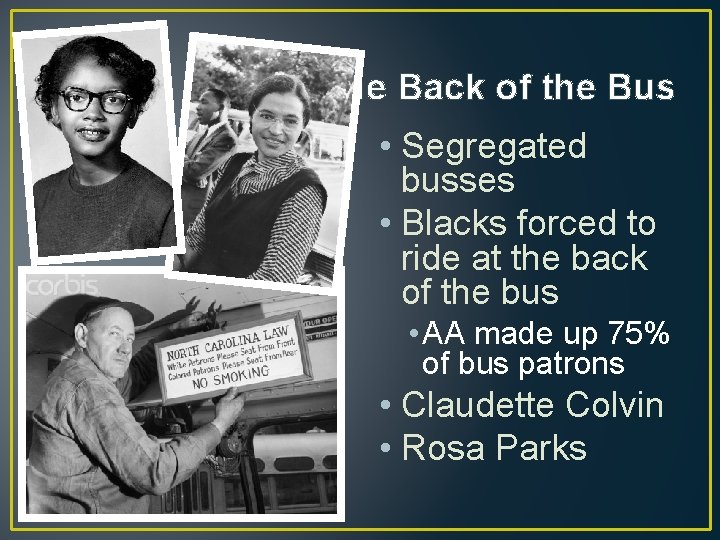
The Back of the Bus • Segregated busses • Blacks forced to ride at the back of the bus • AA made up 75% of bus patrons • Claudette Colvin • Rosa Parks
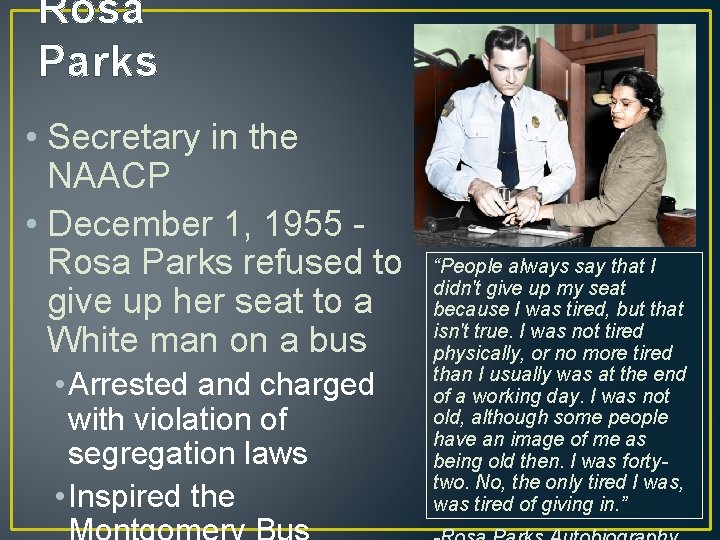
Rosa Parks • Secretary in the NAACP • December 1, 1955 Rosa Parks refused to give up her seat to a White man on a bus • Arrested and charged with violation of segregation laws • Inspired the “People always say that I didn't give up my seat because I was tired, but that isn't true. I was not tired physically, or no more tired than I usually was at the end of a working day. I was not old, although some people have an image of me as being old then. I was fortytwo. No, the only tired I was, was tired of giving in. ”
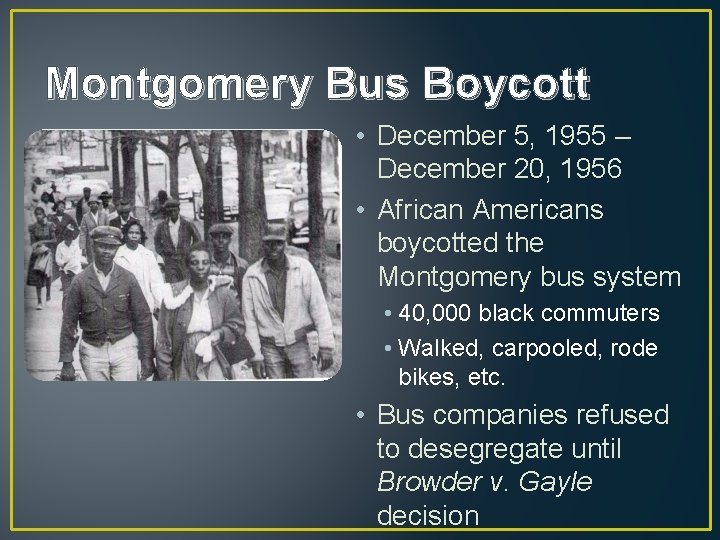
Montgomery Bus Boycott • December 5, 1955 – December 20, 1956 • African Americans boycotted the Montgomery bus system • 40, 000 black commuters • Walked, carpooled, rode bikes, etc. • Bus companies refused to desegregate until Browder v. Gayle decision
Henry David Thoreau Plessy v. Ferguson http: //bit. ly/2 oj 9 Lx. D http: //bit. ly/2 j. JAC 0 a http: //bit. ly/2 f. XLV 3 J http: //to. pbs. org/1 jk. CVUx Gerrymandering, poll taxes, literacy tests Jim Crow laws http: //bit. ly/1 y. Hy. YO 4 http: //bit. ly/2 n. Fc. P 4 s http: //to. pbs. org/2 ojgck 6 http: //s. si. edu/1 do. Kfp. H Booker T. Washington W. E. B. du Bois http: //bit. ly/1 f. BPHu 1 http: //bit. ly/2 n. FAn. Gl http: //bit. ly/1 f. Cyb 9 s http: //bit. ly/2 m. WKmtz Harlem Renaissance Ku Klux Klan (1920 s) http: //bit. ly/1 tez. Ox. O http: //bit. ly/2 n. Jfg. UZ http: //bit. ly/2 nslwx. X http: //n. pr/2 nojy. Oj Mahatma Gandhi Scottsboro Boys http: //bit. ly/1 og. JXqq http: //bit. ly/1 Gwzq. EK http: //to. pbs. org/1 b. Nt 67 N http: //bit. ly/1 Qz. Oqq. V