
ORIGINS OF AMERICAN GOVERNMENT PART 1 Textbook Chapter
ORIGINS OF AMERICAN GOVERNMENT PART 1 Textbook Chapter 2
Content Standards ■ 12. 1 – Students explain the fundamental principles and moral values of American democracy as expressed in the U. S. Constitution and other essential documents of American democracy. ■ State Standards 12. 1. 1 – Analyze the influence of ancient Greek, Roman, English, and leading European political thinkers such as John Locke, Charles Louis Montesquieu, Niccolo Machiavelli, and William Blackstone on the development of American government.
Lesson Objectives 1. Students review the lasting influences of Ancient Greek and Roman government on democracy. 2. Students identify John Locke’s ideas of natural rights and the social contract in the formation of government systems.
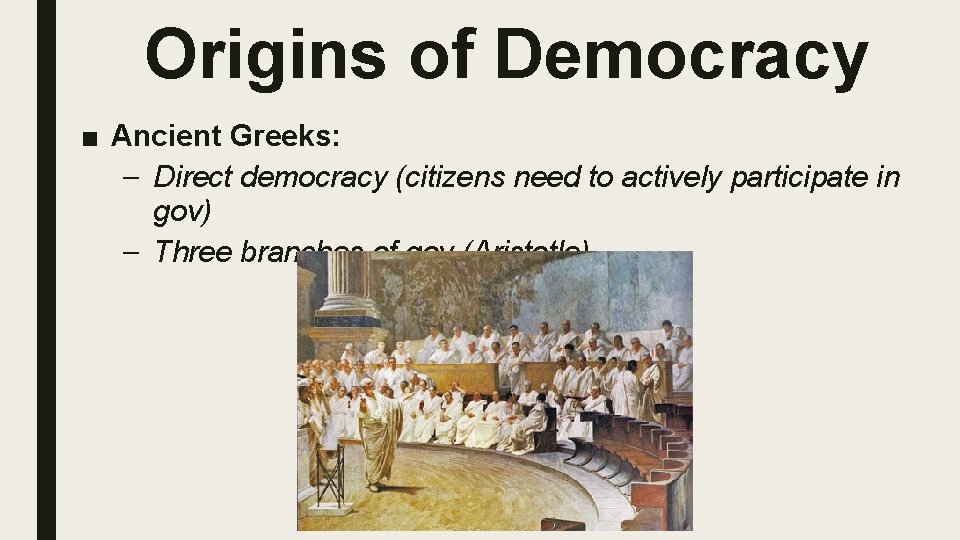
Origins of Democracy ■ Ancient Greeks: – Direct democracy (citizens need to actively participate in gov) – Three branches of gov (Aristotle)
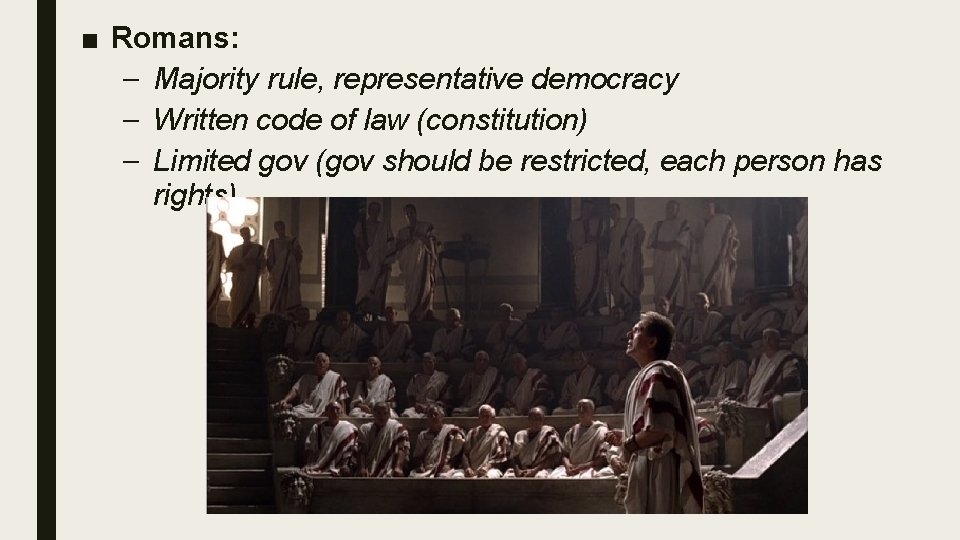
■ Romans: – Majority rule, representative democracy – Written code of law (constitution) – Limited gov (gov should be restricted, each person has rights)
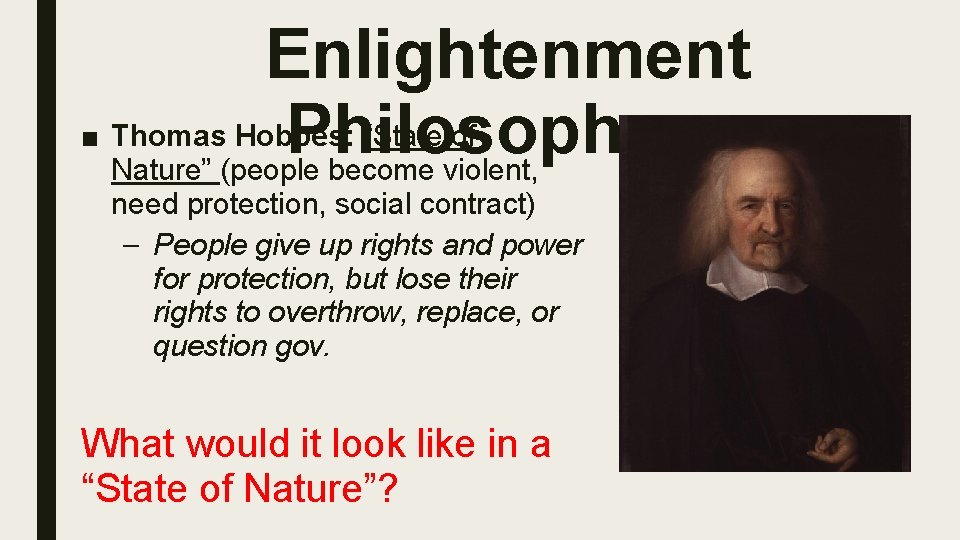
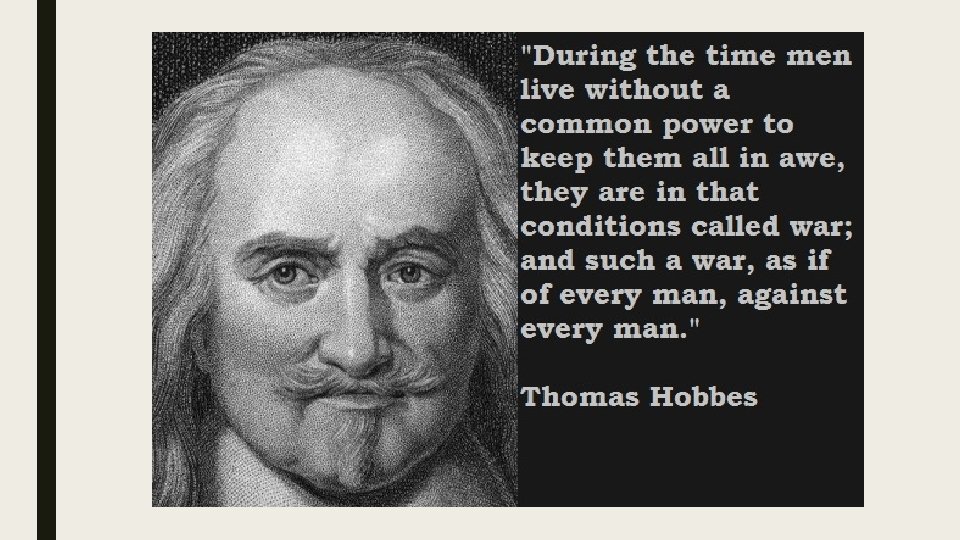
Enlightenment ■ Thomas Hobbes: “State of Philosophers Nature” (people become violent, need protection, social contract) – People give up rights and power for protection, but lose their rights to overthrow, replace, or question gov. What would it look like in a “State of Nature”?
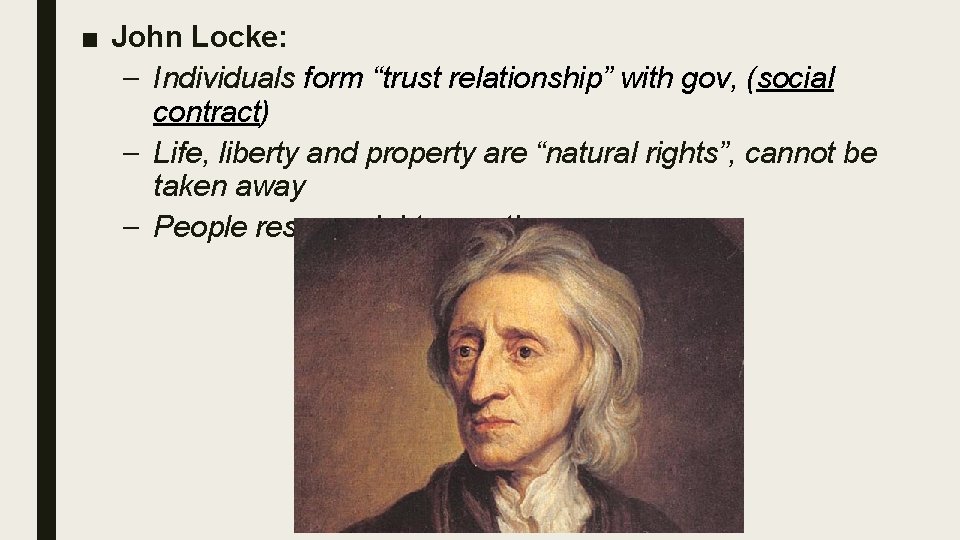
■ John Locke: – Individuals form “trust relationship” with gov, (social contract) – Life, liberty and property are “natural rights”, cannot be taken away – People reserve rights overthrow gov
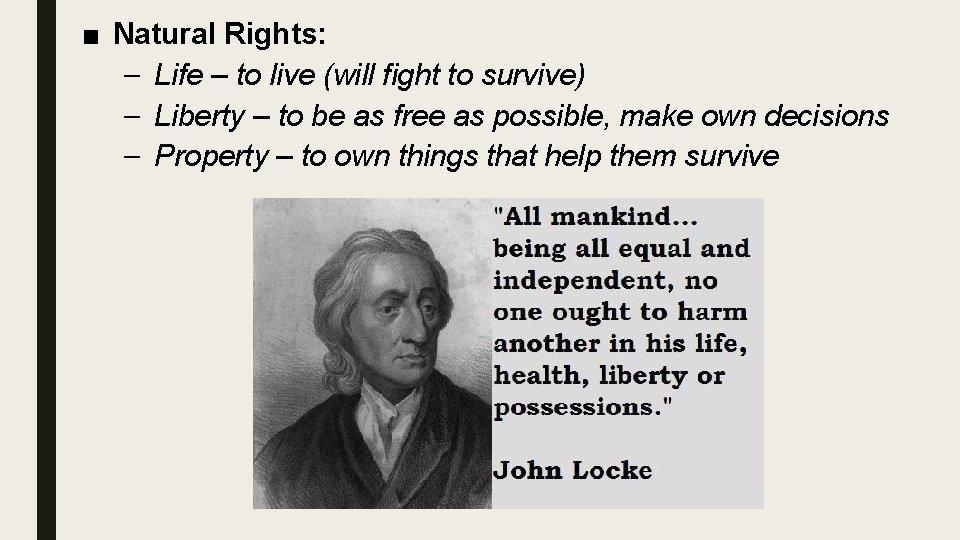
■ Natural Rights: – Life – to live (will fight to survive) – Liberty – to be as free as possible, make own decisions – Property – to own things that help them survive
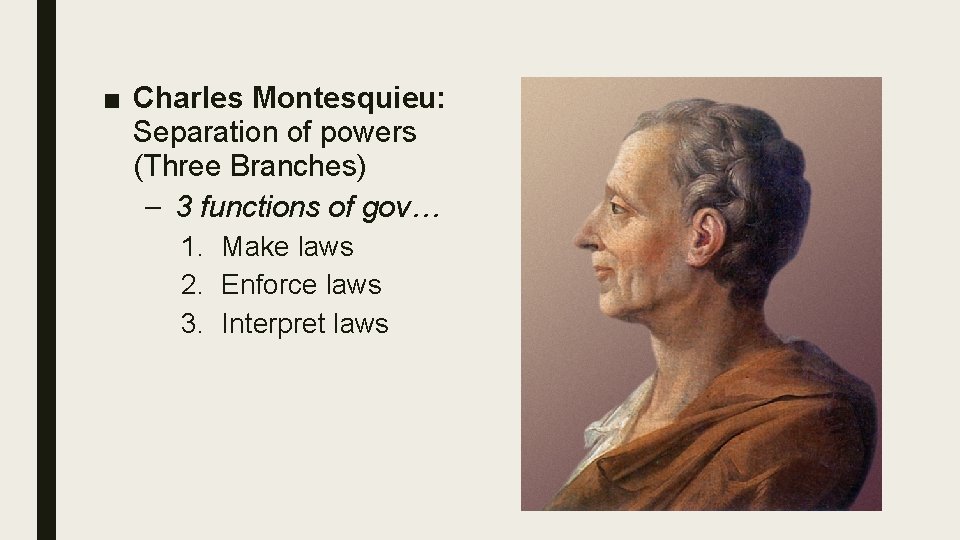
■ Charles Montesquieu: Separation of powers (Three Branches) – 3 functions of gov… 1. Make laws 2. Enforce laws 3. Interpret laws
Lesson Closure: Exit-Slip Describe how the words listed below are connected with each other: 1. State of Nature / War 2. Life / Liberty / Property 3. Government / Social Contract
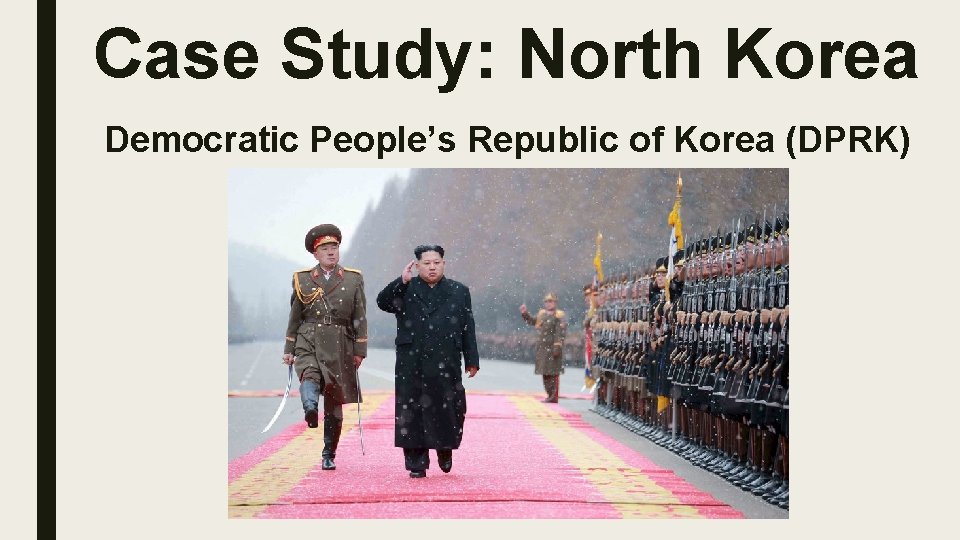
Case Study: North Korea Democratic People’s Republic of Korea (DPRK)
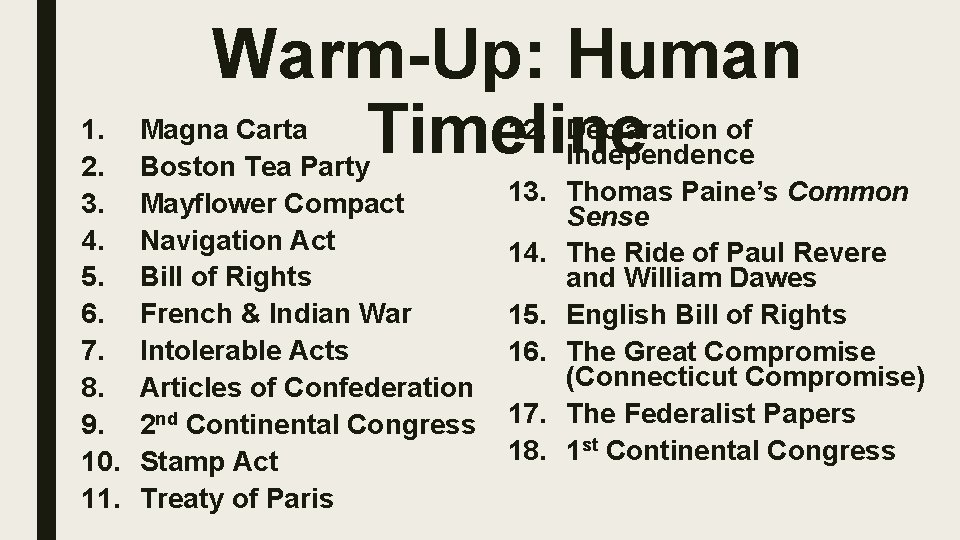
1. 2. 3. 4. 5. 6. 7. 8. 9. 10. 11. Warm-Up: Human 12. Timeline Magna Carta Boston Tea Party Mayflower Compact Navigation Act Bill of Rights French & Indian War Intolerable Acts Articles of Confederation 2 nd Continental Congress Stamp Act Treaty of Paris 13. 14. 15. 16. 17. 18. Declaration of Independence Thomas Paine’s Common Sense The Ride of Paul Revere and William Dawes English Bill of Rights The Great Compromise (Connecticut Compromise) The Federalist Papers 1 st Continental Congress
Warm-Up: Human On PAPER: Timeline 1. Date of event / term (month, day, year) On INDEX CARD 1. Name of Event / Term 2. Date of event / term (Month, day, year) 3. THREE sentences describing / defining the term
Lesson Objectives 1. Students identify John Locke’s ideas of natural rights and the social contract in the formation of government systems.
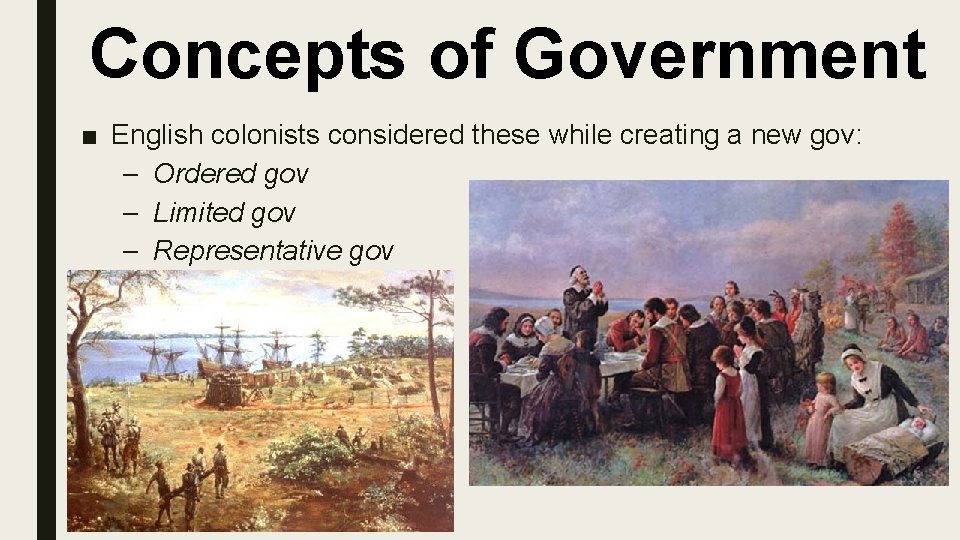
Concepts of Government ■ English colonists considered these while creating a new gov: – Ordered gov – Limited gov – Representative gov
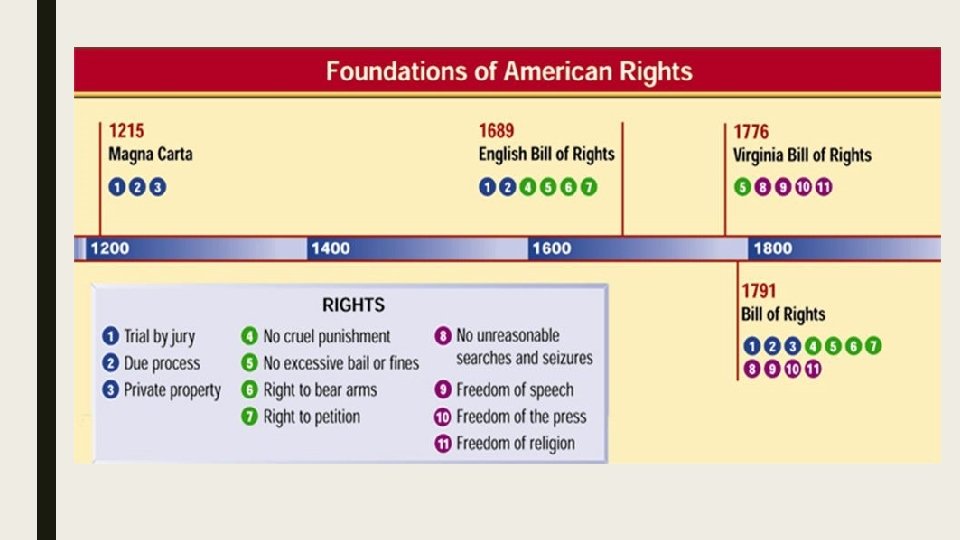
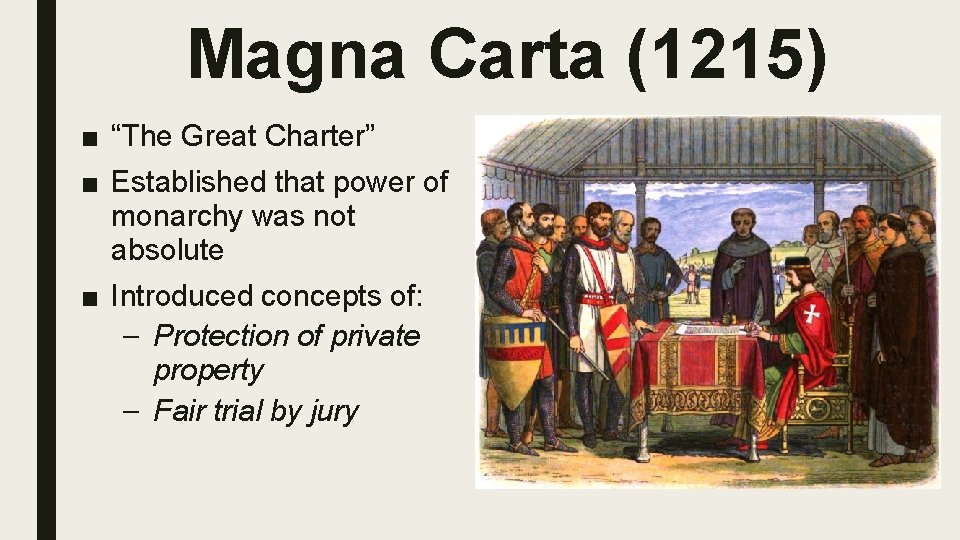
Magna Carta (1215) ■ “The Great Charter” ■ Established that power of monarchy was not absolute ■ Introduced concepts of: – Protection of private property – Fair trial by jury
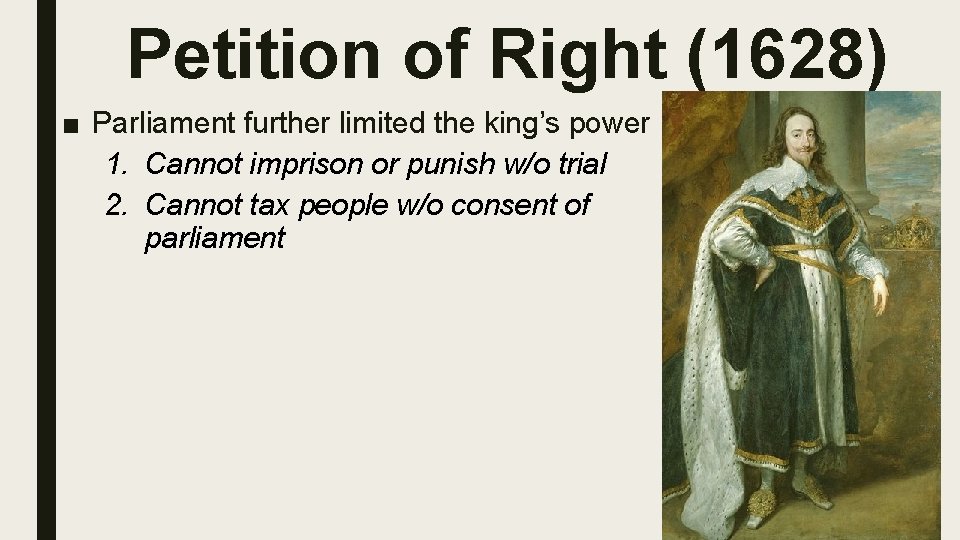
Petition of Right (1628) ■ Parliament further limited the king’s power 1. Cannot imprison or punish w/o trial 2. Cannot tax people w/o consent of parliament
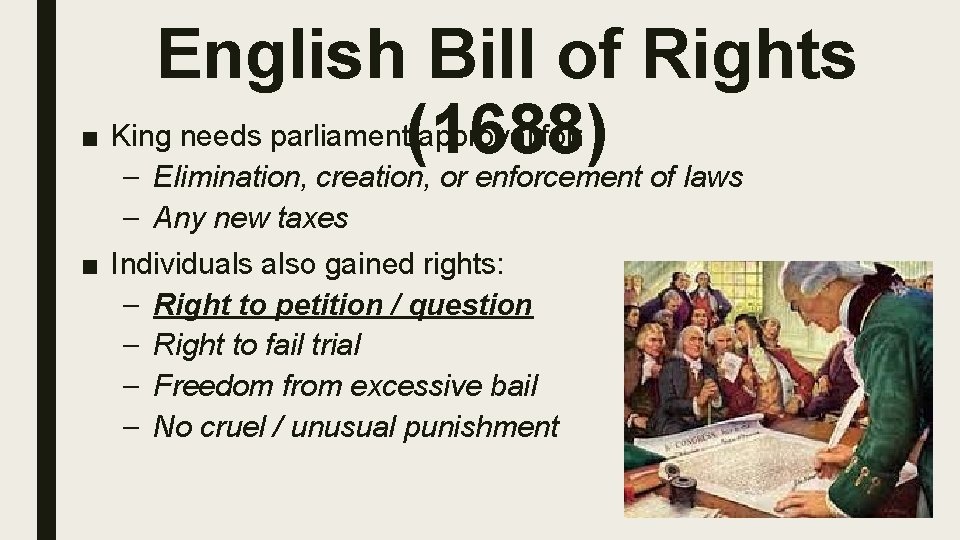
English Bill of Rights ■ King needs parliament(1688) approval for: – Elimination, creation, or enforcement of laws – Any new taxes ■ Individuals also gained rights: – Right to petition / question – Right to fail trial – Freedom from excessive bail – No cruel / unusual punishment
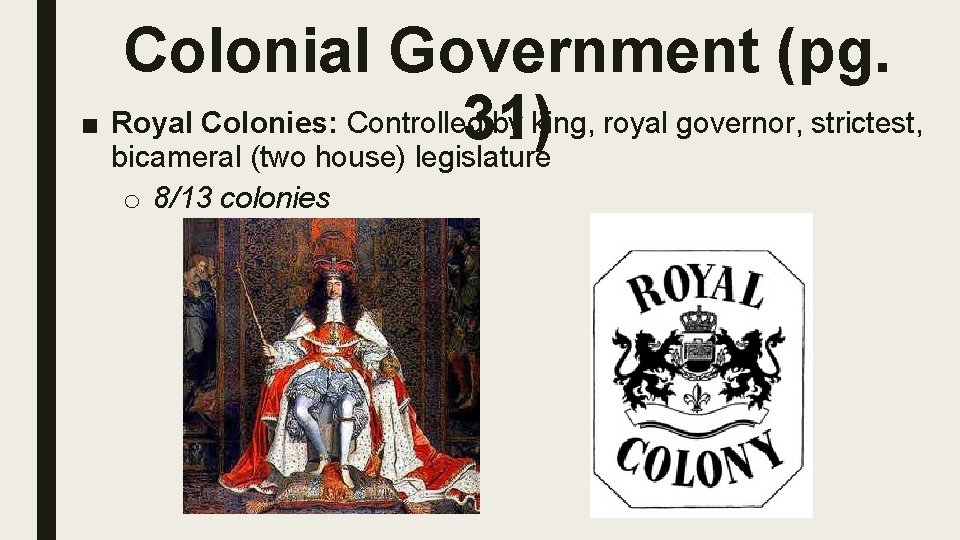
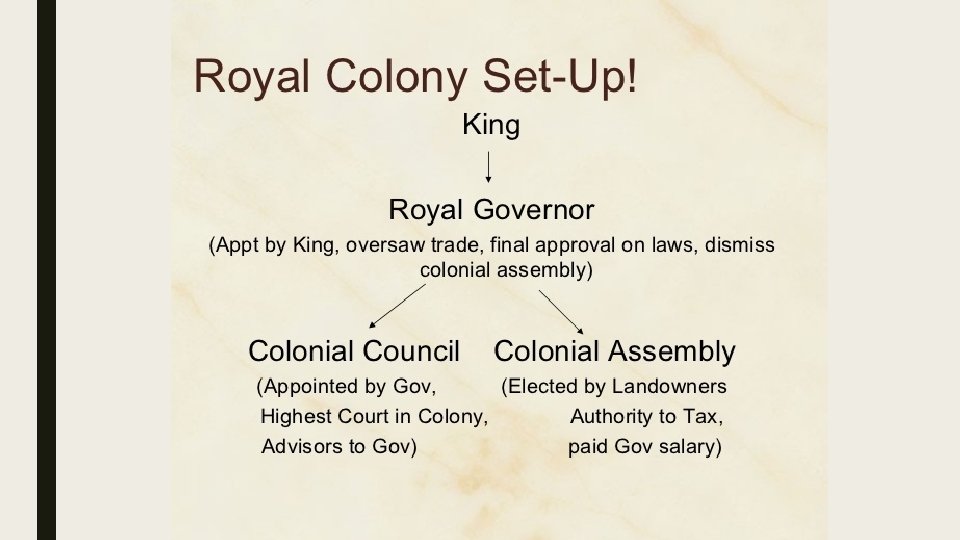
Colonial Government (pg. ■ Royal Colonies: Controlled by king, royal governor, strictest, 31) bicameral (two house) legislature o 8/13 colonies

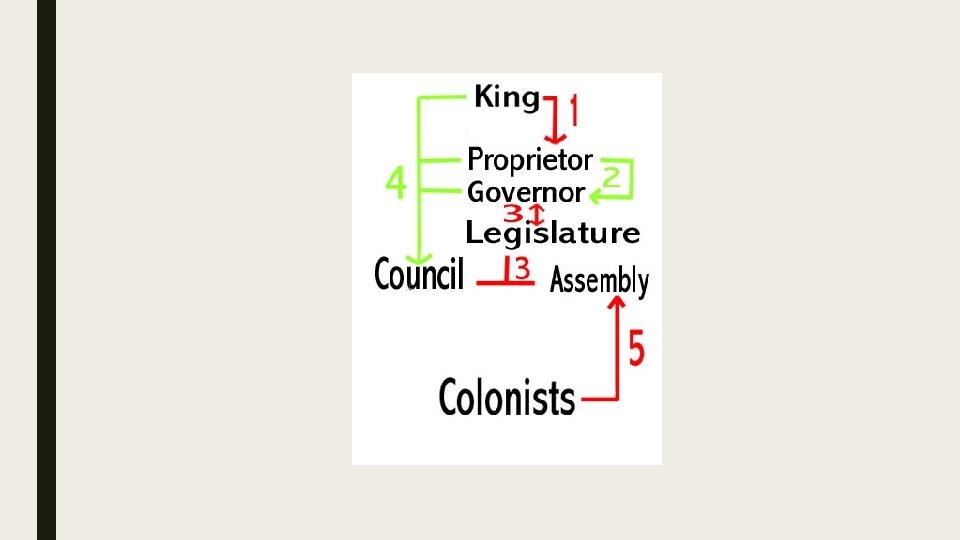
Colonial Government ■ Proprietary Colonies: (cont) Individuals (proprietors) given land by king, annual payment to king, proprietor appoints governor o Delaware, Maryland, Pennsylvania
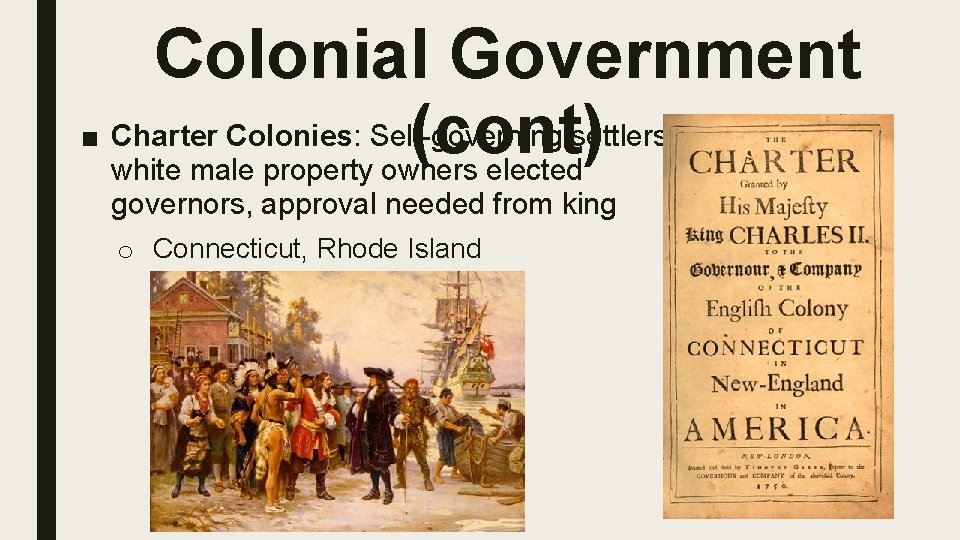
Colonial Government ■ Charter Colonies: Self-governing settlers, (cont) white male property owners elected governors, approval needed from king o Connecticut, Rhode Island
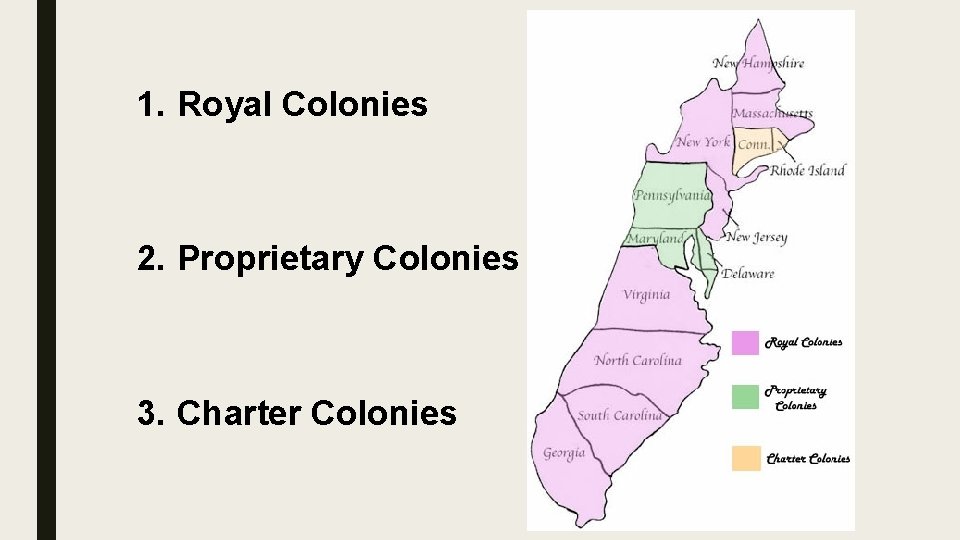
1. Royal Colonies 2. Proprietary Colonies 3. Charter Colonies
Lesson Closure: Quick 1. What were some of the fundamental rights and Write principles established by the Magna Carta, the Petition of Right, and the English Bill of Rights? 2. How were Royal, Proprietary, and Charter colonies different from each other? (3 sentences)
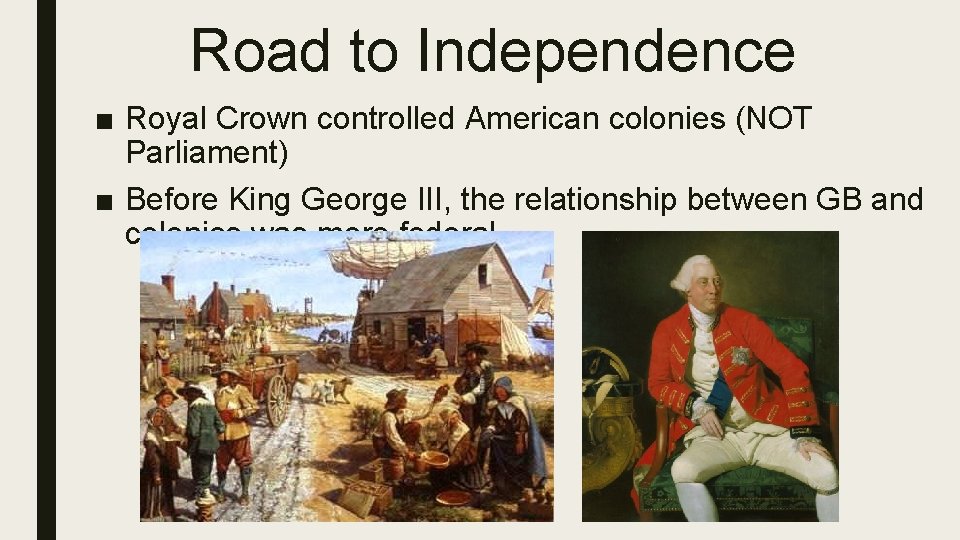
Road to Independence ■ Royal Crown controlled American colonies (NOT Parliament) ■ Before King George III, the relationship between GB and colonies was more federal
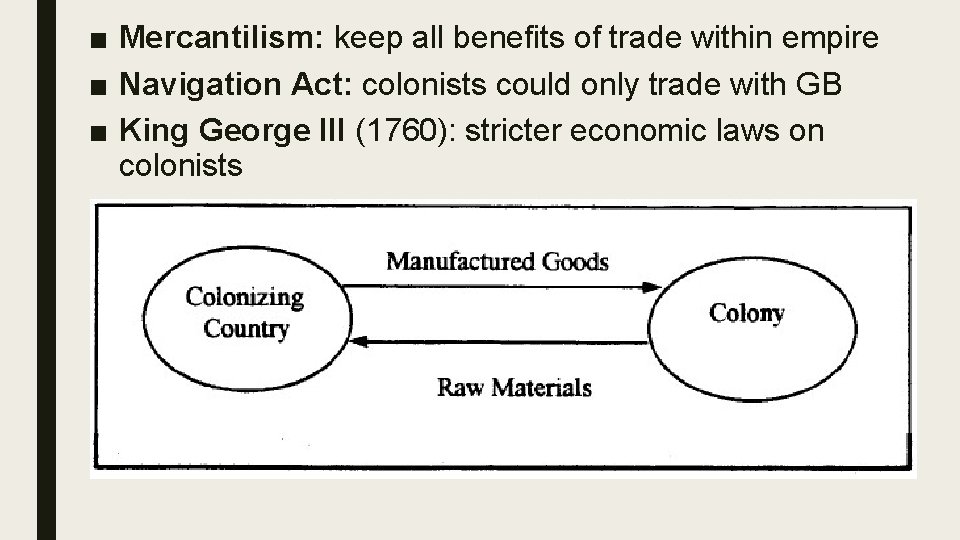
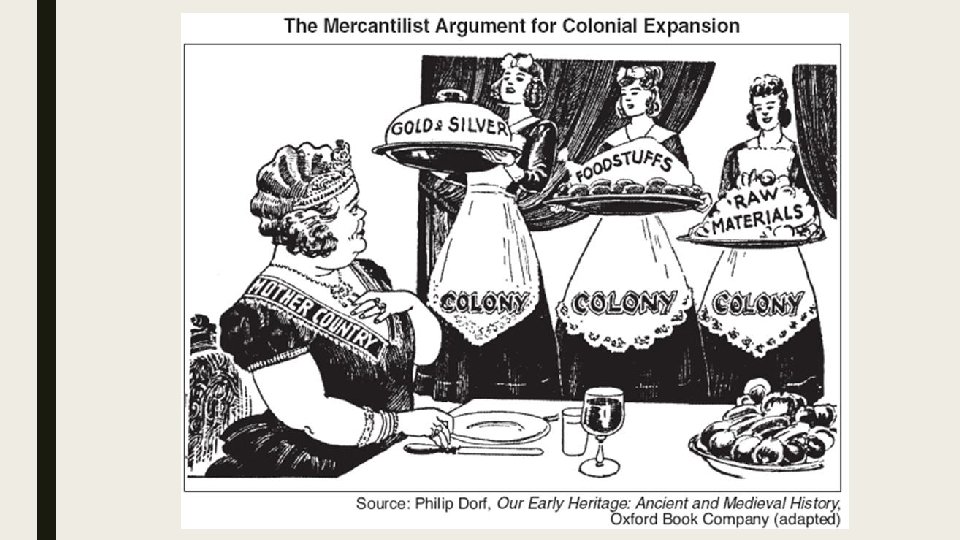
■ Mercantilism: keep all benefits of trade within empire ■ Navigation Act: colonists could only trade with GB ■ King George III (1760): stricter economic laws on colonists
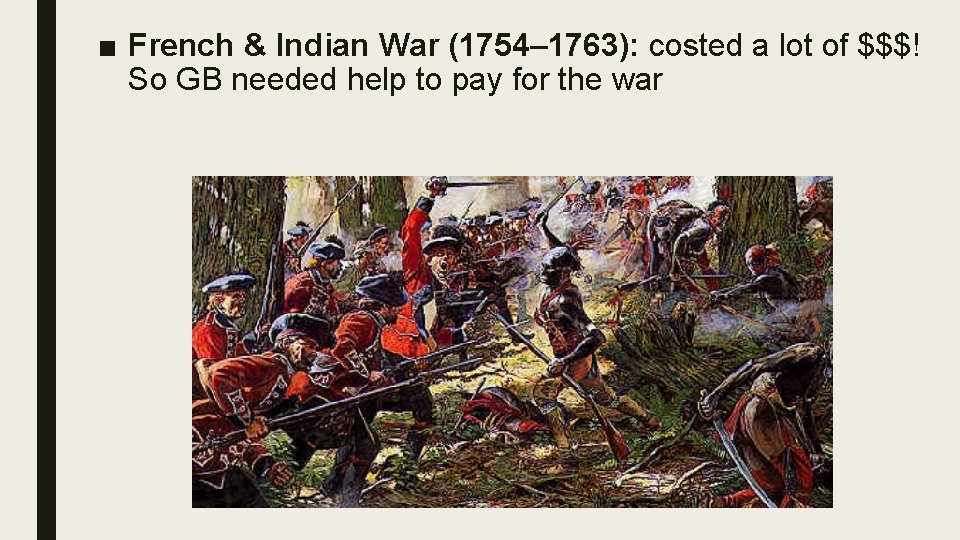
■ French & Indian War (1754– 1763): costed a lot of $$$! So GB needed help to pay for the war
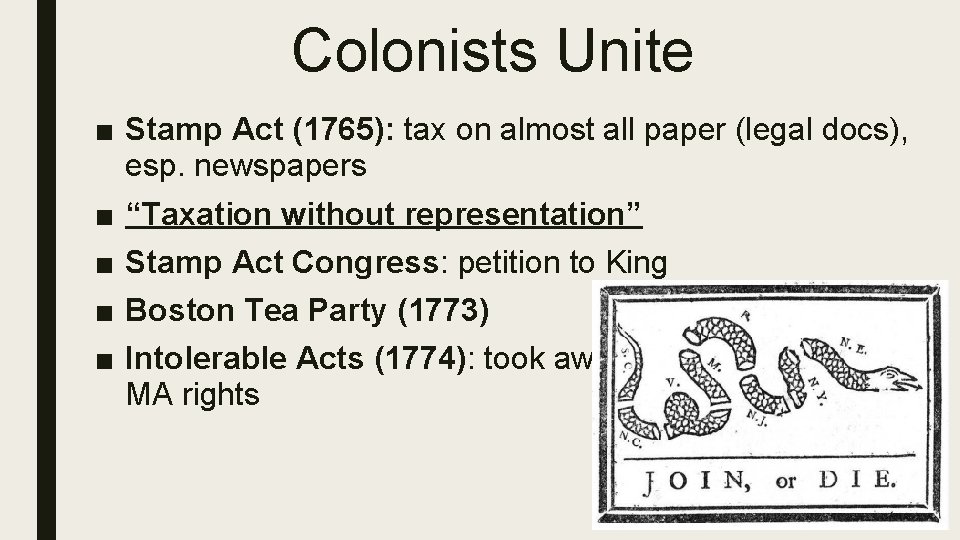
Colonists Unite ■ Stamp Act (1765): tax on almost all paper (legal docs), esp. newspapers ■ “Taxation without representation” ■ Stamp Act Congress: petition to King ■ Boston Tea Party (1773) ■ Intolerable Acts (1774): took away MA rights
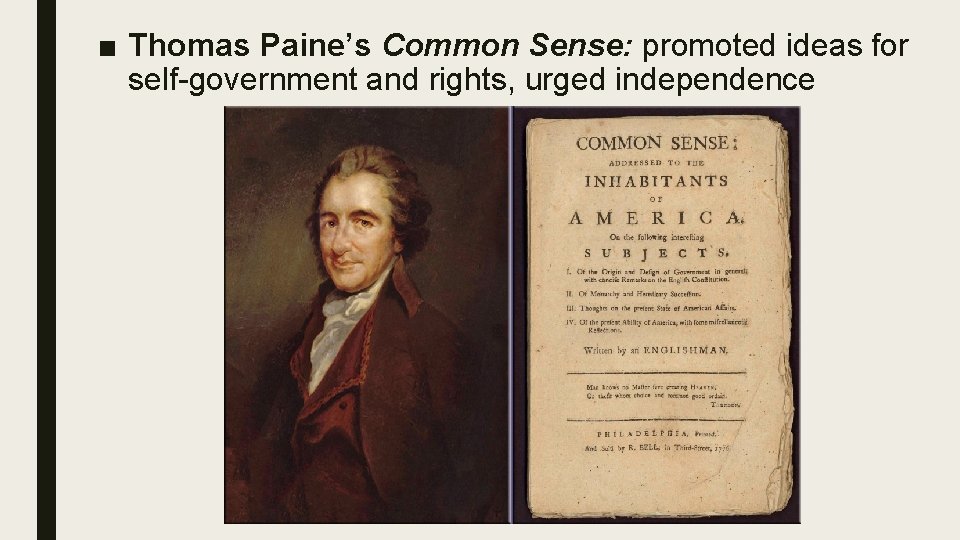
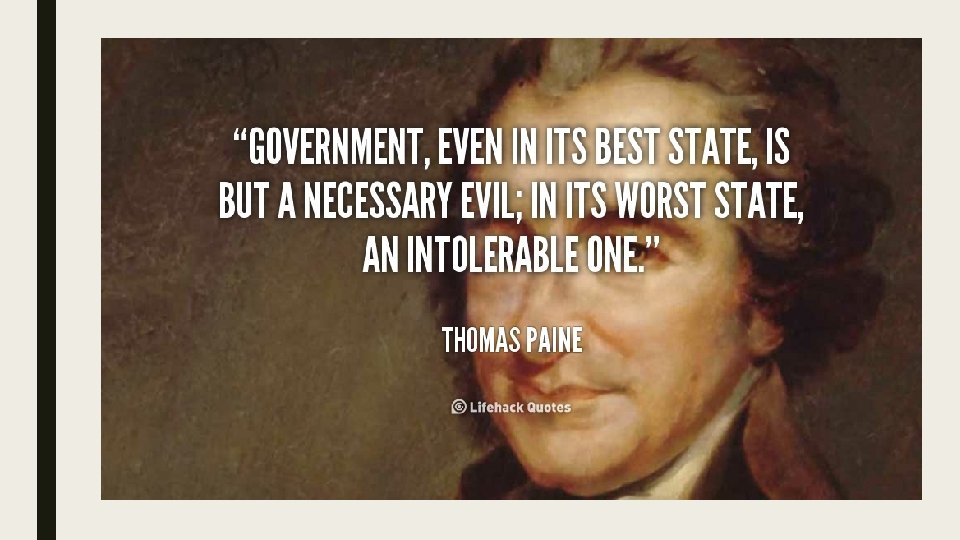
■ Thomas Paine’s Common Sense: promoted ideas for self-government and rights, urged independence
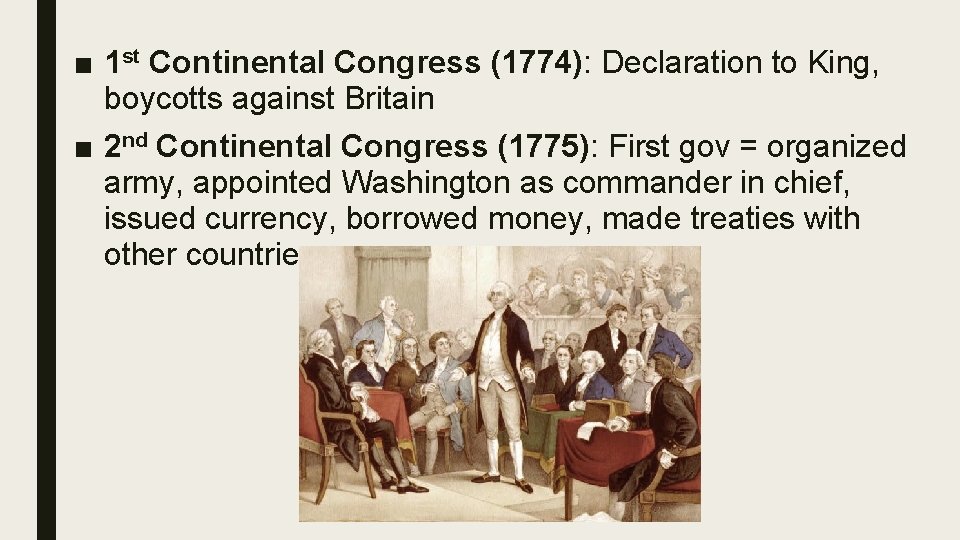
■ 1 st Continental Congress (1774): Declaration to King, boycotts against Britain ■ 2 nd Continental Congress (1775): First gov = organized army, appointed Washington as commander in chief, issued currency, borrowed money, made treaties with other countries
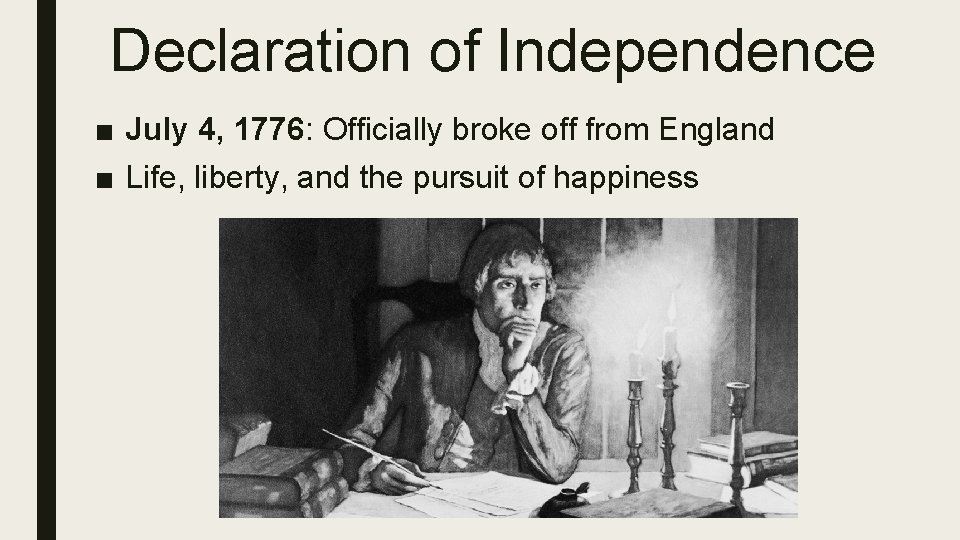
Declaration of Independence ■ July 4, 1776: Officially broke off from England ■ Life, liberty, and the pursuit of happiness
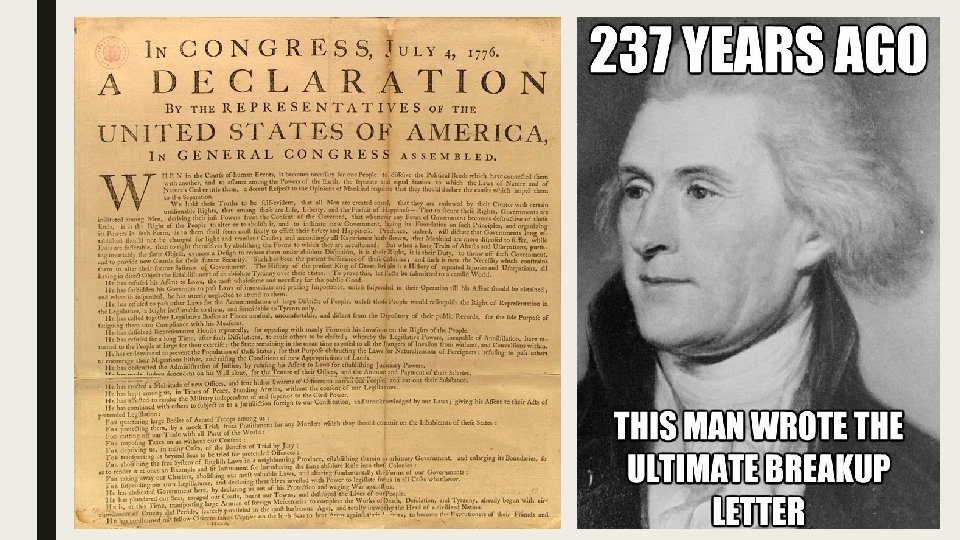
Activity: Close Reading ■ Use Close Reading strategies to read the Declaration of Independence: 1. Highlight key concepts and ideas 2. Underline new vocabulary 3. Circle points of confusion, putting down question mark (? ) 4. Write down immediate reactions, putting exclamation mark (!). 5. Write down questions when you come across a term, idea, or concept that you are curious about.
- Slides: 38